

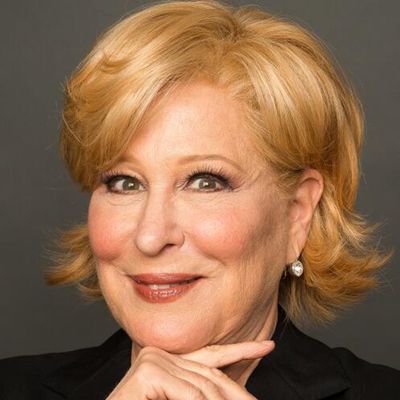
This week I am excited to welcome author Kevin Winkler back to Broadway Nation to discuss his new book, On Bette Midler: An Opinionated Guide. This engaging book is a critical analysis of every aspect of Bette Midler’s career on stage, recordings, film, and television, but in this conversation, we focus primarily on her work as a theater artist... Read More
From the show: BROADWAY NATION
Guests

Featured Artists
Featured Shows
About
This week I am excited to welcome author Kevin Winkler back to Broadway Nation to discuss his new book, On Bette Midler: An Opinionated Guide.
This engaging book is a critical analysis of every aspect of Bette Midler’s career on stage, recordings, film, and television, but in this conversation, we focus primarily on her work as a theater artist. To date, Midler’s long career has been bookended by her appearances in two classic Broadway musicals, Fiddler On The Roof and Hello, Dolly! In between, she invented her distinctive brand of musical theater—“musicals of her own devising,” as Kevin calls them.
For more than twenty years Kevin Winkler was a curator, archivist, and administrator at the New York Public Library, and prior to that, he was a professional dancer. His previous books include the award-winning Big Deal: Bob Fosse and Dance in the American Musical in 2018, and Everything is Choreography: The Musical Theatre of Tommy Tune. Kevin and I discussed that terrific book on several episodes of Broadway Nation back at the beginning of 2022.
Become a PATRON of Broadway Nation!
This podcast is made possible in part by the generous support of our Patron Club Members, including long time member, ANNE WELSH.
For just $7.00 a month, you will receive exclusive access to never-before-heard, unedited versions of many of the discussions that I have with my guests — in fact I often record nearly twice as much conversation as ends up in the edited versions. You will also have access to additional in-depth conversations with my frequent co-host Albert Evans that have not been featured on the podcast. All patrons receive special “on-air” shout-outs and acknowledgment of your vital support of this podcast. And if you are very enthusiastic about Broadway Nation there are additional PATRON levels that come with even more benefits.
If you would like to support the work of Broadway Nation and receive these exclusive member benefits, please just click on this link:
https://broadwaynationpodcast.supercast.tech/
Thank you in advance for your support!
Transcript
This transcript was automatically generated and might contain errors.
[0:00] David Armstrong: Welcome to another episode of Broadway Nation, the podcast that tells the remarkable story of how immigrant, Jewish, queer, and black artists invented the Broadway musical and how they changed America in the process.
[0:35] David Armstrong: I'm David Armstrong, and today I'm excited to welcome Kevin Winkler back to the podcast to discuss his new book On Bette Midler, An Opinionated Guide. In this engaging book, Kevin focuses on all aspects of Bette Midler's career, on stage, recordings, film, and television. But in our conversation, we'll focus primarily on her work as a theater artist. To date, Midler's long career has been bookended by her appearances in two classic Broadway musicals, Fiddler on the Roof and Hello Dolly. But in between, she invented her own distinctive brand of musical theater, musicals of her own devising, as Kevin calls them. For more than 20 years, Kevin was a curator, archivist, and administrator at the New York Public Library, and prior to that, he was a professional dancer.
His previous books include the award-winning Big Deal, Bob Fosse, and Dance in the American Musical, which came out in 2018, and Everything is Choreography, the musical theater of Tommy Tune. Kevin joined us here on Broadway Nation to discuss that terrific book back in 2022, and I highly recommend you seek out those episodes if you haven't heard them. Before we begin, I want to give a big shout out to all of our patron club members whose generous support helps to make this podcast possible. Especially longtime member ANNE WELSH. If you would like to help support the creation of Broadway Nation, I'll have more information at the end of the episode about how you too can become a patron. Here we go.
[2:08] David Armstrong: Kevin Winkler, it's so great to have you today on Broadway Nation to talk about your brand new book on Bette Midler, An Opinionated Guide.
[2:17] Kevin Winkler: David, thank you so much. It's great to be back with you. I was looking forward to this.
[2:20] Kevin Winkler: This is not a biography of Bette Midler. How do you describe it?
[2:24] Kevin Winkler: No, it's not a biography at all. I guess I would describe it as a kind of critical analysis of her career in which I dive deep into her work as a multi-platform artist. She's a unique figure because she has excelled in so many areas of entertainment: the theater, recordings, motion pictures, television. I wanted to dig deep into each of those and try to understand how each of them impacted her work in the other mediums. I didn't interview Bette Midler. I didn't seek her out. I didn't try to speak with anyone who had ever worked with her. The key to my work is the subtitle of the book, which is An Opinionated Guide. It's my opinion as a longtime fan and observer of her work. I hope people find my take on her work and her importance really as a cultural figure through all these mediums. I hope they'll find it interesting and very readable.
[3:19] David Armstrong: I have no doubt they will. How exactly did you decide, as we talked about, you did a book about Tommy Tune, you did a book about Bob Fosse, both who cross over into many worlds but are very centered on Broadway, on the Broadway theater. Why Bette Midler? How does Bette Midler fit into this trio of books?
[3:35] Kevin Winkler: I don't know if it's a trilogy, but a trio of books that you've written so far. Oxford has a series, I guess sort of an informal series called Opinionated Guide. And there have been volumes on Stephen Sondheim, there's one on Barbra Streisand, there's one on Marilyn Monroe. I had read a couple of them, and I'd been thinking something had been in the back of my mind for a while. And it was that, as I said earlier, I really think of Bette Midler as an important cultural figure, as someone in particular who was a major conduit of a kind of gay sensibility to the mainstream. She's been so successful as that conduit that her impact has been just sort of taken for granted, I think. And I felt in a sense she was in danger of being neglected for that role.
As I was looking at some of these other books, I thought, well, somebody needs to write a book like this about Bette Midler. And I think it took me maybe five seconds to say, Well, I'll do it. And that's really how it started.
[4:31] Kevin Winkler: Can I just tell you a quick anecdote that encouraged me further?
[4:35] David Armstrong: Please do.
[4:35] Kevin Winkler: I was talking to my mother on the phone just as I was starting to think about writing the book, and she was asking me what I was working on. I mentioned Bette Midler, and the first words out of her mouth were, Oh, I just love her. I said, Mom, what is it that you love about her? And she said, Oh, she's so funny, and I like the way she sings, and I love her movies. And I said, Mom, you're engaging in a little revisionist history there. And she said, What do you mean? I said, Well, I distinctly remember us sitting on the couch when I was a teenager, still living at home before I went away to college, and we saw her for the first time on, I think it was on the Tonight Show with Johnny Carson. And I thought she was the greatest thing on two legs, and you thought that she was vulgar and trashy, and you seemed particularly upset that she didn't appear to be wearing a bra.
That was a big thing with my mother. My mother was silent for a little bit, and then she said, Well, that was a long time ago. And I thought, exactly. So, how did we go from vulgar and trashy to oh, I just love her? And I thought, if I can try to kind of traverse that path, that would be an interesting hook for the book.
[5:39] David Armstrong: Absolutely. And the effect that Bette Midler had on the culture, obviously just epitomized right there by your mother's diverse opinion of her. That was not the first time you saw Bette Midler, I'm assuming. Do you remember your first exposure to her?
[5:51] Kevin Winkler: That was the first time I ever laid eyes on her. This was, I think, 71 or 72. She sang Joni Mitchell's For Free. I knew the song. She took it and she turned the song inside out. And she sang it as a waltz. It took on a kind of deeper emotional meaning in her rendition. And I just thought, wow, who is she? I've never seen anybody like her. I can't remember what she said when she sat down and talked with Johnny Carson, but she didn't look, sound, or act like a quote-unquote girl singer is supposed to look, sound, and act like. There was something kind of unruly, something kind of, I don't know, disruptive in some way.
[6:26] David Armstrong: Wild.
[6:27] Kevin Winkler: Wild. Yeah. I was immediately attracted to that. I was trying to pin down when the first time I saw her or experienced her was, and I can't quite pin it down. I certainly saw her on TV. That first album had a major impact on me.
[6:42] Kevin Winkler: Completely. I just played it again yesterday in preparation for this. And you know, I know every second of that album, every beat of it, every nuance of it is just emblazoned in my head as most of her, especially those first two albums.
[6:55] David Armstrong: Yeah, exactly. And it wasn't long after I guess I'd seen her that I got that first album. The first album came out, like you, I played a hole in it.
[7:03] Kevin Winkler: I'm sure I wore it out, yeah.
[7:04] David Armstrong: Yeah, and the second album the same. And then those early years, 72, 73, she was really all over television.
[7:11] Kevin Winkler: Yeah, she was on Johnny Carson's show a lot. I have a very distinctive memory of her on a Burt Bacharach TV special where she sang Boogie Woogie Bugle Boy, and they tricked the screen. They had three Bette Midler singing together. It was just ingenious. And I'll tell you a quick story. Bette Midler's mother was watching it in Hawaii, where she grew up, where her parents lived. And her mother said, gee, that's great. They found two girls that looked just like Bette Midler. But she did Boogie Woogie Bugle Boy. She was hilariously funny. And then she did Superstar, which was a big hit for the Carpenters, I remember around that time. And again, she kind of took it apart and put it back together again. It was a very intense emotional monologue. And I thought she's a real actress. And anyone who can toggle between being a priority funny and then also hit you emotionally, that's a great artist.
[8:00] David Armstrong: You bring up a great point. It ties into something that I've always thought. Your book goes into each of her facets. There's a section focused on what you call Bette Midler's theater, which we'll focus on today, but then her recordings as well, her television and her movies. I've always thought of her primarily as a theater artist.
[8:18] Kevin Winkler: I absolutely agree with you. She's essentially a theater artist. That actually is the first chapter in the book. And I wanted to foreground that because she is truly a theater artist, and she approaches the concert stage as a theater artist. Not everyone who walks onto a concert stage does that, but she certainly does.
[8:39] David Armstrong: Absolutely. So I want to today talk through each of those major productions, major theater pieces, musicals of her own devising, I think you said. But let's start with how she gets there, because she is interested in theater and music right from the beginning, right from her childhood in Hawaii. How does this interest in theater and music start with Bette Midler?
[8:58] Kevin Winkler: As you mentioned, she was born and raised in Hawaii near Honolulu. Her parents migrated from New Jersey to Hawaii during the war. But she has talked about being a kind of wary, bookish child growing up. It's interesting in Hawaii, she was part of an ethnic and religious minority. She was very much an outsider among the Samoan and Chinese and Portuguese kids that she went to school with. And she has talked in the past about the troubles she had. She was somewhat bullied, made fun of, and mocked in different ways. And she found, you know, like lots of gay kids growing up in rather hostile environments. She found that humor and making people laugh and getting up on stage and being kind of fabulous were ways to be accepted. And so she started in school doing dramatic interpretation through speech classes, acting in school plays, and so forth. She sang, she won a talent contest when she was in, I think, grade school or junior high school, singing Lullaby of Broadway.
[9:57] Kevin Winkler: Which she, of course, then would sing for the rest of her career.
[10:00] David Armstrong: Exactly, exactly. So she was really getting a head start. When she graduated from high school, she became a theater major at the University of Hawaii, and she also worked with the Honolulu community theater. And she did all kinds of, you know, a little bit of everything. Plays, musicals, she did chorus work, she played lead roles, she did a little bit of this and that. I think the big touchstone moment for her was when the production company for the movie Hawaii came to Honolulu to film. And she was hired as one of many non-speaking bit players, extras for the film. And the money that she made working on that film allowed her to finance her trip to the United States, and she moved to New York when she was about 19. She'd had about a year and a half of college. She did community theater, but that was really all the experience she had. She had no contacts and she had no real formal training. But her desire when she came to New York was to be a stage actress.
[10:53] Kevin Winkler: To be on Broadway, basically.
[10:54] David Armstrong: To be on Broadway.
[10:55] Kevin Winkler: Yeah, exactly. Fairly quickly after she arrived, she was hired by Tom Ion for a musical Cleopatra spoof he had written and directed called Miss Nefertiti Regrets, that was done at La Mama Experimental Theater Company down in the village. He has written about the fact that when she came to audition for him, he said she looked like a young Lotte Lenya, which was interesting because he said she proceeded to pull out a 12-page arrangement of Pirate Jenny, a song that Lenya was associated with. But anyway, she was hired for this musical spoof. On her 20th birthday, she made her New York debut playing Naomi in Assorted Virgins in Miss Nefertiti Regrets. The show was revived a couple of times over the next few months, and she was elevated almost immediately to the title role.
So obviously she had something. But her work with Ion and at La Mama put her in touch with a burgeoning off-off-Broadway theater scene that was peopled by individuals like John Vacero from his Ridiculous Theatrical Company, Charles Ludlam, who split off from John Vacero and formed his own company. She didn't work with those two individuals, but she was there. She saw a lot of their work. She did a couple of the shows with Ion, and she was, I think, very much influenced by what was going on in that scene.
[12:15] Kevin Winkler: She's thrust into this gay, off-off-off-Broadway, off-Broadway theater world with a very strong camp sensibility from almost day one that she arrives in New York City.
[12:26] David Armstrong: Right, absolutely.
[12:27] Kevin Winkler: Yes. The Ludlam and the Vacero and the Tom Ion shows, they brought together high culture, references to Shakespeare or Pirandello, and then low culture, references to old movies and songs from the recent past that people thought of as just kind of trashy disposable pop music. And they were all kind of thrown together as a conglomeration. When I think of that era, I always tell people it's sort of like those old movie spoofs that Carol Burnett used to do on her TV show in the 70s, only gayer and raunchier and sexier. That was the kind of theater that she was being exposed to from the very beginning of her time in New York. And it brings up something you talk about a lot in the book, which I very much appreciated because it's such a hard subject to talk to people about, which is camp.
[13:12] Kevin Winkler: What is camp? People who try to define camp, it's so hard to pin down, and especially how it relates to gay culture. Talk a little bit about that and what your sort of take on it is. Susan Sontag is, of course, the authority that people refer to, but I think she has a somewhat limited view of camp from my point of view. Her long essay notes on camp that came out, I think in '64, and was highly influential. She sort of only begrudgingly tied camp to gay culture, to homosexuality. People like Ion and Ludlam and others, their camp was a kind of you had to love something. You had to love and respect it to camp it, to camp it up. You can't camp on something if you don't respect it, if you don't understand it and have some kind of affection for it.
I think that's something that Sontag sort of missed. There's a kind of, as somebody called a kind of morality of sympathy that comes out of camp. It's taking a look at sacred cows, and I'm mixing my metaphors here, but tweaking the noses of sacred cows, so to speak. One thing that's always struck me about it, you touched on this a moment ago, is that you can simultaneously think something is brilliant and ridiculous at the same time.
[14:24] Kevin Winkler: Absolutely, yes. And camp is not afraid to embrace both those polarities. That's much of what Ion and Ludlam and others were doing. They were kind of mixing theater of the absurd with kind of jokey mid-century gay humor. It all came out in a kind of Baroque camp style. I don't know. You may want to edit this. No, but I think that's good. What it demonstrates, though, is how difficult it is to tie this down. My students ask about this. Students say, "Well, what are you talking about when you mean camp?" And of course, these are 20-year-olds today. You know, every time I get asked that question, I don't have the ready answer because it means so many different things to different people.
[15:03] Kevin Winkler: Yes, indeed. And as a concept and a word, gay figures back in the '20s and '30s talk about camp and about camping, and especially from the British side of things, there's a long tradition of British camp, which is related to what we're talking about, but is also not exactly the same thing. The camp that we're talking about, certainly in relation to Midler and what she was seeing off off-Broadway, was very much informed by a love of kind of trash culture of not the greatest movies, but in many cases the worst, the most ridiculous movies, and music that was seen as disposable and not worth really remembering. It could be embraced by the people who were doing these kind of shows and putting on these kind of performances. This is something that she will take with her into her career and embrace fully and will in some ways define what she's all about.
[15:53] Kevin Winkler: Yes, indeed. Another way that camp operated in the world that Midler was experiencing was through costuming. And she embraced that wholeheartedly. I mean, her wardrobe was kind of a hodgepodge of styles from across eras, tight gold lame pedal pushers, Merry Widow bras, spring elater shoes from the '40s, things like that. So it was a kind of mix and match dumpster diving aesthetic, not only visually, but in terms of her song selection and the kind of humor that she embraced.
[18:05] Kevin Winkler: Yeah, she first joined Fiddler on the Roof, which is one of the biggest hits on Broadway, and I think this was '66 that she joined. First as a temporary replacement for an ensemble member. But that ensemble track, they didn't call it a track back then, but that ensemble track also included understudying Zidel, Tevy's oldest daughter. And then later on, the actress who was playing Zidel left and they had auditions to replace her. Midler auditioned and was hired as Zidel, and she stayed with the show for another two plus years. She's in the show for a long time.
[18:35] Kevin Winkler: For a long, long time. You know, there's an old saying in theater, it's easier to get a job when you have a job, but that wasn't the case with Midler. She wanted to use it as a kind of launching pad to get other jobs in the theater. She didn't want to just sit still and stay with a show forever, never, never. She wanted to grow and learn and do different things. But she really had trouble. She really had trouble getting another job during or after Fiddler. I can totally relate to and understand her frustration. She didn't look like a typical ingenue. She was more abrasive. She was, again, as I said, kind of unruly, had a kind of disruptive personality. She didn't sound like other ingenues. I understand how difficult it must have been to try to find a slot in conventional musical theater.
[19:21] Kevin Winkler: Conventional musical theater, really up until very recently was, was I think, rather codified in terms of the types of people who were hired for major roles. I can certainly understand her frustration. But out of that frustration, she began channeling her creativity into another area, and she began going after the show and singing in the showcase cabaret rooms around the city. It would be a small cabaret room where they would allow people to come up and sing two or three songs. There's no pay, there's no money involved, but you'd get up and sing, and you'd get to try out material. You get experience in front of an audience. You'd get to see what works, what doesn't work, and build up your confidence as a cabaret performer. And she began doing that. She got a manager fairly quickly, a guy named Bud Friedman, who managed the improv on West 44th Street.
[20:09] Kevin Winkler: The improv was really a kind of a tough, insider-y showbiz place that was known for showcasing comics, not necessarily singers. Friedman managed her for a little while. He got her booked on the Tonight Show for the first time. He got her booked on things like the Merv Griffin Show, the David Frost Show. These were afternoon or late night variety shows that were filmed in New York. At one point, she was approached by a real character, a man named Steve Ostro, about coming and singing at a very unusual performance venue called the Continental Baths. That turned out to be her launching pad. So this is a legendary aspect of her career. Just help us understand, especially for people who were not around during that period. What was the Continental Baths?
[20:54] Kevin Winkler: Let me just back up for a minute. Gay bathhouses in New York, which were places where men could go and have sex with other men were much like gay bars in New York in the pre-Stonwall days, say in the late '60s. Many of them were mob controlled. They were not owned by gay people or managed by gay people, and they treated their clientele pretty terribly. Because the clientele had no choice where to get the clientele had no choice. If they wanted to get together at a bar or a bathhouse, these were the only options. And so the baths in particular could be filthy, really run down. The people who worked there would treat the clientele very badly. And they're subject to police raids and all that kind of stuff.
They're dangerous to a certain extent. Indeed. They would make payoffs to the police, and it was a really corrupt environment. And this was all kind of taken in by Steve Ostro, who was a married bisexual who would frequently go to the baths. And he thought that a bathhouse that treated its patrons with respect, that was clean, that welcomed people and treated them nicely, would be a money-making proposition.
[21:59] Kevin Winkler: So he scouted locations and he found this space in the basement of the Ansonia Hotel on Broadway between 73rd and 74th Street. It's now a landmarked building. It's a beautiful Beaux-Arts building. It's magnificent. The basement had previously been occupied by a gym. There was a swimming pool and a steam room, a weight room, and all this. And he turned it into a bathhouse with little private rooms and lockers and so forth. And from the very beginning, when it opened in 1968, it was a great success. Ostro was correct that the gay male community was hungry for a place like this where they didn't have to be afraid, were treated in a nice way. He was very interested in making the Continental a kind of what he called a living experience for gay men.
When the Continental opened, it had a library, a TV room, a restaurant, although I think the restaurant was probably just a series of vending machines. But there were places to talk, you know, not just to have sex. And one of the things that he decided very early on was that he wanted to offer entertainment at the Continental.
[23:01] Kevin Winkler: Ostro, again, he was quite a character. He and his wife were aspiring opera singers. And they studied with a teacher down at the old Herbert Berghoff's studios, the HB studios in the village. They studied with a guy named Robert Elston. And Elston was instrumental in getting them the first act that he booked at the Continental. It was a folk singing act, a husband and wife named Rosalie and Lowell Mark, I think. And he played guitar and she sang. And they played for, I don't know, I guess weekends for a couple of months. And then he was in the market for a follow-up act, and Elston suggested another of his students, Bette Midler. Ostro went and heard her sing at the improv, liked her, and he offered her a job.
He paid her $50 a weekend to do a show on Friday and Saturday night at 1 a.m. at the Continental. I'll just tell you a quick story that I think is very funny and indicative of the whole atmosphere. Her friend Bill Hennessy, who would figure in her career going forward, went to the baths as a customer and he saw a poster saying, coming soon, Bette Midler. And he said, I couldn't imagine that you were actually performing there. So he thought it was a drag queen that was using Bette Midler's name. So he called her up and said, "Hey, there's a drag queen appearing as you at the Continental Baths." Well, she thought that was the funniest thing she'd ever heard, and she used that as sort of a laugh line her first night at the baths. She was off to a roaring start, so to speak, after that. She becomes a draw at the Continental Baths.
[24:24] Kevin Winkler: Yeah. She described her act up to that time as kind of a bluesy down trip. She specialized in torch songs. She had a friend named Ben Gillespie, who had been a dancer and fiddler, who introduced her to torch singers of an earlier era, people like Helen Morgan, Libby Holman, Edith Piaf. He had a record that was a big influence on her. It was a tribute album by Aretha Franklin to Dinah Washington. Midler said, "I'd never heard these songs before." And she adopted the songs. She kind of dressed like a torch singer with long velvet dresses and so forth. But when she got to the baths, she realized that a lot of the people who were there on Friday night were back on Saturday night, and they wanted a different show.
They were bored if she sang the same songs, you know, two nights in a row. And she said she'd never really talked much between songs, but she realized she had to keep their attention because if they got bored with what you were doing, they just walk away and go have something. They had other things they could occupy their time besides listening to this girl singing by the swimming pool.
[25:27] Kevin Winkler: Bill Hennessy, who was a hairdresser, started working with her, and they came up with comedy bits and jokes and characters and things like that. He had been a very high-end hairdresser at Bergdorf Goodman's under the name Mr. Gerard, and he would refer to himself as the Divine Mr. G. And so they kind of came up with a characterization for Midler called the Divine Miss M. The Divine Miss M was a kind of body, brazen, outspoken, unruly woman character who could dish and cajole the audience, could handle hecklers, and who could keep this audience entertained between songs. Her act quickly became not just about singing, but about relating to this specific audience in a way that I think touched a real chord with them. And she's in an environment that is not focused. She's got men in the pool.
[26:19] Kevin Winkler: I mean, the swing pool. Steam room. She's in a room where she's got to grab them. Right. She said something like, They won't settle for half-ass at the bath. You've got to be on the entire time you get in front of them. You had to keep their interest again, because there were plenty of other things to do. Of course, she carries that with her into everything that comes afterwards as well, that sort of dynamic grab your attention. That kind of larger than life performing style.
[26:45] Kevin Winkler: Not long after she was at the Continental, she met someone who was very influential in sort of the next phase of her career, and that was Barry Manilow, who was hired as sort of the house pianist at the Continental. And she quickly glommed onto him and she kind of claimed him as her musical director, even though he was doing lots of other things. His charts for her, his musical arrangements really brought a focus and a discipline to her musical performances. That's clear almost from the very beginning.
[27:17] Kevin Winkler: Very much so. The songs had a shape, they had a dramatic intensity to them that her work before that didn't have. I find this fascinating because she's obviously a very, very smart, intelligent woman. But at this point, she's come from Hawaii. She knows very little about show business or about this world that she's entering into, and she's dependent on this series of smart gay men to feed her. She's like a sponge, is my impression. But it is a product of these men that she meets that create that Midler.
[27:51] Kevin Winkler: Absolutely. One of the many reasons I love her is because she really from the very beginning, she's given credit to the people who helped her. Then Gillespie, certainly, who introduced her to a world of singers and music that she knew nothing about, a Bill Hennessy. They took her to movies. She had never seen, she said, a Marlena Dietrich movie. She'd never seen Busby Berkeley movies. She'd never seen singers and actors and performers of earlier generations. They helped her with wardrobe, and certainly they helped her with song selection and her musical charts with Barry Manilow. She always gave them credit.
[28:26] Kevin Winkler: Not everybody gives the people who helped them along the way the kind of credit that they deserve. And she always has done that. Well, I think you make a point in your book that Miss Streisand did not always give credit to some of the same kinds of influences that she was given.
[28:40] David Armstrong: Yes, indeed. There was a small army of gay men who were influential in helping Barbara Streisand find her look, her style. I mean, her voice was fabulous from the very beginning. She always downplayed that, and Midler never did. She said, if there hadn't been these men in my lives, I wouldn't know nothing from nothing. You know, you gotta love her for that.
[28:59] Kevin Winkler: Another point you make in the book, which fascinated me because I'd never heard anybody say this before, is that the success of the Continental Baths, and not just with Bette Midler, but many other performers played there as well, really started that sort of 1970s New York gay cabaret scene.
[29:14] Kevin Winkler: That was one of the most fun things to write. I guess you could write a whole book about it. But her success there at the Continental really kind of jumpstarted a renaissance in kind of the cabaret scene in New York. I'll just back up and say that she was such a sensation at the Continental, and she played off and on there for about two years. She'd play eight or ten weeks, then she'd go off and do other things, and she'd come back and so forth. But Ostro opened her performances to women and straight men.
[29:41] Kevin Winkler: And so seemingly overnight, going to hear someone at an underground, literally an underground gay men's bathhouse was the hottest, hippest thing to do in New York City. And there are pictures, you can find pictures online of people lining up in fur coats and so forth to come and see Bette Midler sitting alongside men still wearing, you know, in towels. Celebrities. Mick Jagger and Helen Gurley Brown and David Bowie and Andy Warhol, Rex Reed, they all came. Her success there at the Continental really jumpstarted kind of a renaissance in nightlife.
[30:14] Kevin Winkler: There had always been small clubs, certainly, but they seemed to pop up more frequently at this point, and they were generally smaller, more intimate rooms. They kind of built on what I called the Continental Formula. Small, informal rooms that particularly catered to gay men. One of the interesting things was that there was a burgeoning gay publishing scene in New York in the early 1970s. There were gay newspapers and bar guides, what we call bar rags. These clubs would specifically advertise in these papers to appeal to gay men.
[30:46] Kevin Winkler: Places like Reno Sweeney's down in the village. That was really the biggest, kind of the most upscale place. Brothers and Sisters on West 46th Street, which I think is now the site of Don't Tell Mamas on 46th Street. Walter's Apartment on the East Side, which was literally an apartment in a brownstone building, Trude Heller's, several others. Le Mouche. Well, Le Mouche was later, that was a disco. I remember going to see Gotham there.
[31:09] David Armstrong: Oh, yes.
[31:10] Kevin Winkler: It was a disco that also had carved out a space for cabaret. And speaking of Gotham, this whole network of clubs, which were informally referred to as the KY Circuit, also kind of spawned its own kind of star system. So there were people like Ellen Green, long before she did Little Shop of Horrors, who was a big hit on that circuit. Elena Reed, a black singer and actress, Laura Kenyon, you might know her voice. She's a theater actress, a fabulous singer, Gotham, which is a fabulous trio of three gay men. They were sort of like a gay Andrew Sisters. They did close harmonies and comedy. They were terrific. Baby Jane Dexter, Judith Cohen. Many of them didn't go much beyond the circuit, but they were stars on that circuit, and there was a lot going on.
[31:55] Kevin Winkler: Waylon Flowers probably was part of the. Waylon Flowers and Madam was Peter Allen kind of got his start. He did a weekend at the Continental Baths, then went on to Reno Sweeney, and you know, from there on and on. Midler also, she created a kind of template for cabaret performance. She was an enthusiastic dumpster diver in terms of finding songs that people had forgotten about or had just thought were marginal, not worth anything, and reclaiming them. Many of the people who followed her on this circuit had a borrowed from that template and did similar material.
[32:28] David Armstrong: Yeah, certainly Gotham did.
[32:29] Kevin Winkler: All of them did. Yeah, yeah. And she very famously, although she'd already been on the Tonight Show with Johnny Carson, this idea of where she's performing becomes part of what she talked about on the Tonight Show. And is a little scandalous in terms of a way. She doesn't quite reveal all of it, I don't think, at least at the beginning. She said she worked at a Turkish bath. That's all she said. It's a Turkish bath, which was not completely untrue, but she didn't say it was a gay man's Turkish bath. And she said when they like something I do, they stand up and throw their towels up in the air or something. That was something else that was so important to her early success.
[33:04] Kevin Winkler: And I guess one of the things that scandalized my mother when we were watching her were her appearances on the Tonight Show. The format for the Tonight Show and the format for her appearances on the Tonight Show really played to her strengths because she'd generally come out and sing a song of particular style. Then she'd go over and sit with Johnny Carson. She distinguished herself as a really wonderful conversationalist. She was funny, she was quick, she was informed. She was clearly a very intelligent person. She could be ever so slightly risque and raunchy within bounds. She tells a story about she was in bed and somebody broke in her window and robbed her. She said, It was fabulous. I was in bed and he broke in my house. Things like that. She always had funny stories to tell.
[33:48] Kevin Winkler: And then after a commercial break, she'd get back up and she'd sing a song in a completely different style, in a completely different mood. You got the entire Bette Midler experience in about 20 minutes. And she had a great connection with Johnny Carson.
[34:02] David Armstrong: Yeah.
[34:02] Kevin Winkler: When you look at footage of him back in the day talking with young women, sometimes it's kind of creepy by today's standards. It wasn't like that with Midler. They had a kind of easy, flirty banter. He obviously got a kick out of her, and she wasn't cowed by sitting between him and Ed McMahon, two people who are much, much older than her. She could hold her own conversationally. And so their back and forth was funny, and there was a clear affection. So she's established this template, as you said, for her cabaret act. How does that start to turn into what I think of as theater?
[34:39] Kevin Winkler: There's one crucial step that I should just back up and talk about briefly. In 1972, she met Aaron Russo, who was a rock club impresario, and he managed her for the rest of the decade. He really was instrumental in breaking her into kind of the rock arena. He booked her into venues that were generally like folk rock establishments, places like The Troubadour in LA, The Hungry Eye in San Francisco, The Bitter End in New York. She kind of expanded her act. She certainly talked about outrageous things, but she expanded the subject she talked about, where she talked more about political figures and celebrities. She always had jokes about Fredericks of Hollywood and her prodigious bosoms and so forth.
And it turned out the rock audiences loved her just as much as the gay audiences. They loved the boogie woogie, they love the ballads, they loved jokes where she'd talk about Richard Nixon and call him tricky dick and things like that. She didn't have to adjust herself much to appeal to a broader audience.
[35:39] Kevin Winkler: But it became very clear, certainly around the time she released her first album in 72, that she was breaking bigger. And she began going out on tour. She did a lot of colleges, smaller clubs, eventually larger clubs. And most of the year, 1973, she undertook a big, huge long tour where she started playing much bigger theaters around the country. She had a band with her, Manilow was her musical director, and she added a trio of backup singers called the Harlettes, or the Staggering Harlettes. They were sort of patterned on Icantina Turner's IKES. And she established a kind of bantering relationship with these women. They kind of boosted and gave her a fuller sound. She put her act into acts. There's a first act and a second act, and she began shaping those shows as a kind of arc, if you will. She was already thinking in theatrical terms.
[36:32] Kevin Winkler: And that was the show that brought her back to New York at the end of that tour, at the end of 1973, where she played the Palace Theater and broke umpteen records and was extended over and over and over, and ended up winning a Tony Award. It was an honorary Tony, a special Tony Award for adding luster to the Broadway season. So there was that. And so she was certainly thinking in theatrical terms. But I think the real turning point in her stage shows, the theatricality of her stage shows, was the next show she did, which was Bette Midler's Clams on the Half Shell Review in 1975 that played the Minskoff Theater. And that's where we'll pick up the conversation on the next episode of Broadway Nation when Kevin Winkler returns with more insights into his new book on Bette Midler, an opinionated guide.
[37:19] David Armstrong: Saul Peter, Saul Peter. I talk with my boss then, Brian Harry and the best. And a handsome answer in a new attitude. Now here's the information about how you too can become a patron of Broadway Nation. A donation of just seven dollars a month will not only keep Broadway Nation rolling along, it will also provide you with exclusive access to the complete unedited versions of many of the interviews that you hear on this podcast. And all patrons will receive special shout-outs and acknowledgments of your vital support for Broadway Nation. To join, simply go to Broadway Nation Podcast dot supercast dot tech. That's Broadway Nation Podcast dot S U P R C A S T. Or click the link in the show notes to this episode. Broadway Nation is written and produced by me, David Armstrong. Special thanks to Pals Mox for his help with editing this episode and to the entire team at the Broadway Podcast Network.
© Broadway Podcast Network, All Rights Reserved