

Welcome to a new season of Broadway Nation — the podcast that delves deeply into the remarkable history of the Broadway musical, with a special focus on the Immigrant, Jewish, Queer, and Black Artists who invented it... Read More
From the show: BROADWAY NATION
Guests
Featured Shows

About
Welcome to a new season of Broadway Nation — the podcast that delves deeply into the remarkable history of the Broadway musical, with a special focus on the Immigrant, Jewish, Queer, and Black Artists who invented it.
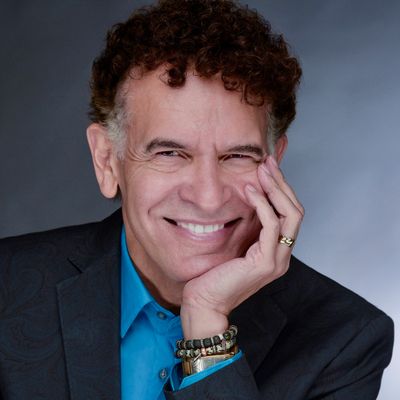
My guest today is Tony Award-winning Broadway star Brian Stokes Mitchell.
After a short break, I am excited to be back with a new season that will be jam-packed with fascinating Broadway history, including interviews with an amazing lineup of authors of some brilliant new books that take us back to the earliest days of Broadway and bring us right up to the twenty-first century — from George M. Cohan to how TikTok and the digital age have impacted the Broadway musical.
Today, we start things off with a bang with a delightful conversation with Brian Stokes Mitchell, whose career spans over forty years on television, films, recordings, concert appearances, and, most notably for our purposes, ten Broadway shows. He made his Broadway debut in 1988 in a short-lived musical called Mail, and in 1990, he was cast as the lead in David Merrick’s revival of the 1926 Gershwin musical Oh, Kay! He next went on to two very high-profile gigs — first replacing Gregory Hines in Jelly’s Last Jam and then Anthony Crivello in Kiss Of the Spiderwoman. In 1998, his unforgettable Tony-nominated performance as Coalhouse Walker in Ragtime firmly established him as a true Broadway star, and the following year, jumping from musical drama to musical comedy, he won the Tony Award for his performance in Kiss Me Kate. His performance in August Wilson’s play, King Hedley II, in 2001 earned another Tony nomination, and the next year, he took on the title role in Man Of La Mancha. His most recent Broadway appearance was in 2016 in George Woolf’s behind-the-scenes look at Shuffle Along, but as you will hear, Brian Stokes Mitchell may be back on Broadway very soon in a new musical that he is very excited about.
In addition, our conversation today ranges from two tear-inducing new video performances that he has recently been involved in creating and performing: a Ted Talk with Leer deBessonet, which you can find at https://www.youtube.com/watch?v=zZNhuRIGQZs and "Hope" with Jason Robert Brown, https://www.youtube.com/watch?v=KJkqV2xwars.
Also, his work with The Entertainment Fund and the soon-to-be-released video capture of their reunion concert of Ragtime, as well as a peek inside his process and approach to interpreting a song.
Become a PATRON of Broadway Nation!
This podcast is made possible in part by the generous support of our Patron Club Members, including our newest member, Alan Teasley.
For just $7.00 a month, you will receive exclusive access to never-before-heard, unedited versions of many of the discussions that I have with my guests — in fact, I often record nearly twice as much conversation as ends up in the edited versions. You will also have access to additional in-depth conversations with my frequent co-host, Albert Evans, that have not been featured on the podcast. All patrons receive special “on-air” shout-outs and acknowledgment of your vital support of this podcast. And if you are very enthusiastic about Broadway Nation, there are additional PATRON levels that come with even more benefits.
If you would like to support the work of Broadway Nation and receive these exclusive member benefits, please just click on this link:
https://broadwaynationpodcast.supercast.tech/
Thank you in advance for your support!
Transcript
This transcript was automatically generated and might contain errors.
[0:00] David Armstrong: Welcome to a new season of Broadway Nation, the podcast that delves deeply into the remarkable history of the Broadway musical, with a special focus on the immigrant Jewish, queer, and Black artists who invented it. I'm David Armstrong, and my guest today is the Tony Award-winning Broadway star, Brian Stokes Mitchell.
[1:21] David Armstrong: After a short break, I'm very excited to be back with a new season that I promise will be jam-packed with fascinating Broadway history, including interviews with the authors of some brilliant new books that take us back to the earliest days of Broadway and bring us right up to the 21st century, from George M. Cohan to how TikTok and the digital age have impacted the Broadway musical. Today, we certainly start things off with a bang with a delightful conversation with Brian Stokes Mitchell, whose career now spans more than 40 years of television, films, recordings, concert appearances, and most notably, for our purposes, 10 Broadway shows.
[2:02] David Armstrong: He made his debut in 1988 in a short-lived musical called Mail, M-A-I-L, and then in 1990 he was cast as the lead in David Merrick's revival of the 1926 Gershwin musical, Oh, Kay! He next went on to two very high-profile gigs, first replacing Gregory Hines in Jelly's Last Jam and then Anthony Crivello in Kiss of the Spider Woman. Then, in 1998, his unforgettable Tony-nominated performance as Coalhouse Walker in Ragtime firmly established him as a true Broadway star. And the following year, jumping from musical drama to musical comedy, he won the Tony Award for his performance in Kiss Me, Kate.
[2:45] David Armstrong: In 2001, he received another Tony nomination for his performance in August Wilson's play King Hedley II, and the next year he took on the title role in Man of La Mancha. Unfortunately for his Broadway fans, his most recent appearance was in 2016 in George Wolfe's behind-the-scenes look at Shuffle Along. But, as you will hear, Brian Stokes Mitchell may be back on Broadway very soon in a new musical that he is very excited about.
[3:14] David Armstrong: In addition to that, our conversation today ranges from what were, at least for me, two tear-inducing video performances that Stokes has recently been involved in creating and performing, to his work with the Entertainment Fund and the soon-to-be-released video capture of their reunion concert of Ragtime, as well as what I think is a fascinating peek inside his process and approach to interpreting a song. So let's not wait another minute. Here we go!
[3:43] David Armstrong: Brian Stokes Mitchell, it is such a pleasure to have you today as a guest on Broadway Nation to talk about a myriad of things that you have coming up in your career. Welcome!
[3:52] Brian Stokes Mitchell: Great! David, thank you so much. It's so nice to be with you and Broadway Nation today.
[3:56] David Armstrong: Absolutely. So glad to have you. Why don't we start by talking about the things people can see immediately. They can immediately go and Google a few of the things that are brand new for you.
[4:05] Brian Stokes Mitchell: Yeah, all kinds of interesting things that have been going on. I just did a TED Talk that was recently released with Lear deBessonet, who is the artistic director now of City Center Encores! And she actually did the talking. I did the singing for her. And that was a really, really interesting and kind of life-changing experience for me.
[4:22] David Armstrong: I watched it and brought a little tear to my eye. I have to say I got a little emotional at the end of that. I won't give it all away for people because I think they should experience it. Your performance, of course, was sensational the way it always is. But then there's this added value that comes to it, which is really quite staggering.
[4:38] Brian Stokes Mitchell: I don't know how many people of your listeners listen to TED Talks. I have loved them. I'm a big science nerd and a nerd of all kinds. So there's a lot of TED Talks that have appealed to me. The main place that they have is up in Canada. That's where they do their show in Vancouver. That's where we were invited to do this talk.
[4:56] Brian Stokes Mitchell: Lear at first asked me, she said, I've been invited to do a TED Talk. Would you be a part of it? Do you want to do it? And my immediate answer was yes, because I not only love Lear. She and I have been trying to work together for a very, very long time, but we've never been able to do it. But as I said, I love TED Talks as well. So I went up there and I was able to go to most of the talks, which was really, really fun.
[5:16] Brian Stokes Mitchell: It talks about quantum computing and solving carbon in the atmosphere. Everything, world peace. It started out with a discussion between an Israeli man and a Palestinian man, both of whom had, and this was after the kidnappings and everything happened over there, had family members die on different sides. And they put a chair across from each other. That may be available now. I think it's on TED.com. You could see that. And that's what started the whole thing.
[5:43] Brian Stokes Mitchell: There was a lot on AI. I guess the year before it was AI bad, AI bad, AI devil, AI gonna kill us, AI robots taking over. This year, it was more AI good, AI wonderful, AI terrific, AI can help us solve problems. AI did some amazing art as well for this event.
[5:59] Brian Stokes Mitchell: But the thing that was most moving to me, actually, I realized on the last day that I kind of had a smile on my face that seemed to be affixed for most of the last few days. And this really great feeling in my heart, which was totally unexpected.
[6:15] Brian Stokes Mitchell: Because what I realized was I had this incredible sense of hope in my heart. Because when we turn on the news nowadays, or any television, it seems, or get on your phone and read anything that you have, it looks like everything is blowing up and the world is an awful place to be. And people are doing terrible things to people. And I'm not saying that doesn't happen as well.
[6:34] Brian Stokes Mitchell: But I don't think it happens to the extent that the news would have you believe. Of course, that makes great news for everybody when you watch something like that. They want to keep dragging you in. Why? Because good news, they found out, doesn't sell pharmaceuticals and toilet paper. Bad news does. They keep trying to hook you in with all these terrible fear, fear, fear things. It can bring us all down into this kind of drain of doom.
[6:58] Brian Stokes Mitchell: What I realized being there was that I was with a group of people who are at the top of their fields in the world trying to solve the problems of the world. And not only are they trying to solve problems, they were coming up with remarkable solutions about ending hunger, about ending problems with water, about ending the education issues that we have in many, many countries, especially for women, where women aren't being educated and people working to solve these issues.
[7:24] Brian Stokes Mitchell: And I realized, oh, I feel so good. I feel so optimistic about where we're going because it was like a week of good news. But it was not just platitudes. It was a week of good news with people that were solving the problems and showing you how. And it was just really, really amazing.
[7:54] Brian Stokes Mitchell: And I realized that the world is actually an amazing place. And all we have to do is start taking part of it and opening our eyes. And we have to be the ones to say, I'm going to make the change. I'm going to do something about it. You know, if you sit back, life will happen to you. But you can actually make life happen as well if you start making conscious choices about what you're interested in, what you want to put your time in, what you want to put your heart in, your mind, your passion, your treasure, whatever.
[8:17] Brian Stokes Mitchell: I find, at least, that the world starts kind of aligning with you. The universe starts throwing you these kinds of wonderful opportunities and other people that are doing the same kinds of things. So for me, that TED Talk was one of those opportunities where I got to meet those people. And it just left me floating, levitating.
[8:36] David Armstrong: When all that sense of hope that you just talked about tied in completely to the subject of Lear's TED Talk and then, of course, the song that you sang to cap it all off. Tell us just a little bit about what Lear talks about. What is the subject of the TED Talk? And then you sing "The Impossible Dream," which, of course, you sang on Broadway to Tony Award-nominated effect, I believe.
[8:57] Brian Stokes Mitchell: Nominated for that show.
[8:59] David Armstrong: Nobody ever remembers what you win for, what you were nominated for.
[9:03] Brian Stokes Mitchell: Exactly. All right. All right. So Tony-nominated effect. I was really taken by the way you take all the cobwebs off of that song and just bring it back to what it's about, which was actually a sort of countercultural statement at its time.
[9:17] Brian Stokes Mitchell: And it got turned into this sort of cheesy thing just by too much repetition and too many people singing when we were kids, which did the song a disservice. I think you sort of are resurfacing it. I know you sing that in concert all the time.
[9:31] David Armstrong: Yes. The approach you have to that song, it just has such effects. So just give us a little sense of that. Again, I want people to go watch it because I was terribly moved by it. I have to say.
[9:41] Brian Stokes Mitchell: Yeah. Thank you very much. Lear's talk was largely about spectacle in our lives and how that is used in art and especially live theater as well.
[9:49] Brian Stokes Mitchell: Lear is from Baton Rouge, I believe. They have their own version of a Mardi Gras there. So she grew up with spectacle in her life. And I think it's one of the things that touched her.
[9:59] Brian Stokes Mitchell: She has a program that she started, the public theater called Public Works, where she brings in everybody to help with her shows. And I've seen a number of them. They're quite amazing.
[10:07] Brian Stokes Mitchell: She did a Tempest at Shakespeare in the Park. And for instance, she brought in a group of taiko drummers and they were the storm. And she brings all kinds of different people in from the community. She brings people with different talents and just sometimes people have never performed before.
[10:20] Brian Stokes Mitchell: And she makes these wonderful spectacles. And they really are, I think, an overwhelming kind of emotional event that she creates in addition to the show itself and a celebratory event, too.
[10:30] Brian Stokes Mitchell: And that's what her talk is about and the importance of spectacle and ritual in our lives. She asked me to sing "The Impossible Dream" for her. Thank you for the kind words that you said about that song.
[10:40] Brian Stokes Mitchell: It's interesting because when I did Man of La Mancha originally, I remember thinking to myself, OK, there's good news and bad news. The good news is I get to sing "The Impossible Dream."
[10:49] Brian Stokes Mitchell: It's one of the most famous songs in the world. Everybody worldwide knows this. It's been covered by everybody. It's been sung for years and years. The bad news is it's one of the most famous songs in the world. It's been covered by everybody for years and years.
[11:01] Brian Stokes Mitchell: I was thinking, how am I going to sing this song differently in a way that people have never heard it before? Because I remember growing up on the original recording of it and hearing the impossible dream in these long kind of phrases.
[11:15] Brian Stokes Mitchell: When I started doing the show, I thought, let me kind of deconstruct this song. And what is the song really, really about? Because I've always heard the song as it was performed by Richard Kiley, you know, originally, who did a brilliant job at it.
[11:31] Brian Stokes Mitchell: But I thought, how do I want to do this? And what do I want an audience to hear? And as I looked at the song, this is something that I do, by the way, with every show that I do, every song that I sing, I write out the lyrics and I have this. It looks like a crazy man.
[11:44] Brian Stokes Mitchell: Actually, if you look at my sheets of paper, all of the rhyme schemes, inner rhymes that are circled, all these different references, I kind of write out and analyze the song in my own way. I realized as I looked at that song and the lyrics of it, to dream the impossible dream, to fight the unbeatable, to bear with unbearable sorrow, to run where the brave dare not go.
[12:04] Brian Stokes Mitchell: There's a quietly implied question in between the song that I never was given a chance to hear before, because it was singing as a long phrase to dream the impossible dream, to fight the unbeatable foe. I discovered this little question that said to dream what? The impossible dream, to fight the unbeatable foe, to bear with what? With unbearable sorrow, to run where? Where the brave dare not go.
[12:31] Brian Stokes Mitchell: So there's this quiet question. So I decided when I approached the song to actually put space into the song. One of the things I love about Steve Sondheim is he understands the use of space and how an audience needs a moment sometimes to digest the lyric, to digest the joke. And he automatically writes these into his material. That's why I love him so much and his material and love singing his songs. He does 85% of the work for you.
[12:55] David Armstrong: Absolutely.
[13:25] Brian Stokes Mitchell: It gives them a chance to do that. So they're not just listening to a song. They're listening to a thought process. For me, that's, I think, the most important part when I approach a song. I want it to be a thought process. It's what am I thinking? What am I feeling?
[13:37] Brian Stokes Mitchell: It's really a character. When you're watching a musical, the audience should feel like the character is making up the lyrics to the song as they're doing it.
[14:08] ♪ Musical number: "The Impossible Dream" — performed by Brian Stokes Mitchell ♪
[15:29] Brian Stokes Mitchell: That's kind of my approach. So thank you for kind of articulating the feeling of what I had been trying to communicate. It makes me feel that, well, perhaps I got that one right. And so that became a part also of Lear's TED Talk. And then, yes, it becomes more fun than that. But like you said, it's better if people go and watch it themselves, because she came up with a brilliant idea for the song as well. And I thought it was executed really well. And she directed it, by the way. It was a wonderful, wonderful session. And completely tied back into the subject of building community through the arts. Everything that she talked about really just comes to a circle with some assistance that you get at the end of your song there. Yeah. Yes. Yes, exactly. I just encourage people to hit Google immediately and check that out. It's well worth doing.
[16:16] David Armstrong: This idea of hope ties directly into a new video single that you have out, which is called Hope. It's a song written by Jason Robert Brown, who accompanies you on the piano. And again, a very moving piece of video that I think people will definitely want to check out. And this, to a great extent, harkens back, I think, to something people really remember. The pandemic seems so long ago in some ways, and so yesterday in other ways. But I know one of the things we all remember is you standing in your window of your apartment building and singing. What was your thought process? How did that even start? The first time you stood in that window to sing, what was going on in your mind?
[17:03] Brian Stokes Mitchell: Great question, because that kind of was the progenitor of my search and desire to kind of spread hope was that moment. I mean, it's been all through, I realized it's been all through kind of my career and what I've done, but it really became crystallized during COVID. I had just recovered from COVID. This was the beginning and this is beginning in 2020. And I was one of the first people that I knew that even had it. The only other person I knew that had it was Terrence McNally, who had just passed away from it, actually. And, you know, this was in a time of great fear. There were no vaccines. There was really no hope. All we could see were these stories coming from China and coming from Europe, where they were dealing with the cases first of just all the destruction and death it was leaving in its wake and all of the questions as well.
When will this end? Will this kill us all? Am I going to get it? How do we pass it to each other? All those things? Yes, we didn't even know that. Remember when we would go to the grocery store, my sister tells a story, she would come and she would literally disrobe, leave her clothes at the front door. She would bring everything she bought in the packaging, threw it into the sink, washed everything. She would end up washing her clothes because we didn't know anything at that point. So there was all this fear and uncertainty around. And if you were in New York City at the time, as I was, half of the city had left. I think they thought this is going to be a terrible place for a pandemic to be around lots and lots of people.
As it turned out, I think it was one of the best places to be because people are already in New York very respectful of space and very knowledgeable about, you know, when you're too close to somebody, when it's okay to be too close to somebody like on a subway train during rush hour, and when you need to give somebody space. So people were already very sensitive to that kind of thing. So we were kind of well prepared for that. You know, New York, the best hospitals, the best doctors, the best, you know, if you can make it there, you'll make it anywhere. And that's what that refers to. And that goes for every business, including medicine, but still walking through the streets and seeing empty streets.
I actually have another video that I'm I've yet to edit. I spent my time going to the Broadway theaters when the pandemic started. Nobody on the streets, nobody in front of the theaters, nobody there. So that's my next projects that I'm working on, actually. But also you walk through the park and there are all of these tents set up treatments because they knew tens of thousands of people would be going and they would be overwhelmed. And there were refrigerator trucks for the dead bodies that were to come. And so there are these specters of terror that you are constantly surrounded by. So when I got it, I actually went online and I started a video kind of little blog that I did to just to tell everybody, well, this is what it is.
I want to demystify this disease. And it was the worst thing I ever had, but I did get through it when I was still recovering on my bed. I heard all this noise coming through from the front window. I lived five floors over Broadway in the Upper West Side. And my wife and son one day were making all this noise. I could hear coming through the door and asked her, what was all that noise? Hooked her head in with a mascot and everything, you know. And she said, oh, New York has started this incredible thing where we stop at seven o'clock every night. And if you're on the street, you stop and yell and scream. If you're in your apartment, you open the windows and bang on pots and pans. If you're in your car, you honk your horn to thank and acknowledge all of the essential workers that were trying to get us through this impossible situation, this unbeatable foe.
I thought, oh, great. I can't wait to do that. And finally, I was well enough and we all took a different window overlooking Broadway. And I remember clapping and shouting and screaming out the window one day. During this time I was also, I could feel it moving around my body. And the very last place that it hit was my lungs. I was very concerned about my lungs for two reasons. One, I'm a singer and I love to sing. And I thought, could this be the end of my career? I don't know. Maybe I will never be able to sing after this. And two, I like to breathe as well. So I thought, very important to have your lungs. I would come into this very room right here, which is also my studio where
[20:39] Brian Stokes Mitchell: We're doing this interview from today, where I've recorded the vocals for most of my albums that I've done because I've produced all my solo albums myself. This is my singing room, my music room as well. I have my instruments here and everything. You can see some in the background there as we're talking here on video. And I would vocalize and singers are delicate flowers. So we're very aware of every little thing that's going on in our vocal cords. And I would vocalize and just do, you know, whatever I could just to exercise my lungs and feel how everything was doing. I could feel that it kept getting better and better. And it didn't go deep into my lungs because it was towards the end. So I think I had enough antibodies.
And then one day when I went to the window to clap for all the essential workers, after the applause died down, I thought, I think I can sing. And I just spontaneously started singing "The Impossible Dream" out the window. I had no plan to do it. I just, you know, just came out. And I remember looking down because there are people on the street, of course, because we're overlooking Broadway. There are always people on Broadway. And everybody kind of stopped and looked around and they looked up at me, you know, like, what's that? What's going on here? And at the end of the song, they applauded. So I thought, oh, that's fantastic. It was my act of gratitude for all the people that helped me through Jason Kint, the Actors Fund, now the Entertainment Fund, but the Actors Fund doctors still back then that kind of got me through it all and all the other people that were just working to keep the city going.
Now, it was a one-off for me. I was going to repeat it. The next day came and I'm clapping for everybody and I'm about to close the window and I look down and there's a whole lot more people down on the street than they've ever been before. And they're all kind of glancing up at me. And I'm thinking, no, this is just a one-off. And I reach up to close the window and somebody from the street said, sing the song. I sang the song again and then people applauded again. And then it became a thing. Somebody taped it across the street. It went viral. It went on every news feed everywhere. It got to the point where on the weekends, there were probably around a thousand people that would gather on the street below.
This is about a week into it. I thought, OK, now this doesn't feel right anymore. It feels like people are coming to hear me sing now and not applaud for all the essential workers. That's the reason we're doing this. I thought I'm going to stop this because it just doesn't feel right now. I feel like I'm doing a show, which was ironic because here I was singing over Broadway every single night when everybody that I knew that worked on Broadway backstage, front of house, actors, singers, orchestra, everybody, people that cleaned the theaters, nobody was working. And the day I decided to do that, I walked into a store that is about a half a block from me. It's a grocery store, kind of the local grocery store that we all use.
And as I was going in the front door, I feel this tap on my shoulder. I hear, "Mr. Mitchell, Mr. Mitchell." And I turn around and I'm looking at somebody I'd never met before. And he said, "I'm sorry. So sorry to bother you. You don't know me. I'm your neighbor. I live across the street. I just wanted to say thank you to you. I come out every night. I come out with my wife and my two sons. We come out to clap for all of the essential workers. We also come out to hear you sing."
[23:24] Brian Stokes Mitchell: And he started getting emotional as he's telling me this story. And I could see he started crying and he's trying to hold it together. It's the one time in my day I feel joy. And I thought, oh, that's why people are gathering on the street. Everybody is starved for a little bit of hope, a little bit of community. We couldn't be together anymore. It was one time when people could kind of be together and say, we're all in this together. That hope, that joy, that possibility that we were going to be OK. It was just one moment in the day when people could experience that. And I realized, oh, now I get it. This is why people are gathering and this is why it's important for me to do it. So for literally every night for the next two and a half months straight, I sang it every single night.
But the lesson for me was the power of art to bring people together, to make people feel hopeful, to give them a sense of community, to make them feel not so alone, to give them a sense of empathy for others because they could see everybody else with the same word expressions on their faces. We're all living in the same place, going through the same thing, watching the same news. And art has this incredible ability to heal people and change people as well in one epiphanal moment sometimes. Literally, that's what made me think I should really dedicate my focus to giving people joy and giving people hope. There's enough crap and bad feeling and pessimism and lying and divisiveness and terrible things happening in the world and focused on particular people largely as well.
And we tend to be giving those particular people way too much power because, again, most people just want to have peaceful lives with their families, with their loved ones, and just get through things. I thought I can help remind us all that we're all in this together and let's help each other through this because we have more in common than we have uncommon.
[25:05] David Armstrong: Absolutely. So tell us about this new video single, Hope, which is rolling off from what you just talked about. It's an extension of that.
[25:12] Brian Stokes Mitchell: Yes. I actually started singing it last year. I heard Jason Robert Brown do it at a concert at the Library of Congress. He was doing a concert of his music. This is the song that he started off. I thought, that's the song that I need. I need that song right now because we were going through George Floyd. We were still going through COVID. We were going through the dysfunction of the political world, not only here, but literally all over the world. There seemed to be an energy that was just really negative and funky and incorrect, something that I was unused to. One of the things also that had just happened was the kidnapping in Israel. Then later on, the retaliation for that, which I looked at and I said, oh, what a lose-lose situation.
This is terrible for all sides. This is not good for anybody. I thought, what can I do as an artist to help with this? So I started singing this song in my concerts and people started responding to it. As I responded to it, I could feel like, I need this. I come to sing a song about hope. In spite of everything ridiculous and sad.
[26:22] ♪ Musical number: "Hope" — performed by Brian Stokes Mitchell ♪
[27:15] Brian Stokes Mitchell: True. And so we sing a song about hope. Though I can't guarantee there's something real behind it, I have to try to show my son that I can find it. And so today, when life is crazy and impossible to bear, it must be there. And so I decided to do a recording of it. And we decided to do it, it was right before Thanksgiving. And I thought, usually my regular pianist, Ted Firth, who plays it with me, I called Ted, I said, Ted, would you mind if I called Jason Robert Brown? He wrote it, and he plays it, and I'd see if he would like to play for the video. I'd love to have you do it, but I feel I should ask Jason, since it's his song, and it would be great to have him play it. And he's a pretty good piano player.
[28:12] Brian Stokes Mitchell: And he's a pretty good piano player as well, exactly. And I'm a big fan of his, by the way, I've always loved his music. And what my idea was, I said, I want to record this song and just be able to give it away to people. And the best way to do it, and one of the things that I learned, actually, the TED Talks, by the man who runs it, there's great strength in just giving what you have away. And the internet is, if you want to do that, the best way to do it, because now everybody signed up for YouTube, particularly. So I thought, I'll put it on YouTube. And most people that have a computer or a phone or anything now will have access to this for free. They won't have to pay anything for it. So I decided to record it.
We put this whole thing together, and I started calling all kinds of other people. I needed a place to do it. And another friend, Phil Bursch, who runs Playbill, is a great friend of mine, because we lost our place that we were going to shoot it. I said, I had this crazy idea. I'm looking for a studio or somebody with a home. So I have a home. I thought, I totally forgot. He said, you can use it if you want. So we set this up the day before Thanksgiving. Did this. Dori Bernstein, wonderful producer, who's become a great friend of mine also. Oh, Ragtime. Don't let me forget to tell you about the Ragtime concert and the documentary we've been working on about that, too, which Dori worked on. She shot the video.
She said, I want to be a part of that as well. And she became kind of the producer and the director of the singing part of the video. I had written a script. I knew exactly what I wanted it to be, and I ended up editing it. I shot the footage at the beginning and the end of it as well. So I had a really great idea of what I wanted the piece to be. And it became that. I wanted it to be something that people could watch and pass around to their friends. And I hope people go online, Google Brian Stokes Mitchell Hope, and it'll take you there on YouTube. And then if you know somebody else that needs hope, I have friends that have terrible diseases and illnesses. I have friends that are going through just terrible times in their life, terrible depression, on top of everything else that we're dealing with in the world right now. So I say, please, if you like the video and it works for you, pass it around. It's made to give out and to help people feel more connected and better.
[30:09] Brian Stokes Mitchell: And so we sing a song about hope, though I can't guarantee there's something real behind it. We have to try to show our children we can find it. And so today, when life is crazy and impossible to bear, it must be there. Fear never wins. That's what I hope. See, I said hope. The work begins.
[31:10] Brian Stokes Mitchell: And again, you have a nice little surprise at the very end of it, which I thought was lovely.
[31:17] Brian Stokes Mitchell: Thank you. That took me forever to do. I won't say what it is, but thank you very much. Yeah, when I started editing, I thought, I'm going to edit this. I know exactly what it needs to be because I do Pro Tools. I've edited all my albums and everything. I think, how hard could it be doing, you know, Premiere Pro and editing this? Well, it's totally different. And what I thought would take me five days to do took me about two and a half months to complete. And that thing that you're talking about was one of the things I probably did that 30 times before I got to the one that I thought, OK, now it's correct. Don't go away. Broadway Nation will be back right after this quick break.
[31:49] David Armstrong: Well, you mentioned Dori Bernstein, who is, of course, the founder of the Broadway Podcast Network that we're speaking on right now. Tell us about Ragtime.
[32:01] Brian Stokes Mitchell: Yeah, thank you. So last year for the entertainment community, I've been trying for years and we have been trying collectively as The Fund to do a concert version of Ragtime because we have never, ever with the original cast had a reunion of any kind. And we thought, let's do a Ragtime reunion concert. And we started it first about five or six years ago. And it was in the planning, in the works, ready to go. And that's when Maren Masey passed away. And then all of a sudden, it put a stop on everything. We thought, well, what can we do? How can we do this without Maren? And we also needed a time of mourning as well. You know, she is the leading lady that I've done more performances with than anybody else.
We've done, I think, four shows together on Broadway or off Broadway as well. And so this continued and we had another plan for it and COVID happened. So we said, well, it'll be over in a few months. And of course, it wasn't over in a few months. So finally, we were able to do it last year. And it was really incredible. One of the things we did was we also captured it on video. We're looking to release this. It will probably be released. I can't say too much about it right now, but we're talking to a television station that is very interested in doing it. So maybe by the end of this year, we'll be able to have that out because I wanted this to kind of be something that was part of my legacy as the chairman of the board, which I finally stepped down from at the Entertainment Community Fund that could be just shown every year, like The Wizard of Oz used to be, you know, once a year and everybody would watch it.
It came out really, really extraordinarily. And one of the things that I thought was most exciting is Dori Bernstein joined us and she interviewed everybody and she put together the most fabulous documentary. It's still being finished. So my hope is that we'll be able to see both of these together at some point. I don't know if we'll see them initially. It interviews all of the players and talks about where was the world when Ragtime originally took place, which was the beginning of the last century. Where were we when Dr. O wrote it? Where was the world when we actually first did it in Toronto as a cast? Where are we now as a world? And she did a really incredible documentary interviewing everybody.
So keep your eyes for that. Look for the Entertainment Community Fund website. We'll have information for that when that will be released. And I hope everybody is on that and sees the kind of good work that organization is still doing. I'm still involved with it just because the hook is firmly set in my mouth after 26 years of being on the board, 19 years as the chairman.
[34:15] Brian Stokes Mitchell: And you've seen what they do. I personally have known dozens of people who've been helped directly by the fund over the years.
[34:22] David Armstrong: Yeah, and that's what's kept me there for so long. You know, when he originally asked me to do it, to be the chairman, I said, how long is this for? He said, three years. I said, three years? Joe, I can't possibly do that. I'm about to have a kid and I'm still working. I don't know if I have time to do that. I'll do it for one year and then let's visit each other and see if we've been useful. Because I didn't just want to be there by name. I wanted to be useful to them. Then 19 years later, you know, of course, I finally said, OK, time to step down. I was going to actually do it three years ago, but that's when COVID started. I thought, no, don't do it now. But what's kept me there is all of the incredible work that happens, the nine performances that the fund still does with many of the shows.
We go back before the shows and we talk to the cast almost every single time before I went out the stage door, you know, just go sit in the audience and watch the show. Almost every single time I did one of those, somebody would stop me and say, hey, can I talk to you a minute? And they would pull me aside and say, hey, I just wanted to say thank you for the work you're doing and the work the fund is doing particularly. It helped my brother. It helped my friend. It helped me. It helped, you know, and they tell some story about what the fund did for them. It's just an incredible organization. Joe Benincasa, who's the president's CEO, is an unusual human being. All of the people involved there are.
That's what kept me there for so long. I realized, oh, this organization is amazing and doing amazing work. And the board, our board meetings were so much fun. You know, they weren't contentious because we were there helping people. It was and still is an incredible organization. One of the messages that's been the hardest to get out, I think partly motivated the name change, is that it's not just about people in New York and not just about people on Broadway. It's about for anybody in the entertainment business across the country.
[35:50] David Armstrong: Yes. Yeah. Thank you for sharing that. Actually, I think it was my second or third year as the chairman. That was one of the things I thought we need to change the name because the unofficial tagline of the fund, it seemed like whenever I was talking about it, I am Brian Stokes Mitchell from the Actors Fund. But it's not just for actors. People thought it was just only for actors when it was founded 141 years ago. And now I think it is. Actors was kind of a pejorative name given to anybody in entertainment. You know, he's one of those actors from that acting company, you know, because we didn't have the best reputations then. One of the reasons is, you know, an actor had just shot the most beloved president of the United States.
I think that didn't help. And his brother, by the way, John Wilkes Booth's brother, Edwin Booth, in the United States, he was the premier Shakespearean actor of his time and still considered one of the great actors. But that didn't help. That's why we changed our name. Finally, that first time we gave it a try, but not enough people wanted to do it. But then we realized people just don't realize it's for everybody in the entertainment industry. And I say to anybody who needs help, you come upon hard times. If you're a crew member, a dancer, a singer, if you work in the opera, if you work in the circus or wherever, if you're an entertainer of any kind that you need some help, that is the organization to go to. You can go to entertainmentcommunity.org or even actually if you put in Actors Fund still, that'll take you to the new name.
[37:10] David Armstrong: Well, John Wilkes Booth brings us to a new musical, which I'm very excited about that you have coming up in San Diego at the La Jolla Playhouse. Tell us about that.
[37:16] Brian Stokes Mitchell: Three Summers of Lincoln. Yes. About eight, nine months ago, Daniel J. Watts, a friend of mine who's a wonderful performer, called me one day and he said, hey, I'd like to talk to you about a new musical I've been working on. I said, oh, OK. And what is it? He said, well, I'll tell you. Let's go out to dinner. And I said, all right. So now I said, OK, because I hear this many times, of course, in a year that people want me to do some show and I'm always offered Broadway shows. Honestly, eight shows a week is really, really hard. And I also do television and film and I also record and do concerts. And I find not only is it easier, it's more lucrative than doing Broadway. So I kind of thought, I don't know that I really want to do a show anymore.
So my habitual answer when people say, when's your next Broadway show? Because I'm always asked, my stock answer has always been, well, when the right one comes along. So I sit down with Daniel J. Watts and Chris Ashley, a wonderful director who's artistic director there at the La Jolla Playhouse. He directed Sweeney Todd that I did in Washington, D.C. many years ago. Just love him and love his work. And everybody knows him probably from his work Come From Away and a whole lot of other shows he's done. And so they sat me down and said, we're doing this show. It's about Abraham Lincoln and kind of the three summers that he spent at the army camp during the Civil War, which was a camp that was about a half hour horse ride from the White House at the time, because in the summers they got very, very hot.
And the army camp had a breeze. It was more open. He felt he was away from people because Abraham Lincoln had like a thousand people a day that would meet. That was in the old days when the White House was totally open and any Joe could just go visit the president, knock the president. You want to just walk in and he tried to talk to everybody. Yeah. But if you wanted to get anything done, because it was during the Civil War and he needed to get a lot of things done, he had to get away. So that was one of the places that he went. So they explained the show and it's about him. It's about some meetings he had with Frederick Douglass as well. And a lot of things that he was telling me about that I never learned in the history books.
I knew, you know, the kind of main things about Lincoln and the Emancipation Proclamation, you know, oh, Lincoln freed the slaves, which you're basically taught in school without much other subtlety or detail behind that, you know, kind of hear these main things. And then he started telling me some other aspects of it. And I thought, I didn't know that. I didn't know that. And so they're explaining this and these interesting dynamic meetings between Lincoln and Frederick Douglass. I thought, oh, I didn't know about that either. And although I knew a lot about Frederick Douglass. So he said, well, we have a script for it. And Crystal Mané Hall, she was a black female. She has written and done a lot of things with Broadway inspirational voices.
And I knew her from before. But this is, I think, her first major musical to do. She was in the cast of Hell's Kitchen at that time because she's a wonderful performer as well. And so I said, is there music? Yes. Crystal's done a demo. So I said, send me the script and send me the music. And let me think about it. So we said, OK. And then they said, oh, yeah, by the way, we want you to play Lincoln. I thought, oh, OK, that sounds really interesting. OK, well, let me take a look at it. So a couple of days later, I get the script and I sit down and I put earphones in and I have her demo where she's singing all the parts. And, you know, I'd say maybe two thirds of the songs had been written at this point.
And I'm reading the script by Joe DiPietro, a wonderful book writer, and listening to her songs. They come up and reading and listening and reading and listening and reading and listening. I get to the last page and I close and I went, crap, damn it. This is the one. This is the one I've been talking about. Ah, what is intriguing about the show and really captures me and I'm getting chills as I even talk to you about it right now is it is so much. I wouldn't say exactly because it's not exactly, but it's very much what we are going through as a country right now with these two sides.
[42:24] Brian Stokes Mitchell: As was Frederick Douglass, by the way. Full of hope, and full of ideas, and full of ambition, and full of kindness, and empathy, and all the things we seem to be missing, or have felt we have been largely missing from our politics. And most of all, what's amazing about him, he was dirt poor, came from nothing, self-taught, an autodidact, worked hard. Throughout his life, he would talk to anybody from a king to the poorest person, and he had this incredible sense of humility about him, and a great sense of humor, and he could tell stories. And I realized, oh, there was nobody else to bring this country through this time, this union that was becoming disintegrated. He was trying to bring this union, this United States of America, which was this new organization, together.
And that's what the show is about. And I think what is most striking, and what people will respond to, are the parallels that we're going through now, and the sense that, hey, we've been through this before, we can get through this together, and we need to sit down, and listen, and talk, and be humble, be empathetic, and be curious. This country is so huge. That's why we have so many problems. We're in all these different time zones, different geographic, and we have issues. Some is farmland, some is this land is your land, like that, from this to that, and there's everything in between. So it's very complicated. I'm really excited about how this can be a part of the conversation coming up too, because part of the other thing that I've been doing is embracing imperfection lately.
The problems I know that I've had, and I think a lot of us have, is that we expect perfection from everything, from our government, from our candidates, from everything. You know, people are perfect. Nobody is perfect. So every institution we touch, our governments, our institutions, our businesses, our religions, anything that human beings have had their hands in is also going to be imperfect. So let's start there, that we're imperfect, and give each other some grace, and be able to move forward from there. And that's very much what this show is about. I'm just so excited to put it in front of an audience now, and then we'll see what happens. It just feels like a zeitgeist kind of show. It's what we need now, no matter what happens with our election coming up.
It will be, I think, a show that will be inspirational and useful and healing. What are the dates? The performances start February 18th, and they go to March 23rd, with a possible extension if all things go well. But they can't extend for very long, because they've got a whole series going on there. They've got to do the rest of the season, yeah. Exactly. I'm particularly excited about being there, because San Diego, that's the home of my theatrical roots. That's where I started acting, and started performing at the Globe, and all the theaters that are down there. So I'm really excited to be returning there once again, my theatrical home. Three summers of Lincoln at the La Jolla Playhouse, starting in February. Yes, three summers of Lincoln at the La Jolla Playhouse, starting in February.
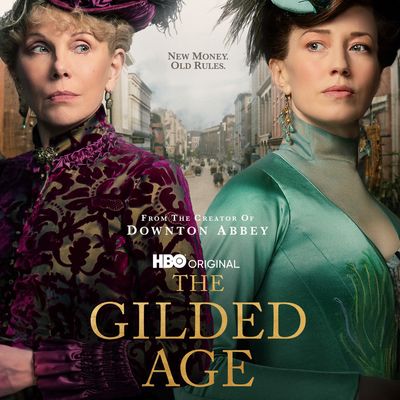
[45:06] Brian Stokes Mitchell: I want to get to the concerts you have coming up, but before that, give us just a little preview of the next season of The Gilded Age. Oh, yes. I just finished shooting three episodes of The Gilded Age just last month, and it's for season three. I'm the husband of Kalisha Rashad, and Jordan Donica plays my son. Denae Benton, of course, who's already on the show, is a regular, is also involved in the scenes. I can't say too much, because they've sworn it's mostly to secrecy, but I have to say it was one of the best experiences I've ever had shooting. The cast, not only are they terrific, they're all Broadway people. They were all my friends. I remember doing the Zoom readings that we do often before a show like this.
You know, where you read through the scripts, and it's like, oh, I know like 90% of the people here. There's Doug Sills, and there's Kelly O'Hara, and there's, you know, all of the people, because we were reading a number of the different episodes at the time. It's Julian Fellows, obviously, who's created the series, and he loves theater people as well. It's interesting, because I've been doing television since I was 19 or 20 years old, and I have found kind of a difference between the way television and film actors approach doing television and film, and the way theater actors approach doing television and film. It's kind of a different way we approach it, like we're doing theater. People show up, they know their lines, they have an idea of what they're going to do, and also there's a listening thing that happens that sometimes doesn't happen with every television and film actor.
I remember early in my career when I was doing a show called Trapper John M.D., the editor said to me, you're from the theater, aren't you? I said, yeah, how do you know? And he said, well, because you don't turn off when you're not saying a line. That's what theater people, you know, you're always being looked at. It was just the most amazing experience. We had this very, very long scene. It was like more than four pages, which is very, very long for a television or film scene. After I shot it, I thought, I don't think in my entire career I've ever shot a scene that long, and it was only a three-person scene, and it was just wonderful. It was with Felicia and Jordan. What a joy. It was a pleasure.
They shoot the show in another city near Albany because that's an area where a lot of the buildings were from that era, the late 1800s, which was the Gilded Age. So we all got to be there and hang out and talk and just talk about the theater, and it was amazing. But I'm really, really happy with the show, and it's a beautiful show. If people haven't seen it, beautiful score, wonderful performances. It's just terrific, and I'm really, really glad that they asked me to be a part of it. Did you get to play any scenes with Audra? Yes, I did see Audra, who's also, you know, one of the characters on the show as well, and we got to work together and see each other and just catch up as well on family, on friends, on the theater, on everything.
And she's just amazing. She's one of my favorite people, favorite actresses, favorite artists, and it's just always a joy to be around her as well. And Felicia too. Felicia and I did Jelly's Last Jam together. It's where I first met her. So, you know, it's like putting on a comfortable pair of, you know, pants or old shirt, you know, just being around people like that. Even if you haven't seen them in a year or two, it's like no time has passed. Absolutely. Where does it film? Is it filmed in Troy? They film all over. Yeah, Troy, Schenectady. I think they filmed some in Albany as well, but yeah, which I'd never been there. So it was great because I had a day off or so, and so I got to look around Albany, which was interesting because it was one of the places that Lincoln went through.
I mean, there's all these things that are tying everything together, what we're talking about. As a matter of fact, I was just reading recently, Lincoln was there when John Wilkes Booth was also there at the same time. You know, he wasn't searching for Lincoln at that time, but he happened to be there. And, you know, there's this crazy thing. They're passing each other several times before the fateful event. Yes, exactly. Exactly. Yeah. I used to live in Troy when I ran the Cohoes Music Hall back in the day. So I was historic buildings. So it's really amazing that so much is preserved there of that architecture because it was so poor for so long that the urban renewal passed it over. All those buildings got preserved.
Yeah. And now the neighborhoods there, you know, people have obviously realized what they have there. They've fixed up these houses. The neighborhood we shot in, which is absolutely beautiful. It's interesting that you say that because I never heard of Troy before this. And then my acting coach, who's also now a great, great friend who lives in Los Angeles, he's from Troy. And I literally went by the house and he was raised there and took film for him and sent it back to him. And now you, David, what are the chances? You'll meet somebody else.
[49:21] Brian Stokes Mitchell: You have several concerts coming up, several events. I want to make sure that people have a chance to come and see you. I'll tell you a few things that are coming up. I mean, the best thing to do, actually, I upgraded my calendar on BrianStokes.com, which is my website. Most of these things I think are on there. I'll be back at the Library of Congress. I've done a few concerts there in the past. I'm doing a Henry Mancini concert. It's its 100th anniversary, actually, with Monica Mancini, his daughter. We've performed a number of times. So I'll be singing three of the Mancini great songs. Moon River, of course, everybody knows that's one of the ones that I'll be singing. He's just written such beautiful melodies.
I have a concert I'm doing on the 22nd of October for Aaron Lazara, a great friend of mine who I performed with, who is now dealing with the challenges of having ALS. And so we're doing a concert for Project ALS at City Winery. And a lot of wonderful singers are joining me for this concert to raise money for Project ALS as well. One of the things I'm most excited about coming up is our annual gala for Black Theatre United, which is going to be on September 30th at the Ziegfeld here in New York. Last year, it seemed to be the hit of the gala season. It really was, I think, the best gala that I have ever been a part of or been to as well. It's a big party this year. We are honoring three wonderful women.
We are honoring Linda Twine, who was, see how everything kind of fits together. She was the musical director when I did Jelly's Last Jam, which I did with Phylicia Rashad, and a number of other shows she's been the musical director and conductor for. She is getting our 2024 Accountability Award. The Chief Diversity Officer of Meta, Maxine Williams, is getting our Advocacy Award. And 16-time Grammy Award winning artist Alicia Keys will be there to accept the 2024 Aspire Award as well. So it's going to be a big party. The founding members will be there. I'll be part of the people that you'll see on stage as well with some of the other folks like Norm Lewis and Vanessa Williams, my wife Allison Tucker Mitchell, Michael McElroy, and Natasha Williams.
And I mean, it's just really incredible performers and advocates I'm very excited about as well. That sounds like something not to be missed for everybody in New York and can get there to see it. Where can they find tickets? Everybody can find tickets for that and more information at blacktheaterunited.com. That's theater spelled the British way, T-H-E-A-T-R-E dot com. And just go on your computer and that'll take you right to our website. You can sign up there and join us. It'll be a lot of fun.
[51:37] Brian Stokes Mitchell: Brian Stokes Mitchell, it has been such a pleasure to have you today as a guest on Broadway Nation to talk about everything that you have coming up, and especially Three Summers of Lincoln, which I know that there's a world of people out there who can't wait to have you back on Broadway again, in spite of the fact that you may have some reluctance to do that, to take that on. No. Thank you, dear. I do not. On this one, I don't. You know, the eight shows a week part, it's still I think about, but no, the last time I was this excited about a show was Ragtime. I have a little thing that goes off in me and it went off during Ragtime. And this is the first time it's gone off again. That's why I'm so excited about it.
I think it has the potential to be really extraordinary. It sounds extraordinary. It's an incredible team of people put together. And with you as Lincoln, it just seems like a must-see event. Yeah. Thank you very much. Thank you for covering the theater like you do and loving the theater like you do. And to all of your listeners and audience members, I thank them for the same. It's all of us together to keep the world going and collaboratively just making art happen and the world happen and kindness happen and empathy happen and hope, hope happen. Yes. Thank you.
© Broadway Podcast Network, All Rights Reserved