

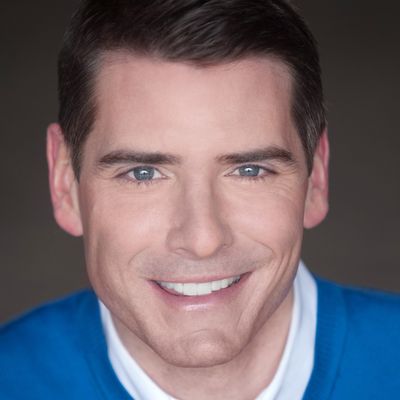
My guest is six-time Tony Award nominee Chad Beguelin, who has created book & lyrics for Broadway musicals The Prom, Disney’s Aladdin, The Wedding Singer, and Elf. Today, he joins me to discuss his captivating new novel set in the world of theater, SHOWMANCE... Read More
From the show: BROADWAY NATION
Guests
Featured Shows
About
My guest is six-time Tony Award nominee Chad Beguelin, who has created book & lyrics for Broadway musicals The Prom, Disney’s Aladdin, The Wedding Singer, and Elf. Today, he joins me to discuss his captivating new novel set in the world of theater, SHOWMANCE.
The beautifully crafted plot of Showmance opens on the disastrous opening night of a new Broadway musical — Stage Of Fools — with book, music, and lyrics by Noah Adams, the novel’s central character. The scorching reviews the show receives, coupled with a family emergency, send Noah back to his Podunk hometown of Plainview, Illinois, where he figures he can hide out for a bit and lick his wounds. There, to his horror, he discovers that his agent (and longtime boyfriend, Chase) has secretly arranged for him to stage an amateur production of his musical at the hometown community theater he grew up in. And, of course, he also runs into Luke, the hot, sexy jerk from high school, whom he may have misjudged, all of which sets the stage for a delightful and often hilarious romantic comedy.
How to become a PATRON of Broadway Nation!
This podcast is made possible in part by the generous support of our Patron Club Members, including longtime patron Neil Hoyt.
For just $7.00 a month, you will receive exclusive access to never-before-heard, unedited versions of many of the discussions that I have with my guests — in fact, I often record nearly twice as much conversation as ends up in the edited versions. You will also have access to additional in-depth discussions with my frequent co-host, Albert Evans, that have not been featured on the podcast. All patrons receive special “on-air” shout-outs and acknowledgment of your vital support of this podcast. And if you are very enthusiastic about Broadway Nation, there are additional PATRON levels that come with even more benefits.
If you would like to support the work of Broadway Nation and receive these exclusive member benefits, please just click on this link:
https://broadwaynationpodcast.supercast.tech/
Thank you in advance for your support!
Transcript
This transcript was automatically generated and might contain errors.
[0:00] David Armstrong: Welcome to Broadway Nation, the podcast that explores the remarkable history of the Broadway musical with a special focus on the immigrant, Jewish, queer, and black artists who invented it. My guest today is six-time Tony Award nominee Chad Beguelin, who has created book and lyrics for the Broadway musicals The Prom, Disney's Aladdin, The Wedding Singer, and Elf. Today, Chad joins me to discuss his captivating new novel set in the world of theater titled Showmance. The beautifully crafted plot of Showmance opens on the disastrous opening night of a new Broadway musical titled Stage of Fools, with book, music, and lyrics by Noah Adams, the novel's central character. The scorching reviews the show receives from The New York Times, coupled with a family emergency, send Noah back to his podunk hometown of Plainville, Illinois, where he figures he can hide out for a bit and lick his wounds.
To his horror, however, he discovers that his agent and longtime boyfriend Chase has secretly arranged for him to stage an amateur production of his musical at the hometown community theater he grew up in. And, of course, there he runs into Luke, the hot, sexy jerk from high school, who he may have misjudged, which sets the stage for a delightful and often hilarious romantic comedy. Broadway Nation is made possible by the generous contributions of our Patron Club members, with a special shout-out this week to longtime patron Neil Hoyt. If you would like to help support the work of this podcast, there will be information at the end of the episode about how you, too, can become a patron. Here we go! Chad Beguelin, it is so great to have you today on Broadway Nation to talk about your new novel, Showmance.
[1:50] Chad Beguelin: Oh, thank you for having me.
[1:52] David Armstrong: I have to say, I enjoyed this book thoroughly, and you have not been known for writing a novel, so anytime anybody embarks on a first novel, you don't know what to expect. But I found it incredibly accomplished, very, very engaging, and delightful in every way.
[2:08] Chad Beguelin: Thank you.
[2:09] David Armstrong: And, of course, you've had terrific success in musical theater. Aladdin is now in its tenth year on Broadway. Elf is just about to open for its third run on Broadway.
[2:19] Chad Beguelin: Yep.
[2:20] David Armstrong: And The Prom was not only seen on Broadway and on tour, but had a major presence on Netflix with major stars. Quite incredible for a Broadway show. And even The Wedding Singer has become a high school staple. I'm not sure that everyone is aware of how often The Wedding Singer is produced around the country, probably around the world. It's becoming part of the canon of musical theater.
[2:43] Chad Beguelin: Yes, it's amazing. I think one of the things about The Wedding Singer is there are so many great character parts. And, you know, for high schools, you always want a lot of good parts for the female actresses. So, you know, it sort of fits perfectly in that sort of setting.
[2:58] David Armstrong: Absolutely. So with all that success, what inspired you to branch out into writing a novel?
[3:03] Chad Beguelin: It's funny. I'm working on a new show with the team from The Prom, but there's so much waiting around when you write a musical. And, you know, the thought is that it takes seven years to get a musical staged, if you're lucky. But it's not really the writing that takes that long. It's waiting for the actors that you want or the director's schedule or the exact right theater that will make financial sense. And so I thought, well, I'm feeling creative, but I don't want to wait around and I'm already waiting around. So I thought, here's something I can do on my own and I can go as fast as I want. And I did. I wrote it really quickly. I wrote it in about six months and I was almost like possessed by it. I was just day and night, like would wake up in the middle of the night, make notes. And we were on vacation with friends and I was constantly typing thoughts into my phone and just was, you know, possessed in a good way, I would say.
[3:53] David Armstrong: And had you been thinking about this for a while or did it just sort of come to you all of a sudden?
[3:58] Chad Beguelin: Well, it's funny. I had the idea, sort of the basic idea, and I wrote a couple chapters and then I thought, oh, I don't know if I can do this. This is a very, very tall hill to climb all by myself. And, you know, when you write five jokes in a musical, you've got your first scene. But if you write five jokes in a book, you're not even off the first page. So I sort of said, no, I don't know if I can do that. And then I started thinking about it again. And all of a sudden I could sort of see the whole thing in my mind. And I got really excited about that because before when I was working on it, I was kind of like, I don't know where this goes. And then suddenly something clicked and it just came pouring out of me. I was almost afraid I would lose the wave of creativity. I think that's why I wrote it so fast, because I was like, oh, I don't want to lose this momentum.
[4:40] David Armstrong: And did you have any literary models? Were there books that you admired or books that you had in mind when you were conceiving this?
[4:47] Chad Beguelin: Well, I'd been reading a lot of sort of queer rom-coms and, you know, the famous one being Red, White and Royal Blue. But I also like Alexis Hall, who's a British writer, and he does many genres, but I especially like his rom-coms. And big fan of Stephen Rowley and Anderson Greer. And so my mind was in that world.
[5:07] David Armstrong: So you were already on that wavelength to a great extent.
[5:10] Chad Beguelin: Yeah, I was realizing something happened when Heartstopper came out. I did not know about the graphic novel, but I learned about it through the show. And I started to get really annoyed that when I was younger, that wasn't around. I kind of felt like when I was growing up that any sort of gay story always was sad or shameful. And I thought, well, if I want more of this, maybe I should contribute. I can see if I can write one. I come from a small town that's very much like Plainview in the book, a small town called Centralia, Illinois. And we have a very active community theater that I grew up in. And I sort of wanted to pay homage to them as well, because I love all the people there. And I think it's amazing what they do there to keep the arts alive in the middle of, you know, a very rural area.
So I like the idea of that setting and those characters. And I like the idea of sort of, you know, a guy that goes off and comes to New York and becomes a complete snob, comes back and is judgy and sphinx their budget picks. And then they all start having these brilliant ideas and take him down a peg, which he probably needs to be taken down a peg. So all of that sort of came to me at once. And then that's when I just went completely insane writing like mad.
[6:28] David Armstrong: With the old phrase, you know, writers are often told to write what you know. And you undoubtedly did that here because you not only were able to draw on your extensive firsthand knowledge of the world of Broadway theater, you also, as you just said, were able to draw a great deal from your early life. So how closely would you say your central character, Noah, is based on yourself? And what elements of the story and other characters are drawn from your actual life?
[6:55] Chad Beguelin: Well, Noah's a lot younger than me, for one. So, a bastard. And hopefully I'm not as big of a tool as he is. But, you know, I had to have him sort of start somewhere so he could grow. I would never yell at a room full of community theater. And the mother character, my mom's name is actually Nancy Kay. And it's based on her. She's hilariously bad at cooking, but will have these pearls of wisdom every once in a while that come out of nowhere. I sent her the draft before I sent it to the agents. And I said, you know, if you want me to change the name, I'm happy to. And she was like, oh, no, I love it. I love her. And so we kept the name. And then a lot of the characters in the community theater are based on an amalgam of people that I met through my years working at, it's called the Cultural Society, the Centralia Cultural Society. And, you know, the father figure was sort of a mix between my dad and my stepdad. So I was pulling from a lot of things that I knew.
[7:47] David Armstrong: Did you have any nervousness or hesitation about your family or your friends seeing themselves in this novel?
[7:52] Chad Beguelin: No, because, you know, they're all such hams that make a lot of twists. I knew they would. And I put some people's names in there as well. I have a friend, a gay couple, and one's name is Eddie and one's name is Gregory. And so I made the bully Eddie Gregory. I said, you know, he's sort of this rough, white, trash bully. And they're like, great. So, you know, I ran the game to be in the book.
[8:14] David Armstrong: No such thing as bad publicity.
[8:16] Chad Beguelin: Exactly.
[8:17] David Armstrong: Have you heard from any people that you were not terribly close to, but have discovered themselves in your writing?
[8:24] Chad Beguelin: Well, actually, they asked me to come back and do a book signing at the community theater, which I did last week, which was amazing because it felt really full circle. And yeah, it was very funny talking to people who said, now, am I this character? And I'm like, yeah, a little bit, you know, so it was kind of fun to see their reaction.
[8:40] David Armstrong: So what was that like to be there in that space that you have spent all this time thinking about and writing about and fictionalizing?
[8:48] Chad Beguelin: It was great. I mean, they asked me to do a book signing and I said, yeah, but I'm going to donate the books and then we'll sell them and you'll keep the money. And we sold out, which was great and raised some money for the theater there and always sort of felt like home. When I was a kid, I say in the afterward, you know, I was there so often they finally just gave me a key to the building because I would just go on a Saturday and organize the costumes or just sweep up in the proper, I would just love being there. And it was very sweet because I was leaving, they came up to me and they gave me a key to the building again. So it was very sweet. But yeah, it felt like a full circle moment. And you know, it was very touching and very real to me because so many queer and gay kids find themselves in theater, whether in high school or community theater.
It's a place to, you know, it sounds like a cliché, but it's absolutely true. You find home, which relates to another theme in your book, which is the legacy of bullying in high school and probably grade school that Noah received and how that continues to figure in, in his adult life and in the plot of your novel. What I find interesting about it, and again, which seemed very real, was it's sort of like a quiet trauma and under the surface thing. It's not a major impediment on his life, but even people who have achieved a great deal of success, frankly, by capitalizing on what they were made fun of for being originally, which you think would be sort of the ultimate triumph, are still affected by that bullying and that feeling of rejection, which still lingers.
[10:22] Chad Beguelin: Yeah. Well, it's funny when I was starting to write the novel, I was thinking about sort of my grade school and high school experience. I was bullied relentlessly and I was a very scrawny kid. So it made it sort of scary to walk the halls. There was this one guy that from sixth grade until the day I graduated high school, just every homophobic slur you could think of, he would threaten to beat me up in the parking lot. It was just a daily basis. And then years later, when Facebook became a thing, he sent me a friend request. And I thought, is this guy insane? And then I started thinking, did I misremember it? Am I like complete? So I, you know, called some people that I'd gone to school with.
They're like, oh no, no, he's a total asshole. But it made me start thinking about the sort of Luke Noah relationship and like, what if one of them got it wrong or didn't remember exactly correctly? And I think also the bullying is why Noah can come off as harsh. You know, people handle it different ways. I remember after college being in therapy and I would get very defensive and I was very quick to anger and sort of realizing that that was how I sort of coped.
[11:24] Chad Beguelin: And the therapist said, which was profound to me, she said, you can put your dukes down now. They're not here anymore. They're not coming to get you. It's done, you know. So I wanted to sort of have that as part of Noah's background and makeup. And I wanted everybody to have, you know, Luke has his own issues from the past. And I just wanted to sort of have that as an undercurrent that both of these guys have some trauma, but they're able to sort of come together and overcome it slightly.
[11:56] David Armstrong: One of the challenges of writing a genre like this romantic fiction is we instinctively know where this story is going. And we should, in a way. I mean, I don't think I'm giving anything away to say that when Noah meets Luke or re-encounters Luke, we have a sense, oh, I think I know where this is going. But the challenge as a writer, which is really hard to do, and you've done extremely well, is to keep us doubting whether that outcome is going to happen. And you also, I think I have to give you kudos for keeping Chase not just a bad guy. We have little hints right from the beginning, like, I don't know about this guy. Is this really who he's going to be? But you've done quite well to also endear us to him and make it not such an easy choice for the reader.
And ultimately, I mean, Noah has no choice in the end. Talk a little bit about that from a challenge point of view. You have to fulfill the requirements of this kind of story. What was your thinking about that?
[12:53] Chad Beguelin: Yeah, it's funny, I'm blanking on her name now, but a very famous romantic comedy writer said, lean into the tropes. The audience wants the tropes. That's what they're here for. But you just have to do it in a fresh way. So that's what I tried to do. I'd written the first draft, and so it's my theatrical agent who then sent it to the literary agents. And they helped me go through a couple of times, and they gave me notes to sort of whip it into shape before we took it to the market. And one of the things they said was, Noah seems so in love with Chase. What is he? I mean, he's handsome. He's got a good body. But what is the deal? And so I started thinking about it. And I started realizing, okay, so I've got to give him some good qualities.
And I started thinking about my own relationship with my husband, Tom. And Tom is very much like Chase in that he figures out the tip when we go out to dinner, and he pays the credit card bills, and he plans the vacations. And I'm over in a unitard doing modern dance in the corner because I can't do real life. And we had friends over at our, we have a place in Miami, and Tom hadn't gotten there yet. And it was our first time there. And they said, wow, which way are we facing? Because we're on a balcony. I was like, oh, that's a Tom question. And they were like, well, how many units are we building? Oh, that's a Tom question. So I started realizing, well, that would be major for someone like Noah, for someone that's creative, and his brain doesn't think that way, to have somebody that did all of that.
And it would seem out of love and out of caring. But as the character says later on, it's also really kind of controlling in a way. But that was sort of the trick there. And it was brought up by the agents before it even went out to publishers. And I was like, okay, so that's their relationship. And when things fall apart, he has no idea how to run his life, and he's petrified. The thing about Luke that I wanted was I wanted this guy that looks great on paper. And everybody's like, oh, he's always got a smile for everybody in town, and so helpful, and so wonderful. But he has this terrible thing that happened in his childhood, and has all these abandonment issues, which becomes a plot point.
And so it was just sort of trying to figure out how to make every character have some sort of depth. And the other thing I wanted to be sure to do is make sure that every character had some sort of reduction. It's one of those things where my stepfather was the high school basketball coach and athletic director. And I was dressed as Mary Poppins. So in my early 30s, he called me out of the blue, and he said, I just want to apologize to you, because I didn't treat you so well when you were a kid, and you acted more like an adult than I did, and I'm sorry. And it was such a huge moment for me, because I've always felt like I have people who really change. And for a guy like that to apologize and say he was wrong was major, because that was not the guy I knew. And so I really wanted to have that happen throughout the book to all the characters, so that it is sort of a redemption story. And the musical, too, gets some redemption.
[15:45] David Armstrong: Well, and talk a little bit about that musical, because it's unlike anything you've actually written. So it's a place that really diverts from reality. Why is it a musical based on King Lear? How did that come about?
[15:57] Chad Beguelin: Well, you know, one of the issues that Noah has in the book is that his father can't say the words I love you. And so I thought that's a great theme, because, you know, in King Lear, the two daughters falsely adore their father, and the one that really loves him can't say. So it was a theme that I thought would strike Noah. And I just thought, well, it's got to be really bad. So I thought it should be some boneheaded choices, like setting it in the future on a spaceship, and with cyborgs. And, you know, so it was the theme, and then making it just ridiculously, terribly bad, and so awful that it would just close immediately. But have, you know, it too had to be redeemable. So yeah, so once they took all of this craziness away, and all of a sudden, it becomes sort of real.
And, you know, it sort of affects the people of the town, because it's reflecting people that are just like them. You know, he goes from a spaceship to a farm. And, yeah, so sort of just trying to figure out how they would correct him, and which ones they would correct him on.
[16:58] David Armstrong: When he has to be willing and open enough to then take that in and make the changes to absorb all that.
[17:04] Chad Beguelin: Yes, and he does it kicking and screaming at first. He gives this big speech at the beginning that the right idea wins. And that's something that like on every musical, we've always agreed, like, look, I don't care who comes up with it. If it's the best idea, it's the best idea. So those words come back to haunt him, of course.
[17:19] David Armstrong: Exactly. Are there favorite characters that you especially enjoyed writing?
[17:25] Chad Beguelin: I really like one of the twins, Jackie McNew. I love her character, because she just says what she means, and just isn't afraid, and just, you know, everybody else is sort of in awe of Noah, or trying to be very gentle with, you know, what's wrong with the show. And she just does not care, she just steamrolls her way through everything. So I definitely like her a lot. And I really like the friendship between, well, both friendships. I like Chiara and Noah's friendship, and I like Melissa and Noah's friendship, and they're very different. You know, it was great to write, especially his friend Melissa, who he hasn't seen in three years, and see them just rediscovering their friendship, and the, you know, the way they talk and counsel each other when things go wrong. And then the other is sort of his Broadway friendship. You have like the hometown friendship and the Broadway friendship.
[18:13] David Armstrong: Right, exactly.
[18:14] Chad Beguelin: Which it's fun to see the parallel aspects of those. They're similar in a way, but of course, they're very different. It was fun to sort of take her out of her New York bubble as well.
[18:22] David Armstrong: And how closely was Chiara based on someone in real life?
[18:26] Chad Beguelin: Chiara is the amalgam of, like, all of my female friends. You know, there's a line where he's so enamored with her, and he's watching Wuthering Heights in film history at NYU, and he captures her and says, I am Heathcliff, and he says it to her, and she's like, don't ever say that again.
[18:41] ♪ Musical number ♪
[19:27] Chad Beguelin: And were there any scenes that you're particularly proud of or that are your favorite parts of the novel?
[19:31] Chad Beguelin: I really like the balloon ride scene. We have a balloon fest in Centralia every year, so it's, of course, clearly stolen from that. When I first started working with an editor, she was like, most people don't know what it's like to be up in a balloon. And I would do it every summer, so I was like, oh, okay. So I had to go back and rewrite all the descriptions and rewrite how fast it goes and what the smell is. So that was also a fun layer to put in. But it was just the way that Noah has this realization that Luke is this really amazing person, and he's had it wrong his whole life. And then what does that mean? Another spoiler alert. But then they're going back home in the car, and Luke acts like they came up with this idea for this ride together, which is the sweetest thing that anybody's ever done for Noah, especially in front of his dad, to impress his dad. That's one of my favorite chapters.
[20:22] David Armstrong: We seem to be in this moment of gay romance stories, as you mentioned at the beginning. There's Heartstopper on television. Is there any chance we're going to see showmance adapted for film or television?
[20:31] Chad Beguelin: I mean, I would love that. We haven't gotten to the point where we send it out to studios yet, but I would love that.
[20:37] David Armstrong: Or the stage, you never know.
[20:39] Chad Beguelin: Or as a musical, is my next question.
[20:41] David Armstrong: Yes, I would love that too.
[20:42] Chad Beguelin: And did you have that in mind at all when you were writing it? Was there any thought of, well, maybe I should just not make this a novel, but turn it into a musical? Or were you just so clear once that idea hit you, you went down that path full steam?
[21:00] Chad Beguelin: I mean, one of the other reasons I wanted to write it was because I realized that, and I love directors and actors and designers, but there was nobody to put their spit on it. So I could talk directly to the audience and I can also put them inside of Noah's head. And while he's confused and falling in love and getting his heart broken and realizing that he's wrong about every single thing and eating humble pie, I was excited to try that because you don't do that with a musical or a play. And it's funny, there are some things that I just felt like this should be a book first and then we'll see. I had another idea for a book and we were in the middle of the pandemic and Bob Martin, Casey Nicholaw, and Matthew Sklar and I were trying to come up with the new show.
And I said, well, I have this idea. I thought it was a book. I'm not sure it's a book anymore. And I sort of pitched it to them and they were like, yes, that's it. So that's the next show that we're working on. So that was sort of the exact opposite. It was like, nah, that doesn't feel like a book. It feels like a musical. But yeah, this one felt like I wanted everybody to be in Noah's thoughts and in his dilemma.
[22:04] David Armstrong: And can you give us any hints about that new show that you're all working on?
[22:07] Chad Beguelin: Yes. It's called Horrible People and it's about these two broke bakers in Queens. They have a sailing bakery and they're at the end of their rope. And this very rich woman from the Hamptons comes in and she's about to get a facelift and lipo and she wants a little sweet treat beforehand. It's just awful. And she accidentally falls down their stairs in the cellar and dies and they decide, let's steal her identity. She's terrible. She deserves it anyway. And the woman, the female baker, we did a table read, Sutton Foster did it. It was amazing. Sort of looks like her, who was Beth Leavel in the reading, like a younger version. So they're like, she said, nobody's home at her mansion in the Hamptons. We'll take her car. We'll go. We'll take anything of value. We'll hock it. We'll go off to Rome or, you know, we'll just be.
[22:49] Chad Beguelin: And when they get there, one by one, the family starts coming back. So, they quickly put bandages on, and they're like, oh, yes, she's still healing from the surgery. But then at one point, she gets caught without it. And they're like, mom, you look 20 years younger. So, they're all buying it by this point. And she starts falling for the dead rich woman's husband, and he is like, you're a new person. You're like, changed. You're so kind and loving. And so, they start falling in love with each other, and she finally decides, like, maybe we can stay. Maybe we can pull this off. And at the end of Act One, we cut back to the bakery, and you see the woman that we thought was dead crawling out on her hands and knees, going, I'm going to kill him, and that's the end of Act One.
So, even crazier things happen in Act Two, but it's a big farce with slamming doors and mistaken identities and all kinds of craziness. Fantastic. You seem to be continuing the tradition of musical comedy. Do you have a philosophy about that? Is that something you intentionally have pursued as a writer? Although we've had a lot of musical comedies lately, I can't think of another writer who has made that their mission in a way that you have. You know, one of the things I was so happy about with the prom stage version was that we went to some very real places, but then whenever it started to feel like an after-school special, we undercut it with comedy. And so, I love that sort of, you know, whenever things are getting a little too deep, someone makes a joke, and I think I'm drawn to those sorts of shows, and I also feel like the world is horrible right now.
So, please, can we have some joy? Can we forget our problems for, you know, two hours and 10 minutes or whatever it is? I don't know if I ever thought of it as a philosophy, or I just think it's what I prefer and I'm drawn to.
[24:30] Chad Beguelin: And what were the shows from the past that you most admire? What would you say have been your inspirations? Well, for me, one of the biggest ones was I came to New York with my dad when I think it was like 14 or 15, and we saw Little Shop at the Orpheum Theater. And it was the first time I really listened to lyrics, and I was just completely blown away, and immediately a huge fan of Howard Ashman's work. And it's also, I think, a perfectly written show. It's just completely so perfect, at least to me, and in my mind, and you know, at the end, where she literally goes to someplace that's green, or when she rhymes Audrey with tawdry, who am I? So, that's definitely one of my, that was the first show that I really thought, wow, that must be really hard and fascinating to write lyrics like that. Clever lyrics that also rhyme in a surprising way and reveal something completely new about the character. That was the gateway for me. That was the gateway drug.
[25:29] Chad Beguelin: Well, and what a great inspiration, because it's perfectly crafted. I mean, it is geniusly, I often hold that up when I'm teaching as an example of that and Sweeney Todd as being two perfectly crafted musicals of equal achievement in a way, even though one is completely, you know, a ridiculous musical comedy and the other is Sweeney Todd. They're also both Faustian bargains. Totally. I mean, they're both thrillers. They're both having to do this incredibly challenging genre on top of being a musical and succeeding brilliantly at it. And, you know, those brilliant moments of comedy in the middle of a musical about a guy that kills people and a lady puts them in ice, that makes it to me even just more brilliant because we could have just sung, there's no place like London and Joanna and stayed in the sort of beautiful, sad world, but it just has those moments of just great comedy that just shake it up so wonderfully. And then Little Shop has a couple of moments of actual scares of some horror aspects. Yeah, absolutely. Which really do give you some chills.
[26:30] Chad Beguelin: So what was it like? I'm sure you've been asked this question a lot, but you just mentioned Little Shop being that inspiration to that 14-year-old boy who now I have a great sense of who that 14-year-old boy is based on Showmance in a way. So then to complete the work of Howard Ashman, to work on Aladdin, to augment the work, that has to be like an incredible full circle experience. Yeah, I had and still have a picture of Howard, just a little JPEG on my wallpaper. And one day before any of this happened, I started to go over lyrics. I thought maybe Alan could do it. I thought he's gonna think I'm crazy, but I'm such a fan that I have him here. And he's like, oh, he's with me all the time. He's with us everywhere.
And so I was like, okay, so he doesn't think I'm crazy. But then we were working on the show and then he said, we're gonna need more songs. I was like, yeah, there's just some big holes here. And I was assuming he would call up Tim Rice or Glenn Slater and he just went, you write lyrics. And I really had like an out of body experience. And I was just like, yeah. And he's like, well, you wanna write songs? And I was like, that would be a dream from Drew. And it was also so fun for me to analyze Howard's lyrics and Tim's lyrics and say, how can I fit these two songs in that jargon? So, because Howard wrote, I'm in the mood to help you, dude. I could ride, OMG, the guys are BFFs. It was taking from, you know, looking at the kind of languages the two of them were using and when and where and for which characters.
And so, yeah, it was fascinating. I am super proud of Aladdin and I'm super proud of the book, but I'm just really, really proud of the songs, especially because some of them were written under the most stressful pressure of my entire life. Like, you know, we got killed in Toronto. And one of the major things we had to do was rewrite Jasmine's first song because we had a trunk song in there called Call Me a Princess, which just wasn't working. And you hated her character. And so we had to, you know, in a week write a new song. The pressure of that was, you know, we went to the Allen's Hotel room. He put down the melody. I took it to my hotel room and just was like, you have five minutes to freak out and then that's it.
I just sat there going, OMG, this is a lot, this is a lot, this is a lot. And I was like, all right, that's it. We're not going back there. You got out of your system, now get to work. And I remember when we taught Courtney, who was playing Jasmine, the song. Brian Gonzalez, who was playing Babcat, happened to be in a theater and he walked down to me and he said, thank you for what you just did for our show. And I was so touched. First of all, you know, most actors don't care. It's not them. But he had this sort of insight that this is the first major shift that is going to help us get the boat back on track. Or, you know, I'm mixing my metaphors, the train back on tonight. So yeah, it was an honor.
And my favorite part of that journey was getting to write those songs with Allen and getting to see my name up there with my hero, Howard Ashman, and another hero of mine, because I love Davida, Tim Rice. That was surreal when we got to New York and that changed on the marquee. And I was just like, this is amazing.
[29:34] Chad Beguelin: Elf must be in rehearsal, I'm assuming? Yes. And when do performances begin? I believe November 17th is our first performance, our first preview. And it's the production from London, from the West End. It's played there twice. And I sat through their last studio run through. And, you know, I've been sitting through this show since 2010. I can recite the jokes in my sleep. I've heard these songs. I honestly walked in and I was like, okay, I got to do this again. It's fine. And I was hanging on every word. Gray Henson is a revelation. He's amazing. And every single character, I'm sorry, every single actor brings themselves to the character in such a new and fresh way. It felt like a totally new Elf the musical.
So I'm really excited for people to see it because it's just a very special cast that, you know, just when you think they're going to play it one way, they play it the opposite way. And it just is funny and delightful and just a great time. I guess it's one of the double-edged swords of writing a holiday musical is that it gets to get done year after year after year, but then you have to work on it year after year after year. Yeah. I mean, the good thing about it is that Bob is freshening up jokes and references and I'm freshening up lyrics that aren't as funny as they used to be. And so you do very rarely get a shot to do it over and MTR, which licenses it, is very happy because they get to update all their scripts and scores and give the people that are doing it out across the world the new Broadway version.
[31:02] Chad Beguelin: Before I sign us off, anything about the novel that you wish I'd ask you or that you want to talk about? The funniest thing that happened, I was out to dinner with my husband, Tom, and all of a sudden I burst into tears and there might've been cocktails involved. And he's like, what's wrong? And I was like, I'm going to have to break his heart. And he's like, who's heart? And I was like, Noah's. And he's like, oh, you mean that made up person that lives in your brain? And I was like, yeah, but they feel so real. And I sort of felt sad when it was over because when you do a musical or a play, it becomes Beth Leavel's character or it becomes, you know, Greg Henson's character and you have this divide and then they put their spin on it and it's no longer.
But yeah, it was sort of one of the surprising things to me was how real they became. And then when it was over sort of going, oh, I miss those guys. I mean, you know, it's just a weird, weird sensation. But, you know, whenever I sort of miss them, I'll go back and read a few pages and then I'll be like, oh yeah, okay, yeah. They're still there. And you can always write a sequel. Exactly, yes. I have to read a lot and buy it so I can write a sequel. Well, that's good inspiration. And I think people who read it will want a sequel. It feels like it could be a series of some kind. Yes, there are certainly more adventures for Noah and his ego. Absolutely. Chad Beguelin, it has been delightful to talk to you about your new novel, Showmance. Oh, thank you so much for having me. This has been great fun. My pleasure.
[33:05] ♪ Musical number: "Buddy the Elf" — performed by Chad Beguelin ♪
[34:06] David Armstrong: Now here's the information about how you too can become a patron of Broadway Nation. For just $7 a month, you'll receive exclusive access to never before heard, unedited versions of many of the interviews you hear on Broadway Nation. And all patrons will receive special shout outs and acknowledgements of your vital support. To join, simply go to broadwaynationpodcast.supercast.tech. That's broadwaynationpodcast.supercast.tech. Or simply click the link in the show notes to this episode. Broadway Nation is written and produced by me, David Armstrong. Special thanks to Pals Mox for his help with editing this episode, and to the entire team at the Broadway Podcast Network.
© Broadway Podcast Network, All Rights Reserved