

My guest this week is the noted journalist and theater critic Laurie Winer, the author of a beautifully written and expertly researched book, Oscar Hammerstein II and the Invention of The Musical... Read More
From the show: BROADWAY NATION
Featured Shows
About
My guest this week is the noted journalist and theater critic Laurie Winer, the author of a beautifully written and expertly researched book, Oscar Hammerstein II and the Invention of The Musical.
Diving deep into Hammerstein’s life and work, Winer, offers new insights into the groundbreaking achievements of the creator of Show Boat, Oklahoma, Carousel, South Pacific, and The Sound of Music, to name only a few of the musicals that made Hammerstein one of the most commercially successful and culturally significant artists of all time. In Winer’s view, Hammerstein can be credited more than anyone else with inventing the Broadway musical.
Laurie Winer has been a theater critic for the Wall Street Journal, the New York Times, and the Los Angeles Times, and was a founding editor of the Los Angeles Review of Books.
How to become a PATRON of Broadway Nation!
This podcast is made possible in part by the generous support of our Patron Club Members, including longtime patron Chris Moad.
For just $7.00 a month, you will receive exclusive access to never-before-heard, unedited versions of many of the discussions that I have with my guests — in fact, I often record nearly twice as much conversation as ends up in the edited versions. You will also have access to additional in-depth discussions with my frequent co-host, Albert Evans, that have not been featured on the podcast. All patrons receive special “on-air” shout-outs and acknowledgment of your vital support of this podcast. And if you are very enthusiastic about Broadway Nation, there are additional PATRON levels that come with even more benefits.
If you would like to support the work of Broadway Nation and receive these exclusive member benefits, please just click on this link:
https://broadwaynationpodcast.supercast.tech/
Thank you in advance for your support!
Transcript
This transcript was automatically generated and might contain errors.
[0:07] David Armstrong: Welcome to Broadway Nation, the podcast that explores the remarkable history of the Broadway musical with a particular focus on the immigrant, Jewish queer, and black artists who invented it.
[0:19] David Armstrong: I'm David Armstrong, and today my guest is the noted journalist and theater critic Laurie Winer, who is the author of a beautifully written and expertly researched book titled Oscar Hammerstein II and the Invention of the Musical.
[0:33] David Armstrong: Diving deep into Hammerstein's life and work, Laurie Winer offers new insights into the groundbreaking achievements of the creator of Show Boat, Oklahoma, Carousel, South Pacific, and The Sound of Music, to name only a few of the musicals that made Hammerstein one of the most commercially successful and culturally significant artists of all time.
[0:54] David Armstrong: In Winer's view, Hammerstein can be credited more than anyone else with inventing the Broadway musical.
[1:01] David Armstrong: Laurie Winer has been a theater critic for The Wall Street Journal, The New York Times, and the Los Angeles Times, and was a founding editor of the Los Angeles Review of Books.
[1:11] David Armstrong: Before we begin, I need to give a big shout out to the generous patrons of Broadway Nation, especially longtime patron Chris Moad.
[1:20] David Armstrong: If you would like to help support the work of this podcast, please listen for the information at the end of the episode about how you too can become a patron.
[1:28] David Armstrong: Here we go.
[1:30] David Armstrong: Laurie Winer, it is a great pleasure to have you today here on Broadway Nation to talk about your book, Oscar Hammerstein II and the Invention of the Musical, which I understand just came out in paperback.
[1:41] Laurie Winer: It did indeed.
[1:43] Laurie Winer: And it's Oscar Hammerstein II, which you kind of have to say because Oscar Hammerstein I is quite notable in the theater world.
[1:51] David Armstrong: Totally.
[1:52] David Armstrong: Well, one of the things that your book goes into, we learn quite a bit about both Oscar Hammersteins in your book, which I think is really fascinating because Oscar Hammerstein I, although notable as he was, often gets left out of the conversation.
[2:05] David Armstrong: And he has a tremendous influence on all the Hammerstein.
[2:10] Laurie Winer: He does kind of indirectly because he wasn't a touchy-feely person. He wasn't a good father particularly. Oscar Hammerstein II barely knew him, really. Happened to visit the hospital when he was in the throes of his final illness, and actually was with him the day before he died and sat with him in his room. He did feel a connection, but he really did not know him.
[2:31] Laurie Winer: I do think he was influenced by his grandfather's megalomania. I think it's one of the reasons why he had a very attractive humility throughout his life because he knew about the devastation that megalomania can bestow on a family.
[2:48] David Armstrong: That's a fascinating observation. Also, one of Oscar Hammerstein's what he often thought of as one of his most important works, Carmen Jones, seems to have been heavily influenced by his grandfather as well, or trying to carry on the legacy of his grandfather.
[3:03] Laurie Winer: Absolutely think it was a bow to his grandfather. His grandfather loved that opera, but it also came about at a time when he just could not get any tread on his work. This came after a decade of living in Hollywood, and his collaborations were just not paying off in a way that was satisfying. Some of them were successful, but they weren't integral to the culture at all. And he had had that experience in the 20s, so he really did feel the loss of it.
[3:31] Laurie Winer: One of his attempts to take back the reins on his career was to write Carmen Jones because he didn't have to collaborate with anyone. So he could really have control of the project. He sensed that that was part of the problem.
[3:43] Laurie Winer: And indeed it was a hit. Although, as you know, it came out after Oklahoma, even though he wrote it before.
[3:48] David Armstrong: Right.
[3:48] Laurie Winer: And sort of became like a victory lap after Oklahoma to a great extent.
[3:53] David Armstrong: Definitely, yes. Let's go back to the beginning though, before we jump to Carmen Jones. I am very fascinated with that show because I think it's one we have very little connection to today, and yet was a giant hit in its time. And it really has gotten lost in the shuffle to a great extent, even though there have been a few productions that have resuscitated its reputation to a certain extent.
[4:15] Laurie Winer: Yeah, the John Doyle production, which I don't know, I can't remember the year, maybe 2014 around there. You know, was a huge thing, and it was proof of my theory, which is that these musicals can be reinterpreted by their directors, and you're a director, so you know this, so that they can be very relevant to contemporary audiences.
[4:36] David Armstrong: Absolutely.
[4:36] Laurie Winer: I've been listening to your podcast for the first time because I wasn't really aware of it before. I just love it. I think you do a wonderful job of being erudite without being pretentious, which is absolutely right for the subject. I really feel I learned a lot when I listen, and I'm also completely entertained and it's very enjoyable. So I really like how you get the balance right.
[4:57] David Armstrong: Well, I am very honored to hear you say that because I have to say, having read your book, which is so beautifully written. And I have to say the introduction is, I told this to my friend Albert Evans, who you might have heard me speak with on the podcast. I was often a guest, that I thought the introductions were probably one of the most beautiful introductions to a book I've ever read. Really beautifully done.
[5:21] Laurie Winer: Thank you.
[5:21] Laurie Winer: It's very, very nice, terrific finding you the check.
[5:24] David Armstrong: Thanks. You opened that introduction with a very personal story, which really hit home with me about your parents' collection of cast albums and how they affected you as a child. And I think we're probably of a very similar age. And you speak about this being typical of our generation.
[5:41] Laurie Winer: I was hesitant to begin the book that way because I almost felt like it was a cliché that so many people had this experience, and a lot of people have written about it, which is that we're listening to our parents' cast albums, and we're thrown into this incredibly vivid, entertaining, generous-hearted world that's so much better than the world that we actually exist in. We just want to live in it. And we learn so many things from listening to those albums. And so much care was taken in recording those albums too, because the original creators knew that the album would be the representation of the show of their production. So they're very intense experiences just audibly.
[6:52] David Armstrong: And just describe what your ritual as a child was.
[6:55] Laurie Winer: Okay. Well, I'd like to just precede that with one story, which is that I think the first musical I saw was the movie of Mary Poppins. So my parents took me to that. I think I was five. And it was that experience of, oh my god, this is amazing. And I told my parents that I was going to stay for the next showing. They could leave or they could stay. It was up to them, but I was not leaving the theater. One of them stayed with me and one left. That introduction to the fullness and the beauty and the pleasure of that world is just something we do all share. It's like a handshake. But in the introduction, I write about lying in bed at night, listening to the cast albums, just so still, lying so still, like you didn't want to breathe because the magic was so strong.
And then hearing the show and understanding what this particular show was about, how it was related to other cast albums that you had already listened to, and start as a child to build a knowledge of this world that is so welcoming to children because at some level it's often a very simple world, even if a lot of the meaning of the shows are complex. And another thing I say is that as I got older, I found more and more richness in these works that I loved as a child. It's one of the only things that I still love that I lost when I was a child.
[8:17] David Armstrong: You say musicals are elemental, which is why children adore them. Explain that just a little bit for us.
[8:23] Laurie Winer: Well, I think they're just inherently very democratic in nature. They're inclusive, and that includes including children. The language that the lyricists particularly use, and sometimes the book writers, tend to be very simple for very good reason that the great lyricists understood the power of the music. They allowed the music to heighten the lyrics with emotionality. So that the lyrics are often very simple and they're often very funny and they rhyme, which children love. And so I do find it's a very welcoming world for children. And it's democratic in general.
[9:01] David Armstrong: And you also note that a lot of times that's filled with references that children don't understand at all, but that's part of the fascination for kids with them.
[9:09] Laurie Winer: Yeah, you know, I just saw Guys and Dolls in London, which was one of my favorites as a kid. And when I went back and listened to it as an adult, I realized I didn't understand hardly anything they were talking about in, for instance, the song Guys and Dolls. A lot of stuff about gambling, you know, the Roxy, you know. That's how you learn is you enter a world that you don't quite understand. Someone had called it the cloud of unknowing. There's just little strands that you understand, and then you pull yourself up by those strands until you understand the world. I think that's how a lot of us read Shakespeare in high school. You don't understand the play entirely, but there are things that you latch on to that move you, and then you latch onto that, and then you climb it yourself up and you really learn the text when you're emotionally mature enough to.
[10:00] David Armstrong: So you started off in the introduction, you tell us that you started off with a very different idea for this book. It was a much broader idea. Did you actually start writing that book, or you just explored it and figured out you had to focus?
[10:12] Laurie Winer: I did start writing it, and I remember when I went to interview Stephen Sondheim, I must have still had that concept for the book. I remember him saying, "Well, those aren't 10 musicals that define America. Those are just 10 musicals that Laurie Winer likes." You know, he liked to give notes, let us say. So I must have still had that concept when I went to see him, which was in 2017. But yes, as I explain, I just started to realize that the musicals that really meant the most to me in my life and that helped me the most in my life were written by Oscar Hammerstein.
[10:47] Laurie Winer: I knew about Oscar Hammerstein. I was a theater critic, and I knew what any person who's well-read in the theater knew, but I felt like I didn't know enough. I wanted to really understand who he was, how he got that way. And so that sent me to the archives.
[11:02] David Armstrong: You did a tremendous amount of research, as you just mentioned, some of the original research. You interviewed Sondheim, you interviewed a number of people for this book. And also it seems like you must have spent weeks and years in the archives, both in New York and in Washington.
[11:16] Laurie Winer: Yes.
[11:17] Laurie Winer: Weeks and years, yes, but not constantly, you know, it would be a more spherical music. But research is so much fun for writers, I think. I just enjoyed it so much. I was sad when it was over. You know, I made some friends along the way, people I would see in the libraries or librarians, have wonderful discussions at breaks. So it was very interesting, fulfilling, fun time doing the research. I loved it.
[11:41] David Armstrong: Was there one or two particular moments of research that especially live for you as discoveries or just days where you went, wow, I found this?
[11:50] Laurie Winer: Well, yeah, it's so funny how you're just sitting in a library and you're all alone and you're doing this very quiet, private thing, and then you find something that you've been looking for, and you know, you're ecstatic, but you can't express it, you know, because you're quiet in the library.
[12:06] Laurie Winer: Yeah, that's always really fun. So one librarian who I met, I think he's the chief music specialist at the Library of Congress. His name is Mark Horowitz, and he has helped so many scholars over so many years, very generously. He's just a wonderful person.
[12:23] David Armstrong: Have you met him?
[12:24] Laurie Winer: Yes, we had him on several episodes.
[12:26] David Armstrong: Well, I haven't watched that one yet.
[12:28] Laurie Winer: We became friends. While I was in the course of writing the book, he discovered a cache of letters, love letters, that Oscar had written to his second wife, Dorothy. They had been in the Library of Congress the whole time since they got Oscar's papers in the 60s, but they had been misfiled and they were in someone's office, and he just happened to find them while I was doing my book.
[12:52] Laurie Winer: And in fact, I had finished my research by then, but I rushed to Washington to read them. And that was just a completely intoxicating experience.
[13:01] Laurie Winer: Because he did write a good letter, and he was so in love. You know, it was just very satisfying to kind of see the origin of this love that he had for his wife, Dorothy, that inspired so many great love songs, some of the greatest love songs of the 20th century. So that was super thrilling. And then the other thing that I write about in the book is reading his obituaries. I wasn't reading everything in order of how it was published or when it was written. It was very kind of haphazard. I think the archive is much better organized now, but at this point, it was just a mishmash of stuff. So you weren't reading chronologically necessary. So one day I got to the last year of his life. I read all of the last letters that he wrote to his friends and his family, the letters that he got from the very few people who knew that he was dying.
Then I read the letters to Dorothy, the condolence letters. I felt like he had died that day. I was in the library. I felt it so strongly. That night I went to meet my husband for dinner at an Indian restaurant in DC. It was packed, and I just burst out in uncontrollable, hysterical crying. Everyone was glaring at my husband like he had, you know, done something terrible. Why did he make her cry? You know, it was one of those sobbing and Sherol of which I do in the theater, and I don't do in real life. I very rarely cry in real life, but it all comes out when I'm in the theater.
[14:24] David Armstrong: That's so interesting. I wouldn't, however, describe this book as a biography, although it's very biographical. How do you describe the book?
[14:32] Laurie Winer: Yeah, I think that's exactly right. Um, I think it's an appreciation of Oscar Hammerstein, a part of biography and the cultural assessment, what his place was in the culture when he lived and what it is now. And I do include a lot of contemporary productions. It's always so interesting to me how directors make old musicals relevant. I just saw Hello Dolly in London. I want to talk to the director about it. They emphasize different things that have not been underlined before. For one thing, did you know that the protagonist of Hello Dolly is a man named Horace Vandegelder, who's very cheap and mean, and he learns to become a human being. It's also about the importance of community, which was always in Dolly, but is really underlined in this production.
They underline the values that are going to speak to people today. The audience was half people my age, gray-haired people, and half not, half young people, no one left at intermission. The audience was packed. These things are still relevant, and then the scores are so good that it's important that directors reinterpret them.
[15:36] Laurie Winer: And one of the things about Oscar is that often in today's arena, he's put on the firing line by young people because he did write about other cultures. He wrote about Thailand in The King and I. He wrote about Southeast Asia in South Pacific. He wrote about Chinese immigrants in Flower Drum Song. When young artists look at those shows now, they see what he got wrong, and he did get things wrong. And he was a little bit condescending, arguably, but he's on the firing line because he cared about other cultures. He wanted to understand other cultures, and he wanted his fellow Americans to broaden themselves to other cultures and to liberalism, what used to be called liberalism in general. So I think it's ironic that some of our most progressive artists really get rigged over the coals now because they cared. And they put themselves out there writing about these other cultures.
[16:33] David Armstrong: One of the things I admired about your book, because it ties in so much with what I believe, I guess. When we look at these great artists, first we should look at what they achieved and what they were trying to do and how far they went in achieving it, and then acknowledge the shortfall, their shortcomings, where they got it wrong, which you do in this book, I think very fairly to talk about both sides of it, but emphasizing number one, what the intention was to begin with, his worldview, and the undeniable effect that had on society for decades and decades, still having on society.
[17:08] Laurie Winer: Absolutely. But some of what was going on is now lost. One of the reasons that we moved to France was because I felt that the idea of a common good was disappearing in my own country. And it really worried and upset me. This is gonna maybe sound snobbish or whatever, but in France, you just feel there's more of a general idea about what a common good is. Everyone has very good health care. People are not as stressed. They're not as loco in their political thinking. They're not being driven insane in the same way. That's all kinds of problems here in politics as well. But the idea of a common good, which I find so beautiful, and that is something that is very prominent in Hammerstein, something he really gave voice to. I was very moved by how he was constantly urging people to be better than they were, and took that responsibility, the responsibility of his fame so seriously for such a good cause. So I was I'm very moved by that in his work.
[18:11] David Armstrong: Absolutely. I have my own book coming out next year, and the final chapters are about what I call the three principal themes of the Broadway musical. And the overwhelming one is community. Community is at the heart of it, and Hammerstein is at the heart of why that is one of the central themes of the musical. And I do worry that it's out of step with current thinking right now, that we're so much about identity as opposed to community that we have a friction there.
[18:37] Laurie Winer: There is definitely a friction there, but it's a transitional time, and transitional times are always a little awkward. So I think it'll all work itself out. We don't know point out. That sort of ties us back to what we were just talking about, which is do you say no one person has a better claim to the musical's invention than Oscar Hammerstein?
[18:57] David Armstrong: A word you say that will annoy historians.
[19:00] Laurie Winer: Well, enough for sure, but it'd be really annoyed a lot of historians because you're leaving out so many people who were so important. But do you know that the analogy about the hedgehog and the fox? Isaiah Berlin made this analogy that the writers are either hedgehogs or foxes. So if the fox wanders the world and knows everything and is interested in everything, Shakespeare is a fox. The hedgehog is like digging into that ground, getting that bone. And that's what I'm like. I'm like, I get obsessed with certain things, and I just want to go down that hole. And I wanted to do that with Oscar Hammerstein. I did make some statements that, you know, may sound like they're hyperbole, but I really do believe everything I said.
If you had to give it to one man in terms of elevating the story in the musical to the level of the music and the comedy and the dancing and everything else, Oscar would have to be at least the top three. That he was just devoted to that purpose. Other people were figuring it out as well simultaneously. But so yeah, there were scholars that were just outraged, you know.
[20:10] David Armstrong: There's no doubt about what you're saying is true. It comes back to Oscar Hammerstein, I believe, being the central figure in the, and we both like this word, the invention of the Broadway musical.
[20:19] Laurie Winer: I like that word because it's not pretentious, it's very practical. I think of the musicals being like other great American inventions like the light bulb. Comes from this same sort of place. There's some genius artistic element to it, something beyond just the ordinary. You had to tap into something to create it, almost ethereal. And yet at the same time, it's a very practical thing that ordinary people will respond to.
[20:45] Laurie Winer: Absolutely. And the other thing about the musical is that it uses everything. It's like, what do they call it? Like a head-to-tail cooking, where you use every part of the animal. It uses everything: the human voice, singing, dancing, comedy, the presence, the physical presence of the human being. I mean, it's just that's why when it works, I think it's such an overwhelming and ecstatic experience. That's why it's so expensive, too. No other art form uses everything in the way that theater does. Scenic design, I mean, it's all there, you know, everything we can do as human beings. It's total theater in a way that I think that Wagner never really achieved, or the people that talked about those kinds of ideas usually don't want to attribute that to the Broadway musical, but I think the Broadway musical is what has achieved that more fully than anything else.
[21:29] David Armstrong: Well, Wagner did not let us say have a democratic leaning.
[21:35] Laurie Winer: I think that's fair.
[22:04] David Armstrong: Words wouldn't come in an easy way. Don't go away. Laurie and I will be back with more Broadway Nation right after this quick break.
[22:31] Laurie Winer: Let my golden chances me. You also note that Hammerstein is not usually included in the list of 20th century artists who changed their genres, like Martha Graham or Ernest Hemingway or people like that. And that he's being re-looked at now by you and other people, but is not entirely in favor with two generations or maybe three generations now of people who I wouldn't say turned against him, but have been critical of the work, especially of Rogers and Hammerstein.
[23:10] Laurie Winer: One of the reasons I think he's underappreciated is because he himself had so much humility and did not blow his own horn. Also, as I say in the book, the nature of his art was very humble in that he tended to not show off with wordplay. I mean, even though he really could write a joke, I mean, he has some really funny stuff. He didn't show off. Just wasn't a show off. And he had a humility to the power of the music that Richard Rogers wrote. These were part of the things that made him a great artist, and also assured he would be discounted somewhat when the counting time came. You can't really call him an underdog, he's so famous, he was so rich. And yet, you know, somehow he still is an underdog.
[23:50] David Armstrong: Yeah, I think that's right. And even though his shows are still hugely successful and beloved around the world, partly when he died, he died at that moment when critical thought was starting to change and when Rogers and Hammerstein were no longer hip or cutting edge in any way. The final show being The Sound of Music certainly didn't help that. I know when you look at Richard Rogers' career after Oscar died, you get the sense that, you know, I don't know whether it would have been quite as miserable for Oscar as I think it was for Richard Rogers. I think near a very hard time after a lifetime, you know, since he was 15, being claimed as a genius, when he was just writing little ditties, to become kind of irrelevant and even snickered at was very hard for him.
He was not a humble man at all. Oscar may have handled it better, we don't know, obviously, but I don't think it was fun for Richard Rogers after the culture shifted away from him. And it was such a giant culture shift. I have tried to explain to my students the difference in 10 years that made it seem like things that happened just 10 years ago happened 30 years before, even for somebody who was a teenager at the time. We made this leap in the late 60s. I don't know, it's hard to put a date to it, that just made the 50s seem like they were as remote as the 20s and the 30s.
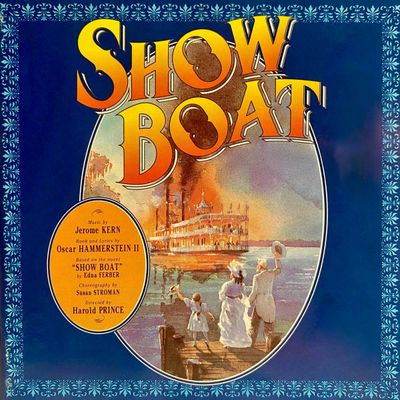
[25:09] Laurie Winer: Definitely. Yeah. It is important for young scholars, I think, to understand and also have sympathy for the times in which these things were written. Some of them do tend to assume that they would have been enlightened in that era, more enlightened than everybody was, which is not necessarily true. And so I think to have a little humility about understanding the era, for instance, with Show Boat, you know, when you go back and look at the 20s, it was unbelievably racist. You know, I mean, you just shudder when you look at pictures of people in blackface, both white and black actors. And that Show Boat was so astoundingly new in that culture to appreciate how new it was, you have to understand the culture that it was written in too. And to give credit again, I've gone back and read the novel of Show Boat, which has frighteningly racist elements in it.
[26:02] Laurie Winer: I mean, some of you just go, I can't believe this is here in this book. From this woman who I greatly admire and think, you know, obviously was a visionary writer. It is hard to rectify. It's hard to, from our perspective today, which I understand why younger people really have this challenge. But at the same time, certainly Oscar Hammerstein and Jerome Kern's goal was to create something that was an anti-racist statement. Absolutely. And it's interesting when you compare the musical to the novel, in that they made Queenie and Joe so much more, they fleshed them out. I mean, they're so much more human than they are in the novel. You know, that's Oscar. I mean, he's the one that's writing the words.
He's the one that's making the decisions about the structure of the drama. I really try to imagine that night when it opened at the Ziegfeld Theater in December 1927 when the audience came in and were expecting a musical comedy from Ziegfeld, and the first thing they see are black stevedores hauling heavy loads on the dock. The first words they hear are "N-words all work on the Mississippi." It's real. It's like we're gonna have a real conversation right now about what is going on in this country. Then the white chorus comes on and they are just all thinking about what a good time they're gonna have tonight. You see how the white world is being held up by the black labor. I don't think, even in straight theater, that was shown in 1927. I mean, maybe a little bit in Eugene O'Neill, and I'm sure some others that I don't know. But so extraordinary, so much humanity, so much vision, just incredible.
[27:41] David Armstrong: I love the way you described that because I do think the impact of that and the visceral presentation of that is so clear. We don't experience because we hardly ever see Show Boat today. And when we do, it's heavily revised, but it's impossible to know, but fascinating to think about sitting in that audience on opening night, as you just said, and being confronted with that presentation. And I love the story about the 15 seconds of silence at the intermission, which actually happened not in December, but in November when it opened in DC, its pre-Broadway run at the National in Washington. The first act ends, and there's just dead silence for 15 seconds, which is an incredibly long time in the theater. And in those 15 seconds, Ziegfeld is sure that he was right. This musical is way too serious. They hate it, but they were just stunned. They couldn't even respond. And it took them 15 seconds to collect themselves, and then there was very large applause.
[28:40] Laurie Winer: Yeah. And I've actually experienced that in the theater myself, that kind of reaction, maybe not to that level where the audience has to take that little bit of time to figure out what they think to process it. But then they realize, yes, this is what's happening. You know, this is real. We haven't seen this depicted before, but yes, this is real. It's very exciting to imagine that.
[29:01] David Armstrong: Absolutely. As we all have our time travel fantasies, that certainly is one of them. Someone asked me once, you know, if I could time travel. I said I would really be torn about either it would be torn between killing Hitler and seeing Barbra Streisand in Funny Girl. That's a hard choice. And that Funny Girl cast album, wow, you really do get the power of that performance.
[29:22] Laurie Winer: Yeah. And Barbra Streisand later, she started to edit herself heavily and to be so concerned about perfection. But on the Funny Girl cast album, she's not concerned about that. She's just concerned about giving this amazing, balls-out performance.
[29:38] David Armstrong: I totally agree. I think it's just so exciting when she's singing "I'm the Greatest Star." She really is at that stage in her life. It's just very exciting.
[29:47] Laurie Winer: So I think Hitler might have survived.
[29:49] David Armstrong: That's fabby. We've talked a little bit about Show Boat. Oscar has this amazingly long career and with several different phases to it. His dad is the king of vaudeville, and he grows up in that world. And I think he's exposed to that world more than I got from your book; he was more exposed to that world than some other books may have led us to believe that he's not quite as separated or as sheltered from the world of show business.
[30:12] Laurie Winer: Right. He says that he went to his father's theater, The Victoria, which was the vaudeville theater at that time, every Sunday. So he saw almost everything that was going on in vaudeville. All the greatest stars of the era. Right. And the uproarious comedy and everything that was happening, which was kind of exciting because so many nationalities were merging. And I mean, this is your area too, I know. It's a very exciting time.
[30:37] David Armstrong: Completely. And then at the same time, his uncle is producing theater and especially musicals and operettas. And eventually, against his father's wishes to a certain extent, he goes to work for his uncle. And that's where he first begins writing. And he writes his first play for his uncle, and it was a disaster. It's called The Light. Some critics said, you know, it should go back to the darkness from whence it came. But he just started writing another show right away. He had an amazing work ethic and was always working and working, working, working, figuring things out.
[31:09] Laurie Winer: In the 30s, I'm sorry I may be skipping ahead too far, but in the 30s when he was in Hollywood and he was constantly working on projects, but nothing that ever seemed to matter. And he had 11 years of really feeling, with a couple of exceptions, of feeling just totally out of it, out of the conversation, the cultural conversation. He somehow kept up his spirit enough and his hopes and his dreams enough so that when he did finally team up with Richard Rodgers in 1942 to write 1943's Oklahoma, he had gratitude just at his fingertips.
[31:47] David Armstrong: "Oh, What a Beautiful Morning" was the first song they wrote together.
[31:50] Laurie Winer: And it's such a beautiful, expansive song about gratitude to the world. He was able to access that because he kept all of that alive in himself during this really dark decade. And then another thing that I found in the Library of Congress that I don't think anyone else had really put together before is the letters that he was writing to his first wife, Myra Finn, who he remained kind of close with. All of his letters to her are instructing her how to be less petty, less impatient, more generous to other people, less bitter. He was instructing her how to be a better person because he himself was having this very difficult battle internally about staying optimistic, not becoming bitter, staying generous.
Because when everything feels like it's turning against you, it's sometimes very hard to be your best self. His fight to remain emotionally alive can be seen in his instructions to Myra. I think his instructions went largely unheard by Myra, but he heard them and he was ready to be there and meet the moment when it came.
[32:59] David Armstrong: I think it's fascinating with their interpretation of those letters because some people might think of them just as sort of being either rightly or wrongly instructing his ex-wife on how she should behave. But it is very interesting to think of them as being for himself, really what he needs to do, what he needs to remember. Some of them, not all of them, but some of them seem so urgent. They're in all caps. You know, some parts of the yelling, but I don't think he's yelling at her. I think he's screaming, this is so important. You will die, you will lose a part of yourself if you don't try to be more generous and better.
[33:35] Laurie Winer: So before we get to Rodgers, let's talk a little bit about Harbach. In addition to Rodgers and Kern, the other central person in Oscar Hammerstein's creative world is Otto Harbach. What do you see as being the effect that Harbach had on Hammerstein?
[33:51] David Armstrong: They have a huge age difference between them.
[33:53] Laurie Winer: 22 years, I think.
[33:54] David Armstrong: Yeah. Oscar's uncle Arthur set the two of them up to write together. And Harbach's mission was in line with Hammerstein's. And I think Hammerstein took the baton from Harbach, just went much further than Harbach was able to go. They were both very interested in making the story really make sense, make it organic, make it matter. These were things that just were being done in musicals. So Harbach very much also wanted to make the stories relevant, important, and organic and sensible. But he was fighting a losing battle because it was an earlier time. And so producers were much more willing to say no, you can't do that. We have to have Frank Tinney do his specialty number at APM. It's in his contract.
He was said no to a lot by producers. Also, he wasn't quite as talented a writer as Hammerstein. I think he was 22 years older. I think he was a little bit more of a stick in the mud and had an older sensibility. So he wasn't able to make his ideas kind of live, but because Oscar was working with him and then would operate in a later time and have more power, and he was a better writer, he was able to take what they were doing much, much farther. And I think there are always these figures who kind of get left behind who really were doing the other bit of work, but just weren't quite good enough, you know. And I think that's true of Harbach, probably. Had the ideas and the concept, but not necessarily the talent to pull it off.
[35:28] Laurie Winer: I think so. But Oscar clearly had the talent, so together as a team, they were quite effective and created some giant hit shows that did move the needle on how shows were created. We don't remember most of them today. We don't acknowledge them for that. But it is interesting that when Jerome Kern picked the lyricist and bookwriter for Show Boat, he was working with both of them as a team.
[35:51] David Armstrong: Yeah, repeatedly.
[35:53] Laurie Winer: He did not pick Harbach. He picked Hammerstein. She saw something there that was brighter as well.
[36:00] David Armstrong: I think that absolutely is very telling.
[36:40] ♪ Musical number: "Oh, What a Beautiful Morning" — performed by Laurie Winer ♪
[37:00] David Armstrong: Now here's the information about how you too can become a patron of Broadway Nation. For just seven dollars a month, you'll receive exclusive access to never-before-heard unedited versions of many of the interviews you hear on Broadway Nation. And all patrons will receive special shout-outs and acknowledgments of your vital support. To join, simply go to Broadway Nation Podcast.
[37:32] David Armstrong: Or simply click the link in the show notes to this episode. Broadway Nation is written and produced by me, David Armstrong. Special thanks to Pal'Mox for his help with editing this episode and to the entire team at the Broadway Podcast Network.
[38:21] ♪ Musical number: "Oh, What a Beautiful Day" — performed by Laurie Winer ♪
© Broadway Podcast Network, All Rights Reserved