

I recently had a chance to interview NY Post columnist Michael Riedel about his new book, Singular Sensation, and that conversation proved to be the perfect vehicle to tell the story of the Broadway Musical during the final decade of the 20th Century... Read More
From the show: BROADWAY NATION
Guests
Featured Shows
About
I recently had a chance to interview NY Post columnist Michael Riedel about his new book, Singular Sensation, and that conversation proved to be the perfect vehicle to tell the story of the Broadway Musical during the final decade of the 20th Century. Michael not only had covered the events and personalities of this period first-hand in his newspaper columns during 1990s -- for the book he also reached out and interviewed more than 100 key people -- from Andrew Llyod Webber to Patti Lupone -- so that he could really flesh out the full story of this momentous time.
During the course of our conversation we cover the sudden demise of the British Invasion with Sunset Blvd., the return of the rock musical with RENT, and the return of the musical comedy with Crazy For You and the revival of Guys & Dolls.
Transcript
This transcript was automatically generated and might contain errors.
[0:06] David Armstrong: Welcome to another episode of Broadway Nation, the podcast that tells the extraordinary story of how immigrants, Jews, queers, African Americans, and other outcasts invented the Broadway musical and how they changed America in the process.
[0:20] David Armstrong: I'm David Armstrong, and I call this episode The Triumph of Broadway, the Broadway musical in the 1990s, Part 1.
[0:48] David Armstrong: I recently had a chance to talk with New York Post columnist Michael Riedel about his new book, Singular Sensation, and that conversation proved to be the perfect vehicle to tell the story of the Broadway musical during the final decade of the 20th century. Michael had not only covered the events and personalities of this period firsthand in his newspaper columns during the 1990s, but for the book, he also reached out and interviewed more than 100 key people, from Andrew Llyod Webber to Patti Lupone, so that he could really flesh out the full story of this eventful time.
[1:18] David Armstrong: Here's the first part of our conversation. As usual, from time to time, I'll chime in with any additional information that might be needed. Enjoy. So it's my great pleasure today to have as my guest Michael Riedel. Since 1998, Michael Riedel has been the theater columnist for the New York Post, where his incredibly influential column has long been a must-read for everyone who works in the world of theater. Michael's previous book, Razzle Dazzle, The Battle for Broadway, received the Marfield Prize for Arts Writing in 2015 and became a New York Times bestseller. He's here today to talk about his newest book, Singular Sensation: The Triumph of Broadway, which, just like his first book, I found almost impossible to put down. Welcome, Michael. Thank you so much for joining me today.
[2:01] Michael Riedel: My pleasure, David. Good to be with you.
[2:02] Michael Riedel: This book is filled with amazing stories, and I'm so happy to have you here today in person to share some of them with us.
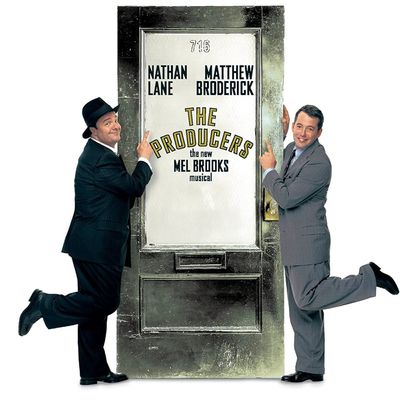
[2:08] Michael Riedel: Well, yeah, I mean, the idea for the book was to cover Broadway in the 90s, which was a kind of a key decade. A decade that I try to show in the book was when Broadway really became part of the mainstream of American popular culture again, with shows like Rent, Chicago, Angels in America, The Lion King, and of course Mel Brooks's The Producers. And the idea for the book really was a sequel to Razzle Dazzle, which covered Broadway in the 60s and 70s and into the 80s, and that was a tough time for Broadway in the 60s and 70s when the city was going bankrupt, and Times Square was sleazy and dangerous, and a lot of the theaters were empty. That book was about a handful of people, the Niederlanders and the Schuberts and Michael Bennett, David Merrick, who stuck by Broadway and really shored it up in the 70s, and then it became a pretty thriving business with Cameron Mackintosh and Andrew Llyod Webber in the 80s. But the 90s was a big shift.
[2:57] Michael Riedel: And my idea for the book was I begin with Andrew Llyod Webber's Sunset Boulevard, which is the last of those big British shows that so dominated Broadway for 15 years, and it was the most expensive show of all time. But as you know, it was riven with all kinds of backstage feuds, and Andrew fired Patti Lupone and she sued him, and he fired Faye Dunaway and she sued him, and he had some battles with Glenn Close. And I covered all those battles, and we didn't know it at the time, of course, but that was the last of those big British shows. You know, it ran for a few years, and it seemed like it was a hit, but it was so expensive, it just completely imploded. And though it won the Tony Award in ninety-five, its only competition was Smokey Joe's Cafe, which was a revue of Lieber and Stoller songs.
The musical Sunset Boulevard was the last of three big setbacks for the British invasion style mega musical. First was the failure of the musical Chess in 1988. This show had lyrics by Tim Rice and music by Benny Andersson and Björn Ulvaeus of the pop group ABBA. The show was a hit in London where it ran three years, performed in the now well-established sung-through all music operetta style. But for the Broadway production, they added a spoken dialogue book by playwright Richard Nelson, and the show ran only 68 performances. However, its failure was dwarfed by the massive success of Phantom of the Opera that same season. Then in 1990, Andrew Llyod Webber's Aspects of Love with lyrics by Don Black and Charles Hart opened with a giant advance sale and managed to run 377 performances, but still proved to be both a critical and a financial failure, losing its entire $8 million capitalization, which the New York Times described at that time as being perhaps the greatest flop in Broadway history.
And this was in spite of having what I believe is Andrew Llyod Webber's best score, proving once again that a musical story is what ultimately makes it a success, not its music and lyrics. And that brings us to Sunset Boulevard.
[5:21] Michael Riedel: During the 1950s, the film's original star, Gloria Swanson spent five years working with writers on a musical version, but eventually dropped the idea. In the early 1960s, Stephen Sondheim worked on an adaptation, but then moved on to other projects. In the 1970s, Hal Prince approached Sondheim again to work on a version as a vehicle for Angela Lansbury, but Sondheim declined, as did Kander and Ebb. Hal Prince also approached Lloyd Webber during this period, who wrote a few songs, but then the project lay dormant until 1991, when Lloyd Webber teamed up with writers Amy Powers, Don Black, and Christopher Hampton. The London production opened in 1993, starring Broadway's original Evita, Patti Lupone, as Norma Desmond.
However, after a staggering amount of drama, intrigue, and legal maneuvering, all of which Michael covers quite compellingly in his book, movie star Glenn Close opened in the show on Broadway. The show received seven Tony Awards, including Best Actress, Best Book, Best Score, and Best Musical. But as Michael mentioned, it was in a season in which only one other new musical was even nominated. In the end, the show's elaborate production was so expensive to mount and to run that in spite of playing for more than two years in New York and selling more than one million tickets, Sunset Boulevard closed at a loss of over 20 million dollars and introduced a new category of musical that Frank Rich dubbed the Flop Hit.
The next year, and this show was in development, but none of us had ever heard of the kid writing it or what the show was called, and it was Rent by Jonathan Larson. And Rent came really out of nowhere, and everything kind of shifted. You know, the British were finished and over with. And here was Rent, which was young, contemporary, and American, and that set the stage for the kind of return of the American musical and the American musical comedy. And that culminated with Mel Brooks's The Producers. And then I was thinking, well, how do I end this book? And of course, I looked out my window one day, the very same window I looked out when I saw the planes hit the World Trade Center September 11, 2001.
And I thought, you know, that's the book ends with the attack on the World Trade Center and how Broadway staged a remarkable comeback. And I called the book The Triumph of Broadway because it was a triumph. I mean, I covered that comeback and it was an extraordinary thing to see. But you know, I finished the book, the manuscript in February, then I went off skiing. I got back in March and everything shut down. So I never intended the title Triumph of Broadway to be ironic, but it certainly is now because I don't know how much I don't know when Broadway's gonna reopen again. I really don't know. And I certainly want to hear what you have to say about the current situation.
[7:56] David Armstrong: But before we get there, I was intrigued by the two subtitles for your books. The first one was subtitled The Battle for Broadway, and this one is subtitled The Triumph of Broadway. And as you just said, both books focus on significant turning points in the history of the Broadway musical. And I guess I would describe this book as being about the turning point when Americans reclaimed the Broadway musical from the British.
[8:18] Michael Riedel: Yes, absolutely. And also, you know, we had a kind of resurgence of plays with Angels in America, which, you know, kind of jumped off the theater pages and became part of the whole intellectual cultural discussion in America and, you know, the New York Review of Books and The New Yorker, and it had a really profound impact, showing again that the theater can be part of the intellectual landscape of America.
[8:40] David Armstrong: I want to ask you about some of the themes that I traced in your book. Rent really brings the rock musical back into Broadway in a way that again, being there at the time, I think we all felt like, well, the rock musical is a thing of the past.
[8:52] Michael Riedel: Totally. Even though rock had been absorbed into the Andrew Llyod Webber shows, and there were elements of rock, but he and most other writers moved further and further away from rock as it went on.
[9:03] Michael Riedel: Yeah. And I mean, the score to Phantom has some rock elements, but it is far away from Jesus Christ Superstar, which is a rock and roll score.
[9:10] David Armstrong: Absolutely. And it seems that Jonathan Larson was, I what I didn't know from reading your book, how intent he was on bringing rock music back to Broadway.
[9:19] Michael Riedel: He was so singularly focused on that.
[9:21] Michael Riedel: Yeah, he was. Well, it's interesting about Jonathan because he actually fell in love with the musical theater. His family, I interviewed his sister, Julie, and his father, Al. And the first time he ever showed musical talent was Julie had the 1970-71 cast album, or no, it was a concept album, actually, to Jesus Christ Superstar. And she played it over and over again. And one day Jonathan sat at the piano and he played the whole score by ear, and that's the first time they realized he had musical talent. So in fact, Jonathan was profoundly influenced by Andrew Llyod Webber and that rock score. But he felt that the Broadway that he loved, the rock and roll Broadway that was about young people, about young people's problems, it had moved so far away from that.
And it was true when you look at all those 80s British musicals, they're kind of set in fantasy worlds. You know, you have the 19th century Paris opera house of the Phantom, you have the revolutionary students of 1848 of Les Misérables, you have Norma Desmond in her eerie 1950s, well, 1920s, Hollywood Mansion, really, and Cats is set. Well, frankly, I have no idea where it's set, but there's a big tire and a lot of smoke. But they were not contemporary, you know, and I think Jonathan felt these shows do not speak to someone who's my age, and Rent was so important because here was a show with a rock score, but still very much a theatrical score.
[10:34] Michael Riedel: Lobby to days of inspiration, playing hooky, making something out of nothing. Going against the grain, going insanity, going mad.
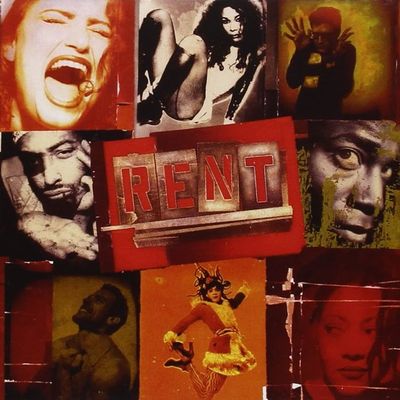
[10:52] Michael Riedel: The 1996 smash hit musical Rent with music, lyrics, and book by Jonathan Larson is very loosely based on Puccini's opera La Bohème. It tells the story of a diverse group of impoverished young artists struggling to survive and create a life in lower Manhattan's Bohemian Alphabet City neighborhood during the AIDS crisis. Jonathan Larson died suddenly of an aortic dissection the night before the off-Broadway premiere. After moving to Broadway, the show received Tony Awards for Best Book, Best Score, and Best Musical, and ran for 12 years.
[11:28] Michael Riedel: Love E Bol. Love Evolent. The enormous success of Rent solidified the use of pop rock music in Broadway musicals. And almost all musicals since then have had pop rock scores that blend contemporary rhythms and styles with traditional show tune structures and purposes. Friend of Jonathan said, you know, Jonathan wrote musical theater songs disguised as rock songs, because they work in the musical theater. But it was about something going on right here, right now. It was about New York City in the 1980s and 90s. And it was about kids struggling to make a living, dealing with gentrification, dying of AIDS, battling drugs, all of those things that none of these musicals at the time were dealing with.
[12:11] Michael Riedel: And so much of it based on his personal life that you make clear in your book, that really elements of that came out of that apartment that he lived in, those friends that he had.
[12:20] Michael Riedel: Yeah, absolutely. And you know, I went back and spent a lot of time talking to people who knew Jonathan because the kind of myth has sprung up that, well, one, a lot of people think he died of AIDS, which is not the case at all. He died of an aneurysm. After the dress rehearsal, he went back to his apartment, put on the tea kettle, and dropped dead on his kitchen floor because of a problem in his heart that and a vessel that broke there. But what people I don't think really understood about Jonathan was that he was, and I got this from all of his friends and his sister. He really was at the end of his rope there. I mean, he'd been knocking around the theater for a long, long time, and he had some near misses, but nothing he wrote ever really quite took off.
And he was in desperate straits. He was in desperate straits emotionally and certainly financially. And he told a lot of his friends if Rent didn't work, he would have to rethink what he wanted to do with his life because he just couldn't hold on much longer. So there is a kind of desperation of the characters in that show, that you know, one song before I go, that kind of thing. In Jonathan's case, he wasn't thinking one song before I go because I'm gonna die. He didn't know he was gonna die, but I think he was thinking one song before I have to stop and do something else with my life because this is not working out.
[13:25] ♪ Musical number ♪
[14:22] Michael Riedel: Yeah, it really is an incredible story. Like so many of these stories in your book, you couldn't make them up. You invented them, whether it's the saga of Sunset Boulevard really being this dramatic sudden end to the British musical, which was totally unexpected at the time.
[14:37] David Armstrong: Yeah, absolutely.
[14:38] Michael Riedel: Or Jonathan Larson's story, this rebirth of the American musical with this heavy drama layered over at the top of it that brought such attention to tragedy. That's what I mean. But that focused so much attention from the media, from the world, from the culture on a Broadway show.
[14:55] David Armstrong: Yeah, absolutely. And also, you know, I always try to write about the business side of Broadway because Broadway is, after all, a business. And going back, and I'd forgotten many of these details. That's why I went back and interviewed everybody, because I did not want this book to be a memoir or just stringing my old columns together. I wanted to go back and really talk to the people who created these shows, who were around these shows, to get a sense of how they felt at the time. And I talked to Kevin McCollum and Jeffrey Seller, who produced RENT, and they were nobodies back then. They were just kid producers, scratching out a living around Broadway. And they sat down with their marketing team led by Drew Hodges, who went on to create Spotco, a big advertising agency in New York.
And they said, you know, we can't advertise RENT in the traditional Broadway way because we're trying to get to an audience that doesn't go to Broadway shows. So one of the key decisions they made was they would not use the word Broadway or musical in any of their advertisements. Because they thought if young people who they wanted to come see RENT saw Broadway musical, they'd think, well, it's something from my grandmother. Because Broadway had that kind of reputation of being something maybe your mom and your dad took you to on a family outing. It seemed kind of old and out of touch, and they did not want to brand RENT as a musical or as a Broadway music. And the whole idea was RENT had so many things going on.
It was a musical indeed, but it had an operatic component because it was based on La Bohème, but it was also rock music, so it was young. And so the whole idea was let people come and figure out what the show is for themselves. Don't tell them what it is, which is kind of a brilliant marketing strategy when you think about it.
[16:20] Michael Riedel: Totally. And one of the things that sets your books apart, I think, is what you just mentioned, that focus on the business side. You deal more with producers and press agents and people like Drew Hodges than I think most other books about Broadway do, which brings a really fascinating perspective to it.
[16:37] David Armstrong: Yeah, you know, I always feel, you know, the artists and the actors, they're interviewed a lot, you know. There are plenty of interviews with Tony Kushner, and there are plenty of critics who've written gazillions of words on the importance of Angels in America. So you don't need me to evaluate these things and tell you the importance. I just try to show you how they came together, how they were created, try to put you in the rehearsal room, or sometimes just in the room where the composer is first pecking out the opening number to a song, and then to show you how the producers and the press agents sell this show to the world. And I've always found, as you know, friends of ours like the late Margot Lyon, producers are a wonderful source, and they're great interviews.
I mean, they're very colorful and terrific people to hang around. And for them, they're dramatic and compelling people because they live in a life or death world. You know, the show can be a gigantic hit and they can get incredibly rich, or it can be an absolutely humiliating flop that wipes them out. So they're on a tightrope every time they step out with a new show.
[17:40] Michael Riedel: Right. Absolutely, no question about it. You've got to have a very strong stomach to be a Broadway producer. And of course, there are so many businessmen who start businesses and they fail and they move on to the next one. But very few, very few businesses have the New York Times examining your every move. And if you fail, you know, if you open a donut shop and it doesn't work, Ben Brantley is not going to give you a bad review. But if you open a bad Broadway musical, the New York Times is going to say, this sucks, and so do you. So it's a pretty public place to be flogged.
[18:10] David Armstrong: Don't go away. Michael and I will be back with the return of the musical comedy right after this short break.
[18:31] David Armstrong: Michael, I want to pick up on another of the threads in your book, which is the return of the musical comedy. For much of the 1980s, it seemed like the musical comedy was dead. And I remember people saying, well, there'll never be another musical comedy again, basically, or at least a sincere one.
[18:45] Michael Riedel: Yeah.
[18:45] David Armstrong: One that was emotional in any way or had came from a sincere place. But that turned around during this period that you write about. And what's interesting is it starts with some revivals, I think, in a way that sort of bring back the idea whether it's Guys and Dolls or Chicago that sort of prime the pump for maybe we could have that again with a new show.
[19:05] Michael Riedel: Yeah, I mean, I think the seeds for the return of the musical comedy are really planted by Mike Okrent and Susan Stroman with Crazy for You.
[19:13] David Armstrong: Yes.
[19:14] Michael Riedel: And which is sort of a revival as well. It had a new script by Ken Ludwig, but it was the old George and Ira Gershwin songs. But it had such a lightness of touch brought to it by Okrent and Stroman. It played like a new old-fashioned musical comedy, if you will. And I remember thinking as I was putting this book together, and I knew I was leading to The Producers. So I wanted to say, okay, as you know, in any art form, David, nothing comes out of nowhere. You know, there are building blocks put in place before the one that becomes the most famous takes off. It has to have a launching pad that somebody else built. And Stroman and Okrent, they put together Crazy for You, and while it was Gershwin and was old-fashioned, it played like a sharp, fun, great musical comedy.
And so I went back and I said, yeah, I got to remember what Frank Rich said about this. He was the critic of the New York Times then. And his opening paragraph was when future historians write about when the Americans took back Broadway from the British, they'll start with Crazy for You. I thought, aha! He was right.
[20:15] Michael Riedel: The 1992 musical Crazy for You started out as a revival of the 1930 Gershwin musical, Girl Crazy. But during pre-production, the show's director, Mike Okrent, choreographer Susan Stroman, and book writer Ken Ludwig ended up creating an entirely new plot and set of characters for the show, retaining only Girl Crazy's Western setting as well as many of its songs, which were augmented with other Gershwin hits. Billed as the new Gershwin musical, Crazy for You was nominated for nine Tony Awards and won three, including Best Musical. Susan Stroman received the Tony Award for Best Choreography, the first of the five Tony Awards she has received to date. Crazy for You became a major hit, running 1,662 performances.
[21:03] Michael Riedel: And then six months after Crazy for You, you have Jerry Zaks's terrific revival of Guys and Dolls that made Nathan Lane and Faith Prince stars. And so I went back and I interviewed everybody on Guys and Dolls, and the driving force I got from them was that they did not want to do a revival. Because remember back in those days, David, revivals of the old shows generally were touring productions with a star who was kind of past his prime. And they would come in for the last bit of the tour for three or four weeks at Broadway, and that'd be it. So you'd see Topol in Fiddler on the Roof after he'd been touring the country for a year, or you'd see Robert Goulet in Camelot.
[21:39] Michael Riedel: Exactly right. Joel Gray in Cabaret, you know, the Fran and Barry Weissler produced. And I remember as a kid seeing, I grew up in upstate New York, Rochester. I remember people like Louis Jordan in Gigi, you know, big stars once upon a time, but you know, by the time they were touring in the Fran and Barry Weissler show, they were not exactly Hugh Jackman. And Michael David and Jerry Zaks, Michael was the producer and Jerry, of course, the director. They thought we have to treat Guys and Dolls as if it were a new musical. Not something we're taking off the shelf that was done in 1950 and blowing the dust off. Let's think of it as a brand new show, as if the writers had just turned in the script and the score for us.
And so let's not cast stars. Let's cast young people. You know, Nathan Lane was not a star. He was known in the theater world from the Terrence McNally plays, but he was not a star. Faith was not a star. She had a minor part in Nick and Nora at the time. The only one closest to being a star was Peter Gallagher, who'd been in Sex, Lies, and Videotape. But these people were not stars at all. So, you know, Jerry approached it as if it were a brand new musical. And indeed, you know, they got it right because all the critics said this does not feel like some musty old thing from the 1950s. It feels as sharp and as pungent and as witty and as fun as a brand new penny.
[22:52] Michael Riedel: Nathan, why can't we elope right now?
[22:55] David Armstrong: Because.
[22:56] Michael Riedel: Well, I gotta go to a prayer meeting.
[23:01] David Armstrong: Nathan, this is the biggest lie you ever told me.
[23:06] Michael Riedel: But I promise you it's true.
[23:08] David Armstrong: You promised me this, you promised me that. You promise me anything under the sun, and you give me a kiss and you're grabbing your hat and you're off to the races again.
[23:15] Michael Riedel: When I think of the time gone by the way, when I think of the way I could honestly die.
[23:25] ♪ Musical number: "Sue Me" — performed by the cast of Guys and Dolls ♪
[24:08] Michael Riedel: I went to college with Faith, so I know exactly where she viewed herself in the pecking order at that point, and that was a gigantic step forward for her.
[24:16] David Armstrong: Absolutely.
[24:20] Michael Riedel: Although she had been slapping around for 10 years, like everybody else. And so had Nathan, exactly. And then they wound up on the cover of New York magazine. And it was funny, I read this very good piece that Ross Whetstone, he's no longer with us, sadly, wrote for New York magazine, celebrating Guys and Dolls. And at the end of his piece, he said, you know, you gotta remember then, the revival of Times Square was just in its infancy. So when you would go by the Martin Beck Theater, as it was then called now the Al Hirschfeld, where Guys and Dolls was, you would step on crack vials. You know, there was a crack epidemic raging in New York City in the early 90s. And Ross Whetstone said, you know, this production is so fresh and conjures up a Times Square that is such a delightful, happy place to be that maybe it'll remind New Yorkers of what their great city once was and could be again.
[25:06] David Armstrong: And I thought, well, that's kind of what happened.
[25:22] David Armstrong: As I continue my conversation with author Michael Riedel about his new book, Singular Sensation, The Triumph of Broadway.
[25:30] David Armstrong: Broadway Nation is written and produced by me, David Armstrong. If you enjoy these podcasts, you could do me a big favor by subscribing to the show wherever you listen. And if you listen on Apple Podcasts, please give it a five-star rating and write a brief review of the show. This really does help to get the show in front of other Broadway fans that might be interested. I also invite you to follow Broadway Nation on Twitter, Instagram, and our Facebook page, where I often post photos, video, and additional information about the musicals that are profiled in each episode. Special thanks to KVSH 101.9, the voice of beautiful Vashon Island, Washington, and to the entire team at the Broadway Podcast Network.
© Broadway Podcast Network, All Rights Reserved