

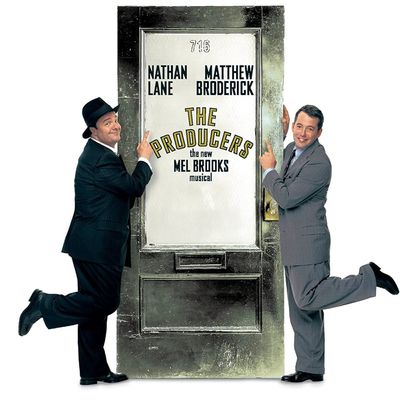
I recently had the delightful opportunity to chat with beloved Broadway actor, singer, dancer, director and choreographer Lee Roy Reams whose nine Broadway musicals span from Sweet Charity in 1966 to The Producers in 1996, and he is still going strong having recently celebrated his 79th birthday with performances at 54 Below and The York Theatre Company!.. Read More
From the show: BROADWAY NATION
Featured Shows
About
I recently had the delightful opportunity to chat with beloved Broadway actor, singer, dancer, director and choreographer Lee Roy Reams whose nine Broadway musicals span from Sweet Charity in 1966 to The Producers in 1996, and he is still going strong having recently celebrated his 79th birthday with performances at 54 Below and The York Theatre Company!
Our conversation ranges from his childhood dancing schools in his hometown of Covington, Kentucky, to college in Cincinnati, to his dancing with the stars in summer stock, nightclubs, and on most of the big TV variety shows, and along the way working with many of the greatest directors and choreographers in Broadway history.
Hang on to your hats – talking with Lee Roy is always a wild and irreverent ride!
You can see Lee Roy dance the "Cool Hand Luke" number that is mentioned in this episode (along with several other of his fabulous TV appearances with Gwen Verdon and other stars) on YouTube -- and I have included links to those in the Broadway Nation Facebook Group.
Next week on October 13 and 14 the Fosse-Verdon Legacy will present a piece entitled the “Sweet Gwen Suite” as part of the New York City Center Fall for Dance Festival. This new dance piece is adapted from three dance numbers that were performed by Gwen Verdon on television including “Cool Hand Luke”.
On the next episode of Broadway Nation we will follow Lee Roy back to NY where he will indeed break out of the chorus and make history playing one of the first openly gay characters in Broadway musical history.
Broadway Nation is written and produced by me – David Armstrong. If you enjoyed this podcast, you can help other like-minded people find Broadway Nation by rating and reviewing the show on Apple Podcasts or wherever you listen. I thank you in advance for helping to spread the word about Broadway Nation.
Special thanks to KVSH 101.9 the voice of beautiful Vashon Island, WA and to the entire team at the Broadway Podcast Network.
Note: This episode contains some salty language as well as a vintage lyric that includes a nickname for Broadway dancers that many consider to be offensive today.
Transcript
This transcript was automatically generated and might contain errors.
[0:00] David Armstrong: Come on along and listen to the lullaby on Broadway.
[0:08] David Armstrong: Welcome to another episode of Broadway Nation, the podcast that tells the remarkable story of how immigrants, Jews, queers, African Americans, and other outcasts invented the Broadway musical and how they changed America in the process.
[0:22] David Armstrong: I'm David Armstrong, and I call this episode 50 YEARS on Broadway.
[0:27] David Armstrong: I recently had the delightful opportunity to chat with beloved Broadway actor, singer, dancer, director, and choreographer LEE ROY REAMS, whose nine Broadway musicals span from Sweet Charity in 1966 to The Producers in 1996.
[0:43] David Armstrong: And I'm happy to say that he is still going strong, having just recently celebrated his 79th birthday by performing his one-man tribute to Jerry Herman at 54 Below and at the York Theatre Company.
[0:56] David Armstrong: Our conversation today ranges from his childhood dancing school days in his hometown of Covington, Kentucky, to college in Cincinnati to his dancing with the stars in summer stock, nightclubs, and on most of the big TV variety shows, and along the way, working with many of the greatest directors and choreographers in Broadway history.
[1:15] David Armstrong: Hang on to your hats.
[1:16] David Armstrong: Talking with Lee Roy is always a wild and irreverent ride.
[1:20] David Armstrong: Here we go. So welcome, Lee Roy.
[1:22] LEE ROY REAMS: Thank you so much for joining us on Broadway Nation today.
[1:25] LEE ROY REAMS: As always, a pleasure, my Kentucky buddy.
[1:28] David Armstrong: Exactly.
[1:29] LEE ROY REAMS: Well, I'm actually from the Cincinnati side of the river, but I spent a lot of time in Kentucky.
[1:33] LEE ROY REAMS: We'll probably talk a little bit about why in a couple of minutes.
[1:36] LEE ROY REAMS: Well, Harvey Honig or Harvey Evans was a wet bat too.
[1:40] LEE ROY REAMS: You all came over the river.
[1:42] David Armstrong: But I also studied in Cincinnati too.
[1:44] LEE ROY REAMS: You crossed the river many, many times there.
[1:47] David Armstrong: Well, you know, with Harris Rosedale, did you ever study with him?
[1:50] LEE ROY REAMS: I didn't. I know that name.
[1:51] LEE ROY REAMS: I remember hearing that name before.
[1:53] LEE ROY REAMS: They used to have a TV amateur show on the local TV and all of that stuff.
[1:57] David Armstrong: So my show is all about connecting the dots over the course of the 120 year or so history of the Broadway musical.
[2:05] David Armstrong: And your career begins in the final years of the golden age of Broadway and spans through the modern era and right up to the 21st century.
[2:13] David Armstrong: Your first show on Broadway was in 1966, and your most recent show on Broadway was 2006.
[2:19] David Armstrong: So that's 50 years on Broadway, which is truly amazing.
[2:23] David Armstrong: So over that time, you've had the experience, the sort of unique experience of working with several of the musical theater's greatest Tony Award-winning director choreographers, Bob Fosse, Ron Field, and Gower Champion are at the top of that list, as well as wonderful choreographers that you worked with on television, most of whom also worked on Broadway.
[2:43] LEE ROY REAMS: Yes.
[2:44] David Armstrong: And then you yourself have worked extensively as a director and choreographer in addition to your performing career.
[2:50] LEE ROY REAMS: Yes.
[2:50] David Armstrong: So I thought it would be interesting today to talk through your career with a special focus on the amazing creators that you had an opportunity to work with and that were clearly eager to work with you.
[3:01] David Armstrong: But before we get to there, let's spend a couple minutes talking about how it all began.
[3:05] David Armstrong: How did this boy from Kentucky end up having this amazing career on Broadway?
[3:10] David Armstrong: Where did it start? What got you interested in show business?
[3:13] LEE ROY REAMS: Well, probably we have a lot in common, David, because you know, for your listeners, we're from the same area and studied with some of the same teachers as we were being trained.
[3:23] LEE ROY REAMS: And uh in my case, no one forced me.
[3:26] LEE ROY REAMS: I just as a kid, whenever there was music on, I was up in the middle of the floor singing and dancing.
[3:33] LEE ROY REAMS: And I was the youngest of seven children.
[3:35] LEE ROY REAMS: And my mother, when they would ask her how many children she had, she always said, I've got three boys, three girls, and Leroy.
[3:42] LEE ROY REAMS: And so I would jump up in the middle of the floor singing and dancing.
[3:46] LEE ROY REAMS: And so my mother read in the local newspaper, the Kentucky Post, I think it was, and it uh was advertising a local dance school, which was called the Jules Stein School of Dance.
[3:58] LEE ROY REAMS: And they said, if you sign up for so many lessons, you got a free pair of tap shoes and a promise your child would be in the annual recital.
[4:06] LEE ROY REAMS: So off I went.
[4:07] LEE ROY REAMS: And they had the sign that said Taptoe Ballet, Acrobatic Baton Ballroom, Voice Personality and Culture.
[4:14] LEE ROY REAMS: And my teacher was not Jules Stein, Joan Bamberger.
[4:17] LEE ROY REAMS: She was a younger girl who taught the young kids.
[4:20] LEE ROY REAMS: And so that's how I started.
[4:21] LEE ROY REAMS: Indeed, I was in that first recital, but I'd known that I was shown a picture.
[4:25] LEE ROY REAMS: It's very funny. You'll see me in my white blouse and the black pants with the sash and the big black floppy tie, you know, because that's the way we did it.
[4:32] LEE ROY REAMS: It was the Johnson rag.
[4:35] LEE ROY REAMS: There goes the Johnson rag, you know, tap dancing and all of that.
[4:38] David Armstrong: So how old are you at this point?
[4:40] LEE ROY REAMS: Oh, I had to be like maybe six years old.
[4:44] LEE ROY REAMS: About that age. I can't remember exactly how old I was, but I was young.
[4:48] LEE ROY REAMS: And of course I just loved it.
[4:50] LEE ROY REAMS: And what was interesting, my niece, who was only two years younger than I, also went to dancing school.
[4:56] LEE ROY REAMS: She was like three or four. She didn't last, but I loved it.
[4:59] LEE ROY REAMS: And at the end of that recital the next year, that dancing school teacher hung himself.
[5:04] David Armstrong: You were kidding.
[5:05] LEE ROY REAMS: Jules with Jules Stein, which had nothing to do with me.
[5:10] LEE ROY REAMS: So, you know, and then we had to find another dance teacher, and then that was Bob Ziggler, who was about 18 years old.
[5:18] LEE ROY REAMS: And he started his school in Covington, Kentucky.
[5:20] LEE ROY REAMS: And so we signed up there, but then he got drafted.
[5:23] LEE ROY REAMS: And so his teacher, Alma Trantor, and her husband came in to run the school while he was in the service.
[5:30] LEE ROY REAMS: And she was one of them.
[5:31] LEE ROY REAMS: She had blonde hair, and I just loved her.
[5:34] LEE ROY REAMS: And when she saw me, she took me out of my class because she said I was too good to be in my age range.
[5:41] LEE ROY REAMS: So she put me in one of the more advanced classes.
[5:44] LEE ROY REAMS: So of course I loved her.
[5:45] LEE ROY REAMS: And she told my mother she wanted me to do a solo.
[5:48] LEE ROY REAMS: We didn't have money for private lessons.
[5:50] LEE ROY REAMS: And she said, Well, I'll teach Leroy without him having to pay.
[5:54] LEE ROY REAMS: So she taught me a routine, put me in the recital, and she told my mother, she said, he has it.
[6:00] LEE ROY REAMS: She said, he's got the talent and he can make a living doing this.
[6:04] LEE ROY REAMS: I don't tell all the parents that, but Leroy has it.
[6:07] LEE ROY REAMS: And that was the first validation of my talent.
[6:10] LEE ROY REAMS: And of course I loved her.
[6:12] LEE ROY REAMS: And then when Bobby came out of the service, I wasn't as happy because he wanted me to put back in my age group.
[6:18] LEE ROY REAMS: And so that's when I went to the Alan Stanhope School, who was also a student of Mrs. Tranter's.
[6:23] LEE ROY REAMS: And I stayed there for a while.
[6:24] LEE ROY REAMS: And I also went to Bobby later and then I went to Harris Rosedale in Cincinnati and all of that stuff.
[6:30] LEE ROY REAMS: So then when I was in my senior year in high school, I got a call from the Cincinnati uh opera ballet because they had heard of me and wanted me to come and audition to be in the opera ballet at the zoo.
[6:41] LEE ROY REAMS: So anyway, I was hired, and that's where I met Susie Ficker.
[6:45] LEE ROY REAMS: Susie was then about maybe 14, and I was like 17, because I didn't turn 18 until that August.
[6:51] LEE ROY REAMS: And so we became friendly, and she said, uh, how would you like to come and study at my school, the College Conservatory of Music?
[6:57] LEE ROY REAMS: And I said, Well, I'd love to, but I don't have the money.
[6:59] LEE ROY REAMS: We have just enough money to even get me into college because we were on a budget.
[7:03] LEE ROY REAMS: So she said, Well, I can get you a scholarship.
[7:05] LEE ROY REAMS: Mary and Lequeur, I said, Well, do I have to audition?
[7:07] LEE ROY REAMS: She said, No.
[7:08] LEE ROY REAMS: She comes to the opera and I'll point you out.
[7:09] LEE ROY REAMS: And indeed, Marion Lequeur came back and said, Yes, I'll give you a scholarship.
[7:13] LEE ROY REAMS: And had I known David, I mean, you know, anyone to lift all those fat girls, I could have probably asked for money and gotten a scholarship plus a salary.
[7:20] LEE ROY REAMS: But anyway, so I did.
[7:21] LEE ROY REAMS: And of course, Susie Ficker became Suzanne Farrell for the New York City Ballet.
[7:26] David Armstrong: Wow.
[7:27] LEE ROY REAMS: So we had met that summer, and that was a lifelong friendship.
[7:30] LEE ROY REAMS: She was responsible for getting me my scholarship.
[7:32] LEE ROY REAMS: And of course, then with Marion LeCorry, and eventually Tatiana Grantseva, who was with the Ballet Russo de Monte Carlo, replaced Mary Lacor when she retired.
[7:40] LEE ROY REAMS: And that's when I really got heavy duty training from uh Tatiana Goronseva.
[7:45] LEE ROY REAMS: She was incredible.
[7:46] LEE ROY REAMS: And I have never danced better or had such a strong foundation because of those people.
[7:51] LEE ROY REAMS: But the good thing about being in those dance schools where they taught everything, you tap danced, you did everything.
[7:56] LEE ROY REAMS: And it gave you a whole uh background to go into musical theater.
[8:00] LEE ROY REAMS: Now, I didn't want to be a ballet dancer.
[8:02] LEE ROY REAMS: I knew that.
[8:02] LEE ROY REAMS: I loved doing it.
[8:03] LEE ROY REAMS: But I I was a singer.
[8:05] LEE ROY REAMS: I studied voice at the conservatory.
[8:07] LEE ROY REAMS: And also I was a theater arts major at the University of Cincinnati with Paul Rutledge.
[8:12] LEE ROY REAMS: That was under the English department back then.
[8:14] LEE ROY REAMS: And then later, when I graduated the next year, they had a musical theater major, which Pam Myers, who was in Company, she was the first student.
[8:21] LEE ROY REAMS: So we're all connected that way.
[8:23] LEE ROY REAMS: But the training that I got in the Covington, Kentucky, Cincinnati area was what prepared me for New York.
[8:29] LEE ROY REAMS: And because of Paul Rutledge, she was my professor at the university.
[8:33] LEE ROY REAMS: My junior and senior year, I directed and choreographed all the musicals.
[8:37] LEE ROY REAMS: And then I was a vice president of the Marbers Guild my sophomore year and president my junior and senior year.
[8:42] LEE ROY REAMS: And we operated theaters in the summertime.
[8:45] LEE ROY REAMS: But at the end of my freshman year, I went up to Dayton, Ohio and was with the James Alex Summer Theater.
[8:50] LEE ROY REAMS: And that's where I met all the stars.
[8:52] LEE ROY REAMS: You know, Dorothy Dandridge, Rita Moreno, Patricia Morrison, Dorothy Collins, Catherine Grayson, Martha Ray, just a huge amount of professional people.
[9:03] LEE ROY REAMS: And I did roles.
[9:05] LEE ROY REAMS: I was promised so many parts.
[9:07] LEE ROY REAMS: And I was hired as a principal actor.
[9:08] LEE ROY REAMS: But when the director Neil Kenyon, who eventually did Dames at Sea off Broadway, uh, I was just too young.
[9:14] David Armstrong: What shows are these?
[9:15] LEE ROY REAMS: The first show was Showboat and then Damn Yankees, Brigadoon, Kiss Me Kate, Wildcat, which I actually didn't get to do because a contralto sat on my lattern bruised my testicles.
[9:27] LEE ROY REAMS: So I had to leave earlier.
[9:29] LEE ROY REAMS: And then Bye Bye Birdie with Jack Carson.
[9:33] David Armstrong: And uh this is one week stock?
[9:35] LEE ROY REAMS: One week stock.
[9:36] LEE ROY REAMS: And you know, you wonder how you do that now.
[9:38] LEE ROY REAMS: I mean, we literally opened a show and then we had a day off, and the next day we came in, rehearsed all day for the next show.
[9:45] LEE ROY REAMS: And I don't know how we did it.
[9:47] LEE ROY REAMS: I don't either.
[9:48] LEE ROY REAMS: But you know, because we were young and we can memorize all that stuff and we loved it so much, and we could rehearse all day and perform at night.
[9:55] LEE ROY REAMS: We don't do that anymore.
[9:57] LEE ROY REAMS: But boy, it was great training.
[9:58] LEE ROY REAMS: And it was interesting because uh when we walked in for Showboat, I was supposed to have played Frank Schultz, and Neil Kenyon took one look at me and said, Well, he's too young.
[10:06] LEE ROY REAMS: He's a boy.
[10:07] LEE ROY REAMS: You know, and I was in 17, but I looked younger.
[10:09] LEE ROY REAMS: And he said, if he takes off a shirt, he's gonna look 12, you know.
[10:13] LEE ROY REAMS: But uh, I was trained, I could do the work bet anyway.
[10:16] LEE ROY REAMS: So I some of the roles I got and some of them I didn't because of my age.
[10:20] LEE ROY REAMS: But Dorothy Dandridge was the first star, and she was absolutely beautiful, one of the most beautiful women I've ever seen.
[10:27] LEE ROY REAMS: But she saved herself playing Julie.
[10:29] LEE ROY REAMS: Playing Julie.
[10:30] LEE ROY REAMS: But she saved herself during rehearsal, so she would always go, Fish got a sweet.
[10:36] LEE ROY REAMS: So when it came time with the show, she had no voice.
[10:39] LEE ROY REAMS: And so when she got on stage, when she did Can't Help Loving That Man on Mine, she went, Fish God's bird's gonna fly.
[10:44] LEE ROY REAMS: I'm gonna can't help.
[10:45] LEE ROY REAMS: And she thought he has went, Can't help.
[10:47] LEE ROY REAMS: Meaning her throat, oh yeah, you know what a time stock was.
[10:50] LEE ROY REAMS: But then the next show was Damn Yankees, Arena Moreno.
[10:53] LEE ROY REAMS: And of course, she had just won the Academy Award for West Side Story.
[10:57] LEE ROY REAMS: And I was gonna do Who's Got the Pain When They Do the Mambo?
[11:00] LEE ROY REAMS: And so our first day of rehearsal, Marvin Gordon was the choreographer.
[11:03] LEE ROY REAMS: Wonderful man. I loved him.
[11:05] LEE ROY REAMS: And Rita took one look at me and her eyes got real big.
[11:08] LEE ROY REAMS: And Marvin said, Don't worry, he's very good.
[11:10] LEE ROY REAMS: And if you don't watch it, he'll steal the number from you.
[11:13] LEE ROY REAMS: So hesitantly she started rehearsal, and when she realized that I could do what I was supposed to do.
[11:18] LEE ROY REAMS: And at one point she had to get up on my shoulder and throw herself back and say, Is there a doctor in the house?
[11:25] LEE ROY REAMS: And she said, Well, maybe uh, because she didn't trust me being able to hold her.
[11:29] David Armstrong: Sure.
[11:30] LEE ROY REAMS: And so Marvin Gordon, I learned a real good lesson from Marvin.
[11:32] LEE ROY REAMS: He said, Look, he said, if you can't do it, of course, that's the original choreography that Gwen Verdon did.
[11:39] LEE ROY REAMS: So Gwen did that, he said, Yes.
[11:41] LEE ROY REAMS: Oh, okay.
[11:42] LEE ROY REAMS: So she jumped up through the back, and that was fine.
[11:44] LEE ROY REAMS: So I learned then how to manipulate people.
[11:47] LEE ROY REAMS: She said, Well, if you can't do it, Gwen Verdon could do it.
[11:50] LEE ROY REAMS: But you know, so finally they get the energy to be able to do it.
[11:53] LEE ROY REAMS: But and it went on, and then Patricia Morrison, I was supposed to play Bill Calhoun, but too young again. So another actor played up, but I did all the dancing, so it was a very strange thing. He was singing the song that I'd come out and do the dancing, but Annie Get Your Gun was the biggie because that was a bigger role. And of course, that part now has been written out of the new version of Annie Get Your Gun. The comedy couple, basically song and dance couple. Yeah. I think his name was like Tommy Keeler. He had two numbers. Had two numbers in the show. So I got a great review for that, and the local critic there became one of my fans, so it was really terrific. But I tell this story, it's a good story.
The lead lady who was going to play her name was Christine Norton. Now you've probably never heard of her. She's English. She's sort of like a Diana Dors type lady. Janice Page was supposed to have played it, but supposedly a pressure cooker blew up in her face. At least that's what they said. So Christine came in to replace her, but she had never seen Annie Get Your Gun. And she's gonna learn it in a week. And so the first day of rehearsal, when I went, I met her, and she said, "Well, you're cute. What are you doing now?" I said, "Well, nothing, just you know, waiting." She said, "Well, why don't you come with me to go to my costume fitting and we'll get acquainted." So we went to costume fitting, and she was big breasted.
And she stripped off her clothes in front of me, she had a bikini bra and bikini under, which I had never seen. So she is standing there and she bent over and her bosom came out, and she picked up and went, "Get back in there, my little pink poodle." And she looked at me and I had big eyes, and she said, "I hope I didn't bear." She said, "No, I find you, but I'll tell you what's embarrassing." She's "What's embarrassing, I was once going down to my boyfriend driving in a convertible, and a bus came by." She said, "Now that that's embarrassing." So that was my introduction to Summerstock. Welcome to show business. Yes, right. So I grew up a lot that summer, but I loved every single moment of it.
I would have stayed up at night and rehearsed if they would have let me. I remember those Summerstock days as well. We would have licked the stage if they needed us to look at the stage. And of course, when I came back to run the show, David, you were with the company then. So that's when we worked together.
[13:57] David Armstrong: Absolutely. We have many things in common. I studied with Bobby Ziggler at Ziegler's Studio of Dance for many, many years. Also went to the University of Cincinnati and worked with Paul Rutledge, great mentor. And I owe so much to Paul because he really was one of the people that recognized my ability to do something at a time when really there was no reason for anyone to think I could do it, especially at the age I was at.
[14:18] LEE ROY REAMS: Yes. And those people I think are so important in our lives. People say, "Oh, there's something about this kid," even though he has no experience, and you wouldn't expect he would be able to choreograph something or direct something or do the things that I did at a young age. Those people like Paul, and I'm sure the same thing worked for you, that are able to identify talent in spite of the fact that there's really very little to go on. Huge, huge influence in my career and in my life as a person because I am a gay man and Paul was a gay man. He was, you know, a good role model, and he was extremely intelligent and knew his business and gave me the responsibility so that when I came to New York, I was a working professional.
I had my equity card that I got that summer at the James Alex Summer Theater. So when I came to New York, my first audition was for the Julia Prouse Nightclub Act. And I got it only because I was experienced and I had been trained well because of my teachers and all those people who recognized my talent and gave me the courage and the confidence to pursue it. And also my first professional choreographer from television, of course, was Ernie Flack, who did the Julia Prouse Nightclub Act. And he had not done the Calvernett show by then, but he had done the Gary Moore show. So he also was a prime factor in me getting to know people. And then Juliet Brouse introduced me to everybody. And that began my career as a dancer.
I danced with all the stars, did all the television shows, and that's where I met Tony Charmale, who choreographed Juliet's second act and was my favorite choreographer, by the way. I love Tony Charmeley.
[15:51] David Armstrong: Let me just put this in context. You arrived in New York in what year?
[15:56] LEE ROY REAMS: 65. I graduated in 64. We went down to Florida with the university and we operated the Daytona Beach little theater there. So we did the summer there, Marcia Lewis, who was, you know, part of the company and all of that. They all came down and we operated this little theater for the summer. Then at the end of the summer, Marcia didn't go back to get her nursing degree because she was already a registered nurse. So she went to New York, and then I had to get a job to make money to be able to come to New York. So I worked as a piping contractor secretary because I had taken business courses in high school, and I screwed up his book so badly he fired me, which he should have, because I knew I wasn't going to do it.
And then I became a substitute English teacher in the Covington and Cincinnati school systems because I couldn't sign a contract because I knew as soon as I had 500 bucks, honey, I was gonna go to New York. So I did that. I got the money, and Paul Rutlich, as a matter of fact, drove me to New York.
[16:48] David Armstrong: Don't go away. Broadway Nation will be back right after this short break.
[16:59] LEE ROY REAMS: Now we pick up our story with Leroy's arrival in the big apple. I had two little suitcases, and I stayed with Marcia Lewis, and she had a nursing apartment through Mount Sinai Hospital at 96th Park, a very nice apartment that she shared with another nurse. And it was illegal to have someone in there, but I went there and that's where I stayed. So when I went to my first audition, picked up Backstage Show Business Magazine, read the ads, and it said Julia Prouse Nightclub Act. Must be six feet attractive, sing and dance. Well, I got the job. And then I fell in love madly with Julia Browse. And so when we finished the act, I came back to New York, picked up the papers again, and that's where I read about Sweet Charity and Bob Fosse.
So I went to that audition and I got that audition. And that began my thing with Bob Fosse. But it's interesting that you couldn't buy dance pants then. They didn't sell them. They certainly didn't sell them at Cincinnati or Covington. So I wore ballet tights, because that's what I wore. So when I went to the audition for Sweet Charity, of course, there were dancers who made the double-knit jersey pants. But you had to know them, you couldn't go to a store and buy them. So Bob Fosse wouldn't pay attention to me at the audition because he thought I was a ballet dancer. But Gwen was watching me. And I kept getting saved and saved, but he wasn't paying attention to me. So then we had to sing. And then when I opened up because I could sing, I was a studied singer. And dancers didn't really sing like that back then.
[18:26] David Armstrong: Well, very few dancers sing as well as you do even today.
[18:29] LEE ROY REAMS: Well, once I opened up my mouth, Cy Coleman jumped up and ran over to Bob Fosse. So I knew then that that was a good sign. But Bob Fosse still wasn't sold on me. He kept me back, but he still wasn't giving me the you know the final selection. So then he had me read for a small part in the show called Young Spanish Man. And my competition was Miguel Hedro, who is Puerto Rican. I think that was Fosse's way of saying, well, I'll get rid of him this way. But Miguel Hedro didn't speak very well. And of course, I had Spanish 101 at the university. So when I read, that was it. I got the part. But even in rehearsal, Fosse wasn't paying a lot of attention. And then with the fruit, we had to smoke because he's always with a cigarette in his mouth. And so I said, "Well, I'm sorry, I don't smoke, and I prefer not to smoke." And so he said, "Well, I guess at least you can carry the cigarette. If one person is smoking, they won't notice."
[19:28] LEE ROY REAMS: So then we got out of town. Now, this is a true story. Now I'm bragging, but it's a true story. So we had our first performance out of town. And at intermission, Bob Fosse came back to the dressing room and burst in and looked at me and said, "What were you doing out there?" And I thought, well, this is that he's gonna fire me. Because he doesn't really like me anyway. And I said, "I'm sorry, I don't know what you mean." He said, "You never performed like that. You came out on stage, you know, I couldn't keep my eyes off of you all night. You were out there just carrying on." He said, "You never did that in rehearsal." I said, "Well, you didn't ask me to." So, anyway, then I became a favorite. Did you rehearse Sweet Charity in the theater or the studio? Where did you rehearse the show?
[20:09] David Armstrong: We rehearsed in a studio.
[20:10] LEE ROY REAMS: And I think it was a variety arts. That old studio that had the polls that we all used to hit our heads on. That's because that was Fosse's favorite place. And he used to take a room in the nearby hotel when he was rehearsing, so he could just be next door. That's the way he did it. It was a fabulous time. And Bobby and Gwen would rehearse on the breaks. I used to go into the room and sit in the back to watch them. Now they never said you can't be in here. Because the other kids were out smoking and you know, carrying on on me. I was in the room watching them rehearse because I knew this was history. And I'll never forget one day. They were doing a step, and then she do it, and Fosse threw up his hands and he said, "I don't know whether any of this shit is any good or not."
He said, "On you, everything looks good." But he was right. He would do it, and then when she did it, it became art because it was in her face. A lot of people dance with their bodies, but Gwen danced with her face. And watching them create. Oh my god, David, you can't buy that.
[21:01] David Armstrong: You're already interested in directing and choreographing. You've already done some of it. So here you are having this masterclass. And I understand because I had many of those same impulses to be in the room when things were happening, no matter what everybody else was doing. And another moment during that rehearsal period, Gwen didn't like singing, "Where Am I Going?" And one day she just said, "Oh, Bobby, I don't want to do this number. I'm not a singer. I'm not a singer." Well, she was wrong. But on Matinee Day, she used to cut that number all the time. So I got to see those things. And then our first dress rehearsal out of town in Philadelphia. The first number Gwen had on like a green fish-tailed dress.
And Fosse said, "I don't like that dress." I can't say because she wore a black slip in rehearsal. And he got used to seeing her in that black slip. So he didn't like that dress. Then the "Hey Big Spender" number came on. And he screamed, "I hate those dresses. They're too glittery. This is a cheap dance hall." And Irene Sharaff took those sketches. And I was out in the audience. The kids were backstage. I was in the audience watching. And Irene Sharaff took those sketches down and she threw them in here. She said, "Here, you son of a bitch. You approved all these costume sketches. You were at the fittings. What you're seeing on the sketches of what's on stage." And he threw everything out. And then we did the fruit number, and we were all in shades of beige and browns, and our outfits were silk mohair.
And the girls had hand-painted tights from Paris. And we came out and did the fruit number when we finished. The knees came out of the tights. The boys, we ripped our jackets. We looked like we'd been through World War II. So all of those costumes were thrown out. And Fosse said, "I want them in black tuxedos. I want the girls in black sheets." And they saved the trim on those dresses and put them on the black dresses. And Gwen, of course, he said, "She's just gonna wear that black slip." So they made Gwen a black dress, which she wore during most of the show. So all those costumes were thrown out in one dress rehearsal. It was fascinating. But Irene Sharaff is a pro. She went into the room and she did what he wanted.
She wasn't happy, but she did what he wanted, and it was interesting to see how professionals work and to have witnessed Irene Sharaff yelling at Bob Fosse and seeing all these giants of the theater. And then getting to know Cy Coleman and Dorothy Fields. I mean, here was Dorothy Fields, who began writing lyrics when she was 16 years old at a time when women couldn't get jobs, period, in the theater, doing that kind of thing. She knew everybody's name. It was incredible to see how professional people work. And I've been lucky because most of the people I work with were like that. Cy Coleman was a buddy, and Cy Coleman came up to me first day of rehearsal and said, "I'm so glad you're in the show when you opened your mouth and sang, I had to have you."
And we became friendly. And I remember my memory's now coming back at a party for New Year's Eve. It was in one of the hotels. They had this big party for us. And Gwen, unfortunately, was out of the show that night because she got down from one of the coats in her throat.
[23:50] LEE ROY REAMS: And Helen Gallagher had to go on with no rehearsal. And she got through, it was brilliant. But we went to the party, and at the party, everyone got drunk. And Cy Coleman was playing the piano, and he said, "Hey Dorothy, come over here and sing one of your songs." And she went over and sat down next to him, and I sat at her feet, and she sang, "Don't blame me" that night. I thought I'm the luckiest guy in the world. And then when she finished the song, I said, "Oh, Dorothy, that was so wonderful." She said, "Thank you, John. I can't stand up. I'm so drunk. Would you help me up and take me up to my room? My keys in the purse." And she said, "Just make sure when you get me in that my feet are on the bed and leave the key on the nightstand."
So I took Dorothy Field up, put her in the room, put her feet up, put on the key. But I felt like I was the luckiest person in the world to be in that company. I've never lost my fascination and love of the business and the people in it. And to be accepted and to be one of them. It's a thing that continues to amaze me. When I worked with Jerry Herman and did that concert where I'm jumping off the piano singing his songs and he's playing the piano, I would just look at him and say, "How can this have happened?" And to know these people on a first name basis and that they, you know, quote Sally Feel, they really liked me. And to be accepted by them and to be treated with respect that way, that's the award. The other stuff is superficial. That's the real award.
[25:05] LEE ROY REAMS: She's a president, she's a hard second, she's a dance, she's a villain felt your orchestra, and the modern jazz quartet. She's a bad protein parade a while. She's the belt of St. Peter's in Rome. She's picture paper on our board. So what was it that made Fossey so great? Well, because he was brilliantly talented and had a style. And the style was his body. And if you see in the movie of "Kiss Me Kate," that section that he did with Carol Haney, that was his choreography. It wasn't a Hermes Pan. That was Bobby's choreography. So he was already establishing a style. And it's interesting, you know, he tap danced. He and his first wife, Mary and Niles had an act that they tap danced. And Gwen tap danced.
They never tap danced at any of their Broadway shows. That's so interesting. They were really good tap dancers. Yes, but they just left it behind. And Gwen worked on point. There's a film clip of Gwen when she was a young teenager working on point. And this relationship between Gwen and Bob Fossey, my feeling is, and I don't know this, you will know this for sure, they're creating this work together to a great extent. Yes, yes, that's true. It is true. And because Gwen was so varied as a dancer, she could do anything. And her work with Jack Cole gave her a style that kind of transferred onto Fossey too. So it was a melding of the styles. Jack Cole was a huge influence on Gwen. And once they did "Damn Yankees" together, and Gwen could see what he could do style-wise, it became a melding.
But Bobby was always in control. He was always the leader. And she followed that way. She never said, "Oh, I don't want to do it that way. I think I should do this." No. Whatever he said, she did. It was like I don't mean this unkindly, like an SM relationship. He drove and she did what she was told to do. And that was amazing. And she was very cooperative, and she kept encouraging him, you know, because he was insecure about a lot of those things.
[27:12] LEE ROY REAMS: And it's interesting we don't think of that, but I remember when he got the Fred Astaire Award for his choreography for "Big Deal," which was a flop. And I was at the awards ceremony that night, and he got up and he said, I'm paraphrasing now. He said, "I think I did some of my best work on Big Deal. And now it's a close show. That's why I'm insecure. That's why I have this attitude about my life, because you know, I think I'm doing so well, and then it doesn't work out." He said, "But I'll tell you one thing I'm not insecure about. It's the love of my dancers, four of whom are in the audience tonight, and I want them to stand up. Donna McKechney, Leroy Reams, Ann Ryan King, and Ben Vereen."
And I cried. I cried, David. To be standing up as a Bob Fossey dancer to be recognized by him. That was an award better than a Tony Award. I'm so proud to have that reputation. And it's because of them. And we'll never see the likes of the two of them ever again. And we'll never see the likes of Gwen Verdon on the stage again. Somebody loves me. She was a magical performer, and it was art at its highest with the musical theater.
[28:20] David Armstrong: Did you see her perform live?
[28:22] LEE ROY REAMS: I did. I saw her in Chicago, the original production of Chicago. She was phenomenal. And the other went Cheetah Rivera. That's as good as it gets. I directed Cheetah in "Anything Goes" at the Paper Mill Playhouse. And I love that production. I think that was one of the best things I ever did. And working with Cheetah, it's as good as it gets. Doesn't get better than that. And I told the kids, I said, if you really want to learn, this is better than taking a course in any university in the country. You just watch Cheetah Rivera and you see how she behaves and what she does. That's a real professional. You only had to tell her something once she would just do it. And every moment has truth in it.
[28:58] LEE ROY REAMS: Then when we got back to New York, Julia Prouse asked me to go back and do her nightclub act. And she was paying $350 a week and $400 a week when we got to Las Vegas. Expenses paid. And what were you getting on Broadway? $125. So dancers made $125 a week in 1966 on Broadway. To put this all into perspective, that $125 a week paycheck would today be the equivalent of $1,024. And the current Broadway minimum salary is $2,034, which means that today Broadway chorus dancers are paid approximately twice what they were in the 1960s. And finally, that $350 salary that Leroy received from Julia Prouse would equal nearly $3,000 a week today. And Bob Fossey said to me, "Just give me a reason why you're leaving the show.
You know how many dancers in New York want to work with me? Just give me one good reason." And I said, "Julia Prouse pays me $350, $400 a week." And he laughed, and that was the end of that. He still asked me to do the film, which I was very happy to do, and it was a wonderful experience. And then he chose me to dance with Gwen when we did the "Cool Hand Luke" number, which is on YouTube with Buddy Vest. And Gwen requested me when she danced on Ed Sullivan's show with Peter Gennaro and Ron Field, who choreographed, she would request me as one of her dancers. So I became a dance favorite of all those people. And I danced with Sid Charisse. I danced with all the star ladies. As Leroy mentioned, you can see that "Cool Hand Luke" number and several of his other fabulous TV performances with Gwen Verdon and other stars on YouTube. And I'll be posting links to those videos in my Broadway Nation Facebook group.
[30:42] LEE ROY REAMS: Next week in New York, on October 13th and 14th, the Fosse-Verdon Legacy will present a piece entitled "The Sweet Gwen Suite" as part of the New York City Center Fall for Dance Festival. This new dance piece is adapted from three dance numbers that were performed by Gwen Verdon on television, including "Cool Hand Luke." But the thing was I was being known as a dancer, and I was working all the time. And then when I went back with Julia, Tony Charmley choreographed her act, and he asked me to do the Danny Kay TV show. So I was a regular dancer, and that was the highest money you could make as a dancer doing television. So I became a television dancer. Many times I would do two shows in a week because the choreographers knew each other and they would borrow me because I was quick.
We would schedule it that I could do rehearsals and do both shows. I watched the "Cool Hand Luke" number again last night, which is you know sensational. Give us a sense of what being a dancer on TV was. How did that work? There's a new show every week. Are you learning all the numbers in that one week? That's it, right? So start rehearsal on Monday, and by Saturday, you usually filmed. And the choreographers were all so good. Ernie Flat, he had such a library in his head, like Susan Stroman does. You say any period style or whatever, they can pull it out. And Peter Gennaro was just like going to a party every day. We couldn't wait to get to rehearsal, and you had to pull us out. We hated to go home. Because it was like a party. He was so much fun. And his body, you just put on music, and he would just get up and everything would start going. It was just absolutely thrilling.
[32:10] LEE ROY REAMS: What was his particular style? What did he have that was special or different than other choreographers? It was like a jazzy style. It's the way that he danced. He was a little guy. So you know, he did shorter movement, and he always liked tall dancers with him. So we always had to say, "Peter, be a little kind. It takes us a little longer to do those things, but you're short, you know." Oh, God. He was a great guy. I loved him so much. As I said, it was a party every day in rehearsal. And Tony Charmley was another one who respected his dancers, and he would come in and he would say, "I've got the best dancers in California. Learn this, I'm gonna go home and paint, you know what you're doing."
He trusted us. We would have killed for him. And I learned how to treat people and how to get the best of it. Because at that time with Jerome Robbins and that group of people, they were very strict and condescending and mean. And I never had that with Tony Charmley and Peter Gennaro. They were wonderful. Ernie was a bit of a taskmaster. Ron Field to a degree. Ron could sometimes be mean to dancers, but he was brilliant. Ron Field was really a wonderful talent. And I was working constantly, but it's not what I wanted to do, David. I wanted to do roles. I wanted to sing and I wanted to act. And so finally, on the Carol Burnett show, Ernie Flat hired me for that. And three months of that, I just said, "This is it."
And I know the week the straw that broke the camel's back. It was around Christmas, and Carol was doing Mowgli in a jungle book number. And Ernie said, "Leroy, there's an elephant in there, and you and Randy Doney will be the elephant. You want to be the front or the rear end?" And I said neither, because I want to talk with you, Ernie at the end of the day. And I said, "I'll finish up the week. I don't want to do this anymore. I said I should be back in New York, and I want to leave. And thank you for giving me my first job and for being kind to me, but I have to go back to New York."
[33:52] David Armstrong: On the next episode of Broadway Nation, we will follow Leroy back to New York, where he will indeed break out of the chorus and make history playing one of the first openly gay characters in Broadway musical history.
[34:05] ♪ Musical number ♪
[34:23] LEE ROY REAMS: And that's the end of that!
[34:25] David Armstrong: Broadway Nation is written and produced by me, David Armstrong. If you enjoyed this podcast, you can help other like-minded people find Broadway Nation by rating and reviewing the show on Apple Podcasts or wherever you listen. Special thanks to KVSH 101.9, the voice of beautiful Vashon Island, Washington, and to the entire team at the Broadway Podcast Network.
[34:49] ♪ Musical number ♪
[35:12] LEE ROY REAMS: It should happen to me.
© Broadway Podcast Network, All Rights Reserved