

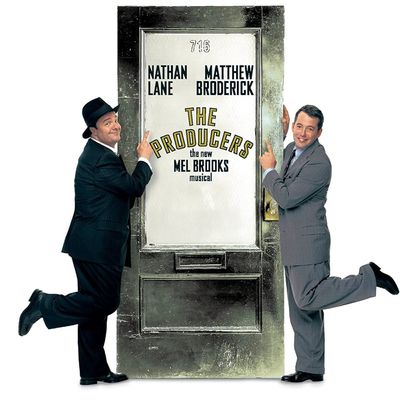
This is the second part of my conversation with Broadway actor, singer, dancer, director and choreographer Lee Roy Reams whose nine Broadway musicals span from Sweet Charity in 1966 to The Producers in 1996, and as you will hear – he is still going strong!.. Read More
From the show: BROADWAY NATION
Featured Shows
About
This is the second part of my conversation with Broadway actor, singer, dancer, director and choreographer Lee Roy Reams whose nine Broadway musicals span from Sweet Charity in 1966 to The Producers in 1996, and as you will hear – he is still going strong!
If you missed Part 1 you may want to listen to that episode first. We left off there with Lee Roy leaving his job as a dancer on the Carol Burnett Show in Hollywood and heading back to NYC because he was determined to move out of the chorus and start playing principal roles.
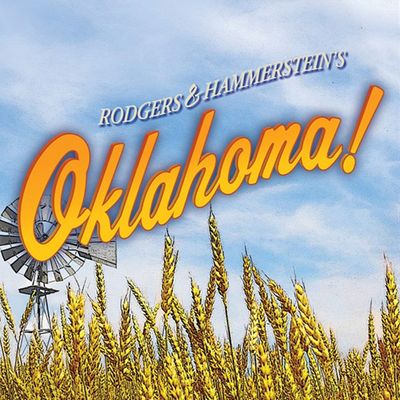
The many shows, stars and Broadway creators that we discuss include Richard Rodgers, Agnes DeMille, Gemze De Lappe and the 1969 Lincoln Center revival of Oklahoma!; Lauren Bacall, Penny Fuller, Bonnie Franklin, Ron Field and the Tony Award winning Best Musical Applause; as well as Carol Channing, Comden & Green, Joe Layton, Ernie Flatt, Peter Gennaro, and the musical Lorelie. And more!
Transcript
This transcript was automatically generated and might contain errors.
[0:05] David Armstrong: Welcome to another episode of Broadway Nation.
[0:14] David Armstrong: A podcast that tells the remarkable story of how immigrants, Jews, queers, African Americans, and other outcasts invented the Broadway musical and how they changed America in the process.
[0:25] David Armstrong: I'm David Armstrong, and I call this episode 50 Years on Broadway, Part 2.
[0:31] David Armstrong: This is the second part of my conversation with Broadway actor, singer, dancer, director, and choreographer Lee Roy Reams, whose nine Broadway musicals span from Sweet Charity in 1966 to The Producers in 1996.
[0:46] David Armstrong: And I'm very happy to say that he is still going strong.
[0:49] David Armstrong: If you missed part one, you may want to listen to that episode first.
[0:52] David Armstrong: We left off with Lee Roy leaving his job as a dancer on the Carol Burnett Show in Los Angeles and heading back to New York because he was determined to move out of the chorus and start playing principal roles.
[1:04] Lee Roy Reams: What an incredibly brave thing to do, to give up that money, to give up that security, to walk back to not having any idea what you might find in New York.
[1:13] Lee Roy Reams: Well, when I was doing Sweet Charity, I can't remember the famous casting lady out at Universal brought me in for an interview to become a contract player at Universal.
[1:22] Lee Roy Reams: And I went for the audition, and she looked at me and said, Yeah, we could use a kid like you on the lot. You're dark, so you can do all the Italian-Spanish things.
[1:30] Lee Roy Reams: And I said, Well, that's interesting because actually I'm Irish, and I certainly can do the accents, but I also sing and dance.
[1:36] Lee Roy Reams: She said, Well, we know that, but that's not really important. Now, singing and dancing is an end. We only read the we're doing charities for Shirley McLean.
[1:43] Lee Roy Reams: I said, Well, then what is required? She said, Well, you sign a seven-year contract. And we pay you $350 a week. And then every six months or so you get a raise.
[1:52] Lee Roy Reams: And I said, What is my outclause? She said, You don't have an outclause. You sign seven years, we own you.
[1:58] Lee Roy Reams: I said, Well, how about you? Can you let go of me? So, well, I can let go of you the next day. They can let go of you anytime, but you have to stay for seven years.
[2:05] Lee Roy Reams: And I thought, My goodness, I'm gonna stay in California and maybe do TV and bits and movies, and that's not what I wanted to do. And also seven years seemed like an eternity to me.
[2:15] Lee Roy Reams: And of course, at that time, the only variety show that was really successful was the Carol Burnett Show. And there was no chance for me to get ahead there because I was just a member of the chorus.
[2:24] Lee Roy Reams: So I thought I've got to go back to New York. So I went back home, and then Paul Rutledge got the show boat. They leased it from University of Indiana.
[2:32] Lee Roy Reams: So Paul said, if you stay and help me run the show boat, we'll give you credit for your master's degree. So I spent the summer doing that, and then in the fall, I went back to New York and immediately started working for Peter Jenner on the Ed Sullivan Show.
[2:44] Lee Roy Reams: Because I know I like making money and I've always worked. So I was doing that, but then I got an agent and I started auditioning for roles.
[2:52] Lee Roy Reams: And one of my auditions was for Will Parker at Lincoln Center because I had done a summer stock production of that in Miniola on Long Island with John Wraith. That's the first time I played Will Parker.
[3:01] Lee Roy Reams: Dennis Cole choreographed, and Dennis was one of Agnes DeMille's assistants. And Jim Zelap was her disciple.
[3:10] Lee Roy Reams: Right. And so when they were gonna do Oklahoma at Lincoln Center under Richard Rodgers producing with Agnes Mill's original choreography, but Jim Zelap was going to choreograph, and Dennis was going to be her assistant.
[3:21] Lee Roy Reams: So that's how I got the audition because I had done that show with Dennis. So I was told not to sing a Richard Rodgers song at the audition because he didn't like people doing his songs.
[3:31] Lee Roy Reams: And because if you didn't do it correctly, you did a wrong layer, he'd get upset. So I thought that I would impress Richard Rodgers that I was really a singer too, just not a dancer.
[3:39] Lee Roy Reams: So I decided to sing Leonard Bernstein's Lonely Town to use my big voice. So I got about two notes out, and he I don't want to hear you sing that song. You're auditioning for a comedy character, don't you have a comedy song?
[3:51] Lee Roy Reams: And I said, Well, no, Mr. Rogers. I said, But I can sing Kansas City. He said, Well, why wouldn't you sing that? You're singing in the show.
[3:58] Lee Roy Reams: I said, I'd love to sing it for you. So I did two choruses of Kansas City, and he said, Can you dance? And I said, Yes, sir. He said, Show me.
[4:06] Lee Roy Reams: So I had a dance routine that I did for him. And then he finished, and he said, Young man, I said, Yes, sir. He said, Is there anything you can't do? I said, No, sir, there isn't.
[4:14] Lee Roy Reams: And I got the job and I didn't read the script. He hired me from that audition. But in all fairness, I have to say, I'm sure Dennis told Jimsy about me, but that's all that I had to do with the audition, and the part was mine.
[4:27] Lee Roy Reams: And Agnes DeMille came into rehearsals once the things were choreographed to approve him. The Kansas City, that wasn't really one of her signature pieces.
[4:36] Lee Roy Reams: So I think that whoever did that originally, Lee Dixon, I think initially it was whoever was playing the role, they kind of put their stuff into it. So I did what was taught to me, but we also added a few things, and we made the ending longer.
[4:49] Lee Roy Reams: So we changed a few things. And when Agnes saw the number, she approved it. I was gonna ask you about that because there's a great video of you dancing the Kansas City number outside at Lincoln Center.
[4:59] David Armstrong: I assume it was for some TV promotion or something.
[5:06] Lee Roy Reams: What you're doing now, Will? All right, all right, the couple fellows doing it.
[5:17] Lee Roy Reams: And the choreography is sensational, and some of it is similar to what you see in other versions of Kansas City, but a lot of it is very different.
[5:24] Lee Roy Reams: I love that section where you're shooting all the cowboys, and there's a section where one of the cowboys does wings and you top him, and then he tips his hat to you. All of that was new.
[5:33] Lee Roy Reams: So I was wondering, was that created on you? Was that given to you? Where did that come from? The only thing that I did, a lot of the leaps I did bigger because of my ballet training.
[5:42] Lee Roy Reams: And because I'm more balletic in my dancing, I had more space when I danced. I wasn't a hoofer. So it became more balletic and bigger in scope as I moved.
[5:52] Lee Roy Reams: And then the end number where we did those steps, that was done quickly. And I said, no, no. What I'd like to do, I'd like to start it, and then add two guys, then add four guys.
[6:01] Lee Roy Reams: And so we just keep doing it, yelling and screaming. I would go upstairs, I'd run and I'd dive, and they would catch me to put a button on the number, which would make the applause better.
[6:11] Lee Roy Reams: So it was things like that. And Agnes DeMille approved it, and Jimsy was very collaborative.
[6:16] David Armstrong: So what was Agnes like? Were you intimidated by her?
[6:19] Lee Roy Reams: I remember being at several events with her in later years when she was very imposing. But I wondered what she was like in rehearsal.
[6:25] Lee Roy Reams: She was, you know, crippled by that time, and she came in with a cane, I guess from her strokes. And she had a big chair in the middle of the mirror, and she stood there as the empress, you know, on the throne.
[6:35] Lee Roy Reams: And then she would, you know, fix things. And it was fabulous to see what she would tell them and the images that she would give the dancers.
[6:42] Lee Roy Reams: And Graziella Danielle was one of the dancers. But Agnes didn't work so much with me because I only did the one number.
[6:49] Lee Roy Reams: And then the other number all or nothing was standard. You know, she was more interested in working with the ballet and doing many a new day and telling the girls about the brushing of the hair and making the birds fly and all of those images.
[7:01] Lee Roy Reams: It's always funny because everybody has a different image. And so no, they're scooting the chickens. No, it's the dove. So Agnes, of course, cleared up a lot of that stuff.
[7:09] Lee Roy Reams: And then Jimsy knew it to a degree. And I know I did an evening of Rogers and Hammerstein down at the Muni. And Jimsy came in and restaged the Potter Doug, I think to carousel.
[7:19] Lee Roy Reams: And the kids had learned. And then when Jimsay came in, I went to rehearsal that day because, you know, that's my thing. I want to watch the people do it.
[7:26] Lee Roy Reams: And listening to how Jimsy took the steps and told them what it was and how the music had to be played, and how the lift had to go with the music.
[7:34] Lee Roy Reams: And so, as Carol Channing's husband, Charles Lowe always used to say, it's the difference between chicken salad and chicken shit. Once you get the real thing about what it's supposed to be, and a lot of people make fun of that.
[7:46] Lee Roy Reams: But if you know what it is and you treat it with respect, it's art. And if it's done correctly, it can't be better.
[7:52] Lee Roy Reams: People say it's so old fashioned as it isn't. It fits the piece, and if it's taught correctly, it should really be treasured and kept.
[7:59] Lee Roy Reams: And I think in many ways it's the trappings that got old fashioned, not the actual choreography. It's the sets, the costumes, it's the way the show was done that seemed dated, and it made the choreography seem dated to some people.
[8:11] Lee Roy Reams: But when you take it out and put it in a contemporary setting, I think it still works beautifully.
[8:17] David Armstrong: Yes, it does. It does. Let's jump to Applause, 1970.
[8:21] David Armstrong: And again, I assume this is part of your mission now to play roles.
[8:25] Lee Roy Reams: Yes.
[8:26] David Armstrong: And this turns out to be a significant one for you.
[8:29] Lee Roy Reams: Yes.
[8:29] David Armstrong: Tell us about how that came about. What was your process of getting into that show?
[8:34] Lee Roy Reams: Well, I had an agent by that time. And of course, the role was a singer dancer, and we knew that it was a reinterpretation of Thelma Ritter from the movie, and he was going to be a gay hairdresser, which now seems so calm, but back then it was a big deal.
[8:49] Lee Roy Reams: And as a matter of fact, my agent warned me and said, I don't know whether you should be playing a gay character. But I didn't even think about it, David.
[8:57] Lee Roy Reams: First of all, I am gay. I'm very proud and secure about that. So I thought, well, why shouldn't I be playing a gay hairdresser? And I wouldn't play him stereotypically.
[9:07] Lee Roy Reams: I wouldn't want to do that. And it wasn't what Ron Field wanted either. They wanted him to be a real person, you know.
[9:14] Lee Roy Reams: And of course he had to have a bit of a flair. So with the audition, my agents said, they liked you very much. I think they're gonna make an offer.
[9:22] Lee Roy Reams: Well, they didn't. Ron hired Garrett Lewis instead, who's a tall, good looking dancer from California who is like a leading man looking guy.
[9:31] Lee Roy Reams: And I was so depressed that I lost the part. And Juliet asked me to do her act again. It was the third time, and I was going back to Covington to spend Thanksgiving with my family, and I was gonna go to California, and I was very depressed.
[9:44] Lee Roy Reams: And I was in a relationship with Bob Donahoe, then who became my husband, when we could legally do it. So I I was with him for 50 years. And he's now gone, unfortunately, but you know, we had a great time.
[9:55] Lee Roy Reams: And so when I got back, Juliet's manager called me and said, Julia, I want you to come out earlier. And I didn't want to do it. I wanted to spend Thanksgiving with my family, but I had a Victoria Page moment from the red shoes.
[10:06] Lee Roy Reams: It's like the shoes just stopped. So I said, I don't want to do the job. And he said, Well, you have to call Juliet. I'm not gonna get him. And I called Juliet, and I was so sorry.
[10:14] Lee Roy Reams: I said, Julia, please forgive me, you know how much I love you, but I can't go back again. I can't go back. I have to return to New York. I just have to go back. And I did. I went back to New York and again, back on television, dancing in the chorus after doing Will Parker. I had to swallow my pride and very depressed. And that New Year's Eve, Bob got a big bottle of champagne for us, and we made a toast, and I said, you know, that part should have been mine. I should have played that part. He said, Well, there'll be other parts, and happy new year. The next day the phone rings, they fired Garrett Lewis. And I had to come in, and I mean, they were almost into run-throughs. Wow. So I had to really learn everything quickly.
And so they threw a script at me, and Ron said, I'm so sorry, and all of that. But anyway, I'm a professional. And so he said, now in the first scene, you come in and it's backstage, and you go in and you go over and you stand at the end of the state by the where the closet is. You go over there, stand by the closet. Said, okay. I said, Well, when I come in since they don't know who I am, can I carry a fall and be brushing it? And I was introduced to Lauren Bacall. I said, And Miss Bacall, I and she said, My friends call me Betty. And I said, Betty. And she said, That's better. I said, I won't touch your hair, but at least I'll prim so they'll know that I'm the hairdresser, you know, because that would establish my character.
And Ron said, okay, whatever, just do it and go over and stand by the closet. So they start the scene. The scene's going on and on and on, and they're stopping and starting. And finally, I raised my hand. I said, Excuse me, when does this character get out of the closet? Well, Lauren Bacall laughed. She threw her head back, and that was the beginning of a beautiful friendship. From that moment on, I can't explain it to you, David. We were like that. We started hanging out together when we got out of town. I went to dinner with her. We became the characters off stage that we were on. And that became a friendship for my life. I always arrived at the theater, went in to see her first, and then I would get dressed, and then I would always go in at the end of the show to be with her, because we would usually do things. So after the show, I would come down to her dressing room and I would walk her to the limo, and of course she would drop me off too. So I got limousine service too. But that's how it all began.
[12:27] ♪ Musical number: "But Alive" — performed by Lee Roy Reams ♪
[13:22] David Armstrong: So I have a question. You're playing this gay character. It's a year after Stonewall. Were you aware? Was Ron Field aware? Were the creators of the show aware that they were making a statement, that they were doing something bold, that you're in essence a gay rights pioneer? Did you have any sense of that at the time?
[13:39] Lee Roy Reams: Not to the degree that it became. But yeah, they knew, and it was Comden and Green's idea, because they wrote the book to take the Thelma Ritter character and make him a hairdresser.
[13:49] David Armstrong: What the modern version of that character would be.
[13:51] Lee Roy Reams: That's right. That's right. Because a lot of stars, the hairdresser became like that person. And I was warned. They said you're gonna get stereotyped. But I didn't even think about it twice, David, because I was only concerned about number one having a role, and number two, being with Lauren Bacall and Comden and Green, Charles Strouse, Lee Adams. Why wouldn't I want to be in that company? And I just thought of it as an actor. You know, I'm gonna play a character, and I'm not a hairdresser. Then we didn't want him to be portrayed with that stereotypical squishy thing. We wanted him to be a real person, and why shouldn't I play it? As a matter of fact, the person that I chose to use as my image for that character was a hairdresser that was on Oklahoma at the time.
His name was John Qualia. And we became friendly. So that's who I based my character on. And actually, Tommy Tune in his book says he was the first person to play the gay character in Cison Natsu. Actually, René Auberjonois played a gay character in Coco and referred to his boyfriend or whatever, but it wasn't as specific as applause. I now have that title as being the first openly gay character in. And the big line was Margot Channing says to Dwayne Fox, Duane, how would you like to take two lonely ladies out on the town tonight? And he said, Well, I can't, I've got a date. And she says, bring him along. Now, that was rather tame to us and funny and subtle. But when we were out of town in Baltimore, and when we said that line, bring him along, there was like a gasp in the audience.
And then we go to the gay bar. She's here! Oh God, I can't believe it! She's tears! Woo! Now that's the first time a gay bar was ever on, a stage as far as I knew. And the audience was just like this. And when we entered the bar, it was all in pantomime. And I come on with Eve and Margot, and my boyfriend comes up to me and kisses me like in the mouth. Well, we come in and we go, the audience went, woo! Like this.
[15:58] David Armstrong: Wow.
[15:58] Lee Roy Reams: And then, of course, the joke was, and I introduced Margot in Pantomime, and of course, he puts out his hand to Margot Channing. He kisses me, but that's the joke, right?
[16:07] David Armstrong: Yeah.
[16:08] Lee Roy Reams: Well, honey, from that point on, the audience didn't laugh very much. And the next day we go into rehearsal, and Ron said, Leroy, I said, I know, cut the kiss. So then what we did, we walked in and I would hug him, and then you know, he would extend his hand to Marg. But it was a thing back then. We didn't think of it that way because we're New Yorkers and all of that. It's show business. But yeah, it did have an effect. But in contrast to that, David, what has happened? A lot of gay men who were younger, that was a huge thing in their lives. And I have received this over and over again. Guys coming up to me saying, When I was young and I saw you in that show, you don't know what an effect that had on me. To see a gay man had substance and this and that. They said you were a huge image for us. And I never thought of it that way, but it's true.
[16:54] David Armstrong: Absolutely. That same reaction that you're getting from that audience, you're having the equal reaction from young gay men and not so young gay men all across the country, eventually, when the show goes on tour, because of this part that you helped to create.
[17:15] ♪ Musical number ♪
[17:40] David Armstrong: That visibility was so important. And it was important to Ron Field too. Ron did not want that character to be a stereotype and being cheapen. Broadway Nation will be back right after this short break.
[17:58] David Armstrong: So tell us about Ron Field. It's somebody who we don't remember very well, even though he won two Tony Awards for applause for direction and choreography. And that was a giant hit show in its day. It was one of the defining shows of my young life, because it was the big show that opened when I was just at the right age for that to mean a lot to me.
[18:17] Lee Roy Reams: Sure.
[18:18] David Armstrong: What was Ron's contribution? What was he like? What did he bring to the show that we should remember?
[18:22] Lee Roy Reams: To make a longer story longer, I first met Ron when he came to California to do a TV show. And two other dancers and I were called in for a private audition because he needed an extra dancer. And at the audition, I wore a pair of navy blue dance pants. I had a red and white striped shirt, and in those days in the 60s, we wore scarves. So I had a little scarf around my neck, which was blue and white polka dot. And I had white jazz shoes. And so at the audition, Ron Field just didn't really even look at me. And I'm not bragging, but I knew I was the better of the three dancers there. He didn't take me. He took the one dancer and actually had an affair with him later. And then he backed out, and then he took the other dancer, and that was it.
And then after that meeting, I did a special, the Sid Cherie special, where I danced with Sid Charisse. And Tony Charmley had a big party the night that was going to be on, invited all of us, including Sid, and we were gonna watch the show on TV. Well, at that party was Ron Field. So, as we're watching the special, of course, I'm dancing with Sid Cherice. And so at the end, Ron Field came up and said, I owe you an apology. He said, I didn't know who you were when you auditioned for me because all I could see was an American flag with that outfit that you had on. And I took a beat and I said, Well, God forbid I could dance. I thought, you know, fuck you. I mean, you know, there's other people I can work for.
So that was my initial thing with Ron Field. But then when I got the call for applause, Ron and I did become very friendly until his death. And he was wonderful on applause. And it was his first big responsibility. The first show he directed, he had done cabaret, which is by the way, some of the best choreography ever in the musical theater. That show was so brilliant, and Ron's work in it was brilliant. And Betty loved him. Betty loved Ronfield, and she was very dependent on him. They almost replaced Ron out of town because our reviews in Baltimore were mixed. The gay thing, one of the reviewers called it a lot of homo ho hum. Oh yeah. And Diane McAfee was certainly okay, but it wasn't working. The original Eve who got replaced by Penny Fuller.
[20:29] Lee Roy Reams: Yeah. And Penny Fuller made a big change in the show. She really did. She was a big reason that show was better. But anyway, they were insecure and ever going to replace Ron Field. And Bacall stood by him and she said, "Look, I bought this show with Ron Field. You don't take Ron Field, get yourself another leading lady." So Ron stayed and got the Tony Award for Best Musical in Ron's work and Bacall. I can understand why Lauren Bacall felt so strongly about him because those numbers were so beautifully crafted to her level of talent, which was sensational in terms of star quality. But she was not an experienced musical theater performer. No. But she was musical. And that's what saved her. She understood the beat, and she also had great style, and with that very commanding voice of hers.
And no one could believe that she could do anything musical. So it was a great surprise to everybody. And she was a bass buffoon, I mean, you know, that's for sure. But she understood and she loved doing it. She really did. She was such a good sport. And we just all had a great love affair. Everybody connected with the show did. And when Penny Fuller came in, it was unfortunate for Diane. But Diane was a younger girl and she was dark, and they liked that contrast, but it didn't stand up as competition as a woman. And Penny is such an experienced actress. I'll never forget her first rehearsal. Because everybody in the company were was insecure at that point because I was a replacement, which happened just before they went out of town.
Now they're replacing Eve Harrington. So everybody is like this. But Penny came in and we started the rehearsal, and Penny walked in as the character, and she did a little thing where she looked at all of us, and then she looked at Lauren Bacall as Margot Channing, and something happened in her. And I went, ooh, look out. She knows what she's doing. Penny didn't need direction. And at the end of the first act, when there's that concentration, and you know, and Eve says, paraphrasing, please forgive me, Miss Channing. She said, but please believe me. And of course, Bacall would look and say, "Oh, I do. I do." And of course, she would go into "Welcome to the Theater." And what Diane would do was just put her head down and kind of shrink off.
Not Penny. Penny looked, and Penny dismissed Bacall as she walked off. Well, Bacall tore into that number with such vengeance. And then when she finished it, Bacall threw up a ramp. She said, "Thank God I've got an actress." And Penny embraced her, and that was the beginning. When we got to Detroit, the reviews were much better. There was Penny's performance that did that. Is there anything specific about Ron Field putting a number together that you remember? Any specific memories about the way he shaped things? The applause number stayed the same from the very beginning. It never changed. And it was so odd that in a musical, a character who has nothing to do with the plot whatsoever walks out on stage and does the title song with a big production number and has absolutely nothing to do with the plot.
And when's the Tony Award? And when's it? Well, she was nominated. Oh, she was nominated. She was not. Melba won that year. Oh, that's right. And again, friendships that you make, Bonnie and I were blossom buddies from that moment on until the day she died. And she's no longer a gypsy. Never changed. Those two production numbers never changed. The only thing that happened out of town, they put in something greater. The song at the end of the show. Outside of that, nothing dance-wise ever changed. But Ron was a choreographer. And his stuff wasn't always easy. It could be very complicated, all that head jerking and all that little stuff that we did, but it was very effective. And he got the Tony.
[24:00] Lee Roy Reams: Next on Broadway for you is Lorelei. Just a kiss upon. And yet we dance on at all. Carol Channing first rose to stardom in the 1951 musical Gentlemen Prefer Blondes. And Lorelei was a sort of revisal of that show that would give Channing the opportunity to return to the role of Lorelei Lee 23 years later. I played the role of Henry Spofford opposite Tamara Long, and the cast included Peter Palmer, Brandon Maggart, and Dodie Goodman. Oh, but I know too well. Maybe. Ernie Flatt is the choreographer. So actually, Joe Layton in the beginning. Oh, it started with Joe Layton. I didn't know that. Joe Layton was the director choreographer. We went on tour. They replaced him with Condon and Green became the directors, and Ernie Flatt became the choreographer.
And Ernie didn't really change much because Ernie said there's nothing wrong with it. It works, you know. And then Ernie had to go back because he had commitments. And then Robert Tucker took over the choreography. And then they put in a new number for Tamara and I called "Let's Live in Sin," which was just awful. And it was embarrassing to even do. I mean, I can go through it if you want to get into it to tell you about the number. First, I'd like to hear about Joe Layton, who is another great name that did so many shows, Sound of Music. Again, a name that's sort of lost to us today. George M. He did George M. George M. Joe Layton's 19 Broadway musicals also include the choreography for Once Upon a Mattress and Direction and Choreography for No Strings and Barnum.
Is this your only time you worked with him? The only time I worked with him, but I loved it. I loved Joe. I liked his work as a director and as a choreographer. We got along great. And I thought his work in the show was terrific. I don't know why they changed it. Well, what happened? We opened in Oklahoma City. We were sold out every night. We got great reviews, but then we went to Dallas next, and the reviews weren't so good. And Joe had taken a week's vacation because he was tired and he didn't want them to find him. So they considered that as deserting the show and they fired him. Then they brought in Ernie and Condon and Green, and we were on tour for a year. And we came in every day for rehearsal, and we got an extra paycheck because they went beyond the limit of rehearsing, which didn't bother us at all.
We liked having the money. But we worked on that show changes for a year. And then finally they put in that number, "Let's Live in Sin," which wasn't good, and finally they took it out. And then they gave Carol yet another solo number. And as Dodie Goodman said, if she went to do a nightclub act, why did they hire all of us? And then when we got to California, they brought in Robert Moore as a director and Peter Gennaro as a choreographer, and he redid "I Love What I'm Doing," a tap number for Tamara Long. So then that's how we went through four directors and four choreographers during the year.
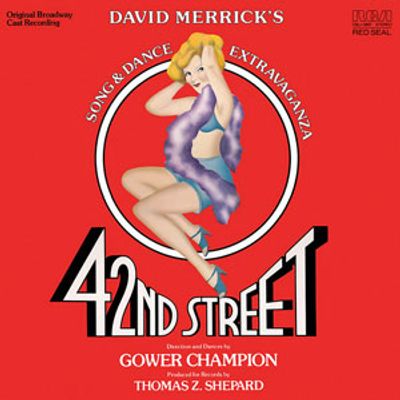
[27:11] Lee Roy Reams: Step on the gas and step to rhythm at class. We're keeping cool with cool teeth. Young folks, old folks, shake a leg. It's the cat's meow. Oh wow! Even if they break a leg, who cares? Papa says yes, mama says no. Vote yo, vote meow, yeah. Then Lorelei opened at the Palace Theater, and I played the Palace four times. So it was my good luck house. And I'm a lucky guy because all my Broadway shows were respectable runs. And of course, 42nd Street. It was eight years. Who writes the words and music for all the girly shows? No one cares and no one knows. Who is the handsome hero? Some villain always free.
[28:32] David Armstrong: On the next episode of Broadway Nation, Lee Roy Reams will take us inside the creation of 42nd Street, share his views on the genius of Gower Champion, and relive all of the drama of that show's legendary opening night.
[29:07] David Armstrong: Broadway Nation is written and produced by me, David Armstrong. If you enjoy this podcast, please follow, rate, and review the show on Apple Podcast or wherever you listen. This really will help other people who may be interested discover Broadway Nation as you have. Special thanks to KVSH 101.9, the voice of beautiful Vashon Island, Washington, and to the entire team at the Broadway Podcast Network.
[29:39] ♪ Musical number ♪
[30:09] ♪ Musical number ♪
[30:14] ♪ Musical number ♪
[30:18] ♪ Musical number ♪
[30:21] ♪ Musical number ♪
© Broadway Podcast Network, All Rights Reserved