

This is the final part of my conversation with Broadway actor, singer, dancer, director and choreographer Lee Roy Reams, at least for now. I am sure I will have Lee Roy back for another discussion in the not so distant future... Read More
From the show: BROADWAY NATION
Featured Shows
About
This is the final part of my conversation with Broadway actor, singer, dancer, director and choreographer Lee Roy Reams, at least for now. I am sure I will have Lee Roy back for another discussion in the not so distant future. There is no end to the amazing insights and classic show-biz stories that he has locked in his memories. If you missed the first two parts you may want to listen to those episodes first.
We begin this episode with Lee Roy sharing his experience playing "Cornelius Hackle" in the 1978 Broadway revival of Hello, Dolly! which was directed by an amazing woman named Lucia Victor. During her 45 year career on she was involved in more than 30 Broadway shows as a performer, producer, Casting director, stage manager and most significantly as the Production Stage Manager, Assistant To Gower Champion, and/or Production Supervisor on the original productions of Hello, Dolly, I Do, I Do, and 42nd Street.
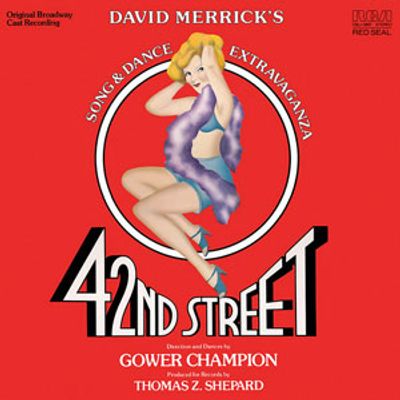
Along the way you will hear hilarious and heartbreaking stories about Carol Channing, David Merrick, Marge Champion, Bob Fosse and more! And most thrillingly Lee Roy takes us inside the creation of the smash his Broadway musical 42nd Street, illustrates the genius of its director & choreographer, Gower Champion, and shares all the incredible drama of its legendary Opening Night!
Broadway Nation is written and produced by me David Armstrong.
If you enjoy this podcast please follow, rate and review the Broadway Nation on apple podcasts or wherever you listen. This will really does help other people who may be interested to discover the show as you have. Special thanks to KVSH 101.9 The Voice of beautiful Vashon,, Island, WA, and to the entire team at the Broadway Podcast Network..
Transcript
This transcript was automatically generated and might contain errors.
[0:34] David Armstrong: Welcome to another episode of Broadway Nation, the podcast that tells the remarkable story of how immigrants, Jews, queers, African Americans, and other outcasts invented the Broadway musical and how they changed America in the process. I'm David Armstrong, and I call this episode 50 Years on Broadway Part 3. This is the final section of my conversation with Broadway actor, singer, dancer, director, and choreographer Lee Roy Reams. At least for now, I'm sure I'll have Lee Roy back for another discussion. There is no end to the amazing stories that he has to tell. If you missed part one and two, you may want to listen to those episodes first. We begin with Lee Roy sharing his experience of playing Cornelius Hackle in the 1978 revival of Hello, Dolly!, which was directed by an amazing woman named Lucia Victor.
During her 45-year career, Lucia Victor was involved in more than 30 Broadway shows as a performer, producer, casting director, stage manager, and most significantly as the production stage manager, assistant to Gower Champion, and/or the production supervisor on the original productions of Hello, Dolly!, I Do, I Do, and 42nd Street.
[1:51] Lee Roy Reams: Well, very detailed, very efficient, a lovely woman. I adored her, and I'm so glad that she was my first director on Hello, Dolly!. Of course, the choreography was identical. But I play Cornelius Hackle, so I didn't really dance in the show except for the elegance number, which was staged. Everything was exact Gower Champion, and Lucia was his production stage manager originally. So she had it all down to the nuts and bolts. So that's what we were taught. But at the same time, Lucia gave me room as an actor to discover Cornelius Hackle. I mean, she would never say, well, you know, if you say this word louder than this word, you'll get the laugh. And when Charles Nelson Reilly did it, I was so different from Charles Nelson Reilly.
And the reason I was cast in Hello, Dolly! was because of Carol Channing, because we had done Lorelei together. I got a call on the phone when he said, Hello, Lee Roy. It's Carol. Carol Channing, darling, listen, I'm doing a revival of Hello, Dolly!, and I want you to play Cornelius Hackle. But Lucia Victor, the director, and Jerry Herman don't know you, darling, but don't worry, you got the part. And that began. But Lucia was respectful to me as an actor. And I had my vision of how I wanted it to be played. And she allowed me the creative input to do that. I mean, she directed, but she gave me the freedom to discover the part the way that I saw it. So it was very different. He was more romantic in the revival, much less as a comic. And I love the show, obviously. It's been a staple in my life. I just love that show, and I love all of Gower's work in it.
[3:28] David Armstrong: It was my impression that you did more dancing than Cornelius had done before, but maybe you just did it with more flair and style and lap tire than everybody else.
[3:37] Lee Roy Reams: That's right. Because when I did the crossover doing the leaps, I could really do the leaps. I remember that vividly. And then also in the teaching of the dancing, I could be more physical. So I got bigger laughs with how I would contort my body. And of course, then when I really learned to dance with Irie Molloy and the rest, I really danced with her. So, you know, Dolly taught me how to dance. So it was more obvious because I am a dancer. And then when I did the revival that I directed, we did all the original choreography, but I changed some things. And I put more dancing in for Dolly. And Carol was then 78. I mean, 76. And I actually restaged So Long, Dearie. And I put more dancing in it.
I staged it more. Wave your little hand and wish for so long, dearie. You ain't gonna see me anymore. And Marge Champion was my date that night of the opening. And when the number happened, Marge looked at me, she said, You fixed it. I said, fixed what? She said, You fixed Dearie. She said, Gower never had time because it was put in at the last minute. She said, You made it so much better.
[4:41] David Armstrong: And Carol was game for that?
[4:44] Lee Roy Reams: Not in the beginning. Not in the beginning, because she was so busy trying to remember what she had done. And I kept saying, Carol, I don't want you to try to remember what you did. I want you to remember what you would do now. Because Dolly was like a women's liber. She was in a time when women couldn't vote. They were the product in a marriage of being chattel. And then when her husband died, because he gave us money and encouraged young things to grow, she didn't have money. She had to work, she had to support herself, and for whatever reason they didn't have children, but she had to live. So she became a matchmaker doing whatever a woman could do to make a bump. So I said, You have to have that independence.
And the only thing a woman could use that a man couldn't buy was her sex. So she could control using that. So her being more sexy to Horace Vandergelder, and especially in a scene where, you know, he said, I wouldn't marry you, or the last woman on earth, and her attitude is oh, you don't want to marry me. Well, I don't want to marry you. But what I got is so good, but you can't have it. So wave your little hand and whisper, so long, dearie, I'm so good, but you can't have it. It's a tease. So that's where I wanted to go. And not doing a strip number, but making it more sexual.
[5:58] Lee Roy Reams: And on those cold winter nights, Harris. You can snuggle up to your kisser. It's a little lumpy, but it rings. And once Carol got into it, then she loved it. So then you finally get to work with Gower Champion himself on 42nd Street in 1980. Did that happen because you'd been such a success performing in Dolly?
[6:29] Lee Roy Reams: Had nothing to do with it. First of all, Mike Stewart, who I became close to with our revival of Dolly. We became close friends. And Mike told me that he was doing a musical based on 42nd Street. Of course, I knew the movie. And so I said, Well, you know, Mike, I would be very right to play Dick Powell. And never heard from him for a while. But then when the show was casting, I finally got a call to come in and audition. And I asked my agent the name of the character, and he said, Andy Lee. And I said, Is that the Dick Powell part? He said, No, no, they think you're too old for that part. They want you to audition for Andy Lee, who's like 40 years old, and he's the choreographer, and he doesn't have a solo, but he dances in the ensemble numbers.
And I didn't want to go to the audition. I was so disappointed. And of course, Bob is writing on a pad, take the audition, take the audition while I'm on the phone. So I said, Why should I take an audition that I don't want to play that part? He said, Go in and just do what you do. A light went off in my head. So I got my accompanist, Cheryl Hardwick, I'll never forget. And I said, Cheryl, first thing I'm gonna do, I'm gonna do my uptune. And in those days, of course, we auditioned in theaters, which puts you at a much better advantage. And I said, and let's not wait for them to ask me to sing a ballad. I'm gonna go right into a ballad. I can't remember what I did as my uptune. I was probably on a wonderful day like today.
And then I did I Only Have Eyes for You because it's a song I love as my ballad, and then Tony Kaye, who was one of the best dancers ever in the business. We had just done a Rogers and Hart review, and we did a big tap dance on which I choreographed. So I said, Tony, you're coming to my audition, and we're gonna do that tap dance. I just plowed on. It was very ballsy. And when we finished the tap dance, there really was like dead silence. And I thought, I've ruined my career. And coming down the aisle was Gower. And he motioned for me to come to the front of the stage, and I leaned over and he said, You're not right for Andy Lee. And I said, Yes, I know that. He said, You're very right for Billy Lawler.
I said, Yes, I am. And I got it. I got it that day. But then Gower was famous for changing his mind. Like Mack and Mabel, I said you just say, Mack and maybe, because he changed the character so many times. But then I got a call to come back and audition again. And I thought, well, now this callback, everybody in town's gonna be there. But no, he called me back and he said, I'm getting ready to pick Peggy Sawyer, and I just wanted to see you again and watch you do what you do. Still no contract. And then I got a call that he wanted me to come in and rehearse with a girl that he was maybe going to pick to play Peggy Sawyer. So Karen Baker, Randy Skinner, the two dance assistants, and by the way, Karen Baker from Cincinnati is one of his assistants, and we were partners in Cincinnati and worked in the opera together and went to school together.
So the four of us are rehearsing with Lisa Brown, who was the candidate. And so after we finished the rehearsal, she left and Gower said, So what do you think? And I said, I love her. I said, I think she is so right for the character. And Karen said, Well, she's not a great tap dancer. And I said, Well, I think she was under a lot of pressure. She can learn that. Well, Gower decided to give her the part. So Lisa handed in her notice to her soap opera, and she was also in Best Little Whorehouse in Texas. She handed in her notice. And on Monday, she was going to go in and sign her contract. On Saturday, there was an open call for chorus people for 42nd Street. In the chorus call was Wanda Richert.
And when Gower saw her, he said, She's very good. And Karen said, Yes, she's excellent. And he said, Well, keep her after the audition, and maybe she could be the understudy. So he auditioned her after the thing and he changed his mind. And so Lisa Brown, having her notice in on two jobs, ready to come down on Monday, and was told she didn't have the part.
[10:11] David Armstrong: Was she able to get those jobs back?
[10:13] Lee Roy Reams: Well, interestingly enough, she got the soap opera job back, but the whorehouse, no, they had replaced her. But what she did, she replaced Wanda when Wanda left. So she got to do the show. And she was wonderful in the part. She really was. Wanda as a dancer, you couldn't touch her. Wanda's one of the finest dancers I've ever worked with. And our legs fit together. Gower knew what he was doing. He matched the dancers. And also Wanda and I were jazz dancers too. So in the tapping, we added a whole jazz conceptual feel to that pot of joke. Which no one else has been able to do, I have to say. Because they danced on top of the floor. We danced into it. That was all created on us. And Wanda, Gower, Randy, Karen, and I rehearsed for a week before we started official rehearsals. And that was, again, one of the best weeks of my life.
[11:33] Lee Roy Reams: And so those numbers were created on our bodies. Because Gower didn't tap dance. And Karen and Randy, of course, put in the steps. But Gower choreographed it. It was all his stuff. But like in We're in the Money, that number was not mine in the beginning. It was for the girls. Then one day in the rehearsal, Gower said, You're working so hard in this show. I've got to give you a number. I'm going to give you money. So he got Randy and Karen, and we went into another room, just the four of us, and we did money. And Gower designed it, and he gave some moves, and Karen and Randy added the tapping. And then Gower said, Enter, come down, go left, then come back to right. Then the big dime comes in.
And I said, Well, I know what to do. And I did my tapping. I did the traveling time step with total things and all of that. And then I said, when the thing comes in, I'll just do this in front of it. And he got up and he said, now tap around, do your steps, and then go around the perimeter now. So he designed the movement, but I put my taps in.
[12:44] David Armstrong: Talk a little bit more about that, because I think not everybody understands that a dancing star will often contribute to the choreography themselves.
[12:52] Lee Roy Reams: Like Ann Miller.
[12:53] David Armstrong: Yeah, exactly.
[12:54] Lee Roy Reams: Or Bobby Van, I understand on No, No, Nanette did his own material. Or if you look at the movies, Fred Astaire and Gene Kelly choreographed their own stuff. They didn't do the ensemble. Gene Kelly did, but Fred Astaire didn't do the people around him, but he always did his own stuff. Yes. And Hermes Pan, by the way, Fred and he worked together as partners. You can tell Fred had a style. Hermes could add to it or say no, do this instead of that. But they were so joined as people that it was like, you know, having your brother there with you doing the work. It was that flawless. Where Gene did almost everything. So in this particular case, Gower trusts you to bring yourself to the choreography and to bring your own steps to the choreography, in fact.
[13:35] Lee Roy Reams: We were so in tune, David, he didn't have to tell me what to do.
[13:39] Lee Roy Reams: He would look at me, and I instinctively knew what he wanted me to do. When we staged games, it was very complicated because the girls and their colors. So Randy and Karen were moving the girls around, getting them in the thing. And Gower said, "Look," he said, "I don't have time, Leroy. Whenever you have a solo line, wherever the hole is, go through and pose and do what you do." So that's what I did. I basically did my own stuff. And then what was brilliant the day that he staged "Olulla by a Broadway." I'm sorry, show business isn't for me. I'm going back to Allentown. What was that word you just said? Allentown. I'm offering you a chance to star in the biggest musical Broadway scene in 20 years, and you say Allentown.
Come on along and listen to the lullaby of Broadway. The hippo and ball. It was so simple, but it was so right. When they do the first thing, and it just in my mind, everything he had them do was natural. And then he starts adding the company. So he had Carol Cook, me, and two other people come in to sing the first entrance thing. And of course, one I came and went, "Come on along." They all laughed because they knew I was gonna get it. So I'm the first principal to come out. And then Karen Prunzik. Who was a brilliant dancer? We knew what to do. We knew when to come down the stairs and the moves. We knew when to go. It was just like he was staging, but we all knew what to do. It was one of the most thrilling afternoons I've ever spent in my life because it was so bright.
Simple, clean, it just couldn't be done better. And no one should ever re-choreograph 42nd Street. They should just do what Gower did. It's never gonna be better. It's not. And also the same thing with Hello Dolly. I don't care who the choreographer is, it's never gonna be better than Gower's original work. It's not. It's just perfect. It was as much a part of the writing of those shows as the music and lyrics. It all came together at the same time in the same place. And they're authors of those shows, is the way I think of it. And Gower, when he choreographed, he did dissolves. Like movie dissolves, like in dancing in Dolly. You go from the hat shop into the street into the next scene, and you don't have to wait for a scene change.
It's all choreographed. And in 42nd Street, when Dorothy Brock and the upper part of the set sings "I know now," and now it's like "I'll only have eyes for you." And then it goes down to the scene in the bar where everyone's singing, and then the things open, I come in, and we're into the show again. We have three different scenes all melding in a dissolve. Gower was brilliant at doing that. No one could do it better. He was a dancer, he knew how to move a show without any weights. Also, if you ever saw Carnival, which was my first Broadway show, Gower Champion's work in Carnival was brilliant. I've only read about it. I wish there was a video to see. Oh, I do everybody has talked about that opening sequence where the Roustabouts came in and built the tent. Gower never gets the praise that he deserves as a choreographer. He really was a genius.
[17:36] Lee Roy Reams: Don't go away. Broadway Nation will be back right after this quick break. He really was a genius. Fosse had the style, and Ronfield had a bit of his style, which it actually kind of jacked Cole too. And Michael Bennett certainly was great at what he did too. Gower, as a director, I remember in 42nd Street originally the scene opened with people auditioning and you know, picking the girls and all of that. And one day in rehearsal, Gower said, "Why am I bothering with this shit? It's about the tap dancing. Let's just open with the number." So he cut all that stuff, and it opens with that tap dance. I mean, no better opening than that. That was all Gower. And it's funny because I was there, and I've got other people that'll back me up.
Mark Bramble, who's passed on now, always talks about how he's in the back of the house. The night that the curtain went up and it got stuck, and the applause started. It was all planned that way from the very beginning. There was no accident. Nothing was ever an accident at a Gower Champion show. He thought out everything. I'm telling you, not a move or a piece of scenery wasn't choreographed. That's the way it always was. That's the way he intended it to be.
[19:16] David Armstrong: I've never heard that story, but I would not have believed it because it's so clearly intentional and genius. You may not remember, I'm sure you don't remember this, but during previews, the previews for the show you will remember were delayed quite a bit for a month. And I was on your list at that time, and I remember I got a call from you saying, "Get to the theater because we're gonna have a show tonight." And I was one of those 200 or 300 people that were there at the very first preview of 42nd Street. That performance that you saw was only an invited audience. And that's the first time a New York audience saw the show. Now we were supposed to open the first week of August, but David didn't think the show was ready.
[19:56] Lee Roy Reams: David Merrick. Yeah, and Gower Champion was beside himself. He was so angry. And he stopped coming to rehearsals. And we would do the show at night with full orchestra costumes, and the only person in the audience was David Merrick. Because he was the only producer. And then Gower, you know, got sick and was in the hospital, and we knew it, but not knowing he was gonna die. But that performance that you saw, Gower Champion, that was the only performance he saw of the show in New York. He saw some of the rehearsals in the theater, but with an audience that was his first time seeing it with a New York audience, and the only time he saw it. And we didn't even know he was there. So after the show, I'm coming by and I'm passing Wanda's dressing room.
And Gower is in the dressing room. And I was so shocked to see him. I said, "Gower!" And we hugged and carried on. And I said, "Well, the show's gonna be a hit." With that audience that night, which was terrific. I said, "The show's a hit, Gower. That's a New York audience, and that's it. It's a hit." And Wanda said, "It's all because of you, Gower." And he looked at her and he looked at me and he put his arms out and he pulled us into him so tightly, hugged us, and he said, "No, it's because of us." David, I could cry because that was the last time I saw him, and that's the last words I heard. I didn't say goodbye. I just, I welled up like I, I mean, it's still so fresh in my mind. I'll never get over that moment.
And I left the dressing room. I was choked up. The last time I saw him, never saw him again. Then, you know, to go to that night, the official opening, when we had like 15 curtain calls, it was just like in the movies. And with all the photographers running down the aisle, and we were all like this. And then when David came out on stage, I thought he was going to say, because we knew Gower was in the hospital at that point. I thought he was going to say, "Gower Champion couldn't be here tonight, but I just want to thank him for this wonderful." That's what I thought he was going to say. And instead, he said, "This is tragic," which everyone laughed because it was a joke. What was tragic about all the curtain calls?
And then he just simply said, "Gower Champion died this afternoon." Well, everybody, I mean, there was an audible, ooh, in the audience, and he turned upstage and grabbed Wanda. And Jerry Orbach, thank God, had that presence of mind to say, "Bring in the curtain, bring in the curtain." And the curtain came down and hit the stage. Now, at that moment, I had a flashback. And I remembered a private conversation I had with Gower. And we were talking, in essence, I said, "You know, Gower, I'm a song and dance man, and I was born too late because I should have been at MGM." And he said, "I understand that," because he said, "You know, I came at the end of MGM. I understand that. But this show's gonna be that for you."
And he said, "And you know, Leroy, when they offered me 42nd Street, my doctors told me not to do it because they didn't think I was well enough." Because he told us the first day of that private rehearsal with Wanda and me that he had an anemic blood condition. He didn't say Waldronstrom's disease. We didn't hear that till later. And he said, "Once in a while I have to have a blood transfusion." And he would do that. Some days he'd come in late because he would have a blood transfusion. And he was active and looking great. So what the hell did we think? He was just going through a little bit of a, you know, an anemic blood condition, which they were gonna fix. So he said, "My doctors told me not to do it."
And he said, "Because, you know, I know what it is to work with David Merrick, and that's why I have such a thick contract, and it hasn't always been pleasant." He said, "But you know, Leroy, during the period of the 70s, I tried to get with it, I did the drugs, I walked the beach stoned with my son, and I went to the discos and tried to do the steps." And he said, "I just one day woke up and had to face the fact that I'm an old-fashioned song and dance man." He said, "That's what I am." And he said, "And when David Merrick offered me this show, I understood it, and I had to do it because I don't want to be remembered as a has-been." And boying, that's the memory that hit me. And so then, you know, like all actors, we've got an opening night party to go to, baby.
So we all got up and put on our tuxedos, and it was held at the big ballroom at the Waldorf Astoria. And you'll never believe this being in show business. It was a sit-down dinner with an orchestra. Wow. Because we only had one producer. Right. And we sat down at tables and were served with an orchestra to dance. And there's food left for the cast. We were served sitting down. We didn't have to stand in line and pick at the bone or find a place to sit down. And when I walked in to the ballroom, the first person I saw was Bob Fosse. And Bob Fosse came up to me and he said, "That son of a bitch." He said, "I filmed my death, and he had to do me one better by doing it on opening night." And we laughed.
And we held, and I said, "You know, Bobby, if there's a heaven and Gower's there, he's smiling down tonight." You gave him a big laugh. And that was the first thing that happened at the party. And then, of course, the rest is history. And there was a lot of criticism about David publicizing, you know, the whole thing. Because when David found out that Gower had died, he had all the PR people call the television stations and say, "Don't put it on the five o'clock news, and I'll make a statement and you can come to the theater and film me." He took advantage and turned it into an event. And as a result, our reviews were like news stories. Which friend, on all the major newspapers across the country, you can't buy publicity like that.
So David, being the producer he is, used it to his advantage. Now, were we taking advantage? Yeah, but listen, we got a hit show as a result, and the Gower Champion estate made a lot of money. And it's hard to understand what else he could have done. He couldn't have let people at two o'clock in the afternoon know that Gower Champion had died. Right. You wouldn't have a show that night. That's right. And what we were done as the cast members, we got a call in the afternoon from the stage manager saying, "David wants everybody to come to the theater at three o'clock. It's opening night." We've already done the show. What are you talking about? We've got limousines and families in from out of town.
And what do you mean? Well, it was David Merrick. We had to do what David told us to do. So we all go down to the theater. It was a drama beyond belief. But David worked it. He used it, and the show became a humongous hit.
[26:04] David Armstrong: Yeah. Well, I think that's the perfect place to wrap this up because we get Gower Champion, we get Bob Fosse, and we get you all in the same place in the same story. Really amazing. Thank you, Lee Roy.
[26:26] David Armstrong: Broadway Nation is written and produced by me, David Armstrong. If you enjoy this podcast, please follow, rate, and review Broadway Nation on Apple Podcast or wherever you listen. This really does help other people who may be interested to discover the show as you have. Special thanks to KVSH 101.9, the voice of beautiful Vashon Island, Washington, and to the entire team at the Broadway Podcast Network.
© Broadway Podcast Network, All Rights Reserved