

This is the third and final part of my recent conversation with Kevin Winkler, author of the fascinating new book: “Everything Is Choreography” – The Musical Theater of Tommy Tune. If you missed parts one and two, you may want to go back and listen to those before starting on this one... Read More
From the show: BROADWAY NATION
Guests

Featured Shows
About
This is the third and final part of my recent conversation with Kevin Winkler, author of the fascinating new book: “Everything Is Choreography” – The Musical Theater of Tommy Tune.
If you missed parts one and two, you may want to go back and listen to those before starting on this one.
As we ended the last episode, Tommy Tune had just received two 1990 Tony Awards for his direction and choreography of Grand Hotel, and, as Kevin noted, the following year he won two more Tonys for The Will Rodgers Follies, and became the first and only person to accomplish that feat two years in a row. The Will Rodgers Follies also received Tony Awards for “Best Costume Design”, “Best Lighting Design”, and most significantly, "Best Score” and “Best Musical” – beating out Miss Saigon in the process. Today we begin with a behind-the-scenes look at the making of that incredibly entertaining -- but today somewhat forgotten, musical.
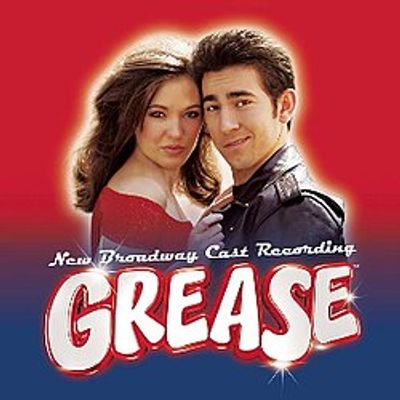
Along the way Kevin shares all of the backstage drama of The Best Little Whorehouse Goes Public, the "Tommy Tune production" of Grease, the ill-fated Busker's Alley and more!
Broadway Nation is written and produced by me – David Armstrong.
Special thanks to Pauls Macs for his help with editing this episode, KVSH 101.9, the Voice of Vashon Island, WA, and the entire team at the Broadway Podcast Network.
Transcript
This transcript was automatically generated and might contain errors.
[0:09] David Armstrong: Welcome to another episode of Broadway Nation, the podcast that tells the remarkable story of how immigrants, Jews, queers, African Americans, and other outcasts invented the Broadway musical and how they changed America in the process.
[0:23] David Armstrong: I'm David Armstrong, and I call this episode The King of Broadway, the genius of Tommy Tune Part 3.
[0:52] David Armstrong: This and every episode of Broadway Nation is made possible in part by our Backstage Pass Club members.
[0:58] David Armstrong: A heartfelt thanks to all of you for your generous support for the mission of this podcast.
[1:03] David Armstrong: If you too would like to become a member of the Backstage Pass Club, you can find information on exactly how to do that in the show notes for this episode at www.broadway-nation.com.
[1:15] David Armstrong: This is the third and final part of my recent conversation with Kevin Winkler, author of the fascinating new book, Everything is Choreography: The Musical Theater of Tommy Tune.
[1:26] David Armstrong: If you missed parts one and two, you may want to go back and listen to those before starting on this one.
[1:31] David Armstrong: As we ended the last episode, Tommy Tune had just received two 1990 Tony Awards for his direction and choreography of Grand Hotel.
[1:40] David Armstrong: The following year, he won two more Tonys for The Will Rogers Follies and became the first and only person to accomplish that feat two years in a row.
[1:40] David Armstrong: The Will Rogers Follies also received Tony Awards for Best Costume Design, Best Lighting Design, and most significantly, Best Score and Best Musical, beating out Miss Saigon in the process.
[2:00] David Armstrong: Today we start with a behind-the-scenes look at the making of that incredibly entertaining, but today somewhat forgotten musical.
[2:07] David Armstrong: Here we go.
[2:08] Kevin Winkler: Will Rogers is a very different show than Grand Hotel and does not come out of this workshop process and comes from a very different kind of place. How did he get involved with Will Rodgers Follies?
[2:19] Kevin Winkler: Will Rodgers Follies was the brainchild of a producer named Pierre Cossette, who had done a lot of things, but he was probably best known for producing the Grammy Awards telecast on TV. And he'd had the idea to do a show about Will Rogers for a long time.
[2:33] Kevin Winkler: Toon was tangentially involved with this for a number of years. Even before Grand Hotel.
[2:38] Kevin Winkler: Even before Grand Hotel, yes. At one point, it was to star and have a score written by John Denver. And that didn't happen.
[2:44] Kevin Winkler: And then Betty Condon, Adolph Green, Cy Coleman came on board, and Peter Stone came on board to write the libretto, the book.
[2:52] Kevin Winkler: On and off for a number of years. You know, when you work with people of this caliber, people like Cy Coleman, Tommy Tune, they were busy.
[3:07] Kevin Winkler: And there were issues with the book. You know, Peter Stone at first didn't really want to write the book for this show because he said Will Rogers had a spectacularly uninteresting life.
[3:16] Kevin Winkler: He was unknown, then he became known, then he became a big superstar, and then he died.
[3:21] Kevin Winkler: Right. But there's no drama, there's no conflict. But he found a way to kind of tell his story as a kind of, I think of Will Rogers as one of the last big concept musicals.
[3:31] Kevin Winkler: Because he found a production concept, a framework to show vignettes from across his life, all within the context of a Ziegfeld Follies extravaganza.
[3:43] Kevin Winkler: It's actually kind of brilliant, really.
[3:46] Kevin Winkler: Mr. Will Rogers, Fox Theater, Cedar Rapids, Iowa. Dear Mr. Rogers, pleased to invite you to join the ninth edition of My Follies, starring W.C. Fields, Eddie Cantor, and Ed Wynn. Stop.
[4:04] Kevin Winkler: Stop. Expecting an immediate and affirmative reply, most sincerely, Florence Ziegfeld.
[4:13] Kevin Winkler: Ladies and gentlemen, the Ziegfeld Follies of 1921.
[4:22] David Armstrong: And the original title was what?
[4:26] Kevin Winkler: So the concept was right there in the title from absolutely from the beginning. So it would be on the stage of the Ziegfeld Follies with Rogers reliving these vignettes and major events from his life.
[4:38] Kevin Winkler: And sort of fascinatingly, it exists in the present day and in Ziegfeld's and Will Rogers' time all at the same time.
[4:46] Kevin Winkler: They played with time in interesting and kind of disquieting ways.
[4:50] Kevin Winkler: So for instance, Rogers was very famous for pulling out of the day's newspaper and reading the headlines and riffing on them. And so when Will Rogers would do that in the Will Rodgers Follies, he'd pull out the New York Times from 1991.
[5:04] Kevin Winkler: If you were seeing it on May 10th, that's the edition he would pull out and quote from. So it's a fascinating concept.
[5:10] Kevin Winkler: It's one of the things that I think is so interesting about the show is that it was emblematic of changes that were happening in the theater, changes that have only accelerated since then in the 30 years since the show was produced, and that was that costs were beginning to skyrocket.
[5:25] Kevin Winkler: Will Rodgers Follies was always envisioned as an expensive show. It had to be lavish. The funding puzzle took a lot of time to put into place.
[5:35] Kevin Winkler: The number of producers and the number of investors that you needed to pull together to make these shows happen made them so complicated. And Toon's period of greatest success was during all of this.
[5:45] Kevin Winkler: When these things were happening, you know, Nine had a complicated funding structure by one and only, on and on. So he was not unused to this, and he stayed out of that, really.
[5:55] Kevin Winkler: But Pierre Cossette, who was the lead producer on this, really had problems raising the money for this. They got the star, Keith Carradine, and there was some difficulty finding a star for the show at first.
[6:06] Kevin Winkler: They had everything ready to go, and Cossette floated the idea of postponing the rehearsals for another season to give them a little more time to raise the money.
[6:14] Kevin Winkler: And Toon said, I don't know if I'll be interested in another year. So Cossette said, okay, all right, we'll get everything together.
[6:20] Kevin Winkler: So it just showed you how large Toon loomed as an artist and a creator and a real box office deliverer of hits. And his willingness to flex his muscles and say, here's what I need.
[6:28] Kevin Winkler: Here's what I need, and you need to get it together so that we can do this show. They did have kind of a quasi-workshop period before they went into actual rehearsals, was all done at the Nederlander Theater.
[6:44] Kevin Winkler: Again, because Toon liked to rehearse in theaters, for a number of years, he worked at the Nederlander Theater quite a bit.
[6:50] Kevin Winkler: If you go back to the old days before Rent moved in and stayed there for 12 years, the Nederlander was not a very sought-after theater. No one wanted to be there.
[6:59] Kevin Winkler: It was frequently empty. And so they built a replica of Tony Walton's full stage encompassing staircase on the stage of the Nederlander Theater to rehearse.
[7:08] Kevin Winkler: But anyway, the funding puzzle was very complicated, and part of it involved an agreement with a Japanese company whose name I'm forgetting now, but one of their requirements was that they would film the show to be shown on Japanese TV and sort of their equivalent of HBO.
[7:25] Kevin Winkler: And so there's a beautiful stage filming of the show, which is on YouTube right now. Sometimes with Japanese subtitles, but that's just part of the complicated funding puzzle that was part of doing a show at that point.
[7:38] Kevin Winkler: But we benefit from that now that you can just watch the entire production spectacularly filmed, too. I mean, it's a beautiful video capture.
[7:45] David Armstrong: Yeah, it really is. You were talking about the conceptual aspect of the show, which again I don't think people remember or appreciate how innovative that was.
[7:53] Kevin Winkler: So it was state-of-the-art 1991 stage technology evoking this grand bygone era of 1920s and 30s Broadway, and particularly Broadway niche, the Grand Ziegfeld reviews.
[8:07] Kevin Winkler: One of the things that's interesting, I mentioned earlier about him being a real minimalist, as all great director-choreographers are. This was his most opulent show by far.
[8:16] Kevin Winkler: It was far removed from Nine or Day in Hollywood and Night in Ukraine or even Grand Hotel. And yet it had a kind of simplicity to it.
[8:25] Kevin Winkler: There were very few set pieces, there were things that were flown in, but everything was done on that staircase. And he used it in a myriad imaginative ways to create different settings.
[8:38] Kevin Winkler: So even though it was fabulous costumes, Willie Kim costumes, just brilliant, it had a streamlined elegance to it. It was still a unit set, basically.
[8:48] Kevin Winkler: The only set was that big staircase. Now they made that staircase do everything in the world. It lit up, it retracted, it did everything.
[8:56] Kevin Winkler: It did everything but sing and dance. That's so different than what we see today. But one thing just reminded me of in Grand Hotel, there were no props.
[9:04] Kevin Winkler: Everything was mimed, not one single prop in the entire show. They're on a bar drinking champagne. They're just miming the champagne.
[9:11] David Armstrong: Yeah.
[9:13] Kevin Winkler: Again, that's so alien to what we see today. And yet I remember so many shows raised in was done that way with no props back in the 70s. It was part of the essence of that period.
[9:24] Kevin Winkler: Yeah, Toon says, too much stuff. You know, he lives his life this way. Where he lives, his apartment is it's not bare, but there's a sparseness to it that to me it's very relaxing and calming.
[9:36] Kevin Winkler: But something else that struck me when I was working on the Will Rogers chapter for the book, directing and choreographing a major multi-million dollar musical like Will Rodgers Follies, you have to be sort of the creative CEO of a large corporation with dozens of moving parts, with different departments reporting to you, assistants, associates, the designers, the musical staff, and so forth.
[9:59] Kevin Winkler: Again, keeping all those balls in the air. It struck me that Toon had a really kind of symbiotic relationship with his designers.
[10:07] Kevin Winkler: This was another show that was designed by Tony Walton. And Toon is also an artist, a painter, and a sketcher. And he storyboarded the show before he even got started.
[10:16] Kevin Winkler: And he had ideas for using rope as a motif. You know, Will Rogers was famous for his rope tricks. He had the idea to incorporate ropes as a kind of design motif.
[10:26] Kevin Winkler: And Tony Walton, of course, took that and ran with it. Give a man enough rope. Give a man enough rope. Give a man enough rope.
[10:34] Kevin Winkler: It's good to set your sights up high. But don't expect high in the sky. A guy might brush the guy, my brush. For that old pot of gold.
[10:45] Kevin Winkler: Because my friend the world is round, or so we are full. So be on four.
[10:53] Kevin Winkler: There's so many witty, clever touches. The passerelle around the orchestra pit was ringed with rope and so forth. So many clever things.
[11:01] Kevin Winkler: And Tony Walton said the storyboards really helped him clarify what Toon needed in terms of making the stage useful to him and evocative of the period.
[11:12] Kevin Winkler: So the storyboarding, if I were going to sit down and storyboards, I would have to be stick figures and it wouldn't look very good. But Tune, because he's an artist, could really give a real flavor of what he was looking for.
[11:22] Kevin Winkler: But I think the relationship with designers, with lighting designers, costume designers, scenic designers can't be understated.
[11:29] Kevin Winkler: That relationship of director with those artists. When he seemed very comfortable working with teams of people, he often had teams of choreographers and co-directors, co-choreographers working with him, and obviously managed that very well, and people were able to incorporate their work. They were doing substantial parts of the show, and yet I don't think people felt like they were being taken advantage of.
[11:55] David Armstrong: Right.
[11:55] Kevin Winkler: As a conceptual director, he has the ideas for things, but again, because he's the creative CEO of a big show, he obviously can't spend all of his time just on steps. So he'll come up with the concepts, assistants and associates will flush them out for him. He'll adjust them, fine-tune them, cut them if he needs to. So there's a give and take and a back and forth. And Toon’s always been very generous in giving credit to people who contributed to his shows. So many of his shows he was billed as the co-choreographer, the co-director of the shows, which is really fascinating. He didn't think twice about sharing that credit, and he didn't feel like it diminished him in any way.
[12:34] David Armstrong: No, no, not at all. So Will Rogers Follies, again, a spectacular show, a big hit. It's in this era of the mega musicals, the British mega musicals that's sort of holding the place for America in that era. We gotta prove that we can do it just as well as the Brits do.
[12:49] Kevin Winkler: Yeah, travel back with me, if you will, to the 80s. The British seemed to kind of own Broadway. Shows like Cats, Le Miz, The Phantom of the Opera, Miss Saigon. They in a way kind of sucked the creative energy, not intentionally, but that was the zeitgeist of that era. And Toon was one of the people who really kept the American musical kind of going concern. His shows were unique. Each one was a kind of occasion when they appeared. In doing research on the book, I was particularly struck by around the time he did Grand Hotel and then Will Rodgers Follies, there was a real boosterism among Americans, people like Jerry Herman and others saying, Come on, do this for the team. Gotta make the show a hit for the team.
When Will Rogers Follies opened, that was in the aftermath of Operation Desert Storm. There was a kind of, I don't know, jingoism, uh real resurgent patriotism. And of course, Will Rogers was an all-American favorite. You can't get any more all American than Will Rogers, and it opened right around the same time as Miss Saigon, the latest big British blockbuster. And there's an edge in terms of people in the industry really wanting Will Rogers to be a hit. And of course, it won the Tony Award over Miss Saigon. And Tommy Toon won for direction of choreography. So yeah, in a way, he was sort of, I won't say David going up against Goliath, but he was like an MVP for the American musical during that period.
[14:10] Kevin Winkler: And part of it, I often think the British invasion is made possible by the AIDS crisis because so many of the creators of American musicals die or are sidelined during this period. And Tommy Toon is the sort of survivor of that, or the one who's still there to carry on the torch. When Grand Hotel opened, Michael Bennett had just died about a year and a half before that. Gower Champion and Bob Fossey were gone. And it felt like he was the last one, the last one standing, certainly. So there was that energy behind his acclaim as well. And we don't know. We'll never know what we lost, the AIDS crisis. We'll never really understand. Not only what the shows Michael Bennett and Ron Field and all those people might have created, but the dancers who were working in those shows who would have been the next generation of choreographers and directors.
We almost skipped a generation to then Casey and Jerry Mitchell. There was a generation in between there. I don't know if you call it a full generation, but you know what I mean. A group of people in between there who we never got to see what they would do. There were people that I worked with. You know, I was a dancer in the late 70s to the late 80s. I worked with Chris Chadman, who was a protege of Bob Fossey's. There's no doubt in my mind that he couldn't have gone on, then a marquee name as a director, choreographer. Uh choreographer named Adam Grammas. I don't know if you're familiar with him. I don't remember. He danced in Shirley McLean's act for a long time. He began to make a transition to choreography.
He was a protege of Graziella Daniels. I worked with him on a couple of shows. Again, there's no doubt in my mind that he would have been one of that next generation of star choreographers. And those are just two names. There are dozens, hundreds of other people like that. The same with designers, writers.
[15:53] David Armstrong: Absolutely.
[15:53] Kevin Winkler: Every aspect of the business.
[15:55] David Armstrong: Every aspect of the business. The next chapter in your book I thought was probably the most interesting, but the most heartbreaking in a way, because we go into this period for Tommy Toon where he puts a lot of focus on performing, which is great. And I think probably personally for him was very rewarding, since that was of equal importance to him as his directing choreography career. But it also seems like he just doesn't have success in finding the right shows to stage during this period. None of them quite work out. And you tie it in a little bit to the death of his agent, his longtime collaborator and agent. You can see that his career sort of drifts at this point.
[16:33] Kevin Winkler: Yes, Tommy always gave his agent Eric Shepherd a lot of credit for giving him career advice, really shepherding, no pun intended, shepherding his career. And Shepherd was another person who died of AIDS. He died right around the time Toon was doing Will Rogers' Follies. And he said I was lost without him. He said I didn't have that broad range strategic view that Eric Shepherd could give me. So, yes, you know, it's funny. After Will Rogers' Folly, as we said, he was the king of Broadway. He could do anything he wanted. It's almost unimaginable to think that that would be the last Tommy Toon hit on Broadway. The last Tommy Toon hit, but not the last Tommy Toon show. Don't go away. Kevin and I will be back with all of the backstage drama of The Best Little Whorehouse Goes Public, the Tommy Toon production of Grease, the ill-fated Busker's Alley, and more right after this quick break.
[17:50] ♪ Musical number: "Give a Man Enough Rope" — performed by Unknown performer ♪
[17:54] Kevin Winkler: It's almost unimaginable to think that that would be the last Tommy Toon hit on Broadway. And he was young, he was in his prime. The shows that he was involved with in the next several years didn't work out for a variety of reasons. Including his biggest flop, Best Little Whorehouse Goes Public. He has a major, humiliating flop with that show. Best Little Whorehouse Goes Public seems like a great idea. And actually, the score by Carol Hall, who also wrote the first Whorehouse, is quite good. And a couple people I talked to about the show said they workshopped it at the Niederlander Theater. You would have thought it was gonna be the biggest hit in years, based on the reaction to the workshop.
[18:31] Kevin Winkler: I'm leaving Texas, and the more that I've been thinking, have to come right out and say I ain't too sad. I'm leaving Texas and my heart, it is not sinking. No, it hit her pats away, cause it's so glad. Goodbye to good old boys sucking on their long neck beards, bellies hanging out like sleeping homes. Goodbye to listening to them sing about their mamas while they treat their wives and sweethearts just like dogs. It's hell is Texas, yeah, it's dusty and it's barren. It's got a lot of chickers, ticks and nets. Farewell to Texas and to women with big hair and all those men in high-heeled boots and stupid hats. Goodbye to bowls of chili. Never really liked it much. I gotta say, it always gave me yes.
Goodbye to Rodeos and watching big old cowboys wrestle steers. We're going far here, and I hope nobody sees us. You drive his car here, banner. How can you have Jesus toe to rattlesnakes and horny toads? Old ass gunks on country roads. Call in pack, call it hogs, centipede and pitfold dog. Now for someone hears this song in Texas. I'm leaving Texas.
[20:10] Kevin Winkler: But there was a disconnect between a workshop with everyone in leotards and the show that emerged in all its gaudy spectacle and so forth. I suspect that if Best Little Whorehouse Goes Public were produced 20 years later, it would have had a better reception than it got at the time. I think the AIDS epidemic cast a pall on a show like that. It also seemed, and I saw that show, that the economy of what Tommy Toon did, the taste was suddenly thrown out the window for just more is more is more. Whereas less is more seemed to be his watch word prior to that. As I think I said in the book, he wasn't able to do with Las Vegas grandeur what he was able to do with Ziegfeld Follies. He wasn't able to kind of scale it down and simplify it.
It just seemed overstuffed. Even the Bob Mackey costumes, which are fabulous, it was more is more, and it seemed out of character with his other shows. And you quote somebody in your book saying, What happened to Toon? What happened to Tommy Toon? You also have to remember this was a double whammy because Best Little Whorehouse Goes Public opened at the end of the 1993-94 season. And a few days later, again, part of that same season, the revival of Grease, which he served as a production supervisor for, opened.
[21:25] Kevin Winkler: And didn't he have his name over the title of it? Well, it was built as the Tommy Toon production, and it didn't get good reviews. Although it was a huge hit, it ran for a long time. It toured very successfully, didn't get good reviews. One of the reviewers that I quote said, What happened to Tommy Toon? He had such great taste and style, and he's come up with these two shows. But every artist we can name has had flops. Of course. Unfortunately, these two were back to back and seems shockingly out of tone with Tommy Toon's style. But you know, Grease, you know, Toon's always been very adamant that he did not want to do revivals on Broadway. He says revival should be for Summerstock. He said, if we keep doing revivals on Broadway, what are we going to revive in 20 years?
And he's absolutely right about that. So he's never wanted to do revivals on Broadway. The Weisslers asked him to do this revival of Grease. He didn't want to do that. But Jeff Calhoun, who we'd worked with on Will Rodgers Follies and who had directed his one-man show that did a couple weeks on Broadway a few years earlier. Toon suggested that Jeff Calhoun directed and choreograph it, and he would serve as a production supervisor. So we would have the Tommy Toon imprimatur on it, but he didn't direct and choreograph it. But his influence, and I talk about this in the book, his influence came to bear in terms of the show's visual style. I'm not a fan of Grease, but he had some interesting ideas for that show, and he had some good people at Billy Porter.
[22:56] Kevin Winkler: It's out of time to you knew the story. They could not teach you anything. You think you're such a lookout. But no customer would cover you unless she was a bugger. Nobody knew who Billy Porter was at that time. He was terrific. And the show was, like I said, it was a huge hit. It didn't win any awards, but it was a huge, huge hit. And up until Chicago, it was the Weisler's biggest hit.
[23:25] David Armstrong: Right. Talk about some of these other projects that didn't even make it to New York during this period and that he worked on.
[23:30] Kevin Winkler: There were a number of different shows. Happy nights are always at in Buscar Alley. Because we're here to greet you. You'll be glad you came tonight to Buscar Alley. And we're glad to meet you now. Then, friends, you're in for a treat. Here's a stage right here on the street. No fancy lights, but then the price is right. Whatever's your pleasure. There's no fair affair than Buscarali. You know, I think that if Buscarali had come to Broadway, had opened on Broadway, as it had been planned to, it would have had a run. It would have been seen as counter programming to shows like Rent and Brandon Noise bringing to Funk. It was very much an old fashioned show with a score by the Sherman Brothers, which is terrific.
And Tommy Toon is the star of it as well. Tommy Tune's a star. Jeff Calhoun directed and choreographed it. And they went out on the road. They toured it for about six months. I think there were problems inherent in the book, like Peter Stone says, it's always the book. But I think they were working out at Peter Stone came in and worked on the book. They had begun to get better reviews on the road. And then, of course, this is also part of, you know, Broadway legend. Toon famously broke his foot near the end of the out-of-town tour. Right before they're supposed to come to Broadway. Right before they're supposed to come to New York. They thought about postponing. They tried to get Gregory Hines to come in as a temporary replacement.
Nothing worked, and they ended up closing the show. I think if that show had come to New York, it would have had a run. It would have, I think, been seen as a rather old-fashioned show, but it had a good score. And some extraordinary numbers, right? Fabulous numbers.
[25:19] Kevin Winkler: Love is so lovely. And life is so sweet. I tap happy optic mear set in the beat. I never could dance like this before got to blame it on someone. I adopt. And the concept for that show, the concept for this show's chorus actually came from Toon. They said they were auditioning dancers, and he said the choreography that Jeff had created looked great on the man, not so good on the women. So they came up with the idea of having a stage full of alter egos for Charlie, the lead character who Toon played. There were ten men who were spectacular dancers and performers.
[26:20] David Armstrong: Yeah, sort of the flip of nine.
[26:21] Kevin Winkler: That's a good way of putting it. So there were interesting things going on in the show. It had a great set by Tony Walton. Again, I think if the show had come in, it could have had a run. And Toon was a star. He was an above-the-title star who I think would have brought audiences in. It's just a shame that it turned out the way it did. Easter Parade, I remember reading about Easter Parade, I don't know, in the Times somewhere. And I thought Tommy Toon, Irving Berlin, Easter Parade, all these great numbers, Sandy Duncan. This is a hit. This is gonna be a hit. It's a no-brainer. And when I interviewed Tom Toon, I said, What happened? I thought this was a surefire thing. He said we couldn't get the book right.
And he said the budget, we couldn't make the numbers, the money numbers work. Right. And he said he just we couldn't make it work. So I really feel like that in a way, that's a real shame. It seems like a natural. In some ways, I sort of feel like that's the last time I heard about a new Tommy Toon show. It sort of marked it ending like, well, I guess he's not gonna do another show. To me, it feels a bit like the end of an era, in a way, that you know, he's someone who, as I think I wrote this in the book, he's someone who could take care of business. He could get things done. And the fact that he wasn't able to with this show, and Peter Stone had come in to work on the book. They did a couple of workshops, they couldn't get the money numbers to work. It just felt like it was the end of an era for that kind of show. It felt a little bit like the economics of Broadway defeated him.
[27:54] Kevin Winkler: Had shifted. They had shifted. It shifted so much he wasn't able to function in it anymore. Yeah. Which is sad in a way, because he's still very much alive. One of the contrasts between writing this book and your Fossey book is that you had Tommy Toon as a source. You know, in archival circles, we refer to primary source material, meaning the real thing. Well, Tommy Toon was my primary source material for this book, yeah, so that was a gift. And to have his enthusiastic cooperation on it. But all during this time, he was continuing to work as a solo performer. You know, he had an act with Manhattan Rhythm Kings that he toured for years all over the world, very successfully. You know, as he said, you work on things all the time, and some things work out and some things don't. And you go on to the next thing.
And he always had his performing career that was very successful. So my sense from speaking with him, and I hope I convey this in the book, he doesn't dwell on those things. He doesn't think badly about them or anything. He's perfectly happy to talk with me about them, but they're just sort of the kind of natural ebb and flow of a career.
[28:54] David Armstrong: So what do you think his legacy is? What is the legacy of Tommy Toon?
[28:58] Kevin Winkler: He was a tremendous stylist, and he was nimble, a nimble stylist. He could fit a style to whatever the material called for. So when we look back at his work, the Will Rodgers Follies couldn't be any different from Grand Hotel, which couldn't be any different from Best Little Whorehouse in Texas, which couldn't be any different from the club. The tremendous versatility that he displayed is remarkable. He's the polar opposite of someone like Bob Fossey, or even Goward Champion, who had a kind of worldview that they imposed on whatever material they were working on. Tunes, shows were not like that. Each of them looked very different. Having said that, there are elements that appear throughout his work, things that we've talked about today: simplicity, uh an intellectual rigor, a really symbiotic working relationship with designers who really he worked closely with to help bring his vision to fruition.
He's an important figure in the history of the Broadway musical, and in particular the history of the director choreographer, because he is a direct link to this older generation that started with Agnes DeMille, Robin's Michael Kidd, Champion, Fossey, Bennett, Joe Leighton, people we've mentioned. And then he's also someone who straddles another generation and his influence, again, as we've said, people like Susan Strowman, Casey Nicola, Jerry Mitchell, and so forth. So he's a conduit between an older sort of what we think of as the golden age, these talents that have brought the American musical into the 21st century. So in some ways, his role as a conduit may be even larger and more important than the individual shows that he did.
[30:33] David Armstrong: It's so interesting. I think the most Tommy Tune-like show on Broadway right now is probably Hamilton, in terms of the way it's staged and put on the stage.
[30:42] Kevin Winkler: Talk more about that.
[30:43] David Armstrong: Well, it's a unit set.
[30:45] Kevin Winkler: Yeah. All of the storytelling that's done through the choreography and the physicality is done just through the bodies. There's almost no scenery. There's only chairs on the stage.
[30:55] David Armstrong: I hadn't thought about it that way.
[30:57] Kevin Winkler: It follows that aesthetic, I think, to a great extent. And I don't know how much Andy Blankebueller was influenced by Tommy Toon, but I suspect he's of the right age to have seen a lot of those shows and to have absorbed that. It'd be fascinating to talk to him at some point and see what that influence has had on him. Hamilton strikes me as it's funny because the choreographer is not the director. Tommy Cale's the director, but it strikes me as almost the essence of a director-choreographer show. They were able to make it seamless. You don't know who did what.
[31:27] David Armstrong: Yeah.
[31:27] Kevin Winkler: Which, of course, is the goal when you have a director and a choreographer, is that somehow you end up with a product where I can't tell you who did which part of the staging. Yeah. So it that goes right into what you're saying. It is the essence of a director-choreographer show, even though it has two people doing it. And it's maybe not one big giant musical sequence, but it is extending these musical sequences for long periods of time, keeping that ball in the air, as you said about Tommy Toon. Also, it goes back and forth seamlessly between dialogue and song, and one flows directly into the other in a way that a lot of other musicals that are on Broadway right now don't. Yeah, it has all the hallmarks of a Toon Musical for all those things you said.
[32:03] David Armstrong: Yeah. Now I need to go back and see Hamilton with that in mind. Thank you so much, Kevin. I have thoroughly enjoyed these conversations. My guest today has been Kevin Winkler, author of the fascinating new book, Everything is Choreography, The Musical Theater of Tommy Toon.
[32:26] ♪ Musical number: "I'm Up Among the Stars" — performed by Unknown performer ♪
[32:46] David Armstrong: Broadway Nation is written and produced by me, David Armstrong. If you love this podcast and want to delve even deeper into the world of Broadway musicals, I invite you to become a member of the Broadway Nation Backstage Pass Club. For as little as seven dollars a month, members will receive exclusive access to never before heard unedited versions of every season two interview and many from season one as well. I often record at least twice as much conversation as ends up in the public episodes. And this includes additional in-depth conversations with my frequent co-host Albert Evans. You will also have the opportunity to ask us any questions about Broadway musicals that you would like to hear answered and to propose topics and subject matter that you would like me to cover, all of which I will incorporate into a special series of Ask Me Anything About Broadway episodes.
Last but certainly not least, you will receive special on air shout outs and acknowledgement of your vital support for this podcast. To join, just click the link included in the show notes for this episode on our website at www.broadwaynation.com. That's Broadway Nation.com. Special thanks to Pals Mox for his help with editing this episode, to KVSH 101.9, the voice of beautiful Vash on Island, Washington, and to the entire team at the Broadway Podcast Network.
© Broadway Podcast Network, All Rights Reserved