

This is the first episode of a new Broadway Nation mini-series that explores what I am calling, “The Other Broadway”... Read More
From the show: BROADWAY NATION
Featured Shows
About
This is the first episode of a new Broadway Nation mini-series that explores what I am calling, “The Other Broadway”.
Today when we see or hear the word “Broadway”, we most likely think of New York’s Theater District and it’s 41 active theaters nestled in and around Times Square (where today 36 plays and musicals have thankfully returned to the stage!) Or that word evokes the legendary cannon of shows that have played in those theaters, most especially those great, glorious Broadway musicals that up until now have been the principal subject of this podcast.
That, however, is really only part of what “Broadway” has meant to most people during the first half of the 20th Century – when Broadway was at the center of American culture. For more than 5 decades the word “Broadway” meant not just the performances in the legitimate theaters – those Plays, Musicals, and Revues. But also, or even more so, it meant the Nightlife that surrounded them. From the 1910s through the 1950s there were hundreds of cabarets, speakeasys and nightclubs crammed into the Theater District. And they epitomized “Broadway” just as much as what was happening in the theaters,
In fact, the most famous songs about Broadway – those anthemic tributes that you hear on every Tony Awards show and every Broadway themed occasion such as “Give My Regards To Broadway”, “Lullaby Of Broadway” and “On Broadway” – all have lyrics that are much more about the nightlife than they are about the shows.
During this series I will lead my listeners on a late night tour of Broadway’s most famous hot spots including Rector’s, Reisenweber’s, The El Fay Club, Club Durant, Club Richman, The Hotsy Totsy Club, Club Alabam, The Silver Slipper, The Pansy Club, The Stork Club, Casa Lopez, La Conga, 21, The Parody Club, The Rainbow Room, The Latin Quarter, El Morocco, The Astor Roof, The Cotton Club (it was in Times Square for a while), Billy Rose’s Diamond Horseshoe, The Copacabana and many more.
There you will rub elbows with such stars as Vernon & Irene Castle, James Reese Europe, Sophie Tucker, Clifton Webb, George Raft, Rudolph Valentino, Gilda Gray, Texas Guinan, Ethel Waters, Florence Mills, Helen Morgan, Harry Richman, Bill Robinson, Cab Calloway, Desi Arnaz, Tommy Dorsey, Frank Sinatra, Fats Waller, and Clayton, Jackson, & Durante to name only a few.
However, before we venture out into the night, we need to look back to the origins of this other side of Broadway, so in this first episode I explore exactly where New York nightlife began.
I hope that you enjoy it. I am now entirely obsessed and fascinated by this subject! Please let me know what you think!
Transcript
This transcript was automatically generated and might contain errors.
[0:06] David Armstrong: Welcome to another episode of Broadway Nation.
[0:09] David Armstrong: Come on along and listen to Broadway, the Hipporayan Ballyhoop.
[0:19] David Armstrong: The Ramble Subway play, the rattle of the taxi.
[0:23] David Armstrong: The back-duldo and a play, an angular magazine.
[0:28] David Armstrong: The podcast that tells the remarkable story of how immigrants, Jews, queers, African Americans, and other outcasts invented the Broadway musical and how they changed America in the process.
[0:39] David Armstrong: I'm David Armstrong, and this is the first episode of a new Broadway Nation miniseries that will explore what I'm calling the OTHER BROADWAY.
[0:48] David Armstrong: Today, when we see or hear the word Broadway, most likely we think of New York's Theater District and its 41 active theaters that are nestled in and around Times Square.
[0:58] David Armstrong: Where today, as I record this, I'm very happy to say that 35 plays and musicals have thankfully returned to the stage.
[1:06] David Armstrong: Or the word Broadway evokes for us that canon of plays and musicals that have played in those theaters during its storied history, most especially those that have been the principal subject of this podcast, at least up until now, those great, glorious Broadway musicals, their songs, their creators, and their stars.
[1:26] David Armstrong: But that is really only part of what Broadway meant to most people during the first half of the 20th century, that period when Broadway was at the center of American culture.
[1:35] David Armstrong: For more than five decades, the word Broadway meant not just the performances you could experience in the legitimate theaters, those plays, musicals, and reviews, but also, or even more so, it meant the nightlife that surrounded them.
[1:49] David Armstrong: During the 1920s, 30s, 1940s, and 1950s, there were hundreds of cabarets, speakeasies, and nightclubs all crammed into the theater district, and they epitomized Broadway just as much as what was happening in the theaters.
[2:03] David Armstrong: In fact, the most famous songs about Broadway, those anthemic tributes that you hear on every Tony Award show and every Broadway themed occasion all have lyrics that are much more about the nightlife scene than they are about the shows.
[2:17] David Armstrong: Take "Lullaby of Broadway" as an example.
[2:20] David Armstrong: Come on along and listen to the lullaby.
[2:26] David Armstrong: What does this song famously tell us that we should come along and listen to?
[2:30] David Armstrong: The hippo and ballyhoo.
[2:35] David Armstrong: What is it that constitutes the hipparay and ballyhoo of Broadway?
[2:39] David Armstrong: The rumble of the subway train.
[2:44] David Armstrong: The rattle of the taxi.
[2:47] David Armstrong: First and foremost, the song's lyricist Al Dubin tells us that it's the rumble of the subway train and the rattle of the taxi, both sounds that we would associate with a visit to Broadway today.
[2:58] David Armstrong: But then he introduces the daffodils who entertained at Angelos and Maxies.
[3:08] David Armstrong: Meaning, of course, the chorus cuties who sing and dance, not in a mainstem musical comedy, but rather in a fictitious nightclub that could be a stand-in for scores of other similar joints.
[3:19] David Armstrong: Then in the second chorus, he goes on to evoke the experience of being in that nightclub.
[3:25] David Armstrong: Come on along and listen to the lullaby on Broadway.
[3:39] David Armstrong: The man begins to go to the town, and everyone goes crazy.
[3:45] David Armstrong: You rock by your baby round till everything gets hazy.
[3:49] David Armstrong: The band begins to go to town and everyone goes crazy.
[3:53] David Armstrong: You rockaby your baby round till everything gets hazy.
[3:56] David Armstrong: He's not talking about the band in the pit of a Broadway musical.
[4:00] David Armstrong: No, he's referring to you and your baby dancing the night away in the wild, smoky atmosphere of the nightclub and getting dizzy and probably tipsy in the process.
[4:10] David Armstrong: And you and your baby don't call it a night and go home until it's early in the morning and the milkman's on his way.
[4:17] David Armstrong: Because Manhattan babies don't sleep tight until the dawn.
[4:21] David Armstrong: Let's call it lesson to the lava pie.
[4:35] David Armstrong: So this night out on the town on Broadway may indeed have included seeing a legit show earlier in the evening, but the song certainly never mentions it.
[4:45] David Armstrong: That's because in 1934, when this song was written, that was Broadway, just as much as seeing Ethel Merman in "Anything Goes" earlier that evening would have been.
[4:55] David Armstrong: And indeed, you might have seen Ethel again later that night at one of the nightclubs, either as a patron or as a moonlighting performer.
[5:03] David Armstrong: It was not at all unusual for Broadway stars to have midnight gigs at a nightclub after their show.
[5:09] David Armstrong: Now let's look at "Give My Regards to Broadway," which was written by George M. Cohan way back in 1904.
[5:17] David Armstrong: Although the first verse is a bit opaque in its meaning, give my regards to Broadway.
[5:23] David Armstrong: Remember me to Herald Square.
[5:25] David Armstrong: Tell all the gang at 42nd Street that I will soon be there.
[5:30] David Armstrong: Whisper of how I'm yearning to mingle with the old time throng.
[5:34] David Armstrong: Give my regards to Broadway and say that I'll be there ere long.
[5:39] David Armstrong: That's pretty general, but in the second verse, Cohan makes it very clear what he's talking about when he says, When you're at the Waldorf, have a smile and charge it up to me.
[5:49] David Armstrong: And in the song "45 Minutes from Broadway," which Cohan wrote in 1906, a character named Kid Burns, a Broadway wise guy, is complaining about being stuck in the small town of New Rochelle, and he sings, only 45 minutes from Broadway, not a cafe in the town.
[6:08] David Armstrong: Oh, the place is a bird.
[6:10] David Armstrong: No one here ever heard of Delmonico, Rector, or Brown.
[6:14] David Armstrong: All three of these songs are about Broadway babies missing the nightlife of New York, the world that they considered to be Broadway.
[6:22] David Armstrong: And as you will hear, the Waldorf Astoria, Delmonico's, Rectors, and Browns are a crucial part of the story.
[6:29] David Armstrong: Over the course of this series, I will lead you on a late night tour of many of Broadway's most famous hotspots, including Rectors, Risenweber's, The L Faye Club, Club Durant, Club Richman, the Hotsitzi Club, Club Alabam, The Silver Slipper, The Pansy Club, The Stork Club, Casa Lopez, La Conga, 21, The Parody Club, The Rainbow Room, The Latin Quarter, El Morocco, The Aster Roof, The Cotton Club.
[6:54] David Armstrong: Yes, it was in Times Square for a while.
[6:56] David Armstrong: Billy Rose's Diamond Horseshoe, The Copacabana, and many, many more.
[7:01] David Armstrong: Where you will rub elbows with such stars as Vernon and Irene Castle, James Reese Europe, Sophie Tucker, Clifton Webb, George Raft, Rudolph Valentino, Gilda Gray, Texas Guinan, Ethel Waters, Florence Mills, Helen Morgan, Harry Richman, Bill Robinson, Cab Calloway, Desi Arnaz, Tommy Dorsey, Frank Sinatra, Fats Waller, and Clayton, Jackson, and Durante, to name only a few.
[7:25] David Armstrong: But before we venture out into the night, I think we need to look back at the origins of this other side of Broadway.
[7:31] David Armstrong: Where exactly does the story of New York nightlife begin?
[7:35] David Armstrong: Well, at least for white upper class and middle class New Yorkers, it begins at Delmonico's, America's first restaurant.
[7:44] David Armstrong: It was founded by Italian Swiss immigrant brothers Giovanni and Pietro Delmonico.
[7:50] David Armstrong: Now, of course, Delmonico's was not America's first place to eat outside the home.
[7:55] David Armstrong: There had always been inns and taverns for travelers and working men that served fixed meals at fixed times.
[8:02] David Armstrong: And in its early years in the 1820s and 30s, Delmonico's was much like other eating houses that fed the lawyers, merchants, and stock exchange men of Lower Manhattan.
[8:13] David Armstrong: These were dark, uncomfortable rooms that served simple daytime food suitable for men who were in a hurry to get back to work.
[8:21] David Armstrong: And because of their all male atmosphere, women were heavily discouraged, if not outright forbidden to enter.
[8:27] David Armstrong: Outside of this, almost all other meals during the Victorian and Edwardian eras were eaten at home, where women were expected to stay.
[8:36] David Armstrong: By 1848, however, Delmonico's had evolved into what the New York Weekly described as an expensive and aristocratic restaurant, and in fact, the only complete specimen of its kind in the United States.
[8:50] David Armstrong: This was the achievement of the brother's young nephew, Lorenzo Delmonico, who took over the restaurant in 1848 and transformed it into a refined, efficient, and orderly institution.
[9:01] David Armstrong: Under his tutelage, the waiters were instructed how to provide fast, efficient, and extremely courteous and deferential service.
[9:09] David Armstrong: This itself was revolutionary, and such service became a hallmark of the era, and a century later would inspire the waiter's gallop in "Hello Dolly."
[9:18] David Armstrong: Lorenzo introduced dishes that were unknown outside of Europe, along with the concept of an a la carte menu offering a wide variety of meals, all served to order in luxurious and elegant dining rooms.
[9:31] David Armstrong: As New York gradually moved further and further uptown, so did Delmonico's.
[9:36] David Armstrong: When it arrived at Fifth Avenue and 14th Street in 1863, it hired a great French chef named Charles Ranhofer.
[9:44] David Armstrong: From then until 1895, he would substantially elevate the standards of American dining and help Delmonico's to achieve an unprecedented level of sophistication in atmosphere and cuisine.
[9:56] David Armstrong: Among the dishes that Ranhofer introduced or invented there were Chicken a la King, Lobster Newburg, Steak Delmonico, Eggs Benedict, and Baked Alaska.
[10:07] David Armstrong: Delmonico's cultivated an atmosphere of elegance and exclusiveness.
[10:11] David Armstrong: As one writer put it, there is always the peace, order, comfort, and elegance for which Delmonico's is famous.
[10:19] David Armstrong: And by the 1860s, this even made women feel comfortable and welcome there.
[10:24] David Armstrong: They were comfortable in part because no unescorted women were allowed to enter.
[10:29] David Armstrong: Women could only walk through Delmonico's door on the arm of a man.
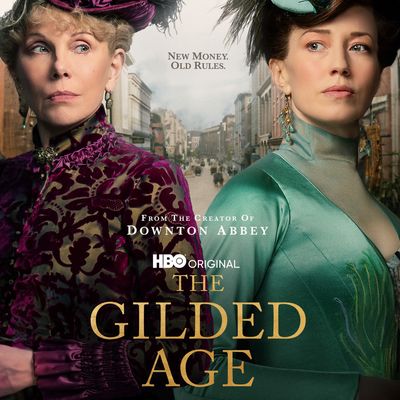
[10:33] David Armstrong: Samuel Ward McAllister, the real-life character that Nathan Lane plays on the HBO series "The Gilded Age," was one of the men who escorted women to Delmonico's.
[10:43] David Armstrong: McAllister had pretty much appointed himself the arbiter of New York High Society.
[10:48] David Armstrong: Socialite Elizabeth Lair called him the Shepherd of the 400.
[10:53] David Armstrong: And in fact, it had been McAllister that inspired Caroline Astor to establish the concept of the 400.
[10:59] David Armstrong: A number that was first broached when McAllister said in an aside to a reporter in 1888, why there are only about 400 people in fashionable New York society.
[11:10] David Armstrong: If you go outside that number, you strike people who are either not at ease in the ballroom or make other people not at ease.
[11:17] David Armstrong: See the point?
[11:18] David Armstrong: His 1890 memoir, which he titled "Society as I Have Found It," includes a poem that was written in his honor by a friend following a dinner that McAllister had hosted at Delmonico's at the height of his influence.
[11:31] David Armstrong: It reads, There ne'er was seen so fair a sight as at Delmonico's last night, when feathers, flowers, gems, and lace adorned each lovely form and face.
[11:42] David Armstrong: A garden of all thorns bereft, the outside world behind them left.
[11:47] David Armstrong: And by whose magic wand is this, all conjured up, the height of bliss?
[11:57] David Armstrong: The autocrat of drawing rooms was McAllister.
[12:02] David Armstrong: Put on your Sunday clothes.
[12:04] David Armstrong: There's lots of world out there.
[12:08] David Armstrong: Get out the brilliant teen and dine a cigar.
[12:13] David Armstrong: We're gonna find adventure in the evening. Girls in white in a perfume night where the lights are bright as a star. Put on your Sunday clothes. We're gonna ride through time. In one of those new horse-drawn open cars. We'll see the shows at Delmonico's, and we'll close the town in our world. But we won't come home until we kiss the girl. So Delmonico's was the first big step toward New York nightlife. However, contrary to Jerry Herman's lyric in Hello Dolly, you could not see any shows there because Delmonico's did not feature any entertainment or even music or dancing. At least not until much much later when it had to keep up with the growing competition it had inspired. For example, the legendary restaurant Lu Chow's.
[13:29] David Armstrong: Don't go away, Broadway Nation will be back right after this quick break with dinner at the Harmonia Gardens. No, I mean Lu Chow's. The most likely model for the Harmonia Gardens restaurant, where Dolly Levi and Horace Vandelder meet to eat, both in Thornton Wilder's play The Matchmaker, which is set in the 1880s, and in its musical adaptation, Hello Dolly, which is set in the 1890s, was Lu Chow's, which opened in 1882 at 110 East 14th Street, a block from Union Square. August Guido Luchau, a German immigrant who arrived in the United States in 1879 at the age of 23, soon found work as a waiter and bartender at a cafe and beer garden belonging to a certain Baron von Melbach. Just three years later, at age 26, Luchau was able to purchase the business, possibly with the help of a $1,500 loan from William Steinway, the piano magnet, who was a regular customer at von Melbach's establishment and had a concert hall and showroom called Steinway Hall right across the street.
[14:54] David Armstrong: At that time, this stretch of 14th Street was one of the most prestigious parts of the city, and August Luchau's new establishment quickly became known as the Capital of 14th Street. Gradually he would expand the restaurant until it took over most of the entire block. And since 14th Street was the heart of the musical, theatrical, literary, and political life of New York, and with Luchau's proximity not just to Steinway Hall, but also to Tony Pastor's Theater, where Vaudeville was born, the Academy of Music, which was the city's opera house of the day, and Tammany Hall, which was the center of politics, it was only natural that Lu Chow's became a favorite hangout for people in the emerging music and entertainment world. And the food was good too. In fact, this German American feasting hall would be considered the final word in epic Teutonic dining from then all the way up to its closure in 1982.
[15:48] David Armstrong: Over the years, many famous names from Vaudeville, Tin Pan Alley, and Early Broadway became associated with Luchow's. Oscar Hammerstein I, Weber and Fields, and Irving Berlin were regular customers. Millionaire businessman Diamond Jim Brady and the glamorous vaudeville and Broadway superstar Lillian Russell dined together there so often that they both had private dining rooms named after them. And legend has it that Diamond Jim once hosted a banquet there to which he invited 20 Broadway chorus girls to be his guest. As they sat down at the table, each of the ladies found, tucked in their dinner napkin, a $500 bill plus a piece of diamond jewelry. In addition to its sauerbraten, Wienerschnitzel, and imported Wurtzberger beer, Luchow's became famous for its music as well.
[16:47] David Armstrong: Composer Victor Herbert was another devoted customer. The table where he ate lunch nearly every day would eventually be adorned with a plaque designating it as Victor Herbert's Corner. And reportedly, Herbert wrote the scores to some of his most famous operettas at that table. In 1901, Herbert persuaded August Luchau to add another innovation to the dining experience, a small orchestra that played music during dinner and supper. They played Strauss Waltzes, Brahms, Wagner, Liszt, and Victor Herbert, of course. Later in 1914, Herbert and a few colleagues gathered at his table to establish ASCAP, the American Society of Composers and Publishers. A decade later, another regular patron, songwriter Gus Kahn, composed the lyrics to Yes Sir, sir, that's My Baby at Lu Chow's. So it was not so far-fetched for Jerry Herman and Michael Stewart to imagine a similar establishment in which a polka contest could win you a life-changing gold cup, and where galloping German waiters would welcome Dolly Levi back to the human race by serenading her with the show's title song.
[18:02] David Armstrong: And into my personal hay. But now that I'm back in the lights of 14th Street. The Waldorf Astoria opened on 34th Street, and Sherry's opened right across the street from Delmonico's a year later. The Waldorf's main restaurant, the Palm Garden, put diners on public display and soon became the most sought-after eating place in America. Lined floor to ceiling with mirrors, the Palm Garden gave diners a 360 view of themselves and other rich and powerful diners. People came from all over just to sit and watch the famous men and fashionable women seated around them. This was a major change in society. The wealthy first families that made up Mrs. Astor's 400 were growing restless and began looking for amusements outside of their own homes. The younger set especially expressed increasing boredom with her authoritarian rule and the limited social outlets available to them. They wanted to go out.
[19:42] David Armstrong: Soon Fifth Avenue was lined with other fashionable restaurants Martin's, the Holland House, the St. Regis, the Savoy, and on Broadway there was the Astor Hotel and the Knickerbocker. Music was introduced into all of these restaurants after the turn of the century, but decorum was still a prime value. According to the Hotel Monthly, public dining rooms should expunge emotional excitement and be like the most elegant of private homes in which every effort is made to preserve quiet in the dining room. Orchestras were placed behind screens or palms and were instructed to play soft music appropriate to the dignified ambiance. The public restaurant was still expected to mirror the private world of the finest homes.
But there was no dancing. In the 19th century, upper class women only danced at private parties in their homes or at formal balls and dances that included a carefully invited list of guests and strict social codes of behavior, including dance cards and chaperones. The kinds of events that we've seen portrayed in countless films and television shows set in the Gilded Age.
[20:55] David Armstrong: But that didn't mean that upper class men couldn't dance. All they had to do was venture west of Broadway and go slumming in the Tenderloin. From about 1870 to 1910, the Tenderloin District was a whole other world, almost an alternate reality. This was New York's largest entertainment and red light district. And it was teeming with saloons, dance halls, music halls, gambling casinos, bordellos, and clip joints of every kind. It was a sexy, boozy, nonstop party where people of every race and color, every economic strata, and every sexual proclivity mixed and mingled. The establishment and the press didn't call it the Tenderloin. They called it Satan's Circus. And on the next episode of Broadway Nation, we'll go there together.
[21:51] David Armstrong: All down around, and we leave you by singing. We'll never do.com on Instagram at David at Broadway Nation, on Twitter at Podcast Broadway, or join more than 2,000 fans of this podcast in our fun and very interactive Broadway Nation Facebook group. Broadway Nation is written and produced by me, David Armstrong. There are two books that were immensely informative and helpful in creating this episode. The first is Stepping Out New York Nightlife and the Transformation of American Culture by Lewis Ehrenberg. The second is Inventing Times Square, Commerce and Culture at the Crossroads of the World, which is a collection of articles and essays edited by William Taylor. Special thanks to KVSH 101.9, The Voice of Beautiful Vashon Island, Washington, and to the entire team at the Broadway Podcast Network.
[23:44] ♪ Musical number: "There'll Be a Hot Time in Old Town Tonight" — performed by Unknown performer ♪
© Broadway Podcast Network, All Rights Reserved