

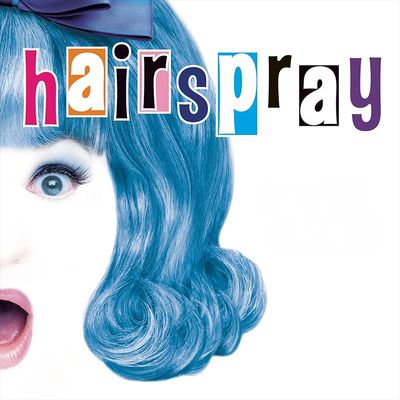
Continuing our celebration of the 20th Anniversary of HAIRSPRAY – The Musical, my guest this week is the show’s original choreographer JERRY MITCHELL who shares with us a first-hand, behind-the-scenes look into the creation of that Tony Award winning musical -- especially in regard to the how the show’s unique staging, choreography, design, as well as many of its most memorable moments were first dreamed up and executed!.. Read More
From the show: BROADWAY NATION
Guests

Featured Shows
About
Continuing our celebration of the 20th Anniversary of HAIRSPRAY – The Musical, my guest this week is the show’s original choreographer JERRY MITCHELL who shares with us a first-hand, behind-the-scenes look into the creation of that Tony Award winning musical -- especially in regard to the how the show’s unique staging, choreography, design, as well as many of its most memorable moments were first dreamed up and executed!
You will also get an inside view of Jerry’s close collaborations with Hairspray’s director, Jack O’Brian, lead producer Margo Lion, set designer David Rockwell, and Tony Award winning songwriters Marc Shaiman & Scott Wittman. You will also have the opportunity to hear excerpts from the show original "demo recording" featuring vocals by Annie Golden and Jenifer Lewis!
20 years ago I had the great privilege of being part of the birth of Hairspray – The Musical because at that time I served as the Producing Artistic Director of Seattle’s 5th Avenue Theater where the show received its World Premiere.
This is my 3rd episode celebrating HAIRSPRAY’s 20th. Last week I had the great pleasure of having Marc & Scott as my guests, and a few weeks ago, on Episode 71, my guest was one of the show’s original producer’s, Adam Epstein, who is now the host of his own podcast called Dirty Moderate.
Please feel free to listen to these episodes on any order as each of my guests brings their own specific memories and perspectives to the celebration.
Jerry Mitchell is a two time Tony Award winner whose work on Broadway includes the choreography for You’re A Good Man Charlie Brown, The Rocky Horror Show, The Full Monty, Dirty Rotten Scoundrels, La Cage Ax Folles, and Catch Me If You Can - and the direction and choreography for Legally Blonde, Kinky Boots, On Your Feet, and Pretty Woman.
Transcript
This transcript was automatically generated and might contain errors.
[0:07] David Armstrong: Welcome to another episode of Broadway Nation, the podcast that tells the remarkable story of how immigrants, Jews, queers, African Americans, and other outcasts invented the Broadway musical and how they changed America in the process.
[0:22] David Armstrong: I'm David Armstrong, and I call this episode 20 Years of Hairspray Part 3.
[0:35] David Armstrong: Today, my guest is Hairspray's original choreographer Jerry Mitchell, who shares with us a first-hand behind-the-scenes look into the creation of that Tony Award-winning musical, especially in regard to how the show's unique staging, choreography, design, and some of its most memorable moments were first dreamed up and executed.
[0:54] David Armstrong: You will also get an inside view of Jerry's close collaborations with Hairspray's director Jack O'Brien, lead producer Margo Lion, set designer David Rockwell, and songwriters Marc Shaiman and Scott Wittman.
[1:07] David Armstrong: Twenty years ago, I had the great privilege of being part of the birth of Hairspray, because at that time I served as the producing artistic director of Seattle's Fifth Avenue Theater, where the show received its world premiere.
[1:19] David Armstrong: This is my third episode celebrating Hairspray's 20th anniversary, and it's been such fun looking back at that exciting time.
[1:26] David Armstrong: I had the great pleasure of having Marc and Scott as my guests on last week's episode of Broadway Nation, and a few weeks ago on episode 71, my guest was one of the show's original lead producers, Adam Epstein, who is now the host of his own podcast called Dirty Moderate.
[1:42] David Armstrong: Please feel free to listen to these three episodes in any order as each of my guests brings their own specific memories and perspectives to the celebration.
[1:50] David Armstrong: Jerry Mitchell is a two-time Tony Award winner whose work on Broadway includes the choreography for You're a Good Man Charlie Brown, The Rocky Horror Show, The Full Monty, Dirty Rotten Scoundrels, La Cage aux Folles, and Catch Me If You Can, as well as the direction and choreography for Legally Blonde, Kinky Boots, On Your Feet, and Pretty Woman.
[2:10] David Armstrong: Here we go. Welcome, Jerry Mitchell.
[2:12] David Armstrong: It's so thrilling to have you here on Broadway Nation to talk about the 20th anniversary of Hairspray.
[2:19] Jerry Mitchell: Thank you, David.
[2:20] Jerry Mitchell: Oh my God, can you believe it? Twenty years ago at the Fifth Avenue.
[2:24] Jerry Mitchell: Absolutely. I can't believe it.
[2:26] Jerry Mitchell: It's been fun this summer to look back at the 20th anniversary of the opening of the Fifth Avenue, which was in June.
[2:33] Jerry Mitchell: And now, as we're having this conversation, we are three days away from the 20th anniversary of the opening on Broadway.
[2:40] Jerry Mitchell: So take us back 20 years. Take us back to what was happening on this day.
[2:43] Jerry Mitchell: The show was frozen after the pre-Broadway run in Seattle, after recording the cast album, after all the preview performances, and now the critics are showing up.
[2:55] Jerry Mitchell: You know, it was so odd because we had such success at the Fifth Avenue with Hairspray, and we all knew it going out of there. But one of the greatest lessons I think I learned as a young choreographer working with Jack O'Brien, who was the director, and what a leader he was for all of us, was that there's a very short distance between good and great.
[3:17] Jerry Mitchell: And the thing you have to do is stay focused and continue to work. And there are a lot of things that are very good, but there are very few things that are great. Hairspray is great. Hairspray was great. Hairspray continues to be great.
[3:32] Jerry Mitchell: We just did a production in the UK last year that was incredibly successful with Michael Ball. It's going to be opening on Monday night on the 20th anniversary in Australia in Melbourne for the first time, the original Broadway production, you know, Matt Lenz and Dom Shaw are over there heading up the charge for Jack and I.
[3:55] Jerry Mitchell: But the thing I learned, and the thing I remember most was continuing the work, even when it was that good. And it was good from the very first preview, but we didn't stop working.
[4:08] Jerry Mitchell: And so here we were, the show was frozen. We're in New York City, and we're sitting on pins and needles because no show is a guaranteed success until it finally opens on Broadway, and you either get the approval of the Broadway community, which then can lead you to years of success, or you get mixed reviews or even bad reviews, and then you have to fight very, very hard to try and sell your product that has gotten, you know, not the best welcome.
[4:40] Jerry Mitchell: And we were fortunate, we got rave reviews, and the box office was already taking off, which is usually a great indication because nothing sells a show better than word of mouth. Word of mouth is what does it, and you've got a chance every night to get however many people are in that theater to leave and tell one friend or two friends you have to see the show, and that's what sells a show and makes it a long-running hit.
[5:03] David Armstrong: And you were opening the show in August, which was very unusual.
[5:07] Jerry Mitchell: Yeah, it was very unusual.
[5:08] Jerry Mitchell: And now it's become sort of a prime spot for a lot of musicals, right?
[5:13] Jerry Mitchell: And I think Hairspray sort of opened that door, or at least showed people that it could work.
[5:18] David Armstrong: Yes, absolutely.
[5:19] David Armstrong: So now take us back to the very beginning. We'll work our way back to that opening night. When did you first become involved with Hairspray?
[5:27] Jerry Mitchell: Well, I think probably many of your listeners might know this, but originally the show was going to be directed and choreographed by Rob Marshall. And he had done several workshops in New York City. And right when they were getting ready to do the fourth workshop, Rob had been offered the movie Chicago, which we all know went on to be a great success for him.
[5:48] Jerry Mitchell: And Rob and John are great friends and I've known them for a very, very long time. We all started out as dancers together. So I get a phone call, Mark and Scott I had been friends with since I was 23. Now I'm 40 years old or 39 at the time and they say we want you to direct and choreograph Hairspray and so they put me in a meeting with Margo and Marg says absolutely not.
[6:09] Jerry Mitchell: And then Mark calls me back and says what if we asked Jack O'Brien to direct it will he ask you to choreograph and I said if he doesn't I'll kill him because Jack and I had just finished The Full Monty, which was a big success for us and we had a ball working together.
[6:25] Jerry Mitchell: So Margo hired Jack and Jack said you got to hire Jerry Mitchell to choreograph. She said I'm not hiring Jerry Mitchell and she was adamant about it. And so cut to finally she agreed and I was on the show. We started working we did that fourth workshop together in New York City with most of the cast that had already done many of the readings and Jack and I met them all and we said well why would we not want to use Marissa Harvey, Laura Bell Bundy, Dick, all these people they're spectacular.
[6:55] Jerry Mitchell: And that was it. We did that fourth workshop and we knew we were going into production and away we went.
[7:02] David Armstrong: And why was Margo so opposed to you doing it? What did she have in her mind?
[7:06] Jerry Mitchell: I have no to this day, I don't know. But actually, once she finally said yes to me, she took me out for a lunch, and I'll never forget it. And we sat there together, getting a little emotional because she meant so much to me. And she said, I hope you won't you won't hold a grudge against me not wanting to hire you at the first time. And I said, Margo, I want this show to be a success. I've heard the music, I've read the book. Scott and Mark are my friends. They've been my friends for years, and I believe in them, and I believe in this story, and I believe in this music, and I will do anything to make it a success.
[7:47] Jerry Mitchell: And so we had an amazing lunch and we were lifelong friends. She was an amazing lady, just such a wonderful woman. Because I met her at the same time during this process. I had a relationship with her partners with Richard Frankel, and that's how the idea of bringing it to the Fifth Avenue came to Marg. And I was there at that fourth workshop, which was thrilling. And I often tell people that Hairspray was one of the shows that out of the box was the most ready to go of any of the many, many new musicals that I've been associated with. This was the show that just seemed like, well, this is done to a certain extent.
[8:23] Jerry Mitchell: Yeah. When Jack and I finally were asked to do it, I was in San Diego at Jack's house, and he had a CD that Mark had sent that had the tracks on it. This was before the workshop. And we put the CD on and we listened to the songs together, and we wept. We literally wept. When we heard I Know Where I've Been, we wept because we knew we were listening to something that was incredibly special.
[8:52] Jerry Mitchell: You know, as a director and a choreographer, I get a lot of stuff sent to me, and I read and listen to a lot of stuff. And they've changed over the years, you know, the way they're presented, how people do demos. But Mark from the get-go, it was like listening to a show album.
[9:12] Jerry Mitchell: Oh, oh, woke up today, feeling the way I always do hungry for something.
[9:22] Jerry Mitchell: Very first demo I received was like listening to a show album. He had figured out all his orchestrations, even though Harold Wheeler came in and worked with him and finalized all that stuff. But Mark is one of those musical geniuses who just won't settle. He just keeps going until it's right.
[9:39] Jerry Mitchell: Good morning, Baltimore. Every day like an open door. Every night is time to see. Every sound like a sin for me. I remember that demo. It was so thrilling. I think I still have that demo. I have it somewhere. I need to dig it out. I should use it for music for this podcast. Hopefully I can find it.
[10:03] Jerry Mitchell: Baltimore.
[10:06] David Armstrong: Well, obviously, I was able to find it because you're listening to it right now. And I used some cuts from it on last week's episode as well.
[10:13] David Armstrong: That's Annie Golden singing Good Morning Baltimore.
[10:16] Jerry Mitchell: Oh, oh, I've got my hairspray and rail. I'm ready to go. I'll be all the way.
[10:24] David Armstrong: When you and Jack start work on the show, and you're inheriting a show that's already been worked on by some really talented people.
[10:31] Jerry Mitchell: Yes.
[10:31] Jerry Mitchell: How did you approach that?
[10:33] Jerry Mitchell: Well, as a choreographer and having done The Full Monty with Jack, we already had this wonderful relationship. And I had just finished doing The Rocky Horror Show on Broadway, and I met David Rockwell for the very first time. He designed the set. And David and I got on spectacularly. And I said to Jack, Who do you think's gonna design the set? I'd love you to meet David Rockwell. And he said, Who's David Rockwell? And I said, He just did The Rocky Horror Show with me, and I think he's brilliant. Jack, you just have to meet him. And so we went to the coffee shop on Union Square and we met David, and it was one breakfast. And Jack said, I love this guy, let's hire him.
[11:19] Jerry Mitchell: And that was it. And we started with the physical production. How were we going to tell this story? And how were we going to present the show? And David is sort of a genius, also in that not only is he an amazing set designer, he designs spaces and restaurants in the world, really. And we met in his office and we started from scratch. And one of the first things I remember, we walked in and he had gone to a store, a toy store, and bought all of the 60s toys that were around at the time that were hot big toys. Anything that was 60s, he had it in these boxes in the room. And we started talking, we were looking at mood boards. He does mood boards with color and design and stuff. And one of the things in the box was that light bright thing.
And we started pulling it out and playing with it. And we were looking at a box of the Neil Simon because we knew we were going there. And we thought, what if that light bright wall were the back wall of the theater? And Mark and Scott had a beautiful piece of artwork in their apartment in their loft that was a Kendall that was all made out of light bright peg. And I remember that piece of art and that light bright toy, and we started to play around with this idea and called Kenny and who was doing the lighting. How do we make a human life-sized light bright wall and use it as the back wall? And that was one of the defining moments of the show, and placed it in that world. And we had candies, all sorts of candies from the 60s, neck wafers, and the colors and neck waivers became the striped walls.
And then listening to the CD and working with David, you're just flying on these levels of just like creativity. And I'm in bed and I'm singing the song. I wake up in the morning, I'm looking at the ceiling, I'm singing Good Morning Baltimore, looking at the ceiling, and I go, that's it. And I called David and I say, I know how we opened the show. And he said, What do you mean? I'll come down. And I said, The bed is facing the audience, and Tracy's standing up against it, and the audience is the ceiling. And he said, What do you mean? I said, The audience is the ceiling. It's the perspective. And David loves perspective. So he immediately got it and started designing that first moment. And that was so off-center, much like John Waters is off-center. So we found the voice and the vocabulary through the physical production. Fantastic.
[12:13] Jerry Mitchell: I remember that Light Bright Wall, I'm sure as you remember too, was very influential. You started seeing that in advertisements on commercials. That light bright wall from the Broadway production Hairspray suddenly became a style icon. I remember having a meeting with the producers when we were at the Fifth Avenue, because that thing was so big and so heavy. Yeah. And through the entire run at the Fifth Avenue, we couldn't lift it. We had the towers always in front of it. And many times those towers were empty. There was no bodies on them. So you just saw empty towers all night. So we were trying to figure out a way to make those towers go away. And we figured out in the plotting of the show when we could lift the light bright wall, move the towers.
So they had to like double load the fly system at the Neil Simon so they could lift this huge lighting rig, put the towers and bring it back down. Now the light bright wall is made out of tissue paper, literally tissue paper. It's like we have come so far technically in 20 years. The light bright wall on the National Tour of Hairspray right now folds up and goes into eight hampers. It's made by Pixel Flex, I think, which is an amazing new sort of thing. And not only does it do all the lights, it does video, live video. So I was allowed to eliminate the towers, record the dancers, and put them on the wall in silhouette, just like in the show. And we didn't have to take the towers with us. So describe exactly what that light bright wall was then.
What was it made of? I think each of those cones had several LEDs in them, and those LEDs were all wired to a computer, obviously, and a system, so Kenny could program all of that stuff. I mean, it was complicated. Servers and computers and LEDs. Now you can buy it at Party City, basically. This was all new technology. All new. Nobody had ever done it. Fantastic.
[15:47] Jerry Mitchell: I love that story of you discovering that opening moment of the show, which is so arresting and so iconic and so much fun. I mean, you start the show immediately with a laugh. Also, it's one of the greatest openings. You know, opening a Broadway musical is the hardest job you will ever have because getting it right or getting it even good is just such a challenge. And I think of, you know, the opening of A Chorus Line, which always to me was the greatest opening, and the opening of West Side Story, one of the greatest openings. But literally, Hairspray is special because it breaks the mold of the I want song because usually the I want song is the second song, but here it is the first song, and you're getting the character immediately and her optimism and everything that Tracy's about and how she sees the world in a four-minute number.
And you're in, you're in. And doing what's usually the job of the opening number, which is establishing the world at the same time. Yeah. They combined the I want song and the opening into one, which is fantastic.
[16:50] ♪ Musical number: "Good Morning Baltimore" — performed by Annie Golden ♪
[17:48] Jerry Mitchell: I remember when we were in rehearsals to come to the Fifth Avenue. And Mark and Scott had written Welcome to the 60s, which was the first time the light bright wall was really going to be visible to the audience, and it was going to go multiple colors when these three performers, the dynamites, stepped out of a living poster. And David had done a lot of research of black pop singers in the period, and we decided it was going to be three girls. There were some girl and guy groups, you know, all of those groups, the Temptations, but we decided to go with three girls and have them come to life by coming out of the poster. And so we sort of mocked up how we were going to do it at the Fifth Avenue.
And it happened, and it was such a failure because we had them kind of truck on in one. I don't know if you remember. And it was half barn doors and they were half real. And the barn doors would open and they'd step out of the unit. But we would see them truck on, and the girls were frozen, and they would be wiggling. And Willie Miley Long had put these little drop beads on them and they would shake, but the girls were frozen. And so, okay, we have to do better before we get to Broadway. How are we going to do better? And we had done some research and discovered the young man, I can't remember his name, who did the living images in Laguna. I think the living pictures. Oh, the big pageant that they do every day.
And so we consulted with him, and he came to New York and he helped us put those dynamites in a proper box, and we didn't truck them on, we put them in two, so now they were revealed, so they were still, and we could keep the focus on Edna and Tracy till they brought us to the poster and then pop the poster to life, and the lighting was right and it got applause, right? It was so smartly done because you really fooled us. Like a magician, you took our eye away. We weren't looking at that poster. We saw it, but we thought it was a piece of scenery. Yes. Well, the first time you saw it, it was a picture, but the second time you saw it now, there were real girls in it, and you didn't clock it because your mind said that's a picture, and you're watching Edna and Tracy, and suddenly, oh my god, they're alive.
Yeah, exactly. I mean and the dynamites, which were still to this day, one of the greatest, you know, the Greek chorus taking Tracy and Edna through the world. And we had finished the number, and everyone in the show was in Welcome to the 60s. 30 seconds later, all of those kids had to be changed and had to be in the dodgeball sequence. Literally, like they had to run off stage, change into gym clothes and come back on stage. I turned to William, I said, How much? He said, Give me 30 seconds, I can get everybody changed. And I looked to Mark and I said, Well, you have to write me a playoff or something because we need 30 seconds. And so Mark started playing at the piano, called Shana, Judine, and Camilla over to the piano.
They started singing, and then he said, Listen to this, and he said, Okay, stage it. We did that transition in about four minutes, and that transition to this day gets one of the most amazing rounds of applause, no matter where it plays in the world, because you're featuring these three gorgeous, incredibly gifted black women singing to the rafters. And it's just one of the most thrilling moments. Just created out of necessity.
[21:35] Jerry Mitchell: So you mentioned John Waters before. What was John Waters' influence on the show, but especially on you and your approach to it? Did you know John Waters prior to this? I didn't know John at all. And again, when Jack and I were asked to do it, John invited us to Baltimore so he could give us personally a tour of all of the places that were a part of his story. So we went to Baltimore and he picked us up in this big huge Cadillac and drove us around and we got cheesesteaks and cheese fries and we had an amazing time with him. And we've been friends ever since. But I remember at that point, one of the things he said to me, he said with the choreography, he said, you need to keep the choreography innocent. He said, remember, it's 1962, and Kennedy hasn't been assassinated. Kennedy was still alive, and he said, our country changed drastically on that event, and our innocence was lost.
[22:37] Jerry Mitchell: And he said, you have to keep the choreography. The dancing is innocent. It's not sexual for the most part, it's innocent. So I went and I researched all of the dancing shows and watched everything I could at the Museum of Television in New York. And then also he set up two of the original dancers from the Buddy Dean show who came to New York City for the weekend and taught me the Madison, the real Madison. They were on the show. And they taught me all of the steps and all of what they did so I could use that authentic stuff in the show. And I basically created the choreography, the bed of the choreography, the vocabulary on, you know, six steps: the twist, the hull-gully, the Latusi, the pony, things that were real steps that were made up in the 60s. And then I just messed them up and morphed them up and added some of my own.
You got to remember, nobody was really a dancer in the show except for Matt Morrison. They were all incredible singers, but not really dancers. And why was the Madison so important? Why was that particular dance special to this story? It was in the movie, and Mark and Scott had written a whole scene around it. You know, since then they've gone on to do the movie, and we did the television movie, and there's a song called Lady's Choice. And when we were doing the Hollywood Bowl, we looked at maybe should we do Lady's Choice and not The Madison? But the reality is the scene that is inside of the Madison where Tracy comes and her friend Seaweed gets her to do the steps that he's taught her in front of Corney, which gets her on the show.
And that choreographed musical transition from the end of the Madison that takes us back to the Corney Collins show and roll call, and the last name is Tracy. Another one of those magical theatrical transitions that was just so beautifully written, right? That it made me look very good. And I might have been a part of writing that transition. I don't remember exactly how we came to it, but I remember that it was that was collaboration at its very, very best. And I'm not talking just Mark and Scott and myself and Jack. I'm talking the music. I'm talking about the scenery, the way the scenery moved, the costume changes. It all was just like a swirl, and suddenly the girls on the show. That's when theater can be so special.
Well, it was such spectacular storytelling, and that's why you couldn't cut it because the story is dependent on that moment. Brilliant. Talk about what happened during this fourth workshop. What were the major changes? And really just in the whole process, what would you say were the major problems with the show or challenges? And then what changed? I don't remember anything about the fourth workshop other than being there and watching it. But then once we got into the rehearsal process, after that fourth workshop, Mark O'Donnell, who had written the book, at that point, Margill wanted to bring on Tom Meehan to help him with structure. Tom Meehan came on and worked with us all and helped the structure.
And then Harvey was very, very helpful to the Book of Hairspray, obviously playing Edna, but he had many, many things to do and helped us quite a lot shape the show in the end. You know, new musicals work best for me, my experience is when everyone's in the room. When everyone's in the room and everyone's focused on making it the very best that it can be. Everybody has an ego, but everybody leaves that outside as best they can and really focuses on the work. And that's what I remember most 20 years ago. That Harvey and Tom and Mark and Scott and Mark and myself and Jack, we were in it to win it. And we were willing to try anything that would make the show work, even so much as you know, which is legendary, the story of I Know Where I've Been, which had been done in the fourth workshop, but the producers felt that the song was too down and it needed to be a more up song for the Motormouth character.
And so Mark, being a team player, wrote another song. We had the first day of rehearsal or the first week, and all of the black company were learning the new song who had learned already I Know Where I've Been. And they sort of said, No, we don't want to sing this song. We want to sing I Know Where I've Been. And it started this whole thing with our company about the artists really speaking up and saying how they felt. And we listened. But more importantly, I have to tell you, is when I heard that song at Jack's, I always think about the first time I hear a song. Because usually by the time you get into the rehearsal period, you have worked on the show so much that it's often hard to actually feel and hear and listen because you've heard it so many times.
The joke won't make you laugh if you've heard it 50 times. I always remember the first time I heard that song and how I cried. It really broke my heart. And so I thought Mark and Scott wrote this song from a place that they believe it was the right place. And they're the authors. And I said, Jack, isn't that why we're going out of town to Seattle? To listen to what was written. And then once we hear it in front of an audience, if it isn't working, we have the time, that's why we're going there to try new things, write new things, and see that in front of an audience before we come to New York. People forget that, you know, when I was doing Your Good Man Charlie Brown, I will never forget there was a line, and they're all looking at the stars before happiness is, and they're looking at the stars, and they were all upstage left.
And B.D. Wong, as Linus, said, Let's take a closer look. And he walked three steps down right, and they all came with him. And the audience would just lose it. They would laugh so hard. And I thought, never would have guessed there would be a laugh there. But obviously, let's take a closer look, three steps closer from a child's perspective. Oh, I'm closer to the stars. It's just, you know, you don't know sometimes what's gonna land and what isn't. And that song landed. We know that. I mean, that first night, it stopped the show in Seattle. And now, 20 years later, that song gets standing ovations. It's got standing ovations in London. It's been getting constant standing ovations on the road.
It's a powerful, powerful number. So talk a little bit more about when I talk to playwrights. I talk about listening to the audience and how important it is that you really can't finish your show until you are there sitting with a paid audience and watching them watch the show. The audience is your final scene partner. They will tell you when they're happy, they'll tell you when they're bored, they'll tell you when they love something, they'll tell you when they like something. All you have to do is pay attention to them. I don't know if you remember, but in Good Morning Baltimore, we originally only had the white cast, not the black cast. They didn't come on until they were in um uh Welcome to the 60s, I think, was it?
Welcome to the 60s, I think was like their first big entrance. We had 18 in the cast all together of the of the ensemble. There were 10 white kids. No, there were eight and seven, fifteen, and then there were the principals, 13 principals. So we had eight white kids in the opening number, plus Tracy. I think nine total. And maybe we had the two authority figures, so 11 people. And I went, This is terrible. We're doing an opening number. We only have 11 people on a big musical. And the challenge was the story was about two groups of people who are segregated. So how do I create an opening number where the two companies are segregated? And I had to figure that out choreographically. I had to keep them on different sides of the stage, not interacting with each other.
And we did, and we came up with something I think quite fabulous. But that was a big change. And seeing it in front of an audience immediately, I knew, oh, this isn't good enough. We can do better. I always go to Chicago a lot for out of towns. Not always, I came to Fifth Avenue with Catch Me Ujack, and I came back. But I go to Chicago a lot, great audiences, and I was there with Kinky Boots and Stephen Remus had written this incredible number for the boxing where Don wins, and it ended with this big huge, fabulous vocal ending, and the audience would literally go, and I went, Why are I busting my ass? I created this whole boxing match in slow motion. Don wins, everything's fabulous. Why aren't they clapping?
And I went back another night and I watched the audience watch it, and I saw they don't like Don. They don't like the character. They don't want him to beat Lola. And so I said to Steven the next day, I said, We're changing it tomorrow. It's not gonna end, we're gonna let it fade out and we're gonna go right into the scene. The audience will never cheer for this number, no matter what we do, because they're not gonna cheer for Don because they don't like him. They're on Lola's side, and when Lola gives up the fight to him, they're mad. They want to know why. And so we have to get to the scene where Lola tells us why. And all you had to do was pay attention to the audience. Listen to the audience.
You know, I think George Abbott said this. I'm almost certain. I think the SDC has a tape of him saying it, and he says, if we as directors didn't fall in love with our own work, it would be much easier to fix our own shows. I love that quote. Something like that. So true. And for everybody involved, the writers as well. I try to always remind myself when I sit down to watch the show in previews or in a run-through or whatever. I always say to myself, you've never seen this before. Brand new, brand new. I've never seen this. Because it sometimes allows you to see things you didn't look at or really focus and don't zone out and pay attention because maybe an actor will try something and do something that's really spectacular, and you go, that's in the show.
We're gonna use that. I remember watching you and Jack work together, and it was such a great collaboration. The handoff between the two of you during rehearsals during the tech and every aspect of the pre-Broadway at Fifth Avenue. Talk about that relationship, and it's a tricky one. You're the choreographer, you've become a director, a very renowned director. What was your relationship with Jack O'Brien and how did that work? What was so great about it? I think the reason we are so good together is because we're cut from the same cloth. Jack's a Michigan boy, I'm a Michigan boy. He grew up in Saginaw and went to the University of Michigan. I grew up in southwestern Michigan. I went to Webster, but you know, we grew up in that environment.
Jack is about empowering the people in the room. But I had worked with Jerry Robbins and I had worked with Michael Bennett. And Michael and Jerry were choreographers like myself, who came from a very, very disciplined world, right? So choreographers have a tendency to carry that discipline stick and smack it. And I learned that from them. And I was very disciplined, and I still am to this day. But as a director, I've learned to be more inviting because of Jack, more of a diplomat, really, and not a dictator. More of a person who encourages everyone in the room, like Jack does, to bring their best game because ultimately it gives people ownership in the project and investment.
[33:54] Jerry Mitchell: And that makes everyone want to be a part of it. One of the things that was so amazing about the show, when there's a director and a choreographer, ideally you want it to look like one person's vision, and you don't know where one person's work stopped and where the other ones picked off. And that you succeeded with in Hairspray. I literally mean this. Jack would sit and watch me choreograph things, and he would get up and he would do the steps. He would do exactly what I just did. And I went like, wow, he can dance too. And then I'd be doing a number, and there would be dialogue between it, and he'd let me stage it. He'd go, go ahead, just stage it and I'll mess it up or fix it if it's not right.
And he'd let me finish the whole number. It really was and still is to this day. I mean, I would do anything with Jack again. It doesn't matter what title it is. It's about having that person in the room. Jack and I worked together for 10 years. We did 10 years of shows together. So the first time I directed and choreographed on my own was Legally Blonde. And I would turn and go, oh, where's Jack? I can't, I don't have my partner. So, you know, it does become after a decade, it becomes sort of a very comfortable way of working. And it was a transition to do it on my own, even though I had Dennis and Mark Bruni, who were spectacular with me. It wasn't Jack.
[35:16] David Armstrong: Everybody in your position, everybody who aspires to be a director, choreographer on Broadway, and you achieve that spectacularly, you want to create shows that are successful.
[35:26] Jerry Mitchell: Yes.
[35:26] David Armstrong: What you created with Hairspray is a classic. And that's a very rare thing to create a show that 20 years later is clear, this is a classic Broadway show that can be included with West Side Story and South Pacific, and you name it. What does that feel like? You're growing up thinking of these great shows, and now you are largely responsible for creating one of them.
[35:49] Jerry Mitchell: You know, you don't think about that. I still I don't think about it. Hearing you say that, it makes sense to me, but it's not something I've ever thought about. For myself, when I go into the theater, I want to walk out feeling happy. I want to walk out feeling hopeful. I want to walk out feeling like I saw something that I'd never seen before, and that it made me feel something. So I try to look for things that I can do that might have that effect on myself and an audience. And that is a privilege to be in that position now in my career that I can actually decide, oh, I want to do this because I think this will make a difference for me and hopefully for other people. Michael always said, leave them with hope, leave them with hope.
Jerry said, Where's the hope? Where's the hope? I've heard it from so many other people that I admire, and it's something that I think musicals have sort of a built-in thing. Now, not all musicals, but then again, you might be able to find a shred of hope in every musical because most musicals, you walk out and there's some form of redemption. I think that's why they're so special. People find themselves in the musical and they walk out thinking I can do better.
[37:05] David Armstrong: I absolutely agree with you. There's something just about the nature of music. Music takes you to a place that other emotions just don't, right? It allows hard people to become soft and soft people to become basket cases. It just does. That's what's so special about them.
[38:51] Jerry Mitchell: So what's next? What are you working on currently?
[38:54] Jerry Mitchell: So I'm currently working on a new musical based on the iconic cartoon character Betty Boop, who is the ultimate optimist. Maybe I'm Betty Boop, really. I can see that. David Foster's doing the music, Bob Mark doing the book, and Susan Birkenhead has written the lyrics, and it's a really wonderful, hopeful, charming show, an amazing score. We did a lab a while ago, and yeah, we're going to Chicago. Fantastic. And I'm going over to London to launch a new musical called Becoming Nancy, based on a book that I bought the rights to. And I'm really thrilled about a young kid named David Starr auditions for the school musical Oliver, and he gets cast as Nancy because he has the best voice in the school.
Starts to fall in love with the boy who gets cast as Bill Sykes and how the school interacts with all of that. His best friend is a young black girl named Francis Bassey, no relation to Shirley Bassey. And she is leading a rock against racism protest in school. It takes place in 1979 when the rock against racism was in its heyday. And it's just got so many things that speak to what's happening right now. I fell in love with the book. I fell in love with the characters. I read it on a plane ride from London to New York because I watched all the movies. Got off the plane, called Mark Sandroff, my lawyer, and said, Mark, give me the rights to this book. And that's how it happened. And Kinky Boots is coming back to New York.
Kinky Boots is coming back to New York. Kinky Boots just opened at the Hollywood Bowl. It's a huge success in Korea for the sixth or fifth time. It's reopening in Japan for the fifth or sixth time. And now, with what's been going on in our world, the story lands in a whole new way, sort of strangely, and it's not even been that long, but identification and accepting yourself. It's really wonderful.
[40:47] David Armstrong: Thank you, Jerry Mitchell. Thank you so much for joining us. I would love to have you back to go through your entire story, not just Hairspray, because from your days as a dancer and working with Jerome Robbins and Tommy Tune and everybody. You bridge that gap between those artists of the golden age of Broadway all the way up to the latest, newest 21st century world. We'll have to do a thing about philanthropy on Broadway and about 30 years of Broadway Bears. Just thinking about all of the choreographers who got their start at Broadway Bears before they did a Broadway show. Josh Rhodes, Lauren Lataro. I mean, the list goes on and on and on.
[41:22] Jerry Mitchell: Absolutely.
[41:22] David Armstrong: And on top of all the money you raised.
[41:24] Jerry Mitchell: Yes, well, that's nice too.
[41:27] David Armstrong: It's unbelievable. What's the latest number of Broadway Bears?
[41:30] Jerry Mitchell: We made 1.9 million on this last Broadway Bears, which takes us to 24 and a half million dollars raised for Broadway Cares Equity Fight Aids. It's crazy.
[41:38] David Armstrong: That's amazing. You should be so proud of it.
[41:41] Jerry Mitchell: I am. I'm really proud of it. Totally.
[41:43] David Armstrong: Thank you, Jerry. This has been great.
[41:45] Jerry Mitchell: My pleasure, thank you.
[41:50] David Armstrong: Just like last week, we'll give the final word to Jenifer Lewis.
[41:55] ♪ Musical number ♪
[41:58] ♪ Musical number ♪
[42:07] ♪ Musical number ♪
[42:12] ♪ Musical number ♪
[42:16] ♪ Musical number ♪
[42:21] ♪ Musical number ♪
[42:26] ♪ Musical number ♪
[42:31] ♪ Musical number ♪
[42:35] ♪ Musical number ♪
[42:41] ♪ Musical number ♪
[42:45] ♪ Musical number ♪
[42:54] David Armstrong: If you enjoyed this episode, I invite you to join our Broadway Nation Facebook group, where you will find more than two thousand other fans of this podcast who are just as obsessed with Broadway musicals as you are. I feel certain that you will find it both fascinating and fun. Broadway Nation is written and produced by me, David Armstrong. Special thanks to Pals Mox for his help with editing this episode. To KVSH 101.9, the voice of beautiful Vashon Island, Washington, and to the entire team at the Broadway Podcast Network.
[45:05] Jerry Mitchell: Oh yeah, I'm famished.
© Broadway Podcast Network, All Rights Reserved