

This special Halloween edition of Broadway Nation! This is the first part of my conversation with Adam Abraham, author of Attack of the Monster Musical – A Cultural History of Little Shop Of Horrors... Read More
From the show: BROADWAY NATION
Featured Shows
About
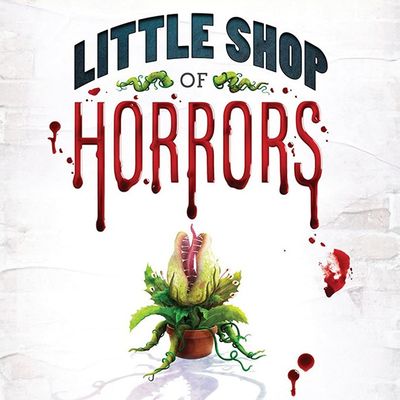
This special Halloween edition of Broadway Nation!
This is the first part of my conversation with Adam Abraham, author of Attack of the Monster Musical – A Cultural History of Little Shop Of Horrors.
In this terrific new book Adam relates the unlikely story of how Roger Corman’s schlocky, low budget, 1960’s monster movie was transformed 20 years later into a smash hit, long-running, Off-Broadway musical that became an international sensation and spawned a hit film musical adaptation as well. And of course, today Little Shop Of Horrors is a hit all over again and can currently be seen in another long running off-Broadway production.
Adam Abraham is a Postdoctoral Teaching Fellow at Auburn University, and he also has taught at Virginia Commonwealth University, NYU, and Harvard. His previous books include When Magoo Flew: The Rise And Fall of Animation Studio UPA, and Plagiarizing The Victorian Novel: Imitation, Parody, Aftertext. He has also written for film, television, and theater.
Attack of the Monster Musical provides us with a fascinating, in depth, look into the dynamic partnership of Howard Ashman & Alan Mencken and their creation of what I believe is one of the best and most perfectly crafted musicals of all time.
Topics discussed in this episode include: How Howard Ashman was influenced by the cast album of GYPSY; how he discovered Roger Corman’s film in the first place; his first musical The Candy Shop;
the truth behind the legend that Corman shot the original movie in just two days; NYC’s Off Broadway scene during the late 1970s and early 80s; the WPA Theater; how an early version of Little Shop bombed at the BMI Workshop; the casting of Ellen Greene & Lee Wilcoff (and how Nathan Lane & Faith Prince were almost in the original cast); why the show never moved to Broadway; what Cameron Mackintosh, David Geffin & the Shubert Organization have to do with the show; how the dream team of Ashman & Menken worked together; and the tragic loss of Howard Ashman.
Transcript
This transcript was automatically generated and might contain errors.
[0:01] David Armstrong: Welcome to another episode of Broadway Nation, the podcast that tells the remarkable story of how immigrants, Jews, queers, African Americans, and other outcasts invented the Broadway musical and how they changed America in the process.
[0:15] David Armstrong: I'm David Armstrong, and my guest today is Adam Abraham, author of the new book, Attack of the Monster Musical, A Cultural History of Little Shop of Horrors.
[0:36] David Armstrong: Just in time for Halloween, Adam's book, of course, relates the unlikely story of how a schlocky, low-budget 1960s monster movie was transformed 20 years later into a long-running smash hit off Broadway musical.
[0:51] David Armstrong: And also spawned a hit big screen film musical adaptation as well.
[0:56] David Armstrong: And of course, Little Shop of Horrors can currently be seen in another long-running off-Broadway incarnation.
[1:02] David Armstrong: Adam Abraham is a postdoctoral teaching fellow at Auburn University, and his previous books include When Magoo Flew, The Rise and Fall of Animation Studio UPA, and Plagiarizing the Victorian Novel: Imitation, Parody, Aftertext.
[1:18] David Armstrong: He's also written for film, television, and theater.
[1:21] David Armstrong: Attack of the Monster Musical provides us with a fascinating in-depth look into the dynamic partnership of Howard Ashman and Alan Mencken and their creation of what I believe is one of the best and most perfectly crafted musicals of all time.
[1:36] David Armstrong: Here we go. Welcome, Adam Abraham.
[1:39] David Armstrong: It's wonderful to have you here today to talk about your new book, Attack of the Monster Musical, a cultural history of Little Shop of Horrors.
[1:47] Adam Abraham: Thanks for inviting me.
[1:48] David Armstrong: So, what inspired you to write this book? You've written about a number of different subjects, but this is your first book as far as I can see about theater. How did that come about?
[1:56] Adam Abraham: I wrote this book because I've always loved the work of Howard Ashman. That's where it began. So Ashman was the director, the lyricist, and the author of Little Shop of Horrors. And as you know, he then went on to work for the Walt Disney Company and was involved in the reinvention of the Disney animated musical with Little Mermaid, Beauty and the Beast, and Aladdin. So I always wanted to know more about him and know how he did it. And in New York, I met his estate, that is the sister, Sarah Ashman Gillespie and the life partner Bill Lauk. And they've been very helpful and supportive. And I pitched them the idea of doing a book, a complete history of Little Shop of Horrors, going back to the original Roger Corman film of 1960 through the Ashman Mencken musical of the 80s, to everything that happened thereafter. And I wanted to really tell this story in as complete a way as possible.
[2:47] David Armstrong: What was your affiliation with Little Shop of Horrors prior to this? Had you ever worked on it, been in it?
[2:52] Adam Abraham: I had the audio cassette tape. That was my affiliation. I don't even remember why I knew this thing existed, but I still have it. It lived in my mind. And I didn't actually see it for much later. So to some extent, for me, it still is a cast album. And later I found out that Ashman, growing up in Baltimore, was very much enamored of Broadway musicals in part through the LP record, which his mother, like many Americans, collected. So he also kind of lived in Broadway musicals by hearing them even before he saw that. This is, of course, not an uncommon experience, but I knew it as an album first. And there's a quote from him in the book about cast albums.
[3:30] Adam Abraham: What does he say? Well, I think I know the one you mean. He's asked, how can we get young people to get involved to write musical theater? And he says, strap them in chairs and make them listen to Gypsy. So I thought that was a great quote because he said, listen, he didn't say watch, he didn't say go to revival. He didn't say go to Lincoln's Center Library and look at some old recording. He said listen. So for him, it was still kind of an audio experience.
[3:53] David Armstrong: Well, and of course, one of the prime experiences for my generation, we grew up with those vinyl records in our parents' record case with the Hi-Fi. And you put them on, and when you listen to those cast albums, you envisioned the show. You imagined the show as sort of like radio in a way. You supplied the sets and the costumes and the staging and the story in some cases, if it wasn't totally clear from the songs themselves or from the notes. That may be how Howard learned how to be a director and a producer and a writer was by that imaginative process.
[4:25] Adam Abraham: Apparently, he took that process a step further by actually staging Gypsy in his backyard with his sister and neighborhood kids. I don't know if he'd seen it yet, but hearing the album inspired this idea of creation, creating a musical, whether it's in your backyard or eventually in a New York not-for-profit theater. So there is a strong link between the cast albums, the way they preserve a show, but also the way they spark the imagination of the listener.
[4:50] David Armstrong: So he has this childhood relationship to Broadway musicals and Gypsy. He probably saw the movie of Gypsy. He was a little bit older than I was, but I had that experience, which I've told on other podcasts of going to see the movie of Gypsy when I was quite young and just being enamored of it. But he also had a relationship with the original film of Little Shop of Horrors when he was a kid. How did that come about?
[5:11] Adam Abraham: It happened because the Corman film, like many low budget films, came and went in the cinema. It was meant to last a minute and it succeeded, but it had an afterlife on television because in the early years of television, the airwaves would be filled with essentially crap. B movies and black and white films and 65-minute programmers that would fill the time. So one of the movies filling the airwaves in the 60s was the Roger Corman film, The Little Shop of Horrors. And Ashman just happened to see it. He said it was 14, so it's probably 1964, thereabout, maybe four years after the film was finished. He discovers it and it just tickles his teenage imagination. And he loves this film. And he thought it was the wittiest, most clever thing of all time.
He was 14. And it just stayed with him. Now, when he graduated from high school, he wound up writing his own musical with a collaborator, another high school friend, and they essentially plagiarized from the little shop. They wrote a musical called The Candy Shop with a singing talking plant named Ethel, which seems to be named for the original star of Gypsy. So he'd always loved the story. And then in the 1970s, when he was looking for an idea for his next show, he said that Little Shop just came back to him. He remembered it. And he remembered the way it delighted him. Now, as a grown-up, he looked at the film again and saw it more critically and saw the flaws, but thought there was something there. There's some core thing that could be made into an off-off-Broadway show and could really capture people the way it had captured him.
[6:36] David Armstrong: I love the story about The Candy Shop because you have sort of Gypsy and Little Shop coming together in that plagiarized version. But before we jump to the musical, let's talk a little bit more about the original movie. You had to do a lot of research on this movie, which is of course the furthest back in time. Who were you able to talk to that was involved with that original film?
[6:54] Adam Abraham: I spoke only electronically to Jackie Joseph, who was the original Audrey. I think there's one other cast member still living, but I did not contact him. He was the Virtual Seymour. And then I spoke to people who worked for Corman, and they really gave me insight into his filmmaking practice and his attitude towards his own productions, which was that they were not worth much. One of the interview subjects said that Corman saw his movies like Kleenex, something used and throwaway. So he had no idea that something like The Little Shop of Horrors would have any residual value in any future medium. And in fact, I learned Corman never bothered to copyright his own movies, in part because it cost money and he was notoriously cheap.
You had to pay a filing fee and actually run one print at the lab and send it to the Library of Congress where it sits for all time. And that's, you know, at least hundreds of dollars, which who cares? Who would ever steal this? But that's half the budget of one of his movies.
[7:46] Adam Abraham: Exactly. So for a, you know, for a big studio, that's nothing. They will copyright the film and have a single 35mm print sitting in the archives of Library of Congress because to them that's change. To Corman that was a significant number. That could be the difference between profit and loss on a given project. So he did not copyright the film, which the WPA Theater seemed to not know. They negotiated in good faith with him in 1981 and made a deal with him. So he got 1% of everything that Little Shop made on the stage, 1.5% after it recouped its original investment.
[8:17] David Armstrong: Which of course amounted to a significant piece of change there.
[8:20] Adam Abraham: Yeah, it was something. The movie was made on a bet, kind of. There's a legend about it, and you sort of clarify that legend a bit. Corman liked to tell the story that he made this movie on a bet or as a challenge. And Ashman definitely knew the story because he would repeat it to his family and to his friends because sometimes the story behind the story is better or at least equally good. Print the legend, I think is the same. The story goes that Corman wanted to see if he could beat his own record for speed. He got things down so that he could make a feature-length movie in five or six days. That's five or six days of principal photography. Even a low-budget film would shoot for four weeks, and a studio feature could shoot for months and months on end.
So five or six days is fast. Corman thought, can I get it down even lower? And he had a friend who had a set that they weren't using, and they were going to give him this set for a week for free, sometime around Christmas 1959. And he designed a movie that he could shoot in two days. That was his aim. Although the fact is there's some exterior photography not done on that stage, which took maybe two or three more days. So technically it was more than two days, but that was the original impetus. Can I make a movie in just two days?
[9:27] Adam Abraham: And it makes a good story. I've seen that movie. I directed and produced Little Shop several times over my career, and of course, watched the movie, did due diligence to see the original, but it's almost unwatchable as far as I'm concerned. It's hard to imagine it shows the genius of Howard Ashman in a way that you could watch that movie and then turn it into something so engaging. The story his family told is that they all sat down to watch the video tape. I think the Betamax tape, an early format of the movie The Little Shop of Horrors, and Ashman said, okay, here's my next musical, take a look at this black and white film from 20 years ago. And they all hated the movie and they said, This is a terrible idea.
What are you thinking? And he'd already had one or two shows in New York that were not successful commercially. So there was the sense that he's gonna have another failure. This thing can't work. But somehow Ashman saw what they did not see. He saw through the limitations of the Corman film to something that could be better, and he did make it better.
[10:24] David Armstrong: It is a really good example of adaptation. It's transformation in a way, because he really just takes the bones and the bones are there. I mean, you have to give Corman credit for what he did create that then someone else could take and really make into an engaging story, which I don't think you can say about the movie. There's interesting aspects to the movie and engaging aspects of the movie, but it doesn't hang together as a narrative. It's a good idea. It's a good title, actually. Because it has this contrast between something petite and cute but also horrifying. But we should also credit the original screenwriter Charles Griffith, because it really was his brainchild. He worked with Corman on a number of productions, including A Bucket of Blood, an earlier Corman film, which is actually structurally similar as you may recognize.
To some extent, they were rewriting Bucket of Blood in a new setting with a plant. That became The Little Shop of Horrors. But yeah, Ashman really improved upon the work. And that movie Bucket of Blood has been adapted into a very effective musical called Beatsville, which was produced down in Florida a few years ago. The Bucket of Blood is probably a better film. It's more solid. It actually does a good job of capturing, I think, the Beatnik culture of the 50s, the cafe culture, and Mel Wells, who appeared in many Corman films, actually admired A Bucket of Blood in that regard for really kind of capturing that cultural moment of 1959 and those beat poets and cafes.
[11:43] Adam Abraham: When Corman probably used all five days to film that one.
[11:46] David Armstrong: It was a five-day shoot, maybe six, five or six. More his standard shoot. It's a slightly better film. Now let's go back to Howard Ashman. He's moved to New York by this point. He's left college. He has become the artistic director of the WPA Theater. Tell us a little bit about that, because one of the things that I loved about this book was just going back to that time of off-Broadway. For me, because I lived in New York in that period, I moved to New York around 1980. It felt a little bit like things that happened yesterday, but at the same time it felt like things that are from another distant past world that is hard to even remember.
[12:19] Adam Abraham: So Ashman became a co-artistic director of the WPA with his partner at the time, Stuart White. They'd actually gone to graduate school together before at Indiana University to study theater and acting. But the WPA pre-existed then. There was an earlier incarnation of the WPA that was operating in the early 1970s down on the Bowery, and they were doing, you know, a mix of the offbeat, the avant-garde, and some classical works, and pretty well received. Again, shoestring budgets. This is off off Broadway. So the tiniest professional production you can really do, and still use equity actors under the rules. This company had worked with Ashman a couple times, so we had some connections to them. He had written a musical version of The Tempest, which was called Dream Stuff, and that played at the old WPA down on the Bowery and got pretty nice reviews, never transferred, only played there for its typical multi-week run.
Then that original WPA was foundering, and the ones who created the company essentially gave it to Ashman and his partners and said, "Do you want this thing? We don't want to do this anymore. We're done." The building they were in was condemned. It would be too much money to bring it up to code or whatever the requirements were. So essentially Ashman, White, and a few others were given this theater, which had a bit of a name, a reputation, some funding from the state, and a not-for-profit status. So here's this thing, go run with it. So there was a second generation WPA, which began in 1977, and Ashman and White started programming shows there. And Kyle Rennick comes in to be the managing director of the theater.
[13:51] David Armstrong: Yeah, because Ashman and White were both artists and not really businessmen. So they needed somebody to hold down the ship. They knew Kyle Rennick, and he became the producing director, I think they called him at first. The titles shifted over time. And he essentially ran it day to day, made sure the thing was solvent, and pretty much stayed with it till the end. It ran through the 1990s. And to my benefit, he left an amazing archive of papers, which are now in New York Public Library. And he was one of those people who just kept every single thing. So as a researcher, this is a dream. If the words Little Shop of Horrors appeared in any newspaper, he saved it, he clipped it, he kept it in a file, and he lived in one of those apartments filled with boxes. And now those boxes have been sorted and are available to researchers.
[14:36] Adam Abraham: The WPA had quite a bit of success outside of Little Shop of Horrors. This was a theater that was often transferring shows from that showcase equity code to off-Broadway or even Broadway.
[14:46] David Armstrong: Yeah, they had a great track record under Ashman and White. They were sending pretty much one show, at least one show per season to Broadway or off-Broadway. So there was some sense that in each season, one of these five or six shows would be the one. So there was the feeling that maybe in this season, the 81-82 season, that Little Shop would be the one to transfer. And in fact, that's what happened. Perhaps my favorite part of the book was your revelation of how the show changed and evolved during the writing process, and especially the examples you show us of how lyrics would change to a song, how songs evolved, songs that were written and got thrown out. Talk a little bit about that discovery process. Where did you find all that stuff and what are the highlights of that?
[15:27] Adam Abraham: Well, I mentioned the Ashman estate, Sarah and Bill. They deposited all of Ashman's papers in the Library of Congress in Washington, DC. And as you may know, it's a remarkable archive, including musical theater history, the papers of Richard Rogers, the papers of Jonathan Larson, and many, many, many artists in between. So it's a perfect place to store the Ashman papers. And he was one of those people who kind of kept everything a little bit like Kyle Rennick. So there's just this paper trail of scribble notes and alternate lyrics and telephone numbers and doodles and all these pieces of history which are there to be found. So for me, it's just fascinating. It's like looking over someone's shoulder.
It's pretty clear I saw what are the very first notes that Ashman just jotted down as he thought about transforming, to use your word, the Corman film into a musical. And you can see it seems like he's watching the film, taking notes. He's writing down scenes, he's writing down words, he's writing down "Feed Me," which the plant says in the film, then of course becomes a catchphrase for the plant and the musical. It's just remarkable to almost go back in time with this paper trail and watch a musical kind of come to life on the page, draft after draft.
[16:34] David Armstrong: Give us a good example of something you discovered there.
[16:37] Adam Abraham: An interesting version, and maybe many writers go through something like this. Ashman began with the Corman film, as far as I can tell. He was doing Seymour and Audrey and so forth. But then he threw that away and tried to kind of reinvent it, and he came up with new character names for some reason. And maybe it's just an exercise to get away from the Corman film a little bit, because as you say, the film is deeply flawed. So now it's going to be Bernie instead of Seymour and Mr. Bush instead of Mr. Mushnick. So Bush seems to be a name that would be in the popular consciousness in 1981 because he was recently became a vice president of the United States. He wound up going back to the original names and some of the original ideas, but it's an interesting step that he felt he had to take.
It's kind of like you have to forget something and then you remember it. And this happens to researchers and maybe different kinds of authors. He knew the film so well he had to force himself to unknow it, to forget it, and then refined it again. So that was something that I wouldn't have guessed. So there is this alternate version out there in which the characters are not Seymour and Audrey, but they had these other names.
[17:37] David Armstrong: And what were the biggest changes that he ended up making? Either biggest additions or changes from the plot as it existed in the original movie?
[17:46] Adam Abraham: I think the singular most brilliant insight was this. In the movie, The Little Shop of Horrors by Roger Corman, there are multiple murders and deaths and people getting eaten by a plant, but they are all silly and kind of jokey and dumb, really. There's one moment where there's some woman, she's a streetwalker, and for some reason Seymour throws a rock in the air and the rock lands on her head, and then she's dead and he feeds her. So it's kind of a grim humor, I suppose. Ashman had the insight that every murder should matter, that each one should happen to a person who's closer and closer to Seymour. Not random people like robbers or streetwalkers he happens to meet, but those in his own circle.
And Ashman designed it so that the people who die are closer and closer to Seymour. First is an enemy, that is Orin Scrivello, then his boss, that is Mushnick, then the woman he loves, Audrey, and finally himself. In that order. So it's such a cunning little piece of rewrite, and you could easily forget it because both have murders and both have people who die and get fed to a plant. But those who die are actually quite different in the Corman film and in the musical. Now there's a streamlining that happens if you want to have an off-Broadway show run, having fewer characters is beneficial. But it's more than that. There's something darker and more focused and more terrifying about the Ashman version where each of these murders counts and means something, especially to Seymour.
[19:07] David Armstrong: You're absolutely right, because it ups the stakes so significantly and puts Seymour in these big decision moments, which is the essence of drama. When I teach story structure, I always talk about what you want to do is put your leading character into a position where they have to make a giant decision between two bad things. Because that is drama. End of act one, "Now It's Just the Gas," is a song that is a textbook example of what you're describing.
[19:28] ♪ Musical number: "Now It's Just the Gas" ♪
[20:06] Adam Abraham: Seymour has two distinct options. He can save the dentist by helping remove this gas mask, which presumably is about to asphyxiate this guy, but this guy is his nemesis. This guy is an abusive boyfriend. He's cruel and he's vicious to Audrey. So if he died, where's the harm in that? And he has to make a decision. He has about 90 seconds and he sings it.
[21:18] ♪ Musical number ♪
[21:18] Adam Abraham: Mencken and Ashman together musicalize those moments in a way that just makes it gripping. Incidentally, that number was not in the first draft. I was looking over the first draft of the show. So it's one of those many ways in which, in addition to improving on Corman's work, they kept improving their own over the time in which they're writing this. In the first version of the musical Little Shop, Seymour just kills Orin in cold blood, which is a little bit hard for the audience to take. And that's in fact what happened in the Corman film. But by having this moment of crisis, where essentially by doing nothing, Orin dies, and therefore Seymour gets what he wants, it's pretty powerful.
[21:55] David Armstrong: And in fact, you describe a presentation at the BMI workshop, the famous BMI workshop that Ashman and Mencken were both involved with. Is that where they both really the story is this?
[22:05] Adam Abraham: Mencken joined BMI in the early 70s when there was an influx of amazing people. Mari Eston, Ed Kleban, Carol Hall, quite a few really talented people joined around the same time, and many went on to write Broadway shows. Around this time, Ashman was actually rejected by BMI because in that one particular year, there seemed to be too many lyricists and none of composers. So the founder of the BMI workshop, Lehman Engel, told Ashman we actually can't take any more lyricists this year. So it's a bit wounding. But Ashman wound up becoming involved through Mencken, and they did present their work in progress called Little Shop of Horrors multiple times at BMI. What I found is they basically did what I think is the very first reading or presentation of the show, first draft, top to bottom, and sang it and played it and performed it for Lehman Engel and his class of would-be songwriters.
[22:55] David Armstrong: And to not a very good reception from the way you describe it.
[22:59] Adam Abraham: Yeah, I mean, New York can give you tough crowds. A reading can give you a tough crowd. And you have to imagine this. There's no set, no costume, no props, no gigantic mechanical plants, not even a cast of actors. Just Ashman and Mencken singing and playing the score, playing all the parts themselves. You can lose track of who's Audrey and who's Mushnik, because they're all played by Ashman or Mencken with some funny voices. But that first audience did not like it. They thought it was nihilistic, they thought it was grim, they thought it was bloodthirsty, they thought an audience would not be able to tolerate this. And it was a very strong and bad reaction. And the average person, I think, would be hurt and maybe even reconsidering his options at that point.
But Ashman and Mencken persevered. But I also write in the book how they did take some positive lessons away from that. Not that they were articulated by the crowd, because I didn't hear a lot of good advice, but they saw what was not working and they attacked it and they made it better. And the draft that eventually played at the WPA did benefit from that workshop because a couple important improvements came along. One was the addition of the song "Somewhere That's Green," which was not in the first draft and not performed at BMI. That song was not there yet. And that brings some heart and that brings some depth and that really wins the audience into having sympathy for Audrey, right in the middle of the first act.
So that was one of several important changes that came out of it. So the show did get better, but it was still recognizable. It was still Little Shop of Horrors, but that audience that day did not like it.
[24:25] David Armstrong: I've been involved with the BMI workshop, and that can be a tough crowd. I know exactly what that's like. But it could also be incredibly helpful if you're able to hear what they're saying and get past that initial response, as it seems like Ashman was able to do.
[24:38] Adam Abraham: One of those things was what you just said, wasn't it, that having Seymour kill the dentist in cold blood was simply a showstopper in the worst way.
[24:46] David Armstrong: Yeah, he's still your hero.
[24:47] Adam Abraham: Even if he is flawed and anti-heroic, he takes a drill and he drives it to the dentist and kills him and then feeds him. That's tough for a musical to get past that.
[24:56] David Armstrong: Yeah.
[24:56] Adam Abraham: So in the rewrite with a new song, which I mentioned now is just the gas, it accomplishes the same goal, but in such a more interesting way, with this powerful dilemma, literally like a dilemma between two choices.
[25:07] Adam Abraham: But the group on that day also felt that the show was missing a point. They said, "What's this all about?" And they mentioned the Twilight Zone by Rod Serling and pointed out that Serling would always have some kind of lesson or something to take away, even when things are uncanny and strange.
[25:20] Adam Abraham: So after the BMI workshop, the writing team of Ashman and Menken wrote a new finale called "Don't Feed the Plants," which is about as clear as possible. Whatever they offer you, don't feed the plants. So it was responding to things that the BMI cohort found to be missing.
[25:36] Adam Abraham: And Ashman felt from the beginning, he just hadn't put it on the page that the show was about the effects of fame and fortune on someone, the danger.
[25:45] Adam Abraham: In the song, they say they may offer you fortune and fame.
[25:48] David Armstrong: Yeah, I mean that final song helps to clarify that.
[25:58] Adam Abraham: But whatever they offer you, don't feed the plants. Although I would add, intriguingly, when Howard Ashman pitched the show that day to his BMI cohort after they seemed to miss the point. It's fascinating what he said.
[26:09] Adam Abraham: He said, "It's a story of a plant from outer space who wants to eat us. And this plant can just find one sucker of a human being and offer that guy a Chevy and a girl. And then this guy will do anything, even morally reprehensible things like chopping up humans and feeding them to a plant."
[26:29] Adam Abraham: So it's fascinating to me that Ashman really saw it as the story of the plant from that perspective. Not so much the story of Seymour and Audrey, although they are the stars and they would be the characters that the human audience presumably identified with.
[26:42] Adam Abraham: But when that audience did not understand the show, that is how Ashman reframed it. I think that's how he understood it. The active character at the center of the drama is the plant.
[26:52] Adam Abraham: And then everyone else has to react to the plant. If you think of screenwriting 101, you want a character who wants something. Audrey II, the plant wants something, wants to eat humans, wants to grow, become stronger, populate the earth, dominate the planet, and win.
[27:07] Adam Abraham: Seymour and Audrey don't want things in quite as active a way. Audrey has dreams and wishes, which we hear, and she articulates beautifully in some of the scenes.
[27:23] Adam Abraham: It's the plant who gives him an ambition and gives him this chance at a life that he maybe never imagined. But yeah, the plant is the active agent and makes something happen.
[27:32] Adam Abraham: And at least in the original version of the musical, the plant succeeds. The plant gets everything it wants.
[27:54] Adam Abraham: Something's coming to make the love home. If we fight it, we still have a chance.
[28:01] Adam Abraham: But whatever they offer you.
[28:19] David Armstrong: Don't go away. There's more Broadway Nation right after this quick break.
[28:26] David Armstrong: Talk a little bit about Howard Ashman, because obviously he's at the center of this book, and tragically, you were not able to talk to him. In the history of the musical, there are a couple moments where I always feel like, oh, what did we miss? What would have happened if Michael Bennett had not died so early?
[28:40] David Armstrong: And Howard Ashman may be the biggest of those missed opportunities, because we only got really one major show from Howard Ashman that has lived on, and then we had Smile and God Bless You, Mr. Rosewater, as sort of minor works that have not lived on.
[28:55] David Armstrong: You had a chance to talk to his family, to his estate, to his husband, or would have been husband if they were lived long enough to be able to do that. They would have had that opportunity.
[29:04] Adam Abraham: Yeah, yeah. Talk a little bit about that aspect about the missed opportunity of Howard Ashman.
[29:09] Adam Abraham: Well, you remember this time very well. So Ashman died in 1991, pretty much the peak, around the peak of the AIDS crisis. And he was 44. And to some extent, just getting started.
[29:21] Adam Abraham: So there's all sorts of pathways that he could have taken. No one can say for sure. The only thing I will say is this. He did something in the time he had, and that I believe is Stan is a transitional figure from the mid-20th century musical of Rogers and Hammerstein and Lerner and Loewe.
[29:38] Adam Abraham: Kind of a bridging character from those musicals to the musicals that happened from the 80s and 90s on. Because so many of them, whether at the Disney studio or in other animated films or on Broadway or elsewhere, seem to have learned how to make musicals from Ashman.
[29:53] Adam Abraham: So I really feel like he kind of, even though he's not with us, there's so many who learned their craft or wanted to get into musicals because they saw his stuff.
[30:01] Adam Abraham: So in a way, he's kind of channeling the DNA of the classic American musical into the late 20th century and showing us how to make musicals, how to make stories sing for us now in the present.
[30:11] David Armstrong: So I do think that is a remarkable achievement that maybe is not recognized quite enough.
[30:15] Adam Abraham: I think you're absolutely right. His influence on the next generations, even his own generation to a certain extent, was phenomenal, both through Little Shop and through those Disney movies.
[30:26] David Armstrong: In talking to Mencken, he's of course gone on to have an amazing career and was still very much vital and alive and creating, but he lost his partner along the way. Did he talk about that at all?
[30:38] Adam Abraham: He did. And it's hard for us to reconstruct this to imagine Alan Mencken in 1978, where he was a songwriter trying to get heard, trying to get shows on, doing a cabaret act, doing some songs for a TV commercial.
[30:51] Adam Abraham: I heard one of the jingles he wrote for some shampoo. You know, he's got a wife, he's gonna start a family, he's trying to get his stuff heard. So he's not the Alan Mencken that we know today, who is a multiple, multiple award winner and really an iconic creator of musicals.
[31:05] Adam Abraham: But that was the Mencken that Howard Ashman found when they first worked on God Bless You, Mr. Rosewater, the musical you mentioned based on the novel by Kurt Vonnegut.
[31:14] Adam Abraham: So what Mencken told me is that Howard was the boss. That was the exact phrase. Ashman ran the theater, the WPA. Ashman got the rights to whatever the works were. Ashman was going to direct, write, and eventually do the lyrics for everything he worked on, always just seemed to have it kind of in his mind.
[31:29] Adam Abraham: Writing didn't seem to be much of a struggle from what I can tell. There are redrafts, but sometimes that first draft is so good and so close and to swapping little bits here and there.
[31:38] Adam Abraham: Sometimes scenes and lyrics just seem formed and they're coming out of them. So for Mencken in this collaboration, he actually had a relatively nice role. He had to play the piano and make the notes and make the harmonies to go with whatever Howard had thought of, because Howard had thought of everything, had thought of the structure and knew what the song needed to be.
[31:57] Adam Abraham: And you know, songs can always go on a journey, but Mencken lost that. And suddenly he had to kind of fend for himself and he had to become more assertive. That's what he said to me. He had to basically step into an Ashman-like role, and that's what he's done thereafter with his other collaborators.
[32:00] Adam Abraham: And he had to learn to do that. But in the works that they did together, it was, I think, very pleasant for him. He could focus on being a musician and doing that, which he does as well as anyone who's ever lived.
[32:20] Adam Abraham: But he did have that kind of growing pains and that change. And he worked since that time with many wonderful people. And Mencken, as he's expressed to me, had to kind of step into something of Ashman's role and being more of the entrepreneur, more thinking of the totality of the production.
[32:34] Adam Abraham: He didn't really have to do that when he's working with Howard because Howard had already thought of everything, and he was seemed to be always right.
[32:40] David Armstrong: And who are the other big personalities that you bring to life in this book? Who are the major figures of Little Shop, other than Howard and Alan Mencken?
[32:49] Adam Abraham: Well, I would mention the cast. The original cast from 1982 was definitely a quirky cast, not necessarily a musical theater cast, because there is an alternate version of Little Shop in 1982. Nathan Lane was up for the part of Seymour, and Faith Prince was actually offered the part of Audrey.
[33:07] Adam Abraham: And incredibly, 10 years later, they did perform together in a beloved revival of Guys and Dolls, which Jerry Zaks directed. So that combination could have been the opening night Little Shop, but for different reasons, it didn't happen.
[33:19] Adam Abraham: Instead, the cast that wound up going in was even quirkier, maybe than Ashman originally thought of, and not necessarily musical theater performers, some more than others. Some were more actors who could also sing.
[33:28] Adam Abraham: So Lee Wilcoff was cast as Seymour. Ellen Greene was cast as Audrey, and Frank Luz was cast as the dentist. And as you know, doing a new musical is hard because there is no playbook.
[33:42] Adam Abraham: If a musical is a revival, you can look at the film, you can listen to the album, you know what it's like. So for these actors, there was a struggle. Ellen Greene was a very demanding performer who knew what she wanted, who knew what she needed, who knew where she wanted to go and what she needed to get there.
[33:59] Adam Abraham: And she could be very demanding on the process, as some would describe, sucking all the oxygen out of the room. And for some of her other performers, they felt a little bit sidelined by this process.
[34:09] Adam Abraham: She was the kind of person who would monopolize Ashman's time and attention. Lee Wilcoff was essentially in his first starring role in a musical, and he really felt like he was floundering. He was not getting what he needed from the director, in part because Ashman was staging a very complex musical in about four weeks with four mechanical plants and Ellen Greene.
[34:28] Adam Abraham: It's a lot to deal with. Wilcoff's performance was just not there. So he struggled a little bit with that. So there's, you know, there's different kinds of success stories. There's a success story where everyone smiles and has a good time, and there's a success story in which there was those conflicts and gritting of the teeth and some pain and struggle.
[34:44] Adam Abraham: This was more of a painful birth, as one of my interview subjects called it. So the end result, everyone looks great, everyone's happy, but there was definitely a challenging rehearsal process to get to the result that we know.
[34:56] Adam Abraham: And it was not really about the writing. Thankfully, Ashman and Mencken had just crafted the things so carefully using BMI, going back a few times and working on and working on it, and essentially workshopping the songs.
[35:08] Adam Abraham: By the time everyone began rehearsals in early 1982, that show was done. It's remarkable how few changes there were, because as you know, a new musical can have radical changes, whether it's out of town or previews or whatever.
[35:20] Adam Abraham: Did not really happen for Little Shop of Horrors. Once that thing went into rehearsal, it's pretty much the show that we would recognize. Only one song was actually sacrificed because it seemed to slow down the second act, and that's called "We'll Have Tomorrow."
[35:32] Adam Abraham: Otherwise, it's pretty much the show. So the challenge was not one of the writing, the writing was there. The challenge was personalities, the technical challenges of the plants, and putting on this complicated, ambitious piece with very little money in about four weeks, and Ellen Greene.
[35:47] Adam Abraham: And Ellen Greene, of course, ended up being part of the sensation of the show.
[35:51] Adam Abraham: I know Seymour's the greatest.
[35:56] Adam Abraham: But I'm dating a semi-sadist.
[36:00] Adam Abraham: So I got a black eye and my arms in a cast.
[36:08] Adam Abraham: Still that seems a cutie.
[36:12] Adam Abraham: Well, if not, he's good enough.
[36:16] Adam Abraham: Beauty.
[36:18] Adam Abraham: And I dream of a place where we could be together.
[36:24] Adam Abraham: And live.
[36:26] Adam Abraham: What kind of a place is that, honey?
[36:28] Adam Abraham: An emergency room.
[36:30] Adam Abraham: Oh no, it's just a daydream of mine.
[36:33] Adam Abraham: A little development I dream of just off the interstate.
[36:37] Adam Abraham: Not fancy like Levittown.
[36:40] Adam Abraham: Just a little street and a little suburb.
[36:43] Adam Abraham: Far, far from Urban Skid Row.
[36:47] Adam Abraham: Oh, I dream about it all the time.
[36:50] Adam Abraham: Just me.
[36:52] Adam Abraham: And the toaster.
[36:54] Adam Abraham: And a sweet little guy. Like Seymour. She was right in a way. From her point of view, she had something in her mind she was trying to get to, and she did get there and made the show, made her performance at least sensational.
[37:09] David Armstrong: Yeah, because if you go back and look at the Roger Corman film, Jackie Joseph is not doing the same Audrey. Jackie Joseph is a brunette. No, that film has three days of rehearsal. So Ellen Greene knew that film, but she was not channeling Jackie Joseph. Ellen Greene created her own version of Audrey, which she saw in her mind, taken from a few different sources. Born Yesterday was definitely an inspiration for her. But also the wig was an inspiration. She saw the character as a blonde, even though she herself was a brunette like Jackie Joseph. So she found the blonde wig, and she said once she found the right wig, she began to find the character once she had the color and tone of that wig. So the wig was really important to her, and people told me she would refer to the wig as Audrey, which is interesting, and saying Audrey's not doing well today. But she did create something that's so distinct that she was given the chance to recreate the role in the feature film version of 1986, which, as you know, many Broadway performers did not get to do.
[38:02] Adam Abraham: You mentioned Gypsy as one of many examples where the Hollywood producers said, "Oh, we can get someone else. We don't want Mary Martin, we don't want Ethel Merman. We're gonna have a Hollywood person do this part." So it seems to still be the exception that the person who creates the role on stage, even in a great big hit, gets to do the movie. Ellen Greene got to do the movie. Everyone else is pretty much recast. And part of that was just because her performance was so definitive.
[38:29] David Armstrong: End up bedtime, 9:15. Miss Noggle watching Loves Lee on a big enormous 12 screen his Ember Bride.
[39:54] Adam Abraham: You mentioned Faith Prince. I went to college with Faith Prince, and we moved to New York around the same time, but I didn't know that she had been offered the role originally. I did see her in the show. Because she did take it over, I guess, in the second year of the run.
[40:06] David Armstrong: In LA, and then she came into New York as well.
[40:08] Adam Abraham: Yeah, I saw her do it off Broadway. And that story you tell about they first gave her a red wig, the color of her own hair, and the performance didn't work, and then they changed it to the blonde wig, and all of a sudden the show just kicked in.
[40:20] David Armstrong: Exactly. And as you can imagine, anyone playing Audrey after Ellen Greene has to make a clear decision. I either do Ellen Greene or I do something else. And that was a challenge. Not to say they all imitated her, but somehow in that production, it had to be that blonde wig, and nothing else seemed to work. Faith Prince definitely did not want to do what Ellen did, and she had her own way of performing the character, and many people admired her in the role, but they found that they needed the blonde wig.
[40:44] Adam Abraham: You're right. She was terrific in the show, and she did not do a carbon copy of Ellen, but for some reason the blonde hair was crucial to make that character work. Although now the show is playing off Broadway and there is a red wig. So it shows that you can reinvent things with sufficient time in preparation.
[40:58] David Armstrong: The show becomes a gigantic success. Tell us about the level of success. We don't have off-Broadway anymore. So it's hard for people to go back there. What off-Broadway would we have now is shows that used to be on Broadway that then reopen off Broadway and continue with her run.
[41:15] Adam Abraham: Oh, West 42nd Street. Exactly, in the theater district. We don't have this world that I grew up in and loved, but even just some of the specifics of it seems so alien today. The idea that the off-Broadway schedule on Saturday nights was always seven o'clock and ten o'clock for shows. And the idea that anybody would go to a show at 10 o'clock or even midnight, which they did during the original run of Little Shop, is just so hard for us to understand today. And yet I remember doing it vividly and doing shows that had that schedule.
[41:45] David Armstrong: What was the scope of this success?
[41:47] Adam Abraham: I would go back to the very first incarnation of the musical at the WPA. So remember, it was first off off Broadway. That was the showcase contract, like you said. It played there for four weeks, but even there it clicked. It was working. It didn't take very long. And they knew they had something. Producer started circling this again, limited run. This is in a 98-seat black box theater. Tickets are $7 each, cash only. No reservations, no phone call, no credit card. You just walk up with your seven dollars and there's no seat assignment, and in many cases, you're lucky to get in.
[42:19] David Armstrong: And as you mentioned, at the WPA in this initial run, they did, I think, three midnight shows, which seems remarkable for a musical theater piece, but that's what happened. And apparently these midnight shows were just electric. And something that's where the show really really clicked, and the actors kind of found the piece. You know, it connects to the idea of a midnight movie and cult films and those things, which are part of the DNA of Little Shop of Horrors. Based on this off-off Broadway limited run, only four weeks, that's the most you could get. A number of producers became involved, and a team emerged of Cameron Mackintosh, David Geffin, and the Schubert organization, who are now going to produce this thing off Broadway, which is kind of inconceivable because the Schubert organization owns more Broadway theaters than anyone in the world.
[43:02] Adam Abraham: What are they doing producing off Broadway, first of all? How is David Geffin? How is Cameron Mackintosh doing this thing? Why is it not going to a Broadway house? There's multiple questions, but the simple answer is Howard Ashman always felt this belonged off Broadway. And it belonged in a smaller house, it's a more intimate piece. He wrote it for a cast of eight plus puppet. So even though, after the success at the WPA, it could have made the leap to Broadway, even to one of the smaller houses, like maybe the Booth or one of those. Howard said no, that's not right for the show.
[43:32] David Armstrong: And they found a place called the Orpheum on 2nd Avenue, a kind of derelict space in what was then a rather seedy neighborhood, rather like the Skid Row described by the song in the phone's off road, you go downtown.
[43:49] Adam Abraham: Where you like the joke, you go downtown.
[43:52] David Armstrong: When you buy your phone, the new guy.
[43:56] Adam Abraham: Home to Skid Row.
[43:59] David Armstrong: Home to Skid Row.
[44:03] Adam Abraham: Yes, you go downtown where the cabs don't stop.
[44:07] David Armstrong: Downtown.
[44:08] Adam Abraham: Where the food is slow.
[44:10] David Armstrong: Downtown.
[44:11] Adam Abraham: Where the hot head is hot in the stone.
[44:16] David Armstrong: Down on Skid Row.
[44:19] Adam Abraham: So that's where the off-Broadway show began. And that's where it really became a phenomenon. The show ran for five and a half years. And I think that's a phenomenon you mean where it really was the genuine off-Broadway success. At many points, it could have moved to Broadway. And there was discussion. When you have something that's running, it's making money. Why not move it? And as you can imagine, the Schuberts would say, "We've got these theaters. Here's an empty theater. It's beautiful. Come uptown." And Howard just somehow knew it was not right for his show and always insisted that it remain at the Orpheum, and that's where it stayed for the duration of the run. And many, many, many people saw it, including many celebrities and including Hollywood filmmakers.
[44:56] David Armstrong: We then pursued it for the big screen. You could not get a ticket.
[45:09] Adam Abraham: But I think in the end, Howard was absolutely right to keep it there, keep it a hard ticket to get, which is why it ran for five and a half years. And of course, the ticket price differential. The Broadway show would have more tickets and a higher price. So there was an economic reason to move it. There was also the temptation of a Tony Award. Little Shop of Horrors could have been nominated, could have won a Tony Award in any number of categories. It would have been very competitive. So Howard resisted that possibility, which would be tempting for many a writer. But he said, "No, this show belongs here. This is how I designed it. This is where it's going to stay." And thankfully, that's the way the contract was created that the producing team could not move the show without the consent of Ashman and the WPA.
[45:49] Adam Abraham: One of the staggering things, which I had forgotten, frankly, was that the producers were the Schuberts and David Geffin and Cameron Mackintosh. At an early stage for all of them, Cameron Mackintosh, Cats had not opened yet. Later the same fall. It opened in New York after Little Shop opened at the Orpheum. Talk about a heavyweight trio, and Albert Poland, the general manager, had a lot to do with bringing that team together. There were relationships in place because Cats opened in London in 1981. And Mackintosh told me he had already done the deal to bring Cats to New York, and he was working with the Schuberts and working with Geffen. So there was a relationship there that existed. In different ways, each of them was told about the show.
You mentioned Albert Poland. He was the general manager that Kyle Rannick of the WPA brought in. Once it looked like Little Shop was actually an entity that was going to run a professional commercial thing. He called up Albert Poland, who really was an expert in the off-Broadway scene. And Poland thought this is a quirky, funky show. This is exactly what Cameron Mackintosh would love. Albert called Cameron Mackintosh in the UK and said, "We've got the show, you would totally love it." At the same time, David Geffin was getting introduced to the show through Ashman's agent Esther Sherman, because I believe she knew Geffen from when he worked at William Morris back in the day. Geffen also worked with the Schuberts on Dreamgirls. So there were some connections there, but how this particular trio wound up producing Little Shop off Broadway still staggers the mind.
[47:18] David Armstrong: I'm done the cater to until Adam and I will be back next week with part two of this conversation, where we'll focus on the film version of the musical as well as the incredible legacy of Little Shop of Horrors.
[47:46] Adam Abraham: Where the guys are trips, downtown, where they whip your slips.
[48:26] David Armstrong: Special thanks to Pal's Mox for his help with editing this episode, to KVSH 101.9, the voice of beautiful Vashon Island, Washington, and to the entire team at the Broadway Podcast Network.
© Broadway Podcast Network, All Rights Reserved