

My guest today is Jesse Green who, in addition to being the Chief Theatre Critic for the New York Times, is the author of the most acclaimed and talked about theater book in recent memory – SHY: The Alarmingly Outspoken Memoirs of Mary Rodgers... Read More
From the show: BROADWAY NATION
Featured Shows
About
My guest today is Jesse Green who, in addition to being the Chief Theatre Critic for the New York Times, is the author of the most acclaimed and talked about theater book in recent memory – SHY: The Alarmingly Outspoken Memoirs of Mary Rodgers.
This is the first of two episodes in which Jesse Green shares with us the story of how Mary Rodgers selected him to tell her remarkable, sometime harrowing, and ultimately inspiring story, and how he was able to perfectly capture her unique voice so perfectly, aas well as her bold and unwaveringly candid view of herself.
Mary Rodgers grew up in the icy shadow of her father, the legendary Broadway composer, Richard Rodgers, and her disapproving mother, Dorothy. As she reached adulthood her closest friends, colleagues, and romantic partners were Stephen Sondheim, Hal Prince, Leonard Bernstein, Jerome Robbins, Martin Charnin, and Arthur Laurents.
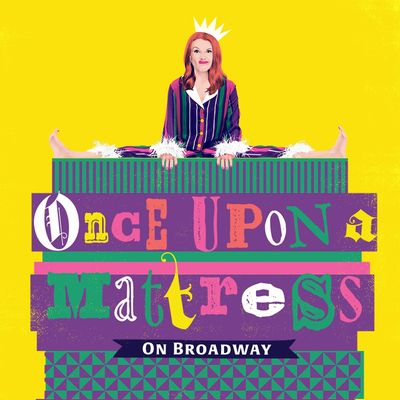
Somehow, she became not just a highly successful Broadway composer in her own right — most notably with her score for the Broadway and television hit Once Upon a Mattress — but also a renowned author of books for young people including the classic Freaky Friday.
There is a reason that this book has become a bestseller, and received so much attention, and it’s not just because it’s filed with sometimes juicy gossip about many of the leading lights and minor players of the Golden Age Broadway. No, at its heart, this is the story of a woman who struggles, and I think ultimately succeeds, in liberating herself from disapproving parents, rampant sexism, and her own fears and insecurities as she journeys to discover art, romance and family on her own terms.
Broadway Nation Backstage Pass Club
If you love this podcast, I invite you to become a Patron of the show by joining the "Broadway Nation Backstage Pass Club".
For a just $7.00 a month you can receive exclusive access to never-before-heard, unedited versions of many of the discussion that I have with my guests — in fact I often record nearly twice as much conversation as ends up in the edited versions. And you will also have access to additional in-depth conversations with my frequent co-host Albert Evans that have not been featured on the podcast. And all patrons receive special “on-air” shout-outs and acknowledgement of your vital support of this podcast.
And If you are very enthusiastic about Broadway Nation there are additional patron levels that come with even more benefits.
To become one the very first members of the Broadway Nation Backstage Pass Club and receive all of these exclusive member benefits – just click on this link:
https://broadwaynationpodcast.supercast.tech/
Thank you so much for your support!
Transcript
This transcript was automatically generated and might contain errors.
[0:07] David Armstrong: Welcome to another episode of Broadway Nation, the podcast that tells the remarkable story of how immigrants, Jews, queers, African Americans, and other outcasts invented the Broadway musical and how they changed America in the process.
[0:22] David Armstrong: I'm David Armstrong, and my guest today is JESSE GREEN, who, in addition to being the chief theater critic for the New York Times, is the author of the most acclaimed and most talked-about theater book in recent memory, Shy, the alarmingly outspoken memoirs of Mary Rodgers.
[0:38] David Armstrong: Mary Rodgers grew up in the icy shadow of her father, the legendary Broadway composer Richard Rodgers, and her disapproving mother Dorothy.
[0:47] David Armstrong: As she reached adulthood, her closest friends, colleagues, and romantic partners included Stephen Sondheim, Hal Prince, Leonard Bernstein, Jerome Robbins, Martin Charnin, and Arthur Laurents.
[0:58] David Armstrong: But somehow she became not just a highly successful Broadway composer in her own right, most notably with her score to the Broadway and television hit Once Upon a Mattress, she also became a renowned author of books for young people, including the classic Freaky Friday.
[1:14] David Armstrong: This is the first of two episodes in which JESSE GREEN shares with us the story of how Mary Rodgers selected him to tell her remarkable, sometimes harrowing, and ultimately inspiring story, and how he was able to so perfectly capture her unique voice and her bold and unwaveringly candid view of herself and the world around her.
[1:35] David Armstrong: There's a reason that this book has become a bestseller and received so much attention, and it's not just because it's filled with sometimes juicy gossip about many of the leading lights and minor players of the golden age of Broadway.
[1:48] David Armstrong: No, at its heart, this is the story of a woman who struggles and I think ultimately succeeds in liberating herself from disapproving parents, rampant sexism, and her own fears and insecurities as she journeys to create art, romance, and family on her own terms.
[2:07] David Armstrong: Here we go. Welcome, JESSE GREEN to Broadway Nation.
[2:10] JESSE GREEN: It is so great to have you here to talk about Shy.
[2:13] David Armstrong: How do you describe it actually? Is it a memoir? Is it an autobiography? What's the description of this?
[2:18] JESSE GREEN: Well, we spent a lot of time figuring that out. I guess technically we're calling it a memoir, but it's a very peculiar one insofar as it's a memoir written not by the person whom it's a memoir of. So I'd like to think of it more as a monodrama with commentary.
[2:35] JESSE GREEN: It does feel almost like it could be performed as a one-woman show. And it may yet be. There will be an audiobook, certainly, coming out next year, but there is some talk about what future life it might have.
[2:46] David Armstrong: That's very interesting. And do you know who's going to record the audiobook yet?
[2:50] JESSE GREEN: I have my dreams. I mean, I, for instance, would like my part of it to be played by Oscar Isaac, but I think it'll probably be more someone like Chip Zion. There's a lot of great actors who could just have a field day with Mary. So I'm not even going to tip my hat on that, but you'll see.
[3:08] David Armstrong: Well, you certainly captured her voice perfectly. I met Mary a few times in my career, not extensively, but enough to understand her cadence and her voice. You perfectly put that on the page. Let's talk about that. How did this book come about? How did you come to write Mary Rodgers' memoir?
[3:26] JESSE GREEN: Well, Mary had been under contract to write her own memoir several times and kept vacating the contract. There were a bunch of reasons that she wasn't feeling up to it. She didn't have the stamina she wanted to have. She wasn't interested in the form generally. It had never been her idea anyway, all these things, and she wasn't having fun when she did try.
[3:45] JESSE GREEN: And I read what she wrote. It was only a small portion, it was like 50 pages. It of course included some of the same great stories, but it oddly enough didn't sound like her. And it didn't sound like she was having fun. In fact, I think I say in the book at some point it sounded like she was doing a psychiatric case study. And she referred to her father as RR and her mother as DR by their initials, you know, like they were redacted in a crime drama or something, and maybe they were. I could see why she wasn't having fun.
[4:12] JESSE GREEN: And she asked me, finally, if I would do it with her in some way, not really having any idea what it would be. How I came to know them is described in the book. But basically, I had written about Adam Guettel many years earlier when he was doing The Light in the Piazza. For that, I had interviewed Mary and her husband Hank Guettel, and we got along great. We got to be friends, and that's how I knew the family.
[4:36] JESSE GREEN: So she asked me to come by one day and talk about what could this book be.
[4:39] David Armstrong: So she invited you to help her, basically, as she was struggling with how to fulfill these obligations that she'd had.
[4:45] JESSE GREEN: And it sounds like she'd been pushed to write a memoir, I assume, because so many of her friends knew what great stories she had to tell.
[4:52] JESSE GREEN: Yeah, I mean, this was a woman who, aside from her own achievements, which are notable in themselves, but also in particular because she was a woman doing these things at a time when women were severely underrepresented in the areas that she became well known for. But also, as you say, I mean, anyone who's ever spent one course of one dinner with her at a gala or seen her talk for five minutes, knows not only are the stories unbelievable, she was right at the center of mid-century American theater culture with arms reaching out into many different related areas as well, but also her way of telling stories was just so fun.
[5:31] JESSE GREEN: You know, I guess you could say catty sometimes, but what they really were was honest in a way you weren't used to hearing from people who had something to protect. People in that sort of position are often very careful because they don't want to burn bridges. She was a bridge burner. And it made for some great dinner table entertainment.
[5:49] David Armstrong: How would you describe the process of the two of you working together?
[5:53] JESSE GREEN: Well, we were feeling it out because neither of us really knew what the book should be under this new arrangement. It very quickly became clear to me she was not going to write it at all. She didn't want to, that was not fun for her. What she loved was sitting and talking with me, although it could have been someone else, but we were friends and also had a similar taste, I guess.
[6:12] JESSE GREEN: And you know, in a certain way, I now think I came into it already having her voice in me because you know, I grew up, I was in Once Upon a Mattress twice as a kid. You know, there's just certain ways, the way Sondheim is in many of us, or the way Kander and Ebb are in many of us, it's certain kinds of emotional patterns and verbal patterns. I feel like I already knew her voice in me when I started to meet with her.
[6:33] JESSE GREEN: So it wasn't just a random person to speak to, I think. And she liked my writing. We just started talking, and I remember the email I sent her the day before our first work session was think about your mother. Don't prepare anything, just think about your mother. So I showed up at her apartment the next day, sat in the living room on the yellow chair next to where she was seated on the sofa, and for the next maybe four hours we talked.
[6:59] JESSE GREEN: I asked her things. She went off on some stories that were practiced, I mean, that she already had spoken of before, and a lot of new ones, and I kept pushing her. And from there on for two and a half years, that's what we did. I typed every word she said that I thought was worth typing. I typed a lot of words that I said that I thought were worth typing. We gradually understood that it should be some kind of conversation.
[7:20] JESSE GREEN: She often would grab at things that I said and say, Oh, let me say that. You know, which I was happy to do. But you know, in this way, I gathered some 600 pages, 600 single space pages of her talking with me interspersed. And not with recording her at all. No, I couldn't bear that. The thought of having to spend my whole life transcribing was a nightmare to me. And I'm a very fast typist.
[7:43] JESSE GREEN: And also when you're typing, you can leave out the stuff that isn't interesting, or when she goes off on something that is not to do with the book. And also I had a job, you know. I mean, this wasn't this is your side job you're doing here.
[7:56] David Armstrong: Yeah.
[7:57] JESSE GREEN: Right. We would have these conversations. I would go back, I would sort of clean up what I typed, and I would start to check things. Because even aside from the stories I'd already heard, the new ones she was telling me, and I would say two-thirds of them are new, or more than that, three quarters are new, were so kind of jaw-dropping. And I would say to her, Mary, can that be true? Is that she said, Well, yes, you know, I'm not making it up. I said, But could you have forgotten? She said, Well, I don't think so.
[8:22] JESSE GREEN: And I would check them as much as you can check these things, and gosh darn it, they checked out to the extent you could check them out. And the weirder they were, the more they checked out. That was great to know. And Mary was how old at this point?
[8:34] JESSE GREEN: When we started, I think she was 80. And when we finished, she was 82. And she died soon after we finished this process. And just as I had begun to write, only the first 10 pages did she ever see.
[8:46] David Armstrong: Wow. It's really amazing. Just that story, that aspect of it.
[8:49] JESSE GREEN: Well, it's lucky we started when we did.
[8:51] David Armstrong: Yeah.
[8:52] JESSE GREEN: Because I mean, if I had had a month less with her, I would have missed some incredible story.
[8:56] David Armstrong: And did you work basically chronologically or jumped all over the place?
[9:01] JESSE GREEN: Whatever the subject was mother, father, whatever.
[9:04] David Armstrong: Yeah.
[9:04] JESSE GREEN: Exactly. She never spoke chronologically. I mean, that was part of the joy of the way she spoke. She would make connections between things that were 50 years apart that really electrified both ends of the connection. She also clearly stated the thing she didn't want in this book. She did not want it to be strictly chronological.
[9:23] JESSE GREEN: And as you'll see when you read the book, it totally isn't. I mean, it has a general movement from past to future, but within you'll often find yourself talking about the 30s and then jumping to the 70s in some way, shape, or form.
[9:35] David Armstrong: Right.
[9:35] JESSE GREEN: And among the other things she didn't want the book to be, she didn't want it to be simply one of those and then I wrote kind of things. She didn't want it to resemble in any way her parents' memoirs. Her mother wrote at least three, and her father wrote one, and she considered them to be astonishingly invalid works of fiction. And there were all these things that she didn't want it to be. So we had to figure out what it was going to be.
[9:58] JESSE GREEN: And while we were collecting all these stories, we were also discussing how it would work. And that's how we came to this rather strange format. So, in a way, almost like writing a musical, you talked about what it was going to be extensively before it actually happened.
[10:12] David Armstrong: So when you went to do it by yourself, you had already agreed on what the form of it was going to be.
[10:17] JESSE GREEN: Yes, although it would have been great if I had her around to read more than those 10 pages, because obviously, as I wrote it, I had to make choices that were beyond the brief that we had discussed together. You know, as you come up with problems, structural problems, especially.
[10:30] JESSE GREEN: It wasn't such a big problem. How do I tell this story? I would gather all the different things she said about it over the course of two and a half years and anything else she had said about it in the past. And I would just sort of put it together with my own glue of her voice that I had in my head and make a great story out of it that essentially resembled what it felt like to sit and hear her say it.
[10:49] JESSE GREEN: But the trick was how am I going to do that while also providing the information that someone who's telling that story is not going to provide? This is part of the problem with her own draft. She didn't actually say Richard Rodgers or R. She said Daddy, and let alone him. I mean, there were millions of characters, you know, Betty Comden or somebody named Temple Texas, who she spoke of, and I'd never heard of, and I had to look up who that was. And I was like, how am I going to preserve the main thing I wanted, which was her voice?
[11:17] JESSE GREEN: I wanted readers to feel like they were swimming in the deep water of her voice, while at the same time providing them with enough information so that they could understand what she was talking about without her saying Richard Rodgers, the great American composer, author of blah, blah, blah, which of course she would never do.
[11:32] JESSE GREEN: So that's one of the reasons that this structure I came up with where I would be commenting, correcting, giving context from notes that would gradually structurally change over the course of the book because another structural problem was, as I sadly found when she died. I was going to have to write about that. I mean, it's like Sunset Boulevard. How do you tell a story of someone's dying if they're dead? And she insisted that I find a way to do it.
[11:58] JESSE GREEN: As she was getting worse and telling me that she was not going to make it, and I was not believing her because, you know, I loved her and I didn't want to believe it. She was saying you're gonna have to figure this out. That's another reason why this unusual structure came to be.
[12:11] David Armstrong: Well, I found the structure really fascinating and delightful because we get to hear both of your voices back and forth throughout the book. It was very smart. I also love that she said this was not a and then I wrote book, it was a and then I didn't write book.
[12:25] JESSE GREEN: Well, right. I mean, a lot of it is about things that didn't happen. And she tells those stories, you know, wryly and humorously and with some annoyance, but not blaming the world.
[12:38] JESSE GREEN: Sometimes she blamed an agent. But she made those stories helpful and informative and funny rather than just, uh, score settling. And that's what I loved about everything that she would talk about. And I think it was very important to her to be honest because she had felt that growing up, particularly as a woman, but even as a person in the theater of her background, no one was honest. I mean, uh, her father was useless because his position in the American theater was unique and was completely irrelevant to what she might experience. But beyond that, her parents were difficult, cold, angry at her for not being quiet and genteel, and didn't tell her much about anything. And she feels that women in particular, but really everyone needs to benefit from actually hearing the truth about the people who came before them, not the varnished truth, not the faked truth, not the cardboard truth, but the real truth.
So she would tell these stories both about her failures, how she failed, how she felt she failed, but also about what it was like to be a woman in those days. And she wasn't going to leave out the part where she was a woman who wanted to be a mother, who wanted to have romance, who wanted to write. She had a lot of things she wanted to do that no one had told her how to do.
[13:56] David Armstrong: Let's jump to that actually, because I do think there's three elements of this book that really fascinate me in terms of stories that we don't get to hear very often. And one of them is this story of a woman growing up in that period, being told so frankly. She's so frank about her sexual life as a woman in this sort of pre-liberation era, just before and overlapping, of course, with the women's liberation movement. She gets married very young and has, you know, many children during her marriages, which seems to be at odds with the other things she's trying to do. And talk a little bit about that because the role of a woman, the lot of a woman at that period is a really strong element, and I think fascinating one in this book.
[14:38] JESSE GREEN: Thanks. I do too. Uh, remember, she turned 20 in 1951. She's entering her young adulthood at the really the height of a certain kind of repressive time, not necessarily in terms of behavior so much as what people spoke about. Furthermore, she had been the object of strong repression by her parents, who, aside from the fact that her father just was not available except through music. Her mother was like a weird, controlling prude. And Mary just was desperate to get out from under their thumbs. And one of the classic ways young adults do that is through sexuality. One is through work, and one is through having the wrong friends. And she like went right for all three of those. I mean, she had the most wrong friends her parents could have wanted.
Her best friend her whole life, basically, was Sondheim, whom her parents hated. So, you know, and she dated Hal Prince for a while, and they considered him, you know, from the wrong side of the tracks, no matter how many Tonys he eventually won. She's partly operating out of sort of a classic rebellious need to do what her parents didn't want her to do. But she's also acknowledging a truth that we now take for granted, which is that women like men want to have romance. They want to have fun. They want to find out what fits for them. She had an early engagement whose entire purpose, it now seems, was to be able to get out from under her family. She didn't end up marrying the guy, but she did convert to Catholicism for him, which is one of those stories that had my jaw on the floor, but checked out completely.
You can read about the amazing how Walter Winchell got involved and all of this. Talk about rebellion. Really? I mean, that was quite a Shonda, as they say. But in particular, once she found this sort of coterie of theater types, as many of us did in those years for ourselves, late teens, early 20s, that was it for her. Those were her people. She was going to be with them no matter how much her, in fact, the more so because her parents didn't approve of them. And then, too, she married very early, not this marriage that didn't happen, but then very soon after that, a guy who it turned out was gay. Uh, she didn't quite know that, but she probably sort of did a little. And he knew it, but wasn't letting on.
And it was a very difficult marriage with some abuse involved. And once that was over, once that marriage ended, she was like, okay, I'm gonna find out what can it mean. It's not tawdry or tacky. I worry that some people read the book or hear about it and think, well, why is she talking about who she slept with or who mashed on her? But it was so important to her to have younger people read that and know that you're gonna fail and you're gonna try a million things and they're not gonna be right. And that's okay and useful. And happily for her, it did lead to a long and happy marriage eventually. But in the meantime, it led to a period of years of really fantastic stories of odd guys who she hung around with.
And she's so open about it, which I think is wonderful because again, I think it's shining a light on a period that especially young people today view as I have students that I teach at the University of Washington, and nothing happened before 1970 that involved sex or anything else. They just can't imagine that the things they're experiencing are what young people have always experienced.
[17:55] JESSE GREEN: She wasn't a feminist because that word really barely existed in her world. She said she did feminism, but she didn't know enough to be one, and she regretted it. And later in her life, she may try to make amends, but you know, she worked a lot in ways to support women artists in particular. But at the time, she was really focusing on feminism as a personal mission. That is to say, how could she, as a woman, get all the things she wanted? She didn't understand at that time the connection of those thoughts to other people who were in the same or much worse situations. I mean, of course, she came from a great deal of privilege, although she was constantly strapped for money. If she ever got too strapped, she'd be bailed out.
Well, and I thought that was interesting. She's caught between this Jewish bohemian world of the theater, and then because of who her parents are and what they're trying to give her, this sort of upper-class WASP establishment world. Basically, she's struggling with that from when she starts school all the way to when she's at Juilliard, trying to find the balance between those two worlds.
[18:58] JESSE GREEN: Right. Well, she went to Brearley for many years of her education, which at the time had a quota. And among the only other Jewish girls were the Berlin daughters. And I find it very amusing. She would come home and ask her mother who's more famous, Daddy or Mr. Berlin. And her mother would say, Irving Berlin. Just really annoyed her. But it's really an amazing document in her life because, like, I didn't know anything about this. Jewish girls could not debut. They couldn't come out in that way we see in all those movies. They couldn't be debutants, yeah. Exactly. All the people she knew at school were doing that, and that was simply not an option for her. We learn what the options were, which were kind of not satisfactory, shall we say, to someone like Mary.
And so she did what she did. My favorite little story of that when she was dating Hal Prince and some others, and how she met Hal is another story. But there were only three clubs where her parents would allow her to go on a date. And they were like the restaurant club in the plaza and in the Drake and in one other fancy hotel, and they were terribly expensive, and no one she was interested in could afford it. So she would go through the front door of the plaza, meet the guy, and then go right out the back door in downtown.
[20:08] JESSE GREEN: And you alluded to this too. She marries a gay man. And one of the things that struck me is she's surrounded by gay people, which is not to be unexpected if you're immersed in the world of the theater. But her stories shine a light on how pervasive that was and accepted it was, even in the 1950s, at a time when I think she says in the book, anyone under the age of 50 couldn't possibly understand what a nightmare it was to be gay in the 1950s. But everyone is gay in her world in the 1950s. So those two things are hard to rectify in some ways.
[20:43] JESSE GREEN: Well, the theater people who are gay have an easier time of it because there's a lot of them, and because the theater has a history of drawing to it all kinds of people who are looked down on by mainstream society, and a lot of the social movements that have improved a lot of various minorities found their first expressions in the theaters. So that's true. But her husband, her first husband, was a lawyer, and he really was a WASP. She, of course, was not at all, but for him, it was intolerable. I mean, the idea that he could be a gay man was not possible, and he certainly was doing stuff, but she didn't really understand how much and in what way it was torturing him. So there is a difference between someone like that and someone like, say, Marshall Barer, her collaborator, Sondheim, her friend and collaborator, and a lot of the other gay men that she was, you know, she says in the book, everyone should marry a gay man once.
And when she was thinking at one point of marrying Marshall Barer, who had suggested it to her, even though he was gay and told her, you know, I'm not going to give up my lover, right? You understand that, right? And she's like, oh, oh, really? And Richard Rodgers got wind of this and called her into the library and said, why don't you just go all the way and marry Truman Capote? And he also said those marriages never worked, didn't he?
[22:58] David Armstrong: He did, but as Mary pointed out, that wasn't really true. I mean, they often didn't work, but they sometimes did. It depends on what work means. You know, there were a lot of, shall we say, mixed marriages in that sense of that period, from Leonard Bernstein to Mary Martin. Cole Porter is the best example. It's a delicious irony because his marriage to Dorothy, I guess it worked, but no better than the ones he said didn't work because it was an often furious, very difficult marriage for both of them. Neither of them was a prize emotionally.
[23:31] JESSE GREEN: What was it like to live in the shadow of the great Richard Rodgers? JESSE GREEN and I will be back with more Broadway Nation right after this quick break.
[23:31] JESSE GREEN: That's true. She was explicit about that. The first word of the book is Daddy. That was not an accident. That was the first thing she had to face. As you say, it's kind of an overarching theme, how she's going to resolve the relationship with her father. And I found it very moving and fascinating because in the end, she was able to find a resolution in their relationship, and he changed too. There's a strange moment as he's getting older and fearful, very fearful, of losing his powers, as most composers do, if you're not Verdi. I guess the first hint of it was when he was writing Sound of Music with Oscar Hammerstein, and Oscar Hammerstein was diagnosed with terminal cancer. And I should mention here, as the book says, you know, this is the way things were in that world.
He was diagnosed, but he was not told. Richard Rodgers was told, but not Hammerstein himself. So Dick Rodgers, being an incredible businessman and not very sentimental, thinks, what am I going to do if he dies before we finish this show? And he asks Mary to be on deck to write the lyrics if Hammerstein dies. I found that astonishing. He didn't, of course. He famously finished the stage version of the show and wrote his last song, Edelweiss. And she was glad of that because she just hated all those praying larks and the Doe Deers and all of that kind of stuff. It wasn't her kind of writing. And then later, as his powers did begin to diminish, he depended more and more on her for advice in a way that he never had. There was that, but there was also, as she said, if she ever wondered what her father gave her, all she had to do was listen.
[25:06] JESSE GREEN: Was you know, listen to If I Loved You in Carousel, listen to particularly the Rodgers and Hart stuff, which she had heard him composing downstairs from her bedroom. Her heart was connected to her ear. If you were going to offer her ear some of those incredibly rich, delicious, fun early stuff and the really powerful emotional stuff that he wrote with Hammerstein, particularly Carousel, which of course is about a bad father, then you were going to win her over eventually. And that is what happened. With her mother, though, who was quite a smart and accomplished woman in her own right, and you know, and the New York State Council for the Arts and started her own business and invented the Johnny Mop, you know.
But her mother never came around to really liking her. And Mary returned the favor. It's quite a story. And at the center of it is wanting to be a composer and being Richard Rodgers' daughter. Right. Well, there's that too. And of course, that was very complicated because for a long time people thought he wrote her music. They couldn't believe that a young woman could write music, I suppose, or maybe music that was pretty good, or maybe maybe they thought it sounded like him. And you know, it just of course it miffed her, but also it was painful in another sense because as she said, why would he write my music? He doesn't even like my music. And he was really pretty cold about, you know, he would listen to something and just say, Why did he do that?
I wouldn't do that. So she stopped showing him the music, but she got a kind of reputation as being someone who depended on her father, whether for actual melodies or for entree. The first is not true. The second, of course, she chose to keep her name Rodgers for professional purposes, but you'd be foolish not to. But she really did go her own way. She at first cultivated an area of music that her father didn't go into so that she would have a different identity. She did a lot of children's musicals and golden records and commercials like the Prince Spaghetti song and Captain Kangaroo theme and you know, Rentin Tins. She had a strange subcategory of dog songs that she was always writing. I guess she felt in a way that it kept her out of her father's backyard.
But also, I'm sorry to say, it seems that people of that time thought that was marketable from a woman, whereas other kinds of music might not have been. And it was only really with Once Upon a Mattress that she broke through into sort of the main playing field of American music. It felt a little bit like she thought this is all a woman could get at the time, or all a woman was allowed to do. Well, there weren't any models, so she was sort of right. But on the other hand, it wasn't just Rodgers, and maybe you were, I mean, it wasn't just Richard Rodgers. Maybe you were going to get to this, but when your closest friend is Stephen Sondheim, um, you've got another, you know, uh problem on your left side with Rodgers on your right side of here are I think a lot of people would say the two great writers of music in American musical theater, and one's your dad and one's your best friend doesn't encompass what their relationship was.
Right, life partner of some way, but but right, and in certain ways that are quite surprising. I told you earlier that there were a few few huge things that had my jaw on the floor, and many small things. And the story of her relationship with Sondheim, beyond what we all knew about it, uh, was one of those. Yeah, and she described to the sort of a trial marriage. Yes, that was her phrase. That's so interesting. But they never lived together. Not exactly not exclusively, but she spent many a night at his apartment in Turtle Bay sharing a bed in kind of creepy terror. As neither of them really on both sides. Yeah, they didn't, you know, what were they doing? But no, it was according to her, it was explicit between them that they were gonna see whether it was possible for them, understanding who they were, to make a go of it because they were that close.
And uh happily for the world, they realized it was not possible before a year was up, they had stopped. As you just said, her best friend is Stephen Sondheim, who is starting to achieve everything he achieves. Her working partner during this period is Leonard Bernstein. Right. Well, she she was an assistant, and uh the titles were really weird, but she worked for Lenny's entire run of the young people's concerts on every single one of them. You know, seems to have helped uh shape the scripts and keep him in line. I it's a little hard to tell exactly what she did, but you know, she had a very close eye on him for many, many years. And not, you know, as you say, okay, Rodgers Sondheim, then there's now Bernstein, add to that, and then you've got for better or worse, Arthur Lawrence.
You've got Jerry Robbins, who is part of her world, you've got George Abbott, who was for many years the leading director of Broadway musicals, who directed once upon a mattress. She was the only one in the entire company who called him George. Everyone, including his own daughter, had to call him Mr. Abbott. And that's because she knew him since she was. She sat on his lap. Yeah, as it was. You know, at parties all the time. She wasn't gonna call him Mr. Abbott. So that's what I mean when I say she was right at the middle of all of this. You know, she had a healthy appreciation for the brilliance of these people, but she was in a position to know how not to be snowed by them either. And she could really see them.
She had the access to see them for what they really were, both the positives and the negatives. I do think it's one of the things that makes this book so why theater fans especially have just been obsessed with it. That's not an exaggeration. People are obsessed with this book. I I don't, I don't, I don't, I'm not doing Twitter these days. I don't know what's going on, but I'm glad to hear it. Take it from me, they are, because she is somebody who, as you just said, is at the center of the Broadway world for 80 years, basically, and is a keen observer, even at a young age, to be able to comment and remember things, even dating back to the 1930s and the 40s. Yeah, well, she claims that her first memory is of an earthquake in California when she I think she was two, and she gets it partly right.
It's impressive, but you know, I think she had the day wrong, as as I note in a footnote. That's so funny. And as you said, you know, that list, that group of people that she is immersed in, is playing games with, is her gang of people that hang out like we all had that group of people in our 20s. You're meshed with in a way that you never meshed with any other friends at another time in your life, is phenomenal. And you just named most of them, how Prince she's practically engaged to or is engaged to a couple times. So it's just this, she's right there at the center of this all. And I think that's why the book is so compelling for theater fans. There's one scene that I particularly love that demonstrates that incredible thing that happens when you're young and you find your people.
Um, but of course, in her case, it's like turned up on the volume dial to 10 because it's because of who the people are and the circumstances. It's just this scene where she and Sondheim spent many years trying to break in, a process that is to some degree described in his show Merrily We Roll Along. And you know, they wrote songs together, they like looked at the market. What's selling this year? Oh, calypso, let's write a calypso song. You know, let's write a Christmas song, let's write a this. And they spent a lot of time together in Connecticut at her parents' house there. And there's a really moving to me scene in which she says to him, apropos of a discussion they're having, that he, like the person in the story she's telling, might be like that, meaning gay.
And she says, Oh, it's okay, they can fix that now. And you know, because that's what people thought then, I guess. Yeah, and he says, Well, maybe I don't want it fixed. And she has a realization. Okay, so that story is touching among people, you know, early 20s, whenever it happens. Where are they, though? They're sitting on the floor underneath Richard Rodgers' piano. To me, that's what this book is. It's like incredible moving stuff everyone understands, put into this just astonishing context. Absolutely. JESSE GREEN and I will be back next week with part two of this conversation.
[33:12] David Armstrong: I think it's the one I got an audition. I started the story with rehearsal pianists. Where are we eating? I'm moving the playboy. The publisher called me. I'm doing a rewrite. Parents are coming. I saw my fair lady. I rewrote the rewrite. I sort of enjoyed it. I tell you how the story. I'm meeting an agent. We're all getting together. We're opening doors, singing. Here we are. We're filling up days on a time. That's our way shore. Looking at too far. We're following every star. This is a pride.
[33:42] David Armstrong: If you're a fan of this podcast, I invite you to become a patron of the show by joining our Broadway Nation Backstage Pass Club. For a contribution of just seven dollars a month, you can receive exclusive access to never before heard unedited versions of many of the discussions that I have with my guests. In fact, I often record nearly twice as much conversation as ends up in the edited versions of the podcast. You will also have access to additional in-depth conversations with my frequent co-host Albert Evans that have not been featured on Broadway Nation. And all patrons will receive special on-air shout-outs and acknowledgments of your vital support for this podcast. And if you're particularly enthusiastic about Broadway Nation, there are additional patron levels that come with even more benefits. To join, go to Broadway Nation Podcast.tech. That's supercast. Or you can find the link in the show notes to this episode, or in our Broadway Nation Facebook group, which I also invite you to join.
[34:46] David Armstrong: Now it's my pleasure to give my heartfelt thanks to longtime members Elizabeth Troxler, Ellie Schaefer, Judy Hooker, Gary Fuller and Randy Everett, Steve Reynolds, Robert Braun, Roger Clarice, Chris Mode, and Neil Hoyt. Thank you so much for your generous support. Broadway Nation is written and produced by me, David Armstrong. Special thanks to Powell's Mox for his help with editing this episode and to the entire team at the Broadway Podcast Network.
[35:14] David Armstrong: Stop in rehearsals, I ran out of money. The nightclub was rated. I have to start coaching. My parents are coming. They screwed up the laundry. My wallet was stolen. I saw the musicians. We're being evicted. I'm having a breakout together on Sunday. They're slamming the doors, singing, go away. It's less of a sale than our climb. That far away shores. Father, every day. We're learning to rip the shape. We still have a lot to say. You know what you'll do. What? We'll do a review. What? We'll do a review of our own. What? Where? Why? When? Not just songs, but stories, scenes, piano pieces, mine. Frankly Fresh. A showcase of our own. The club's reopening. Don't write about a new stuff. We write old stuff.
What about the girls? What about the girls? Only that we're gonna need a girl. Well married. Thanks. I don't perform except at dinner. Who wants to live in New York? Who wants to worry? That nice that dirt the heat. Who wants the girls can flagging in the street? Thank you for coming. Next stage, please. They're always popping their cork. Up a tongue. The cops, the cabbage, the sales girls up the sex. You gotta have a real taste for maniacs. Thank you, you're hired. Oh my pet. I'm Frank. I really thought I'd stack. I'm Mary. Charlie. By the way, I'm told we Elf on Saturday. What? I'm serious. Nobody's ready. Apparently, somebody cancelled the booking. The songs aren't finished. And what about costume?
How do I learn all these numbers? I'll bring you the comments. Okay, but I have to lose that with anything worry about it. We're opening doors, singing. Here we are. We're filling up days on our time. Then far away shores, looking at the farm. We're following every star with our doors, shall we? We're missing it all on our time. The farming source coming here again. We only counted sin. We only count it. We have a dog. We have that dog.
© Broadway Podcast Network, All Rights Reserved