

Today’s episode is the second half of my conversation with JESSE GREEN, author of the New York Times best seller SHY: The Alarmingly Outspoken Memoirs of Mary Rodgers — undoubtably the most talked about theater book in years!.. Read More
From the show: BROADWAY NATION
Featured Shows
About
Today’s episode is the second half of my conversation with JESSE GREEN, author of the New York Times best seller SHY: The Alarmingly Outspoken Memoirs of Mary Rodgers — undoubtably the most talked about theater book in years!
Last week Jesse shared with us how Mary Rodgers selected him to tell her remarkable story — from her childhood growing up surrounded by the brightest lights of the Golden Age of Broadway, but always yearning for love and attention from her father, Richard Rodgers, of Rodgers & Hammerstein — to her teenage years struggling to get out from under the thumb of her very disapproving mother, Dorothy.
Today we look at the work and career of Mary Rodgers, including how as a working mother raising six children was not only able to become a successful Broadway composer in her own right (Once Upon A Mattress and The Mad Show), she was then able to reinvent herself and become a best-selling author (Freaky Friday), and eventually the Chair of the Board of The Julliard School.
It's a captivating book, and Jesse was a fascinating guest! Enjoy!
Become A PATRON of Broadway Nation!
This episode is made possible in part by the generous contributions of our Patron Level members:
GARY FULLER & RANDY EVERETT.
If you too would like to support Broadway Nation, I invite you to become a PATRON.
For a just $7.00 a month you can receive exclusive access to never-before-heard, unedited versions of many of the discussion that I have with my guests — in fact I often record nearly twice as much conversation as ends up in the edited versions. And you will also have access to additional in-depth conversations with my frequent co-host Albert Evans that have not been featured on the podcast. And all patrons receive special “on-air” shout-outs and acknowledgement of your vital support of this podcast.
And If you are very enthusiastic about Broadway Nation there are additional patron levels that come with even more benefits.
To support the show and receive all of these exclusive member benefits – please just click on this link:
https://broadwaynationpodcast.supercast.tech/
Thank you so much for your support!
Transcript
This transcript was automatically generated and might contain errors.
[0:02] David Armstrong: Welcome to another episode of Broadway Nation, the podcast that tells the remarkable story of how immigrants, Jews, queers, African Americans, and other outcasts invented the Broadway musical and how they changed America in the process.
[0:17] David Armstrong: I'm David Armstrong, and today's episode is the second half of my conversation with JESSE GREEN, the author of what is without a doubt the most talked-about theater book in years.
[0:27] David Armstrong: The New York Times bestseller Shy, the alarmingly outspoken memoirs of MARY RODGERS.
[0:34] David Armstrong: Last week, Jesse shared with us how MARY RODGERS selected him to tell the story of her remarkable journey from her childhood to her teenage years, during which she was surrounded by many of the greatest figures from the golden age of Broadway, but yearned for love and attention from her father, composer Richard Rodgers of RODGERS and Hammerstein, but also struggled to get out from under the thumb of her disapproving mother Dorothy.
[0:59] David Armstrong: Today we look at the work and career of MARY RODGERS and how, as a working mother raising six children, she was able to somehow become a successful Broadway composer in her own right and then reinvent herself to become a best-selling author and a leader in arts philanthropy.
[1:16] David Armstrong: This episode is made possible in part by the generous contributions of our patron level members, GARY FULLER and RANDY EVERETT.
[1:24] David Armstrong: And if you too would like to support Broadway Nation, there'll be information about how to do that at the end of the show.
[1:30] David Armstrong: Here we go. Let's talk a little bit about her work.
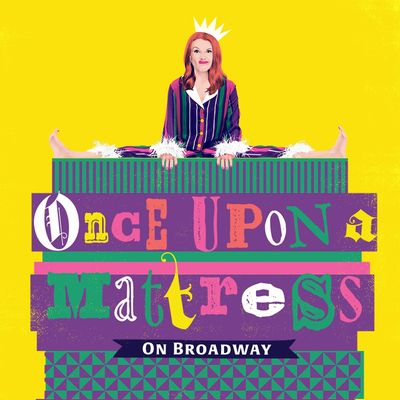
[1:33] JESSE GREEN: She is very modest about it, but she has two significant works, in my view, that just keep coming back. First on Broadway with Once Upon a Mattress, which not only is done on Broadway but then is done on television three times, I believe.
[1:48] JESSE GREEN: What are the stats today about how often that show is produced?
[1:51] JESSE GREEN: Well, when I last checked with what used to be called the RODGERS and Hammerstein office, it was the sixth most produced musical that they represented.
[1:58] JESSE GREEN: And when you consider what the top five are, I mean, that's saying quite a lot and produced a tremendous amount of income still. It's really fascinating.
[2:06] JESSE GREEN: I gave a lot of time to the development of the show. I read a review that somebody said, Who cares how they put the show together? Why so much time on it? But I think it's really fascinating and useful, particularly for anyone who wants to write a musical, but it's just also fascinating about how things come together and the accidents that become long-term selling points.
[2:25] JESSE GREEN: And you can read about it in the book, but basically, among other things, they were given a task to write a show that would employ nine lead performers.
[2:33] David Armstrong: Tell us where this happens.
[2:34] JESSE GREEN: Right. So in the summer of '59, or maybe it's '58, she goes to Tamament, which was kind of an off-off Broadway training camp. And it had been a union retreat for years, and it was now a place where mostly Jewish young singles came looking to find mates.
[2:52] JESSE GREEN: And while they were there, the guy who ran the theater part of it would put on shows that they could come and see, give them entertainment. And he hired people to write reviews. And if they wanted to, they could also then in the second half of the season try to write a show. And that's what happened. That's how the Princess and the P, as it was called, came to be.
[3:08] JESSE GREEN: But in letting them try to write this, he said, I have nine principal performers who I pay a lot of money to, which, you know, maybe it was a hundred dollars a week. And you've got to give them all lead roles.
[3:18] David Armstrong: Okay.
[3:19] JESSE GREEN: So that's a lot. And it's fascinating how that fact, which sounds like a terrible constraint, became one of the reasons, aside from the width, that that show has sixty years later still done all over the world and in high schools and community theaters everywhere. Because there's a lot of roles for people.
[3:35] JESSE GREEN: And you can read how one of them didn't know how to sing, and one of them could barely move, and one of them was this, and one of them is that. So they wrote to those limitations.
[3:42] David Armstrong: Well, there's somebody with that limitation in every community theater.
[3:46] JESSE GREEN: So it's brilliant in that way. And it's also, as I say, a lot of fun. And the score is wonderful.
[3:51] JESSE GREEN: We have an opening for a princess for a genuine certified princess.
[3:57] JESSE GREEN: Tell us when you intend to win this dilemma, we're in.
[4:24] JESSE GREEN: Someone's being bashful.
[4:28] JESSE GREEN: That's no way to be not with me.
[4:32] JESSE GREEN: Can't we see that I am just as embarrassed as you can I can understand your point of view?
[4:44] JESSE GREEN: I've always been shy.
[4:48] JESSE GREEN: I confess that I'm shy.
[4:51] JESSE GREEN: Can't you guess that this confident air is a mask that I wear? Cause I'm shy.
[4:58] JESSE GREEN: And you may be sure. Why down D fine D me or though some people I know might deny it? At bottom I'm quiet and pure.
[5:10] JESSE GREEN: I'm aware that it's wrong to be meek as I am. My chances may pass me by. I pretend to be strong, but as weak as I am, all I can do is try.
[5:24] JESSE GREEN: God knows I try, though I'm frightened and shy. And despite the impression I give, I confess that I'm living a lie.
[5:37] JESSE GREEN: Because I'm actually terribly timid.
[5:41] JESSE GREEN: And sure. Yesterday you seemed as lovely to me as anyone ever could be.
[5:56] JESSE GREEN: Now I see what tricks my eyes can play. Yesterday I must have been utterly blind, or else I was out of my mind. For I find you so much lovelier today.
[6:26] JESSE GREEN: Tonight I love you less than I will.
[6:42] JESSE GREEN: And then it came to off-Broadway, and George Abbott came on, and how the how it got rewritten really fast is a kind of hilarious story.
[6:49] JESSE GREEN: How it got cast is a sad story in certain ways. There's an amazing piece about Jane White, who played The Queen. And I don't want to give away, but it's really a devastating story about her casting.
[7:01] JESSE GREEN: So I did give a lot of attention to Once Upon a Mattress for those reasons, and also because it was her big hit. But there were lots more things she wrote, which people may not be as familiar with.
[7:11] JESSE GREEN: And she had other hits. The Mad Show was a hit.
[7:13] David Armstrong: Yes.
[7:14] JESSE GREEN: We remember that show mostly for one song. The song she wrote with Santan, but she was involved heavily with that entire show.
[7:20] JESSE GREEN: Yeah, and it's a very good representation of the kind of thumb on your nose moment when it came out. It plays like Mad Magazine. It's a very good version of that.
[7:27] JESSE GREEN: Some of the stuff is dated, of course. But some of it isn't if you listen to the cast album. It's really clever.
[7:33] JESSE GREEN: I grew up with that album, so I know those songs really well. And they're still funny. They're still very, very funny.
[7:40] JESSE GREEN: There are certain facts in life that can upset you. Of course, I never let them cross my path.
[7:47] JESSE GREEN: We made our mothers take us out of psycho when Janet Lee was bleeding in the bath. Although I never watched the man from Uncle.
[7:58] JESSE GREEN: I know I wouldn't like it if I did. I saw a scene or two for Mary Poppins. I think it's too sadistic for a kid.
[8:09] JESSE GREEN: Hate, blood shed everywhere you turn. When will our parents learn that isn't what we yearn for? Love, kindness, peace in every land.
[8:23] JESSE GREEN: So hand in hand in hand. We're gonna stamp out hate. That's our creed. Why about violence, intolerance, and grief? We're gonna start right now. Tomorrow is too late.
[8:27] JESSE GREEN: We're gonna stamp out hate. We're gonna stamp out hate. Stamp it in the ground, and then take happiness and spread it all around.
[8:51] JESSE GREEN: We'll put an end to grief. We can hardly wait. We're gonna stamp out hate. We're gonna stamp out hate.
[9:01] JESSE GREEN: Sock it in the eye, shoot it in the stomach, yelling, die, die, die. We'll pull its insides out. And look at what it ate. We're gonna stamp out hate.
[9:10] JESSE GREEN: We're gonna stamp out hate. Flash it with a switch. Happy penis on the likes and see how long they dwitch will bought his toes on hooks.
[9:24] JESSE GREEN: And then go up for playing. We're gonna stamp out hate. We're gonna stamp out hate. Show him who's the boss.
[9:34] JESSE GREEN: Take him up a lonely hill and nail him to a cross. Won't it be kicks to watch the blood co wag you like? We're gonna stamp out hate.
[9:42] JESSE GREEN: We're gonna stamp out hate. Poke it with a pick. Show it till a soul and then we'll smell it on a snake. We're gonna stamp out hate.
[9:57] JESSE GREEN: Slick a finger up its nose and pull it off his face. We're gonna stamp out hate. Clinch him with a rope.
[10:06] JESSE GREEN: Find a Nazi doctor who can boil him down for soap. We'll pull his teeth right out and sell the silver plate. Ladies and gentlemen, in these troubled times, I think there's a lesson to be learned from these dedicated young people.
[10:24] JESSE GREEN: Okay, get the door getting together on us. Hold him still.
[10:49] David Armstrong: Broadway Nation will be back right after this quick break.
[11:03] JESSE GREEN: Tall and slender like a pallo. He goes walking by. And I have to follow him the boy from the remolvo e go sanibusacus la Juan Tantel Soli Crosp.
[11:21] JESSE GREEN: And then she had her flops and really never had a musical theater big success again, or even any kind of success. But it doesn't mean she didn't write some glorious music, and I had access to a lot of the stuff she wrote much later, which unfortunately is tied up in contractual problems and cannot be performed except as individual songs.
[11:40] JESSE GREEN: Some of them are, and I hope most of them will be at some point. But she had grown a tremendous amount, and it's just a shame we didn't get to hear where she might have gone with that.
[11:49] JESSE GREEN: But she wasn't going to spend the rest of her life fighting to get into something that wasn't letting her in anymore. So she moved on.
[11:55] JESSE GREEN: She said she had a lot of arrows in her quiver, and she wasn't afraid to try all of them. And so she moved on to writing young adult books.
[12:03] JESSE GREEN: To me, the heartbreaking one there is Member of the Wedding, which sounds like it would be phenomenal. It's interesting, she has the same flops.
[12:10] JESSE GREEN: Everybody has flops, even RODGERS and Hammerstein chose the wrong subject matter and had flop shows, but then she didn't have a hit to make up for it. Again, maybe this is where that idea of access. She didn't have the access to then get to the next hits. Well, and it may also be that, you know, in trying to have it all, eventually she had to face that she couldn't, because she just couldn't give all of her life to something that wasn't giving back to her what she needed from it. She had children, she had to make money. I know it sounds like a joke. The daughter of Richard Rodgers has to make money, but she did. She had to make money. And she went looking for something else that she would enjoy where she could maybe get in more easily. And lo and behold, she found it, and then she did it again. You know, she had at least three major careers. It's so interesting. She then, with Freaky Friday, becomes a best-selling young adult novelist.
[13:00] David Armstrong: Yeah, and again, like Mattress, so cleverly thought through and structured and wittily written that it remains, you know, a bestseller and its sequels to this day. Maybe you don't hit the center of the zeitgeist a hundred times, but if you hit it twice in different fields, that's pretty great. And then when that wasn't working for her anymore, she was trying to write adult novels. It wasn't really happening. I should point out, of course, that Freaky Friday is about a mother and a daughter switching roles and trying to learn to respect each other more. So that's not an accident. But then she became a very important woman in musical philanthropy and became the chairman of the Board of Juilliard for many years. She had a brilliant third act.
[13:39] JESSE GREEN: Why do you think this book has struck such a chord with people beyond what you would think would be the core audience for it to become a New York Times bestseller? This has gone beyond the musical theater maniacs.
[13:53] David Armstrong: Well, aren't we all musical theater maniacs?
[13:56] JESSE GREEN: I'd like to think so, but yes. There's a couple reasons. One, I think that the story of a woman of that period wanting everything and getting a lot, suffering for it in many ways, too. I mean, there's some really pretty tragic moments in the book. But speaking, as we've discussed, honestly, about what it meant to find her way as a woman in fields dominated by men and to have a life at the same time. I think that's a story that you don't need to know Once Upon a Mattress or even West Side Story to appreciate.
[14:27] David Armstrong: So there's that. I think, though, if I may say that it's how funny the book is. She is so funny. And I made it a goal in writing it that I was going to get, if I could, onto every page, and it's a long book, at least three things that were either outrageous or hilarious, or that made you think that were really smart or clever about making connections between this and that. She provided sometimes the actual finished thoughts for that, and when not the raw material for it. I got pretty close to that number. It's just, as I said at the beginning, I wanted you to feel as if you were sitting at a table with her at a gala and hearing some of her stories.
[15:04] JESSE GREEN: Because the book manages that feat, I think people love it. I know when I look at it now, I mean, you know, I spent 10 years working on it. When I look at it and, you know, I read something that I forgot is in there, and sure, I can't believe it. I'm just like, oh my God, this is so funny, or this is so trenchant. I'm not patting myself on the back. It's just that raw material that she had in her life was a gift. And I think people feel that.
[15:30] David Armstrong: I think you're right. And you succeeded in putting at least three of those things on every page because it is part of why you just keep turning the page. And people have said to me over and over, I couldn't put it down. I just could not put that book down. Which is a real achievement, especially given subject matter that's somewhat arcane to the general reader.
[15:49] JESSE GREEN: Well, I thought a lot about that, some of it with her, and we talked about not having it chronological actually helps because you sort of are drawn along into new things and you get to learn things that are important before they happen, so that you want to get to the time when they will happen. You want to hear, oh, how does that go? And you know, writing in many short sections, I think is part of a trick to make a page turner. If you're reading at night and you've read a six or eight page section, I can read one more, you know. Whereas if the sections are 40 pages, you don't. So there's lots of that. But it's mostly her voice. And I think as the book goes along, the increased interaction between her voice and my voice, at some point I just have to take over and do the whole thing in my own voice.
[16:30] David Armstrong: A lot of the book is about the challenges between parents and children, from her parents to her children. I know you have children. Do you see this as a parenting guide in any way? What do we learn? What are the parenting tips to take away from this book?
[16:46] JESSE GREEN: Well, I don't know that her kids would suggest using her as a basis for a parenting guide. But I liked a lot of what I knew about her parenting. And of course, as you say, her parenting was specifically and absolutely in reaction to the parenting she got from her parents. Everything that her parents did, she set out to do the opposite. I think sometimes that's great. She taught her kids to swear. I mean, she taught them the words. And what she taught with it, she says, is when you use them and where. It seems to me about sex, which you might expect. And I don't want to get into it, but teaching the kids more than many kids get taught, and making sure that they were protected and safe as well.
Basically, and this is something I wasn't great at as a parent, being up for a fun time all the time. On the other hand, I think her kids, some of her kids would say that she wasn't always there and some of them needed. And particularly in her first marriage with a husband who was a sort of standard man of that era, except for being gay, insofar as he was at work all the time and he didn't do a lot of the parenting stuff. And if she was out all night working on a show, it was nannies all the time. I think there are downsides to her parenting as well as certainly to her parents' parenting, but all things told I'd rather have been her child than her parents' child.
[18:10] David Armstrong: Well and she's very honest about that and I think it's part of the struggle of a woman in that period and she's quite unusual. How many children does she have?
[18:20] JESSE GREEN: She gave birth to six and five made it to adulthood.
[18:24] David Armstrong: Yeah.
[18:25] JESSE GREEN: Which is not typical of women and especially a career woman. In a career where you have to be out late at night it's not just a career woman this is in show business.
[18:33] David Armstrong: Well she loved being pregnant clearly and I think she probably loved how you get pregnant too.
[18:39] JESSE GREEN: Yeah, yeah. So I found all that really interesting and how it ties all these themes together as well.
[18:45] David Armstrong: Yeah, my kids knew her when they were younger I mean they're now in their late 20s they adored her and Hank as well but she was really really great at showing kids how to be real and fun and not stuffy and controlling. She was just the best whatever else she didn't provide you'll talk to her kids when they write their book.
[19:06] JESSE GREEN: And what kind of reaction have you gotten from the family from people that know her what's been the reviews from the inside circle?
[19:14] David Armstrong: Well the family's been fantastic. They were really asked to put up with a lot which was that they helped me when I needed to check things or this or that but they were not by Mary's insistence which was in a written document Mary made they were not allowed to see the book. It was published without their review so that's a lot for a parent to ask of their children or to disallow their children and given that I'm amazed at how terrific they've been I'm sure they each have their own reactions and things that they maybe wish weren't in it. When I think about like if this is my mother would I want all that in there but you know I wasn't writing for them much as I like them all. I was writing for her.
So I would say basically they've been great. I do hope there's more from them on this because it's an endlessly interesting subject from the people who knew her there are a few people who are like how dare you put that in the book what am I gonna do? You know I did censor her a tiny bit there were a few things that I just like no Mary we're not doing that. But for the most part the thing she was willing to say which was 95 97 98% of her life it was all gonna go in and I'm sorry if some people didn't like that. Mostly what I hear is oh my god she's back you know they read it they hear her they feel like she's in the room with them and that's the most gratifying of all.
[20:22] JESSE GREEN: Well it's a real achievement you deserve all the praise that it's getting.
[20:22] David Armstrong: Well she deserves a lot of it too well and you deserve a lot of the praise for fulfilling Mary's wishes because it seems to me from the outside you delivered the book that Mary wanted there to be.
[20:22] JESSE GREEN: I hope so I'll never know but as you read in the book the only pages she read she said make them meaner make them funnier I didn't know how to do that I thought they were pretty mean and pretty funny as it was but I tried to keep it up for the whole 450 pages, and I think I did.
[21:01] JESSE GREEN: Thank you so much. It's been so great to have you on Broadway Nation to talk about Shy.
[21:07] David Armstrong: Thank you so much, David. It's been a blast.
[21:09] JESSE GREEN: They all lived happily, happily, happily ever after.
[21:14] David Armstrong: The couple is happily leaving the chapel eternally tied.
[21:21] JESSE GREEN: As the curtain descends, there is nothing but loving and laughter.
[21:26] David Armstrong: And the fairy tale ends.
[21:28] JESSE GREEN: The heroine's always a bride.
[21:31] David Armstrong: If you're a fan of this podcast, I invite you to become a patron of the show by joining our Broadway Nation Backstage Pass Club.
[21:39] JESSE GREEN: For a contribution of just $7 a month, you can receive exclusive access to Never Before Heard unedited versions of many of the discussions that I have with my guests.
[21:49] David Armstrong: In fact, I often record nearly twice as much conversation as ends up in the edited versions of the podcast. You will also have access to additional in-depth conversations with my frequent co-host Albert Evans that have not been featured on Broadway Nation.
[22:04] JESSE GREEN: And all patrons will receive special on-air shout-outs and acknowledgments of your vital support for this podcast.
[22:11] David Armstrong: And if you're particularly enthusiastic about Broadway Nation, there are additional patron levels that come with even more benefits.
[22:18] JESSE GREEN: To join, go to Broadway Nation Podcast.tech.
[22:23] David Armstrong: That's supercast.tech S-U-P-E-R-C-A-S-T, or you can find the link in the show notes to this episode, or in our Broadway Nation Facebook group, which I also invite you to join.
[22:35] David Armstrong: Now it's my pleasure to give my heartfelt thanks to longtime members Elizabeth Troxler, Ellie Schaefer, Judy Hooker, Steve Reynolds, Robert Braun, Roger Clarice, Chris Mode, and Neil Hoyt.
[22:47] JESSE GREEN: And new member Kelly Allen.
[22:49] David Armstrong: Thank you so much for your generous support.
[22:52] David Armstrong: Broadway Nation is written and produced by me, David Armstrong. Special thanks to Powell's Mox for his help with editing this episode and to the entire team at the Broadway Podcast Network.
[23:03] JESSE GREEN: Rapunzel had platinum dresses that would double the length of her dresses.
[23:08] David Armstrong: She was kept in a tower for years by a wicked.
[23:16] JESSE GREEN: She scrambled by letting her hand down.
[23:19] David Armstrong: That's what I call the wild switch.
[23:23] JESSE GREEN: I'll be finished before I begin.
[23:25] David Armstrong: And besides, I don't want to get out.
[23:28] JESSE GREEN: I wanna get in.
[23:33] David Armstrong: I want to live happily, happily, happily ever after.
[23:39] JESSE GREEN: I want to walk happily out of the chapel, eternally.
[23:59] David Armstrong: Happily happy, happily, happily happy.
[24:04] JESSE GREEN: And the roadly said it's so.
© Broadway Podcast Network, All Rights Reserved