

This is the second part of my conversation with director Sheldon Epps whose very engaging new book is titled: My Own Directions — A Black Man’s Journey in the American Theatre... Read More
From the show: BROADWAY NATION
Featured Shows
About
This is the second part of my conversation with director Sheldon Epps whose very engaging new book is titled: My Own Directions — A Black Man’s Journey in the American Theatre.
This week we follow Epps’ journey as it takes him from New York to California, first to the Old Globe Theatre in San Diego to his appointment as Artistic Director of the Pasadena Playhouse which makes him the first black person to lead a major theater company in Southern California, and one of the only three artists of color to hold that position nationwide.
As you will hear, both this week and next, Epps’ two decades at the Pasadena Playhouse are packed with high drama, both on and off the stage, including artistic triumphs, financial disasters, and both subtle and overt racism. However, during his tenure the Playhouse is radically transformed and reinvigorated by his leadership.
One of the highlights of the book and this episode is an unbelievable but absolutely true story involving Epps first visit to the Pasadena Playhouse and the legendary black star Ethel Waters!
I also enjoyed our discussion of the certain amount of arrogance that is needed to be an Artistic Director. As Sheldon once told a Playhouse Board Member, “If you ever have an Artistic Director who is not a bit arrogant — fire them!”
Become A PATRON of Broadway Nation!
This episode is made possible in part by the generous support of"Producer Level” Patron
ROBERT BRAUN
If you are a fan ofBroadway Nation, I invite you too to become a PATRON!
For a just $7.00 a month you can receive exclusive access to never-before-heard, unedited versions of many of the discussion that I have with my guests — in fact I often record nearly twice as much conversation as ends up in the edited versions. And you will also have access to additional in-depth conversations with my frequent co-host Albert Evans that have not been featured on the podcast. And all patrons receive special “on-air” shout-outs and acknowledgement of your vital support of this podcast.
Special thanks to our newest PATRONS:
Ruth Oberg
Juan J. Neumeister
and
Kelly Allen
And If you are very enthusiastic about Broadway Nation there are additional PATRON levels that come with even more benefits.
If you would like to support the work of Broadway Nation and receive these exclusive member benefits, please just click on this link:
https://broadwaynationpodcast.supercast.tech/
Thank you in advance for your support!
Transcript
This transcript was automatically generated and might contain errors.
[0:12] David Armstrong: Welcome to another episode of Broadway Nation, the podcast that tells the remarkable story of how immigrants, Jews, queers, African Americans, and other outcasts invented the Broadway musical and how they changed America in the process.
[0:27] David Armstrong: I'm David Armstrong, and this is the second part of my discussion with Sheldon Epps, whose engaging new book is titled My Own Directions: A Black Man's Journey in the American Theater.
[0:39] David Armstrong: If you missed the previous episode, you may want to catch up with that one before listening to this one.
[0:44] David Armstrong: Today we follow Sheldon's journey as it takes him from New York to California.
[0:48] David Armstrong: First to the Old Globe Theater in San Diego, and then to the Pasadena Playhouse, where he becomes one of the only black artists to lead a major American theater company.
[0:58] David Armstrong: As you will hear this week and next, his two decades in Pasadena are packed with high drama both on and off the stage, including artistic triumphs, financial disasters, and subtle and not so subtle racism.
[1:13] David Armstrong: But during his time in Pasadena, that theater is radically transformed and reinvigorated by Sheldon's leadership.
[1:20] David Armstrong: This episode is made possible in part by the generous support of producer-level patron Robert Braun.
[1:26] David Armstrong: If you would like to support the work of Broadway Nation, I'll have information at the end of the podcast about how you too can become a patron.
[1:26] David Armstrong: At the end of the previous episode, Sheldon was sharing with us the major success that he had with his musical Blues in the Night, and the many, many productions of that show that took him to Broadway, London's West End, across America and around the world.
[1:50] David Armstrong: Here we go.
[1:51] Sheldon Epps: We got to say.
[2:13] Sheldon Epps: Blues in the Night makes your career, puts you on the map, but also almost becomes a trap in the way that we've seen other directors have a success, and then they end up not doing much beyond that one show. They may do that for years and years. How did you negotiate making sure you didn't fall into that trap that that didn't happen to you?
[2:32] Sheldon Epps: Well, I just had to force myself to stop directing it, frankly. After doing about, and this is an incredibly good fortune, I know, but after doing about 20 or 25 productions of it, I said, okay, I'm in danger here of never in my life directing anything except Blues in the Night. Now I had directed a few other things, but I recognized that people were saying when I would go for other jobs, particularly plays, you know, producers would say, Oh, I know Sheldon Epps. He just does those black musicals, right? He just does those blues shows, right? I heard whispers about that. I said, Oh, this could be dangerous. Even though it was providing me with a nice steady income and directing fees and all of that.
I forced myself to say, okay, that's enough. I'm gonna stop doing this now. And I handed it over to some very good associates and assistants and let them take it, or let other people direct it. But you have to make that choice sometimes, just to say, I've written this cash cow long enough. You know, I better get off and go do some other things. And also artistically, repeating yourself is not the best thing in the world to do, though. Hopefully, you repeat yourself and learn. But sometimes you need to learn by doing other material.
[3:45] David Armstrong: Absolutely. That's a very brave and hard thing to do. I admire that, but it gets boring to do the same show over and over again.
[3:51] Sheldon Epps: There's no two things about it. No, you find yourself in rehearsal saying things and saying, okay, did I say that before for this production or the last time? It is a little bit brave, but it's foolhardy not to do that because you can get trapped. And I've seen that with some people who've made a lot of money and been very financially successful, but haven't done anything else in their life. So I didn't want that to be my situation.
[4:16] David Armstrong: Was there a period then where you were out of work for a while? How long did it take you to turn that around?
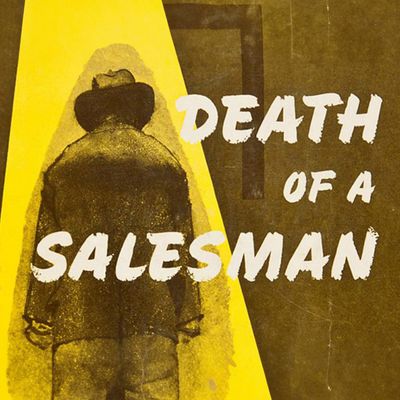
[4:21] Sheldon Epps: Not too long. As I said, I had been doing some other things at the same time, and a big opportunity came round about the time I was making that decision. I think this is true. I was asked to do Death of a Salesman at the Guthrie Theater. Interestingly enough, in the same casting concept of the production that's on Broadway right now with a black Lowman family, not an all-black cast, but a black Lowman family existing in a white world. Talk about things repeating. That production then made a lot of noise and got a lot of attention, just as the current one has, because it was the Guthrie Theater, which was highly esteemed. That was sort of a second stamp of approval on my directing career.
[5:04] David Armstrong: What visibility to position you now as a director of classics, as a director of quote straight theater, I can see where that would quickly reposition you.
[5:14] Sheldon Epps: Yes, it did. And then fortunately, right after that, I did my first production as a freelance director at Pasadena Playhouse. And during that time, actually was asked to come down to the Old Globe Theater and eventually wound up at the Old Globe for four years as associate artistic director.
[5:32] David Armstrong: And as you talk about in the book, you talk about that being your graduate school for being an artistic director.
[5:38] Sheldon Epps: Yes, very much so. I was invited again, Theater Communications Group, TCG, gave me a grant to be in residence for a big chunk of the year. And that was great because it allowed you to stay in one place and not have to worry about doing eight shows over the course of the year to just make a living. With that money, we created the position of associate artistic director at the Old Globe. And I fortunately served in that position during a great time for the theater, but also under the leadership of Jack O'Brien, who taught me so much artistically, but also taught me so much about leading a company. And just being there taught me so much. When you're a freelance director, you go in, you do your play, and you rehearse your play, and you don't really think about anything else that's going on in the building.
But when you go on staff of the theater, then you start to realize oh, there's money that has to be raised. Oh, there's subscription brochures that have to go out, there's marketing, there's all of those things that go into running a theater that you don't know unless you're there all of the time. So that's when I learned what the job of being an artistic director is, and that was my preparation for taking the job at Pasadena.
[6:56] Sheldon Epps: I always say it's a misnomer. It really should have been called an artistic producer, is really what that job encompasses. It's a producing job where you get to direct sometimes if you're lucky.
[7:07] David Armstrong: Yes, that's true.
[7:08] Sheldon Epps: Yes, that's true. Or you have to direct to save money.
[7:10] David Armstrong: Right.
[7:11] Sheldon Epps: And what you also realize is a lot of the job has nothing to do with picking plays and or directing plays. A lot of it is building a relationship with a community. A lot of it is administrative. And a lot of it is beyond what the plays on the stage are, defining the personality, the character of the theater, which has to do with speaking to the community. It has to do with the artwork. It has to do with educational programs, it has to do with all of the things that surround the main stage season. A lot of people put all of their focus on the main stage season, and that's it. And that's great. You have to do that. But if you want to build what I consider, what I know you consider to be a great theater, you have to think in a much larger way than that.
It's all about the entire relationship with the community, the community where you're based and specifically the audience that you serve. And also your position in the national community. If you have that kind of ambition, and I did, and I know you did when you were at Fifth Avenue Theater, I wanted the theater to be a great American theater, not just a great Pasadena theater, but a great American theater. And that takes again a kind of arrogance and ambition, and I was accused of that. But you know, my arrogance and ambition was on behalf of the theater. I wanted the theater to be recognized and celebrated. And I'm not sure you can do that job without some sense of I know how to do this, which right there is arrogant, I guess, to say, because no one's done it before.
[8:41] Sheldon Epps: Second or third year in my tenure as artistic director, someone said to me, Well, you know, you can be kind of arrogant now and then. And I said, You're damn right I can be. And if you ever have an artistic director who is not a little bit arrogant, fire them. Because it is a necessary quality to do this job correctly.
[9:00] David Armstrong: I love that. So let's talk about that. After the Old Globe, you are offered this possibility to go to the Pasadena Playhouse to become the artistic director there. The story that you tell in the book, as you say, sounds like something you've made up, but is entirely true.
[9:15] Sheldon Epps: Let's jump back to your childhood in Compton before you moved to New Jersey. You grew up in Compton, LA, I guess I don't know how you say that, but that's a neighborhood of LA.
[9:24] Sheldon Epps: Yes, right. Yeah, I grew up in Southeast LA, Compton, which, you know, was not the Compton of Straight Outta Compton. It was a nice lower middle class community that people took great pride in their homes and landscaping and all of that. And it was a community. Everybody took care of everybody else. And my father was a Presbyterian minister in that community. He built up quite a great church and a wonderful congregation. But part of his belief, his aesthetic as a minister, was that children should be exposed to the arts. So almost every Saturday we were taken off to Philharmonic concert, symphony, the ballet, all of that. And on one of those Saturdays, we got on the bus and made a long, long trip from Compton to a theater.
And I walked into this theater and sat down and saw a production of A Member of the Wedding with the great, great Ethel Waters, and one of the last times she played that role on stage. And that theater, believe it or not, was Pasadena Playhouse. So my connection to Pasadena Playhouse goes all the way back to being eight years old. And when I went back to direct for the first time, I sort of had this feeling of deja vu. Like, I know I've been here before, but I don't know why or when. But one day it struck me, and I said to one of the volunteers, you know, one of those great ladies who've been working there forever, I said, Did Ethel Waters ever do a play here? And she said, Yes, she did. I remember The Wedding here in '62, '63, something like that. So that's when I realized that I'd been working with Pasadena Playhouse for a long time.
[10:59] David Armstrong: That is so amazing.
[11:00] Sheldon Epps: And to have seen Ethel Waters on stage.
[11:03] ♪ Musical number: "Why Should I Feel Discouraged" — performed by Ethel Waters ♪
[11:21] Sheldon Epps: God, yes. Yes. I mean, to discover the power, the real power of a star performance at such an early age. For Gas is my portion. What an actress was capable of. And I know that he watched me. How you could literally hold an audience in the palm of your hand. So I sing because when she sang "His Eyes on the Sparrow" in the rocking chair with Frankie on their lap, it's just transcendent. Oh, I sing on free.
[12:48] Sheldon Epps: Watching me. Right, you've got the sharpest set of human bones I ever felt. Amazing. I remember her being on TV a lot when I was a kid and being mesmerized by her, but she's somebody who's I wouldn't say forgotten today, but woefully neglected as somebody we talk about as a great star.
[13:11] Sheldon Epps: I'll tell you a funny story. I can't remember who sponsored it, but it was something like at City Center or Town Hall or one of those in New York, where they did a tribute to Ethel Waters. And they had every Black Diva on Broadway come along, you know. So Nell Carter was there, and Amelia McQueen, and you know, maybe even Leslie, and they all sang songs from Ethel's career. And they were all great. But David, then they lowered a screen and they showed a clip of Ethel herself from one of those MGM movies. And she started singing "Taking a Chance on Love," and it was as if nobody had been on stage. Talk about being blown away. Everybody else just disappeared into the mist.
[13:57] Sheldon Epps: Here I'm here in Cropitz Blow again. All a glow again. Taking a chance on love. Don't go away, Sheldon and I will be right back. About to take that ride again. Diary eyed again, taking a chance. On love.
[14:26] David Armstrong: And so in 1997, Sheldon became the first black person to lead a major theater in Southern California and one of the few people of color in the country to hold that position. Was that something you were well aware of, or was it just something that went along with, oh, I have this big job to fill? Were you focused on that, I guess, is the question?
[14:45] Sheldon Epps: No, I don't think I was focused on it. I quickly had to get focused on it. Um, in taking the job and making the move up from San Diego to Pasadena, I didn't think about that much. You know, I thought about what I wanted to do with the theater, how I wanted to make or remake the theater. Because frankly, at that time the work was a little bit in the doldrums. It was not highly respected, it was not well recognized as a great American theater. I was thinking about that, but shortly after my appointment, there was an article in a very, very leftist radical newspaper here.
[15:47] Sheldon Epps: So if I hadn't been aware of it before, I was still aware of it at that very moment. It's in the book. I said, I kind of laughed at it, but then I showed it to my mother and she burst into tears. And I said, Oh, well, maybe I should be taking this a little more seriously. That's really where I became aware of it and thought about it. And then whispers, other whispers started. You know, what's this guy gonna do? Is he gonna try to turn this into Negro Ensemble Company West? You know, is this going to be a Chitlin Circuit Theater? All of those kind of things, very rarely to my face, but I heard the rumors behind my back.
[16:23] David Armstrong: It's so interesting how our perspectives can be so warped. When you got that job, I thought, well, of course he should have that job. He's one of the leading directors working at this moment. But the reality on the ground, as you talk about it in the book, was something else.
[16:38] Sheldon Epps: Yeah. And by the way, especially now when fortunately we do have a number of people of color leading major theaters. At that time, there were three of us. Kenny Leon was at the Alliance, George C. Wolfe was at the Public of non-ethnic specific theaters. There were three of us, three people of color leading non-ethnic specific theaters and major theaters.
[17:02] Sheldon Epps: Right. And then Kenny and George left to go on to do other things. And so I was the only one. You know, you have to remember that it was a very challenging situation because it was entirely rare. Very few were doing it, or I was the only one who was doing it. All of us felt that burden of I gotta succeed, not just so that I succeed, but so that there is not a reason to say that people of color can't run arts organizations, which is a big burden to carry around.
[17:34] David Armstrong: You talked about the theater not being very distinguished when you arrived there, and I can affirm that that is true. It was not well respected in the industry of American theater. It just sort of had a very lackluster sort of profile. What did you do to set about to change that?
[17:50] Sheldon Epps: Well, there were a couple of things. One was that, as I said before, by that time, I had worked at some great American theaters. I had just come from four years at the Old Globe when the Old Globe was at its peak, sending lots of things to New York. I'd worked at the Guthrie, I'd worked at Cleveland Playhouse. So I'd worked at some pretty snazzy theaters along the way. But I was smart enough to know that the work I'd seen at Pasadena Playhouse was not up to that standard. But that was my standard. I said, I want this to be one of the great American theaters. At least I want that to be the goal.
[18:24] Sheldon Epps: Now, while the work was not very good, the theater is a beautiful facility. It is in the Spanish mission style, and fortunately has always been maintained as it was built. So it's a gorgeous physical facility. And it had a legendary past as well. It had a legendary past, you know, was established in 1917. So one of the oldest theaters in America, with Cleveland Playhouse, actually, one of the oldest theaters in America. But it had had some rocky times. And at that time, the focus was on just staying open. If you could just keep churning out the plays, no matter what the plays are, or who was in them, or who directed them, or who is involved, if you just kept churning out the plays, that was the measure of success.
[19:08] Sheldon Epps: And I said, Well, I think it ought to be a little bit more than that. We should churn out the plays, but they also should be good, right? They should aim for artistic excellence. And that was like it was a revolutionary thought that you would actually think about the artistry and the excellence of the work on stage. It didn't seem revolutionary to me. It's just that somebody had to do it. Somebody had to say, here's the artistic standards of this theater. We want to work with the best directors, the best actors, the best designers. We want to attract the best projects. Rather simple things in concept, but you have to have enough ambition and arrogance again to want to make that happen.
[19:53] Sheldon Epps: I just went about that, you know. And fortunately, here we are, the theater is on the fringe of Los Angeles. So there were all of these major theater artists who had moved out here to do film and television, but who really wanted to work in the theater if it was the theater that they felt good about working in.
[20:12] David Armstrong: The plays that you selected to do in those first several seasons, I think really put the theater on the map and put you on the map. What was your thinking behind that when you talked about creating this first season or the first couple?
[20:23] Sheldon Epps: Well, there were two things. One was just to establish a quality of writing and a diversity of writing, number one, that I felt was essential to say, this is the personality of this theater. This is the kind of work that we can do. So again, being very bold, the very first production I did as artistic director was The Real Thing by Tom Stoppard, which I think is just one of the great plays in the English language, but challenging, thought provoking, tough, you know, an audience has to work at it, but just brilliant in its writing.
[20:57] Sheldon Epps: And the other thing was the theater when I got there, we were sort of doing the same play over and over again. And I don't mean that literally. They were doing a four to six-character play with one setting with a bunch of white people who thought they were funny. And sometimes they were, and many times they were not. But that was it. You rarely saw a face of color on the stage. You certainly did not see a play by a writer of color. And you rarely saw any people of color in the audience. So all of that had to change.
[21:26] Sheldon Epps: And that in and of itself was going to make it a more interesting theater. The range and the breadth of the fare was beyond, you know, silly boulevard comedies, but encompassed work by black writers, by Latino writers, by Asian writers, and writers of greater skill and depth. That was a good beginning. And then you get good people to direct those plays and good people to be in them and great people to design them. You know, you're on your way to greatness. But it means holding the standard up and not settling for less good people or less good plays or less reach for the audience.
[22:05] Sheldon Epps: I don't know Pasadena very well demographically then, much less now. But I'm assuming it wasn't that there weren't black people living in Pasadena or living nearby. It's just they were not coming to the theater. They were not coming to the theater, and there was a long period of time, despite the fact that Pasadena is in Southern California, not southern Georgia. There was a long period of time when they were not invited or wanted to come to this theater. When they were frankly excluded from coming to this theater. That wasn't in any legal way on the books, but it was made clear we really don't want black people here. We don't want Latino people here. I say it's true that many times I would sit in the courtyard and be the only black person, the only person of any color, and the only person under 60. All of those things were dangerous for the life of the theater and had to change.
[22:56] David Armstrong: How did you change that? Because that has been, and I think still remains the goal of many theater companies around the country. Is how do we change that dynamic?
[23:03] Sheldon Epps: Well, number one was the programming. Number one was to stop doing that same play over and over again with that four to six funny or unfunny group of white people, to do the work of Latino writers, you know, great writers like Nilo Cruz, to do plays like The Old Settler by John Henry Redwood and eventually August Wilson plays, to do work by Sondheim, to do work like The Real Thing that would attract a younger audience. So the programming was central to that, but so was the marketing. I was never of the belief if you build it, they will come. I just don't think that's true, and I think that's a problem with many American theaters. They think that. Well, no, you got to build it, but then you gotta get out there and tell people that it's there, and you've got to extend a sincere invitation into your home, especially if for years and years there's been no invitation to your home.
It was about choosing the plays that would attract the audiences plural that you wanted, including younger audiences, doing them well, and then establishing a real relationship with all of those communities.
[24:13] Sheldon Epps: And by the way, simple thing was Pasadena Playhouse was a very insular theater in the Pasadena community. I first of all wanted it to be a greater Los Angeles theater and to serve all of Greater LA, and then I wanted it to be a national theater. I was not content for it to be a little community theater just because it was based in Pasadena. And by the way, there were people who were almost proud of it being sort of this semi-community theater. You know, we're just this slowly little community theater in Pasadena, and that's okay with us. That's what we want. And I said, Well, that's not what I want. And that's not what I think this theater deserves with its history, with its building, with its ability to serve a larger community, we can and should dream bigger than that. You know, it took some arm twisting with a lot of people.
[25:06] David Armstrong: So these first several years that you're there are met with great success. You do a number of plays that get a lot of attention and are well received, but there are some challenges as well. What challenges do you face in transforming the theater?
[25:23] Sheldon Epps: Well, one challenge was recognition that there were going to be some people who were not happy with these diversity efforts, who did not want to see plays other than those same old, same old plays that they were seeing, and certainly did not feel that they wanted to welcome new audiences into the theater. I had a conversation with a subscriber at one point who I was told didn't want to renew his subscription because I was doing too many black plays. Once again, that comment came not to me, but to someone else. And I said, Well, I'm going to talk to that man. I called him and I said, Is this true? Are you not renewing because you think there are too many black plays in the season? He said, Well, yes, I do think that's true.
And I said, Well, there's one out of six that could in any way be defined as a black play. So if you're telling me that one out of six is too many for you, then you should not renew because this is not the theater for you. And he said, Well, I'll think about it. Now, the good part of that story is that years later that man came back to me and thanked me for not letting him escape, you know, so he was grateful for the variety eventually, but that was a challenge. And there were some that did flee, but fortunately they were replaced by many, many others.
[26:38] Sheldon Epps: And then there were always, always, always at this theater economic challenges. Economic challenges that went way back before I was artistic director, a debt load that existed from the establishment of a new not-for-profit producing company that had to be serviced. That was always hanging over your head, and there was always scrambling if you wanted to do something a bit more ambitious or finding partners so you could afford to do something more ambitious, or getting a grant or getting a donation or whatever. So that was quite honestly a great challenge, and you know, a challenge that eventually we had to stop for a while to deal with. This is made worse by the financial collapse, the dot-com bust, as we call it here in Seattle, which everyone felt and every theater in America suffered from. That is making those financial challenges, again, that almost every theater have different ones than you had in Pasadena, but similar in their effect.
[27:43] Sheldon Epps: But I always said it's just hand to mouth on a different level. That's true. I used to say it's just the decimal point is in a different place, you know.
[27:51] David Armstrong: Exactly.
[27:51] Sheldon Epps: It's either a five million dollar problem or a $50,000 problem, but it's kind of the same problems.
[27:57] David Armstrong: That's exactly right.
[27:59] Sheldon Epps: That financial debacle in 2008 created even bigger problems for us in the financial area because from my point of view, it gave donors an excuse not to ante up. People would say, oh, well, my portfolio is down by a third. You know, I'd be thinking, well, yeah, but you had a hundred million dollars. So you're telling me you're down to your last 70 million dollars, so you can't donate to the theater. But you know, you can't argue with that if somebody feels that way. I describe it as we were running in front of a snowball all of the time, and you're constantly looking over your shoulder, and the snowball's getting faster and bigger and all of that, so you have to run faster. And that just caused it to get too big and too overwhelming, and we were suddenly in a position, even with big, big hits, David, with this record-breaking production of Fences followed by the world premiere of the record-breaking production of Sister Act.
We got to the next month, and there's no money in the bank. We were faced with trying to meet payroll and pay bills and all of that. And a new managing director said, This is not the way to do this. You should shut down for a while and solve these financial problems. I, of course, went crazy and said, You're out of your mind. How could you think of that? How could you even suggest that? But after a while, I came to see the wisdom of that thinking, and painful as it was in 2010, we did take what we described as an intermission, but frankly, at that point we had no idea whether there was going to be another act or not. We were hopeful, but we really didn't know.
[29:34] David Armstrong: Sheldon and I will be back next week with the remarkable story of how he led the Pasadena Playhouse out of that crisis and the secret mysterious donor who helped make that second act possible.
[29:59] David Armstrong: If you're in love with this podcast, I invite you to become a patron of Broadway Nation. For a contribution of just seven dollars a month, you can receive exclusive access to never before heard unedited versions of many of the discussions that I have with my guests. And in fact, I often record nearly twice as much conversation as ends up in the edited versions of the podcast. You will also have access to additional in-depth conversations with my frequent co-host Albert Evans that have not been featured on Broadway Nation. And all patrons will receive special on-air shout-outs and acknowledgments of your vital support for this podcast. To join, go to Broadway Nation Podcast. Or you can find the link in the show notes to this episode or in our Broadway Nation Facebook group, which I also invite you to join.
And now it's my great pleasure to welcome new patron members, Kelly Allen, Juan J. Neumeister, and Ruth Oberg. Thank you so much for your support. Broadway Nation is written and produced by me, David Armstrong. Special thanks to Pals Mox for his help with editing this episode, to KVSH 101.9, the voice of beautiful Vashon Island, Washington, and to the entire team at the Broadway Podcast Network.
[31:26] ♪ Musical number ♪
© Broadway Podcast Network, All Rights Reserved