

This special Encore episode of Broadway Nation celebrates the birthdays this week of two of Broadways greatest composers -- George Gershwin & Vincent Youmans. Both were born 124 years ago in 1898 and they came into the world just one day apart – Gershwin on September 26, and Youmans on September 27... Read More
From the show: BROADWAY NATION
Featured Shows
About
This special Encore episode of Broadway Nation celebrates the birthdays this week of two of Broadways greatest composers -- George Gershwin & Vincent Youmans.
Both were born 124 years ago in 1898 and they came into the world just one day apart – Gershwin on September 26, and Youmans on September 27. And even though they were both born in NYC, they came from different worlds.
Gershwin’s parents were Russian-Jewish immigrants, and George grew up on the Lower East Side where his father worked in a shoe factory and George dropped put of school at 15 to go to work.
Youmans, however, was born into the lap of luxury – his father was a wealthy hat manufacturer, and Vincent grew up in Larchmont, NY, attended the exclusive Trinity School, and eventually Yale University.
But despite their differences, over the next 30 years their lives would often be intertwined. Both fell in love with music and show business, both began their careers as Tin Pan Alley song pluggers, and both served as rehearsal pianists on Broadway musicals that were composed by Victor Herbert.
Gershwin made his Broadway debut as a composer in 1918 and had his first hit song the following year with “Swanee”, which had lyrics by Irving Caesar. Their song became an absolute sensation when Al Jolson incorporated it into his hit show Sinbad.
Youmans had to wait until 1921 to make his Broadway debut with the musical Two Little Girls In Blue. Interestingly, the lyrics for that show were written by George’s older brother, Ira Gershwin.
Both Gershwin and Youmans achieved international fame and fortune on Broadway during the 1920s, creating hit shows and hit songs that still define the era. George archived his greatest successes when he finally teamed up with his brother, Ira. And Youmans biggest hits were created in collaboration with George’s early partner, Irving Caesar.
All of this took place during the first decade of what I call the “Silver Age of Broadway” – which is the focus of this episode.
Strangely, both composers would die young, way before their time -- Gershwin of a brain tumor in 1937, and Youmans of Tuberculosis a decade later.
This episode is dedicated to them and to all the amazing men and women who epitomized the Jazz Age on Broadway.
Transcript
This transcript was automatically generated and might contain errors.
[0:00] David Armstrong: Welcome to a special Encore episode of Broadway Nation to celebrate the birthdays this week of two of Broadway's greatest composers, George Gershwin and Vincent Youmans.
[0:11] David Armstrong: Both were born 124 years ago in 1898, and they came into the world just one day apart, Gershwin on September 26th and Youmans on September 27th.
[0:22] David Armstrong: And even though they were both born in New York City, they came from different worlds.
[0:28] David Armstrong: Gershwin's parents were Russian Jewish immigrants, and George grew up on the Lower East Side, where his father worked in a shoe factory, and George dropped out of school at 15 to go to work.
[0:38] David Armstrong: Vincent Youmans, however, was born into the lap of luxury.
[0:42] David Armstrong: His father was a wealthy hat manufacturer, and Vincent grew up in Larchmont, New York, attended the exclusive Trinity School, and eventually Yale.
[0:52] David Armstrong: However, despite their differences, over the next 30 years, their lives would often be intertwined.
[0:57] David Armstrong: Both fell in love with music and show business, both began their careers as Tin Pan Alley song pluggers, and both served as the rehearsal pianists for Broadway musicals that were composed by Victor Herbert.
[1:09] David Armstrong: Gershwin made his Broadway debut as a composer in 1918 and had his first hit song the following year with "Swanee," which had lyrics written by Irving Caesar.
[1:20] David Armstrong: Their song became an absolute sensation when Al Jolson incorporated it into his hit show "Sinbad."
[1:26] David Armstrong: Youmans had to wait until 1921 to make his Broadway debut with the show "Two Little Girls in Blue."
[1:33] David Armstrong: Interestingly, the lyrics for that show were written by George Gershwin's older brother, Ira.
[1:39] David Armstrong: Both Gershwin and Youmans achieved international fame and fortune on Broadway during the 1920s, creating hit shows and hit songs that still define the era.
[1:49] David Armstrong: George achieved his greatest successes when he teamed up with his brother Ira, and Youmans' biggest hits were created in collaboration with George's early partner, Irving Caesar.
[2:00] David Armstrong: All of this happened during the first decade of what I call the Silver Age of Broadway, which is the focus of this Encore episode.
[2:08] David Armstrong: Strangely, both composers would die young, way before their time, Gershwin of a brain tumor in 1937, and Youmans of tuberculosis a decade later.
[2:18] David Armstrong: This episode of Broadway Nation is dedicated to them and to all the amazing men and women who epitomize the jazz age on Broadway.
[2:26] David Armstrong: Here we go.
[2:36] David Armstrong: Welcome to another episode of Broadway Nation, the podcast that tells the extraordinary story of how immigrants, Jews, queers, African Americans, and other outcasts invented the Broadway musical and how they changed America in the process.
[2:49] David Armstrong: I'm David Armstrong, and I call this episode the Silver Age of the Broadway Musical, Part 1.
[2:54] David Armstrong: Most writers and historians have labeled the entire period from the 1920s through the 1960s as the Golden Age of Broadway.
[3:02] David Armstrong: But I find it much more useful to make a distinction between the Golden Age and what I call the Silver Age.
[3:08] David Armstrong: In my way of thinking, the Silver Age spans roughly from the end of World War I through to the opening of Rodgers and Hammerstein's "Carousel" in 1945.
[3:17] David Armstrong: "Oklahoma!" certainly inspired the Golden Age, but it was "Carousel" that made it clear that this new way of making musicals would now be the only way.
[3:25] David Armstrong: During this period that I call the Silver Age, more than 300 musical comedies, operettas, and reviews opened on Broadway, and overwhelmingly they were the creation of a second wave of Jewish, Irish, African American, and queer artists, including significant contributions from women.
[3:41] David Armstrong: Most of these artists were second generation children of immigrants, and in a big shift from the previous generation, many of them had attended college.
[3:50] David Armstrong: It was during this period that the distinctive form, structure, and sound of the Broadway show tune was established.
[3:57] David Armstrong: This era's rich trove of perfectly crafted, wonderfully expressive, endlessly captivating, and incredibly enduring works of art have come to be known as the Great American Songbook.
[4:08] David Armstrong: Jazz music also emerged during the same period, but I don't consider jazz music and Broadway music to be exactly the same thing.
[4:15] David Armstrong: They are, however, very closely related, completely mixed up with one another, and their roots are the same.
[4:21] David Armstrong: And in addition, Broadway music was strongly influenced by jazz, and elements of jazz were incorporated into Broadway show tunes.
[4:29] David Armstrong: Conversely, the core repertoire of nearly every leading jazz musician and vocalist has largely consisted of Broadway show tunes.
[4:36] David Armstrong: Even so, the intention behind a jazz composition and a Broadway composition is very different.
[4:42] David Armstrong: The goal of a jazz composer, much like a classical composer, is to create musical impact.
[4:47] David Armstrong: And the lyrics of a pure jazz composition, if there even are any, are secondary to the music.
[4:53] David Armstrong: In contrast, the principal intention of a Broadway songwriter is to tell the story or enrich the depiction of a character within a story, and the words are always of equal, if not even greater importance than the music.
[5:05] David Armstrong: The story of how African American music and Jewish music merge together to create the distinctive sound of the Broadway show tune is a fascinating one, and I'll go into that in depth in my next episode.
[5:27] David Armstrong: What were the shows of the Silver Age like?
[5:30] David Armstrong: Well, to answer that question, let's take a look at the three types of musicals that vied for dominance during this era.
[5:36] David Armstrong: First, there were the musical comedies.
[5:38] David Armstrong: I call it the Silver Age because the hit shows of this period all feature great classic, timeless songs.
[5:44] David Armstrong: But unfortunately, their stories were not crafted in a way that we find compelling today.
[5:49] David Armstrong: They didn't have to be.
[5:50] David Armstrong: Audience expectations were very different then.
[5:53] David Armstrong: The shows were made to be disposable, much like a sitcom, an episode of "The Simpsons," or a "Saturday Night Live" sketch today.
[6:00] David Armstrong: And the material could be hit and miss as long as the overall effect was entertaining.
[6:09] David Armstrong: Running side by side with the musical comedies were the operettas.
[6:13] David Armstrong: Although the plots and stories of these shows were more carefully crafted than the musical comedies, and their scores were more purposely tied to the plot and characters, audiences today are just not very drawn to this style of music.
[6:25] David Armstrong: And the books are creaky in their own way, with leading characters that are rather generically romantic and heroic, and comedy sidekicks whose jokes were not very fresh even at the time.
[6:35] David Armstrong: Finally, there were the reviews.
[6:59] David Armstrong: Most of the jokes would be incomprehensible to that future audience because the subject matter would be long forgotten, and because writing that had been tailored to specific stars would not sit all that well on other performers.
[7:11] David Armstrong: The review format migrated to television in the 1950s, and as a result, it pretty much died on Broadway around the same time, except for composer compendiums.
[7:22] David Armstrong: But the structure of the review would heavily influence the structure of the book musicals of the 1970s.
[7:29] David Armstrong: The result of all this is that almost none of the hit musicals from the Silver Age, reviews, operettas, or musical comedies, are ever performed today.
[7:38] David Armstrong: However, in their day, these shows were wildly entertaining, hilariously funny, and sometimes deeply moving, and they left a tremendous legacy, in addition to the hundreds of enduring songs that came from them, songs that are still very much with us.
[7:52] David Armstrong: Many of the innovations, techniques, and content that originated in these shows have been handed down to the musicals of today.
[8:00] David Armstrong: That these shows have not retained currency is not really surprising.
[8:04] David Armstrong: Most theatrical works throughout history have faded away entirely, and I wonder what songs, books, movies, and shows of today will still be in the mix a hundred years from now.
[8:14] David Armstrong: This longevity is what makes something a classic: a work of art that endures and retains impact over many years and through changing times, cultures, and values, even if some of their content has become dated and out of sync with contemporary times.
[8:29] David Armstrong: The decade of the 1920s really kicks off with a giant hit that had opened the previous year, 1919, "Irene."
[8:35] David Armstrong: As we discuss in episode two, "Irene" brought together all the strongest elements and best practices of the first wave of musical comedies.
[8:44] David Armstrong: Then in 1921, the sounds and rhythms of the jazz age roared onto Broadway with a sensational "Shuffle Along," as we talked about in episode five.
[8:53] David Armstrong: "Shuffle Along's" immense influence would at first only be seen through individual songs that were incorporated into reviews, such as the Ziegfeld Follies, the George White Scandals, and the Earl Carroll Vanities.
[9:05] David Armstrong: Then September of 1924 began a 12-month period in which the two distinct strains of the musical, operetta and musical comedy, romantic melody and sexy jazz were vividly and definitively established and solidified.
[9:19] David Armstrong: During that year, the smash hits "Rosemarie," "Lady Be Good," "The Student Prince," "The Garrick Gaieties," and "No, No, Nanette" would all make their debuts.
[9:29] David Armstrong: One of my time travel fantasies is to be able to journey back to September of 1925 and see all of those shows in one week.
[9:37] David Armstrong: Let's look briefly at each of those shows.
[10:06] David Armstrong: The biggest hit song was "Indian Love Call," which in later decades would be spoofed endlessly.
[10:12] David Armstrong: But there was nothing campy or old fashioned about it at the time.
[10:51] David Armstrong: It was the height of drama and romance with an effect on its audience much like the music of the night in "The Phantom of the Opera" has on audiences today.
[11:44] David Armstrong: And it was also the show that transformed the brother-sister song and dance team of Fred and Adele Astaire into major Broadway stars.
[11:52] David Armstrong: George and Ira's parents were Russian-Jewish immigrants, and the brothers grew up on New York's Lower East Side, where the Yiddish Theater District was located, and it greatly influenced them both.
[12:15] David Armstrong: So down on their luck that Fred's character feels obligated to marry a wealthy socialite instead of the woman he loves.
[12:22] David Armstrong: With the help of various wacky schemes and disguises, his sister saves him from this undesirable fate.
[12:28] David Armstrong: There was a lot of interest in the show because earlier that year, 26-year-old George Gershwin had debuted what he called his jazz concerto, "Rhapsody in Blue," at Carnegie Hall.
[12:38] David Armstrong: And because of this, he'd become an overnight celebrity.
[12:41] David Armstrong: Gershwin epitomizes the melding of cultural influences that created the musical sound of Broadway.
[12:48] David Armstrong: "Lady Be Good's" hit song "Fascinating Rhythm" had a new sound that reflected the jagged tempo and modern pulse of New York City during the 1920s.
[13:07] David Armstrong: Each falling I give up with a sign.
[13:34] David Armstrong: "Fascinating Rhythm," you gotta stop making on me.
[13:40] David Armstrong: The Garrick Gaieties, which opened that spring, was an irreverent review that spoofed the plays, stars, and theatrical scene of the day.
[13:47] David Armstrong: Something along the lines of Forbidden Broadway. It was originally intended to be only a two-performance fundraising event put on by the young members of the Theater Guild, sort of like the interns are gonna put on a show and help us raise money. However, the audience response was so huge that it was extended into a run of more than 200 performances. The centerpiece of this success were the songs of 23-year-old composer Richard Rogers and 30-year-old lyricist Lorenz Hart. Rogers would later say that literally overnight, I was lifted from despair. Interestingly, 28-year-old Herbert Fields was the choreographer of the show. One song in particular became an instant smash: Manhattan. We'll have Manhattan, the Bronx and Staten Island too. It's lovely going through the first of Rogers and Hart's 26 Broadway musicals. It's very fancy on old Elancy Street, you know. The Subway Charms of Soul when balmy breezes blow to and fro. And tell me what street compares with my.
[15:45] David Armstrong: Jewish family. His father was a doctor. His parents loved music and theater, and during his childhood, Rogers received piano lessons and was taken to many musical shows and operas. He attended Columbia University, where he became the first freshman to write the score for the annual Variety Show, and where he met both Larry Hart and Oscar Hammerstein II. With these two partners and a few others, in a career that would stretch from 1919 to 1979, he would create 43 Broadway musicals and more than 900 songs, many of which are the most performed, recorded, and beloved of all time. It's estimated that on every day of every year, somewhere in the world, there is a live performance of a Richard Rogers musical. Don't go away, Broadway Nation will be right back.
[16:33] David Armstrong: Although No No Nanette didn't open on Broadway until the beginning of the 1925-26 season, by that time, this blockbuster show had already been running for a year in Chicago, where what was supposed to have been an out-of-town tryout for Broadway had become so successful that it just kept running. Two road companies were also already touring America, and a hit London production was already up and running. This mildly sexy farce was lyricist Irving Caesar's biggest hit. He was the son of Romanian Jewish immigrants, and he provided lyrics for dozens of Broadway musicals. The book was by Otto Harbak and Frank Mandel, and the score was by Vincent Youmans. No no, Nanette. That's all I hear. I get it the whole day through. No, no, Nanette. It's in my ear, no matter what I am old and turning grey, perhaps I have my way. But just as yet, it's always no, no, no, no, no, no, no, Nanette.
[17:40] David Armstrong: Like Cole Porter, Youmans is unusual in this world since he came from a very wealthy WASP family. But also like Porter, he was probably queer. However, if that was true, he left very little record of it. He had a reputation for being cold and distant, and he worked with many lyricists, but most of them only once. That makes me wonder if he was just very reluctant or very afraid to reveal his personal life to his colleagues. In spite of having to retire from songwriting when he was only 36 due to tuberculosis, during his short career, he composed the scores to 12 Broadway musicals and many timeless hit songs, including one of the most performed songs of all time, T for Two. Just T for two and two for T. Just me for you, and you for me alone.
[18:50] David Armstrong: An unexpected smash hit Broadway revival of No No Nanette in 1974 would put that song and that show back into the cultural zeitgeist and sparked the nostalgia craze of the 1970s. Toward the end of the decade, another of the most successful songwriting teams of the 1920s emerged, and they were a cultural melting pot unto themselves. They were the Portuguese, Russian, Jewish, and German team of De Silva Brown and Henderson. Belong to everyone. The best things in life are free. The stars all shine for everyone. We're shining for you and me. The plots and settings of their shows were ripped from the latest headlines and cultural fads of the day. Their most enduring hit, Good News, was set at fictional Tate College.
Now, prior to World War I, only the children of the very wealthy went to college, and they were overwhelmingly male. The 1920s brought a gigantic surge in college enrollment. And by the end of the decade, 20% of all college-aged people had matriculated. Today it's around 65%. This included a significant number of women. By 1926, college life and especially college football had become national topics of interest. And Good News set out to capitalize on that. The setting provided a chance to put a stage full of young, attractive, horny college kids front and center. The lyric to the opening number sets the tone. Students are we of dear old Tate College, learning, learning, learning every day. Filling our minds with jewels of knowledge, learning, learning, learning every day.
Learning how to sin, not how to think, how to mix our gin right in the sink. We spend our days in having romances. When we're through with college and our pennants have been furled, we'll be prepared to face the wide, wide world.
[19:11] David Armstrong: Good News introduced the hit songs, The Best Things in Life Are Free and the Varsity Drag. There is the drag. See how it goes? Down on your heels, up on your toes, and that's the way to the Varsity Drag. Hotter than hot, newer than new, newer than mean, blueer than blue, gets as much applause away from the flag. You can pass many classes, whether you're dumb or wise. If you all answer the call when your professors rise, everybody down on your heels, up on your toes, stay after school, learn how it goes. This was the first of four consecutive hit De Silva Brown and Henderson musical comedies that epitomized what was fashionable and racy on Broadway in the late 1920s. All of them would run close to 400 performances, and each of them would feature a pop culture fad at its center.
The plot of Hold Everything revolved around the sport of boxing. It made a star of Bert Laur and introduced the song You're the Cream in My Coffee. Their next musical, Follow Through, was subtitled A Musical Slice of Country Club Life. And the story involved a women's golf tournament. This show made a star of dancer Eleanor Powell and introduced Button Up Your Overcoat. Since Charles Lindbergh and Amelia Earhart were front page news in the late 1920s, it's not surprising that the De Silva Brown and Henderson's final show would be set in the world of aviation and be titled Flying High.
[22:19] David Armstrong: Buddy DeSilva, Lou Brown, and Ray Henderson together and separately worked on scores of Broadway musical comedies and reviews and created dozens of classic hit songs. Button up your overcoat when the wind is free. Take good care of yourself. Eat an apple every day, get to bed by three, take good care of yourself, you belong to me from a whipperwill out on a hill they took a new note, pushed it through a horn till it was born into a blue note, and then they nursed it, rehearsed it, and gave out the news that the Southland gave her to the blue if it's naughty to lose your lips, shake your shoulders and twist your hips, let a lady confess I wanna be fair. This thing of being a good little buddy is all very well. Life is just a bowl of cherries, don't make it theory, life's too mysterious. But you can take your dough when you go go go. So keep repeating it's the berry, the strongest doe must fall the sweet things in life.
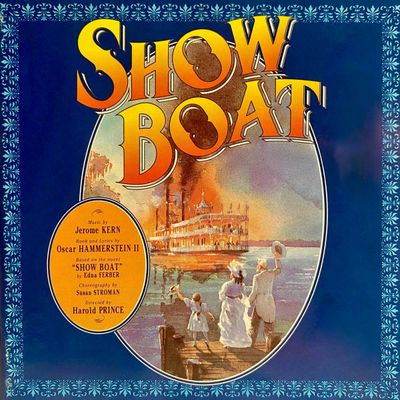
[24:32] David Armstrong: Two you were just loaned. So how can you lose what you never owned? Life is just a bowl of cherries. So live and laugh at it all. For the moment, I'm going to skip over the 1927 musical Showboat. It was in many ways the most significant show of the Silver Age, and I will discuss it in great detail in upcoming episodes. As you might imagine, the stock market crash of 1929 and the Great Depression that followed had a tremendously negative effect on Broadway. Ziegfeld was only one of the producers who went bankrupt. Many theaters closed their doors or became movie theaters in which you could now see Al Jolson for a quarter. During the 1927-28 season, 59 musicals opened on Broadway. But by the 1932-33 season, there were only 29.
Of course, it was not just the pool of investors that had shrunk, the audience had shrunk as well. Nearly one-third of all New Yorkers were unemployed, and at least 20,000 of them were theater workers. And of course, as I record this, thousands of theater workers are out of work again. At this very moment, Broadway is completely shut down by the coronavirus epidemic, as is virtually every other kind of performing arts in America and around the world. How they will recover from this remains to be seen, but I feel confident they will. As you will see in the next episode, in spite of or perhaps because of the hardships and struggle of the depression, the Broadway musical during the 1930s would enter an extraordinary period of artistic flourishing and continued development that included the emergence of several new defining and iconic masters of the musical theater.
So keep on repeating it's the berry. The strongest oak must fall. The sweet things in life to you are just loaned. So how can you lose what you never owe? Life is just a bowl of cherries. So live and lie at it all.
© Broadway Podcast Network, All Rights Reserved