

This special encore episode of Broadway Nation was first released in the fall of 2022. My guest is PAUL SALSINI, who many listeners will remember as the founder and original editor of The Sondheim Review, the first and only quarterly magazine ever devoted to a living musical theater composer... Read More
From the show: BROADWAY NATION
Featured Shows
About
This special encore episode of Broadway Nation was first released in the fall of 2022.
My guest is PAUL SALSINI, who many listeners will remember as the founder and original editor of The Sondheim Review, the first and only quarterly magazine ever devoted to a living musical theater composer.
Paul passed away earlier this month, at the age of 88, so I thought this was a very appropriate time to revisit this fascinating conversation.
Paul launched the magazine in 1994, and over the following ten years, Paul exchanged notes, letters, faxes and phone calls with Stephen Sondheim — who it was clear was reading every word of every issue of the magazine — and Sondheim often had corrections and comments, or as he called them, “emendations.” On a few occasions these notes and phone calls included “vigorous objections” to what Paul had included the magazine, but overall Sondheim was wonderfully supportive and helpful.
In his book SONDHEIM AND ME, Paul chronicles his unlikely relationship with Sondheim during an eventful period that included the New York premieres of Passion and Saturday Night, the Kennedy Center’s Sondheim Celebration, Broadway revivals of six of Sondheim’s major works, and the decade long development of the musical that would eventually be called Road Show.
Transcript
This transcript was automatically generated and might contain errors.
[0:00] David Armstrong: Hi, this is David Armstrong, and this is a special Encore episode of Broadway Nation that was first released back in the fall of 2022.
[0:09] David Armstrong: My guest on this episode is Paul Salsini, who many of you may remember as the founder and original editor of the Sondheim Review.
[0:17] David Armstrong: Unfortunately, Paul passed away earlier this month at the age of 88, so I thought this was a very appropriate time to revisit this fascinating conversation.
[0:27] David Armstrong: Here we go.
[0:37] David Armstrong: Welcome to another episode of Broadway Nation, the podcast that tells the remarkable story of how immigrants, Jews, queers, African Americans, and other outcasts invented the Broadway musical and how they changed America in the process.
[0:51] David Armstrong: I'm David Armstrong, and my guest today is Paul Salsini, author of the new book, Sondheim and Me.
[0:58] David Armstrong: Many of you will know Paul as the founder and original editor of the Sondheim Review, the magazine that he launched in 1994.
[1:06] David Armstrong: Over the following 10 years, Paul exchanged notes, letters, faxes, and phone calls with Stephen Sondheim, who it was clear was reading every word of every issue of the magazine.
[1:17] David Armstrong: And he often had corrections and comments, or as Sondheim called them, emendations.
[1:23] David Armstrong: On a few occasions, these included, quote, vigorous objections to what Paul had included in the magazine.
[1:30] David Armstrong: Paul's new book chronicles his unlikely relationship with Sondheim during that eventful period that included the New York premieres of Passion and Saturday Night, as well as the Kennedy Center Sondheim celebration, Broadway revivals of six of Sondheim's major works, and the decade-long development of the musical that would eventually be called Road Show.
[1:51] David Armstrong: Here we go.
[1:52] David Armstrong: Welcome, Paul Salsini.
[1:54] Paul Salsini: Thank you so much for joining me today on Broadway Nation to talk about your new book, Sondheim and Me.
[2:00] Paul Salsini: Thank you very much for having me. I'm thrilled to be here.
[2:03] Paul Salsini: The subtitle for the book is Revealing a Musical Genius. But how would you describe this book?
[2:08] Paul Salsini: My tagline that I've discovered is putting a human face on a genius. I tried to make it as human as possible, and I think it reveals something that people did not know before.
[2:21] Paul Salsini: And they can see his inner workings, they can see his mind working, and they can see his foibles and occasionally how he gets upset, but also how kind he is, how generous. I think it reveals a lot of personality about him more than a biography would.
[2:40] David Armstrong: And how did this all come about? Give us the backstory on how you first came to know Stephen Sondheim.
[2:46] Paul Salsini: I first came to know Stephen Sondheim when I saw Follies on Broadway in 1972. I was blown away. I didn't know anything about the show. I didn't know anything about Sondheim, though I had been to a lot of musicals. Somehow I missed Company. I missed A Funny Thing Happened on the Way to the Forum. And so this was all new to me.
[3:05] Paul Salsini: And Follies, as you'd probably know and your listeners would know, is such a unique musical. It has so many layers. So basically it's a story about two couples who come back for a reunion of showgirls in which one of the women is still in love with one of the men. But it's much more than that. It's about our affordables, it's about our follies. It's really about the follies of human nature.
[3:28] Paul Salsini: And the score was so amazing. I was so blown away by Follies that I started researching Sondheim. I got a lot of material. I went to his shows.
[3:40] David Armstrong: What were you doing at this time professionally?
[3:42] Paul Salsini: I'm a journalist. I was working at the Milwaukee Journal. It was one of my last years there because there was a merger and I took a buyout. But I was still at the paper and my job at that point was staff development director. I had been state editor, I had been a reporter. I'd been there ever since college and I really enjoyed the journalism of it.
[4:02] Paul Salsini: When I discovered Stephen Sondheim, I had collected all this stuff and I didn't know what to do with it. I thought maybe I'd write a book, but I didn't have the time. I didn't have the resources. That would mean a lot of travel and I, as I said, I was working and so I couldn't do that. And then it dawned on me that maybe I could have a newsletter, a journalistic newsletter. And so I thought, okay, let's do that.
[4:26] Paul Salsini: And so I did. It turned out to be the Sondheim Review. It turned out to be a magazine and it turned out to be quarterly and we had subscribers all over the world.
[4:36] David Armstrong: And this began in 1994.
[4:39] Paul Salsini: Correct. I didn't need Sondheim's permission really, but I wrote him a letter saying that I was going to do this and I thought maybe he'd write me a note back. We had exchanged a few notes before that and he called me one Sunday afternoon. The phone just rang and there's Steve Sondheim.
[4:54] Paul Salsini: Yeah. Hi, this is Steve Sondheim.
[4:56] David Armstrong: Right.
[4:56] Paul Salsini: Okay. All right. As I picked up the phone because I dropped it. We had a long conversation. I'm not sure that he knew what the Sondheim Review was going to be. I tried to assure him that it was not a fanzine, that it was journalism, that it was news and reviews and essays and articles and lots of stuff, journalism, all of it.
[5:20] Paul Salsini: And he sort of wondered about it, but he said, "Oh, well, okay, go ahead." He mainly wanted to talk about Passion because Passion was about to open then, and he was putting the finishing touches on this great musical that was going to open in May, I think.
[5:36] Paul Salsini: What was interesting was he talked about the film on which Passion was based. It's based on an Italian film called Passione del Amore. From my name, you know that I'm Italian, and I'd seen a lot of Italian films, but I had not seen that one. And the next week he sent me a videotape of Passione del Amore, which knocked me off my feet.
[5:57] Paul Salsini: To a virtual stranger, basically. He goes out of his way to send you a videotape.
[6:02] David Armstrong: Right.
[6:02] Paul Salsini: This was a videotape because this is before DVDs. So I played it and I realized what a powerful story it was, grim but powerful and fascinating characters, especially the Fosca.
[6:16] Paul Salsini: Fosca. You have to face the truth. Please. You have to give me up. Loving you is not a choice. It's who I am. Loving you is not a choice. And not much reason to rejoice, but it gives me purpose. Gives me voice to say to the world. You are why I live. Loving you is why I do the things I do. Loving you is not in my control. But loving you I have a goal for what's left of my life. I will live and I would die for you.
[7:46] Paul Salsini: That's why I was fascinated. And at that point, we were about to publish the first issue. I'd seen a preview of Passion, and the first issue included a long interview with him, interviews with the stars, excerpts. I was very pleased with the first issue.
[8:03] David Armstrong: Had there ever been a quarterly magazine devoted to a living author of any kind, much less a musical theater author?
[8:11] Paul Salsini: No, not living. What inspired me, I'm also a great admirer of Kurt Weill, and I have a huge collection of Kurt Weill material. The Kurt Weill Foundation still publishes a semi-annual newsletter, which is very slick that includes articles and news and reviews. So that gave me the idea. But I thought, why should a dead composer have a newsletter and not the greatest living composer lyricist? So there I go.
[8:40] David Armstrong: And what was Sondheim's reaction when you proposed this?
[8:43] Paul Salsini: I'm not sure, as I said, if he really understood what it was going to be, but when he saw issues and he corrected things, it was because he realized that this was something for his legacy, and that's why he made corrections for what I thought were minor things, but they needed to be corrected.
[9:06] Paul Salsini: One of the things I think that's so great about this book is that the 10-year period that you deal with takes us from Passion to Road Show, which I think is probably the least discussed period in Sondheim's life and work. So it really fills in a gap, I think.
[9:22] Paul Salsini: Correct. I'm in correspondence with a person, I won't say her name, but she is just obsessed with Road Show. She collects every piece of audio tape that she can find from the tryouts to the performances. And she knows everything about it. She knows so much more about Road Show than I do. And she followed it from the beginning. For your listeners, this started off many, many years before he actually wrote something. It's about the Meisner brothers, who were land speculators in Florida. They were twins. So it was their story, and it started off as a show called Wise Guys, and then it became Gold, and then it became Bounce, and finally it became Road Show. The book writer was John Wideman.
[10:06] Paul Salsini: And Sondheim during this 10-year period loved to talk about it. I mean, we would get on the phone and he would talk about the changes and what the two of them were doing to change it, because every time they performed it or had a tryout, it got negative reviews or questionable reviews at least.
[10:26] David Armstrong: Yeah, sort of a through line through the book, which I thought was really interesting because it takes almost a 10-year development process for that show.
[10:33] Paul Salsini: Another thing about the book that I liked was it works as sort of a best of of the Sondheim Review from that first 10 years. Because you include articles, portions of articles that you published during that time.
[10:47] David Armstrong: How did you decide what you were going to include and what you were not going to include in regard to that?
[10:52] Paul Salsini: I like to do the interviews with Sondheim, the talks that he gave, and then also the pieces that we ran about the revivals that were during that period. Because there were about five major revivals of his shows in that 10-year period.
[11:09] Paul Salsini: What I relished was the wealth of quotes from Sondheim. First-hand quotes, many of them were new, many were things that I had not exactly heard him say in other places. Things that were in the magazines that theoretically we could all go find, but now you've collected them in this book. Sort of hears words of wisdom from Stephen Sondheim.
[11:27] Paul Salsini: I really liked when he went to Dallas at Southern Methodist University, which is early in the magazine and therefore earlier in the book. He was really open with the students there and talked about the shows that he liked and didn't like and what happened to some of them. And very, very frank. I think the students were amazed, and they asked such wonderful questions that I think maybe reporters might be afraid to ask, but they just asked him. One of them was, "I heard you like country music," which I had never heard of, and he said yes.
[11:57] Paul Salsini: And then they asked him if he would ever write a country song himself. He denied that he would ever write another. I'd like to hear the Stephen Sondheim country song so much of it is his advice on playwriting, on writing musicals, and it's so valuable. In a few weeks, I'm going to go to NYU to teach a course to the musical theater writing students there. I've already pulled out a few quotes from your book about Sondheim's advice about writing musicals that I'm going to incorporate into that lecture. It's really full of great little gems like that. I tried to make the book not about me, but about him. It's a memoir, and I do reveal some reactions that I had, but basically I wanted it to be about Sondheim and his works.
And that's what the magazine was about and not about me. What I found really interesting is how closely he read the magazine. The first time he saw you had a finished edition, I'm assuming completely published and ready to go. He got a copy just like everybody else.
[12:55] Paul Salsini: Did you ask him for notes or did he just offer those on his own? I did not ask him for notes. I didn't expect him to respond. I thought, okay, he didn't get the magazine and sit in his leather chair or not. Maybe just throw it away. I didn't know what his reaction would be. So I was really surprised that he responded almost to every issue, at least at the beginning. He would be very specific about things. And you quoted those in the book, and you quoted those in the magazine as well, right? Did you publish all his responses? There was one I did not, and we can get into that, but yes, I always printed his responses. Well, let's talk about that because he got a little prickly a couple times, which was fascinating, and I loved your candor about all of that. He did not always like what the magazine had to say. Ninety percent of the time it seems like he was entirely supportive of the magazine, but there were a couple times when you got under his skin, it seems like.
[13:48] Paul Salsini: Well, the main one was when we published a review of the London production of Passion. That was in 1996, two years after the Broadway production. And we ran a review by a reviewer who had done other Sondheim reviews for us. And it was not a negative review at all. It was just a review very plain and pointing out some things. The reviewer had seen the production in New York and compared it and not favorably to the New York production. So we ran the review with a little photo. And there were no red flags for you at all at this point. No, no red flags for me at all. We ran reviews all the time. A good portion of the magazine was reviews from the United States and abroad. So I picked up the phone time shortly after the magazine was delivered, and he was furious.
He started it right away. How could we print that? Who is this person? The person doesn't know anything about musicals, doesn't know anything about my work. All the reviews in London were so favorable. Well, it's true that British critics are very favorable to Sondheim. I mean, that's just a fact. And he went on and on. It seemed like a couple hours, but it was probably 20 minutes. And then he hung up, reminded me of when I was an editor at the journal at the paper. Somebody would call and complain about a story a reporter had written, and I'd have to fend him off and defend the reporter. He was just not listening to me at all.
[15:14] Paul Salsini: So I wrote him a letter, you know, and explained the reviewer's credentials. I explained that not all the critics at this time in London were favorable, and I had their reviews, so I could point that out. So I sent off the letter, and before he even got it, he sent me a note complaining again about the reviewer and libeling her. It was a real libelous statement. He said the reviewer made stuff up. Well, you can't say that. That's libelous. And as a journalist, I could not print that or I would be held liable. So I did not print that letter. And then he called again. And this went on for weeks. He wasn't as upset this time, but he was still upset. And then he hung up again. And then he never brought it up again.
Ever. This was 1996, and it wasn't in touch with him until 2004 and never ever said anything about it again. Did you ever figure out what he was so upset about? No. I'm still baffled. I don't know what he was upset about. I went back and read the review, couldn't find anything that was objectionable for him. It was just a review. I don't know. I just don't know. And he certainly was used to getting a myriad of kinds of reviews for his work.
[16:23] Paul Salsini: Oh, yeah. Look at the reviews from Merrill Lee, which practically drove him away from musical theater. It was just a baffling experience. I still don't understand it all these years later. I thought that was a very interesting part of the book. I'm sure you were pleased that that didn't happen very often. There was only one other little incident. I was fascinated by his early work and thinking that maybe readers wouldn't read his early lyrics and maybe see how it compared with his later work. And by early work, you're talking about when he was a child. High school. Yeah. He went to George School and he wrote a little musical there. And so I discovered his lyrics and I published that. And he was very upset about that.
He thought that for publishing his juvenilia. There's all this talk now about Mary Rogers' book, Shy and the relationship with Sondheim and how they quote, were planning a marriage, though that never happened. They had worked on a show during that time, I think, in which they took the show The Lady or the Tiger. It's an old legend about a count having to choose between two doors and behind one is a lady and the other one is a tiger. Well, they composed a lot of material for that, including some songs. I was fascinated that they did that much together, but they finally abandoned it. There was supposed to be a television musical. Does any of that material survive? Is that still around?
[17:43] Paul Salsini: Yeah, it's preserved. The State Historical Society of Wisconsin, which is 90 miles away from me in Madison, had a lot of theater collections. The Lunts, for example. At some point, theater people were donating their early work to there instead of the Library of Congress. And I discovered this, so I went over and looked at all this stuff. And it's still there available to the public. That's fascinating. And do you know why they were doing this? And the Lunts live near there. Right, right. So do you think that they were developed a relationship and then they encouraged other people to support it, or how do you think it happened? Probably. I think that may have been. I don't know the origin of it, but a lot of theater people donated their work there.
Interesting. Interesting also with The Lady and the Tiger, because of course Bach and Harnik would use that story as the second act of The Apple Tree. I wonder if those were related in any way, if that idea was swirling around at that period. Yeah, I just don't know. Did you have any interaction with Mary Rogers during your time at The Sondheim Review? I did not. It would have been interesting. She certainly is outspoken, at least in that book. I learned more about Mary Rogers and her parents than I really wanted to know, I think. It certainly has created quite a talk in the theater world, which is great. It gets people interested in the history of Broadway, is a fantastic thing.
[18:57] ♪ Musical number ♪
[18:57] Paul Salsini: Yeah, it is really a behind-the-scenes story. We talked about what his reaction to The Sondheim Review was initially. Did that change over time? Did he take pride in this? Was it something he pointed to at any time that you know of? I did hear that he did have the magazine in his office and it was displayed, and he would point it out to people. This is all secondhand. I don't know who he did this with, but it was clearly a part of his life. And how did that make you feel when you heard that? You know, I'm a journalist. I take pride in my work, and if somebody likes it, I'm pleased. Don't go away. Paul and I will be back with more Broadway Nation right after this quick break.
[19:44] ♪ Musical number ♪
[20:47] Bounce
[20:49] Paul Salsini: Of the things that Sondheim said to you personally, what were the things that were most memorable? And of course, we talked a little bit about when he was angry at you. I'm sure that's very memorable. But were there moments when you had conversations with him that really have stuck with you over time? I think it was when he was talking about what eventually became Road Show because he loved to talk about it. From the beginning. He was so excited about it. It was like, what does George say on Sunday in the parts? Show me something new. That was him. He was so excited about this show. I would just smile at listening to him because he was so enthusiastic and interested in what he was doing and how he was changing it.
And it was just so fascinating to listen to this guy. And so over those years that he's talking about this, with renewed enthusiasm, it seems like, with each incarnation, did you get to see each of those incarnations of Road Show along the way? Yes, yes. I went to Chicago and Washington to see what was then called Bounce, and Chicago was the world premiere of the show. And I could see the problems then, and then a few months later it was in Washington with some changes, and I went to Washington to see that as well. How did your perception of the show compare and contrast with Sondheim's enthusiasm about it? Did you feel like you were on the same page with him in terms of what you were seeing and what he was saying?
No, I wondered whether he was seeing it through the eyes of the composer rather than through the eyes of the audience, because I think he should have seen more of what the problems were in this show. I don't know if anybody ever produces it anymore. It's interesting. I've looked at it a couple times when I was running the theater, and you know, you want to do it because it's Sondheim's last major work. Right. But I'm interested to see if somebody can rediscover something in it that makes it seem more viable than it does right now. There's some nice songs in it. I mean, yeah, and the craft of it is really fantastic, especially in terms of the musical sequences.
[22:44] Paul Salsini: Yeah.
[22:45] David Armstrong: What?
[22:47] Paul Salsini: Remember when I was in bed with the mumps and had to stay in New Year's Eve?
[22:53] David Armstrong: Frankly, no.
[22:54] Paul Salsini: Remember how I was so down in the dumps when everyone started to leave?
[23:00] David Armstrong: Jesus, it's cold.
[23:04] Paul Salsini: Are you sorry we came, Willie?
[23:08] David Armstrong: Sorry we came.
[23:10] Paul Salsini: Yes.
[23:13] David Armstrong: No.
[23:15] Paul Salsini: Go to sleep at midnight with everyone down at the lake to take in the fireworks show.
[23:23] David Armstrong: Oh yeah.
[23:24] Paul Salsini: I cried till I fell half asleep by mistake.
[23:27] Paul Salsini: And I snuck upstairs and I shook you awake.
[23:31] Paul Salsini: You bundled me up in a couple of quilts, and you carried me up all the way to the roof and that slippery patch.
[23:39] David Armstrong: Yeah, we nearly got killed, but we got to see everything.
[23:42] Paul Salsini: Remember the whispers. Follies, night music, Pacific Overtures. I love that show. Talk a little bit about each of those. Why Follies? What's so significant about Follies for you? It has so many layers, so many things you can think about. The characters and the themes of the show of love and loss and how fragile people are and how they treat one another badly sometimes. It's just so much to think about after seeing Follies. Night music, because of its waltzes, it's just such a romantic, poignant musical with such interesting characters, and it's a terrific story. There's a section in the book where you talk about it being whipped cream with knives.
[25:01] David Armstrong: Right.
[25:01] Paul Salsini: Yeah, that was Hal Prince's story. And it does, as an all Santa. The surface is one thing, and then you go down deep and you find something else. And a lot of pain under the surface as well.
[25:12] David Armstrong: Correct. And then Pacific Overtures.
[25:13] Paul Salsini: It was so adventurous, and because who would think of writing a musical about the westernization of Japan in kabuki style, no less, with an all-male cast? I mean, it boggles me. But the songs and the score and the story was so intriguing that I just love it. And then, well, Sunday in the Park, the story of an artist, and one could say Sondheim's own story of creation, how the problems of creating art and living only for the work, and because of that, other people may be ignored or treated badly. But the work is the most important thing. And when the work turns out to be Sunday afternoon on the island of Grand Jot or Sunday in the Park with George, it's a masterpiece. And it's interesting, you have a couple sections of the book where Sondheim is disputing how autobiographical any of his works are, including Sunday in the Park with George.
[26:09] David Armstrong: Yeah, yeah.
[26:10] Paul Salsini: But I found it interesting that he doesn't really succeed in disputing them. In the end, I came away thinking, yeah, but they really are pretty autobiographical. Even the way he describes them, you go, like, well, yeah, you're sort of proving the other people's point to a certain extent.
[26:23] David Armstrong: Right. We may read too much into it, but there's obviously some things that are autobiographic. What do you think is most autobiographical works or sections of works are?
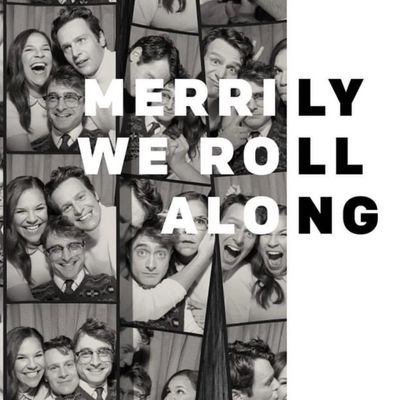
[26:33] Paul Salsini: I think Marile. I think that really is autobiographical in a way. And maybe Mary Rogers is Mary in that script. Her name is Mary, but I guess she's Mary in the original play, too. So we can't read too much into that. And even he has admitted that the opening doors is entirely autobiographical.
[26:53] David Armstrong: How's it going?
[26:54] Paul Salsini: Good, you fair.
[26:56] David Armstrong: Yeah, tell me.
[26:57] Paul Salsini: Chinese laundry. Mary, say hello. I think I got a job.
[27:01] David Armstrong: Where?
[27:01] Paul Salsini: True romance. Thank you. Writing captions.
[27:04] David Armstrong: What about the book?
[27:05] Paul Salsini: What about the book? Nothing are you working on the book.
[27:07] David Armstrong: Good.
[27:07] Paul Salsini: No.
[27:07] David Armstrong: Mary.
[27:08] Paul Salsini: Right, I know, yes, me and Balzac. And you can see that. I don't know if when we get to the beginning or the end, or whatever, and we see the characters as they change. That that's so much autobiographical, but I think the beginning of it is at least the end to it. It's whatever.
[27:33] Paul Salsini: I finished the one act. I got an audition. I started the story. Rehearsal piano. So where are we eating? I'm moving to play voice. Publisher called me. I'm doing a rewrite. My parents are coming. I saw My Fair Lady. I rewrote the rewrite. I sort of enjoyed it. I threw up the story. I'm meeting an agent. We're all good together on Sunday. We're opening doors. See, here we are.
[27:50] Paul Salsini: We're filling up days on a time. Looking not too far. We're following every star. There's not enough time.
[28:07] David Armstrong: When Sondheim died, so many people came forward with their letters that they had received from Sondheim, and he was so prolific in that regard. Was that the inspiration for this book?
[28:18] Paul Salsini: When he died, I was saddened, of course. I mean, he was 91, so one can't be too surprised. I took time to go through all those notes and letters that he sent me. And I took time to go through the magazines that I'd published in those 10 years. And I thought there's a book here. People would be interested in my relationship with Sondheim and what the magazine was about and how we covered Sondheim during that time. It was really as a journalist that I wrote it as a memoir. And clearly his death demonstrated the level of interest that there was in Sondheim and the level of interest in the way he interacted with other people in the world. Clearly, you had a story to tell in that regard.
[29:02] David Armstrong: Yeah, and my publisher agreed. One of the things that's remarkable about your book is the photo insert. Talk a little bit about how that came to be.
[29:09] Paul Salsini: Well, it was a surprise to me. As I was writing it, I said to the publisher, wouldn't it be nice if we had a little insert in the middle of the book with 10 or 12 pages and we could run some photos that we published in the Sondheim Review? And he said, No, we're gonna publish 64 pages of that. And it surprised me. Because I thought, you know, this is a very small publisher. I don't know what his budget is, but this is obviously a costly thing. And so a lot of production photos from Broadway and the Kennedy celebration around the world, lyrics to some songs, covers of the Sondheim Review, cover of Time magazine and Newsweek, in which Sondheim was featured. I call it a Sondheim scrapbook. I like it a lot, and I think readers will like it a lot.
[29:54] David Armstrong: And talk a little bit about the chronology at the end, because I was very interested in that. When I got to it, I thought, oh, this is fantastic. I will refer to this very, very often.
[30:01] Paul Salsini: Yeah, that took a lot of work, obviously. Someone on the publisher staff put most of it together, and then I did some more work on it and added some things, especially at the end, where we'd talk about how he was writing this new show and how he'd seen Company, the revival on Broadway just before he died. He was on Colbert. And I mean, he went to two shows, matinee and evening performances of two shows on the Wednesday before Thanksgiving, and he died the day after Thanksgiving.
[30:34] David Armstrong: That's incredible.
[30:35] Paul Salsini: He was still in it. He was still doing it. A theater fan to the very, very end.
[30:40] David Armstrong: Let's talk about legacy because although this book covers the 10 years that you were editor. The Sondheim Review went on after you.
[30:48] Paul Salsini: After 10 years, you know, I had done all this traveling. I had thought of the stories, I'd assigned the stories. I had a couple of editors who helped me out of the stories, but I did a lot of the editing. I worked with the designer. I went to the printer and watched the magazine being printed. I mean, this was a lot of work. And so after 10 years, I really needed to get alive. Our kids were having their own kids at that point. Anyway, an assistant editor took it over, and it continued until 2006. He did a great job, by the way.
[31:19] David Armstrong: And of course, the person who took over was Rick Pender, who has been a guest on the show as well, and the editor of the Sondheim Encyclopedia. And he had very nice things to say about you, of course, and about none of that would have happened for him if it wasn't for you starting this amazing magazine to begin with.
[31:36] Paul Salsini: He was very good. I mean, he introduced some things into the magazine that I did not. He said you wouldn't have much of a relationship with Sondheim. Sondheim didn't send him notes like he did me. But that was probably because when I did it, it was new to him, and he wanted to have a voice in it. I think maybe he decided, well, these people are doing it, and they're doing it okay or all right, and I don't have to be involved.
[32:02] David Armstrong: Which was a great sort of credit to you.
[32:04] Paul Salsini: He had confidence that the magazine was good and was going to continue to be good, and he didn't need to worry about it.
[32:10] David Armstrong: Right. You wouldn't have to take his little pencil and circle things and write me notes.
[32:16] Paul Salsini: Well, I'm sure you would have loved to have had even more of those notes to look back on.
[32:20] David Armstrong: Yeah, I treasure them. I don't have them actually. I had this huge collection, and I gave it all to the market university in Milwaukee, and they established the Stephen Sondheim Research Collection, which is open to the public if anybody wants to really do research. All the material that I collected, the records, tapes, books, clippings, millions of clippings, pictures.
[32:42] David Armstrong: Yeah.
[32:43] Paul Salsini: What a great resource.
[32:44] David Armstrong: But you had to then go to them to look at your own work.
[32:46] Paul Salsini: Yes, and I would not have been able to write this book without the curator there helping me along and finding the material that I needed.
[32:53] David Armstrong: Well, we learned about two archives of theater-related material today, which I did not previously know about and may mean I have to take a trip to the Midwest at some point.
[33:03] Paul Salsini: Oh, good.
[33:03] David Armstrong: Paul Salsini, it's been so wonderful to talk to you today. Thank you so much for joining us on Broadway Nation and sharing the details of your new book, Sondheim and Me.
[33:07] Paul Salsini: Thank you so much, David. I really enjoyed it.
[33:16] Paul Salsini: I hope people enjoy the book as well.
[33:17] David Armstrong: I think they will.
[33:18] Paul Salsini: I'm certain they will.
[33:19] David Armstrong: Thank you.
[33:20] Paul Salsini: I called a producer, I sent off the one. I started the story. You said to come see him. I dropped out of college. I met this musician. I'm playing a nightclub. I'm doing my one act for Red Bull. I rewrote the ballad. Finish the story. I show up the story and with the musician. I'm going to popular science. We're opening doors, singing pillar cushion, beginning to sail on a time.
[33:41] Paul Salsini: The faraway shores getting very near. We have a thing to fear. We have a good time.
[33:50] David Armstrong: If you enjoyed this podcast, I feel certain that you will also enjoy joining our Broadway Nation Facebook group, where you'll find daily postings of images, videos, articles, and links that relate to and enhance each and every episode of this podcast. Just Google Broadway Nation Facebook group and join the more than two thousand other fans of Broadway Nation.
[34:12] David Armstrong: Broadway Nation is written and produced by me, David Armstrong. Special thanks to Pal Smox for his help with editing this episode. To KVSH 101.9, the voice of beautiful Vashon Island, Washington, and to the entire team at the Broadway Podcast Network.
[34:28] Paul Salsini: I'm Beth!
[34:29] Paul Salsini: I'm Frank!
[34:30] Paul Salsini: I really thought I'd stay!
[34:31] Paul Salsini: I'm Mary Charlie. By the way, I'm told we open Saturday.
[34:35] Paul Salsini: But you're not serious.
[34:37] Paul Salsini: Nobody's ready.
[34:37] Paul Salsini: Apparently, somebody canceled a booking.
[34:39] Paul Salsini: The songs aren't finished.
[34:40] Paul Salsini: And what about costumes?
[34:41] Paul Salsini: How do I learn all these numbers?
[34:42] Paul Salsini: I'll bring you the copies of everything later this evening.
[34:53] Paul Salsini: Here we are.
[34:54] Paul Salsini: We're filling up days.
[34:58] Paul Salsini: The faraway shores.
[34:59] Paul Salsini: Looking not too far.
[35:01] Paul Salsini: We're following every star.
[35:03] Paul Salsini: The sun of time.
[35:18] Paul Salsini: The only thing left is when we know we should count to ten.
[35:21] Paul Salsini: We have a good time.
[35:25] Paul Salsini: We haven't got time.
© Broadway Podcast Network, All Rights Reserved