

Guests
Featured Shows
About
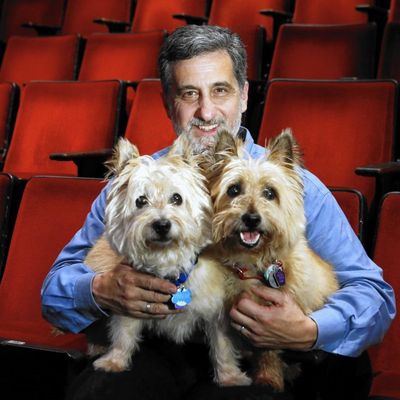
My guest today is theatrical animal trainer Bill Berloni.
Beginning with the original production of ANNIE in 1977, Bill has provided and trained animals of all species and sizes for 27 Broadway musicals and plays, as well as for countless Off-Broadway shows, National Tours, regional theaters, movies, television shows, commercials and the NYC Ballet – and he found almost all of those animal actors in shelters, humane societies and rescue leagues.
His awards include a 2011 Tony Honor for “Excellence in the Theater”, a 2014 Outer Critics Circle Award for “Special Achievement”, and a 2017 Drama League Award for “Unique Contribution to the Theatre” all in acknowledgment of an incredible Broadway career that has included two revivals of Annie, The Woman In White, Gypsy, Legally Blonde, The Lt of Inishmore, A Christmas Story, and The Ferryman.
Bill recently released a third edition of his book, Broadway Tails: Heartfelt Stories Of Rescued Dogs Who Became Show Biz Superstars. I have to say it’s a surprisingly affecting book, and I was not expecting to be tearing up as many times as I did when I was reading the new edition in preparation for this podcast.
Broadway Nation is written and produced by me – David Armstrong.
I invite you to follow Broadway Nation on Facebook, Twitter, and Instagram – where you can find out more about my guests and episodes and interact with a large and lively community of Broadway fans.
Become a PATRON of Broadway Nation!
I want to thank our Broadway Nation Patron Club members, such as John Schroeder and Alan Brodie whose generous support helps to make it possible for me to bring this podcast to you each week. If you would like to support the creation of Broadway Nation, here is the information about how you too can become a patron.
For just $7.00 a month, you will receive exclusive access to never-before-heard, unedited versions of many of the discussions that I have with my guests — in fact I often record nearly twice as much conversation as ends up in the edited versions. You will also have access to additional in-depth conversations with my frequent co-host Albert Evans that have not been featured on the podcast.
All patrons receive special “on-air” shout-outs and acknowledgment of your vital support of this podcast. And if you are very enthusiastic about Broadway Nation there are additional PATRON levels that come with even more benefits.
If you would like to support the work of Broadway Nation and receive these exclusive member benefits, please just click on this link:
https://broadwaynationpodcast.supercast.tech/
Thank you in advance for your support!
Transcript
This transcript was automatically generated and might contain errors.
[0:00] David Armstrong: Hello, this is David Armstrong. I'm going to be taking the month of January off to work on my upcoming book, but in the meantime, I'll be sharing some of my favorite episodes from the past that you may have missed or may enjoy hearing again.
[0:14] David Armstrong: Thank you so much for listening to Broadway Nation, and I especially want to thank our patron club members, including our newest members, John Schroeder and Alan Brody, whose generous support helps to make this podcast possible.
[0:28] David Armstrong: If you would like to help support the creation of Broadway Nation, I'll have information at the end of the episode about how you too can become a patron.
[0:36] David Armstrong: Now here's a specially selected Encore episode. See you in February.
[0:42] David Armstrong: Welcome to another episode of Broadway Nation, the podcast that tells the remarkable story of how immigrants, Jews, queers, African Americans, and other outcasts invented the Broadway musical and how they changed America in the process.
[0:56] David Armstrong: I'm David Armstrong, and I call this episode Tales of Broadway. My guest today is theatrical animal trainer Bill Berloni. Beginning with the original production of Annie in 1977, Bill has provided and trained animals of all species and all sizes for 27 Broadway musicals and plays, as well as for countless off-Broadway shows, national tours, regional theaters, movies, television shows and commercials, and the New York City Ballet.
[1:26] David Armstrong: And he found almost all of those animals in shelters, humane societies, or rescue leagues. His awards include a 2011 Tony Honor for Excellence in the Theater, a 2014 Outer Critics Circle Award for Special Achievement, and a 2017 Drama League Award for unique contribution to the theater.
[1:47] David Armstrong: All of this in acknowledgement of an incredible Broadway career that has included two revivals of Annie, The Woman in White, Gypsy, Legally Blonde, The Lieutenant of Inishmore, A Christmas Story, and The Ferryman. I recently had the pleasure of speaking with Bill about all of that and more.
[2:04] David Armstrong: So, Bill, one of the things I want to talk to you about today, first of all, welcome. Thank you for being here.
[2:08] Bill Berloni: My pleasure.
[2:09] David Armstrong: I have a very active Facebook group that goes with this podcast. We've about 1,700 members in it right now, which is pretty amazing. They're a lot of fun. A lot of people obviously very passionate about Broadway. And one of the questions I put out to them in preparation for this was what shows feature animals as cast members. And of course, 90% of the shows that were named are shows that you have been involved with over the years.
[2:35] David Armstrong: But looking back a little bit before that, I want to pick your brain a little bit about the history of animals on Broadway. What shows stand out to you from the past pre-Bill Berloni that featured animals that have come down to us in legend and history?
[2:50] Bill Berloni: Interestingly enough, the shows before my time were shows that had animals as props. By that I mean they were either carried on, led on, could be cut in regional theater productions and nobody would know. So the roles were small. Chowsey and The Little Lamb in Gypsy. Anything Goes, there's a little dog in Anything Goes that Mother Harcourt has. Oliver, where the dog sort of runs back and forth. They weren't characters that moved the plot necessarily.
[3:18] Bill Berloni: How I got in it was as a young apprentice at the Goodspeed Opera House, it was the first place they did Annie. The executive director offered me my equity card if I would find and train a dog for free. I agreed, obviously. Who wouldn't? And I had dogs growing up that always followed me around, no leashes. They always listened to me because as an only child, they were my companions. We loved each other, we understood each other, and they wanted to be with me.
[3:43] Bill Berloni: So I thought if I could get a dog to think that Annie was really nice and the stage was his home, that would work. That executive director was Michael Price, who led the Goodspeed Opera House for 45 years from 1968 to 2014. And during that time producing more than 235 musicals, including 75 world premieres and 19 shows that transferred to Broadway. Those included Man of La Mancha, Shenandoah, and the hit revivals of Very Good Eddie and Whoopi.
[4:15] Bill Berloni: However, in the summer of 1976, Michael Price was trying to figure out how to produce the world premiere of Annie, a new musical based on the once popular comic strip from the Depression era. And this was a show that depended on two categories of performers that the theater world has often seen as liabilities. As W.C. Fields once famously advised, never work with animals or children. And because he was limited by a regional theater budget and the fact that nobody else would take the job, Michael Price decided to assign a 19-year-old intern with absolutely no experience the task of finding and training the dog that would play little orphan Annie's famous companion, Sandy.
[4:57] Bill Berloni: As you said, everybody on the staff of the Goodspeed Opera House at that time all said no. And they would threaten to quit if they were forced to do the job. So I was the only sucker who said, sure, I'll do it. Certainly one of the most affecting parts of your book is the whole story of your relationship with Sandy, but especially finding Sandy. How did you find Sandy?
[5:15] Bill Berloni: The script called for a medium sized dog of indistinguishable breed and sandy color. What does that mean? So one day they said to go look for a dog, and I had $35 to find the dog and feed it all summer. That was the budget. So somebody told me they had cheap dogs at the animal shelter. But I'd never been in an animal shelter. And I had a list of them in Connecticut. And as I started going to these shelters, I was mortified. I didn't know that we as a society kept animals in dirty, hot cages in their own excrement. It was breaking my heart to go from shelter to shelter and see so many animals in the state where I grew up.
[5:51] Bill Berloni: And there was only one humane society actually in Connecticut. It was the Connecticut Humane Society. And they were the last place I went. They had hundreds of dogs, and I went down to a row of dogs and there was barking and urine splashing in my face. And there was one little beige-colored dog who wasn't barking, so he caught my eye and come to find out he had been abused. And in my naivete, I'm hi, I'm Bill Berloni. I'm working for a play at Goodspeed. I gotta take a picture of this dog so that the director can and the guys are like, Do you want the dog or not? It's an audition. And I said, I'll come back tomorrow. And they said, We're gonna put him to sleep tomorrow. And I was like, excuse me. I didn't know that animals were euthanized. And again, as a 19-year-old, to really learn that animals are killed in our society because nobody wants them was horrifying.
[6:31] Bill Berloni: So I said, Can I put a deposit down on him? And they said, No, you can adopt him. And I said, How much? Seven dollars. And they only had three dollars in my pocket. And when they saw that, you know, they kicked me out because they wanted to go home. And I ran back to Goodspeed, trying to find Martin Charnin and the producers who weren't there. It was killing me to know that I had touched this dog and it was going to die the next day, and I couldn't do anything about it. So, of course, as I bemoaned it to everybody in the shop and everybody backstage that night, my roommate said, Idiot, here's the four bucks. Go back tomorrow morning before they open up, which is what I did.
[7:02] Bill Berloni: So it was sort of a life-changing experience in that moment. It had nothing to do with the show, but it had to do with saving a life, a life that I had come in contact with. And I continued to do that. Once we had the opportunity, it was like I'm gonna use this opportunity to help the others who are not being adopted.
[7:18] Bill Berloni: As created by Martin Charnin, Tom Meehan, and Charles Strauss, the script included a scene in which Annie, having escaped from the orphanage, discovers a stray dog on the cold winter streets of New York. And this scene required that dog to be right in the center of the drama.
[7:35] Bill Berloni: Poor boy. Did they hurt you? Aw. They're after you, ain't they? Well, they're after me too. But don't worry. I'm not gonna let them give me or you. And I'll take care of you. And everything's gonna be fine, boy. If not today. Well, the sun'll come out tomorrow. That's your bottom dollar that tomorrow, there'll be a sun.
[8:11] Bill Berloni: Nobody really told Martin Charnin and Tommy and Charles Strauss that a dog can't play a part. Nobody told me. And so the scene in which Annie meets Sandy, we find out how the two of them meet. There is some drama. Hey, you, little girl. Come here. He's an officer? That dog there. Ain't I seen him running around a neighborhood? Ain't he a stray? A stray? Oh no, officer, he's my dog. Oh, your dog, huh? Yes. What's his name? His name. Oh, yeah, his name. Wait, see, officer, his name is Sandy, Sandy Wright. Right? See, I call him Sandy because of his nice sandy collar. Oh, sandy collar, huh? Okay, now let's see him answer to his name.
[8:58] Bill Berloni: You mean when I call him? Right. When you call him, by his name, Sandy. Well, you see, officer. I just got him see, and sometimes it just doesn't. Call him. Okay. Come here, Sandy. Oh, good Sandy. Good old Sandy. Well, all right. Maybe he is your dog. But the next time you take him out, I want to see him on a leash and with a license. Or else we'll take him to the pound where they put him to sleep. You understand? I understand with the leash and license. Now get along with you before you catch a death of cold in this weather. I don't mind the weather. When I'm stuck with a day, that's great.
[9:39] Bill Berloni: And long name. I just took my chin and grin and so. The sun will come out. If that doesn't happen, then that whole part of that legend doesn't get told that night. So all of you are in this together, creating something that's never been done before. I think you put your finger on it. What changes with Annie is the animals become characters in the show, not just props on the stage.
[10:14] Bill Berloni: I love you.
[10:27] David Armstrong: So what was it about your previous experience with animals that made you think you could do this?
[10:32] Bill Berloni: Just because you had this close companion relationship with him?
[10:35] Bill Berloni: Yes. I grew up as an only child on a farm. Saw my cousins on the weekend. When I went to kindergarten, that was the first time I really was interacting with human kids. But I had a cat, a dog, and a rabbit. I have these very vivid memories before I was five years old of playing with all of them out in the front yard. You know, if you're playing with someone and they're not having fun, they leave. So I must have learned how to understand what their games were like and their needs were like, and met them. So they chose to hang out with me. And that's that was it. It was like they did it because they loved me. How can we get the animals to love the people and love what they're doing?
[11:07] Bill Berloni: And I'm assuming that that's a big break from animal training in many other parts of the entertainment industry. The circus, Hollywood, probably the most famous animal from what I call the silver age of Broadway back in the 20s and 30s was Jumbo, the elephant, a title character of a musical. But it was also a circus that was at the Hippodrome. And that elephant was trained the way circus elephants have been trained for hundreds of years and now are not allowed to be trained that way anymore, sort of brought down the circus as an entity to a great extent, or at least took animals out of the circus over the last few years.
[11:41] Bill Berloni: So that kind of animal training sounds to be very different from what you developed and sort of instinctually found a way to do.
[11:48] Bill Berloni: Exactly. And interestingly enough, when the show moved to Broadway, the Broadway producers wanted to hire a professional trainer. And Martin Charnon said, No, I want Billy. Billy's gonna do this. So they actually sent me to an animal trainer in New York City to learn how to train animals. I remember meeting this gentleman and told him what I did. And he goes, No, you have to be the boss. I remember he walked away from me with Sandy, turned. Sandy didn't turn and he flipped him and he fell on his back. And Sandy started shaking. This is your Sandy. My Sandy. And I left that lesson saying, I'm not gonna do this. And I was about to blow my chance to be in a Broadway show because I refused to do anything that would be harmful to animals.
And fortunately, Martin Charnon was against it. Just let him do it his way. And so here was a kid who showed that an animal can do something eight times a week willingly in front of a live audience, where in most situations, many situations, there is a punishment if the animal doesn't do it. And I know if there's that sort of threat with me, I'm out the door. I'm looking to escape as soon as I can. So this whole naive way of positive reinforcement really sort of caught the world by surprise. And Broadway, all of a sudden it was this kid who could do this. And hey, let's put an animal in this. Let's try that. And so that became my whole entire career.
[13:00] Bill Berloni: How old were you when you were at Good Speed there as an apprentice?
[13:02] Bill Berloni: I was 19 years old when I did the Good Speed production. I turned 20 that November. And we opened down Broadway in April of 1977. So it was pretty overwhelming, let me tell you.
[13:18] Bill Berloni: What if it doesn't work? Oh, I'm going to do that for the touring companies, but I've only done two dogs. Necessity is the mother of invention. As I started to crystallize that and replicate it, it was easy to make it into a training regime and attitude. And also one of the things I'm proud of was that the big story was he was a rescue dog. And it warms my heart now to see so many of those stories in entertainment venues because those are animals that might possibly not have lived. I guess it's a testament that when I go looking for a medium-sized beige-colored dog of indistinguishable breed, I can't find any anymore because that look has become so popular. That little Sandy Mutt, I can't find them anymore. The last one I adopted, I had to drive all the way out to Idaho to adopt a dog. So that also really makes me feel good.
[14:04] David Armstrong: And do you think because they're rescue dogs, there is somehow some affinity? Is there some relationship between being a rescue dog and having the talent for show business?
[14:13] Bill Berloni: It's a silly question, but you've made it work so many times. It has to be explored. Well, and it's the secret to my success, and I have no problem sharing it with everybody. First off, for anybody who's adopted an animal from a shelter, there is a level of gratitude that you don't get when you raise a dog from a puppy. It is a much different bond. It's usually with the person who walks them out of that situation. So, in terms of a motivator, you have this built-in gratitude where the dogs really want to please you. That's one aspect of it. The other is everybody thinks you could train any dog to do anything. If that were true, David, somebody could train you and I to be a tap dancer and a chorus line.
I mean, we could tap, but we may not have the motivation, the personality. And so we need dogs who can deal with stress. On a set, you can shut the set down, you can call it quiet, but in theater, it's a train. It just goes through. And so you have to have a dog to deal with that stress. And what I discovered is that when you go to a shelter, there are three types of dogs. They're the ones who are cowering in the back, shaking, and they're not dealing with the stress of that situation well. They're just overwhelmed by it. They're the ones who are at the front of the cage, barking at you as you come by. Just let me out, let me out because they're not dealing well with the stress. And then the other dogs who are just sitting there waiting.
Those are the dogs to adopt. That dog, if it could put up with this smell of death and all that commotion, it's going to do really well in a dressing room and on a stage with people it likes. So that's the other part of it. I temperament test them in shelters, and that's the best way to see if they can handle the rigors of the stage.
[15:43] David Armstrong: So interesting. And you've had such a success rate with selecting the dogs. I'm sure there have been many, many animals we don't know about that didn't work out that you love nonetheless, but just weren't made for show business. But I have to say, your track record seems to be somewhat incredible. There must be something intuitive you have. And you talk about that in your book. Sometimes you just know from that initial meeting at the shelter or wherever you first experience this dog that it's going to work out, or you at least have a strong sense of that. What do you think that's about?
[16:12] Bill Berloni: It's not magic. It's not magic at all. What I think I've learned as a child and as a person is to listen. I'm the dog listener. I meet a dog and say, How do you do? What are you doing? What do you like? And I listen to what they say. Because I do that in a way that dogs do with each other. I think a dog meets me right away and goes, Hey, you're different than other people. And so I can connect almost immediately and feel if they want to follow me. So it's that sort of instinct. It's that sort of having seen it enough and having Sandy, who was the most reliable and the most grateful for what I did, seeing how he responded. So it's in that moment I just sit back and listen to them to see what they have to say. Do I like a stranger? Do I like a man? Hey, come in and share my small space. But yeah, touch me all over my body. Those simple tests in that moment will tell me, but almost immediately I could tell by looking in their eyes that there's something there.
[17:03] Bill Berloni: So Annie has become a hit on Broadway, and it has established you as a professional dog trainer. This is, of course, not what you started out to do. You started out to be an actor, correct?
[17:14] Bill Berloni: Correct. When Goodspeed closed in the summer of 1976, I had saved my money to go to NYU. I mean, I actually went to NYU and studied with Stella Adler that fall. And when Annie came along in the spring, I thought, well, I'm a poor college kid, Broadway credit, sure, I'll make some money. It changed the course of my life. For that first year, I was still taking classes. I could afford a singing teacher. Peter Jennero used to do tap classes and the bass man. So I was pursuing that. And then I was asked to do a production of Camelot with Richard Burton. I'm like, oh man, being a room with Richard Burton and watch that actor. So we rescued two sheepdogs who did that show. And then I got offered to do another show, and I realized I was probably 22 when I looked around and went, okay, those chorus boys are taller and better looking than me.
So I'm not gonna fit in that group, and I'm not a comedian. Maybe I'm better at what I'm doing right now. Maybe that's my path. And it did. It took me close to three years to figure that out. And I never looked back.
[18:13] Bill Berloni: Don't go away. Broadway Nation will be back with more tales of Camelot and Legally Blonde right after this short break.
[18:28] Bill Berloni: And during those three years, Annie was running on Broadway, a giant hit. Tours were going out. You were dealing with the touring productions, one of which opened the Fifth Avenue Theater in Seattle back in 1980. So I have a lot of affinity for Annie in that regard. And then you get Camelot on top of it with Richard Burton and have to supply what's the name of the dog, Horrid, I believe is the dog, yes, the sheepdog in that, which had been in the show obviously back in 1960. Was there something about your approach to it? Do you know what the dog did in the original production? And were you asked to do different things with the dog this time around?
[19:01] Bill Berloni: Alan J. Lerner actually directed that. He wanted as close to the original production as he could. He was able to tell me exactly what the dog did. And I thought, oh, just walk on stage and sit there. Well, sheepdogs, their attention span is very small. We had found this beautiful sheepdog mix. His name was Bob, big shaggy dog. One of the greatest dogs I trained. And unfortunately, halfway through the tour, he developed cancer, pancreatic cancer, and passed away. And his understudy Daisy took over. We would rehearse her four times before the curtain went up on stage with the actor. She'd still go on stage and forget. Oh, I'm supposed to sit down. But part of the training that we do is that we all make mistakes.
Humans make mistakes. Nobody's perfect. Getting the actors in the mind that it's an acting companion. And when somebody goes up on a line, you just don't let the show stop and let it sink. You try to tell the story. When we work with actors, there's the this is what you do for the right behavior, but the what ifs. What if during this scene Sandy doesn't come? What if? So that we can continue to tell the story and then work on why the mistake happened with the animal. Usually, it's a distraction that's never been there before. Even though sheepdog may have been sitting facing the wrong way, Paxton Whitehead would go, No, look this way. I mean, he would just add the people I've worked with who show their compassion for animals on stage has been really amazing.
[20:16] David Armstrong: And clearly that's very important. The actor's relationship to the animal is crucial to making this work. I'm not gonna ask you to name the actors who were not so good at that, but talk about some of the actors that had particular talent for that. Just mentioned Paxton Whitehead, who was playing Helenor, I assume, in that production of Camelot. But certainly you had a line of Annies from the very beginning who connected with Sandy. Martin Charnin, obviously, I worked on all his productions, and he recognized that when he hired a child who had never had a dog, it wasn't the same performance. Because I can teach you what to do, but I can't teach you that love and that companionship that pet owners understand.
A whole line of them over the last 30 years. There was this young actress fresh out of college who made her Broadway debut in Legally Blonde, Annalie Eshford. And that was the one where Jerry Mitchell calls me up. He goes, Bill, I got a great idea for an opening. The Delta New Girls are there, and Bruiser, Elle's dog comes out and tells them where she is. Tells them, Oh yeah, Bruiser's got lines. Oh, Bruiser's got lines, really. How many, Jerry? Like five or six. I was like, okay, well, let me think about this. Is this the first time you're being asked for a dog to have to bark? I'm assuming is what their lines are gonna be on cue repeatedly, not just once or twice at a distraction, but to have a conversation.
[21:30] Bill Berloni: Have a conversation to tell the audience where our lead actor is. What if he doesn't bark? How do we know where that? So Annalie, being an animal lover from the time she was a child, we were able to create that behavior with a little dog named Chico. Oh my god!
[21:47] Bill Berloni: Guys, she's not here. Where is Elle? She doesn't have an engagement outfit. She is totally freaking out. She's trapped in the old Valley Mill. Oh, whoops, sorry. The old Valley Mall! Oh my god, that's emergency. Go take the freeway! No much of me. Left and left and just had two access arrives. Oh my gosh, oh my god, oh my god, oh my god! Oh my god! Oh my god.
[22:26] Bill Berloni: Had it been someone else whose energy was different or not as bubbly or not as caring, might not have happened. Ken Cantor, great character actor on Broadway. He was in Chitty Chitty Bang Bang. He played the father, who owns the chocolate factory. And at one point, the candy factory, eight dogs come running in and scatter all over the stage. I'd worked with Ken on other shows. He loved animals so much that all those eight dogs would gravitate towards him so that we could move them then off stage. And a pack. I mean, you have an actor who's just doesn't want to get dog spit on their hands, and that relays Jessica Grovet, who was my first Dorothy for the Madison Square Garden production of Wizard of Oz, went on to be a great character actress.
[23:04] Bill Berloni: But she was 17 years old on stage with Mickey Rooney and Eartha Kitt, but never left Toto behind.
[23:10] Bill Berloni: And then there are the ones where I say to the casting directors, listen, they have to have dogs and not be allergic.
[23:15] Bill Berloni: And yet you show up for say rehearsal.
[23:17] David Armstrong: So do you have dogs?
[23:18] Bill Berloni: No, I just like them.
[23:20] Bill Berloni: And then that becomes a show about roast beef in somebody's pocket on stage, wardrobes upset, dog is looking at person's pocket instead of their face.
[23:27] Bill Berloni: Most surprising in your book, I'm sure surprising to you as well, was that you discovered on the first day of rehearsal that Bernadette Peters was allergic to dogs, even though she is one of the most famous dog owners in the world.
[23:38] Bill Berloni: And advocates.
[23:39] Bill Berloni: Yeah, and advocates, exactly.
[23:40] Bill Berloni: It's a minor allergy to a lot of dander and the dog she's always had, she kept clean and all that stuff.
[23:46] Bill Berloni: We had worked together probably seven or eight years on Broadway Barks.
[23:49] Bill Berloni: When she got the show, she was like, Bill's doing the animals, by the way.
[23:52] Bill Berloni: And this is Gypsy.
[23:53] Bill Berloni: Her revival of Gypsy.
[23:54] Bill Berloni: So the first day of rehearsal, I found what the script called for was a little Yorkie, a little terrier.
[24:00] Bill Berloni: And so we're standing there for the press shots, and we're next to one another.
[24:03] Bill Berloni: She's holding the dog, and she started to sniffle.
[24:05] Bill Berloni: And she said, you know, I'm allergic to dogs.
[24:08] Bill Berloni: I'm like, yeah, right.
[24:09] Bill Berloni: We're smiling for the cameras, right? You're allergic to dogs.
[24:11] Bill Berloni: No, really.
[24:12] Bill Berloni: I'm having a little reaction.
[24:13] Bill Berloni: I'm like, what?
[24:14] Bill Berloni: And in that moment, as much as I loved her, I'm not gonna be the guy to make Bernadette Peters miss her performance and ruin her voice.
[24:22] Bill Berloni: So I walked over to the producers and I was like, do you realize that like what?
[24:26] Bill Berloni: So I had to find a poodle that looked like a Yorkie and had to go all the way to Florida to get this party-colored poodle.
[24:32] Bill Berloni: But it was all worth it, obviously.
[24:34] Bill Berloni: But it's interesting because I think a lot of roses often bring their own dog to be Chousey.
[24:39] Bill Berloni: I got my equity card doing Gypsy at the Pittsburgh Civic Light Opera with Dolores Gray playing Rose, who was sensational.
[24:47] Bill Berloni: She had replaced Angela Lansbury in London in that first revival.
[24:51] Bill Berloni: And she had her own dog.
[24:52] Bill Berloni: I don't know whether she had the dog before she did Gypsy or whether she adopted it after she played Rose, but she came into rehearsal the first day with the dog in her hand, and the dog never left her pocketbook, basically.
[25:03] David Armstrong: Have you had any challenges in which you're expected to do something with someone else's dog?
[25:06] Bill Berloni: What I have run into is certain performers, stars insisting that they bring their dog to the theater.
[25:12] Bill Berloni: The rule is there's no dogs in the theater because our dogs need to know that it's their place.
[25:16] Bill Berloni: And if they go by a dressing room and smell a dog in there or hear it, that's all they're gonna fix.
[25:21] Bill Berloni: Coordinating with stars what door you come in, what door we come in, there's no crossing.
[25:27] Bill Berloni: And again, that's not in the rule book.
[25:29] Bill Berloni: It's so interesting how you have to navigate and negotiate all of these different elements to find the successful path for the animal in that particular show.
[25:38] Bill Berloni: Sometimes it's manipulation and conniving.
[25:42] Bill Berloni: Sometimes when you're up against a union, when you're up against a star, when you're up against a director, you have to play dirty.
[25:48] Bill Berloni: And sometimes I say to myself, what does this have to do with dog training?
[25:51] Bill Berloni: I just want to come here and train.
[25:53] Bill Berloni: Why do I have to set up little traps for people to fall into so we can get what we need for the dogs to perform?
[25:59] Bill Berloni: What is it that that dog needs to feel in order to be successful in a show every night?
[26:04] Bill Berloni: Love those of us who have pets, we love our pets.
[26:07] Bill Berloni: And we rescue these dogs, and they fall in love with me, they fall in love with my wife, they fall in love with my trainer.
[26:12] Bill Berloni: Then they go to the theater, and all of a sudden now they come into rehearsal and 30 people come up and pet them and love them.
[26:19] Bill Berloni: They feel all this positivity, and they're social creatures.
[26:22] Bill Berloni: They can't wait to get to the theater to say hello to all their friends.
[26:25] Bill Berloni: But then when the show closes, they come home and they look around and they go, Wait a minute, where's everybody?
[26:30] Bill Berloni: Now they're really needy with us.
[26:31] Bill Berloni: We have to pet them so much more because they're used to all that great attention.
[26:35] Bill Berloni: And what a good problem to have for an animal that's almost died.
[26:39] Bill Berloni: A life of so much good attention and just wanting more of it.
[26:42] Bill Berloni: It's really hard when they retire.
[26:44] Bill Berloni: So they go into mourning when a show closes the same way actors do, basically.
[26:47] David Armstrong: Really interesting.
[26:49] David Armstrong: What's the hardest problem you ever had to solve?
[26:52] Bill Berloni: Cats.
[26:53] Bill Berloni: Man, most of my gray hairs come from when people say, Oh, there's a cat in a play.
[26:58] Bill Berloni: You can't train a cat.
[27:00] Bill Berloni: There's no such thing as a trained cat.
[27:01] Bill Berloni: Somebody from Broadway would call and say, Bill, we need a trained cat.
[27:04] Bill Berloni: There's no such thing as a trained cat.
[27:05] Bill Berloni: But you've done it before.
[27:06] Bill Berloni: I'm like, yeah, but it's a special cat.
[27:09] Bill Berloni: We got to find it, all that stuff.
[27:10] Bill Berloni: So if we do get the job, we have to find that one in a million cat that thinks it's a dog.
[27:14] Bill Berloni: So every night you just never know what a cat's gonna do.
[27:18] Bill Berloni: There was a night in a play called Lieutenant of Inishmore.
[27:20] Bill Berloni: We had done the off-Broadway play down at the Atlantic and moved to Broadway with the same cast and some of the original London actors and one of the characters and the scene that the cat was in, his visa ran out.
[27:31] Bill Berloni: So for the last couple months of the show, his understudy was gonna go on.
[27:34] Bill Berloni: And we would do understudy rehearsals with the understudy cat.
[27:37] Bill Berloni: So everybody would get a chance, even the cat to be on the deck.
[27:39] Bill Berloni: First night this young actor goes on, the cat comes out and he looks at him and he's staring at him.
[27:44] Bill Berloni: I'm like, why are you staring at that actor instead of eating your food?
[27:47] Bill Berloni: But he stayed in place, he didn't run off, and it was fine.
[27:50] Bill Berloni: Next night I'm behind the scene.
[27:52] Bill Berloni: The cue comes, I go to push him out, and he doesn't want to go.
[27:56] Bill Berloni: This is a cat who had done nine months of the same behavior with no problems.
[28:00] Bill Berloni: What it was was that he did not like the actor who replaced him.
[28:04] David Armstrong: Really?
[28:04] Bill Berloni: After nine months, you care about who's there, and the next day we have to put the understudy on.
[28:10] Bill Berloni: So the cats are the most challenging.
[28:11] Bill Berloni: Getting a dog to say lines was pretty easy.
[28:14] Bill Berloni: Getting a goose not to fly off stage was pretty easy.
[28:17] Bill Berloni: So yeah, the cats, most difficult.
[28:19] David Armstrong: We're hearing some dogs in the background, I assume.
[28:22] Bill Berloni: Yep.
[28:22] Bill Berloni: Yep.
[28:23] David Armstrong: Perfect.
[28:24] David Armstrong: Are there particular issues with musicals in dealing with animals?
[28:28] Bill Berloni: Obviously, there's a lot more people involved on stage and off stage.
[28:32] Bill Berloni: There's a much bigger world to acclimate to.
[28:35] Bill Berloni: But in terms of the music itself or special effects or things like that, what kind of problems do those create for the animals?
[28:41] Bill Berloni: Anything that's strange to any of us could scare us and create problems.
[28:45] Bill Berloni: It's finding out what is happening in the show, if there's anything out of the ordinary, scenic moves, sound moves, something, and working to desensitize the animal to it.
[28:56] David Armstrong: I'm assuming a big orchestra playing is not something that an animal would ordinarily be exposed to.
[29:01] Bill Berloni: So does that take some acclimation as well?
[29:03] Bill Berloni: Not really, because when you think about it, they're under the pit.
[29:06] Bill Berloni: They're not being directly in front of the sound, they're not being affected because it's going into microphones and out into the house.
[29:11] Bill Berloni: But as the years have gone by and amplification has gotten better, we're literally having to have some real discussions with sound designers.
[29:20] Bill Berloni: Because yes, the actors do need to hear where they are in the music.
[29:24] Bill Berloni: But come on.
[29:25] Bill Berloni: The conductor's right there.
[29:27] Bill Berloni: He's keeping them in time.
[29:28] Bill Berloni: Andrew McArdle never had monitors off stage.
[29:31] Bill Berloni: She was conducted.
[29:32] Bill Berloni: I'm going to tell a little tale.
[29:33] Bill Berloni: Andrew Lloyd Webber had produced a Wizard of Oz, a new version of Wizard of Oz over in England that they brought to North America.
[29:39] Bill Berloni: It went to Toronto first, went to Canada.
[29:41] Bill Berloni: They hired a local trainer, and dogs weren't working at all.
[29:44] Bill Berloni: So I was called in to do then the rest of the North American tour.
[29:48] Bill Berloni: And when I went up there and we replaced the dogs, it said the dogs didn't work in London very well.
[29:53] Bill Berloni: Our season Toto, Toto one is on stage for the very first scene, and Dorothy starts singing somewhere over the rainbow in our tech.
[30:00] Bill Berloni: We had one tech rehearsal, and Toto's looking at his butt.
[30:03] Bill Berloni: I'm like, cut, cut, stop, stop.
[30:05] Bill Berloni: And we go out there, we're like, is there something moving here?
[30:08] Bill Berloni: And let's try it again.
[30:09] Bill Berloni: We start again.
[30:10] Bill Berloni: And again, the dog is just looking at the floor.
[30:13] Bill Berloni: And we bring the TD out, the technical director and the stage manager, and I'm like, is there something vibrating?
[30:17] Bill Berloni: And the guy goes, No, is it just speakers there?
[30:19] Bill Berloni: I'm like, what?
[30:20] Bill Berloni: Andrew Lloyd Webber's sound designer had created a surround sound set for the actors.
[30:25] Bill Berloni: It didn't affect the sound that came out front.
[30:28] Bill Berloni: It immersed the actors in sound, but the decibels were hurting the dog's ears.
[30:33] Bill Berloni: Do you know what a fight I had?
[30:35] Bill Berloni: I literally had to threaten to walk away.
[30:37] Bill Berloni: Because it was apparent then to everybody who had been on the show, that's why these dogs didn't want to go on stage.
[30:42] Bill Berloni: They were being hurt through the audio system.
[30:45] Bill Berloni: Once we figured that out and brought some of the levels down during the numbers that the dog was in, there never was a problem.
[30:51] Bill Berloni: And were my dogs a little better trained?
[30:53] Bill Berloni: Yes.
[30:53] Bill Berloni: But something like that.
[30:56] Bill Berloni: Why didn't the people really understand why the dogs are so frightened of the stage?
[31:00] Bill Berloni: Why didn't they investigate it?
[31:02] Bill Berloni: That sort of just boggles my mind.
[31:03] Bill Berloni: They just kept putting them into that situation and raising awareness, whether it's on stage or on television or wherever.
[31:10] Bill Berloni: That's one of the things we try to do the most.
[31:12] Bill Berloni: Unless there's a band on stage, then it becomes a little different thing where they're most affected by the percussion.
[31:19] Bill Berloni: So we've done some shows where if the band's on stage really cover it with that plexiglass stuff, but that's all science.
[31:25] Bill Berloni: That's just common sense.
[31:27] David Armstrong: And what about tap dancing?
[31:28] Bill Berloni: How do they respond to tap dancing?
[31:30] Bill Berloni: Once they've seen it and they realize it's not gonna land on them, they'll just lay there.
[31:35] Bill Berloni: Think of dogs who you see in Times Square.
[31:37] Bill Berloni: There's so much more noise and sound and stuff, but if they're desensitized to it, if that's their daily life, they get used to it.
[31:43] David Armstrong: What is their relationship to the music that's playing, either as underscoring or the song before their cues or things like that?
[31:49] Bill Berloni: How sensitive are they to that?
[31:51] Bill Berloni: They're very sensitive.
[31:52] Bill Berloni: Not necessarily to the music because the music is just sound to them.
[31:55] Bill Berloni: But think about when it's feeding time with your dog.
[31:58] Bill Berloni: They could be dead asleep on the couch and you go in the kitchen and open the drawer to get a fork and they come running because they recognize that's the first cue, the first sound cue, which means something good's coming.
[32:09] Bill Berloni: Because the show is so repetitive and it's very easy for them to pick up on cues, like, oh, hard knock life.
[32:14] Bill Berloni: I guess I gotta wake up because tomorrow's the next song.
[32:18] Bill Berloni: But so they memorize the show.
[32:20] Bill Berloni: I often tell Seth Rudetsky, who is a Broadway host on Sirius XM Radio, we play the Broadway channel down there for all the dogs throughout the house because they might hear one of their songs and a voice they remember.
[32:32] David Armstrong: That's funny.
[32:32] David Armstrong: What about special effects, pyrotechnics and things like that?
[32:35] David Armstrong: Did those cause problems in shows for you?
[32:38] Bill Berloni: They do.
[32:38] Bill Berloni: They do.
[32:39] Bill Berloni: In most situations, everybody's working together.
[32:41] Bill Berloni: That's what I love about theater.
[32:43] Bill Berloni: It's a collaborative thing, and nobody intentionally wants to hurt an animal.
[32:46] Bill Berloni: We're just trying to figure out how to work that out.
[32:49] Bill Berloni: There was one show on Broadway, You Can't Take It With You, in which the pyrotechnics were, I felt too strong.
[32:54] Bill Berloni: And they were scaring the kittens.
[32:56] Bill Berloni: We had 10-week-old kittens on stage, and the production refused to reduce them.
[33:01] Bill Berloni: After being promised in dress rehearsal and first preview that was going to be changed, I was done.
[33:06] Bill Berloni: And I snuck out after the first preview and I took the animals with me and I left.
[33:10] Bill Berloni: And fortunately they hadn't signed my contract when everybody was upset.
[33:14] Bill Berloni: But I'm like, I'm sorry.
[33:15] Bill Berloni: I can't trust people who are gonna intentionally harm animals for entertainment.
[33:20] Bill Berloni: We lost tens of thousands of dollars on that show.
[33:23] Bill Berloni: And my trainer was right with me.
[33:24] Bill Berloni: She was like, nope, I don't want to work here if that's what's gonna happen.
[33:27] Bill Berloni: Without laws protecting animals in the entertainment business, without a union, the only advocate these animals have ever had are the trainers that are there.
[33:35] Bill Berloni: In the beginning, it was very stressful because I was just the kid.
[33:37] Bill Berloni: Standing up to Mike Nichols, standing up to Alan J. Lerner.
[33:40] Bill Berloni: Hard to do.
[33:41] Bill Berloni: It's really hard to do, but I wasn't doing it for me.
[33:44] Bill Berloni: That's where I found the courage to do it.
[33:46] Bill Berloni: I was doing it for them.
[33:47] Bill Berloni: If there's no compromise, I don't wish to be a part of it.
[33:50] David Armstrong: Well, and clearly your work was inspiring because you've had so many advocates, Martin Charnin and Mike Nichols, all of those people became advocates for you and wanted you to be the one and only animal trainer that they would work with.
[34:02] Bill Berloni: Obviously, they saw your methods, they saw what you were able to do.
[34:06] Bill Berloni: And it must have seen the compassion that went with it.
[34:08] Bill Berloni: Mike was a great guy.
[34:10] Bill Berloni: He was the producer of Annie.
[34:11] Bill Berloni: Later on in his career, he directed a film called Charlie Wilson's War with Julia Roberts and Tom Hanks.
[34:16] Bill Berloni: That was a big Hollywood film.
[34:17] Bill Berloni: He wanted me to come out and do it because he knew I knew how to handle stars.
[34:20] Bill Berloni: I come out to Hollywood and like, who are you?
[34:23] Bill Berloni: One of my most favorite moments.
[34:25] Bill Berloni: We were on the location.
[34:26] Bill Berloni: He came to check it, and there were hundreds of people around.
[34:28] Bill Berloni: And he came in and he saw me over in the corner and he came over and he hugged me.
[34:32] Bill Berloni: Watching those film people go, who is that? But then he went upstairs, and again, this is what's so great about theater. He went upstairs and one of the assistants said, Mr. Nichols would like to see you. So I go upstairs into a bedroom. There's Mike Nichols, Aaron Sorkin, who wrote the screenplay, and the director of photography. Mike turns to me and he goes, Okay, Bill, Julie's gonna be on the bed. Where do you want to put the dog? And I see Aaron Sorkin and this guy goes, They're looking at like, who is he? Why is Mike talking to him? Mike just knew if we said it and the animal trainer knows what's gonna happen, I don't have to worry about it. I've achieved that on Broadway and in theater, but in film, I'm still very much educating people.
[35:10] David Armstrong: It's your mission in life to spread the Bill Berloni method.
[35:14] Bill Berloni: But no, it's more of my mission to help animals. My other job, my day job is I've been the director of animal behavior for the Humane Society of New York for the last 25 years. They're a small no-kill shelter in New York City, and they can't afford a trainer. So for me to consult with them once a week helps when I'm sitting there and I'm like, God, they won't give me rehearsal with the kids. To go to the Humane Society and see real life problems again helps me get grounded, like what's really important and how to have patience. Whether it's there with you, with school kids, university kids, rich little ladies in the South, I'll come and talk about animals anytime.
[35:48] David Armstrong: And the visibility that you've brought to shelter animals is unparalleled, tremendous. You've changed the world in terms of animals, not all on your own, but the fact that you've been able to bring that visibility to it has really amplified the whole philosophy behind treating animals humanely. And some of that through Broadway Barks, which I know you've been involved with. Tell us a little bit about Broadway Barks.
[36:06] Bill Berloni: Broadway Barks is an organization that was founded by Bernadette Peters and Mary Tyler Moore. They were friends, and a lot of times celebrities would go to one shelter and another shelter and try to get them to work together. And finally they were like, listen, we're gonna bring all these shelters together in Schubert Alley in New York City. Everybody gets a booth and they get celebrities from the shows to come and introduce the dogs that are for adoption. The very first year I was with the Humane Society, and it was our turn to go up. And I was holding one of the dogs, had my Humane Society t-shirt on, and I'm ready to go up on stage in Schubert Alley, and Bernadette comes over with her microphone.
She goes, You, you're Bill Berloni. I'm like, I'm sorry, did I do something wrong? She goes, No, you're a celebrity. You need to be up on the stage with us. So from then on, I was one of the celebrities who helped get the animals adopted. Bernadette recognized that my advocacy was, in her eyes, something that needed to be recognized.
[36:56] David Armstrong: Did you ever imagine when you were doing Annie for the very first time at Goodspeed that you would spend the rest of your life doing Annie to a great extent? How many Sandys have you worked with? Can you even estimate?
[37:07] Bill Berloni: I have counted 24 Sandys that I've had over the last 45 years and over 200 other dogs that have performed in other performances. And just to let the audience know that the minute an animal says to me, I'm done, they are done for whatever reason. And they don't even have to be old. Something could spook them, they could be a little authentic. We don't then force them to do anything. We might move a dog from theater to television. So in the training period before the show opens, we're seeing which dog is going to be better for the part. Should one of those dogs not prove to be a good performer, we'll rehome it at that point. Because by that point, it's a great pet. It's a great dog. But just not wanting to take that next step.
But once they've done a show, and we've had shows that have closed on opening night, we have created a sanctuary where we do give those dogs a forever home. I feel like if you've gone that far for me, you deserve to live on a farm and run around and just have a dog's life. We live on a 90-acre farm up here in central Connecticut where a third of the dogs are working, a third of the dogs are training, and a third of the dogs are retired. It works out sort of like that, and they just sort of keep moving through those phases.
[38:17] David Armstrong: I think you put it perfectly because it is completely nuts in a way, but at the same time, you've turned it into a very sound and reputable business that you have created. How many animals currently are on the farm?
[38:28] Bill Berloni: Currently, we have 21 dogs, three cats, a horse, a donkey, a pig, two geese, the two geese from The Ferryman, and a macaw. My wife loves parrots, so we have a macaw named Kevin.
[38:39] David Armstrong: And have all of those animals at some point been in show business?
[38:42] Bill Berloni: Outside of the geese, the farm animals are more for fun. But pretty much all the dogs have been in show business. Kevin, he would just go on set and swear at people. He's never going to go to a set. But all the dogs have worked, yes.
[38:54] David Armstrong: Bill recently released a third edition of his book, Broadway Tails: Heartfelt Stories of Rescued Dogs Who Became Showbiz Superstars. And I have to say it's a surprisingly affecting book. I was not expecting to be tearing up as many times as I did when I was reading the new edition in preparation for this podcast. Explain that a little bit for our audience.
[39:16] Bill Berloni: The book is an autobiography of all my Broadway shows, from Annie to the last one I've done. And each one is focused on the rescue story involved with the animals in that show. Some of the stories are a little sad, but they all have happy endings. And I remember when the book came out, I forget what actor came up to me. He said, Bill, why didn't you tell me what the book was about? I started crying on the subway. I was like, I didn't, you know, it's just my life. It's not as if it's a sad book where No, most of the time you're tearing up in the happy parts, or when everything finally turns out the way it's supposed to. But of course, there are sad moments as well, because animals don't live forever.
[39:50] David Armstrong: So you've had to go through that with so many of your friends that you've worked with over the years.
[39:55] Bill Berloni: There's a famous quote by a playwright, his name was Sheridan. It's better to have loved and lost than to have not loved at all. And I believe that as hard as it is to lose them in the damn, they don't live long enough. Those moments that I personally get from my pets are unlike any other joy that I have in my life. I say to people, when it gets easy for me to put them to sleep, then it's time for me to get out of this business. I'm still very much affected by everyone we lose. I still have another 21 to go at this moment, but they're having a good life now. Obviously, Annie was one of the highlights. What are the other big highlights of your Broadway career?
[40:30] Bill Berloni: The Wizard of Oz. Now, the Madison Square Garden production, which toured the country because to me, The Wizard of Oz in my childhood was like Star Wars to the millennials. It was the thing we all watched as kids. So to be able to bring that to life with a Toto, because it had never been done. That was a personal favorite. Legally Blonde, it's a lot of fun. I remember the first day of rehearsal of Jerry Mitchell telling everybody, listen, guys, it's Legally Blonde. We're gonna go out there and it's gonna be fun and fast and funny. So let's go. That's what it is. Backstage, it's also fun. You have a slobbery bulldog and a little Barky Chihuahua. So there's always things happening with those guys.
That show makes me feel young. I love doing that one. The Lieutenant of Inishmore, the one with the cat. Martin McDonagh wrote a brilliant play which builds the tension up in the audience to such a level. And then this one action of a cat walking on stage releases it. It's a cathartic moment, unlike any I've seen written into a stage play. And to be able to facilitate that, really so exciting. I'll never forget that cat coming out at the end of that play. As you just said, the entire experience of sitting there builds to that moment, and it is so satisfying and so horrifying and so funny. And you have so many mixed emotions when it happens. Gypsy with Bernadette Peters. Having an advocate like that in a show for me was just great. Bring the baby sheet into my dressing room. Come on, let's hang out. Each one of them is a treasure to me.
[41:53] David Armstrong: Never one to shy away from a challenge. Bill and his wife Dorothy have been developing their own new musical, which is titled Because of Winn-Dixie, and is based on the award-winning and best-selling children's novel of the same name. And with a dog as the title character, this show will significantly up the stakes of animals portraying characters on stage.
[42:15] Bill Berloni: Over 25 years ago, my wife was the director of development up at the Bushnell Theater here in Hartford, Connecticut. And she read Winn-Dixie as a family entertainment. And she thought if there was one person who could bring this alive, this would be us. In it, the dog is the main character. I went from having dogs playing small characters to the challenge of having a dog playing a main character. And Duncan Sheik agreed to write the music. No Benjamin has done the book and lyrics. Our director is John Rando. These are pretty high-powered names who seem to believe in the message of the human-animal bond. We've done four out-of-town tryouts. The most recent was a record-breaking run at the Goodspeed Opera House, which is another whole story to come back to the place where I started in the summer of 2019. We were getting into the queue for the 2020 season.
[43:04] David Armstrong: And what happened?
[43:06] Bill Berloni: Yeah, what happened? We're waiting, and obviously there's opportunities, but do we want to be the first little show to come out and not get the audience? Because we only get one chance at it. So we're being patient. That's what we are as animal trainers, patience. So we're probably in the 24th year of the development from the very first time Dorothy had the idea to now. So we believe we're ready for that moment. And people have been astounded by it. All four out-of-town trials we did were record-breaking for the theaters. I live near the Goodspeed Opera House. I've done other shows there. It's obviously a place where my life started, this life started. And we had just gotten through the dress rehearsal, and I was waiting in the wing on stage right to let Winn-Dixie go out for his curtain call.
The wings are very small boxes in this beautiful theater. And I realized I was standing in the spot where I had stood 44 years before, letting a dog go. Something that would change my life. And I thought, wow, how lucky am I to be back here? It was really wonderful.
[44:03] David Armstrong: I think that's the perfect way to wrap up this interview with going full circle from your first experience at Goodspeed to your most recent experience with your own show that you've developed at Goodspeed. Thank you so much, Bill Berloni, for joining us today on Broadway Nation.
[44:18] Bill Berloni: My pleasure.
[44:19] David Armstrong: And thank you, David, for all the interviews you do because you help others understand what goes on not always on stage. We're all artists. We may not always be recognized, but thank you for bringing some of that to light.
[44:26] Bill Berloni: Thank you.
[44:39] David Armstrong: Broadway Nation is written and produced by me, David Armstrong. I invite you to follow Broadway Nation on Twitter, Instagram, and especially on Facebook, where you can find out more about my guest and episodes and interact with a large and lively community of Broadway fans. Special thanks to KVSH 101.9, the voice of beautiful Vashon Island, Washington, and to the entire team at the Broadway Podcast Network. Now here's the information about how you too can become a patron of Broadway Nation. A donation of just seven dollars a month will not only keep Broadway Nation rolling along, it will also provide you with exclusive access to the complete unedited versions of many of the interviews that you hear on this podcast.
And all patrons will receive special shout outs and acknowledgments of your vital support for Broadway Nation. To join, simply go to Broadway Nation Podcast.supercast.tech. That's Broadway Nation Podcast. S U P R C A S T. Or click the link in the show notes to this episode. Broadway Nation is written and produced by me, David Armstrong. Special thanks to Pals Mox for his help with editing this episode and to the entire team at the Broadway Podcast Network.
© Broadway Podcast Network, All Rights Reserved