

This is the third part of my conversation with author Margaret Hall, whose captivating book is titled Gemignani – Life And Lessons From Broadway And Beyond. If you missed the first two parts, you may want to catch up on those episodes before listening to this one... Read More
From the show: BROADWAY NATION
Featured Shows
About
This is the third part of my conversation with author Margaret Hall, whose captivating book is titled Gemignani – Life And Lessons From Broadway And Beyond.
If you missed the first two parts, you may want to catch up on those episodes before listening to this one.
As the title suggests, Margaret’s book is a biography of Paul Gemignani, who served as the Music Director for more than 40 Broadway musicals, including the 3 shows that are the focus of this episode.
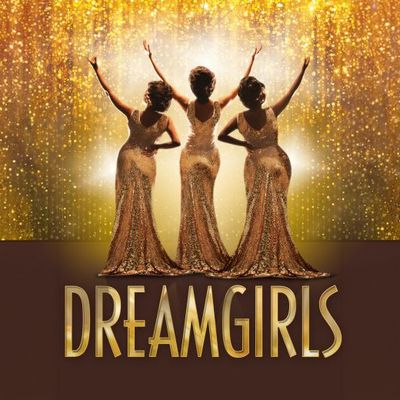
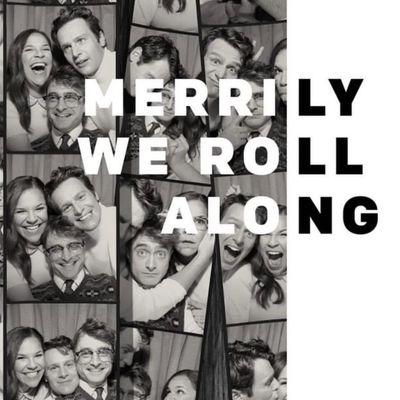
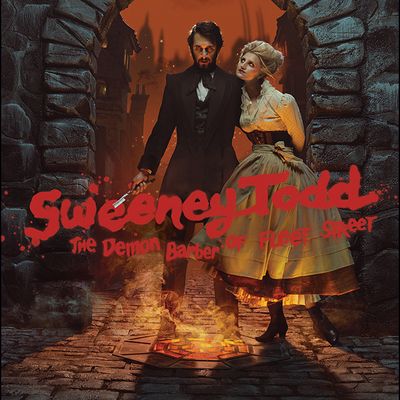
The first two are Sweeney Todd and Merrily We Roll Along, and Gemignani’s contribution to these musicals and his close working relationship with Stephen Sondheim and Hal Prince have been widely acknowledged but never to the level of detail and insight that Margaret brings to them. However, Gemignani’s enormous contribution to the development of Dreamgirls and his close collaboration with that show’s director and creator, Michael Bennett, have been closely guarded secrets for decades and were revealed for the first time in Margaret’s book. You will hear the reasons for all of this mystery and subterfuge later in the episode.
We also focus briefly on Paul's work on the Broadway musical EVITA and his interactions with Andrew Lloyd Webber and Patti LuPone.
Transcript
This transcript was automatically generated and might contain errors.
[0:00] David Armstrong: Welcome to another episode of Broadway Nation, the podcast that tells the remarkable story of how immigrants, Jews, queers, African-Americans, and other outcasts invented the Broadway musical and how they changed America in the process. I'm David Armstrong, and I call this episode Sweeney, Merrily, Dreamgirls and Gemignani. This is the third part of my conversation with author Margaret Hall, whose captivating new book is titled Gemignani, Life and Lessons from Broadway and Beyond. If you missed the first two parts, you may want to catch up on those episodes before listening to this one. As the title suggests, Margaret's book is a biography of Paul Gemignani, who served as the music director for more than 40 Broadway musicals, including the three shows that are the focus of this episode.
The first two are Sweeney Todd and Merrily We Roll Along, and Gemignani's contribution to these musicals and his close working relationship with both Stephen Sondheim and Harold Prince has been widely acknowledged, but never to the level of detail and insight that Margaret brings to them. However, Gemignani's enormous contribution to the development of Dreamgirls and his close collaboration with that show's director and creator Michael Bennett has been a closely guarded secret for decades and is revealed for the first time in Margaret's book. And you will learn the reasons for all of this mystery and subterfuge later in the episode. Here we go. We talked about Pacific Overtures being one of the most challenging jobs he ever had or anyone ever had. Now he ups the ante even more, at least Sondheim does with Sweeney Todd.
[1:47] Margaret Hall: Oh, yes. And Sweeney is Paul's favorite show. He doesn't like to name a favorite that he's done. But if you sort of gun against a wall, it's Sweeney Todd. He loves Sweeney. And that really became a family of a company in like every way. Everyone's on the top of their game. You will never find a better leading lady than Angela Lansbury. The epitome of elegance, but also hysterics. This nonchalant of like, it's not that serious, but also we're taking it serious. But if something happens, it's not the end of the world. And that's okay. There's lots of little pranks that are mentioned within the Sweeney Todd chapter. Lynne Kiryu, who is just a feat of nature and a force of personality. Victor Garber, who becomes a dear friend of Paul's. The entire company just sort of come together in this way.
I spoke about how Paul has this ability to sort of live with one foot in reality and one foot in magic. That entire company had that. And so they're all feeding off each other in this incredible blend of energy. And this score bowls you over. Paul liked to talk about that first sort of whistle into the violins as like a whiplash moment. Like he'd just throw his head back. And when he came back, he was in the world of Sweeney.
[3:13] ♪ Musical number: "The Ballad of Sweeney Todd" ♪
[3:37] David Armstrong: Talk about that whistle, because Paul has a lot to do with that whistle being in the show.
[3:42] Margaret Hall: Oh, yeah. Paul's the reason that whistle exists. If Paul Gemignani had not been in that room, it would be a gong.
[3:49] David Armstrong: So that was the original conception was a gong.
[3:53] Margaret Hall: Yeah. It was just going to be like a big gong that someone in the pit would just hit. And that would be the start.
[3:58] David Armstrong: And was that supposed to be the same idea? It was the sound that made people come into the factory.
[4:03] Margaret Hall: It was supposed to be a call to attention sound is what it needed to be. So it was orchestrated as a gong. That's what Steve had thought of it as. And again, this is where I don't know many people who have been like, I think you picked the wrong instrument, Steven Sondheim. But Paul was just like, I don't think that's arresting enough. Yeah, it gets your attention, but it's not quite the right attention getter. And so he and the set designer spent a lot of time digging through the craziest stuff until they found this actual original Victorian factory whistle that like would make your ears bleed if played unmuffled so loud, like could hear it miles away kind of factory whistle from back in the day.
They get it and they install it in the set design and they played for Hal Prince the first time. Everyone immediately was like cowering in your ears. I was like, okay, I like it, but we're going to cause bodily injury. So they move it and they like swath it and curtains and things like that sort of deaden the sound a little bit at least. So there's not injury to the performers who are on stage underneath it. But the thing that was crazy about this whistle is it's an air activated whistle. It's not an electric whistle or a battery powered whistle like we have today. It was an old school pressurized air whistle. And so the way for it to be engaged, if you're not sitting there with a giant bellows like it originally was, was to be set up with this crazy sort of rubber tubing system that Eugene Lee built that ran down through the rafters of the Eurus Theatre, now the Gershwin, through the floor and the stage deck on stage, down into the pit to a tiny little presser at Paul's feet. It's like the equivalent of if you ever see like an electric guitarist playing and they have like the little things they can tap to modulate the sound. It's like a little pedal.
[5:40] David Armstrong: Yeah basically.
[5:45] Margaret Hall: He's got one of these like just to the side of the podium so Paul can just sort of reach his foot down and tap it. But in order for the air to be released he has to tap it about 1.5 seconds or so before he wants to hear it. So he has to see that far into the future of like when exactly do I need to press it for it to time exactly to Lin slashing the throat or something like that. The first one's easy enough because like it's the first sound. Once it plays we're going. But if it plays two seconds late, okay. We'll go two seconds late. Yeah we're like that's not the end of the world. It's a bit of an end of the world if Lin Caru slits the first victim's throat, the beetle, and then it's like hold da da whistle.
Like it's not gonna work. It's a bad sound cue. But Paul got super good at it and again this is his ability to see into the future and eyes up out of the book he could see the muscles moving in Lin's shoulder underneath his shirt. He was watching him that close that he would be able to time Lin because Lin didn't do it the same every night and he didn't demand that of him. Other conductors probably been like okay we're timing this where it's like a one two three slice. That's not what they did. Paul said slice his throat when Sweeney's ready to slice it and if it takes you an extra three seconds to get there okay I'm watching you I'll see that. And he got so familiar specifically with Lin Caru's right shoulder muscles that he could see when the tendon was starting tighten to start the rise to start the crossover in front and so he'd know like okay the tendon's going press it because it took about that long for him to just reach around and do the slash.
And that's the kind of thing that you do not learn except practical. You can't time that and there's some very funny stories in the book from Jim Coleman who is who Paul hires to take over the Sweeney production on tour. The whistle's not in the orchestration because the orchestration that exists is what Jonathan Tunick did in I believe under a month if I'm remembering correctly. This is a case where Paul Gemignani does not have a score in front of him because he has memorized the entire score and in fact I think you say in the book that they had trouble seeing him on the monitors of the day the TV monitors were not so good because the lighting was so dark in the show there was not enough light on him for him to show up on the monitors his hands especially.
Instead of having a score he just lined the top of his podium with white paper so that it would reflect up on him. They could have put a light there on him probably but he did the same thing without that. He's conducting without a score and he's the one controlling the whistle. This is not something the stage manager is doing or the sound department is doing. He's the one who makes the whistle go with his foot as he's conducting.
[8:10] David Armstrong: He's playing like an instrument.
[8:16] Margaret Hall: Yeah. But that's not in the score and no one had bothered to tell Jim Coleman of this. So Jim Coleman comes in to be the replacement conductor on the show and he's learned the show he's not memorized the score he's actually going to play from the score at least or conduct from the score to begin with but in the score it still says gong. Yeah he knew that it was a whistle now but he felt like oh that's like a stage manager cue the stage manager's like sitting in the wings and he watches and presses a button and that's what everyone thought it was because Paul also didn't make a big deal out of like oh I've got this like super arduous thing to be doing everything he's like no I just tap it with my foot it's whatever I just have to time it right.
[8:45] David Armstrong: It's my job I do it.
[8:51] Margaret Hall: Yeah it's like sure but Jim Coleman had no clue and literally so he had to basically audition to do the tour because Paul had so built this show with Angela Lansbury that Angela was hesitant to trust it with anyone but Paul because Paul really was a part of the alchemy but Paul vouched for Jim Coleman said I trust this guy let him play a matinee with you you're here with your Broadway company I'll be sitting in the pit with him so if like something goes horrifically awry I can jump up there but you can get a feel for what it's like being conducted by someone that isn't me he's basically got the audition of a lifetime to do this tour with Angela Lansbury as judge jury and executioner and Paul's walking him to the subway Jim would like sit and sort of observe Paul conducted like two weeks before this is coming up just to sort of get a sense of how the machine moves Paul's walking him to the subway he just sort of mentions offhand oh you're ready for the whistle huh and Jim is just sort of very uh what are you talking about Paul explains to him like oh yeah no that's your job you're conducting but also you need to play the whistle and Angela's gonna notice if the whistle doesn't go off tomorrow tomorrow yes not even tomorrow in 12 hours from now I'm walking you home after the evening show you're doing the matinee tomorrow so you need to figure that out if Paul had never mentioned it Jim Coleman would have gotten up there hands aloft and just stood there waiting for the stage manager to play the whistle yeah the show would have never begun the audition would have been over before it even started but so Jim Coleman goes home and he pulls out his score which is already covered in notes and like he has annotated this thing to hell and back and he's got the brightest red pen you can imagine he circles every time there's a gong cue like 15 times that's me I have to do this he gets there like an hour before everybody else and he's like crawling around the podium peeling at all of the butcher paper that Paul's placed down trying to find where this button is he finds it he presses it I'm sure the doorman must have been like what the hell is going on who's just like playing the whistle over and over because Jim Coleman just like stood there and hit it like 15 times to make sure he like knew where it was and can I find it in the dark and do I know where it is in muscle memory and he does it he's not as perfect as Paul the first time it takes about one and a half seconds to travel there he's getting it maybe one second where it's excuse like half a second off but that's not really obvious close enough for the first time you're doing the show yeah it's like Lynn might have felt it but it's close enough that people aren't going to be like what happened there it just sort of like oh there's an echo in this gigantic theater interesting I'm sure everyone wrote it off who saw it but Jim's like sweating buckets and Paul's just laughing he's like you good you okay Jim passes with flying colors he does the tour and he ends up being the person who conducts the version of Sweeney that many of us now know as the Sweeney which is Angela Lansbury and George Hearn as filmed on tour that's Jim conducting it was supposed to be Paul but Paul got busy there was a whole mishmash of things he ended up not being able to fly out and do the tour merrily was also starting to happen at that time Sondheim was very busy in the early 1980s so that version of Sweeney that is Jim Coleman doing all of that he's just very impressive and I appreciate him deeply
[11:54] ♪ Musical number: "Rainbow High" — performed by Patti LuPone ♪
[12:50] David Armstrong: So now he's doing another show with Prince without Sondheim and that is Evita.
[12:57] Margaret Hall: Yes Evita he originally was going to open Evita as the opening conductor but he insisted on staying with Sweeney until it closed on Broadway he basically told how he's like Sweeney's my baby please don't make me abandon her I will get you your cast I will get you your orchestra I will get you your music director but please let me close Sweeney so in a way he'd be what they call today a music supervisor on the show yes and then once Sweeney closed and is out on tour then he comes in and he takes over Evita when they send the original conductor for Evita on I believe the international tour is where he's sent so Paul takes it over he is there to finish out Patti LuPone's run and Mandy Patinkin's run and he and Patti they have a fascinating relationship because they're both two people who are so strong but also aggressively Italian and one of my favorite
[13:45] Margaret Hall: Paul Frases is what he likes to call an Italian standoff, which is when you're not even fighting. You're both just so passionate in your corner of a situation that isn't even really a fight, that you're just kind of silently staring at each other, waiting for someone to make a move. And there's a great story in the book of him and Patty having one of those, and it's one of my favorite stories, because they're both just such forces of nature. But clearly they get along, or they like working with each other, because they continue to have a lifelong career, basically, with each other.
[14:13] David Armstrong: Oh my gosh, yeah. They work with each other a ton. Patty's another one. She has a very short list of conductors she requests when she does stuff, and Paul is on that short list. If Paul will do the show, I want Paul. He won't always do the show, but that's who she's calling for first.
[14:28] Margaret Hall: Right. It doesn't seem though that this turns into a relationship with Andrew Lloyd Webber, which is interesting.
[14:33] David Armstrong: Yes and no, in terms of it being interesting. So he actually didn't spend a lot of time with Andrew, because Evita was pretty much fully formed in London before it came over. That's also part of why he did music supervision. It was pretty easy just to bring the guy from London with the show instead of replacing him with Paul. Because of that, he's not working with Andrew in the same way that you are when you're creating a new show. You're not really changing Evita once it gets to Broadway. There's like little tweaks here and there, but you're not rewriting Buenos Aires. It was already a big hit.
[15:01] Margaret Hall: Yeah. So he's not spending a lot of face time with Andrew. And then Evita's also a period in Andrew's life where if you've read his memoir Unmasked, he's in a lot of personal turmoil. And so he's not spending more time in that rehearsal room than he has to. He's getting home to his wife and figuring out everything that's happening there. Paul also tends toward quieter personalities. His best friends are sort of the people who, they're not wallflowers, but they're observers. They're listeners. They're people like Sondheim who take in the world and they synthesize the world. While Webber can do that, that's not his natural mode. He's much more of a showman. He's what I would call an impresario. And that's just not really Paul's vibe.
[15:45] David Armstrong: Evita's really the only show of his that he worked on. He almost did Phantom of the Opera, but that didn't end up happening. If it had, maybe they would have struck up a connection. But as it is, you click with some people and you don't with others. They never had any big fight or anything. They remained cordial. And when they stopped working together, their relationship ended.
[16:03] Margaret Hall: Speaking of relationships ending, this brings us to The Fateful Merrily We Roll Along.
[16:09] David Armstrong: Yes.
[16:09] Margaret Hall: Where Paul is in the middle of a relationship ending to a great extent.
[16:40] David Armstrong: Oh, up to us, pal, to show on.
[16:46] David Armstrong: Don't go away. Broadway Nation will be back right after this quick break.
[16:51] ♪ Musical number: "It's Our Time" — performed by the cast of Merrily We Roll Along ♪
[17:05] David Armstrong: Hi, this is David Armstrong. And if you're enjoying this episode, I strongly suspect that you will want to read my new book, Broadway Nation, How Immigrant Jewish, Queer and Black Artists Invented the Broadway Musical. On sale now wherever books are sold. And I'm very happy to report that the early reviews have been terrific. The esteemed author Jeffrey Bloch says that Broadway Nation is a fascinating, comprehensive and timely gem of a book that more than lives up to its promise of delivering no less than five books in one. Kudos to David Armstrong. And Tony Award-winning lyricist David Zippel says that David Armstrong's insightful history of the evolution of the Broadway musical and its creators is captivating and comprehensive as well as indispensable.
The book is, of course, available on Amazon, but I recommend that you go to the publisher's website, Bloomsbury.com, where you will currently receive a 10% discount. Again, like the podcast that inspired it, the book is titled Broadway Nation, How Immigrant Jewish, Queer and Black Artists Invented the Broadway Musical. Now back to the show.
[18:15] ♪ Musical number: "Something Is Stirring" — performed by the cast of Merrily We Roll Along ♪
[18:25] Margaret Hall: As you said earlier, you devote a whole chapter to this on purpose, even though it's run 16 performances. I happen to have seen the 16th of those performances. One of my time machine shows. You know, I have to say it was very enervating. It just didn't work. It just kind of sat there. The last three numbers worked when they got to opening doors is when the show started to work.
[18:56] David Armstrong: Opening doors is the best song.
[18:58] Margaret Hall: Oh, it's brilliant. But you just sort of sat there wondering what had happened to your idols, because it just didn't click. They've done a lot of work on the show since then, which I think has made it work much better in various versions. But it wasn't terrible. It just wasn't good. That's in some ways the worst kind of thing, because it was kind of dull, even though it's hard to imagine. Once the record came out, it was like, well, this is the greatest score in the world. Why did it not seem that way when you were sitting there in the audience? It just didn't have any effect or very little effect, I'll say.
[19:31] David Armstrong: This is just a great place for me to say the advice that I give to any young composers whenever I talk with them. If you're choosing to adapt something, adapt something that works before you're adapting it, because making something a musical is not going to suddenly make it work. If anything, you risk breaking it further.
[19:46] Margaret Hall: Yeah. And Merrily We Roll Along, the original play, was not a success. It was a favorite of Hal Prince's, but the play flopped. The biggest problem is it goes backwards.
[19:53] David Armstrong: Yeah, and I don't necessarily think that's the problem. I think the book needed help. But the book has gotten help in a lot of productions. The thing that's hard with Merrily is Hal loved that original play, and so he's married to that play, which really needed some massaging. It's gotten that massaging since, but that was one of the big pitfalls with Merrily. Don't adapt your favorite flaws, because you're not going to be as brutal as you need to be with it.
[20:19] Margaret Hall: One of the things that made Rodgers and Hammerstein so legendary is they were brutal with their darlings. There are stories of them out of town on things like South Pacific, where they're like, this is my favorite song that we've ever written together, but it's not working, and so we're cutting it. Things like that, where it was all in service of the story, and they got a little bit too lost in the experience of making Merrily and lost sight of the show itself. And that's one of the dangers when a producer and director is the same person. That can be super helpful in terms of communicating a vision without any roadblocks. Something like Sweeney Todd, there's a lot of producers who would have balked at how expensive that was to do, but Hal Prince wrote his own check to do it.
But one of sort of the pitfalls of it is there was no one there to say, hey Hal, tap you on the shoulder here. Yeah, Ruth Mitchell was there, but Ruth also kind of fell down the rabbit hole with Hal on this.
[21:06] Margaret Hall: Merrily really was a heartbreaking experience for everyone involved, because every single person I've spoken to who worked on it loved it with their entire heart. Where the show was the show itself, but it was also representative of so many things that people held so close. For Steve, it was a representation of who he was when he was 25. He was trying to capture who he was when he was just starting out with West Side Story. And he did a pretty good job of it when you listen to those melodies. Like, that's hard to undo those habits. But he got so sort of attached to that exercise. Hal Prince was very attached to that original play. And the cast was so attached to their heroes. Because this cast of kids, some of them literally the kids of the creators, Daisy Prince was Hal Prince's daughter. It's just a heartbreaking experience.
[21:55] David Armstrong: And for Paul especially, because Paul really does love this score. And Paul was in some ways the keeper of the kids. Because when it really reached crunch time at the end, when Steve and Hal had to put their heads down and try and fix this, Paul was the one who was clocking in every day with a smile, talking to the kids, holding up little signs to make them laugh during bows so they wouldn't notice that people were walking out during the middle of the show. He was like the equivalent of everybody's dad in that company, to the point that he became a surrogate father figure for one of the cast members, Donna Marie Elio, and walked her down the aisle at her wedding. And then when it didn't work, and when all of sort of the hustling that Steve and Hal were doing behind the scenes to make it click.
And this is truly a show that I can't think of a show that went through a bigger metamorphosis during previews. The show on that first preview is not the show that it was on that last preview. They really made major headway. But Hal made the cardinal sin of, you never open a new show cold in New York. Do not do it. You are signing your own death warrant. But in that period, that's what so many shows were doing because the economics were so broken.
[23:01] Margaret Hall: I know, but you're killing yourself before you even start. You're coming in with a deadly infection. So they were sort of set up to fail from that way. I think that if what was the previews of Merrily had been the out-of-town tryout, and then they'd had time to then do a previews on top of it, I think they would have got there. I really do believe in my heart they would have got there, but they didn't have the time. It really broke Paul in like a real way because it didn't just feel like a show wasn't working. That happens. That's a part of the game. But this felt personal, both in that people were really personally attacking his dear friends. People weren't just saying, oh, Sondheim and Prince didn't have a good show.
People were just like, oh, were they ever talented anyway? Oh, they're hacks and that sort of thing. He's just like, no. And so that hurts on like a personal level for your friends. But he knew that Steve and Hal could take care of themselves. They're grown. They've been in this industry for a long time. They'll be okay. These kids were young. Overwhelming majority making Broadway debuts. All of them sort of thought they had their ticket to the life they'd always dreamed of because they're working with these people that are like their idols. And then when the show doesn't work, they all take it so personally and feel like if they had done something different, it would have been better.
[24:59] Margaret Hall: In particular, that main three, namely Lonnie Price and Annie Morrison, really took it on in a personal way of like, I am the reason the show did not work. I was the failing. And that's not the case. They were quite wonderful, actually. I went to college with Jimmy Waltons. Jim at least had sort of like the out of like, I came in halfway through as Frank, like I did what I could in the time I had. But for Lonnie and Annie, it really was like a heaviness of like, I have failed in some serious fashion. Annie more so even than Lonnie. Because Lonnie at least had been around the Prince office long enough to know like flops happen and we will survive this. It was rough. It was not just rough for Annie.
That's like goes for the entire ensemble, really. So many people left the business entirely because they couldn't take it. It was the kind of failure that isn't just like a financial failure or, oh, it didn't reach what I wanted it to reach. It feels like you're personally failing someone who means so much to you. And that was what killed Paul, is watching these kids labor underneath this, just ennui. And recording that cast album the day after the closing, probably the most difficult day of Paul's entire career, second maybe only to going to Michael Bennett's memorial. And that's really close race. The death of one of his closest friends of his entire life from a horrific disease as he's watching people he cared for deeply dying all around him. And then watching the spirits and the lives die behind these kids' eyes. And these things don't come right on top of each other, but within a few years, because the next show is Dreamgirls.
[27:31] Margaret Hall: Yes. Where he obviously is working very closely with Michael. And you describe in your book, I think a very different process than he ever had with Sondheim in that he was in on this show. Of course, Dreamgirls was developed through a series of workshops like Chorus Line had been. And he's really crucial in putting the score together, in deciding what's going to be in the score. The impression I had is that the composers had written a lot of songs, but it was not put together into a score. And Michael and Paul did much of that work.
[27:59] David Armstrong: Yeah. So they had like around 50 songs that they were given. And I'm telling you doesn't exist at this point. But just about everything else is in this pile of 50 songs. And sort of like deciding like, where do things go? What fits the moment best? And it's wild to me because Paul's participation in the workshop of Dreamgirls was basically private until we started talking about this book. It was not discussed. Because Paul hid his work on that workshop so hard to hide it from Hal.
[27:30] Margaret Hall: Where Dreamgirls is such a seminal show. Talk about turning points in the history of the American musical. Dreamgirls is a big deal and so many people have no idea that Paul was more than a replacement conductor because he basically acted as the music contractor for the show. He puts together the pit, he's who picks who ends up becoming the music director and the person who opens the show. He's the one who sets up sort of the run of the songs and where things need to be placed. He leaves, he does a handful of flops with the Prince office. Hal Prince thinks nothing of it, doesn't realize anything had happened. Somewhere around the third flop, Michael Bennett comes to visit Paul. They're like hanging out in someone's dressing room backstage.
They're like, is there any way to fix this? Because Michael Bennett fully is just like, okay, I visited you at too many of these failing shows. How do we fix one so that you have like a show that works? They spend like 30 minutes trying to make it work. They're like, we can't. The show is broken. There's no fixing it. Okay. And Michael Bennett comes up with this idea. So when this one closes, before Hal gets another idea for something crazy, I'll call the Prince office and ask if I can borrow you to be a replacement conductor in Dreamgirls. So you finally get a chance to conduct this outside of workshops in like a locked closet, basically. And so that's what ends up happening. And so everyone thinks that that's Paul's relationship with Dreamgirls.
It's like, oh, we conducted it for like six months in 1983. And it's like, no, that was a homecoming more than anything. That was just sort of Michael being like, now you can actually put it on your resume, even if you can't say everything you did. Because the paperwork is still under lock and key. Like, Michael Bennett really protected Paul because Paul told him where he's like, if I'm doing this, Hal cannot find out. And basically our friendship is over if you ruin my friendship with Hal. And Michael took that seriously. And he protected that. And everyone in his estate protected it. It literally took Paul being like, I myself am giving permission that you can confirm things to her. You don't have to hide it from my biographer.
But even then, people were very hesitant to give details on it because Michael was so strict about like, we do not talk about Paul Gemignani being here. He was not in this room. He did not sign on any papers. It was my friend. Michael had a friend here who helped. That's how we talk about it. Michael's friend helped pick things here and there. Not Paul. Because if any one person you say that to someone you trust who then maybe is overheard by someone in like the hallway of somewhere, if it gets back to Hal Prince, there's going to be hell to pay. But now that Hal has passed on, Paul wants to talk about it.
[30:13] Margaret Hall: We are a family, like a giant tree, growing stronger, growing wiser. We are growing free. We need you. We are a family. So Michael Bennett, this has been a long relationship they've had. And this leads up to, as you said, the other worst day in Paul's life is Michael Bennett's memorial, Michael Bennett's death and the aftermath of that. It was an awful day. And it's something I literally, I can't talk about without tearing up a little bit. Because it was a moment that I think we all need right now, actually, where Michael Bennett's memorial gave everyone permission to grieve everyone they were losing. By the time Michael died, we had reached full epidemic levels. He wasn't like the first wave where we don't really know what's going on.
It's no longer called GRID. We have reached AIDS. And there's something about Michael's loss specifically, someone who people loved so much and was such a good friend to so many and showed so much promise and was so clearly just getting started with an incredible career, to be gone like that. His memorial gave people the space they needed to grieve everyone who was dying around them. For all the chorus boys who had only got one credit in before they were taken from us, before they had a chance to become who they were meant to be even. And it's something we haven't had an opportunity to have during COVID, to mourn all of this loss around us because we're still in the middle of it. But we need a moment like Michael Bennett's memorial, where it's everyone in one room grieving and mourning in just wild abandon.
If you've ever seen any of the footage from that memorial, there's a video that just eviscerates me of Stephen Sondheim singing a song from Sunday in the Park with George that was one of Michael's favorites. And it's just Steve at a piano with his little hand-battered score. And the sound that you can hear release from the audience when Steve finishes, and he just quietly says, goodbye, Michael. And you just you hear people's hearts breaking in the audience in the way they exhale. And that was happening on a macro level. You can't even imagine what was going on on a micro level for the people who were close with Michael. Because Michael was Paul's one of his best friends. Steve was his best friend, but Steve was also kind of his boss.
So they had a very interesting sort of thing for a while until they reached the 90s and then just full best friend. But in the 80s, yes, Bennett would ask favors of him, but he didn't really work for Bennett in that same way. Bennett loved him not just because of what Paul could do for him as a musician sort of thing, but he loved Paul for Paul. And that was not something he had a lot of in his life. That was not a familiar sensation for him. He got that from Michael, he got that from his son, and that's basically where the list ends. And the loss of Michael, especially right as they were sort of working up the courage to maybe become a duo, they were right on the precipice of thinking the Prince office might never recover from this period.
And if that happens, then Bennett and Gemignani can become a thing. And we'll have each other and we'll go on these adventures together. Because they had always been the two young ones in the rooms they were in. Paul is 83 now, Steve just died at 91. That's a little under a 10-year difference, which is not a huge difference, but it's a difference. It's a bigger difference when you're 22 and they're 32 than it was later in life. But yes, when they're the young ones in the room doing follies, that was a big difference. Very much. The loss of Michael was like losing a future in a lot of ways. And that day, that was the hardest part of the entire book to write, was Michael's memorial. It took me three weeks just to write those pages because both Paul and I would just immediately start having a breakdown a couple sentences in.
We had a lot of really good cries. While obviously it can't heal everything, I did my best to construct that section in such a way that I hope that it gives readers even a shadow of the solace that we need after what we've gone through in the last three years. Of even just a second to just sort of drop the shoulders and be like, yeah, it's not okay. And it doesn't have to be. For these seconds that I'm here with this, grief like this has happened. It will happen again. And the only way through it is to feel it and the power of it. And pushing it to the side does not make it disappear, so to speak. And that was very much the case with Michael's memorial. Obviously, even though this relationship with Michael Bennett comes to an end and the relationship with Hal Prince has come to an end, the core relationship with Sondheim continues and actually reaches some highlights over this next period.
Margaret and I will be back next time with a final episode that will cover Paul Gemignani's work on Sunday in the Park with George, Into the Woods, and more. In the meantime, here is the complete audio of the moment that Margaret just described to you, Stephen Sondheim performing Move On from Sunday in the Park with George at Michael Bennett's memorial. Before I introduce Stephen Sondheim, I'd just like to say one more thing, tell you one more story about Michael. A couple of years ago, Michael asked me to come up to his apartment to discuss some business. When I got there, he said that he wanted to play for me an advanced copy of the cast album for Sunday in the Park with George. As we listened, he played just one song.
He stood in the corner of the apartment, looked out the window, his back towards me. When he turned around, there were tears coming down his face. It was the only time I'd ever seen Michael cry. Ladies and gentlemen, Stephen Sondheim will play that song from Sunday in the Park with George.
[36:46] Stephen Sondheim: My usual apologies, Michael. I'll play in the cracks, but I'll sing too loud and too fast, and I think you'll get the point anyway. You always did.
[37:21] ♪ Musical number: "Move On" — performed by Stephen Sondheim ♪
[40:58] David Armstrong: Broadway Nation is written and produced by me, David Armstrong. Special thanks to Pals Mox for his help with editing this episode, to KVSH 101.9, the voice of beautiful Vashon Island, Washington, and to the entire team at the Broadway Podcast Network.
© Broadway Podcast Network, All Rights Reserved