

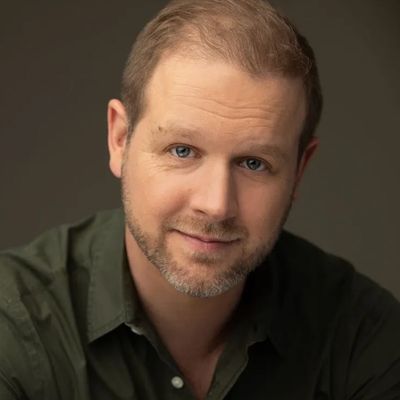
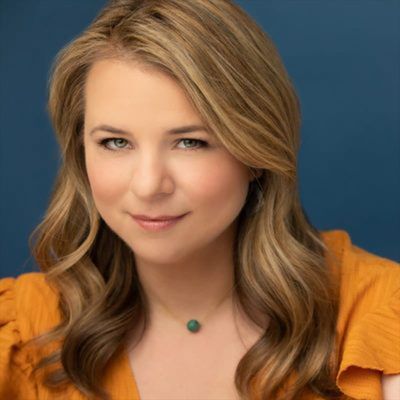
My guests today are Irene Sankoff & David Hein – the dynamic writing team and married couple that created the giant international smash hit musical Come From Away. Five productions of Come From Away have recently reopened around the world: Broadway, Toronto, London, Sydney and on tour across America... Read More
From the show: BROADWAY NATION
Guests
Featured Shows
About
My guests today are Irene Sankoff & David Hein – the dynamic writing team and married couple that created the giant international smash hit musical Come From Away.
Five productions of Come From Away have recently reopened around the world: Broadway, Toronto, London, Sydney and on tour across America. A live filmed version of the show is also streaming on Apple TV+.
Irene and David won the 2019 Olivier Award and were nominated for the 2018 Grammy Award and the 2017 Tony Award for their book and score for Come From Away, with the show itself winning the 2019 Olivier Award for Best Musical, three 2017 Dora Mavor Moore Awards, four Helen Hayes Awards, five Outer Critics Circle Awards and three Drama Desk Awards including Best Musical. David and Irene were also the recipients of the 2017 Outer Critics Circle and Drama Desk awards for Best Book. A live filmed version of Come From Away is now streaming on Apple TV+. Their first show, My Mother’s Lesbian Jewish Wiccan Wedding (based on David’s mother’s true story) was produced by Mirvish Productions in Toronto and played and won Best Musical awards across North America, with Sankoff and Hein performing in most productions. They are currently working on projects with Disney, Warner Bros. and Netflix. Irene and David are the recipients of the Good Neighbour Award from the Four Freedoms Park Conservancy and the Meritorious Service Cross of Canada. They are proud members of the Dramatists Guild, Writer’s Guild East and ASCAP. @sankoffandhein
In this conversation, we explore how Come From Away fits into the history of the Broadway musical – which musical theater writers from the past influenced Irene and David, and what classic shows inspired them. And we will look back at their first musical, which has the memorable title: My Mother’s Lesbian Jewish Wiccan Wedding. But first, I wanted to find out how they got started down this path in the first place.
Transcript
This transcript was automatically generated and might contain errors.
[0:00] David Armstrong: Hi, this is David Armstrong, and as you may have heard, American Theatre Magazine just released its list of the top ten most produced plays of the 2025-26 theatre season. That's the top ten plays produced at professional theatres, most of them members of LORT, the League of Regional Theatres. And number one on that list is the musical Come From Away. So I thought this was the perfect time to re-release my conversation with the authors of that show, Irene Sankoff and David Hein, who wrote the book, music, and lyrics for the most produced play in America. Here we go. Welcome to another episode of Broadway Nation.
[0:46] David Armstrong: The podcast that tells the remarkable story of how immigrants, Jews, queers, African-Americans, and other outcasts invented the Broadway musical and how they changed America in the process. I'm David Armstrong, and I call this episode On the Shoulders of Giants. Today, my guests are Irene Sankoff and David Hein, the dynamic writing team and married couple that created the giant international smash hit musical Come From Away. Five productions of Come From Away have recently reopened on Broadway in Toronto, London, Sydney, and on tour across America, and a live filmed version of the show is currently streaming on Apple TV+. Irene and David have been honored with 2019 Olivier Awards for Outstanding Achievement in Music and Best New Musical, as well as 2017 Tony Award nominations for Best Musical, Best Book, and Best Score, and a 2018 Grammy nomination for Best Musical Theater Album.
In this conversation, we explore how Come From Away fits into the history of the Broadway musical, who were the musical theater writers from the past that influenced Irene and David, and what classic musicals inspired them. We'll also look back at their first musical, which was titled My Mother's Lesbian Jewish Wiccan Wedding. But first, I wanted to find out how they got started on the road to Broadway in the first place. Welcome. Welcome to you both.
[2:26] Irene Sankoff: Thank you. Thank you so much for being here. So I started just loving dance and seeing Broadway review shows and just being obsessed with them and memorizing choreography and learning music videos in my living room. I was a dance major in high school. I have a hypermobility syndrome, so that meant that I was not going to be a dancer, even though it sounds like being hypermobile would be a good thing, but I was also just injured all the time. And then I went into theater in university, which is where I met David. Then I switched out of theater, not because I met David, but unrelated circumstances, and went into psychology, then picked up creative writing, then did a master's in acting, and then kind of did a combination of acting and teaching kids with learning challenges.
David and I never saw each other because we were doing day jobs and also trying to perform. He was a singer-songwriter. I was an actor. We never saw each other, so we were like, well, I know what we'll do so we can hang out. Let's write a show together and perform in it.
[3:56] David Hein: If Irene grew up on musical theater, she watched every musical. Her mom took her to the cheap seats at lots of musicals or like the high school versions of things, because that's what was around where we lived. I grew up on folk music, and my mom took me to the Winnipeg Folk Festival to see tons of people perform. I think the first musical I saw was only in university, and it was Phantom or Cats at that point. But when I met Irene, she introduced me to Rent. She introduced me to a million different musicals. And quickly, I kind of fell in love with that. And I introduced her to a lot of guys playing acoustic guitar music. And so Come From Away, to some degree, is a marriage of those two musical styles. A literal marriage.
[4:30] Irene Sankoff: Yeah, literal marriage. Yeah. There was a summer where we just weren't feeling like we saw each other enough, and we thought, why don't we write a musical? I think looking back on that, we had no idea how hard it was. And at the same time, we put on a show called My Mother's Lesbian Jewish Wiccan Wedding, which is a true story. We like true stories about my mom and how she came out to me and discovered her sexuality and rediscovered her Jewish faith. We put it on in the Fringe, and suddenly it sold out. This was in the Toronto Fringe. We were in a little 80-seat house at the back of this little bar. Which is now a condo, because that's the way it goes, anyway. And then the Mirvishes, the largest Canadian theatre producer, came to see it all of a sudden and picked it up.
We had a couple months to write an extra half hour for it, and we put it on in a 700-seat theatre in Toronto, and it ran for months and months. We started not having any time to see each other, and suddenly we're hip to hip and working together all the time. So it worked really well. Amazing.
[5:56] David Hein: And when did love enter the picture?
[5:58] Irene Sankoff: Oh, right. Oh, well, we were married already at that point. Yeah, we met in university. We started dating.
[6:05] David Hein: Wow. Okay, hang on. 95?
[6:08] Irene Sankoff: 95? Yeah, it was a couple years after. We were friends first for a long time, and then eventually we started dating each other, and it was even better. And so we were together for a long time in Toronto. Irene came down to get her Master's in Acting, and I followed her because I was in love with her. I got to work in a Muppet recording studio here that Irene's uncle owned. So we got a lot of wonderful opportunities within that, and also got to see a million shows and drove back and forth between Toronto and New York just listening to every musical we could and singing to each other. I still miss those drives.
[6:44] Irene Sankoff: Well, and with a successful career where people want you to be somewhere, when we didn't have jobs or a kid or friends, we could just drive and talk about musical theatre. It was so much easier when we didn't have to work, wasn't it?
[6:56] David Hein: Yeah, exactly. Oh, yes. Exactly. What were some of those shows that you obsessed over as a kid?
[7:02] Irene Sankoff: Sure. Okay, the first musical I ever saw was Guys and Dolls, and I was obsessed. And then I saw Damn Yankees and going downtown in Toronto during the magnificent 80s to see all of the mega musicals that were there at the time. So like Crazy for You and Phantom of the Opera and Ragtime, Showboat, Cats, Les Mis, of course, like a lot. I saw Les Mis a lot, because it was like 15 bucks in the back row. And at the time, like it cost the same pretty much to see a movie in Toronto. So I was like, Well, I'd rather see this again. And then I guess as I got older, I remember I was obsessed with Once on this Island for like 10 years before I got a chance to see it. Into the Woods was amazing. This is embarrassing, but I lived in the suburbs.
So I was obsessed with the movie version of A Chorus Line. I also had the cassette of the Broadway. But generally speaking, we didn't get to see a lot of stuff unless it came through on a tour. When I saw A Chorus Line, I guess like five or so years ago, I just realized that, Oh my gosh, I know the whole thing off my heart. And I was like, Oh, wait, I think it did influence the writing of Come From Away, even though I wasn't aware of it until I was sitting there like basically reciting all the lines along with the actors. I think that's the way writing works. So much of it is in your head somewhere. And you don't even understand where the influence came or what even you wrote till after it's done. Especially a sequence like Hello 12, Hello 13, Hello Love is in a way a sort of mini version of Come From Away. It's a whole cast of people and we're in all of their heads all at the same time.
[7:53] David Hein: Yeah, I only heard that on the cassette, right? Like, it's not a movie where I sat watching over and over again. But I also think at the ballet, right? Like they have their monologues intertwined with the music there as well and the repeating refrains. And going in and out of song and in and out of dialogue in such a masterful way.
[8:16] Irene Sankoff: Exactly. Yeah, I've only seen the stage production, I think three times. Like I think twice on a tour. I think I've only seen it once.
[8:23] David Hein: Did you only see it at Stratford?
[8:25] Irene Sankoff: Yeah. Yeah. Okay. But I still made him listen to the cassette because we had a car that had a cassette player at one point. Irene was my musical educator. I feel like it's similar with a lot of shows that they go into your subconscious in that way. You stand on the shoulders of giants, whether you acknowledge it or not. Every show is based on you seeing a show and falling in love with the theatricality of it and then building off that. I think part of what influenced Come From Away, at least, but also what influenced My Mother's Lesbian Jewish Wiccan Wedding was certainly fourth wall breaking. That show was built on a song. It was a silly song that I'd written. It just said the words, My Mother's Lesbian Jewish Wiccan Wedding over and over again. And that was the joke of it.
[9:20] David Hein: My singer-songwriter act would be that I would sit on stage and I'd tell stories and then I'd sing a song that, you know, the story would be about the song or the song would be about the story or vice versa. And you just talk to the audience back and forth. And sometimes in the middle of it, I'd get audience ideas. It was all interactive. And so when we started doing theater, it was a lot of, I'm going to tell you a story. Hi, everyone. That came from that singer-songwriter aesthetic and then adding in a scene next to you that could play and then stepping into that scene and commenting on that scene and commenting on that song. I think the chorus line dynamic played well with that to some degree. And then when we started writing Come From Away, we didn't even really agree that it was a musical for the first little while. Because my background is like straight plays. I don't even like that term because what does that mean?
[10:29] Irene Sankoff: Yeah. Plays. Thank you. Plays. Non-musical plays. Non-musical plays with only an underscore sometimes.
[10:33] David Hein: Yeah. Almost everything we wrote, I'm like, really think this is a musical? But I'd grown up on folk music and that included a ton of Newfoundland music. And so I knew not only was it amazing music and this incredible original sound that had never been heard on Broadway, not that we were aiming at Broadway at that point, but I'd never heard on stage in a musical, but it was in the DNA of the people out there. You really needed it to tell the story. The music was how they had gotten through their winters. The music was how they had done this. But our initial model for this was the Laramie project. It was going out, let's do some interviews. And the interviews were so good and the verbatim was so amazing, especially for a show about people from around the world, everyone's speech patterns and stories and their perspective on the story and their unique history of it.
We really wanted to capture. So the Laramie project and jumping quickly from one thing to another and trying to pack in as many stories as possible was where we started. And then once we realized the music was important, it became a way to facilitate us telling all of those stories. And I think all of those things combined in a pot to create Come From Away. Well, in some ways, it's easier to jump time and space in a musical idiom than it is in a non-musical play form.
[11:47] Irene Sankoff: Yeah, completely. Especially when you are in Canada and don't have much of a budget and blockouts aren't going to work, but you can switch to music.
[11:58] David Hein: The Most Produced Play in America. The Most Produced Play in Toronto. We had a lot of fun moving around North America with that show, performing in it. We brought it to the NIM Fes here in New York. And it was an amazing experience that we had Anne Harada and Liz Larsen played my moms. It was really wonderful and at the same time it was challenging. We had to raise a lot of money. We had traveled down here by ourselves and did everything like we always did ever since Wiccan Wedding started. We had done the posters and the laundry and everything. Produced, write, act, everything. We got a couple of licenses out. It was challenging because the Mirvishes who originally picked it up in Toronto held the rights for it but they were not a licensing company.
It was challenging for us to get the word out and the way that that show spread was people would come to see it in Rochester or at the Finger Lakes Music Theatre Festival in Auburn and then they would want to do the show based on that. We performed it over and over again. It was really fun. We got to get married on stage ourselves. It was a wonderful experience.
[12:46] Irene Sankoff: You appeared in it as well.
[12:47] David Hein: Yeah, yeah, yeah, yeah. In the original incarnations as well?
[12:50] Irene Sankoff: Yes. From the beginning. This was a vehicle for the two of you in a way.
[12:54] David Hein: Yeah, and the play was more popular than we were. We did fine. We did fine. Everyone enjoyed our performances. We started getting a lot of licenses and were like, do we want to go to the Soil Dove in Colorado? I think that's where it was.
[13:04] Irene Sankoff: Yeah.
[13:05] David Hein: And also, can they afford us? No. Can we afford it? No. It just started to be like, oh, wait a second. Okay, I think this is taking on a life of its own. I can't get it out of my head but do you even realize City of Angels also a little bit influenced Wiccan Wedding? Not so much Come From Away. You know, he's got the guy writing and he's telling the story.
[13:22] Irene Sankoff: Yeah, anyway.
[13:23] David Hein: Yeah, yeah. It was very us telling our story which to me that's folk music, singer-songwriter and to Irene that's City of Angels.
[13:30] Irene Sankoff: That's so interesting. I just interviewed David Zippel a few weeks ago so I'll be very interested to hear that.
[13:35] David Hein: Yeah, yeah. And strong female leads in City of Angels too. So this is your first experience with real people being characters in your play, including yourselves.
[13:43] Irene Sankoff: Yeah. Obviously, you've continued that with Come From Away and there's your living people who can come and see the show and either like it or not like it. How was that experience with your mothers?
[13:54] David Hein: We were really nervous about it. So first of all, we wrote the whole script for My Mother's Lesbian Jewish Wiccan Wedding and it was all fictionalized. It was all just based on the name. It was like mix-ups, mayhem and a gay wedding.
[14:06] Irene Sankoff: Yeah, the quote in Drowsy Shepherd.
[14:08] David Hein: Yeah. But someone told Irene, what's so exciting about this is it's all true. And she came home and she was like, we need to change it all. We need to start over. And I was like, we can't, it can't be all true. It would have to be like this and this and this and this is actually really good. Wait, come over here. It became important to us that it was true. And we saw later that it had inspired many people to come up to us and say this story helped me come out. It inspired people to get married and get engaged on our stage. That 70 year old woman who she came up to Astrid because Astrid was in my mother's Astrid Van Weeren who's on Broadway with us was in Wiccan Wedding back in Toronto. And this old woman actually came up to her and said something like I'm 70 years old and I'm Jewish and my daughter just married another woman and I wasn't okay with it. And now I am. It was kind of amazing, really powerful.
[15:06] Irene Sankoff: But the first people that we had to get their blessing from were my moms. We had not expected to write a story about them. And suddenly we had written a story about them and we sent the script to them and very nervously phoned them. And all we heard was laughter on the other end. They were howling and they couldn't believe that we were putting some of those stories on stage. I think they still can, but they loved it. It came from a place similar to Come From Away that it was about celebrating them and celebrating their love. They come to see Wiccan Wedding and they do this the same at Come From Away and they sit in the front row and they hold hands and they sing along and are generally embarrassing. But I think we took that into Come From Away, which was our next project.
[16:02] David Hein: It was the same thing, especially once we had met the people. The story for that is that we had come back to Toronto after performing it somewhere. I think it's Rochester. Yeah. And we didn't know what our next project was. We didn't even know if we were going to write another musical. And Michael Rubinoff, who's now a friend of ours, was just starting something called the Canadian Music Theatre Project at Sheridan College, which is an incredible program. You get five weeks there with a director, with a cast of students that you get to work with and have so much energy. That was an opportunity to start doing a musical. We still hadn't agreed that this was a musical, but we wrote a grant, a grant pitch anyway, saying we're going to write a musical.
I think it was called Gander at the time. Or CYQX or something. 38 Plains. We had terrible titles at the beginning. And we got the grant. We got to go out to Newfoundland on the 10th anniversary. We had never been there before, but it was this unique opportunity to interview not only the locals there who were in prime storytelling mode at the 10th anniversary, but also so many come-from-aways were returning.
[17:02] Irene Sankoff: I'm reporting live from Newfoundland for BBC, CBC, CTV, Al Jazeera. For Rogers TV, I'm Janice Mosher. On September 11, 2011, the town is again filled with come-from-aways. On the 10th anniversary from all around the world, we welcome back the plain people.
[17:18] David Hein: And we got to interview them all. And it was this incredible experience. We interviewed everyone, literally from the flight attendant on our plane there to our hotel check-in person. It was a big grant, and we felt a huge responsibility. No one had ever handed us that much money before. And then as we did it, they invited us into their homes. They fed us. We got screeched in with them. We became friends with them and had such a good time. When you're doing a show about people who you fall in love with, who you also think are incredibly generous, and you're telling a story about their generosity, it falls in the same line of, you're telling their story in a way that you want to honor them and celebrate what they did.
[18:22] David Hein: Don't go away. Broadway Nation will be back right after this short break.
[18:30] Irene Sankoff: Welcome to the Rock.
[18:36] David Hein: You had sort of the come-from-away experience yourselves there.
[18:40] Irene Sankoff: Exactly. Getting put up. And one time we were staying with this gentleman, and he was going off to his cabin to get away from it all. There was only one main street in this town, but they were going to their cabin, which was, wow, we went there too. And it was, I panicked. Like, it's the middle of nowhere. But anyway, so he says, you got to lock the door. Not because anything bad is going to happen, but I just don't want you to be startled if someone comes in for a cup of tea. And I'm like, okay. And I guess we forgot to lock the door after letting the cats back in or something. Because the next morning, buddy is sitting there having a cup of coffee and like, oh, hi. I'll show you around. I was waiting for you to wake up. And then it's like, oh, thank you. Random person.
[19:14] David Hein: I think they were related.
[19:16] Irene Sankoff: But giving us a tour. Yeah, we saw that time and time again. People gave us presents. People offered us food. We were given the keys to the Caine family's house so generously, and they didn't even know us. They just said, just feed the cats. And they left. It was amazing. It's still amazing to be able to celebrate what they did. I think a lot of times I've seen people question how real the generosity was and come from away. Seeing it ourselves, we just wanted to convey to people that this is possible, that it is real.
[19:41] David Hein: Yeah, and we toned it down. Like, that's the crazy part. To make it more palatable, we had to take it down a notch. We actually had to be like, that's too sweet. You can't put that in because there's something wrong with our society, and you can show things as terrible as you want, but show something that's a little bit too sweet, and suddenly people are freaking out. They've got to take it down a notch.
[20:02] Irene Sankoff: We often say that it says something about our society that we're so used to horrible things that when something wonderful comes up, when people are actually kind, we doubt it. We don't believe it.
[20:13] David Hein: Where did the idea for this come from? Did you remember this event? How did you go from even applying for this grant? What was the idea?
[20:21] Irene Sankoff: We had been living in New York over 9-11. We moved down there when Irene got her master's in 1999, and we were staying at this residence for international graduate students called International House, which had 110 different countries represented there by 700 students. We had this amazing international community that on that day, when we were so worried, they came over to our door and knocked on us to check if we were okay. We all gathered around a piano. There was music and art that brought us together at that time, and it was an international community taking care of one another while we waited for news. My cousin was in the towers, but fortunately got out of there.
[21:01] David Hein: We saw in the aftermath of that, like so many New Yorkers, we saw so much kindness in response to that. People going back to the theater was a huge thing, but also people giving blood, people desperately trying to do something to help and to give back.
[21:09] Irene Sankoff: When we talked to the Newfoundlanders later, what they say is that they were lucky that they were actually able to do something. I think in many ways, in those days afterwards, part of the universal story that we've seen around the world is people felt so helpless, but really, really wanted to help. In that time, people actually thanked us in International House for taking the planes. We were Canadians, so they were thanking Canada. We barely knew what they were talking about, but we were like, sure, you're welcome. Great.
[21:34] David Hein: But we were focused on what was happening there, obviously. Years later, and actually, it seemed to follow us a little bit in that Irene had a part in a TV movie where she played a flight attendant on one of the planes. To research for that, I remember listening to the transcripts of the phone calls. Then years later, our friend Michael, who we mentioned earlier, said, do you know what happened in Gander? Do you think it would make a good musical? He had already approached, I think, five other writing teams. They had all said, that's a terrible idea. There's no way I'm going anywhere near that. But I think because of our experience in New York, because we had seen an international community that was responding with kindness, because we'd seen the kindness itself, and because we knew that there was no way we were going to tell a 9-11 story. We weren't telling a story about our experience in New York, except in the kindness that we had seen that was reflected in the story in Newfoundland. It only grew from there.
[22:27] David Hein: The grant application, it's similar in some ways to what you see on stage. We said, it's going to be bare bones. We're just going to use chairs to tell the story. We are going to tell as many stories as we possibly could. We're going to use Newfoundland music because I wanted to at that point. Eventually, I convinced Irene that we could. As soon as the band hit the stage, I was convinced. That's all it took. Then once we got out there, that's what we set out to do.
[22:47] Irene Sankoff: I often say that most great musicals start with what seems like a terrible idea.
[22:51] David Hein: Right?
[22:52] Irene Sankoff: Think of Les Mis. Les Mis is a terrible idea for a musical. It's a giant book that most people never make it through. It's three and a half hours long originally, and written by French people who are not famous for writing musicals.
[23:04] David Hein: Yeah. I love the three and a half hour version. Oh my God.
[23:07] Irene Sankoff: Now talk us through the highlights of this writing process. This is not an easy show, not an easy story. What even is the story? I'm sure you had to grapple with first. Give us a little of the play by play for that.
[23:17] David Hein: So the first thing we did, we spent almost a month out in Newfoundland and we talked about it nonstop. It's where we first heard the term come from away and Irene suggested it as a title. It's where we were carefully writing down every single story we could and talking about how exciting it would be to tell all these stories. We had pages and pages and pages. While we were there, we started to lump them into stories about faith or stories about food or stories about music, trying to find some structure for it. And then we highlighted the stories that felt like more than just anecdotes. They were stories that had a beginning, a middle and end. Beverly Bass's story had this rich, rich history and
[23:56] David Armstrong: The Most Produced Play in America. The Most Produced Play in America. The Most Produced Play in America. The Most Produced Play in America. The Most Produced Play in America.
[27:44] Irene Sankoff: We did it as a workshop at Sheridan. It went very well. Everyone responded really positively to it. And then we had heard of NAMMT. Michael had been down to NAMMT and had suggested that we go down with him, yeah. We went down to watch the NAMMT festival. We were like the only writers without a show, I think, sitting there.
[28:00] David Armstrong: You just heard David and Irene refer to NAMMT, which is industry shorthand for the National Alliance for Musical Theater, a not-for-profit organization that serves more than 200 theater companies, presenting organizations, higher education programs, and individual producers located in 33 states and abroad. NAMMT's signature event is its annual Festival of New Musicals, during which eight new musicals that have been selected through a careful and highly competitive process are then edited down to 45 minutes and presented as staged readings to an audience of producers, theater companies, and industry professionals. Two other organizations that will come up in the conversation shortly are Junkyard Dog Productions and Goodspeed Musicals.
Junkyard Dog Productions is the Tony and Olivier Award-winning producing company that produced the Broadway hits Memphis and Come From Away. It was founded by Sue Frost, Randy Adams, and Kenny and Marlene Alhadeff. And as you will hear, Kenny also is a long-time member of the Board of Trustees of the Fifth Avenue Theater in Seattle. Goodspeed Musicals is the renowned theater company in Connecticut with a long and illustrious history of producing and developing new musicals, and which each year produces its own Festival of New Works. All of these, NAMMT, Goodspeed, the Fifth Avenue Theater, Junkyard Dog, and the Canadian Music Theater Project at Sheridan College, where Come From Away began, are part of a small but vibrant network of organizations that are dedicated to developing new musicals and nurturing the next generation of musical theater artists.
[29:26] Irene Sankoff: Yeah, and no one knew who we were. We kept bothering them. We bothered Sue Frost, but she was busy. So David is like remarkably optimistic, and he's like, I'm just going to write everyone and see if they want to do this show. And I'm like, David, no one's going to write you back. I did my research, though. I researched all the theater companies and found out if they did workshops. And one of the people I wrote to was Donalyn Hilton at Goodspeed. And she wrote back almost immediately saying, we have this festival happening here as well. Would you like to be part of it? Unfortunately, it was at exactly the same time that our next workshop of Come From Away was happening at Sheridan, and we were about to not do it.
And we wrote to Michael. We're like, don't you worry, Michael. We're going to do this workshop. We're going to say no to Goodspeed. And then the phone starts ringing. He's like, no, you're not. Yeah, he was like, that's crazy. You don't say no to Goodspeed. So we figured out a way to do it concurrently with students in both countries working on the show about cross-border collaboration. So we workshopped it there. That's where we got to the end of the show.
[30:39] David Hein: We workshopped it in both places. We did a recording at Sheridan because they had a recording studio there. When we were at Goodspeed, Brandon Haldane, who was running the NAMT festival at the time, walked by us and said, if you don't apply to my festival, you're dead to me. And that was the only words he said to us when we were terrified of it. So we applied and we got in, which was amazing in itself. And then Irene sent in the final NAMT cut two days after giving birth to our daughter from a hospital room.
[31:02] Irene Sankoff: Yeah, I did that. Oh, that poor kid. And NAMT was amazing. It reintroduced us to Junkyard Dog Productions. When we first did My Mother's Lesbian Jewish Wiccan Wedding at the NAMT festival, a stage manager, a friend of our family, introduced us to Sue and Randy at Junkyard Dog Productions just because he wanted us to know good people. And then later when they brought Memphis to Toronto, they invited us out for breakfast. And it was actually the first day of our workshop of Come From Away. And we told them we were working on the show about Newfoundland over 9-11. And they thought we were insane, but they were very sweet. And then they came to NAMT and Kenny Alhadeff was the first person at our table outside.
You stand there hoping that someone's going to come and everyone came to introduce themselves. And it was wonderful. We were really lucky that we had some incredible choices. And we went with the people who had made us laugh all along, who we had enjoyed breakfast with, who we wanted to get together with. But having said that, they were really clear with us. They said, we don't know if this is a Broadway show. We don't know if it'll ever go to Broadway. It has no stars in it. It's a group musical. Everyone's going to call it the 9-11 musical, which we have to overcome. And it has a title that no one can remember. We started doing just readings and workshops.
[32:12] David Hein: I just want to sidebar. I will say there's something really comforting about that. You know, we've been through experiences before with Wiccan Wedding and with Come From Away where people were like, in order to make this commercial, you need to do this, this, and this. And I was like, I don't ever want to make something up or say something happened that I can't confidently sit down and have coffee with Nick and Diane and say, so this is what your story is doing now. It wasn't worth it for us to compromise our relationships with these people in order to try to make something happen.
[32:44] Irene Sankoff: To change their stories to make it more commercial. Yeah, we wanted them to tell us that we'd gotten it right. That was our main goal. Everything else didn't matter. Our original thought was that Canadian high schools would be forced to do this show. So everything else was gravy on top of that. I firmly believed that it would never be done in the States. But that's okay. This is an important story to be out there. So there's something quite freeing about just doing the best story you can and not trying to make it into something.
[33:07] David Hein: We did one or two table reads. But then the first real workshop that we got to play with Chris Ashley, who was locked in his office by Donna Harrell, who told him, you need to read the script, and I'm locking you in until you read it. Chris afterwards said, Okay, I want to do it. Donna was like, Well, you have to interview first for it. He's like, What are you talking about? I haven't interviewed for anything. And she's like, Well, these are Canadians who don't have any idea who you are, you have to interview for it. Anyway, Chris was on board, we brought on Kelly Devine and Ian Eisendrath, because we were doing a workshop out at Fifth Avenue. You came to Seattle, which was so exciting. Of course, Kenny Alhadeff had a great deal to do with that.
He not only advocated for the show with Sue and Randy, he advocated for the show with us as well. He wouldn't shut up about it, in fact. And I hadn't been at NAMT. I missed NAMT that year for some reason. And not having seen it, I'm sure I had the same hesitation that everybody else had when you just heard about it, when you didn't have the opportunity to sit there and experience those incredible songs. But even then, it took a while for people to latch on. And I'll admit I was one of them at the beginning. But from the first day of the workshop in Seattle, it was clear that this was something amazing.
[34:28] David Armstrong: On the next episode of Broadway Nation, David, Irene and I will continue our conversation as we follow the journey of Come From Away through its workshop in Seattle to its ultimate success on Broadway and around the world. Broadway Nation is written and produced by me, David Armstrong. If you enjoy this podcast, please follow, rate and review it on Apple Podcasts or wherever you listen. This is by far one of the best ways to help other musical theater fans discover Broadway Nation. Special thanks to Pals Mox who helped me to edit this episode, KVSH 101.9, the voice of beautiful Vashon Island, Washington, and the entire team at the Broadway Podcast Network.
[35:25] David Armstrong: Thank you for flying aboard again. Hugging them, hugging my crew, because we're home again. Past the gate, up the stairs, and we're there, and he's waiting in line.
[35:44] David Hein: No, I'm fine, Tom. I'm fine.
© Broadway Podcast Network, All Rights Reserved