

Our far-ranging conversation with one of America’s most important playwrights, Terrance McNally, was the highlight of our 2017 Broadway Teachers Workshop event... Read More
From the show: Broadway Teachers Podcast
Featured Shows

About
Our far-ranging conversation with one of America’s most important playwrights, Terrance McNally, was the highlight of our 2017 Broadway Teachers Workshop event. We learned how Ethel Merman made a lasting impression, how his first job out of college led to an around-the-world adventure with a famous novelist, and why teachers have held such an esteemed place in his life. McNally's stories about New York 'then and now' remind us how important theater is as a cultural beacon for the city and how — for him — it remained at the center of his life.
Described by Philip Galens for The New York Times as “the bard of American theatre,” McNally was the recipient of five Tony Awards, for Love! Valour! Compassion! and Master Class (Best Play), for Kiss of the Spider Woman and Ragtime (Best Book of a Musical), and for Lifetime Achievement in 2019. Other plays include Frankie and Johnnie in the Claire de Lune, The Ritz, Lips Together, Teeth Apart, and Corpus Christi.
Transcript
This transcript was automatically generated and might contain errors.
[0:00] Gordon: Hi, and welcome back to the Broadway Teachers Podcast. Hey, Pam.
[0:08] Pam: Hey, Gordon.
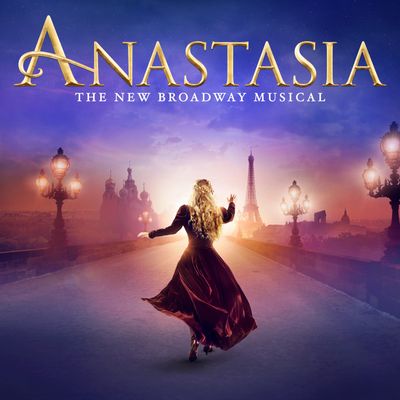
[0:09] Gordon: I'm so excited that we're including this next gentleman as a part of our podcast series, because Terrence McNally is one of the giants of the theater community. And you had the amazing fortune to work with him when you were at Stage Entertainment on the development of Anastasia.
[0:28] Pam: Oh, gosh, I was so excited for that opportunity. And I think the thing that struck me the most was that he was the definition of a gentleman, just a really lovely, lovely person. And the great thing about this conversation, as I recall, is that Terrence has such deep respect for the educators in his life, that he shed a lot of light on the valuable connection and ongoing resonance that education has for everyone in our community. And that really is the theme behind the Broadway Teachers Workshop. We're all peers, whether you're an educator, whether you're in community theater, whether you're in professional theater, we are all working together and nourishing each other.
[1:11] Gordon: Yes. And while we are, of course, so saddened by his passing this year, we are so grateful for all the amazing work that he left behind. So take a listen and enjoy this conversation. The following was recorded live at the Broadway Teachers Workshop, an annual program that brings theater teachers together with the Broadway community for behind-the-scenes classes, workshops, intimate discussions, and Broadway shows in New York City and online. Learn more at www.broadwayteachinggroup.com.
[1:44] Gordon: Please join me in welcoming Terrence McNally.
[1:59] Terrence McNally: Terrence, I think I've mentioned to you that this group is comprised largely of theater educators from all over the world. And so I thought we could open up with just a little passage from your book, which I also want to tell you guys about. Terrence has a book out, which are selected works and a memoir in plays. And it's not only a collection of some of his best known and loved plays, but there's also little sections before each play that sort of talk about its development or parts of his life that are relevant to the piece. And it is a joy to read and I think a must have. So I hope you guys will check it out. But I was struck by this one passage that I'd like to open with. I dedicated Frankie and Johnny to my high school English teacher, Maureen McElroy.
Mrs. Mack taught me to love the English language and not be afraid of Shakespeare. I wanted to dedicate a play to her that she might have heard about all the way down in Austin, where she was teaching at the University of Texas. I feared word about some of my earlier efforts had not spread to my adopted home state. When I was able to bring her to New York for the Broadway 2002 revival of the play and put her up in the Dorothy Parker suite at the Algonquin Hotel, it was one of my proudest moments of my life. I mentioned Mrs. Mack in many of my plays. I don't believe we can ever thank our teachers enough. My grandparents and parents took me to my first Broadway shows on trips to the city, but it was Mrs. McElroy who made me understand that someone had written Julius Caesar and Macbeth and that his name was William Shakespeare and he would be my friend for life. So I was just curious if you would talk a little bit about your early educational influences and did they help lead you to this life in the theater?
[3:44] Terrence McNally: Yes, I'd be happy to, but I do want to say the theme of teachers is in a lot of my work and Mrs. McElroy has profound an influence on my life as any of my illustrious professors at Columbia who had many books to their credit and legendary. Oh, you studied with Lionel Trilling or Eric Bentley, but Mrs. McElroy probably had more actual influence and she made literature and the spoken word just so exciting. And I think that's the age we win people to the arts. Oh, even younger if it's possible, but certainly in high school the hormones are raging with adolescence and to make teaching and literature and art sexy and about something is pretty exciting and it lasts for life. And I guess all of you out there who are teachers, I think you have such enormous opportunity to really make a difference.
When I write a play, if it reaches one person in the audience that night, I feel I've succeeded. I'll never write a play that all thousand people or 400 people for a smaller theater get, but if one person gets what I'm trying to say, I feel rewarded. And if you have one student that gets what you're teaching, trying to be about, you should feel so rewarded. And that doesn't mean they're going to become artists. They could become doctors. They could be civil servants, but will inform the way they live their lives, I think. And I was very blessed that my, though I grew up in Texas, my parents were ex-New Yorkers. So as a child, occasionally they would bring me on their annual trip to New York.
And when I was very young, I saw Annie Get Your Gun. It's the first show I actually remember, I think. And they would go and I remember them leaving playbills on the coffee table in Corpus Christi, Death of a Salesman, Streetcar. And they, I was very aware how those plays had touched them and meant something to them.
[6:00] Terrence McNally: Were they avid theater goers? No, they were the kind of audience that actually constituted the main audience for Broadway in those days. We're talking about the 40s now, I guess, because I was born in 38. It's after the war, certainly. It was for the middle class. Now theater, Broadway is so much for the 1%. And that's a big difference, who's sitting out in those seats then. My parents were not in the 1%. My father was a beer distributor. My mother worked all her life. But they went to the theater because it had something to say to them, not because it was, well, these were very successful plays. But it showed the impact that Broadway had on American culture then. And maybe it does not have that now, unless it's a show of such enormous success as, say, Hamilton.
But these plays by Williams and Miller are very part of the fabric of American life. And that's why they went to these plays. And I've always, so I always knew theater was something special. The curtain went up on Annie, Get Your Gun. I was like stage struck. And the next show I remember seeing was four or five years later. I saw The King and I with Gertrude Lawrence. I was about 10 then, I guess. And then that night, I went to a matinee. That night we saw Pal Joey. I'm sure I had no idea what that one was about. I'd enjoyed it, but I didn't quite get the implications. I didn't know what a kept man and gigolo was at that age. And then when it came time to go to college, my best friend and I both got accepted to Yale and Columbia.
Neither of us were accepted at Harvard. We needed scholarships. And Harvard was a, I think just a no and a no scholarship. Yale and Columbia were the same scholarships. And so we flipped a coin and I won Columbia.
[8:50] Gordon: Did you really flip a coin to make the decision?
[8:55] Terrence McNally: What we thought was silly to go all the way from, no one from our high school had ever gone to an Ivy League, gone out of state. I mean, the drill was if you were a jock, you went to Texas A&M. If you're a liberal arts, you went or didn't know what you wanted to do, you went to Austin University, UT. So when I first got to Columbia, I was a little disappointed because the campus was a little unrelenting for me. Now I think it's an oasis in New York. Little did you know. But then where are the trees? Where are the gorgeous lawns? But then my very first night in New York, I went to see My Fair Lady and at the box office, they said, are you crazy? It's the biggest, it's like if you want one of you tonight to try to get into Hamilton, they'd say, you're insane.
Don't you read the papers? There's no seats for you. So the guy said, but if you want to wait in line here, we open the box office at 10 a.m. and you buy standing room. And it was like 10 of eight as it was. And I said, what am I? No, 840 place began. So I went and saw Gwen Verdon and damn Yankees. And then I went and got in the line for My Fair Lady and sat there all night talking. I didn't sleep. It was warm. But you stayed out all night.
[9:57] Terrence McNally: Well, it was like this. It was 80 degrees. It was September. And that was my first night in New York. I saw Gwen Verdon and the next night I saw My Fair Lady. How I ever graduated cum laude from Columbia is one of the miracles. I think people who can write at all have such an advantage at a liberal arts college over there, maybe more studious fellow students. But that was pretty much my four years at Columbia, going to the theater or the ballet or the opera and studying. I loved my four years at Columbia. It was one of the best times of my life. But I still thought I was going to be a journalist. And then once a senior, Columbia has a tradition, the varsity show, which in my day was Columbia was still an all-men's college.
And Barnard was across the street, which was women. And they didn't have anyone to write the varsity show. And since I'd had a scholarship, I thought I've never given anything back. That will be my payback. I'll write the varsity show. So they put me with a young composer or lyricist who was Ed Kleban, who went on to write Chorus Line. And our director was Michael Kahn, who's run Shakespeare Theater in Washington, DC, brilliantly for many, many years. He just stepped down. And I still thought I was going to be a journalist. And my first job was a newspaper. I went back to Corpus Christi and I could see that they were the tapes, or it was film then, they were filming news stories. By the time I'd written the article for the next day's paper, they were already on the news that night, the 11 o'clock news.
And I realized that kind of reporting didn't have much of a future. And when I was a senior, I was given a scholarship or fellowship to go off and write. And I wrote a beginning of a play and sent it to Actor's Studio. They had a playwright's unit then. And they said, you show talent, but not a lot of sense about practicality. At one scene ends, the man dumped a bucket of paint over his wife's head and then said, blackout, lights up. And they said, you know how long it would take an actress to get the paint off? She can't just appear, maybe an hour later, you're going to have your next scene. And so they offered me a job as stage manager. So I got to be a fly on the wall and also get BLT for Jerry Page and Kim Stanley. And I was in a room with Kazan directing. I mean, I really, when I think about my own life, I get very envious. So whenever I feel down in the dumps, I say, stop it, stop it.
[12:05] Gordon: Yeah. Speaking of envious, I have to say that a part of the book that I found fascinating, and maybe you could talk a little bit about one of your early jobs out of school when you were hired to tour the world for a year.
[12:19] Terrence McNally: That was before I went to, no, that was after the year at Actor's Studio. One day, the head of the playwright's unit was Molly Kazan, who was the wife of Elie Kazan, who was the head of the studio. And she said, we know a family that wants to tour, go around the world for a year with their two sons. And they've interviewed a lot of professional tutors, and they just don't find them compatible as the kind of person they want to spend a year with going around the world. Would you be interested? And at that point in my life, I had barely traveled. And I thought travel is great. And I always knew about the grand tour that families of means, and even middle-class families, should be part of your education.
You went to Europe for a year. So I said, that sounds interesting. Yeah. And she gave me the little card and said, be there at eight. It said, John Steinbeck. I said, oh, like the writer? She said, it is the writer. So I spent a year going around the world with John Steinbeck, his wife Elaine, and their two sons.
[13:14] Gordon: Were you aghast when you realized that it was John Steinbeck?
[13:19] Terrence McNally: Just then, once I met him, he was just another person.
[13:21] Gordon: And did he help influence you as a writer at all?
[13:29] Terrence McNally: Well, I asked him once for advice. He said, don't write for the theater. It will break your heart. And I said, what do you mean? John Steinbeck, they'd been sort of forgotten, but he did write two original plays, The Moon is Down and Burning Bright, I think. And they both did not last very long.
[13:42] Terrance McNally: I said, but you also wrote Of Mice and Men. That was adapted from the novella, Came First, but like all the creative people I know, they only remember their bad reviews, never the good ones. So to John, the theater was where he'd been humiliated with these two plays. So that was his only advice, was don't write anything but at the theater. It'll break your heart.
[14:09] Terrance McNally: After your trip around the world, did it live up to your expectations? Oh yeah, yeah. But I didn't try to write or I just really enjoyed getting to be at these wonderful places. Right. And did you have in your mind like, I'm coming back to New York and I'm going to write again? I'm going to, you know, was that- It was more when I get back to New York, I got to find a job and, you know, do something. Right. I'm sorry my answers are so long, but- No, no. The play I was working on that I sent Actor's Studio got a production on my first play and it was done on Broadway, which now sounds so absurd that someone would put a play on Broadway by a 24-year-old writer who'd never had a play performed except the Varsity Show in Columbia was my primary credit.
But- Who were the producers? I mean, how did that come about? Ted Mann and Paul Libin- And they just loved the play and they said, let's do it. They liked the play. They thought it had great possibilities and the critics thought otherwise. And I went back to work in journalism as an editor on a magazine. And I found it very hard to come home at night after a day of editing other people's work and do my own. And someone said, you should apply for a Guggenheim. And I thought, there's no way I'm going to get one. And I did. And ever since I got the Guggenheim, I have some years barely sustained myself as a writer, but I've not driven a cab, waited on tables or any of those or been an editor at a magazine, which was all the kinds of work I was doing to make ends meet.
[15:44] Terrance McNally: But my first apartment in New York, and this is important, how the real world does affect the arts. My first apartment was on Perry Street, which in West Village now is prime, prime real estate, probably the most expensive place in Manhattan you can live. I had a one-bedroom apartment in a lovely old federal house and it was $45 a month. Now you can't get your foot up the front stoop for $45 a month. And this has affected the arts. It's really hard for a young person to come to New York. Now everybody has a roommate and it's not a euphemism for something else. There's someone to share the rent with and they're living in Brooklyn and Queens and the Bronx. And oftentimes with $100,000 of debt from college saddled on top of it.
I needed a scholarship for Columbia and I remember my tuition was $2,000 a year, $1,000 a semester. And now it's like $35,000. And that student loan did not exist in my day. I think anyone who goes into the arts now has many, many more challenges to face than my generation did. I was in at the very beginning of Off-Broadway. It's not true literally, but the feeling was you'd finish a play on Friday and go into rehearsal on Monday. That's what it felt like. It's probably closer to finish a play on Friday, next month go into rehearsal. But it was this development, years of workshops, readings, notes, all that. That's all happened in my lifetime.
[17:25] Terrance McNally: And do you feel, obviously for musicals it's especially long, the period of development and finally getting something to the Broadway stage. Generally speaking, how long is it to get a play of yours to Broadway? That's changed enormously. So musicals, Anastasia, I was approached about writing Anastasia little over four years ago now. Not one word of it had been written. Other musicals, Ragtime was more six or seven years in development. So it changes all the time. The new play I just spoke of, John Doyle read it and liked it and said, I want to do it at CSC. We have had no workshop, anything.
[18:10] Terrance McNally: Wow, you're just going to jump in. It's interesting because as I was looking over your body of work in preparation for this discussion, I was struck by how you're one of the few people that sort of moved seamlessly from writing plays to writing books for musicals. And I just was curious if you want to talk a little bit about the process for each and do you love the other when you're doing one and want to do one when you're doing the other? For me, they're very different muscles you use. Your job as a book writer is to write a really good play and the composer and lyricist read it and say, that would be a great song. That would be a great duet. That's a great choral number. And then they cannibalize a lot of your most wonderful lines and you have to feel grateful.
Whereas the play, you're the only author. Anastasia has three authors, myself, Lynn Arons, the lyrics and Stephen. So it's a collaboration, all theater's collaboration, but the creative, the actual words on a page, notes on a page in a musical is very, very different than a play. I don't prefer one more than another. I just think it's easier to write a play because you don't have all these meetings. I've got a dentist appointment. I'm having my hair done. It's a million reasons to why it's hard to say we're going to finally meet Friday at 10 AM. The play, you just get up and turn on the computer.
[19:43] Terrance McNally: And are you a disciplined writer? Are you someone who works every day writing from one hour to the next or is it come in fits and spurts? I think I'm fairly undisciplined. I like deadlines. It goes back to my, I spent a lot of time, more time than maybe we've talked about today in journalism, where if the story has to be, oh, this is, hello. Excuse me. I've never really mastered the eye. What is it? Eye watch, Apple watch. If the editor says the story has to be on my desk at eight, it has to be at eight in a newspaper, or you're fired on the spot. You can't say to an editor when I get the mood or the inspiration to write the story. So it's good training for the theater when a scene isn't working and you say to the cast, I'll bring the rewrite in tomorrow morning.
If you have to stay up all night, you've got to bring it in and hope it's better. Because sometimes you stay up all night and they say it still doesn't work or it was better before. So I think that's me. Neil Simon said he wrote every day of the year, including Christmas, New Year's, and Thanksgiving, which I found, Neil Simon would not have taken the trip around the world with John Steinbeck either. That's the difference between us. When I know what I want to write, I'm a pretty quick writer. I think about my plays a long time. There's no point in wasting your life and staring at a blank screen. And I wait until I can't wait to start telling the story.
[21:21] Terrance McNally: The other thing that I found interesting in reading the book was that you talk about how you've had these amazing actors in different productions of yours and that you've been able to write for a specific voice time and time again. And I was thinking about your first sort of really big commercial musical, which was The Rink. And I was wondering what was it like to have Chita Rivera and Liza Minnelli as muses for that project? Well, by the time Liza got involved, the show was pretty much written, but it was always for Chita. And it was just wonderful. When I was at Columbia, West Side Story made its debut and I thought it was such an amazing work. And she was so brilliant in it. They all were, but especially Chita.
But I've always, maybe it's because of the early shows I saw as a child had such enormous personalities in them like Ethel Merman and Gertrude Lawrence. I can remember Gertrude Lawrence today as vividly or more vividly than someone I saw last week. And I have the same feeling when as a student at Columbia, I went to Stratford, England and saw Zoe Caldwell, who was virtually unknown then. Tyrone Guthrie had found her acting in Australia and brought her to London and she was doing All's Well That Ends Well. And so one of the great full circles of my life was to write a play for Zoe. The first play of mine she did perfect and actually I did not write for her, but she agreed to be in it. But watching her rehearse, I thought, gee, I can really write a better part for her.
And that's one of the things that gave an impetus to Masterclass. And I think it's very important that the premiere of a play have the best cast. I've seen a lot of productions of Masterclass that if that actress had opened the play on Broadway, it would not have won the Tony Award. It would not have been produced in almost every language you can think of. And I've gotten to go around the world again, just on people inviting me to see a production of Masterclass in different countries. But it's because Zoe created it. If a mediocre B-team actress had created it, it would have closed after a week or two.
[24:02] Terrance McNally: I think it was one of those great experiences where the role, the words, the actor come together in a way that one can never predict, you can't plan. And it was just such a magical thing that I'm sure it was hard to find someone who comes close. Well, and someone who had such a... I wrote about it pretty much in the book about seeing Zoe and it was seeing her in that production that made me want to become a playwright as opposed to just a writer. Because in public, I tend to be a little shy. I certainly would be a terrible actor. And to say my most passionately held beliefs in my own voice, I know Zoe is going to say them for me or Nathan is going to say them for me, makes a big difference. Not that they always do my plays.
When Zoe, she read Masterclass, I waited. It's a funny thing when you give someone a script and they haven't called you within an hour, you're mad. Why haven't they read it yet? If they call you within two hours, how could you have read it so quickly? You didn't concentrate. So it took about two days and I was like, brr. And she said, I don't get it. I don't want to do it. I said, what? Were you crushed? What do you think? Of course I was. I said, what do you mean? She said, it's a one woman show. I said, no, there's... I don't understand one woman show. I just did Lillian on Broadway. I don't want to do another one woman show. And she said, I know nothing about this world. I hate opera. So I said, well, can we just read the play?
And we did a reading and she said, well, and I said, I know a place we can try it out. Big Fork, Montana. Have you ever heard of it? She said, no. I said, neither have I, but they invited me to come and bring an actor or two to work, to do a reading of this play after a week's rehearsal. So the world premiere of Masterclass was held in Big Fork, Montana. Has anyone ever heard of it? Yeah. Wow. It was spring and everything was thawing and it was very squishy. The earth was like a sponge. So we read the play and they really responded to it. And in fact, I said, if it works for this audience, it'll work anywhere because we're all nervous. This play is only for opera lovers. And I do, I like Q and A after these events to learn something and one person, yes.
And he said, I asked the actress a question, Ms. Caldwell, are you a professional actress? And she said, yes. He said, you're very good. She said, thank you. After Zo had won four Tony awards, but news of the Tony awards does not get to Big Fork, Montana. So then we thought maybe we had something.
[26:29] Terrance McNally: And so you've had, there were a couple of plays that have had sort of opera themes or your love of the opera running through them. Can you talk a little bit about what drew you to the opera when you were, you know, originally, what was, what was it that appealed to you? Well, one day I went in and out of parochial schools as a young man and about the fifth grade, very young, our nun came in with a big phonograph and some records. And she said, I want to play some opera for you. And I liked it so much instantly. And if there are 30 in the class, I was the only one listening. The other 29 are doing spit balls and writing and whatever mischief. And I just like, Oh my God. And I just started buying opera records and had a job at the Robin hood cafeteria. I had to wear a green hat with a feather and tights. And my family would come in with my brother and I.
[27:25] Terrance McNally: My job was to carry trays for elderly people, and I just felt like a fool in this outfit. But then I'd go across the street to the record store, and they had a layaway plan where I'd give them another dollar. And eventually I had a nice little collection of opera, and I was like, not even junior high school. I just liked it. People say, how do you get to like ice cream? I said, I don't like ice cream. That's how it was with me and opera. One of the reasons I was really glad I got to go to Columbia was Michael Kahn and I stood in line for about two days to go to the American debut of Maria Callas as Norma, and that was worth the two days wait. And these are why I say to people, if you really love the arts, the performing arts, New York ain't a bad place to get your education because you don't get Maria Callas in Austin, Texas.
So all of this, I always liked opera. And opera, my plays are filled with arias, duets. I think my plays are written more for performers than extremely naturalistic actors. I think there's a theatrical, I don't think I write naturalistic, I think I write realistic plays. And I hope they're emotionally accurate, but I'm not interested in kind of rock and grown acting style, which we do very well in this country and it has its virtues, but not in my, my writing is more formal and I don't pretend that's what people really sound like. It's literary. And some of you may or may not know, but you've written three operas, is that right? Three?
[29:00] Terrance McNally: Two, for sure. And the last one was in Dallas. Dallas, yeah. And there, I wish we'd had a workshop. The opera is very different because you can't make changes with an orchestra of 80, even changing three bars is hours of manpower to rescore it for the oboe, the flute, and the singers arrive with their parts learned. So it's very different. And the piece was too long for a comic opera, but it's got glorious moments in it. And I think if we really find the time to revise it, it will become as popular as Dead Man Walking, which I'm happy to say is officially the most performed 20th century opera in this country. And the Met is going to do it in two years.
[29:51] Host: Oh, that's fantastic.
[29:52] Terrance McNally: So that's going to be a pretty... Thank you. That will be one night I want to live for. I was going to say, that's a dream come true. Come out afterwards with Jake and a wonderful mezzo, Joyce DiDonato is going to be the lead. And the woman who created the role originally in San Francisco is going to be playing the mother, the second, the mother of the condemned man. So if you don't get it right the first time, I do believe in working to make it right. If there's enough there, I've had projects that didn't pan out. And you say, let go. It's not worth it. Great Scott is worth it. It's an original libretto, which is very tricky because there's so much information for an opera to convey, just helps.
See, Dead Man Walking, even if you hadn't read the story or seen the movie, read her book, you knew when you went in, it's going to be an opera about a nun who is an activist against the death penalty. Great Scott, no one knew what it was about. And at the end of the first act, people literally said they didn't know where the opera was taking place. I mean, you sometimes forget basics. And the set did not help. You know, that's where a production can... It looked like it was going to be a tragic opera. It was trying to be a comic opera, but you don't have previews or anything. You barely get through a dress rehearsal and it's opening night. Anastasia had three weeks of previews and after every performance, we would make notes, little changes, got better and better and better. The opera opened that night and no more rehearsals. And so Jake and I, Jake Hagee, the composer, were very frustrated. We could not improve it.
[31:42] Host: Get the work done that you wanted to do.
[31:43] Terrance McNally: Yeah, we wanted to do. But it's a very different beast than a play or musical. And just because I literally don't know, what's the development process like for the opera? Is it sort of the same?
[31:49] Terrance McNally: It sort of is in one. You sort of do it. You just do it and then you have to-
[31:53] Host: And hope.
[31:54] Terrance McNally: But 99% of the operas being done are Traviata and Carmen. Everyone knows you can do a radical performance of Carmen where, you know-
[32:03] Host: It's reconceived somehow.
[32:04] Terrance McNally: Yeah. So it's a different world, opera than-
[32:10] Host: Than musical theater.
[32:11] Terrance McNally: Than musical theater. Yeah. And musical theater, when I first came to New York, shows still toured before they came to New York, prior to Broadway. And almost every famous musical of that period, this is the 60s, which is referred to now as the golden age. Almost every one of them, there'd be a small story in the New York Times saying, hello Dolly, postpones New York opening a month. And they'd be in Chicago and realize there's more work they wanted to do. And they take it to another city before they came to New York. The road died because of the expense. And the main change between theater when I came and now almost 50 years later, is everything is automated from the deck underneath. The theater I started in, everything was hung on ropes and flats.
They came up and down. So you could make a set change like that. Now to tour a show, it sometimes takes four or five days to set the show up before you can perform it, because it's all on the floor and it's controlled by computers. So it's great once the show's up and running, but it's made traveling a show. The production that we take on the road of Anastasia, no way will it be as complicated as the one in New York. My Fair Lady, I know I'm probably the only one in the room old enough to have seen the original, but it's a very elaborate show with three turntables, balls, and Elijah coming down the staircase. That show closed in, the first run was in New Haven, four performances, closed Saturday night and performed on Monday night in Boston.
That would just be so impossible with Anastasia. It would take four or five days to just get in the theater and it's all in the floor underneath. It all used to be up in the rafters. You don't really need all that loft space anymore. And that's a huge, it's interesting. I don't think a lot of people, and even the playwright doesn't always know this, the technical aspect, how it affects the artistic side of things. There's a moment in Anastasia, we thought it was ready to open and someone came running out and said, we need four more lines here. Terrance, you got to write four lines. I said, why? They said, we've tried with six people. She cannot make the costume change fast enough. We've tried everything.
So I had to come up with four convincing lines that didn't sound like they were written for that moment. But she literally, she had people undressing her, people dressing her at the same time. It was like one of those pit stops in the car races. And sometimes the actor walks out like this, and just a second before they were undressed, the wig was askew. And that's the stuff that, I never really, because I never studied theater, the practical side of it. I didn't know how much goes into the backstage side. And why now they want the final script six months in advance because of the design. It's gotten so complicated on a technical, you just don't paint a new drop and you're going to have to set tomorrow. It's weeks. So-
[35:27] Host: Yes. Well, and speaking of Anastasia, I think I mentioned that this group is seeing Anastasia tonight, right?
[35:34] Terrance McNally: Yeah. So I just thought we could spend a little time about that project. How did it come to you and what was the development like for that piece?
[35:39] Terrance McNally: Well, as I said earlier, I think we, from the first phone call was in February of, what are we now? 17, 13. I was in London and I'd worked with Lynn Ahrens and Stephen Flaherty on Ragtime and The Man of No Importance. And I was aware of this movie, but I'd never seen it because I had a thing about cartoon movies. And I said, I don't think I'd be interested. They said, well, just look at it. And the plan was to open it in Moscow. And they're like, oh, I get to live in Moscow. Then that's where I- That sounded interesting.
[36:12] Host: Yeah. And they wanted to go in rehearsal in September. So we had like four months to write it. I thought this meets all my desires. So great. So we had it done by September. We read it and the producer said, this is so good. We don't want to waste it in Moscow. You wouldn't get the production you deserve in Moscow. And that sort of took us aback. And then we started making plans to do it on Broadway. And then we did a tryout in Hartford last year.
[36:42] Host: And when you finally watched the movie or became familiar with this-
[36:47] Terrance McNally: Once they asked me, I watched the movie and I watched the Ingrid Bergman movie. What was it that sort of grabbed you about the story that turned you around?
[36:57] Terrance McNally: I think the contrast, I knew right away, the most famous song in the movie was Journey to the Past. It opens the movie and I said, it's the perfect act one finale. And I wanted to do an act in Russia, Soviet Russia, with the repression and dark and cold and gloom. And then the second act in Paris, spring light, creativity, Picasso, Stravinsky, the explosion of the arts, women wearing short skirts and bobbed hair. And I thought that would be, oh, that's theatrical. And then of course, get to write my version of the scene between her and the Dowager Empress. And I created some new characters because the cartoon has a singing albino bat in it. It's really tough. I could not bring much conviction to that character.
And I added, made up some characters and, you know, Gleb, who is the sort of protagonist, the antagonist in the stage version is totally original Soviet KGB kind of guy. And so I made it enough of my own to, while utilizing the, I think it's five songs from the movie, the rest of the score, the bulk of the score is brand new.
[38:13] Host: Yes. Right. I have to tell you, when you talk about what drew you to it, we had our first session last week and one of the teachers came up to me after the performance of Anastasia and they said, I loved it. I felt like I went on a trip, you know, I felt like I went on a world trip. So, you know, in a way I think you accomplished what you were setting out to do.
[38:31] Terrance McNally: Well, it's a beautifully designed show. And I think it's thrilling that the two leads in the show are both sort of making their Broadway debuts. And, you know, the show rests on the shoulders of two people in their early twenties. And I think that's thrilling. And I think they hold the show up proudly. And I love being part of passing the torch. I think that's really important. And it was a wonderful experience working, but I entered maybe with the wrong motivation, ended up being very good. And friends of mine who went sort of the same time we would have done Anastasia in Moscow said, you dodged a bullet. They found working there very, very difficult. Both the cultural climate and the current regime, very unpleasant.
And they said they found the stage craft in Russia a good 15 years behind ours. You know, like the word transition does not seem to have entered the Russian vocabulary and every scene ends with a blackout, lots of hammering backstage while you, you know, and make 30 seconds later, hopefully the lights come up on the next scene, but that kind of free flow between scenes that our musicals have, they don't seem to have mastered that yet. And so maybe it worked out all for the best, but culturally they also did not like living in Russia for three months.
[40:00] Host: Really?
[40:01] Terrance McNally: Yeah. They said the antisemitism and the homophobic stuff is, and since Stephen and I are both gay and Lynn is Jewish, we probably did the right thing going to Hartford instead.
[40:21] Terrance McNally: It was cold enough in Hartford. We opened, we started rehearsing in a blizzard and someone said, we might as well be in Russia after all.
© Broadway Podcast Network, All Rights Reserved