

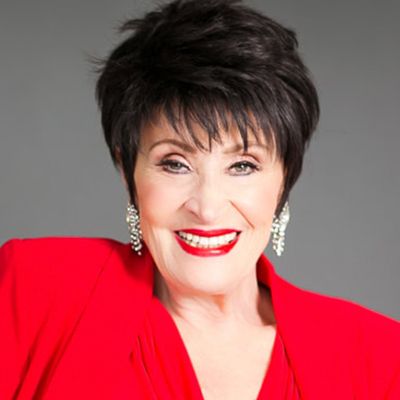
West Side Story, The Rink, Chicago, Kiss of the Spider Woman. Need we say more? Chita Rivera was an inspiration in this 2020 interview where she shared many backstage stories along with words of wisdom to anyone looking to make a life in the theatre... Read More
From the show: Broadway Teachers Podcast
Guests
Featured Shows
About
West Side Story, The Rink, Chicago, Kiss of the Spider Woman. Need we say more? Chita Rivera was an inspiration in this 2020 interview where she shared many backstage stories along with words of wisdom to anyone looking to make a life in the theatre. She discussed what it was like to work with her legendary collaborators: Bob Fosse, Jerome Robbins, Fred Ebb, John Kander, and Terrence McNally, to name a few. Her talent, positivity, dedication, and perseverance all add up to one word — legend.
Transcript
This transcript was automatically generated and might contain errors.
[0:00] Host: Hello and welcome back to the Broadway Teachers Podcast. Hi Pam. Hey Gordon. And what a treat everyone has today to listen to this interview with Chita Rivera. It was an absolute honor to get to talk to her. I, you know, you have those people that you look up to your whole life and sometimes when you get the opportunity or the good fortune to actually meet them, they can disappoint or it doesn't quite feel like what you thought it was going to be. And talking to Chita Rivera was the exact opposite experience. She was so warm, so generous, so kind. She had so many great stories that it was, it exceeded my expectations. And I was so happy that someone I looked up to for so long was a genuinely wonderful person. So I ask you all to sit back, relax, and enjoy this far ranging conversation with Chita Rivera.
[1:23] Host: The following was recorded live at the Broadway Teachers Workshop, an annual program that brings theater teachers together with the Broadway community for behind the scenes classes, workshops, intimate discussions, and Broadway shows in New York City and online. Learn more at www.broadwayteachinggroup.com.
[1:36] Host: I could not think of a better way to wrap up this week than to have a conversation with our next guest. I am so thrilled that she's here. Please join me in welcoming theater legend, Ms. Chita Rivera.
[1:44] Chita Rivera: It's Chita here.
[1:45] Host: Hey!
[1:46] Chita Rivera: And we're just going to share. You are fantastic.
[1:50] Host: There I am. How are you?
[1:52] Chita Rivera: I'm going.
[1:53] Host: I was going to say, how are you doing? How are you surviving these crazy quarantine times?
[1:58] Chita Rivera: Well, this is a great way to survive it. You know, to talk to people that stimulate you, that you can express your feelings to. Unfortunately, I wouldn't wish this on anybody, and yet everybody is going through this.
[2:12] Host: That's true.
[2:13] Chita Rivera: Yeah. And so we just have to, we have to be aware of each other, which sometimes through our lives, we are not. And we have to be charitable and caring and learn more about each other. And so, you know, during this time, we just have to, we have to do something about ourselves. Now's the time to clean up.
[2:40] Host: Indeed. Indeed. Now, I think I told you when we first talked about this, that you are speaking largely to a group of theater educators from all over the world. And so I thought to just jump in, I would love to hear who were the teachers that made a difference in your life growing up?
[2:56] Chita Rivera: Well, I had, well, gosh, if Rosie comes back into the room with my daughter, Lisa, I'll show you a picture of Mr. Obuko. But my very first, Rosie, can I have the picture of Mr. Obuko, please? My very first teacher, because I had, I was such a tomboy and I was constantly climbing trees and throwing pears down at people and walking back fences and riding my bicycle and skating that I was such a tomboy. And I used to jump from furniture to furniture in the house. Well, one day I missed and I went into the cocktail table and I broke the cocktail table. So mother said, I have to do something about this child. She's going to break, she's going to have us in the street. So she put me in the most wonderful ballet school.
I was very, thank you, very, very fortunate that her name was Miss Jones. And I used, unfortunately, I just used the past tense. I hate using that because I do believe that people still live within you and especially your teachers, especially your teachers. And by the way, we all are teachers. It just means the experience you've had in your life and how you dedicate your life. But anyhow, I joined Miss Jones's ballet school. She was from Boston and she had an assistant and Louis Johnson, Arthur Mitchell, wonderful ballet dancers came from that school. And Mr. Balanchine from New York City Ballet wanted to send some scouts down because he had heard Miss Jones had really good dancers and their training was excellent.
And this is luck mind you, luck plus I did the work. You have to care. You've got to want to dance. You have to want to do whatever it is that you've decided fulfills you and you can express yourself through. You must give you 150% if you can. And so Mr. Balanchine sent down the head of New York City Ballet, sent down the scouts and Louis Johnson and I won scholarships to the New York City Ballet Company, New York City Ballet and the American School of Ballet. And so that was my first teacher. Well, within that school was Mr. Balanchine and Miss Reynolds and Madam Dubroska and this was Mr. Aboukal. Now that was my teacher. He was the meanest. I mean, he was so, but we didn't think he was mean.
We didn't think he was mean because he had the things that dancers are asked to do because we are athletes. I don't think we would even attempt them if we were not taught properly by our teachers. If the teachers didn't tell us, you can do it because they are on the outside looking in. We are feeling it, but they are on the outside looking in. So Mr. Aboukal was tough because he had to be. And thanks to him, and by the way, he's the only outside of Jerome Robbins on my fireplace framed and a statue of Jerry, the only ballet teacher I have on my fireplace. So that is a dedication, Mr. Aboukal. 100%.
[7:02] Host: Well, listen, you mentioned Jerome Robbins and I feel like there's such a vast body of work to cover in such a short time. I want to touch on a few key iconic roles that you created. So let's talk a little bit about West Side Story. I'm curious, was it an offer only to you or did you have to audition? What was the audition process?
[7:23] Chita Rivera: I was doing a show called Mr. Wonderful at the time with Sammy Davis Jr. It was Sammy's first Broadway introduction. And I remember being such a little snob. I had the audacity to think because the whole first act was Olga James, Carter. Oh my gosh, I forgot his first name, but a wonderful comic. And myself and of course Sammy and the Wilmeston trio. And the first act was the play, the script. The second act was Sammy's act that you could go to Latin Quarter or you could go to a nightclub and see. Well, I was a snob and I thought, what is he doing in the theater? This is the theater. You don't have nightclubs. Did I eat my feet, my hands, my legs? I ate everything because Sammy Davis Jr. is and always will be one of the greatest entertainers in the world.
And we had the opportunity to sit and watch his club act every single night in Mr. Wonderful. But from that show, D.D. Ryan, a wonderful, wonderful friend of Sammy's and became a friend of mine, said to me, there's a show called West Side Story and you'd be perfect for that show. Why don't you get your agent to see if he can get to an audition or something like that? I said, oh, okay. This is why I'm telling these kids, I'm glad you asked this question, because you never know where something is going to take you. That's why you have to be ready. You have to be in shape and you have to have your teacher's voice in your ear constantly. And so I didn't know that this show would last forever as it has.
It's a classic and I auditioned for it. I auditioned with Kenny Leroy, who became my Bernardo, Carol Lawrence, who was Maria, Larry Kirsch, who was Tony, and Jerome Robbins. I thought, what a great show. And I auditioned for it. What a wonderful idea to do this, Romeo and Juliet. But you think only of the job. You don't think some great artistic piece, because you haven't seen it.
[10:22] Host: And that's funny. My next question was, in the rehearsals or even the previews, did you have any sense that it was going to become the monster giant?
[10:31] Chita Rivera: No. Well, first of all, you can't unless you have a glass ball and you're a fortune teller. You don't know what's going to happen in the future. So you have to do your best every single time you step out there. You have to do the very best you can, because you never know. That may be the performance. That may be the one that some kid is about to commit suicide and some kid says, come to see West Side. And they do, and they have another life. But you never know. No, when we were doing it, we were living it. And that's what was exciting, because the life of Anita in West Side was an exciting idea. I didn't mind being that woman, that young girl. I thought Carol Lawrence's Maria was written beautifully.
I thought every single part. So we lived it. And what was really funny, which I tell this story all the time, you probably, maybe you've heard it, maybe not. We walked into rehearsal and Jerry Robbins said, all right, you're the Sharks and you're the Jets and you don't like each other. Right. And you know, and so we
[11:51] Chita Rivera: He said, so you don't talk to each other. I don't want you talking to each other. I don't want you having lunch with each other. I don't want whatever you do outside the theater is your business. But in this theater, you do not speak to one another. You don't like it. Okay. So we rehearsed in one room with Peter Gennaro, one of our great choreographers, and the Jets rehearsed in the other room. Totally separate. And you not only don't speak, you don't eat. I didn't do either one of them. What I did do was I fell madly in love with Anthony Mordenti, who was a Jet, who played A-Rab, who was my daughter's father. I did not just speak to him. I married him. I had his baby. So I went all the way. So I have a daughter who's extremely gifted and adorable. And she is a shark, half shark and half Jet. And I don't think there are any others existing.
[13:01] Chita Rivera: Oh, that's great. Well, let me ask you this. Since you have the photo of Jerome Robbins on your fireplace, he has a reputation of being a very, what should we say, a challenging person to work with. How was your relationship with him throughout that show? Well, mine was, well, first of all, it was a long time ago. And I am still very much that person. I think that respect and acknowledgement for the craft and the brilliance of someone's gift or just their person is a necessary thing between human beings, period. So you have Jerome Robbins, who is a brilliant choreographer. Are you going to say to Jerry Robbins, I don't think that step, that would not step look a little better? I defy you to do that.
That is the dumbest thing. You have to do exactly what you're told and he will, or they will, whomever the Bob Fosse, Jack Cole, whomever the choreographer, director, teacher is, they will tell you whether or not it's right because they chose you. They know the element that you're bringing to the play. You don't really know until you've done, until you've worked through the creative, the creation because it is a creation. So we had no idea. We just came in every day, did as we were told, loved what we were doing. We were challenged every single day.
[14:49] Chita Rivera: And dancers like to be challenged. They like the temptation of doing something that you can't, you don't think you can do. And then all of a sudden you find out that you can. Amazing. It is amazing. It's a wonderful thing. You have to raise the bar, right? You constantly raise the bar because as you, as you, as you live through your life, you know, you have injuries, you have to work with the injuries. You have changes in your body, the older you get. So seeing other things happen within your being. And that's, what's so great about the arts because you also are working with brilliantly creative people. I mean, Terrence McDowell, we just lost just recently and he's still so much alive to me because Terrence was responsible as was Fred Ebb and many great lyricists and the brothers.
Um, they, they put words in my mouth. They made, they turned me into characters that I understood and I became a bigger person because of these people that I was introduced to during the creation of certain shows. So we are really, very lucky to be in the arts. Really lucky.
[16:24] Chita Rivera: And, and gosh, the list of people you've had the opportunity to work with. I mean, it's amazing, but, you know, we just talked about Jerome Robbins and then, you know, another unbelievably important choreographer, Bob Fosse. I mean, on Chicago with him. And I'm just curious, did you watch the Fosse-Verdon series? That was the miniseries?
[16:45] Chita Rivera: I watched, I watched part of it and I didn't, so I didn't watch all of it because, because I know them so well, my time with them, that I didn't want to see an interpretation that might've been wrong in a certain situation. So I saved myself. It was purely selfishness. Selfishness. I am sure that the characters that they played, I hope, hopefully they, they were accurate and wonderful. I'm sure they were, but I chose not to watch all of it. And so I'm fine with that because I knew, I knew them.
[17:34] Chita Rivera: Yeah. Yeah. And how, it must've been interesting too, for you to have gone through the original production and then see the sort of revival that came up and is now been a part of the landscape for so long. You know, and, and, and I believe you did, you did part of the revival at one point too, didn't you? Was it?
[17:53] Chita Rivera: I did. I did it at the opening of the Mandalay Bay Hotel in Vegas. And I said that I would never do, that's why you never say never. I would never do the new version because I was there when it came out of Bob Fosse's mind and heart. And I was there when I, I watched the brilliant Gwen Burton and the Jerry Orbecks and the wonderful dancers of Ben Brings and all of them. I was there. So I don't need anything else except the Mandalay Bay came upon us. And I thought, well, this is, this is very interesting because it's the opening of a brand new hotel. Why shouldn't this be done the very best it can be? And so I, something put yes into my mouth. God put yes into my mouth and it came out. And I was very glad that I did.
I'm, if I had to weigh a scale, you know, if I had a scale, it would be like this because I did the original and I worked with Bob and Gwen. But the Annie, I thought Annie Reinking did a beautiful job. And also a lot of wonderful dancers had the opportunity to do a form of, of Chicago. And, and, and why should they not? You know, they should be able to have that experience.
[19:31] Chita Rivera: I unfortunately have seen performances where, pardon me, some of the dancers think that they can add on to Bob Fosse's choreography and you can't do that. You have to stick with that or make up your own.
[19:56] Chita Rivera: Yeah. I want to circle back on something you said before you were talking about having to make adjustments with injuries or things that come up in terms of your performing. And I don't know if everyone knows, but there was a time in your life, you were involved in a very serious car accident and had, you know, your leg was, was badly injured. And yet you came back from that to go and do Kiss of the Spider Woman and win your second Tony award, which is just so inspiring to me when that happened. Did you, did you always know I'm going to be back? I am going to be back on that stage.
[20:27] Chita Rivera: Absolutely. And you know, who did that? You know, who enabled me to do that? My teachers, my background. Absolutely. They gave me the backbone, the will, the drive. Uh, it never entered my mind. I remember Gary Crist, who was a wonderful, wonderful dancer, Fosse dancer, ballet dancer. He's he, he, I think he puts, um, uh, Chicago on across the world and, um, he said to me, he calls me up and he said, now I broke my leg, my left leg in 18 places. So I had two braces on my leg. And, um, Gary calls me and says, Cheetah, you're just going to feel different. And I went, oh no, I'm going to be exactly the same way I was. Well, you are different because you wake up every single day, a little bit older, a little bit, whatever you are different every single day.
And you have to accept that. And that's fine. It's fine because we have some things to look forward to. So I, when I recovered and I recovered because not only did I want to, but I wanted to do it for the doctor. I'll never forget that.
[21:57] Unknown speaker: Pardon?
[21:57] Chita Rivera: I said, you're a people pleaser. You needed to please. That's what we are. We have to please ourselves to know we can do it. And then we have to, first of all, we have to please that teacher. We've got to get her. Okay. But, or him. Okay. He's okay. Um, but I remember walking up and down that hall and he would say, all right, now, let me see you walk in a straight line. And I would, I was challenged to walk in a straight line so that he would see how wonderfully he did my operation and that, and I would see how wonderfully I was recuperating. So I think it took me and yes, things became different.
[22:40] Chita Rivera: Um, cause I can tell by my shoes, you know, one shoe is a heel on one shoe is, um, used a little bit more than the heel, but I would never tell you. Well, I just did. But I want the kids to know that their teacher's voice is always, you know, or whatever it is they've seen that they love and they want to be like, yes. Keep that in your mind because you can do it.
[23:01] Chita Rivera: Well, it must've been all that more sweet that you won the Tony award for Kiss of the Spider Woman. I mean, that was really, I mean, talk about a triumphant return.
[23:27] Chita Rivera: Well, that, that was, uh, that was luck. Uh, I must say you have to pray that you have good luck. Also, you have to have the luck. You have to be ready for it. You have to be in shape.
[23:42] Chita Rivera: Yes. And you have to be willing to do whatever it is you have to do in order to make that a reality. So when I say perfect timing, I suddenly made great friends with Fred Ebb and John Kander and Terrence O'Connelly. And they made me whatever it is I am today. Their shows were brilliant, brilliant shows. And Hal Prince directed that show. Amazing. Amazing. There's one more thing I want to talk about before we open it up for questions. I remember reading when you were working on The Visit on Broadway, I remember reading a New York Times article that kind of outlined in great detail your pre-show rituals, when you got to the theater, what you did at the theater. And for those who might have missed that article, I'd love for you to talk a little bit about your routine when you're in a Broadway show.
Well, when I'm in a show, first of all, I love walking through that stage door. There's nothing like it. You pass the doorman or the doorwoman and you say hi. And I'm always at least an hour ahead of when I'm supposed to be in. And let's say an hour and a half, and I go, I'm now picturing the Rialto, the theater that The Visit was in. The Broadhurst. The Broadhurst. And so I walked upstairs and unlocked my door and then I would close, oh, I would never close my door. I always have, I went to Japan and I saw and became friends with some of the Takarazuka, the brilliant female company that they do the male roles and the female roles. They're very famous in Japan. So they gave me a beautiful curtain, Japanese curtain.
And so I would undress and then I would take my, I would stretch. And my favorite stretch is, oh, I'm feeling it now. I take my legs, I lay on my back. I take my legs and I put my knees behind my shoulders. So in other words, I'm in a perfect ball and I just rock there and that warms up my body. And then I do my second positions. And so I do about a half hour, sometimes 45, but a half hour of warmup. And then people start to come into the theater and they know my door is never closed. And which means they're always welcome. But I have my privacy before anybody comes in that theater. And as I get ready, I have an altar. And because I don't believe that we can do anything really alone. And so on my altar is a beautiful statue of the infant Jesus Prague that was given to me by Father William Shelley from St. Malachy's Catholic Church here.
And this is long time ago. And I have a little statues, you know, and then I have the names of people that I want to remember. And I want to say a prayer for. And so I say my prayers. I pray for my friends. And when the funny part was when it got out that I had names on my altar, everybody wanted to be on that altar. Everybody said, go say a prayer for me, say a prayer for me. But the most important thing was my, I asked God to let me say the right words, sing the right lyrics, give the right intention for that performance. Let me do what the creative team expected from that play. Let me please that audience. That's all I ask because that's all you're asked to do for two and a half hours, three hours.
That's amazing. That's amazing. Well, it's nice. It's very nice. It makes you comfortable and you become from a solid place. Yes. Excellent. Well, we have so many questions. I feel like I need to let these folks have their say. So the first one, the first one is from Annalise Setafrati. And she asks, with a career as legendary as yours, how different is it now from when it was when you first started? And what do you see as the future of theater? Well, I don't know about the future of theater because of this pandemic. There are going to be different rules, but we are still artists and we still have the same responsibility to speak and to dance and to sing and to interpret stories for the audience to take home or whatever.
So the future, we have to pray. But we are in control. We will have our theater back. But what was it like? Well, I was younger. Gosh, it was, yeah, it's different when you get older. When I did The Visit, I played an older woman, an old woman. I hate saying that. But it was great. I was ready for it, you know. And when I was, my very first show was Call Me Madam. And I was 17 years old. I just graduated high school. And I was one of four principal dancers. And that was Jerome Robbins also. And I did that with Elaine Stritch. So I was young and green and hungry. And so it's totally different. As I said before, every single day you walk into your life, you are, it is a different day. So you must accept it as a different day and welcome it.
Well, just welcome it. Very good advice, especially during these times. To bring a Brenda Garlick up on the stage here. Brenda, if you want to unmute yourself and share your video. And she has a question for you. Hi, pretty. She's coming in a minute. Sometimes it takes a moment to make it across the cyber. Where is she coming from? Brenda, where are you coming from? I'm from Winnipeg, Manitoba, Canada. Oh, I love Canada. And we open Spider Woman in Canada. We sure you sure did. Beautiful. So and actually with a former colleague of mine, who was who was your leading man? So, yes, yeah, we work together at Stratford. He's a dear, isn't he? Brilliant. Brilliant. Brilliant. As are you, Chita. I have to show you.
I was at The Visit in row two and you played the entire show to me in my mind. Good, good. Thank you for that. My question was, as an artist, that's just a few weeks older than me. Your secret to success. No, I'm this is this is your compliment. I love you to death. You are an idol. You are a hero. You are a mentor. Secret to success. Part of you. You've answered this already. The secret to maintaining your physical regime, your physical success. Again, I know you've started this world as a dancer. You're a brilliant actress, singer. The regime you explained about your prequel to any show. Do you have a daily regime that you also follow? Well, I have a confession. I'm Catholic, first of all.
So I confess very quickly. I am so lazy right now. I cannot believe how they my daughter can't believe my daughter takes virtual classes with a friend, a teacher friend of hers. And so I will stretch. I will stretch. But I have to admit, I should. There's a bicycle over here and I hear every morning and I kind of turn my back on the bicycle. But every once in a while, I will get on that bicycle and I'll begrudgingly ride my bike. The weather is very bad right now. But the best thing we could do during this pandemic is to take a nice walk. Yes, absolutely. Well, you're a gift to all of us, Chita. You've just made my year. Well, you are gorgeous. You are absolutely beautiful. And are you a dancer?
I'm an old bun head. I sure am. We're going to play ballet. Yes, absolutely. Absolutely. Take care. We have another question here from a Juliana who asks, how did you balance motherhood with your career? Oh, wow. What a good question. That is a good one. Yeah, that's a very good one. Because you never know. You never really feel you do it right, except you see the outcome and you're grateful. I was going to say now and then, but it's more now. I say to Lisa, thank you, Lisa, because we're watching a lot of TV and you see these horrible things going on out there in the world. And because you've been working so much, you're not that aware of what goes on out there. But now you are because you're stuck about.
I am so grateful to Lisa because she's a dancer, singer, choreographer herself, that she never made me embarrassed or full of anxiety or frightened or any of that. I'm so proud of my daughter. And this is how I did it. Tony, her dad, Mordenti, brilliant, brilliant dancer and director, Lisa and I, and Lisa, they held up the performance of the show in London of West Side until Lisa was born, which was very kind. Binky Beaumont, the producer, held up the show until she was born. And so Lisa was, I think I was back in shape inside of two weeks. Oh, my goodness. Yeah. And it was something crazy like that. And I get to London.
[35:33] Chita Rivera: And I had a nanny, so I had help. And Lisa was homeschooled for a bit of it, but I paid as much attention as I could. She was always running around the dressing room. She was very familiar with that dressing room or with any dressing room. And she was a show business baby who knew that she had rules and regulations. So in a way, it was really very nice to have her so close to me all the time. Then when we got to California, then she, you know, she actually considers California her home, not New York, because that's where her schooling really was, her junior high and her high school, and her friends come from California. But it was, I don't want to say it was hard. I have a tendency to forget hard things.
I do. I do. I have a tendency. But I don't remember going, Oh my God, this is so difficult that I can't do it. It was a part of what had to be done. And because of my teachers, and my family, my family first, my mother, I, you know, I was expected to think and lead a certain kind of life. I had five brothers and sisters and my dad died when we were young. So I'm very proud of my family.
[37:18] Robert Kennedy: That's great. I'm going to bring Robert Kennedy up. Robert, when you unmute yourself and share your video, please. And we're excited to hear your question. That's me. Robert Kennedy, where is he? There he is. I'm here. Hi, what are you? Are you? How do you like your name?
[37:39] Chita Rivera: I love my name. I was born shortly after Mr. Kennedy was assassinated. So I'm lucky to have the name. Thank you for being here. And nice to see you, Pam. My question is, when you work with Mr. Fosse or even Mr. Robbins, what that was like, did they come in with everything sorted out and just work you guys or was it developed in the room? Or did you guys have any input into that?
[38:01] Chita Rivera: It was both. Yeah, we had what input we had was because we were cast and they liked, say for me, for instance, they thought I was right for that role. So you don't put any input intentionally. If you do, it's your interpretation of the step or the scene. They, no, I can remember taking a taxi up Broadway and Luigi, I believe it was Luigi's class studio. Pardon me. It's just weather. Yeah. Thank you, Rosie. And I remember it was sort of, thank you, like nine o'clock in the evening. And I saw Bob Fosse in the windows because it's stretched almost three quarters of a block and he was working his butt off. So he was doing his homework and consequently the next day, we obviously probably did what he created that night.
I have no idea, but they worked on their own time. But when we came into rehearsals, we were taught segments. I mean, Jerry Robbins would say he'd give us seven different variations and then he would turn to you and say, or give me four bars of the first variation and give me three bars of the sixth variation and our heads would be spinning, but we had to put it together and it was good for our brain. Right. Yeah. I hope you got some clarity out of that.
[40:05] Robert Kennedy: I did. Thank you very much. You know, they did come prepared. That's a simple answer. They came prepared and we did not suggest anything because who the hell am I to suggest Jerry Robbins? Oh, why don't you do, I can hear myself whack. That's not true. That's not true.
[40:30] Chita Rivera: Well, thanks Rob. Thanks for the question. Thank you, Robert. Bye-bye. Okay. We have time for a few more. This is Ms. Susan Palmer. Susan, please unmute yourself and show your video. We'll find out where Susan's from. She's coming this way. Any moment. I feel as though my tree is going to attack me any minute. I've pictures of dancers everywhere.
[41:03] Chita Rivera: Oh my gosh. I'm not sure where, I think we've lost Susan. I'm going to bring up Laura Rizzo. Okay. Laura, when you get here, please unmute yourself and share your video. What's that say? Oh, there we go. Hi, Ms. Laura.
[41:19] Laura Rizzo: Hi. Hi. Wow. This is really happening.
[41:26] Chita Rivera: Oh my gosh. So I'm in Miami, Florida. Hello. Greetings. I lived in New York all my life until this year and I'm currently teaching drama to kids in middle school, private school. I guess my question is you talk about your daughter and everything. Did you ever get an opportunity to perform with her in any of your performances?
[41:45] Chita Rivera: Yes, I did. Lisa and I, I think our very first one was the Merv Griffin show. I'm not sure. It was one of those television shows and it was a wonderful experience because I was very nervous for Lisa and we started the song and before we started it, I said to her, now, honey, don't be nervous. You just relax and you just let the sound come out and use your hands the way you would naturally use them and just listen to your voice. And I look at her and I see, don't worry, mom. Oh, no. She actually said, well, mom, don't worry. I'll be fine. And I went, oh, I better check myself out here because she's going to put me under the stage.
[42:56] Chita Rivera: And what was really nice, I have pictures of it in the other room, was I have a great picture of my mother, Lisa's dad, who was the original A-Rab in West Side. And as I said before, a brilliant dancer, Jerry was crazy for him. And he also did the movie and myself and Lisa. And Lisa was in Florida. I can't remember where at the Burt Reynolds Theater at the time. And she did West Side and she did her mother's role. She did my role. And you'd love this picture because I'm looking at her and the cast is all around us and they are excelling. I mean, they are just, they're grinning from ear to ear because they got the, they knew exactly how I felt and how important it was to me and to Lisa. So that's a very sweet question. Thank you very much. Thank you. Thank you for taking care of those kids.
[44:05] Chita Rivera: I have one last question for you that might be to wrap up. And this is from a Jackie Burns. And Jackie asks, in such an illustrious career, is there one specific memory or performance that stands out as a favorite?
[44:20] Chita Rivera: Well, it always is because I was lucky. I had a lot of great shows. So each one of the shows that I did had some part of it that was so memorable that I, and such a part of me. Each show that I ever did, I think had a part of me in it. The characters that I did, including Spider Woman, who played an actress and death eventually. But I guess you can always say West Side because it was the first. It wasn't the first show, but it was the first huge success. The first thing, the first show that made people think. Unfortunately, we have that same problem even today. So that's, not only is the show brilliant, but it's very, still very necessary. So I guess, because Anita was a motherly type and sexy with Bernardo and faithful with her culture. And so all of those adjectives I'd like to apply to myself.
[45:52] Host: Well said, well said. Listen, I just have to thank you so much. When Gordon and I were putting together our 20th, the slate of folks that we wanted to be a part of it. We wanted to have our most favorite guests from years past and you were at the top of the list and we're just so happy that you took the time. So thank you. Thank you so much. If we were in a room, people would be standing and applauding. So know that that's coming your way.
[46:18] Chita Rivera: As I said before, thank you for making this particular day really quite a wonderful day because it was a little hard when I woke up this morning, but everything is in shape. And thank you for the smiles and the sweet people that you had on and yourself.
[46:43] Host: Be well. Thank you again. You too. Bye-bye.
[46:52] Announcer: You've been listening to the Broadway Teachers Podcast, recorded live at the Broadway Teachers Workshop, an annual program that brings theater teachers together with the Broadway community for behind-the-scenes classes, workshops, intimate discussions, and Broadway shows in New York City and online. Learn more at www.broadwayteachinggroup.com.
© Broadway Podcast Network, All Rights Reserved