

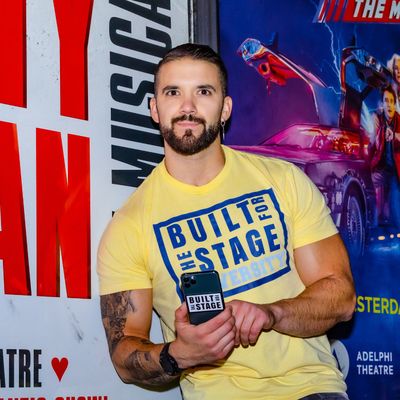
Joe Rosko / @builtforthestage. Tune in to hear how The Avengers lead to this week's guest accepting his claim to fame as “The Broadway Trainer.” We even get a few off-the-cuff renditions of Shut the Eff Up Alan!.. Read More
From the show: Built For The Stage Podcast
Guests
Featured Shows


About
Joe Rosko / @builtforthestage
Tune in to hear how The Avengers lead to this week's guest accepting his claim to fame as “The Broadway Trainer.”
We even get a few off-the-cuff renditions of Shut the Eff Up Alan!
Joe Rosko is the founder of Built For The Stage, Broadway’s #1 online fitness training platform, and its accompanying podcast on Broadway Podcast Network (with over 200 episodes to date!). In the past six years, Built For The Stage has trained clients in over 50 Broadway shows and on international stages around the globe. BFTS clients can currently be seen in such Tony-nominated and Tony-winning shows as “Some Like It Hot,” “& Juliet,” “New York, New York,” “Wicked” and “Hamilton." Joe has some terrific fitness and overall wellness tips about preparing for this busy and exciting time leading up to Broadway’s Biggest Night.
Joe began his professional career as a trainer and actor at the exact same time in 2007. Since then, it has been his mission to build a bridge between the worlds of fitness and theatre. Joe believed that actors were truly professional athletes but didn't feel as though the theatre community was equipped with the proper resources to train like said athletes. This realization led to the creation of Built for the Stage. Joe and his coaches pride themselves on having the unique abilities to continue a performer’s fitness progress while being in or out of a show.
Connect with Joe on his website, TikTok, YouTube, and Instagram.
- Make sure to follow this podcast everywhere you find podcasts, leave a rating and a review, and slip into our Instagram DMs at @wasitchance.
- More about Heather via @vickeryandco on Instagram, @Braveheather on TikTok, and listen to The Brave Files
- More about Alan via @theatre_podcast on Instagram and listen to The Theatre Podcast with Alan Seales
EPISODE TAKEAWAYS
- Broadway performers are the Olympians of theater.
- It’s important to challenge your body in different ways to protect it during such rigorous work as eight shows a week.
- How the hell did Joe get here? It was the perfect storm of three specific things:
- He started playing sports at the age of 4
- A middle school girlfriend talked him into trying out for the school play
- An entrepreneurial spirit.
- Joe studied theater in college and continued to do both theater and sports. While performing in school shows he was also playing football which is a little nuts, if you ask us.
- Built for the Stage really started in college when he started training fellow actors at the age of 18.
- Although his fellow athletes gave him a little shit, they were always supportive and sat in the front row when he did a show.
- Everything in life is mental. It’s all about what you decide to make it.
- After college training was a “survival” job.
- He discovered Crossfit in NYC and ended up managing a gym which led to early virtual training.
- In order to be accessible to Actors, no matter their work status, all of Built for the Stage’s programs have always been virtual.
- During the pandemic, Joe lowered the cost of the Built for the Stage app and donated proceeds to the Actor’s Fund.
- While it may look like it’s all rainbows and butterflies it’s not. Joe works countless hours, drives and flies thousands of miles, and puts his whole heart and soul into the work.
- Although Joe does have a bit of a Midas touch, he embraces failure with the mindset of “never be afraid to ask” and this has helped lead to his massive success.
- Having a really great niche is game-changing!
- Built for the Stage Podcast on BPN.
- Joe is a big believer in the power of no. Stay focused and don’t say yes to things that don’t serve you.
https://builtforthestage.com/ - fill out the form and ask about our next fitness challenge!
Transcript
This transcript was automatically generated and might contain errors.
[0:15] Joe Rosko: Hey, what's going on? Welcome to Built for the Stage Podcast. This is Joe Rosko, founder of Built for the Stage, Broadway's number one fitness platform. If you've never tried out Built for the Stage yet, go to BuiltForTheStage.com and I'd be happy, thrilled, ecstatic to work with you on an interactive fitness app. Built for the Stage trains actors across the globe from over 20 Broadway shows, the West End, Australia, international tours, national tours, collegiate programs, regional theaters. If you are in the market to train like the actor-athlete that you are, then you are in the right place, my friend. I hope to get to chat with you soon. BuiltForTheStage.com. Check us out. Go to Instagram at BuiltForTheStage. Give us a follow. Would be greatly appreciated.
[1:09] Joe Rosko: All right. Today's episode is actually an excerpt from our family podcast over at Was It Chance, a part of the Broadway Podcast Network with hosts Heather Vickery and Alan Seales. You're gonna get a little bit of insight on the history of Built for the Stage as well as some history on yours truly. So enjoy the episode. Let us know what you think. If you have any questions, drop a comment. Reach out to us on Insta at Built for the Stage. And yeah, hope to hear from you soon. If you want, if you're still listening, DM me podcast episode, Was It Chance, and I'll enter you into a drawing for some free swag. Just came up with that off the top of my head, but I'm in a giving mood. We have a lot of new swag that's out right now, and I want you to have it. So DM us podcast episode Was It Chance. And uh yeah, get yourself in that drawing for some free swag. Enjoy the episode. Later.
[2:18] Heather Vickery: Yeah, the power of no is another big thing that I geek out on just self-development, and that's a huge thing. It's just the power of no where it's not always about the yes or the willingness. It's sometimes it's harder to say no. It's harder to say, you know what, this sounds like a cool opportunity, but I'm really dialed in on this other thing. And if I say yes to this thing, it's gonna take me away from my main focus, and it's gonna set me back inevitably.
[2:57] Alan Seales: All right, make it, bruh. What's the what's the female equivalent of bro?
[3:07] Heather Vickery: No, if you ask my 13-year-old, it's just bro. B R bro, bro, it's bro good or it's bro bad.
[3:14] Alan Seales: Bro, bet. The kids nowadays, like bro, is the new term of endearment. Like, there's a meme saying if I want to be like uh, I don't know the exact wording, but if I want to be snotty or pretentious or whatever, I'll call you babe. But if I want to show you love, I'll call you bro.
[3:35] Heather Vickery: And it's good and bad. My 13-year-old, bro, bet. Like, that's a fuck yeah, yeah, I want that. And bro, for real? Is like no, man, don't do that. So also, I'd be in trouble for saying bro because I'm old.
[3:52] Alan Seales: No, go ahead and own it.
[3:54] Heather Vickery: I own it.
[3:56] Heather Vickery: Hi, everyone. Welcome to Was It Chance, the podcast about embracing opportunity and taking intentional risk for your creative life. I'm Heather Vickery.
[4:04] Alan Seales: And I'm Alan Seales. Heather and I started out as two perfect strangers who met by chance and embraced opportunity. Listen in this we chat with other successful people about the risks they've taken to put themselves on a creative path to success.
[4:18] Heather Vickery: All right. I said that wrong. Path to creative success. You get it. You listen to past episodes. Heather, who's our guest today?
[4:25] Heather Vickery: I'm so excited. This is the first chance that I have had to meet Joe Rosko. Joe is the founder of Built for the Stage.
[4:33] Alan Seales: And that happens to be Broadway's number one online fitness training platform.
[4:38] Heather Vickery: Yeah, right. Whoop. And it's a company podcast, which happens to be on the Broadway Podcast Network.
[4:44] Alan Seales: Yo shout out to BPN with over 200 episodes to date. Joe began his professional career as a trainer and an actor at the same exact time.
[4:50] Heather Vickery: A trainer and an actor at the same exact time in 2007. And since then, he has been on a mission to build a bridge between the worlds of fitness and theater, which I'm curious about because theater is fitness in my life.
[5:12] Alan Seales: Joe believed that actors were truly professional athletes.
[5:15] Heather Vickery: Oh, see, there you go. But didn't feel as though the theater community was equipped with the proper resources to train these theater athletes.
[5:25] Alan Seales: This realization led to the creation of Built for the Stage. And Joe and his coaches pride themselves on having the unique ability to continue a performer's fitness progress while being in or out of a show.
[5:37] Heather Vickery: And Joe, I think that that's really cool, and I can't wait to dig in. Welcome to Was It Chance.
[5:42] Joe Rosko: Hey, thanks for having me.
[5:44] Joe Rosko: Dude, uh Broadway performers, especially in musicals, are the Olympians. That Broadway's the Olympian of the Olympics of Theater. And I consider that like they are the Olympians of the theater space.
[6:00] Joe Rosko: And I love this approach that you've taken to embrace the fact that eight shows a week, dancing and singing and acting your butt off is a frickin' hard work. And and requires you to train and be conditioned, right?
[6:17] Joe Rosko: Yeah, absolutely. Um is enough. Eight times is a whole other level. So as a former performer as well, I knew what that life was about, but I also knew what the actor's night life was about, which is like, you know, going out after the show, kicking back a few, getting up the next day at around 12, like 30 minutes, 30 minutes before your half hour call.
[6:50] Joe Rosko: And uh just kind of winging it. And if they did anything, fitness maybe it was like to take a dance class, or maybe they took some boutique like circuit training class, um, but definitely not training in the sense of what I in that intro was talking about, which was training like the athlete that they that they are.
[7:12] Heather Vickery: So, what do you say to the people who say they're already working out enough eight shows like they're fucking tired is it and and so I do want to know what you say to those folks that was my question but I also want to know is it more about um preparing your body like protecting your body than quote unquote training?
[7:12] Joe Rosko: Yeah, I mean it is yeah it is the same training in its root in its core like back in the I don't know the caveman days training was primarily to prevent injury wasn't to like look sexy or uh run a fast mile or something it was in injury prevention and then as we evolved as a culture and community it took on different ebbs and flows but to go back to your your original question when an actor is saying I'm in a challenging show or I'm already working out with my show I just did a post on this on our Instagram at Built for the Stage and you're one you're doing the same thing every day so your body's going to get into a neutral state and it's no longer going to be progressing.
[8:26] Joe Rosko: It's either gonna stay the same or it's gonna digress and you're going to go down a one way path to injury. And the second thing is that if you're only counting on your show as your physical activity it means you're only as good as your show and your show is not just one time, like we mentioned, but it's eight times.
[8:47] Joe Rosko: So would you not want to feel like it's your first show on your show seven and eight of that week, as opposed to feeling like you're hanging from a thread on that last day of the week. So we harp on our clients about training beyond your show.
[9:04] Joe Rosko: And you'll see this with any athlete. The NBA playoffs are going on right now. Uh James Harden for the Philadelphia 76ers, I think he dropped like 40 points in a game, and then they have him on film uh in the locker room after doing a training session with his trainers where he's working out.
[9:23] Joe Rosko: He literally just played a two-hour game and scored all these points and he's working out. Why? Because he needs to challenge his body in different ways for the injury prevention we were talking about, and also to just make sure that his body is working in a different way than it is by just jumping or shooting or doing the movements he does within the training session, but something different, so that when he finds himself in a predicament on the court that could be at risk for injury, he's prepared in those different ways.
[9:55] Joe Rosko: And that's no different than an actor. I'm gonna go back to something you said a little while ago about like caveman day training, and I just want to ask if like did they have to invent the wheel first?
[10:07] Heather Vickery: I was like, this is gonna go bad fast.
[10:11] Joe Rosko: To then have the discus throw, or did they invent discus throw?
[10:16] Heather Vickery: And when you last spoke with a caveman.
[10:18] Joe Rosko: Yeah, yeah. I actually just got off the phone with one before we started, and they invented the wheel, not for any type of like transportation or moving heavy items. It was actually for the first cable machine sell up so that they so the cable wire could successfully, you know, go up and down on that wheel.
[10:40] Heather Vickery: One cook.
[10:42] Joe Rosko: Oh go.
[10:43] Heather Vickery: Oh god.
[10:44] Joe Rosko: Yeah, I have Ted Lasso vibes in my head too when you were talking about the training after the workout and whatnot.
[10:49] Heather Vickery: Yeah, do you ever pull anybody for on the mic?
[10:52] Joe Rosko: Yeah.
[10:52] Heather Vickery: Are you caught up with Ted Lasso? Do you watch that?
[10:54] Joe Rosko: Because like I'm okay.
[10:56] Heather Vickery: Wait, this is a spoiler.
[10:58] Joe Rosko: If you are a Ted Lasso fan and not caught up, you just get 15 seconds.
[11:03] Heather Vickery: And now.
[11:03] Joe Rosko: Yeah, Roy Kent is trading the shit out of Jamie Tart for like being extra in the running all the time and doing all this extra stuff.
[11:10] Heather Vickery: I'm like before and after all these games and badass. How does he do that in addition to playing these great games?
[11:16] Joe Rosko: But anyway, now you've just answered my question.
[11:19] Heather Vickery: Let's talk about Joe.
[11:21] Heather Vickery: Um Joe, can we go back like all the way back? Let's talk about little little Joe.
[11:24] Heather Vickery: Uh, what led you down a path? Well, this is serious, right? Because if we're talking about in taking intentional risk to create success, it's manifestation is never about, you know, thinking something and it magically appears.
[11:40] Heather Vickery: It's about declaring something and shifting the way we show up into the world, and then we create that thing. So can you recall the first intentional risk you took that kind of led you down this path? And did you know this was the path you were going down, or did it kind of surprise you?
[11:57] Joe Rosko: Yeah, I mean, where I'm at right now definitely wasn't something that I saw for my future as a young child. Um so it was really the mixture of three perfect storms. One being that I started playing sports at four years old.
[12:13] Joe Rosko: Uh, two, that I had a middle school girlfriend that convinced me to audition for the school play. And then three was that I always had an entrepreneurial spirit in me that I really didn't even realize.
[12:29] Joe Rosko: So the entrepreneur part, I can remember in third grade, I would use my lunch money to buy as many pencils from the pencil machine as I could, and they were all sports themed.
[12:57] Joe Rosko: Uh I'll leave that up to you, Heather. Uh I don't know if I know the melody for that certain line. Every guest gets to make it up. It's okay. Oh, okay, okay, okay. Well, let's see how much Alan keeps razzing me, and I'll decide if I'm missing it later. But yeah, anyways, I had I would buy up all the pencils, and they were sports themed. So when you would buy a pencil, it'd come out at random. So you wouldn't be able to choose what pencil you got. So the pencils were 25 cents, and I would sell the pencils to the kids for a dollar because I could guarantee that I had their sport team that they wanted. Um I also remember begging my mom at the time for this plastic briefcase from Walmart because I was having meetings with my friend with my friend.
Like this yeah, so I'd be riding my bicycle as an elementary school kid, and um it was it was pink. I remember this too. There was uh no no knock to pink, but there were no I I wouldn't have chosen it, but I was so obsessed over getting this briefcase. I was the only one there, and here I am. I'm riding down uh on my bike with this pink plastic briefcase to a meeting with a make-believe meeting with my friend. Uh I also got Elmer's glue uh and put it in my shelf underneath my desk. You know, as a kid, you don't have a locker, you stay in the same room the whole time. So you had these little like bookshelves under your desk. So I'd let the glue dry and I would color designs on it. And somehow, the brilliant salesman I was, I would sell the dried colored glue to my classmates.
I have no idea. I know. You can literally sell anything. I guess so. I guess so. Yeah. All right. Yeah, so that's that. Um, I grew up a three-sport athlete my whole life, and then in seventh grade, my my middle school girlfriend wanted to audition for the school play. And as you know, when you're a kid, you don't have a car, you have no way of hanging out with your friends or significant other at the time. So you do extracurriculars, curriculars, you know. So I was like, all right, I'll do it. I didn't want to be in the play, I just wanted to be around her. It was much ado about nothing, Shakespeare play. And I was cast in the show, and she was not cast in the show. So I I did this show just to like be able to hang out with my little middle school girlfriend, and uh she wasn't even the show.
So I was there wearing, you know, makeup and tights for the next two, three months as this little like jock boy, and I'm like, what am I doing? I don't understand what what we're saying because it's Shakespeare. I hate this. So the play's over. I'm done with theater forever. Except I'm in I'm in choir, and my choir teacher during a study hall said, We're doing Guys and Dolls Jr. I think you should really do it. I think you're really good. And she convinced me to do it. And of course, Guys and Dolls for me was like the perfect first musical, and I just freaking loved it. And ever since I kept doing it, eighth grade, ninth grade, tenth. I got all the leads. I fell in love with theater, and I was really good at sports.
So my coaches were like forced into working with me to make this story longer. I hope I'm riveting uh all of our listeners. But to make the story longer, in uh sophomore year high school, I was playing Curly in Oklahoma, and it was baseball season in Ohio, and the weather's shitty in Ohio, you know. So you're having to practice in the basketball courts uh for most of the beginning of the season. So I was pitching in the basketball courts, and then my uh a girl from rehearsal at night would run to the basketball court to tell me my scene was coming up, and I'd stop pitching, I'd run to the uh theater to do my scenes, and then I'd run back to baseball practice once my scenes were over. So that's kind of like insight on my life.
[16:50] Heather Vickery: That's wild. No wonder you can go the way you go.
[16:54] Joe Rosko: Yeah, yeah. So then I uh I wasn't really I got good grades. I I got like I don't know, some three, six or seven, whatever. Yeah, we were gonna ask. We were not gonna air the episode if you're trying to get a lot of people. I know, I know, I know, I know. I just say that though, because what I was just gonna say, and I'll say it now is that I didn't really apply myself in school. So I did well, but like I wasn't really trying, and I didn't even know what I wanted to do. I wasn't like, I'm gonna go to a business school or I'm gonna be old doctor or whatever. That was never on my radar. So finally I found out in my senior year that you could go to school for theater. And I was like, oh, amazing.
I'd love to spend $130,000 to get a degree in acting. I'd love that. That'll be uh that'll make it make it back real quick. Exactly. Exactly. Yeah. So I ended up going to Coastal Carolina in Myrtle Beach, um, South Carolina. Originally I'd gotten into a couple of programs. My number one choice was Penn State. I got into Penn State, but forget that that was even more money that I would have tanked. I couldn't afford it. We're gonna take a quick break. Stay tuned for more of the episode.
[18:05] Joe Rosko: And now we're back. So I went down to coastal and um it was a young program. I got cast in a show before basically I got cast in a show off of my school admission audition, which was already made me a hated freshman walking in taking the seniors roles. Uh so I hope none of them are listening. Uh love you guys. So uh I remember freshman year. I'm sitting in my dorm room, and uh, I know this story's long, but it's answering the whole Bill for the stage story. So I'm sitting in my dorm room freshman year, and I hear the football announcements on on Saturday, the games going on, and I'm like crying in my room missing football so much. So that spring I walk onto the team and start playing football and doing theater.
So I'm like up at 5 a.m. for weights, go to class, go to practice after, then go to rehearsal until 11, and then wake up and do it all over again and die, basically. Yeah. Uh so I got close with my strength and conditioning coach, and he was like, You should get your personal training cert. So I did at 18 years old, and then obviously all my friends are actors, so I'm they're wanting to know how to work out because a lot of actors just they don't spend their time in the in the gym when they're younger. It's just kind of what it is. So that was it. Like I started training actors at 18 and uh kept like traveling the country afterwards and during school doing gigs, and every new gig I'd go on, I'd meet new actors and they'd want me to train them and I would train them.
[19:48] Heather Vickery: Um we take a break?
[19:51] Joe Rosko: Yeah, there's there's there's more, but uh it's interesting to me that there's a lot of chance there. 18, yeah, totally.
[19:59] Heather Vickery: So at 18, you get your personal certificate.
[20:04] Joe Rosko: Easy for you to say.
[20:05] Heather Vickery: That's right. And you you were like a lot of theater kids don't do that. And I was thinking, like, well, right, because uh the athletes.
[20:15] Joe Rosko: No, no, no.
[20:16] Heather Vickery: Well, a lot of them, well, Joe's changing that. You know, that's a that's a stereotype, I think. Um what am I trying to say? Is that uh I would be intimidated as an awkward skinny theater nerd to go into a gym with your actual athletes, especially in high school, right? So, like, yeah, to for you to be able to bridge both of those, I think is a huge sort of thing. Do like did were you getting made fun of by your you know your but your sports teams, like, oh, you're going to do this the theater thing, or yeah, yeah.
[20:52] Joe Rosko: Yeah, that's funny. Yeah, that's funny you brought it up. They actually our our town newspaper did like this uh feature on me about the whole theater and sports thing, and they would interview my uh teammates, and they would say, Oh, yeah, the things that Joe makes us listen to in his car when he's driving is just ridiculous. Because it's like musicals or just I don't know, not some heavy metal or rap song. It's you know, some artsy fartsy stuff that they have no idea what I'm having them listen to. But they would be front row center supporting me when it came time for my shows. I even got two of my football players to audition and be in one of the shows in high school, and then same for college.
Like my coaches would praise me in front of like the other the other uh football players. Uh I got cast in a uh a summer gig. So I was like the first player to get a job for the summer, and he was trying to push our college football team to like get our jobs for the summer. He's like, Roscoe got a job, he's going to Arizona to be in the show, and all these you know big 300-pound football players are looking at me like who who the F is this kid. Um, but yeah, I don't know where we're going on that tangent. But yeah, no, I love that. I think it's very cool. I mean, I heard in your whole story, opportunity, you know, unexpected intentional risk, opportunity after unintentional expected risk opportunity.
It's risky to try out for a play if you're a bro, right? I'm not I'm not trying to like put that on you, but you were an athlete. Like a bro. Okay, bro. Like a middle school athlete, right? To go, and you could play, I don't know. I don't know you. You could play it. I'll be like, well, the my girlfriend wants me to do it, man. I gotta do it for her. But you know, you did it. You tried this thing that you know people can give you a hard time for, you weren't planning on it. That was risk. Uh, and then you said yes to the next one, which you hadn't been planning on, right? It just feels like, and then, oh, theater, I could go to school for theater, and then you walked on. You walk we just like glanced over that. You walked onto the football field and you were like, I'm gonna play football for you. Like here I am.
[23:09] Joe Rosko: Yeah, and I that first year I ended up being the the captain of the walk-ons. Being a walk-on, if you're for if anyone listening is familiar, it's like you're the low of the low. Like you might as well, I don't know. I thought Christopher was the captain of the walk-ons. I don't know what that means.
[23:30] Alan Seales: Oh my god. I'm gonna sing the song. I'm gonna sing this.
[23:33] Joe Rosko: Yes, just make it up. Just go for it.
[23:34] Alan Seales: Just make it up. Just go for it.
[23:37] Joe Rosko: Alan, shut the fuck up.
[23:42] Alan Seales: Yes, Joe, and I we're friends. Uh I'll keep working on the melody, but the lyrics were there.
[23:48] Joe Rosko: Uh yeah, yeah. So I feel seed. But as a part of like training with Bill for the stage, kind of like taking a hard rate, but also in line with what you're saying. So much of everything in life, not so everything in life is mental. Everything in life is your mindset, everything in your life is willingness. It's not about like how much you know, how talented you are, like those are all factors. But when it comes down to it, it's like if you see the doors cracked open, are you gonna push it open and walk through it? And sometimes if the door is closed and locked, are you gonna run that at full steam and just knock it over? Like these are just anyone can do what anyone that looks at someone and says, Oh, I wish I could do what they're doing or be successful like they're being in relative to how they perceive success, can do it. Just a matter of doing it, literally.
[24:47] Heather Vickery: Um just say that.
[24:50] Joe Rosko: I'm with that.
[24:51] Heather Vickery: Totally. I'm in the process of getting um NLP certified, neurolinguistic processing certified. And that's basically the core component of all NLP is life is what you decide it is, period.
[25:07] Joe Rosko: Yeah.
[25:07] Heather Vickery: And so they have all these mind, you know, tricks and systems and resources.
[25:12] Alan Seales: Alan doesn't agree.
[25:14] Heather Vickery: Alan doesn't agree.
[25:18] Joe Rosko: I'm going into the whole like uh uh life as a simulation thing, which I know you you kind of believe in, Heather, which I think is fascinating.
[25:24] Heather Vickery: I mean, listen, when they give um when they give Nobel prizes to physicists who can prove that the universe doesn't locally exist, then yes, I believe it.
[25:34] Joe Rosko: Oh, I'm not saying I don't believe it.
[25:36] Heather Vickery: I just think it's fascinating.
[25:36] Joe Rosko: It is how many players removed are you though? Are you like yourself playing yourself, or is there another person playing you that's playing you?
[25:44] Heather Vickery: Like how many phases, how many tiers are there?
[25:47] Joe Rosko: Exactly.
[25:48] Heather Vickery: But actually they tie in, Alan, and I think that this is exactly what Joe is saying.
[25:52] Alan Seales: In NLP, there are tools that were being taught to literally change the way you feel about something that has happened in your life or what you expect to be true.
[26:04] Joe Rosko: Still a statement.
[26:05] Alan Seales: It's still the same thing, right? If the universe doesn't locally exist and we're experiencing it, we can change it. That's why manifestation works. That's what Sammy Moog taught us when he was on the show. And that's what you're doing, Joe. You're like, look, this is gonna be if you can, if you think you can, you can. If you think you can't, you can't. And it's really just a matter of deciding you want the result.
[26:28] Joe Rosko: Yeah, I mean, relative, like obviously I don't know. I'm never gonna win the 100 meter dash in the Olympics because now I'm 35 and too old, and I also just never had that God-given ability. But I think it's also about like choosing your lane, too. Like I obviously, through my story, I told you things that I excelled in, and how when those opportunities came, I took them and then they all eventually kind of morphed together. I think that some people get off track because they're trying to force something that's not really there when really they're called to do something else.
[27:12] Alan Seales: Yeah, I think that's powerful. It's fear because if you're afraid of trying something new and leaving what's comfortable, you're operating.
[27:19] Joe Rosko: Oh yeah, say it again.
[27:20] Alan Seales: Say it again. And there's something really powerful in discovering what your own secret sauce is, right? Like, listen, I could come I could say, Joe, you're wrong, because there are Olympics for older people, and I'm at this exact moment what they're called eludes me, and I don't want to be shamed for that, Alan.
[27:41] Joe Rosko: Is it? I don't think it is. I did a wet back in my previous life, I was a wedding planner, and I did a wedding for an older couple, they were in their 60s, and he was like a Olympic athlete for 70 year olds. So, you know, whatever.
[27:55] Alan Seales: If you wanted to run that race and win it, you probably could, but maybe not the way you think you have to do it, right? It's shifting our Google searched Olympics for old people.
[28:05] Joe Rosko: It's the senior Olympics run by the National Senior Games Association.
[28:10] Alan Seales: Great, cool, got it. Senior Olympics. What about the middle-aged Olympics? That's where we are.
[28:18] Joe Rosko: No, I love it. So you really started Built for the Stage like as an 18 year old. But you didn't know that's what you were doing.
[28:26] Alan Seales: Conceptually.
[28:27] Joe Rosko: Yeah, right. So what shifted?
[28:30] Joe Rosko: Yeah, so um I'm on a contract as an actor after graduation for two years. I come back to the city afterwards a bit burnt out. I still was training people as like my survival job all the time. So when I got back to the city, I had found CrossFit in the meantime while I was on this job. And that was kind of another perfect storm for how Built for the Stage started more on a business side. So I got back to New York, I started competing in CrossFit and managing a CrossFit gym. And the gym, lucky for me, when I started managing it, was about to go out of business. And one of the members was this successful multi millionaire businessman. And he's like, Oh, I love the gym, I don't want it to close, I'll buy it.
So he buys the gym and I'm managing it. And he doesn't know anything about the gym business. So as the owner, he wants to learn the ins and outs so that he could properly, you know, lead it to success, which meant that for the next year he was gonna be there almost every night. So as the manager, I basically got private business school from this guy for like a year. And then another reason why CrossFit was a good thing for me was because CrossFit was kind of a trailblazer in the sense of they were putting workouts online since maybe 2007 or 2008 before apps were a thing, before any of this stuff, like technology-wise in the fitness world was a thing. They used to get like P90X DVDs and stuff, right?
[30:08] Alan Seales: Sure, sure, yeah.
[30:12] Joe Rosko: DVDs, well, but CrossFit didn't do that. It was all just on the world wide web, you know. So when I started, all right, so the last piece of this puzzle is that in the early 2010s, at some point the Avengers started to get big. So they started doing all these spotlights on Hollywood trainers. This Hollywood trainer trains Chris Evans, and this Hollywood trainer trains Thor Hemsworth, whatever his first name is.
[30:47] Alan Seales: Thor Thor Hemsworth is actually his name.
[30:49] Joe Rosko: Right, right. Uh Chris.
[30:51] Alan Seales: Chris Hemsworth.
[30:52] Joe Rosko: Chris Hemsworth. So I'm still. So I'm uh I'm in New York and I'm like, I train all these Broadway people. Like, I'm a Broadway trainer, but I don't hear of a Broadway trainer. So I'm like, I'm gonna be that guy. But I also knew that I wanted to be that bridge that you know Heather read, you know, that long exhausting intro she had to read about me. I'm teasing about me. I'm just making fun of me. Making fun of me. So that was so so kind of you. As a trainer, you only have so many hours in the day, you know? So I was like, I'm gonna take this online. And another thing I know about actors is that you got a job and you don't have a job. You have money and you don't have money. And in that type of lifestyle, you're not gonna pay a hundred, a hundred and fifty, two hundred dollars a session for a personal trainer.
You can't do it. So I'm like, I'm gonna make this accessible to as many people as I can and put this on an app. And this was in 2017, before like apps were cool, like before the pandemic happened, and everyone and their brother tried to go online as a trainer. Alright, one more quick break. Hang on a second. Alright, here's the rest of the episode. Yeah, so that's how that all kind of started. My big break, another opportunity was that I got connected with a kid, Jin Ha. He was cast as the lead across from Clive Owen in the M Butterfly revival in 2017, and the show actually hired me to help him in this transformation because he plays a woman, a man, he had to have a certain look. So they hired me to help with that. And that's really when I decided I'm gonna quit my gym job and quit being an actor and go all in on this thing.
[32:52] Alan Seales: Did your old millionaire boss help you with that? Or was he like the door? Don't let it hit you on the way out.
[32:58] Joe Rosko: Yeah, he helped me without knowing he was helping me. You know, he was helping me for his business, which I was executing. But the entrepreneur in me that was carrying around that pink plastic briefcase as a kid decided that it was time for me to spread my wings and fly, you know.
[33:19] Alan Seales: I love that. That's so cool. And the fact that you went online just from the beginning, I think was brilliant. And like the pandemic hits, and you're like, so I've got all this online community. You've already got everything and like I knew you through this time, and like you left the city and you were still training, and like talk to us about that a little bit because the pandemic for you was that helpful, hurtful? I mean, like talking about having a job, not having a job, not having money. Yeah, I figured that you know that was a little bit affected. But like, did you get to a chance to regroup? And also, I know I'm talking a lot here, as part of the intro that Heather wrote is that you know you have coaches, there's more than one of you in the program, which last time I think you and I really talked about Built for the Stage, it was still just you, so you've been able to grow tremendously from that point too.
[34:16] Joe Rosko: Yeah, yeah, the pandemic was tough. I thought that we were gonna go out of business for sure because all the actors went out of business as far as having their jobs. So I made a decision. If people followed along with Built for the Stage and our story, it was eight dollars. I bumped down, which basically like covered the cost of the app, and that's really it. But at that time, I bumped it to eight and said that I would donate all of that money to the actors fund, which I did. So business was good before the pandemic, so I had a little cushion, and when I made this commitment, I didn't, you know, we all thought this was gonna be a couple of months, maybe. So I made this commitment to do this until like some job opportunities started to happen.
Like I said, hey guys, I'll let you know. Like when I feel as though we can't hold out any longer, I'll let you know that things are gonna go back to normal. So people stuck around, new people came, we were able to donate to the actors fund every month, which was cool. Yeah, and then eventually things started, the waters started to even out a bit with the pandemic, and we persevered. We made it through. But it was wow. It was one of the more stressful times of my life for sure. Like a lot of us.
[35:46] Alan Seales: And were you able to still continue the workouts with these people? I mean, I know that the prices dropped, and I mean so I guess just to keep the membership, right?
[35:55] Joe Rosko: Yeah, yeah, we dropped it just to get people to continue to work out, to continue to be a part of the Built for the Stage family, to also join a cause where their money was gonna go to the actors fund. And then on my end, expense-wise, business-wise and personal-wise, I was just eating the money and tapping into savings that I had from the years prior.
[36:18] Alan Seales: Wow.
[36:18] Joe Rosko: So um after eating pencils and now you're eating money, I guess.
[36:22] Alan Seales: No, but shut the fuck up. First of all, I really admire that. Um, and I'm kind of curious how much of that was I love this community, I love the work I'm doing with this community, and I want to support them. I'm sure some of it was, and how much of it was entrepreneurial, we gotta keep these people around, and this is what I think is gonna work.
[36:51] Joe Rosko: Yeah, it was definitely both to be transparent. You know, one on the business side, it's how are we gonna survive? And by surviving, I knew that we could do it without making money for those couple of months, like I said, but it will help that they're still around when it does come time to open shop up again, you know. But on the community side it was like shit was tough, and the actors' fund was one thing that I really knew that helped with rent and medical bills and things of that nature. So I knew that now then more than ever, people were gonna be needing that.
[37:34] Alan Seales: Well, so failure, one of our favorite questions, right? What is your relationship with failure? What's your relationship with setbacks? Uh, how do you process it? And it sounds like so far you don't really have those. That you yeah, you're like, I'm just gonna show up here. Oh fuck, I got the part. I'm just gonna walk onto this field. Oh shit, I'm the Christopher Walken captain. So uh I'm just gonna show up over here and I'll damn it, I have a business now.
[38:00] Joe Rosko: Yeah, I'm gonna do it. I love I love I love that you're bringing that up because it wasn't all butterflies and rainbows, and like when people see Built for the Stage, they don't know that I'm working 16 hours a day. They don't know when I'm not working, I'm still working because all I'm thinking about is that. I'm not doing this as a side hustle. I'm not just like kind of I'm pouring my heart and soul into it. I'm doing everything that it takes. Um I'm it I I'm doing yeah. The numerous examples, like I'm I'm driving thousands of miles literally to do something. I'm flying to London. I'm a lot of it still is a one-man show, Alan.
[38:42] Joe Rosko: Like you had mentioned, like with the coaches, there is a lot of work that's still going into it. Same with the fitness. I think that and I'm passionate about this because people so oftentimes in fitness, when they have goals that they're trying to succeed in, or at least they have wishes, not even goals, they oftentimes will be like, oh, it's easy for this person, or it just comes naturally, or genetics, or they have the time and I don't have the time. You know, I think that's a bunch of BS. I think that you have to to be uncommon, you have to put in uncommon work and as humbly as I can. Like I when when you're when we stop hitting record and people don't get to be uh a little bird on my shoulder, like they don't get to see all the non-sexy stuff.
They see me on social media, they see me at the shows, or they see me doing all this cool shit, but they don't see me on my laptop with my eyes burning and it's 2 a.m. in the morning, or they don't see me uh talking through my next apparel line with our distributor and why the ink was not correct and why you know headaches like this, like we all know, but like it wasn't easy, still isn't easy. Um yeah.
[40:00] Joe Rosko: Well, so the how do you how do you approach failure though? I mean, because it's tough. Obviously, there's tons that we don't see, but like when the pandemic when the pandemic hits, when you lose a big client, when you have you ever gone to a sport that you haven't been good at? You know, like you know, how do you think I have a rejection of of the interviews. Yeah, I've uh I've lost championship games, I've lost positions in sports, I've not been selected for this, that, or the other. Like I've gone through stuff like that. Business wise, like in just life in general, my dad uh always instilled in me when I was younger, never be afraid to ask. And if they say no, you're no further behind than you were before you asked.
But if they but if you ask and they say yes, then you know there's a win. And to me that's direct correlation with failure in general, is that I'm always asking or I'm always putting myself out there and for everything you might see in the public eye that might have been a yes, there were a hundred no's before that. No different than an actor. You see the actor on the Broadway stage, but you don't see the gazillion auditions they went to that they didn't get cast in, you know. And that's the same with the failures that I go through um I go through daily. I I I have people I have clients that say this is a life-changing program that has been the best thing that's ever happened to them. And then I have some clients that try out the program and s basically in in a couple of select words say I'm dog shit, you know, like uh You can't make everybody happy all the time.
[41:39] Alan Seales: Exactly.
[41:40] Joe Rosko: I have a hat that I wear sometimes on tough days that says you can't please them all. And we're not for everyone, right? I love that saying. You can't be for everyone all the time. They're not gonna all like your approach. So the program the program being remote, the app being remote and like you you're giving personalized coaching routines remotely and uh actors have different uh sets of equipment in their apartments, tiny apartments, they don't necessarily have a gym, they're on tour in hotels. So what are you doing? Like if I if I were to sign on, and in front of me I've got a can of soda, sorry, sparkly water, not soda, sparkly water, full can of water, like I've got all these things I could use as weights. What do you recommend to like when you start the information and collect and and make the plan? Where do you start the plan?
[42:34] Joe Rosko: Yeah, so everyone signs up, builthestage.com. Then once they sign up, it they get a questionnaire sent to them. Then the questionnaire is going to ask for injuries, it's gonna ask for um their fitness background, it's gonna ask if they're in a show, out of a show, prepping for a show, and then it's gonna ask where uh what their goals are, of course, and then where they're working out. So let's just go with the tour example. I'm on tour, uh, I'm hotel to hotel from week to week. So we start them out, I start them out with the program based off their goals in that first week. That first week is like a trial week for us. Uh I don't have this equipment, I don't like this movement. Um this session was too long.
I travel on Wednesdays, I need a rest day on Wednesday. So then I make all these notes in their personal profile, and then in week two, now their rest days on Wednesday. Now I know that they don't have this equipment to use. Now I know that they don't prefer uh walking lunges because they broke their big toe seven years ago, and it still really bothers them when doing this movement. Uh so that's some of the personalization. And then on top of it, they communicate with me as much as they'd like. So going with the tour example, hey, we just got into a uh a one-nighter, the hotel looks like straight out of a horror film, and all there are is a set of ten pound dumbbells. So I had them on a full gym program, and then that week I modified to just ten pound dumbbells. So yeah, it's is it's personalized for sure.
[44:14] Heather Vickery: That's so cool. And how do they receive it? So is it do you record videos and send, or is it just like a PDF and I'll go do this thing? Like how is it how's it received?
[44:23] Joe Rosko: Yes, yeah, so the you you pull up the app and then each app has like the section you'll be completing. Uh and then it'll s it'll list the exercise and it'll have a demo video of me performing. I don't know if you can kind of see it.
[44:40] Alan Seales: The listeners can't see it.
[44:41] Joe Rosko: Right. But there's the the reps and sets and whatnot, and you would plug you would uh type in your results. You can watch the demo video there. And then if like something, let's say you had a question, you could video yourself doing five reps or so and then attach it to that section of your workout, and then once you submit your workout, I'm gonna see your video and be able to review your movement and give you technique feedback um or any questions you have. Nutrition-wise, hey, I feel start I feel so out of uh energy during my show, but I don't like to eat like close to my show. Can you help me schedule out my day nutritionally so that I feel as though I'm equipped to do my show with the energy that I need?
[45:29] Heather Vickery: That's actually it I love that. That's an interesting question. Do you also have a nutrition background? Have you
[45:35] Joe Rosko: Yeah, so anything that's like on a uh base level, um I coach and help all of our uh our clients. If there's anything that I don't know, genetically that is above my pay grade, I have two nutritionists that I reference my clients to.
[45:56] Heather Vickery: That's so cool.
[45:57] Joe Rosko: That's cool. You uh you touched real quick on the on the merch line, and I'm just bringing this up because my favorite one is what's your money note, bro.
[46:04] Joe Rosko: Yeah. Uh that's what he's got a sweatshirt. We got a we got uh a new we got new swag that just came out. We have you can again Heather mentioned it, but I'm showing everyone, I'm showing Heather and Alan right now. But um Jum and Huang from Anne Juliet, we made this design of this uh power switch, and the on switch says dream, and the off switch switch says sweat.
[46:27] Joe Rosko: Dream on. So dream on and sweat it off, like if things aren't going well. I love that. I need to get one. Yeah, like all of your stuff is inspirational slash theater theater chic, tongue in cheek. I love it. Uh but yeah, like uh they're like bro, like what's your money note, bro? You know, it's bridging these two worlds between what you think is traditional, like working out jock and and your your theater.
[46:54] Alan Seales: Yeah.
[46:55] Joe Rosko: Well, yes, as a yeah, grow growing up in theater, you know, like everyone wants to know your money, you know, like what's your especially in college, like toxic college, you know? It's like yeah, what's your top note? You know, and it's the same in the gym where the bros will be like, what's your bench, bro? You know, so I figured I'd I'd put the two worlds together and s and just make this shirt that said what's your money note, bro?
[47:20] Heather Vickery: That's so cool. And you know, the only people who will get it are the people who you want to get it.
[47:25] Joe Rosko: Exactly. And that's and that's built for the stage to the T. Like so many people are like, you're really pigeonholing yourself in this audience. And I'm like, that's my audience. Like, that's who I want to reach. I don't want to reach the gym bro. I don't want to reach the I don't know, the middle-aged office worker. I want to reach a person aspiring to have a career in theater and to equip them with the fitness knowledge they need to know to best do their job on stage.
[47:56] Heather Vickery: Creatively, are you are you purposely choosing the business side, the fitness side, or given like I found in my own life, right? That that when I step away from something that I've been trying for for a while, such as auditioning and auditioning and auditioning and auditioning, that I can come back to it with a little bit of newfound, of course, freshness and perspective and whatnot. Are you still uh are are you like I'm done with performing and I'm okay with that? Or you know, like me, I haven't been on stage in God, you know, 15 years and I miss it every day.
[48:31] Joe Rosko: So it's yeah, I get to see a lot of clients in their shows, and every show I go to, I'm I'm beaming with pride and joy for them. And on the other side of it, I'm also crying inside because uh I do miss it, and I never intentionally like walked away. Like I came back from that one gig in 2014, burnt out, like I said, and I just said I'm gonna take a little break, and now that break has nearly been 10 years. But I I do joke around and say, I'm gonna come back and take Broadway by storm in my 50s when everyone when everyone's like burnt out and jaded and like so over the career of the over their career. I'm gonna come in this fresh face, have an audition for 20, 30 years and be like, what's up, world? I'm here.
[49:22] Alan Seales: Um I think you all just heard that here first because based on the conversation we've been having, it doesn't seem like there's much that you decide you're gonna go out and do that you then don't do. Now maybe you don't do it the way you thought you were gonna do it. But you you seem like a master manifester, and that kind of goes back to, of course, you you work hard, you take chances, you take risks, um, but you get shit done, which is very impressive, including a podcast. So tell us about the Built for the Stage podcast.
[49:55] Joe Rosko: Yeah, so I got into podcasts, like again, luckily before they were cool. Um I was listen, I was listening to uh I was listening to uh Guy Ross uh How I Built This. It's a business entrepreneur uh podcast, and he would interview like the top of the top entrepreneurs, and it was all about their story, like the the inception of their business and the struggles that they went through. And through all of the clients I was working with, they too had similar paths where their big business was like making it on Broadway. But I, as I was working with them, got to have the insight as to what it took for them to get there. And I was just thinking that there's no one's asking of their story, you know, unless they're like, I don't know, uh Audrey McDonald and Playbill's doing a special on them.
But there's gazillions of actors out there that their stories are untold. So I started the podcast uh in two two uh January of 2018, I think, and I had this little microphone that plugged into my cell phone, and then I it was a splitter, a lapel mic, and I would put it on my uh shirt, and then I would put it on my guest shirt, and then I used this app called Anchor to uh put it on to the podcast world. And I had gotten maybe I don't know, maybe I was like 20 episodes in, and then this guy Alan reached out and was like, hey, I'm I remember actually standing the exact spot in one of my old apartments in Astoria in the kitchen, getting this email from this guy Alan and saying that he's gonna start this thing called Broadway Podcast Network.
[51:46] Joe Rosko: And yeah, so uh pretty I don't know if I think during the pandemic when things were just crazy, we took a break. But other than that, every Monday we've put out an episode and yeah, that's been that. Interviewing your clients and it's literally people all around the world.
[52:01] Heather Vickery: And it's literally people all around the world. That's what's really impressive.
[52:06] Joe Rosko: It's it's like Australian cast and London cast and New York cast, and you've you're training people all over the fucking world because you can't. And your reputation has gotten you there.
[52:19] Heather Vickery: Yeah, I mean, uh uh business wise, like the the number one marketing tool or sales tool out there is your product or service. If your product and service is shit, then you're gonna have to work really hard to market and sell it. But if it's good, then the people are gonna sell it for you. So as long as I I do my part, when someone's sitting at the bar after their show and just hanging with their friends in the cast, and their castmate says, like, I want to get in shape or I want to whatever, they're gonna say, Hey, I know this guy, he does this amazing thing for actors.
[52:53] Joe Rosko: And that's a thing that can really only happen when you're niche down the way that you are.
[52:59] Heather Vickery: Right. Because that's what you do. So it needs to be those performers who can say, I've got the guy.
[53:09] Joe Rosko: This is the only one.
[53:11] Heather Vickery: Yeah. Yeah, we haven't talked about it a lot. Uh we touched on just the background, but I'm so grateful for my sports background and that sport, uh, that strength and conditioning coach that I had and and my elements of training with other experts in the field to acquire all of this like top-tier athletic training. I've also trained NFL players, I've also trained people that uh are UFC fighters, I've also trained jujitsu pros. Like I have that ability, but I've chosen to take that into this world of theater because it transfers so perfectly.
[53:51] Heather Vickery: Yeah. Um, yeah. I feel like that's a gift for listeners who are also entrepreneurs, like it's okay. You can have all of these skills, you can have all of these abilities. Yes, you can help everyone, but you'll probably be more successful if you zero in on one particular type of client.
[54:11] Joe Rosko: And yeah, yeah, yeah. The power of no is is another big thing that business wise, I uh speaking of podcasts or books or whatever, I geek out on just self-development, and that's a huge thing. It's just the power of no where it's not always about the yes or the willingness. It's sometimes it's harder to say no. It's harder to s to say, you know what? This sounds like a cool opportunity, but I'm really dialed in on this other thing. And if I say yes to this thing, it's gonna take me away from my main focus, and it's gonna set me back inevitably. So saying no has been something I still work on to this day, because you know, I'm always wanting to get put my hands in different baskets, but I'm sure Alan will come up with some snarky comment on putting my hands in different baskets.
[55:02] Alan Seales: But yeah, you've been around. Now we're waiting for it, Alan. Now we're waiting for it.
[55:08] Alan Seales: I mean, what the hell? I haven't been able to talk yet!
[55:08] Joe Rosko: No!
[55:11] Alan Seales: I don't know what are you talking about. Who are you? The Easter bunny? You can't stay out of their baskets.
[55:17] Joe Rosko: There you go. There it is. That was lame.
[55:20] Alan Seales: That was lame, bro.
[55:23] Joe Rosko: What's your dad joke, bro?
[55:24] Alan Seales: What's your dad joke, bro?
[55:26] Joe Rosko: Dude, dude. Joe, where can we connect with you? Where can we find you on the lines other than builtstage.com, right? And Bill for the Stage on Instagram. Are you just Bill for the Stage everywhere?
[55:37] Joe Rosko: So I wanted to be Bill for the Stage on Twitter, but it's too long. So I had to make it BFTS Broadway. Um you can also go to TikTok, uh, at Bill for the Stage, YouTube, Bill for the Stage. If you're listening and you want to build a YouTube TikTok dynasty with me, and you're a young video producer out there, please hit me up just to give that shameless plug. Um there is no shame in outsourcing to somebody who really likes to do it.
[55:37] Heather Vickery: Outsourcing.
[56:09] Joe Rosko: I would imagine you could do some powerful stuff on YouTube. Joe, you are so cool. You're so much fun. I'm really glad that I got to spend this time with you. Thank you for sharing. I just think there's so many lovely little nuggets of just go out and do the fucking thing. My my ending, like my my last little hurrah to everyone would just be if you want to do it, do it. And if you fail, it doesn't matter. Either keep trying or go to the next thing because you only get one life. You get one life. And to live a scared or tentative or mediocre life is a disservice to yourself.
[56:50] Joe Rosko: And lastly, I'll say stop caring what other people think. Stop. There's this guy that I follow, and he says, You're gonna die, and people are going to say that they're busy and can't make it to your funeral. And the people that do go to your funeral are gonna be sad for a couple of minutes and then ask what's for what's for lunch or dinner after the service, and then they're gonna start talking. Then they're gonna start talking about who won the the Knicks game or who was going to the Tony Awards this year. So like you're gonna you're gonna hold yourself back because of what people think of you, and eventually you're gonna die. And those people really meant shit in the whole equation. So do what you want to do and stop caring about what people think because in the end, the only thing that it's cliche, but really it's about you. What you think and who you can serve and what you can do for the world is the only thing that you should be focusing on.
[57:47] Heather Vickery: I love that. I wrote those videos. I tell my clients, he did. He gave them all acronyms. Yogal, you only get one life and squapped. Stop caring what other people think. So you should hashtag squapped.
[57:59] Joe Rosko: Okay, okay. I always tell my clients what other people think of you as none of your business.
[58:05] Heather Vickery: Sure. Yeah. It's like it's exactly what you said. It's totally irrelevant. No one ever above you or ahead of you is gonna judge you. It's only those that are below and behind. So who cares at that point?
[58:20] Joe Rosko: Mic drop.
[58:20] Alan Seales: Mic drop. And that's and that's the perfect way to end. Joe, thank you so much.
[58:23] Joe Rosko: Thank you.
[58:29] Alan Seales: Joe Roscoe is like a man's theater man.
[58:35] Heather Vickery: No, a theater man's man. Is that what I'm saying? A theater man's man.
[58:39] Alan Seales: Yeah. Just a he's yeah. A little bit of a Midas touch there, don't you think?
[58:43] Heather Vickery: Right. You know, yeah. And now I wonder how much uh, you know, how much did Midas touch that didn't turn to gold? Because you only hear about the things that turned to gold.
[58:53] Alan Seales: Then that's what he said. That was Joe's point. Because you hit you hear about the great stuff. Instagram, this is a common problem that a lot of a lot of today's youth, a lot of them are having. They're like, oh man, look at everybody else's life. It's so much better than mine. Like, no, they're only posting the good stuff. But anyway, to Joe's point, it's a lot of busting your ass when you're working by yourself and working remotely and staying self motivated and all of this. And and I've known him for a couple years, like you said, like we met, we reached out for BPN purposes in 2019. So I know him about a year before the pandemic, and I've seen the the business go in in a couple different directions, and he's always just like, all right, here's our next step. We're taking this failure, we're gonna change it, we're taking the success, we're gonna learn from it, we're gonna continue to work.
[59:43] Heather Vickery: And like, as somebody who just met him today, what did you think?
[59:47] Alan Seales: Yeah, yes, I see that. I mean, he said, you know, YouTube is the next frontier, but there seem to be some obstacles, and you gotta get the money and blah blah blah. Like, just watch it because in a year he's gonna own YouTube in this niche. I just very cool, very fun guy who I think really has his eyes on the prize, but I also get the impression that he's willing to just sort of shift as necessary.
[1:00:15] Heather Vickery: Oh, okay, yeah, we'll do that. We'll move here. Okay, we'll go left. Sure. How about okay, yeah, right?
[1:00:22] Alan Seales: Mm-hmm. And I and I get the feeling that he doesn't take things all that personally either, like the failures. And just like anything else, I think a personal failure is gonna or a a failure in general is gonna sting a little bit, and it's the training and the learning and the mindset you have around how to process it, move through it, and build from it. I won't say move past it, because I don't, you know, who knows if you ever need to move past it, but incorporate it into your toolbox, your pink toolbox of briefcase.
[1:00:53] Heather Vickery: Your glue paint toolbox. That is a brilliant story, by the way.
[1:00:58] Alan Seales: Right. The kids, and uh, we didn't really unpack this because it wasn't the point of the interview, but why did they want to buy his dried? Like, he's that cool.
[1:01:08] Heather Vickery: That's the point. It's just different. If Joe's selling it, then it's gotta be something we want.
[1:01:14] Alan Seales: Yeah. And he had again, he was niched out into that middle school market, too. Or I think it was even elementary school, right? Like, oh, Joe's doing it. We gotta get some of that glue.
[1:01:25] Heather Vickery: You gotta get some of that Joe glue.
[1:01:27] Alan Seales: Joe glue that Joe I also you know he tried to really be um a lovely respectful guest he did he was you were Joe a lovely respectful guest he was not gonna bite with the shut the fuck up Alan he was like no no I don't know the tune and then finally he's like fine fuck it I'll just sing it I appreciate it I can annoy everyone to the point to say shut the fuck up that was a personal quest.
[1:01:55] Heather Vickery: That was awesome. I was like thank you thank you for playing yeah well go to built for the stage dot com and check it out because I think it's I think it's great. I think this program he's got is awesome and like it's especially for people who are a like afraid of the gym for whatever reason just or don't have the motivation to go literally you just you sign up it's easy. And and basically like he he helps you develop this program like oh if you only got 10 minutes a day and it's only a six in the morning or four in the afternoon whatever it is like he'll help you. He just wants to help he like in the core of all of it is is making everyone more healthy.
[1:02:36] Alan Seales: And if you're not an actor use this as a jumping off point to think about but you are an entrepreneur or or you want to create something use this as a jumping off point to think about how you can pinpoint an audience that's really going to resonate with you. Um this is work that I've been doing consistently and it's a nice little reminder like just keep doing it. We can't help everybody. We're not for everybody. And I love it. But but we are glad that was it chance is for you. And we want to hear from you. We want to know what you think of the show. We want to know how you're out choosing intentional risk, taking intentional risk, manifesting your dreams.
[1:03:19] Heather Vickery: Alan, how can folks find us?
[1:03:24] Alan Seales: On Instagram. Was it Chance Podcast at gmail.com. You know, just go type it you type. And you know what? There are plugins from Chrome now that interface with chat GPT to uh allow you to write an email. So you can literally install that and just be like, write an email to Heather and Alan about how awesome their podcast is.
[1:03:24] Heather Vickery: Oh.
[1:03:44] Alan Seales: And then we'll get that email and we'll think you wrote it and we will reply. And we will reply, and we will thank you because we do read all of those. We appreciate it. Hey, listen, we hope that you will go to wherever you enjoy podcasts and like, subscribe, follow, review. It makes a huge difference. It helps people find us and it also just fills our little tiny hearts with joy. So thank you for being here. You've been listening to Was It Chance, the podcast about embracing opportunity and taking intentional risk for your creative life. I'm Heather Vickery.
[1:04:16] Alan Seales: And I'm Alan Seales. And talk to you soon.
© Broadway Podcast Network, All Rights Reserved