

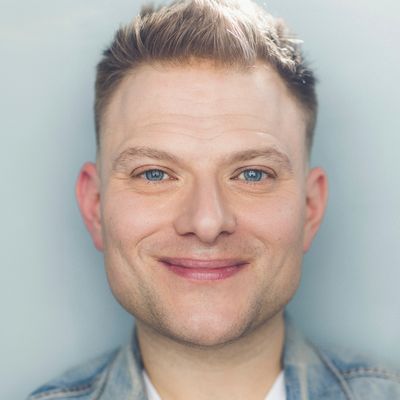
Robert Bannon is a multi hyphenate performer, talk show host, and educator. He has been featured on SNL/Real Housewives of NJ, and has performed at MSG, Beacon Theatre, 54 Below, Feinstein's in LA, Pride events in NYC, NJ, Detroit, LA, Ohio, and more... Read More
From the show: Built For The Stage Podcast
Guests
About
Robert Bannon is a multi hyphenate performer, talk show host, and educator. He has been featured on SNL/Real Housewives of NJ, and has performed at MSG, Beacon Theatre, 54 Below, Feinstein's in LA, Pride events in NYC, NJ, Detroit, LA, Ohio, and more. His debut album "Unfinished Business" debuted at #1 on the Amazon A/C. His new album “Rewind” was recorded live at Green Room 42. Robert hosts an online talk show called “The Roundtable with Robert Bannon” on YouTube with over thousands of viewers each week, described by transgender drag icon Peppermint as “where the queer kids come to play." The Roundtable is also heard on The Broadway Podcast Network. He also hosts “The Broadway Lecture Series,” where fans have an opportunity to hear their favorite Broadway stars in a unique, intimate setting. Want to try our Broadway fitness program for free? www.builtforthestage.com
Transcript
This transcript was automatically generated and might contain errors.
[0:11] Joe Rosko: Hey, what's going on? Welcome to Built for the Stage Podcast. This is Joe Rosko, founder and host of Built for the Stage, Broadway's number one fitness platform with clients in over 20 Broadway shows, clients on the West End in London, Australia, Tokyo Disney. We have clients in collegiate theaters across the country. We have clients everywhere pursuing their dreams as performers on the stage. So BuiltfortheStage.com will suit you for your one-stop shop for all things fitness and theater. BuiltfortheStage.com. Uh, if you'd like to, you can check out BPN.fm. That's our producing partner, Broadway Podcast Network. That's BPN.fm. All right. Let's jump on to our special guest. Already good vibes.
I have my notes out here on my special guest. Actually started playing our YouTube cut of this. Speaking of the YouTube, if you want to check it, check us out on Built for the Stage, you can do so. But our guest has a podcast of their own. That's actually how we got connected. They also are on BPN and they have a fabulous podcast called The Round Table, where I was just speaking with our guest. They have the names of Broadway, my friend. Like if you want to listen to one of your favorite artists speaking in an interview, our guest has them on their show, The Round Table. Uh, you've also seen them on SNL. Can't wait to hear about that. The Real Housewives of New Jersey. Come on. Uh, they also are a performer of their own right.
Uh, they've performed at the Beacon Theatre, 54 Below, Feinstein's in LA, Pride events. Yeah. They have a debut album coming out, Unfinished Business, number one on the Amazon A/C. So we're gonna just jump on into this. So please welcome to Built for the Stage Podcast, Robert Bannon.
[2:16] Robert Bannon: Hey! Hello, Robert. I'm letting you know that this does not count as my one free personal training session with you. This does not count. All right, this doesn't count. We will definitely, we'll arrange it. I would be happy to throw down. That'd be awesome. Oh, good God, because I need it since I ever since I moved to Detroit.
[2:32] I moved to Detroit, Michigan, Joe.
[2:39] Joe Rosko: Oh, you did.
[2:37] Robert Bannon: I moved to Detroit, Michigan eight months ago, and I bounced back and forth to New York. I'm from New Jersey. I was raised in New Jersey, but since I've moved to get married, I married my husband the end of May. And I moved here for him. He's a Detroiter, and he's one of those annoying people that's six foot five and very skinny and eats terribly bad food.
[3:01] Uh-huh. And my gym time since I moved, the transition of a new job in a new house and a new city, have left me uninspired in fitness. So I feel like being around you and Built for the Stage is gonna inspire me back in the scene.
[3:16] Joe Rosko: That's the hope. That's the hope. Happy to help. We'll chat more after the recording. Um, okay. So you're in Detroit, you're in the Motor City, you're in the home of Motown, you're all that, all those things. What's the arts life like in Detroit?
[3:32] Robert Bannon: You know, it's funny because when I moved here, everyone that knew me from Broadway red carpets and movie premieres and the interviews were all like, you're gonna give up everything to go to Detroit. You're gonna give up your spot in, you know, on the Broadway red carpet or what you're trying to build. But Detroit has a really active art scene. So shout out to Broadway in Detroit. We've covered all of their openings. They're the tour house here at the Fisher Theater. We've covered different events that have been held by different promoters, and, you know, the show, The Round Table, it doesn't really fit a box, which is a good thing and is a bad thing because a lot of people like have a niche or they have a certain type of guests that they try to get.
We make no sense. Like we make zero, like we have Sherri Shepherd on today, and we have on, um, you know, I don't know, a Broadway diva tomorrow, and then a drag queen, and then a gospel singer, like it makes no sense. So we just, I just keep throwing stuff at the wall. So if it's a Detroit guest, if it's a New York guest, if it's a guest in Europe, I don't care. I just want to talk to artists about art. So it hasn't changed much. I go to a lot of concerts out here.
[4:36] Joe Rosko: Okay, because music is thriving through Detroit. It's more than Eminem and Diana Ross, like there's a lot of music here. And I've actually loved it so far because it's fun to come home to New York and then leave the chaos to come back to Detroit.
[4:52] Robert Bannon: Right, right. Okay, very cool. So speaking of your title of your podcast being The Round Table, and you just listed this slew of different, very different types of guests. Have you ever had an actual round table where you've brought all these people together in one episode to kind of, because I definitely want the drag queen gospel singers sitting next to each other and chatting it up.
[5:14] Robert Bannon: Okay, so listen, here's how the idea for The Round Table came about. I did an interview in person in Detroit. There was a show coming through, and it was a bunch of 90s TV stars. It was Carl Payne from Martin, and it was Flex Alexander from One on One, and it was Jill Marie Jones from Girlfriends. And the table they gave us was a round table, and Carl Payne was like, Are we actually at a round? See, I'm not that smart, Joe. I didn't think that through. I haven't thought that through.
[5:39] Um, I did a show during the pandemic called Quarantine Cabaret and Cocktails with a guy that was promoting and producing the album that you mentioned before called Unfinished Business. And I was just a singer. I had no desire, I didn't, I don't listen to podcasts. I did not know what, I didn't even have Spotify on my phone at this time. I'm old, Joe. I'm an old man. So I didn't know, I didn't want to host a podcast. All I knew is that during the pandemic, everyone started to do these virtual projects. So when he asked me to do it, I was in my basement in New Jersey and I said sure. And we had people on, and he had the connections to have people on the show. He had a little record company that put out albums of cabaret and Broadway singers, and we did it for a year, and he then was done.
He retired, he moved to Portugal and got out of the business to be older. And I missed it because I don't know about you, but it becomes kind of addictive, it becomes kind of fun. It's an artistic outlet.
[6:40] Um, I love chasing guests. I know people don't like it, but I love the yes, I love the excitement of getting someone to commit to doing the show. And so I reached out to Cabaret, uh, the guy who directs my cabaret shows, and he's a singer and he runs a record company as well, Robbie Roselle. And Robbie said, do the show yourself. And I said to him, I don't know anyone. Like, I don't, I won't be able to do a show. No one will come on. Maybe I can partner with someone, your little record company, or your, uh, a person, a co-host, and he said, just do the show yourself. Call it The Round Table. He gave it the name.
[7:17] Um, and I don't know, three years plus later, we're partnered with Broadway Podcast Network. We're partnered with Broadway World. Every Friday, we have an exclusive chat on Broadway World homepage. And the beat goes on. We just keep on trucking.
[7:31] Joe Rosko: Okay, let's rewind because I feel like your chase of the yes and your pursuit of the guests and all this and your self-producing of your show, it's, uh, it parallels the life of a performer, you know, chasing the yes as far as auditions go, and how daunting the no after no after no after they're not gonna want me, they're not gonna want me, they're not gonna say yes. So I want to dive into this process you have of like maybe rewind to the very beginning. What gave you the courage or, or you at first were saying, I don't know anyone, no one's gonna whatever. So, how did you get over that? And then what, how did you go about just getting all these people to say yes to being on your show?
[8:15] Robert Bannon: Well, you know, I know that people may ask you this question too, and you're probably, you're a very motivational speaker and person. I saw your Instagram pages and I know your company and what you try to do for people is more than just a six-pack and biceps, like it's an emotional and emotional and psychological journey. Um, and for me, you're saying that.
[8:34] Joe Rosko: Yeah, no, it was true, even though I wish my six-pack would come back. When I hit 40, it disappeared, like it sold out. There is no more of that.
[8:42] Robert Bannon: Um, so when I started, because we did the show for a year, this other show, once in a while, a publicist would reach out and say, Hey, so and so is putting out an album. Would you do it on your show? But the show was gone. So one day I decided I'm just gonna put on a guest, and I'm just gonna do the show, and I'm not gonna do it for numbers, and I'm not gonna do it to try to beat something. I was not on a podcast network, I was not on anything. I was on YouTube, and I had known that I could do some research to do a little bit of graphics, use a little bit of the program that we use to upload videos. And what that was I was gonna do two episodes a month because I thought two episodes a month would be enough, and I was gonna focus solely on Broadway and Cabaret and Off Broadway.
[9:30] But I don't really think little ever. And it's a problem, Joe. It's not a good thing. It is a good thing and a bad thing. It's a double-edged sword because I wasn't content with two a month, and I wasn't content with just theater, and I wasn't content with it just being a YouTube show. I'm not content with where the show is now.
[9:49] Uh, and I don't know if that's a satisfying because I'm never satisfied about where it's at, but I want to continue to grow and I want to continue to evolve and push myself. What's funny on a personal level, when I was 18, I had dropped out of college twice, and my parents were afraid that I was never gonna have the guts and the follow-through to get a career to go to school. And I joke with them now because during the day I teach and I run an English department and I sing and I host The Round Table, and I have two master's degrees, and I tell my parents all the time, like I got it together eventually. It just took a long time, and now they tell me to slow down and sit down and be quiet because people don't see the work that goes into your show and this show.
They see the interview, and this is the fun part, but the pitches and the no's and the scheduling, I rescheduled on Joe and made him get up an hour earlier today to do this interview, and then he's gonna edit this and then he has to promote this, and then you're back to the chase for the next one.
[10:50] Um, it takes a driven person that wants to keep going. People ask me about connections and about networking and about finding guests, and people ask me when I teach theater in New Jersey at NJPAC about how do you get an in in this business? And it really for me has been about network building and relationship building. If a guest comes on my show and they have a good experience, and their publicist or their manager or agent or the PR team for the show likes what we do, then they're more inclined to send me more guests.
[11:23] And yeah, I tried to, um, this is the longest answer. I would be so bored if I was the host of this interview because I'd be like, let me talk now, Robert. Shut up.
[11:30] Joe Rosko: No, we're here for you.
[11:33] Robert Bannon: We're here for you. Well, when we tried to expand. So we started doing in-person events, we started doing Tribeca Film Festival, we started going to Comic Cons. We started inviting different music groups on, we started inviting TV stars on, we started doing regional theater guests because I wanted to network with as many PR firms as I could. Because if I get a good relationship with them, when the guests I want to come on, people that move me, we will be able to have access to them because we're trying to put out a good product.
[12:01] I always think it's about making the guests feel at home, it's about making the guests be the star of the interview and really feeling passionate and excited about what the guest is talking about. When I don't feel excited about it, sorry to interrupt.
[12:13] Joe Rosko: Isn't it the worst when the host is just, it's like, why did you, why are you just talk? You don't even invite the person anyone on? Like, are we here for the guests or are we here just to hear you talk? Like, hello.
[12:26] Robert Bannon: And it's so true. And I have done an interview with somebody who I don't think has a show anymore. When I was putting out music, I had a single called I Think He Knew, which was a pride song, which got me to do a bunch of prides, and it did like it, it had some people who listened to it, and it was a really beautiful music video. And I did an interview, and the person said, How was it like when you wrote the song? And I said, I didn't write the song. My friends Matt Gould and Griffin Matthews wrote the song. And they said, Well, what did your dad say when you told him you wrote the song? And I said, Well, I just told you I didn't write the song. It was a list of questions, and no one was listening to me, and I didn't feel okay. So no matter what you were answering, he was just saying the next question, no matter what. I never wanted to be a host like that.
[13:09] Robert Bannon: And I want to have a conversation with people and I want to get to know them, and I want to have the audience get to know them. And it's been the formula that I guess works, I guess it works in some way.
[13:22] Joe Rosko: I would say so. I mean, looking down your list of the guests, like you can't be doing a shitty job and having these people willingly come on to your show.
[13:36] Robert Bannon: Um, have you, speaking of your show and these guests, and from the inception to now, is there ever a time maybe you're still doing because sometimes I do as well, where you're just pinching yourself, like, oh, I can't believe I'm about to talk to this person, or I can't believe I'm doing this right now.
[13:52] Robert Bannon: Uh, absolutely. I had a moment, I had a moment yesterday where I, this sounds really corny, but I was going to bed and I worked my ass off yesterday. I taught all day, I had meetings till five o'clock, I had dinner with my husband. He goes to sleep early, even though he's younger than me. He likes watches Bonanza and goes to bed at 8:30. And I then edit my shows, and I've been trying to edit and getting my life together on Saturdays when he goes to work so that we can. I don't want The Round Table to be my life. And it's very hard because I'm very passionate about it. It's my baby. So I want to work on it all the time. I'm a workaholic. It's not good. And um, I was editing my cousin, Adrian, who shout out to her.
She's taken over the red carpets for me in New York because I'm not there all the time. And she was doing interviews at the Lord Tell Awards. And I was just like, I have interviews lined up and I'm booking my pride shows for June. And it's gotten easier to get guests because we've built relationships and I'm so grateful.
[14:51] Robert Bannon: Like I'm just so grateful for the opportunity. Um, I don't know how, I don't know why. Um, I'm I'm just I'm I'm so grateful for for where I am and that people watch. I also do a live show on Thursdays on YouTube. Um at Thursdays at seven, it's where the show originally started. And there's a community of people that come on, and not a ton, but a group that comes on religiously on Thursday to hear me talk about what's going on, to see the interviews, to hear the little segments I've created. And um, I wouldn't do this without them because knowing that there's people out there listening and knowing that there are people out there who watch this nonsense, um, gives me the motivation to keep going.
I there is no show without the people listening to us right now, and I'm so grateful for that. Well, what's your your biggest strategy with the next guest and where the show is going? Is it through word of mouth and networking? Are you sliding into people's DMs like I did to yours? Like what is everything, right? It's all I'm the pitch queen, Joe. I I see people say I'm no fun anymore because if I go to the movies or watch a TV show with you or listen to the radio, or uh I'm um uh RB singer is coming into Detroit. I'm like, hold on, I gotta take a picture because I gotta remember to email their manager and publicist. Like I am always looking for the way to get into the next person. I want the next guest, and I want to find my way into them.
And I love um, I love discovering new talent and I love being like obsessed with like we had Leticy on the RB singer Leticy was on uh two weeks ago, and um she has a new album out. I get like obsessed with that person, like I I listen to their music. Jeffrey, I did an interview with Jeffrey Seller yesterday, the producer of Hamilton and Rent, and he has a new book that's out. My interview comes on Broadway World on Friday. I read the whole book in a day because I become I want to do such a good interview, Joe, that I want to be prepared. Um Scott Hoing from Pentatonics and his mom are on my show, and she wrote a book about raising Scott. I had to read the book. And I don't I I and I don't I I get nerdy about it.
I I get really nerdy about it when something excites me. So I think I'm forever that 12 year old kid who wanted to, you know, announce wrestling matches and football games at my high school. I think I'm forever the 12 year old kid who wanted to sing in my living room, and I think I'm still that 12 year old kid that gets excited about getting to talk to people about what they do. I'm so curious. I have a thousand questions for you. I just love getting to know people. When what okay? So the 12 year old kid, when did the performing come about? You said you you dropped out of college twice. Were you in the arts at that point? Were you doing a more quote unquote normal educational pursuit? When did like uh yeah, Robert's journey of performing come about?
[17:41] Robert Bannon: Uh, I was 12 years old. My high school, my elementary school, my apologies, Richard Park, New Jersey, did The Wizard of Oz, and I was cast as the Tin Man, and I was so terrible, like terribly terrible, that I told my parents that I wanted to take lessons, so they didn't know anything about this. So they took me to the Bergen Mall to a lady named Carol Naso, who was like an old Miss America pageant coach. I I don't there was there was nothing available back in 1994. I'm 42, so I'll be 42 in October. So, like there was no YouTube, there was no like none of this. So I went there and I sang for her, and she told me to learn there's no business like show business, and we didn't get it done and get your gun.
We did a Christmas review in the mall, but we didn't sing Christmas songs, we only sung Broadway songs to karaoke tracks in a white sequin um jacket and red sequin top hat. Of course, you better. I was this as Jersey and as 1992 as you can get, and I then auditioned for Cinderella in sixth grade at my school, and I got the prints, and then I went to voice lessons in New Jersey with like an actual voice teacher, and she said to me, I think you have something here, and you should go start auditioning. So my parents took me to an audition at the Harbor Conservatory in New York City for Ain't Miss Behaving, which there's no role for me in Ain't Misbehaving. Obviously, we didn't know anything. My parents are not stage parents, but the piano teacher, the piano player at the audition wrote a letter.
It's real fake. It's weird, Joe. Uh, wrote a letter that said, I I was really impressed with your voice. There was no role for you, but I'm the piano companist for Juilliard's first high school program for musical theater at the preparatory school at Lincoln Center. And I want you to come. And I went to Juilliard. I trained with Burton Rouser. I was the first class through high school, and we did gigs. Like we did gigs for at the Beacon Theater with Patty LaBelle. We did gigs with, you know, for all the the um governors and mayors of New York at that time and all these different events. And then I was gonna go to school for this, and I went in on an audition for rent. Speaking of Jeffrey Sellers, and um I got a voicemail, not a voice answering machine message, and answering, come in tomorrow to audition for Roger on Broadway.
I just turned 18. I had these terrible 1999 headshots with like Justin Timberlake dyed tip blonde hair and a denim jacket. Yeah, and I had to learn one song Glory by tomorrow. Yeah, and they did not have YouTube. There was no print the lyrics from the computer, and I went in the audition at Telsey Casting and I bombed. Like I messed up every word. And that was the first strike. And then I met with an agent, and the agent told me, you don't have the look, you're not skinny enough, you're never gonna, you're you're not unique enough as an artist. And I changed my major. I left Juilliard, I changed my major, and I became a school teacher. So I didn't do anything artistic from 19, other than people would ask me to sing at like a little town event, but no music, no acting, no theater, nothing from 19 to 32 years old.
I did nothing. So the album was called Unfinished Business because I felt like I had to come back to it, and everything that I have done in my career has started at 33. So you don't have to be 18 years old to do something, and you don't have to be in college to be able to do something. And I feel very strongly that if it's to open a business to go on a date, to lose weight, to travel the world, like you're not too, it's not too late. You can start it right now and the take one step, and the path will really follow. So um it's kind of become my mission is to just tell people that like you have something you can do, not don't be afraid to do it. Just let's do it.
[21:46] Joe Rosko: I love that. I love that. Well, congratulations on having. I think I think uh what takes even more bravery than starting is maybe restarting, because there's an element of like maybe you've tried it before and it didn't go as planned, or it failed, or you quit, or whatever, or all of that, plus the knowledge of knowing what it takes and knowing what you're getting yourself into. Because when you're first starting, you kind of don't actually know everything you're about to experience. But when you're restarting, you kind of you you have to willingly uh kind of uh well what's the best word, I guess, is like part you would you would just give your you you would not sacrifice, but you would have you would volunteer your comfort in knowing that this is gonna be this is gonna suck, but in spite of it, I'm choosing to do it anyways because that's how passionate I am about it. So yeah, kudos to you.
[22:58] Robert Bannon: It chased me though. Like it chased, like I would go to Broadway shows and the curtain would come up and the house lights would go down and I would cry or watch a curtain call because I just felt like I was a chicken. Like I felt like you didn't give up what coulda, shoulda, would have been. And um, I was so into show business. Like I would read all of the different websites and I would I would look at movie grosses and Broadway show openings and what movie music is coming out because I loved the business. I loved art and artists. Art really felt like as a little gay closeted boy, saved me in a lot of ways. And I felt that first Broadway show I saw, or the records and CDs that I loved as a kid really were my outlet, and I wanted to be a part of that world so badly.
That's what pinches me. Like that's the part that gets me uh about the show or going to a Broadway show, or when I see your Instagram posts and you you you train people that are in Broadway shows, etc. Is that to be accepted by a community of but that I so wanted to be a part of but was so afraid would never accept me because I didn't think I was valuing myself enough that anyone would want me to be a part of it, that I didn't have a talent or a gift to give, I still struggle with that so hard. Like the imposter syndrome of no one really wants to come on my show. And if I ask you to come on my show, I'm annoying you, or I'm gonna fan out, or I I'm not really a part of this community because I'm not doing eight shows a week.
Um, has really been a lot of an in inner work that when people see the end result, they don't know that the self-esteem is not always there, the doubt is always there, and I still work on trying to feel good enough and whole enough to do what I do. So when people feel like they can't do it, you just gotta work through that.
[24:39] Joe Rosko: Okay. Okay, so what is the work? What is the work to you? What what what is that in detail of how you are overcoming these uh these hills and valleys and how you're getting over this?
[24:52] Robert Bannon: Well, you know, uh my personal journey, um I'm not to include fitness a little bit in it as well. You know, I I came out very late in life. I came out at 33. This is welcome to my therapy session, Joe. I'm gonna send my insurance is gonna bill you. Oh, you could build my insurance. I came out, I was married at 16. I got divorced at 32 to a woman, my high school sweetheart, and she left me and I was alone for the first time. And I was not out, I had never addressed my sexuality. I kind of left it just be. I met her, she was the only person I had ever been with, loved, and I was just gonna be satisfied with that. I was up to 320 pounds. I was a very shallow wow, yeah. So you've been you've been through a fitness journey. I have been through a fitness journey. You've been through a fitness journey. Wow. And I was I'm sorry to interrupt you, keep going.
[25:39] Robert Bannon: No, please. So when she left, I I lost 50 pounds just out of pure anxiety and walking and not eating and not taking care of myself, keeping the secret that she wasn't there because I thought she was gonna come back. You know, I just was the anxiety and nervousness of the situation. And it was a bad divorce, it was not a pretty divorce. Um, it involved a whole bunch of drama and mess. And my brother, who's four years younger than me, he said to me after I lost 50 pounds, like you are gonna be skinny fat. Like you need to start going to the gym. Like you're gonna need, like you're gonna lose all this weight and just be like you've never been to a gym. I am not an athletic person, I do not play sports.
He was like, So go to the gym. And I went and I had good friends that were teachers that would go to the gym and teach me the basics. And then it's a whole story, Joe, but uh, but uh long and short of it is that I ended up getting a trainer, and I ended up getting a personal trainer and a and a company, and they inspired me to be an artist and to be a person that took care of themselves. Like self-care is so valuable and important, and I lacked it so much by really having unhealthy attachment to what I thought my life was supposed to be. I thought I was gonna be a husband, I was gonna be a straight man, I was never gonna address these issues, and I I was just gonna be okay being safe. I really was broken in that way.
So for me, I had to learn small steps with therapy and with and with the gym to say, you can go out and spend money on an outfit, you can go out and take to yourself to dinner, you can go out and go see a show by yourself, you can go to the gym and spend an hour and a half with your phone on do not disturb and take care of your mental health. I never had that in my life. And I went to see a show, and the show was called Went Ishuganda, and it was a invisible threat actually at that time at second stage, and I really loved it. And I reached out to the writers of the show, which is is Matt Gould, who then ended up writing Limpika, and Matt said to me, Thank you for what you wrote about the show.
And I I sent him back in a tweet. I don't never even had Twitter Joe, and I said to him, I would do anything to be back singing. And he said, Well, I could teach you voice lessons, and we built a show for a year that became unfinished business that then became the album. And from his relationship with Ian Espinosa, he said, instead of teaching summer school, go to acting school. And I went to William Esper, which is an acting Meisner conservatory in New York City that was supposed to be for six weeks. It ended up being for two years. And I completed the program at 33 years old. And I completed it at 35. And then the music and the theater and the television work and the round table and everything just kind of trickled in once I aligned myself with what I felt was always what I was supposed to do, but was just too afraid to do it.
And the weight came off and the coming out became easy. And the work even I don't want to say this is easy, but it felt right. It wasn't as hard because I wasn't pushing against the grain anymore. I kind of just was letting myself be who I was. And I never found success until I let myself be who I was.
[29:07] Joe Rosko: So you accepted yourself, and then you were able to accept what the universe had for you.
[29:13] Robert Bannon: Absolutely. And I know that sounds corny to people out here, but that's you know, I'm a all alchemist kind of person. Like it was my quest, it was my journey. It was my quest. Like this is what and I fought against it. So until I, you know, marched through the desert, uh, like the in like the like the book, I I was lost. I say this all the time about uh, especially on the podcast, I'll say, like, if this sounds cheesy or corny or cliche and sounds like, oh, everyone always says that, there's a reason that they everyone always says it because it's true, but yet we as humans, we don't want to listen to that.
[29:49] Robert Bannon: We have to be stubborn, we have to go through it ourselves or whatever. But like if you're hearing it from the masses over and over and over again, don't roll your eyes and be like, oh yeah, yeah. No, like this is facts. With a capital F. Facts. Agreed, at least for me. And I wish that people who come to me, even friends and family who are like, I feel lost, I feel stuck. They're not gonna do it until they're ready, but sometimes you just gotta take a step. You just gotta have a leap of faith and just go for it. I wouldn't be getting married, I wouldn't be in a healthy relationship. I wouldn't have been the guts to move to Detroit. I wouldn't have taken a job running a department in a school. I wouldn't have done any, I was so afraid and sheltered. Um, and it didn't come until I was kind of forced to, and I did the work. Go to therapy, get yourself healthy inside out, and um, and you're entitled to take care of yourself.
[30:50] Joe Rosko: Yeah, yeah, I love that. When did uh rewinding and taking a turn to something you said, uh either your family member, cousin, sister, I can't remember, that are helping you on the red carpet, Adrian, yeah, my cousin, your cousin. When did you, so again the universe and you, doors opening and you being willing and ready to run through them? You're doing this podcast, you're also writing for Broadway World as well, right?
[31:17] Robert Bannon: You're right, yeah. We do an interview too. We do a video interview every single time. Interviews, articles, and the red, how did the red carpet come about? How did you get to, yeah? What, how did that all happen? You know, I never did this, Joe, for free tickets to see shows. I never did this to work on red carpets. I didn't even know that was a thing. Like, I didn't even know, like, I'm just an idiot who was just excited to talk to people. And um, so when I went to acting school and I started to do the podcast at the same time, and um, I got to meet a lot of people that worked in the industry through acting school, or I was going to a gym in the city that was in Times Square because my acting school was across the street.
And I was starting to feel like okay, I'm starting to audition for musicals, I'm starting to do some work, I'm starting to sing at 54 Below with my show. I'm making an album. I'm one of the people that I became really that I knew and was a friend of mine was Jeremy Pope before Ain't Too Proud, before he did Choir Boy, um, before he did TV and stuff, and Jeremy would take my headshots. Jeremy was just finishing doing off Broadway. He had not been on Broadway yet. And um, when he did go to Broadway, I reached out to his publicist and I said, like, Jeremy's going to Broadway and I'm his friend, and I want him to, I wonder if he would do my show. And I had text Jeremy, and Jeremy gave me his publicist info, and the publicist said, We want you to talk to him, but he's not, we're not gonna have time as we lead up to the show. So why don't you just come to the red carpet? And I was like, What? I don't know how to do that. I don't know anything like that.
[32:50] Robert Bannon: So we show up for the red carpet, and I don't know what I'm doing. I get my friend from acting school who has a little like tripod and phone, and I don't have a right microphone. I buy something on Amazon for like $22. I don't know what I'm doing. And it was the opening of the show, The Collaboration, and he gets sick. Jeremy gets COVID and there's no opening. But so we were on the red carpet, and I had messed people's names up. I called the comedian Judy Gold, Julie Gold, and she, like, I didn't know what I was doing. The red carpet is a whole other thing. It's very fast. You have to be very quick. I used to take like all these notes about everyone that's on the list, and then I would not even be able to see it in my like while I'm holding it.
So um, I never did it, I never intended to do that. My cousin loves it, like she likes it, like she gets very excited about it. I don't love it as much. I feel like a caged animal because I like what we're doing right now. Like I'm talking to you for 30 minutes. I get to know Joe, and hopefully you get to know me. And we have built 30 seconds on a red carpet if is hard for me. It's hard for me, but people like it. People like it's, it's, it's instead of going on a date, it's speed dating. It's that's, and yeah, it was fun. You know, I've done a lot of them, and I like award shows, and I like, you know, things like that because you see a lot of people in a very short period of time, and sometimes it feels like a class reunion, especially when I'm sure if you do them, you'll see people that have done your show.
That's so much fun to meet them in person. Um, but it's a wild, that's a wild, and people are, some people out there are nasty on a red carpet, they want to fight you. And I'm like, it's not that deep for me.
[34:36] Joe Rosko: Without giving any names, what's like one of the most like, oh that didn't go well?
[34:43] Robert Bannon: I've seen people break onto red carpets that don't have credentials. I've seen people walk on the red carpet to try to follow someone to get an interview. Um, I have rules about it for me. Like I tell Adrian was my camera person for a long time. Now her husband does it for her, and they love pop culture and they love all of that. And I love that she loves it. And my favorite thing about this, Joe, is to take someone to a Broadway show, or when Broadway and Detroit comes around to take my cousins that live out here, and I do an interview, and then they ask us to go backstage and they get excited. Or if it's an R&B singer, you know, uh, the R&B singer Kelly Price was on the show last year. I got to take my sister-in-law's backstage to her concert, and they grew up listening to her music.
Like it's not fun for me if I can't share it with people I love. And if that's the perk, because I'm not making any money off of this, you know, I'm not, I'm not so. If the perk is I can take my mother-in-law to a gospel concert this weekend, then that's the payoff for me. So I love that they love it, and I'm so grateful that I get to be the little piece that gets to do it.
[35:42] Robert Bannon: But yeah, right. So she says to me, 'Are you, do you miss the red carpets?' I said, 'No, because people push me, they want to take my space.' They know, I don't miss that. It's the wild, wild west out there. Um, to wrap this up, anyone that's listening that has never listened to The Roundtable or have been familiar with you before this episode. What is to be expected when listening to The Roundtable? What is The Roundtable? Give us your elevator.
[36:15] Robert Bannon: Let's see. My pitch, I'll give you my pitch. We're a show where artists talk about art. We spend a lot of time with marginalized voices and artist voices. So it's a show Peppermint the Drag Queen says it's where the queer kids come to play. Uh, I like to have people of color, I like to have women creators on, I like to have everybody on. It is for people who love art. So we are not a Broadway show, and we are not a music show, and we are not a TV show, and we're not a drag show, we are an artist's show. So it could be a director of a movie today, it could be a singer tomorrow, and it is light and it is fun, and we don't do drama and we don't do controversy. I mean, we had like I had Jussie Smollett on the other day, okay.
And people said to me, you know, he was canceled, and what are you gonna? I'm not bringing it up. If you want me to bring it up, then you gotta watch somebody else's show. But we're not, we don't do that. If someone gives me the time to be on my platform and they have a movie to promote, then I'm here to make them feel comfortable. I want you to feel like you're in my living room. So when you come see me sing, I want you to feel like we're in a conversation. It's for you, and the show is for you that listen too. So we are love. We are love, we are fun, we are light, we are fluffy, and we're about art.
[37:26] Joe Rosko: Got it. Robert, thanks so much for being on Built for the Stage podcast.
[37:30] Robert Bannon: Can I eat a carb?
[37:31] Joe Rosko: You can eat carbs. Actually, I'm gonna have the privilege of being on your podcast. So everyone that's listening, make sure you check out our episode together on The Roundtable because maybe we'll talk about it.
[37:44] Robert Bannon: Oh, I'm gonna, you eat a carb. And the answer for everyone listening is a definite capital YES for sure.
[37:53] Robert Bannon: Oh well, if that's not a cliffhanger, Joe, now I need you to have me like I'm ready to do my interview with you because I have all right. The interview will be a new nutritional consultation coming up on The Roundtable.
[38:05] Joe Rosko: See, all right, everybody. Robert Bannon, make sure you give Robert a follow on the gram. That's Robert Bannon. We'll have that in the description of this episode. The Roundtable, check it out. Sounds super fun. Can't wait to be on Robert's podcast as well. Speaking of nutrition, we have a challenge going on. It's gonna start May 21st in New York City at a gym called Solace. Uh, if you want information about that, you can head to our Instagram, Built for the Stage, and just check out our links in the bio. Uh, select spots, not a lot left, but eight classes, four weeks long, nutrition included. Um yeah, it's gonna be a good time. We're calling it a Broadway fitness party. I'm Joe Rosko with Built for the Stage. Actors or Athletes, train like one. Later.
© Broadway Podcast Network, All Rights Reserved