

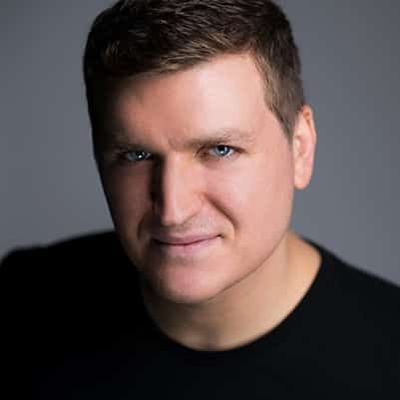
Charlie is a native Pittsburgher and a proud graduate of Carnegie Mellon University, where he studied Acting... Read More
From the show: Built For The Stage Podcast
Guests
Featured Shows
About
Charlie is a native Pittsburgher and a proud graduate of Carnegie Mellon University, where he studied Acting. As an actor, select stage credits include the NY Public Theatre’s “Shakespeare in the Park” (All’s Well That Ends Well, Measure for Measure), the Pearl Theatre Company (Richard II), the Hudson Valley Shakespeare Festival (King Lear, The Three Musketeers, Romeo and Juliet, Love’s Labour’s Lost), The Shakespeare Theatre of DC (Richard II, Henry V, As You Like It, Mrs. Warren’s Profession), Middlebury Actor’s Workshop (Cat on a Hot Tin Roof), The Arts Center of Coastal Carolina (The Unexpected Guest), and Chautauqua Theatre Company (Much Ado About Nothing, Vaidehi, Ah, Wilderness!).
In 2015, Charlie co-founded Esperance Theater Company — a company that produced classical-based work here in NYC. With Esperance, Charlie produced and performed in 12th Night, Macbeth, Romeo and Juliet, and Breitwisch Farm. As a teacher, Charlie has been working with MTCA (Musical Theater College Auditions) for over 20 years, where he is now a Director of the company alongside Leo Ash Evens. Charlie has also taught for Texas State University, PACE University, The Performing Arts Project (TPAP), Broadway Dreams, the City University of New York, Carnegie Mellon's Pre-College program, and the Hudson Valley Shakespeare Festival. As a Teacher and Director, he is able to do two of his favorite things in life: help students to find their authentic selves as artists, and help them find their best fit in their collegiate journey. Charlie also hosts the “Mapping The College Audition” podcast, where he continues that work, and helps demystify this daunting audition process for listeners around the world.
Charlie is also the proud father to a precocious toddler, partner to an amazing Tony-nominated + Grammy-winning Actress, and a humble Broadway Show League Softball MVP.
Want to try our Broadway fitness program for free? www.builtforthestage.com
Transcript
This transcript was automatically generated and might contain errors.
[0:11] Joe Rosko: Hey, what's going on? Welcome to Built for the Stage Podcast. This is Joe Rosko, founder and host of Built for the Stage, Broadway's number one fitness platform with clients in over 20 Broadway shows, the West End in London, Australia, Tokyo Disney, collegiate theaters across the country. We are your one-stop shop for all things theater and fitness. If you want to try a free trial, two weeks of a program on an interactive fitness app where you'll work with none other than myself, you can go to BuiltForTheStage.com. Special thanks to Broadway Podcast Network for producing this episode.
[0:46] Joe Rosko: All right. Let's get on to our special guest today. Special guests as always. A lot of classical theater on their resume here. If I read through it, you'd be like, oh yeah, check the box, check the box, check the box. Um, they also founded their own theater company. Yeah, so I'm excited. Also, they have a podcast and it's on Broadway Podcast Network. And uh they're talking to musical theater heads, they're talking to current performers. Um basically our uh guest today really helps the students that are prepping uh for the world of college uh musical theater and theater programs across the country. Please welcome to Built for the Stage Podcast, Charlie Murphy.
[1:48] Charlie Murphy: Hi, Charlie. Joe, that is it's I uh 200 episodes into doing the other side of it. It's always so weird to be flipped around in the other side of the chair listening to yourself being I'm used to introducing people, not being introduced. It's very good. That was nice. Thank you.
[2:01] Joe Rosko: Oh, thank you so much. Well, welcome to the podcast. Uh we're chatting a bit, and it's funny how uh we have this connection through uh musical theater college auditions, where in the very beginning of it, before maybe even had a name, I was one of uh the first students. Uh when you were just starting at Carnegie Mellon and I was in high school and we chatted about Lisi a bit. So, first off, like it's so needed. I'm sure more so even more with uh prepping kids in high school to get ready for their auditions. How uh how did you stumble into this? Uh let's just start there. How'd you stumble into this uh organization?
[2:43] Charlie Murphy: Yeah, our roots go deep, Joe. They go deep. Our company's roots and and all the little places we touch that we don't even uh always even know. Uh yeah. Stumbled backward into it, I think is the short answer. Um, I always knew, I think as an actor, you know, both my parents are professors, not actors, they're like intellectual, smart people professors, not uh acting professors, but I always knew for myself, like the way I learned best. It's like most called like an autodidact. I'm like, I have to learn something well enough that I can teach it for me to actually learn it. Like I'm not somebody who can just like intuitively be like, Great, I got it. Like I have to really understand every element of it, and then specifically the experience of teaching something.
I'm like, now I really get it. That's like the final stage for me. Like once I can explain it to someone else, I really know. So that's the way I learn. And so I'd always known I'm gonna teach while I act. Like I was TA-ing for my schools, you know, I was TA-ing classes for people you're younger than me. But even, you know, I'd gotten into school a year early, and even that first tour of kids my own age, I was like helping them because I was like, This is I I love this process, I want to do this, I want to teach my whole life. So I always knew I was gonna do something in that world.
[3:44] Charlie Murphy: I think you know, when our founder Alan Lettric and we're talking about our mutual friend Lisi Jordan, who's one of my very very first students. Um, you know, when we were doing this at the beginning, it was like just a friend helping a friend. It felt like tutoring, it felt like TA-ing closer than what it eventually would become. And I think really the the real answer of what made our company our company is as the process got more and more competitive, there was just like more need for us that I think went beyond just the artistic. I mean, we will help people with monologues and songs and dance and you know, all the artistic elements of things, but then it also was like the organizational elements, the strategic elements, as you know, people's school lists went from people do four, five schools to 10 schools, and now a lot of schools people do over 20 schools.
There's a lot to organize, and then they add in pre-screen. So now there's like a timeline to organize. So the process got crazier and crazier, and sort of as it did, the need for help went up and up. And so we were sort of there, and then it eventually it kind of grew alongside my performing career, and then a couple years ago really kind of took over my performing career of like, hey, this is what I think is gonna be my my full-time job.
[4:44] Joe Rosko: Yeah, as a fellow entrepreneur, I'm uh interested to hear about your uh development and transition into going from like you said, where it was almost a tutor of just I'm helping you with your monologue and your song, and I'm truly just uh a coach or an acting teacher or uh or um just a guide, if you will, to help you through this process to a legit business, you know, not so much of a side hustle, but like, oh, we have to have business structure and we have to have an operation to how we do this the exact same way every single time so that we can handle the amount of numbers that we're going through. So so walk, I would love to hear that. Just walk me through the bumps along the road of like, oh, I have to adjust this or I have to get my shit together with this. So then, you know, how did that uh how did that transpire?
[5:37] Charlie Murphy: I think bumps along the road is the right way to describe it. It transpired slowly is the short answer. Um, you know, because the whole time, all of us who were involved, and you know, my now partner Leo Ash Evens, who helps run the company with me, also was performing at the time. You know, Ellen was still involved at that point. I mean, there was like we were all doing other things. So it's like, as much as your side hustle can be hustled, we were hustling it, but it would be like in the emergent, the urgent moment, what needs to get dealt with, and then oh, we got through this year. All right, we'll figure next year out next year. Like it was not built into in terms of anything as we were going.
You know, I think, and it's a decent lesson for performers in general. I think the thing that I had at 22, which I really hope I can hold on to as I enter my 40s, um, is like a real openness to be like, well, what's what what needs to be done? What's going on? What is this company need? Like, you know, I I was very young when I was starting like leadership in this company. And I think it was just sort of I saw this need, and I was like, I I think we need some financial strategy. I think we need some structure here. I think we need some like basically like, you know, we feel like we invented from having none of us gone to business school, we invented like all of the boring corporate culture things slowly and painfully that like companies have figured out of like, oh, that's basically HR.
That's basically like, you know, figuring out some of those basics. I was just helping a friend the other day who's starting a company, and I was like, Yeah, these are lessons that are learned painfully if you don't start off laying the foundation of like mission and vision. We did like mission and vision like 10 years into the company to be like, what is our mission? What are we trying to do here? You know, all this up we did kind of backward. But but the cool thing about that is it did let us really organically grow with what the need is and what we really did. Like we really knew by the time we were doing mission and vision, we weren't like plotting out like, I wonder what a company could be.
We're like, we're building a ship around a moving, you know, we're already a moving ship and we're trying to build the the sort of floorboards of it or whatever. But like right, we knew we had something that worked. We knew what what we were doing, people really were responding to, we had all this demand. And then it was about like, all right, what does that mean? What are we codifying this into so it is more repeatable? And really just so it's more sustainable for our lives, so that we're not somebody who's rediscovering solutions every time a problem comes, but to be like, cool, we've dealt with this before, we got it.
[7:49] Joe Rosko: Yeah, you touched on it a bit, just saying like how kids are correct me if I'm wrong, you said up to 20 college auditions they'll they'll do sometimes more now.
[8:02] Charlie Murphy: These days, sometimes more, amazingly.
[8:04] Joe Rosko: Yeah, individually or in at a conference.
[8:06] Charlie Murphy: Well, so like go to 20. No, not 20 individual schools, realistically, but so they're all these little consortiums you can do where you can do a bunch of schools in one. So some of those consortiums have 50 schools in them. You don't necessarily have to apply to all 50 schools if you do it in a description. But so that's how some some of our students will end up getting uh applying to 40, 50 schools when you count the consortium kind of audition. But those are more the extreme, but even just like at unified, and I'll bet Joe, I don't know if you even attended. Did you do Chicago Unifies?
[8:31] Joe Rosko: Yeah.
[8:32] Charlie Murphy: So yeah, yeah. Unified still exists, and and that's a way that you could knock off in a weekend or a week a bunch of schools could be eight to 10 schools in one weekend. If you do Chicago, you know, are you getting 12, 14 with walk-ins? You could get even more schools just in the in a one-week period. So then you're spreading out you know that number of schools over a course of months, but not doing 20 individual campus visits. That really would be impossible.
[8:54] Joe Rosko: Does MTCA just do the performing side of things, or do you admin as well, where you're helping them with the actual like pen and paper or I guess uh you know, online like the the actual submissions.
[9:09] Charlie Murphy: I'm telling you to tell you, yeah. No, we do it all. That's sort of something uh about 10 years ago, we really became fully soup to nuts in terms of like you know, the the whole thing. We'll we'll we have college advising for the academic side of things. We have an SAT coach if you want an SAT coaching, we'll help you with your essays, we'll help you like bonus coaching. We really do. And it's not just the like literally helping you with applications, but like we do monthly webinars with all of our students, which really it's just like where where should I be right now? It's May of my junior year. Am I in about the right place with what I need monologue-wise? You know, and we'll get students who are just starting now, and we'll get students who've already been working for six months.
So those are answers can differ a little bit based on where you are, but it all moves toward like what is your fall of senior year? What are those expectations for what is you know, an insane process for anyone who's an older actor, like it's maybe kind of like if you ever do a Broadway audition and then you're called back eight months later to do the same audition, you're like, Oh gosh, uh, okay. Like it's a very weird thing that they have to do these pre-screen videos, which is their audition, and then often they're submitting those in September and October. They're not actually auditioning for these schools until February. So it's like you're sustaining a process over a longer period of time than is like really natural to work on.
Like if you're working on a piece in a class, you might be like, We're working on it, and okay, it's I I'm working and I'm putting it away for a little bit. But they they kind of do that, but they can't really do that because they they've got to bring it back out for their actual.
[10:29] Joe Rosko: It's a weird process.
[10:30] Charlie Murphy: I'll I do like that pre-screen audition for the video, if it means that you can kind of already get a sense of if you're if they're even interested in you or not, to like before you take the flight or before you drive, however long, you know?
[10:45] Joe Rosko: Yeah. It's it's definitely well intentioned. And it is so that the schools can spend more time with the students who they're interested in, which makes a lot of sense.
[10:52] Charlie Murphy: It's hard on a 17, 18 year old. Like for a professional, you're like, great, like yes, let me sit in my apartment, do a quick self-tape. Because if you're just like not interested in what I look like at all, then don't worry about it. Then I don't want to waste my time and show up and put all everything I've got into it. For a 17, 18 year old, that's really it's tough. It's just they often don't have experience. They're not necessarily uncomfortable with the camera in their face from the social media. They're more comfortable than we are. I just said the social media. Now I sound ancient Joe as an agent. Um but they're it's not that they're uncomfortable with the idea of camera, but it's like the kind of taking theatrical work and putting it on camera, it's a different feeling, which we as an actor kind of we kind of understand, like, oh, I see it's not quite the same.
But often if they found it in their high school musicals and they understand that version of performing, to then sing on a camera, it's it's kind of tricky adjustment. So it's it's tough for them that they have to do it first in the process. I don't love that. Like if but of course, how else could you pre-screen? But but to do that. Um it's a it's a tricky challenge, even though definitely well intentioned. It's a tricky challenge to have them have to do the pre-screens first. And then they often learn so much from their live auditions. They're like, no, I want to go show those other schools that said no to me, this version of me. I really know it. Now I now I have something I have to share that's different maybe than what they put in their videos.
[12:07] Joe Rosko: I remember uh probably not strategically the best move, but my first audition that I lined up for colleges was CCM. And I I left the saying the same thing of like, oh, that was like my workshop audition, and I wish I didn't do that the the first the first time around.
[12:26] Charlie Murphy: And that's exactly what we talk about. Like, what's the kind of strategic help we can give in this large process. We would now advise you, hey, don't do that. Like that's like don't do if CCM is high in your list, don't have that be a warm-up audition because no matter what, you know, you don't want any schools that are complete throwaways on your school list. You want to have some interest. But no matter what, your first audition will be a learning experience. I mean, you know, we talk about it with sports and you're a sport uh multi-sport athlete, but like so much of the experience of performing is like getting comfortable with yourself in whatever adrenalized state you're in. And like the adrenaline just goes up when you have your first audition and it's all real.
Like even if you've been working this stuff now you got to figure out it's like the difference between practice and a game in terms of like oh there's just more going there's more energy going to my body and I sing a little different and I move a little different. It's actually the adrenaline is helpful to you generally once you learn how to harness it. But those first auditions are too a lot of people are a little shaky they're just they're maybe they're on autopilot because they're nervous and they can't really feel the looseness and the freedom that they'll eventually find. So it's like you want to set yourself up some practice auditions before you do your your most important you know dream school auditions if you can.
[13:31] Joe Rosko: Do you I know that you were at some point are you are you still doing the mock uh auditions like uh you guys have like a I don't know workshop for the week in New York or wherever that you might hold them now but you do kind of a mock mocktober was it during October you were doing it.
[13:47] Charlie Murphy: Joe, you do you remember that's old school MTCA mocktober used to call them October. Yeah we now do them once a month in New York City and then we also do wow once a month congratulations that's amazing. And we do kind of do that's that's what you mean about like where you are in different points of the year, if you're doing this process, is like we try to set up events for you of like, you know, right now we're doing spring faculty master classes with our juniors. We're getting to do these little masterclass experiences, a little one-off chances to kind of explore what working on this material is like, not in an audition format, still in kind of a preparatory format. And then at the top of August, we do this big summer faculty masterclass week where we bring in faculty from all these different campuses to get a sense of different schools and to get a sense of what it's like to work with these professors.
That's all still before their pre-screens, with the idea that they're likely filming their pre-screens in the next month or month, six weeks or whatever it is. Um, at that point, and then the idea is that ideally everybody would do a mock, whether that's and you're doing it over Labor Day, you're doing it in October, November, December, whatever, before your biggest auditions at least, we're giving you that little bit of a chance to be like, experience the pre-screens, know what that is. Maybe you even do an audition or two that is a real audition, but then our mock audition is where we'll give you that kind of like audition feedback of like, hey, here's what happened. Here's how you talk to the companies.
Here's how it seemed like the way when we were playing with you and we'll ask you interview questions, we'll give you adjustments like they will in the room. It seemed like this happened. And are there's how can we make that adjustment for your future auditions? We'll help you with sort of not just how to prepare the material, but like the audition skills of it all, which you know, for most people uh it's brand new. Like, if you've only auditioned for your high school musical, it's a different kind of audition when someone's like, let me test every part of who you are as a human, Joe. I'm gonna throw you off, throw you weird special skills from your resume. I'm gonna ask you questions you've never really thought about, or you know, I'm trying to throw you off because I'm trying to be like, who's this real person?
They want to see through the coaching. And so our job as coaches is not to like not to coach them in terms of like shellac them to have pre prepared answers, but to actually have them prepared to be open and flexible and all the things that the faculty actually want is like how do you show up present in the room, not how do you show up like rehearsed? You want to be like free in the room as much as possible.
[15:48] Joe Rosko: Well, us being a fitness business for performers, you mentioned you have uh a wellness coach. What does that look like for your students? What does the wellness coach uh serve as far as a part of your organization?
[16:03] Charlie Murphy: She can do a lot of different stuff. I mean, certainly she has expertise in like nutrition. So if people need help with like nutrition, especially, you know, a lot of our very busy students sometimes struggle with like, how do I fuel my body in a healthy way? Um, that's something that's true for me to do it. She helps a lot with stuff like um schedule organization and anxiety. Like uh, if a lot of our students are experiencing like burnout and they're just like, I feel like I'm not showing up as my human self, that's the kind of stuff that she'll she'll help with. I mean, really, kind of across the board. If it's like there is something going on with me that I need help with, she can sort of serve as a bridge.
If it is something that's more like medical, then she might refer you to a therapist or a doctor if there's a more sort of severe medical issue. But for a lot of our students, you know, it's I don't know if you've noticed this with younger students, but the percentage of 17, 18 year olds today who report some version of anxiety is like a skyrocketed. I mean, yeah, I'm sure we were experiencing it too, but maybe it wasn't quite as diagnosed, but also it has gotten it's clearly increased. I mean, it is more than half of our students will report some version of an anxiety-related disorder. So um, that's the kind of stuff where then uh Erica can can be helpful, I think, in terms of going, how do we, how do we show up as our our full healthy selves?
You know, we do that with vocal health too. I mean, we want you to show up as you know, you're talking about uh the actors are athletes. We want you to show up as a healthy athlete psychologically and also then physically and and vocally that you're able to bring all those things into the room so that we can see the instrument, and the instrument means your voice, but it also means your body, your psyche, you know, because they're these schools are not accepting like the best performances they see. They're accepting human beings. So they're like, Who is this person? And you know, so much of that decision is based on like your aura as you walk in the room, which sounds a little woo-woo, but it's like anyone who's ever sat behind a table, you see someone walk in, you go, Oh my god, that's our guy.
That's it. We found Tony. Yeah, like and it's not, it's not about your look. It's not like, oh, he looks perfect. You go, that feels energetically like Tony. It's like some of that is hard. It's hard to showcase that at your brightest self if you're not in good psychological help, if you're not sleeping, if you're not, you know, we all know that of like I was only 50% present today, versus I'm like, I'm really here. I I showed me in the room. That's our goal is going, can you show your best me with material that we help you pick? We can help you with what that means to show you know who you are and what you want to say about yourself, but also like how do you walk in the room as that person? There's a lot of strategy, and it takes a lot of time to get that experience, which older actors know how to do that most 18 year olds can't just go like, yep, I got it, you know.
[18:27] Joe Rosko: Yeah. How many roughly, how many co uh high school seniors do you think are trying to get into a musical theater program? Like, I always like even with my business, I'm thinking about how many uh high school kids or college, how many high school kids are entering college and how many college kids are entering New York City? I always think about that like uh merry-go-round, if you will, or the revolving door of like, even though a lot of actors leave the business, it how many are replacing them, if not uh surpassing that.
[19:04] Charlie Murphy: Yeah, it's such a good question. It's uh I don't have a the I don't think anyone has a firm this is exactly the the whole total number. I would guess it's something in the five to six thousand dollars uh dollar, five to six thousand person range. Um, you know, some of the most popular universities will get around three thousand applicants, and so, you know, I don't think there's any singular school that every single person applies to. Um about the most popular musical theater majors, you know, and then actors, there's like with acting majors who are interested in musicals. There's also we work with just actors, non-musical theater people too, you know, but a percentage of those also still might look at a Carnegie Mellon for musical theater because they can apply as an actor.
So it's it's you know, the musical theater acting divide is not a hard line of your one or the other, except then some schools, a Juilliard or whatever, you're only applying as an actor, not a musical person. So, but I think something like 5,000, you know, uh again, in are gonna do this process in any kind of way that is semi-serious of like applying to multiple schools. I'll bet it grows a little bit higher if you look at students who like just do one school. You know, they do their local school and and that's it, and they're thinking about musical theater, but something like that, I think would be my guess of uh featuring.
[20:12] Joe Rosko: Wow. When a student comes to you when they when they find out about MTCA and they're saying the colleges that they want to audition for, do you kind of build them a uh suggestion list? Maybe whether it's uh geographically where they're located, whether it's financial means. Um, how do you go about advising them on which ones and then like how many is too many or how little's too little?
[20:43] Charlie Murphy: Yeah, we we definitely do that. That's become a big part of the initial consultation with them. So we first sit down, we get to know them and then and then give them a version of this. You know, that's where I was joking. It used to be we always had to encourage students, please do more schools, four is not enough, five is not enough. And now students come in more thinking, hey, here my friend did 30 schools. Should I do 30? And we're often like, you actually don't need 30. Like that, there is a level of overkill then. Then if you tell me a specific reason you need 30, okay. Well, we could you could say because I'm looking at these specific different majors and here are all the different things, and I'm not sure.
Okay, but you know, it's more about then we'd help you with balance of your list to go. How many are the most competitive schools? And then how many even still competitive schools but are not quite as competitive? Do you have a safety in there that will sort of help you with that kind of stuff? And really talk about like what are your goals? And then exactly what you said financially. Hey, is finances a big part of this? Let's make sure you have some really um affordable financial options so that at the end of this process you can negotiate, even if it ends up being one of those dream schools, you'll be able to have this option to go to this other schools. This cheap, can you help me out? And there's a lot of that in this process where there's um a lot of negotiation possible.
[21:43] Charlie Murphy: But I'll say that is one of the biggest reasons I want to start the podcast, is I think it is really hard to research these schools, especially there as there are more and more of them. You know, to distinguish between the five, six, seven schools that everybody knows about or knew about back then, not that hard to do. I think people are able to get access to that research. But as you start expanding the list, you know, we used to give students here are the schools, here's what I'm you know, look at these schools and think about them, and they would go, I I don't know, I almost don't know how to research. I'm going on the websites, but I'm not sure what that means to research these schools. And so now what we what the with the pod, I'm really trying to encourage people to do is even when they're coming into that initial consult, it's not just because we'll give you a research these kinds of schools to think about these kind of questions, but if you can come in and haven't already thought about some of like what those questions are and what those answers are, it just lets us give you a more specific school.
Like if a student comes in and says, I'm looking specifically at like BFA conservatory style programs, I do not want academics. I want, I like a small school, I want it to feel an intimate campus, and I but I really want all my time to be acting, singing, dancing. We can give you a very specific list of schools. A lot of students don't come in knowing that, right? Or some will say, you know, I'm really interested in double majoring, but I really want an intensive musical theater program. And you're like, okay, well, what is that? Have you looked at some of those schools? That that's pretty rare that you're gonna feel really intensive, but get a real double major as a realistic possibility. So those kind of things to go like you can absolutely double major some of these schools, but what are you potentially giving up in terms of the acting, singing, dancing of it all, you know, just in terms of time and your schedule?
So the more the students have done some of that research, and again, we help you with that when we meet you, but um, that's some of the reason for the pod. So that I'll have a lot of like freshman sophomore listeners who are gonna meet us next year, but are gonna go, oh, I I already kind of have a sense of the landscape. I really liked for some of these smaller schools, I like these five schools that I heard on the podcast, they really spoke to what I'm I'm thinking about. And they have a sense of the questions a little bit more coming in.
[23:34] Joe Rosko: That's cool. You you basically with the podcast could almost create a uh catalog with all the schools listed, and and the students can go directly there to kind of hear uh insight and and questions you've asked the heads of these departments.
[23:48] Charlie Murphy: And yeah, that's really that's a valuable tool. It's the goal that Joe will never complete the the catalog because programs spring up and then programs change. Like so we're almost five years into the podcast, and already so many schools we've interviewed three years ago have different heads now, have changed. And so I gotta bring them, I gotta get them back and bring them back in. It's like ever evolving catalog, you know. It's like here's a little dot in 2022 of what was true about the program, but now we're gonna bring them back on next year to show you a new sort of continually evolving this process.
[24:18] Joe Rosko: Right. Well, a lot of our conversation so far has definitely been valuable and directed towards uh the younger crowd, the students that might be interested in um uh using MTCA, or maybe you're a college uh student right now. I want to kind of uh redirect the conversation to you, where you're a performer you were a performer or are how has being an entrepreneur and like really having to take the reins of this business and steer it and own it and like make it go and yet stay fulfilled with maybe that performer itch that you have, or is that itch gone? Like, how's that how is that day to day? Because I'm asking from uh a personal standpoint because I go through the same thing. So I'm just curious to hear your your story.
[25:06] Charlie Murphy: You I mean, inherent in the question is someone who understands the ennui of this exact situation. I mean, of course, the itch is not gone. I mean, I think there are people who that might be true for where you go. I kind of had curiosity about performing. That was not me. I mean, this was my first deepest love is what I wanted to do. Um the itch is not gone. I think the itch it it can be scratched in different ways, I think is what I've learned, and I'm still learning. You know, um, when I say I said fell backward into some of the leadership growth, some parts of the company, you know, that's also true with like my life transitions. I mean, when I was doing it, I was still really a director of the company, it was a smaller version of the company, and was truly a full-time performer for many years, where I was doing four or five shows a year, you know, mostly regional theater work, so it's they let me last a couple months, but then that kind of vagabond lifestyle of it's 2 a.m. and I'm finishing payroll after tech and that kind of stuff.
I'm like, I'm living that life. Um, and I think certainly I realized hey, something should shift for the the company to grow. That was so far why I started a theater company so I could try to be here in New York, scratch that itch with the theater company, but then be able to really be present with my teaching company. That was really successful for about five years. That worked worked for me, but then, you know, I met my wife and had a kid, and so that shifted my priorities. Well, you know, I I think, but I also feel like for me, and I don't know if you felt this way when you started a company, like I never made a decision of like, I'm not gonna perform again. It was sort of it is sort of year by year of going right now.
Here's what I think of the, you know, my last performance was right before the pandemic. And so it's like uh I I don't I'm not actively auditioning, I'm doing voiceovers, I'm doing I'll do a commercial edition every once in a while, but I'm not like going out for TV and film now. But I'm not like it'll never happen. I I feel probably it will happen again at some point if there's a a sustainable place for me to slip into that in a way that's not gonna hurt the company. And and while it's not, I think it is about scratching that itch with. I mean, it's one of the reasons I started the podcast basically right after I stopped actively auditioning as a way to be like this is a creative endeavor for me.
Not only in um, you know, there's a lot of like writing, I'm basically writing a blog each um each episode as I sort of do these little takeaways, which is like that's interesting to me. And then all these conversations with artists about their path. So half of our episodes are talking to the schools about their programs, the other half is like talking to artists like we're doing now about what was your path through college, how do you use education in your career? So, you know, there's a still a creative connection to the industry, you know, whether that itch is scratched enough or whether it's gonna come roaring back in two years, you have to ask me again two years. This podcast is gonna be out of date one month later, Joe, just like my podcast.
[27:42] Joe Rosko: Yeah. Is there anything business-wise that you're already brainstorming to add or adjust with the business as times they are a change in? Because while they are and with tech, they've changed even quicker than than ever. Yeah, like does your brain ever stop on like what's next or what needs modified?
[28:06] Charlie Murphy: No, I mean, constantly we new ideas all the time and don't have enough time to execute all the old ideas we already have in our brains. You know, I think it is because we're a company of a lot of artists, and we now have some, you know, sort of admin people who are not principally artists on the company. Still most of them, though, are artists first, trained as artists, even if they've now transitioned um in terms of the people working for us. You know, it it is always that difficult conversation about like rate of growth. How fast can you grow without compromising? I mean, think of the number one thing is we don't want to compromise what is our core product. I think we have become hard fought the leader in this field, and we're very proud of that.
And so we like don't want to, we don't want to do anything to grow that would compromise our core business. But there is so much, you know, as we've started doing stuff like a podcast, more social media, we've now reach a larger subset of people. And so we do recognize there are a lot of things we could do to service younger students, which we we've only really worked with high school students and mostly late high school, mostly 15 to 17, 15 to 18 is the range we were hitting, even 16, 17, 18, but principally, but there's more we could do with younger students, and then we've always known we now have thousands and thousands of alumni who we could service in some way if we have the time to really, but it's a different offering.
We wouldn't be giving them monologue coaching, we'd be helping them find agents and doing all and so many things that we've we have started doing some of that, and we floated that idea, and it's just sort of can we build enough sustainable structure that we can let's say I could step away for a little bit and go, I'm gonna, I'm really gonna work on what would be for our our older students division or our younger students division or those kind of things. But constantly, yes, is the answer to that.
[29:43] Joe Rosko: Yeah, a bit a business. It's tough with uh a business, uh a small business where you know you're not uh something huge, like uh I'm uh I don't know, an Apple, a Google, whatever, or something like uh uh we're basically that. We're basically at that for you.
[29:59] Charlie Murphy: Yeah, yeah, yeah. But even like anyways, you would it'd be almost a sub-entity of what you're doing now, as far as if you went for the graduates, and with that, you almost would need the duplicate amount of employees that you currently have to do that whole beast, and then it's like funding. Well, do we have the capital hire these people or who's willing, or how do we get people to just be employees or start this mission through some other incentive of like uh partnerships or equity or commissions and blah, oh, like you said, I've never done I've never built the ship on the dock. I've only built this ship while it was on the water. So, like I, you know, the idea of going, what does that look like? Expecting business to come of what anticipating what would be we've never done that. We've never taken those risks. Yeah, we're very risk-averse in going, we're building only to meet the demand that we already have that we already see coming.
[30:54] Joe Rosko: Um, yeah, that last comment by me was I've been trying to stay in the box, but that one was me about to exit the box because I would love a whole other episode with you. Yes, just to talk business, because the stories and the information that you could tell to me, I'm sure would be uh extremely valuable because what you've continued to build is uh extremely admirable. So I have the same congratulations.
[31:19] Charlie Murphy: Our next episode, I have questions for you about branding and expansion. I saw you in London. I was like, I see you. I'm I would enjoy that conversation as well.
[31:25] Joe Rosko: Yeah, yeah. Well, Charlie, thanks so much for taking the time. Um, everyone, if you're in high school listening. Uh check out musical theater college auditions. Uh if you're in college, still check them out. Who knows? Maybe after you're done there, they'll have something for you uh ready in the offering.
[31:42] Charlie Murphy: Yeah, the podcast is still for you. You can listen to the podcast for free.
[31:45] Joe Rosko: That's true. We are here for I'm just again back to the roots. I'm just so fixated on like what you do, the mission, the service. I love it. But uh the podcast is definitely a part of it. Check it out. They have um Broadway performers and performers on there all the time. So if you're fans of Broadway, uh they have plenty of guests and plenty of episodes for you to check out.
[32:04] Joe Rosko: So, Charlie, thanks so much.
[32:06] Charlie Murphy: Appreciate it, Joe.
[32:07] Joe Rosko: All right, Charlie Murphy from Musical Theater College Auditions. You can check them out on Instagram. I'll have their uh handle and website in the description of this episode.
[32:18] Joe Rosko: Again, if you want to try out both Built for the Stage, go to BuiltfortheStage.com. You can work with me on an interactive fitness app. All right, actors or athletes, train like one. Later.
© Broadway Podcast Network, All Rights Reserved