

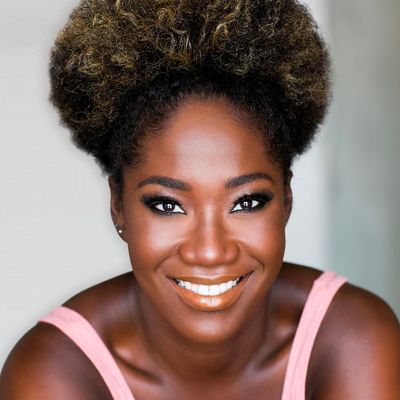
Amber Iman / @amberskyez kindly shares how struggles during her career ultimately led to some of the best opportunities she'd ever come across. We also got to talk to Amber about the Broadway Advocacy Coalition and how a "one-time" event evolved into a full time movement... Read More
From the show: Built For The Stage Podcast
Guests
Featured Shows
About
Amber Iman / @amberskyez kindly shares how struggles during her career ultimately led to some of the best opportunities she'd ever come across. We also got to talk to Amber about the Broadway Advocacy Coalition and how a "one-time" event evolved into a full time movement.
BROADWAY
SOUL DOCTOR
SHUFFLE ALONG
www.builtforthestage.com - Schedule your one week trial today!
Transcript
This transcript was automatically generated and might contain errors.
[0:00] Amber Iman: It was a blessing because when I was auditioning for the role, I was not auditioning to play Nina Simone. The role actually belongs to Indyree. She had been workshopping it and taking acting classes and like was really ready to make a spectacular Broadway debut. But she was also releasing an album and they were trying to work out her schedule. So she was probably only going to do five or six shows a week. So I was auditioning to stand by for her. And so when I finally booked it, it was under the assumption that I booked a standby role. My agents called me like at noon to say that I got it. And then they called me at like seven o'clock at night, like, wait, are you sitting down? We have news. And I was like, wait, am I off Broadway? Do they fire me? Like, this is so confusing. And they were like, no. Apparently, Indyree dropped out months prior, and the producers never told anyone.
[1:09] Joe Rosko: Hey, what's going on? It's me, Rosko, founder and coach of Built for the Stage, an online training platform that helps actors to train like athletes. If you're an actor, you're an athlete. So start training like one. Go to BuiltfortheStage.com and you can try a free trial and see what training is all about at Built for the Stage. We'll help you with your nutrition. We'll help you with a solid program to put you through to just better your performance on stage. So once again, go to BuiltfortheStage.com or you can go to Instagram at Built for the Stage. Give us a follow and check out what we have going on there. As always, we have an exciting guest for you today. Super excited to talk to her. We have Amber Iman on Built for the Stage Podcast. Hey Amber.
[1:54] Amber Iman: Hi.
[1:55] Joe Rosko: Thanks so much for joining us.
[1:58] Amber Iman: Thanks for having me.
[1:59] Joe Rosko: How are you?
[2:00] Amber Iman: I'm doing well. I'm down here in Florida. I went from one hot spot to the other from New York to Florida.
[2:07] Joe Rosko: Where are you right now?
[2:08] Amber Iman: I'm in Atlanta.
[2:09] Joe Rosko: So I went from a hot spot to a hot spot as well.
[2:12] Amber Iman: Yeah, it's hot today, right?
[2:14] Joe Rosko: Yeah, it's really humid and hot, but I'm not complaining.
[2:17] Amber Iman: It could be worse.
[2:18] Joe Rosko: I know. It could be the winter and walking through the dead of Manhattan in snow.
[2:23] Amber Iman: Yeah.
[2:24] Joe Rosko: So yeah, I was gonna bring that up that you're from Atlanta, Georgia, so we're not too far away. We're on that Florida, Georgia line right here.
[2:31] Amber Iman: Yeah, we are.
[2:32] Joe Rosko: Speaking of snow, I kind of wanted to just break the ice with our conversation today and talk about your snow globe collection.
[2:41] Amber Iman: You know, it's funny. Being home in Atlanta, I have been like helping my parents clean out the basement, and I stumbled upon remnants. You know, over the years, a couple of them got broken or lost, but I still have the one from like Disney World. I have one from Louisiana. Um, what's the Tennessee Aquarium? I've got I still got a couple of them laying around.
[3:07] Joe Rosko: If you had to choose a favorite, do you have it? Do you have one?
[3:10] Amber Iman: Ooh, um, I think the aquarium one was cool because it had little turtles and fish swimming around in it. That was really cute. I love that one.
[3:18] Joe Rosko: How did you get into—sorry to make this whole podcast about snow globes, but how did you get into collecting snow globes?
[3:25] Amber Iman: Um, probably because they're shiny and have glitter. I don't know. I mean, I was probably four or five when I started collecting them, so probably just the glitter.
[3:37] Joe Rosko: Got it, got it, got it. Um, so for those of you listening out there, uh Amber made her Broadway debut in SOUL DOCTOR as Nina Simone. We're gonna chat a little bit about that. Um, and she was nominated for a Clive Barnes Award, which recognizes extraordinary work for young professionals in the field of acting and dance. P.S., uh, Ian Padgett, who is also in SOUL DOCTOR, a great friend of ours here at Built for the Stage says hello.
[4:03] Amber Iman: Love it.
[4:03] Joe Rosko: Um, and he wants to throw out a uh celebrity question. He wants to ask, when you're putting out an album and when you're gonna cover more Nina Simone songs.
[4:15] Amber Iman: Tell Ian when somebody writes me a check.
[4:20] Joe Rosko: All right. All right. We gotta talk with your representation and start pumping that pitch to people that we need to get you on an album, ASAP.
[4:29] Amber Iman: Yeah, I mean, the real answer to that question is I'll do an album when I'm ready. Um, I am kind of carving my own path and doing what makes the most sense for me. I'm not in a rush to create a mediocre album. Um, and music is just way too important to me and way too much part of my life. Um, and if I don't have anything to say musically, I'm not going to. So at this point, I don't have anything to say. Um, I'm writing other things that make sense and that are where I am feeling most inspired. But at some point the stars and the money and the music will align and it'll be a great, great piece of work.
[5:08] Joe Rosko: I love that. If you're gonna do it, do it right, right?
[5:11] Amber Iman: Yeah.
[5:12] Joe Rosko: If you guys are listening, um and you're not familiar with SOUL DOCTOR or Nina Simone. I actually spent my morning as I was kind of prepping for a conversation, uh, listening to some of her songs. And uh I love her renditions of feeling good and I put a spell on you. I was definitely rocking out to those uh this morning. Um tell us a little bit about uh your experience with your Broadway debut in SOUL DOCTOR and just like maybe uh great experiences you had or lessons you learned, things like that from your experience.
[5:30] Amber Iman: Um, SOUL DOCTOR was beautiful and terrible and all of those things combined. Um, it was a blessing because I when I was auditioning for the role, I was not auditioning to play Nina Simone. The role actually belongs to Indyree. She had been workshopping it and taking acting classes and like was really ready to make a spectacular Broadway debut, but she was also releasing an album and they were trying to work out her schedule. So she was probably only gonna do five or six shows a week. So I was auditioning to stand by for her. Um, and so when I finally booked it, it was under the assumption that I was I booked a standby role, and my agents called me um like at noon to say that I got it, and then they call me at like seven o'clock at night, like, wait, are you sitting down?
We have news. And I was like, Wait, am I off Broadway? Do they fire me? Like, this is so confusing. And they were like, no, apparently Indyree dropped out months prior, and the producers never told anyone. So the whole time I was auditioning, it was for the actual role. And so, like overnight, my life kind of changed very, very quickly. I was terribly frightened. I thought I was getting punked. I thought at any moment they were actually going to fire me and bring her back. So it was a very stressful time. Um, but it did, I mean, that role, the opportunity changed my life. I still get gigs based off of people who saw SOUL DOCTOR, what is that, seven years ago? Um, so playing the role was a dream, getting to wear gorgeous gowns and sing great songs.
Um, her brother came to see it, which was so beautiful because he was probably the closest person to her in her life. He was her road manager for many years, and he brought me all these signed pictures of her, and it was just I love SOUL DOCTOR, honestly, because it wasn't a success. And when your first show isn't a success, you learn more. Like if it had made a bunch of money and been a great, great opportunity, you know, on all fronts, things probably would have gone a bit different for me. But because it was a struggle, because it was a difficult and a challenge, I feel like I learned a lot more about the business, how to navigate the business, finding my place in the business. So I'm grateful for that opportunity.
[8:02] Joe Rosko: Wow, such a great story. Um, I want to just kind of go back and highlight two points because I love to just parallel um stories from people's theater career and how it relates to fitness. And one of those things was when you found yourself playing the actual role of uh Nina Simone and not just covering, and you felt overwhelmed or felt underqualified, or felt like, how am I ever gonna pull this off? And a lot of the times when you're starting a fitness journey, a lot of people can feel that same thing where it's like, I don't know where to begin, I'm so out of shape, I don't know what to do in the gym, or I don't know even how to begin. Can you just um tell us a little bit more about how you conquered your fears or got over that hump of like, I am meant to be here, I can do this role. Like I am, I'm fit for this.
[8:54] Amber Iman: Got it. Um, well, after the first week, and they didn't fire me, I was kind of convinced that I was gonna stick around for a while. And um, honestly, a big help was my co-star Eric Anderson. He's one of those people who's just a light and a burst of positivity. And when times got hard, he was there to motivate me. Um, I walked out of rehearsal one time because just the circumstances in the room were unbearable, and I was really stressed out, and I was like, I need to get out of here, I need to get some air. And he kind of chased me down 42nd Street. And you know, we had to talk and he had to say, so this is the circumstance. This is what we're working with. And you don't have to fight by yourself.
I'm with you. We can work this together. So having him there as a listening ear, as even just somebody who I could make eyes with across the room and we can roll our eyes together, just having him in the room with me really helped uh encourage me because you know, it's Broadway debut, you don't know what to expect, you don't know what you're getting yourself into. And having someone who had multiple Broadway shows under his belt, he's been there, he's done it. Um, he just helped me have perspective. A couple other cast members were really supportive who were veterans and understood what I was going through. It was just great to have like a cast that really felt like a community to kind of help me usher me into Broadway.
[10:21] Joe Rosko: I love that.
[10:22] Amber Iman: Another fitness parallel or just life in general is just choose your squad wisely or like have people around you as a support system.
[10:31] Joe Rosko: So I love that you brought that up as well.
[10:33] Amber Iman: Yeah, you can't do it alone.
[10:35] Joe Rosko: You really can't. So if you are fortunate enough to have people that you trust that have your best interests at heart, like it's kind of a recipe for success.
[10:44] Amber Iman: Amazing, cool. The other thing I wanted to highlight from what you had said previously was that you you kind of are grateful in a way that SOUL DOCTOR wasn't quote unquote a success, and that you kind of started out with a little bit of a, you know, a pothole in the road, if you will. Um, can you just highlight a little bit more of your experience of like it opening and it not panning out the way you all had hoped, and then all of a sudden it's closing. Um, can you kind of relive that a bit for us and just how that kind of molded your future for the better?
[11:21] Amber Iman: Um, as you said. Yeah, I mean, you have no really, you you never know what's gonna happen with the Broadway show. Everything is uncertain. How long is it gonna run? How much money am I gonna make? Am I gonna get a Tony nomination? Will this lead me to a TV show? There's so much uncertainty there. And so I had only lived in New York a year and a half. I don't, I think I had just gotten like my first apartment, and I was so excited about all these possibilities: financial, career, personal, and you know, we could kind of tell early on we weren't getting a lot of audience members, and I had never known to like read Playbill and look at the weekly grosses. So I started looking at those and the numbers weren't looking good.
And backstage, I think we opened in August or July, and people started placing bets. Like, will we make it to Labor Day? Will we make it to Halloween? And I was like, oh my goodness, this really is bleak. So when we finally got our closing notice, the shock of it was just insane for me. Uh, I felt like I was just getting started, and I didn't uh really know what was coming next, and I was so afraid. But it was like it helped me understand like this is the business, this is how it works. And we learn a lot more, I think, in the valleys than we do at the top of the mountains. So just it prepared me for the future. It was like, you know, maybe I lived in a fantasy land where you know, you get a Broadway show and you work there for 17 years.
And you know, that's not really how it works. So it helped me be able to understand more financially uh how Broadway works, understand the business of it. Like you'd never stop hustling, even though you're on Broadway, you gotta keep auditioning, you gotta keep doing workshops. So I learned just those lessons early on that helped me know how to navigate being on Broadway, what it meant to have an artist hustle, how to take care of myself, how to take care of my body. It was just like a quick mini lesson. It was only three months long, but I feel like I learned a lifetime's worth of lessons in those short three months.
[13:24] Joe Rosko: How do you take care of your body uh now? Like now that you've progressed in your career, what what do you go to the most that you know helps you to sustain during a run of a show?
[13:36] Amber Iman: Um, so you talked about fitness journeys, and I'm fortunate to say that I kind of started my fitness journey in 2016. Um, I did a show called Witness Uganda.
[13:48] Amber Iman: I did a workshop of it, honestly. I think it was two weeks back in I think 2014. And there was a guy in the room in the show, his name was Roger Covington. And Roderick, I call him a lifestyle Snickers bar because he is chocolate and toned and gorgeous, and you just want to eat him up. And the first day I met him, I just looked at him and I said to him, I was like, What do you do? Like, do you work out? I know you work out, clearly, but like you have a glow about you. There's something different about you. He was like, Well, I have a company, it's called Core Rhythm Fitness, and it's made for artists, and I own and operate it. And I was just hearing him talking, and I remember looking at him and being like, I'm not ready now, but when I'm ready, I'm gonna call you.
And two years later, I booked Shuffle Along, and I started rehearsals and I started getting money. It was like a pre-pre-lab. And as soon as I got like my first couple of checks, I called him and I was like, I got some money. I'm ready emotionally, I'm ready physically. I want to start working out with you. And Roderick and his company changed my life. Um, he all of his whole fitness organization is built for artists and by artists, it's for artists, by artists, and about artists. He understands our relationship to money and employment and unemployment, and how when we've got money and got a job, we're going to SoulCycle and we're, you know, eating and buying produce from Whole Foods, and you know, we're working out regularly.
And then when we don't have money, all of those self-care practices go away. And so he comes at fitness from a place of wholeness and not just speaking to your body, but your mind and your heart and your spirit. And so I started working out with him, and like, yes, it aligned my body, and yes, I lost 40 pounds and was stronger than I'd ever been, but he taught me just a mental and emotional awareness and being listening to my body and taking care of my body. So long term, I know that protein and veggies is what I need to eat when I'm working and drinking as much water as I possibly can, and I know I'm not a yoga girl, but I love a kickbox. I love a rumble. Yeah. Where I get to like get out all of my anger and frustration and aggression.
So I love a good hit workout. And I know where to go to get what I need. You know, if I don't have a lot of money, I know that I can go on YouTube and get a free workout. Or I can go walking in my community. Um, I know it's also important to have a community of friends who are also accountability partners. You know, we'll have a cocktail, we'll have ice cream, but then we'll check in with each other and be like, okay, we need to eat salads now. You know, we need to go running and we need to go walking. So when it comes to sustaining during a show, eating right, exercising regularly, keeping myself around people who keep me accountable. Um, those are all things that help me maintain. Awesome.
Yeah, body, mind, spirit for sure. They're all connected. Um, you brought up Shuffle Along um in the midst of that. That was your second Broadway show with some heavy hitters with Audra McDonald, Brian Stokes Mitchell, Billy Porter. You also had Bill for the Stage fam Richard Riaz in there. And yeah, Richard's awesome. And then um a previous guest in the podcast, uh, Offra Hines. So yeah. Good good people, right? Good people. Um, it was nominated for 10 Tonys. Was this uh a limited run? Was it a limited engagement or the run was surprisingly short?
[17:28] Amber Iman: It was an open run. What happened? You had all of the people, all the awards, all like you'll have to ask Scott Rudin, because I have no idea. Oh my goodness. Is there are there any uh is there any legal videos out there that someone could see of this production?
[17:50] Amber Iman: I don't believe there are any legal. We don't even have a cast recording, so I doubt. I mean, I've seen clips of it on YouTube, so there are illegal things, but yeah, we don't have anything legal. Right, right, right. Well, it just goes to show you in reiterate or point um over and over again, just like there's ups and downs on this journey, no matter how good or bad you think it is, they're inevitably going to happen. But like I like to tell our clients at Built for the Stage is that we are where we are, and all we can do is keep moving forward. And I think that message now more than ever is uh very important.
[18:25] Amber Iman: Absolutely. I actually came across your name um from Broadway Advocacy Coalition. Um they did a YouTube series uh a week or so ago um about Broadway for Black Lives Matter again. It was three days of discussions, and I was lucky enough to be on two of them. Um could you just talk a little bit about um BAC and just what's going on with them currently, what your mission has always been, and just anything for our listeners to be informed about.
[18:58] Amber Iman: Got it. Well, uh speaking of Shuffle Along, um, in 2016, we were all in the theater and working together, Brittany Smith, Adrian Warren, and myself, and it was the height of black men being murdered in the streets. Trayvon Martin, Alton Sterling, Philando Castile, um, just us every other day. It was somebody was being murdered by police, by fools, by whomever. And I remember the Pulse nightclub shooting had happened, and I saw on one of those digital platforms that a busload of Broadway actors were going down to Florida to sing, and I thought that was so amazing. And I was like, Oh, I know when you're busy doing a show, you miss events. So I went to Google all of the Black Lives Matter events that Broadway had had.
And my Google search turned up empty because Broadway had done absolutely nothing. And I was like, Yeah, that's pretty on brand for Broadway. So I wrote this Facebook post because I was just angry. And I the post said, you know, there's Broadway for Shark Week, there's Broadway for Britney Spears and Trader Joe's, where's Broadway for Black Lives Matter? And I kind of just wanted to poke the bear and hide the stick. I had no intentions of really doing anything. Um, but I walked away from my computer, came back an hour later, and my post had gotten like 2,000 likes, and I had a hundred text messages of friends being like, yo, Amber, if anyone's gonna do anything, it's gonna be you. And I was like, I'm not doing anything.
So I don't know what you're talking about. But people kept asking and kept being like, Amber, this is our time to build community to try and come together and pull our resources. So we had a meeting, and it was like, what do you want to do, Amber? That's what people kept asking me. And I said, Well, Broadway likes to sing for things, but what do we do when the song is over? So I was like, I want to have a night, an event where it's singing and dancing is spoken word, but then also let's bring in community activists and policy reformers and NYPD officers, and let's have a dialogue. You know, so many people are angry. They don't even know what they're angry about. They don't know what their rights are.
We just don't know anything, but we're angry. So we put together an event, 1,200 people showed up. Uh, let us see in India everywhere of headliners and Cynthia Erivo and Audra and Stokes and Joshua Henry. And the event was a huge success. And after it was over, I was like, okay, we've done our duty. Thank you so much. Have a good night. And people were like, what's next? And I was like, there's nothing next. What are y'all talking about? And people kept asking. So we took a moment to like regroup. And then we decided to form Broadway Advocacy Coalition, where our original mission was bridging the gap between artistry and activism. And so we started this six-month series where we had a partnership with Columbia Law School, and we would do these events called the Invitation, and it'd be like 90 minutes.
Each month would be a different topic: immigration, sanctuary cities, voting rights. And we are basically building community, offering our guests options and ways of being better citizens. Like the end of every event, we would hand them a little postcard and it would say, This week, introduce yourself to your neighbors and invite them over for dinner. Go into your local bodega, your local beauty supply store, introduce yourself, commit yourself to supporting locally. So we started doing that work, and then we branched out and started working with all these different organizations that we were partnering with to create pieces. Like we would bring lawyers together with formerly incarcerated men, and we're wondering how we can start dismantling a broken system.
So we create art pieces based around their lives and experiences because art a lot of times is sugar that makes the medicine go down. You know, if you see a piece, it's different if somebody stands in front of you and yells about police brutality, but maybe if you see a short film or a documentary or a dance or spoken word piece, it helps you process or understand it a little better. So we've been working for four years in all different spaces. And then finally, you know, we're in a pandemic and George Floyd is being murdered. And I text Brent Smith and was like, what are we gonna do? You know, like reminiscent of four years prior. What are we gonna do? And we decided run away from Black Lives Matter again needed to happen, but this time a three-day forum.
And what was most important for us on all ways is taking care of our community. So the first day was for just black artists just to come together, to listen, to heal, to ask questions, to just be in a space together with other black artists because it's a pandemic, people are all over the world. People are at home with their parents, alone with people who don't understand the art and the business. So I mean, the first 30 minutes was a curated playlist of just music and being able to scroll and see literally 600 people dancing to the same music. It just felt like a homecoming. It felt like a family reunion. It just felt good to be in that room. So once we finished healing, the second day was a day of listening.
And I believe we had 4,500 people show up, black and white, and the space was for white people to listen while black people share their stories. And it was such, I think a great day just for people to listen. Don't worry about needing to apologize. Don't worry about needing, just sit here and listen and start to understand the skimming of the surface. Because we are, I mean, we're in the very beginning of this thing. We are just at a point of listening right now. Um, so that was a very, I think a powerful day to hear artists like LaShawns, Lisa Tommy, Daniel Watts, like huge heavy hitters in our industry to sit and talk about the racism and the oppression and you know, working in audition rooms and rehearsal rooms and feeling stifled and feeling unsafe.
And just trying to keep your head up in a system and in an industry that you feel like you have no voice, and you feel like if you speak out, you are going to lose your job. You're going to have a tarnished reputation. So a lot of white colleagues and producers and directors and theater owners needed to hear that. And the third day was about accountability. Like, how can we move forward, making tangible changes so that when we go back to work, everyone is working in a space that is equitable, that feels safe, that doesn't feel stifling, doesn't feel oppressive, depressing. Um, so those three days were just the beginning of conversations that I hope we will be having for a very long time.
[25:42] Joe Rosko: Love it. Thanks so much for just recapping that for the listeners. Uh, we'll make sure to put the website in the uh comments below on this episode, but it's B-way Advocacy Coalition.org. Um, you can check out more of what's going on with them and how you can help support. Um, Amber, I've never met you in person, but I think I did see you on the stage once um in Rent on the New World Stages, because I did get to see that a couple uh couple years back. It was uh, I don't know. It's my first Broadway, I mean my first New York gig, I should say. Yeah, so never uh officially met, but um, I'm assuming I caught you in the show um back then. I hope to see you in more soon.
[26:28] Amber Iman: Uh, I guess fingers crossed early 2021.
[26:32] Joe Rosko: Um, we'll see. I I mean everything that I'm attached to is saying fall of 2021. So we'll see, hopefully.
[26:40] Amber Iman: Oh, all right.
[26:41] Joe Rosko: Well, whenever it is, I just wish you the best.
[26:44] Joe Rosko: And uh I just am so grateful for the time that you've given us today. Thank you so much for being on Built for the Stage Podcast.
[26:50] Amber Iman: Thank you for having me.
[26:52] Joe Rosko: Our pleasure.
[26:53] Joe Rosko: All right, everyone. Thank you so much for listening. Once again, if you like the podcast, please rate, subscribe, leave a comment. Um, we are produced here at uh Broadway Podcast Network. Make sure to check out Broadway Podcast Network on bpn.fm where you can hear a whole, whole, whole lot of Broadway podcasts for you to listen to. Um, if you want to try that free trial, built for the stage.com, go to Instagram at built for the stage, and um, we'll get you on your way. Thanks again for listening. It's me, Roscoe signing off.
© Broadway Podcast Network, All Rights Reserved