

Journey through the 1980s-1990s New York City theater scene. The days of Little Shop, Larry Kramer, and Lucielle Lortel. At the center of a burgeoning Off-Broadway scene sat Ben Sprecher, an ambitious theater owner who was determined to make a name for himself... Read More
From the show: Burnt: How The Show "Rebecca" Set Broadway Ablaze
Guests
Featured Shows
About
Journey through the 1980s-1990s New York City theater scene. The days of Little Shop, Larry Kramer, and Lucielle Lortel. At the center of a burgeoning Off-Broadway scene sat Ben Sprecher, an ambitious theater owner who was determined to make a name for himself.
Twenty years later, it was all gone.
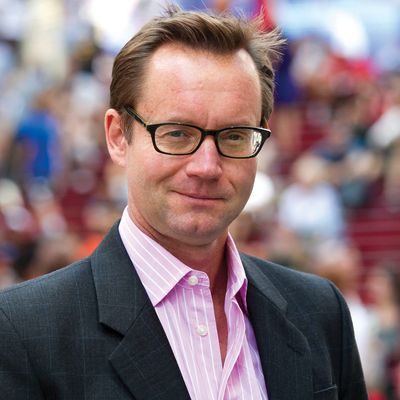
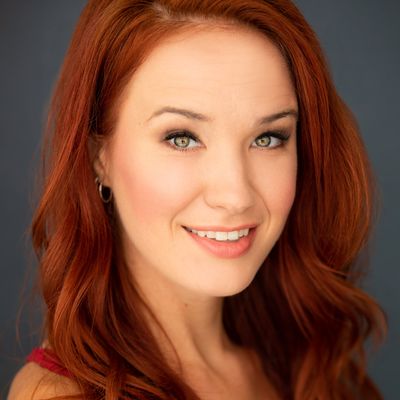
Episode 3 features interviews with Kevin Stites, Sierra Boggess, Tripp Phillips, David Kamp (Vanity Fair), Michael Riedel (New York Post), and Peter Bogyo.
Transcript
This transcript was automatically generated and might contain errors.
[0:00] Blake Ross: Episode 3, The Roaring 90s.
[0:04] Blake Ross: Part 1, Still Fucking At It. The person who sat at the center of Rebecca was undeniably its determined producer, Ben Sprecher. As the saga unfolded, he was positioned at the forefront of this media onslaught. During that time, I was an editor covering the story where my team and I got regular phone calls, not from a publicist, but from Sprecher, hoping to position himself and his show in a very specific light. It's not often that I'd hear from a producer of a show. Maybe an actor seeking publicity, but a producer? Not usually. That's what publicists are for. Of course, Sprecher got screwed by his, so I guess you can't blame the guy. Photos of Sprecher looking hardened and sullen often accompanied many of the stories of Rebecca's collapse.
And throughout these interviews, Sprecher was no doubt casting himself in the role of victim. In the New York Times, in an article titled Rebecca Producer Explains How Trust Betrayed His Dream, there was Sprecher, dressed in a navy pinstriped suit and silk tie, glaring angrily at the camera.
[1:21] Ben Sprecher: Do I feel like I was duped?
[1:23] Blake Ross: He said. Wearing a similar scowl in an interview full of sobbing, he proclaimed to journalist David Kamp,
[1:37] Ben Sprecher: I cannot tell you how much I believe in this musical. I am still fucking at it.
[1:52] Blake Ross: What Sprecher doesn't mention in any of these articles and interviews around that time is the many people under his employ that were left jobless. The actors, stage hands, musicians, all who turned down other gigs to be available for Rebecca. Some did work they weren't paid for. Here again is music director Kevin Stites, actress Sierra Boggess, and stage manager Tripp Phillips.
[2:22] Kevin Stites: Everybody had quit a job or didn't take a job because of it. The actors got two weeks of pay. And myself and um Nick Archer and Greg Jarrett, my assistant associate, were promised a week. Uh the actors got their money, and I'm still waiting for my week's pay. We didn't go into rehearsal. Official rehearsal. Michael and Grazzi and I worked on it in her apartment in New York for a couple weeks before finally it just appeared that this was never ever gonna happen. But we kept working. We were sort of told to end. We just said, well, if this is gonna go again, let's just keep doing our job.
[3:04] Blake Ross: These actors, these musicians, these crew, all these people who were promised these jobs, who have contracts for these jobs, they start in a matter of days and then you pull the plug. And it's you knew that you had to have known that you didn't have the money or whatever this thing is, but you went ahead and played, you know, Monopoly or whatever with people's lives. I mean, people had left other shows in order to do this new musical. And I just want to stress how devastating that was on a level of these are humans with lives that had given up a lot in order to do this and had been promised this money, this show, and that was really, really devastating for people. So to take responsibility is a really good thing.
If you were the person that was in charge of this, instead of denying it or trying to place the blame or something, I think to take responsibility for the fact that you did make mistakes. And if you are going to be a producer or an executive producer, especially, then you have to understand that that is what you're taking on.
[4:26] Kevin Stites: I just was in a state of shock and complete astonishment that at this point, literally 72 hours, whatever it was, even less than that before the first rehearsal, they were once again pulling the plug and disrupting everyone's lives and professional schedules and livelihood. I personally ended up turning down uh two Broadway shows that year for the two times that Rebecca did not go, and that was very difficult for me to um to get past.
[4:54] Blake Ross: So who is Ben Sprecher? This guy rolled up in all this mess.
[5:25] Kevin Stites: Ben seemed like a slumpy guy with a dream. I mean, he'd be played by a character actor in the movie version of this. He was really emotional and really just wanted to make a good show, and I'm a good guy. He kept insisting what a good guy he is. And there was something kind of uh Broadway Danny Rose about the sort of shabbiness of the office. It was like you take the elevator to the fourth floor, but his office is on the fifth floor, so then you have to go up some back staircase where you're stooping a little, and then you finally find this office, which is kind of eccentric with sloped roof, sloped ceilings because it's the top floor of some little theater district office. So everything about it seemed kind of cinematic.
[6:09] Blake Ross: Often alongside Sprecher in these interviews was his attorney, Ron Russo. A longtime criminal defense attorney. Ron is a tall man with a salt and pepper beard and charming Brooklyn accent. When I met with him in his downtown Manhattan office, cramped with books and papers, an imposing solid wood desk, and the odd Grecian bust here and there, he went on about researching me before meeting me. How he was very impressed with me, even stopping his receptionist to tell her how accomplished a young lady I was. Ron is a smart, slick dude who has all the polish and self-possession that Ben Sprecher doesn't have. Ben Sprecher is someone who lets his emotions get the better of him. He often uh wept when speaking to me, whereas Ron Russo is just smooth and knows how to hit those talking points on point.
[7:03] Blake Ross: Once it was clear that the show was not gonna go on anytime soon, Ben was on a war path via the media. He was determined, maybe even blinded, to reposition Rebecca and the insanity that ensued as just a pit stop on the way to his eventual triumph. He had the rights to the show for just a short amount of time. He had half the funding, much of it already spent, and a deadline to get the show up. Or, depending on the agreements he had with his remaining investors, he'd have to give them their money back. So, he and Russo used the media to try and reshape the narrative of him as just a naive upstart in way over his head to a man on a mission to save the day on a beleaguered musical. Sprecker was going to use the old adage, any press is good for us. He told the press in 2013 that the show was, quote, even more valuable than it was six months ago because of all the hoopla.
[8:08] Blake Ross: Part two. That time proved to be a very fruitful one for the commercial theater.
[8:50] Blake Ross: On Broadway, big dramatic musicals like Cats, Les Misérables, and Grand Hotel became mega hits, running for years and bringing in millions of dollars to Broadway coffers. Off-Broadway was cooking too. Defined as theaters with 100 to 499 seats, Off-Broadway was divided into two worlds: nonprofit theaters like Roundabout, Vineyard, Playwrights Horizons, and the Public Theater, and independent commercial houses like Downtown's Manetta Lane and Cherry Lane and the Westside Theater in Midtown. Together, these two forces became the creative engine that drove theater in New York City at that time. New off-Broadway houses were popping up all over New York City during this time to keep up with the demand.
Off-Broadway became home to serious plays with numerous Pulitzer Prizes for drama given to shows that originated there. Still, musicals like Little Shop of Horrors and Nunsense became successes, running for years. Playwrights like Sam Shepard and David Mamet became Off-Broadway legends and often premiered some of their biggest works on Off-Broadway stages. Terrence McNally and Larry Kramer were doing fierce activism through art off-Broadway.
[10:16] Blake Ross: Lortel was an actress in the 20s and 30s before marrying the very wealthy industrialist Louis Schweitzer. Lortel took her newfound mega wealth and began nurturing her love of the theater by producing underappreciated new playwrights both in the city and at her grand compound in Connecticut. Her namesake theater became ground zero for the term Off-Broadway. For many years, the names Ben Sprecher and Lucielle Lortel were inextricably linked. Lortel, who passed in 1999, is still a household name to most New York theatergoers. Her name still adorns the Lucille Lortel Theater, a 24th wedding anniversary gift from Schweitzer. The theater sits in the heart of the West Village on a bustling Christopher Street. Her namesake is also a top prize earned by the best of Off-Broadway performances. And her foundation, the recipient of her fortune after her death, has doled out millions to worthy theater companies and creators across the country.
[11:20] Blake Ross: This closeness to the deep pockets and cultural heft of Lortel made Sprecher a formidable force in the 80s and 90s New York theater scene. He was atop the Off-Broadway food chain, a big commercial success in those days. It gave him an air of confidence, some say arrogance, that made him the kind of guy you either loved or didn't.
[11:54] Julian Schlossberg: It had a hard edge I had never heard in our community. In just those few seconds, I recognized in him an adversary and a harbinger of change for Off-Broadway. Others felt an immediate kinship with the hard-nosed, hard-driven Sprecher.
[12:12] Julian Schlossberg: I'm Julian Schlossberg, and I'm a producer. But I met Ben, and he was very gracious and showed us around the theater of the Barriety Arts and did something that I was very touched by, which you know, sometimes these things happen in your life, and even though it's almost 30 years ago, you don't forget. I said, So would you be kind enough to tell me what the problem I might face if I take the theater? Because I'm leaning towards. He said, The only problem is that in some cases, especially in the balcony, it's tough sometimes to see the stage. You might have to give discount for those seats. You don't want to have people complaining. He could have said, I can't think of any. He didn't have to. He was very, he was came right forward about it. I never had a problem. And in fact, I did as many plays I co-produced with him as I did just being his being my landlord. And he was just tops all the time. He has a lot of great strengths as a person.
[13:13] Blake Ross: Some took a more sinister take on Sprecher, like the notoriously acid-tongued New York Post columnist Michael Riedel.
[13:22] Michael Riedel: Anyone in the theater knows if you fall out of favor with Riedel, you better watch out, as you can hear in a moment. Ben Sprecher was always somebody who um you felt there was a sleaziness to him. When I really got to know Ben, he used to run the Lucille Lortel Foundation. Lucy Lortel was a very, very, very rich woman who owned the uh Theater de Lys and began the Lucielle Lortel theater down on Christopher Street in the West Village where I live. And then there was a foundation, and I always heard, you know, a little rumbling that Sprecher was like, This is his piggy bank. Lucille's old. She trusts Ben. She gives him money, he runs it. And no one was ever minding what he did there. So there was always a sense, if you were in the know back then, that Ben Sprecher, you know, he got his, he hooked his fish, and that was Lucielle Lortel.
[14:28] Blake Ross: And he lived on that for a long time.
[14:31] Blake Ross: And then Ben stepped up when Lucille died, and he was in control of the foundation.
[14:37] Blake Ross: God, I would love to get the records of where some of that money went.
[14:42] Blake Ross: As I said, loved him or didn't.
[14:49] Blake Ross: Sprecher was nothing if not incredibly ambitious.
[14:53] Blake Ross: While working with Lortell, he refurbished the old promenade theater on the upper west side of Manhattan and made it a state-of-the-art center of this booming commercial off-Broadway golden era.
[15:05] Blake Ross: Its first show post-Sprecher Rehab was the New York premiere of David Rabe's Hurley Burley, directed by the one and only Mike Nichols.
[15:15] Blake Ross: It starred William Hurt, Judith Ivey, Harvey Keitel, Christopher Walken, and a young Cynthia Nixon.
[15:23] Blake Ross: After this auspicious start, the promenade would house big named New York premieres like Sam Shepard's A Lie of the Mind, Neil LeBute's The Shape of Things, Edward Albee's Three Tall Women, and Terrence McNally's The Lisbon Trivia.
[15:38] Blake Ross: Nathan Lane, Paul Rudd, Steve Martin, Holland Taylor, Donna Murphy, Macaulay Culkin, and Rachel Weiss all had their names on the marquee there during the 20 odd years that Sprecher ran the theater.
[15:52] Blake Ross: The promenade was so successful that at one time Sprecher bounced around the idea of taking over the West Side Playhouse in his native LA and calling it the Promenade Theater Los Angeles.
[16:03] Blake Ross: There were talks of also opening up similar-sized commercial theaters models on the promenade in other cities too, although none of that materialized.
[16:12] Blake Ross: The West Side eventually became the Geffen Theater named for Media Mogul and billionaire David Geffen.
[16:22] Blake Ross: After his hit with the Promenade, Sprecher took over an old theater on East 14th Street that had a sketchy past, playing B and C grade movies and softcore pornos.
[16:34] Blake Ross: Sprecher turned it into the Variety Arts Theater, and it joined others in the Union Square area looking to revive downtown into the bustling theater destination it once was.
[16:45] Blake Ross: New York Theater and Broadway itself grew from the Union Square area before moving more north, so it wasn't outlandish to think that that area was somewhat hollowed ground for the performing arts.
[16:57] Blake Ross: Mega producer Daryl Roth opened her namesake theater there around the same time.
[17:03] Blake Ross: It's fashioned out of a former bank and it still stands grandly facing the east side of Union Square Park.
[17:10] Blake Ross: So Sprecher had three really big jobs.
[17:14] Blake Ross: He owned two theaters and still stayed on to manage the Lortel.
[17:18] Blake Ross: If you were operating off Broadway in those days and you didn't sit on the good side of Ben Sprecher, you likely weren't going to get very far.
[17:27] Blake Ross: Lots of people I spoke to referred to him as a great champion of commercial off-Broadway.
[17:33] Blake Ross: But by the late 90s, early 2000s, the commercial theater model had changed.
[17:38] Blake Ross: Tastes had changed.
[17:40] Blake Ross: Shows like Rent, Avenue Q and Bring in the Noise, Bringing in the Funk had been smash hits off Broadway and then quickly moved to Broadway.
[17:49] Blake Ross: Theater in general started to become a lot more expensive to put on, and thus people's downtown dollar didn't get them what they used to.
[17:57] Blake Ross: In the 80s, you could see the original production of Little Shop for as little as seven bucks.
[18:03] Blake Ross: Steel Magnolias would cost you $27.
[18:06] Blake Ross: Charles Bush's campy hit, The Vampire Lesbians of Sodom, had people flocking to Greenwich Village for five years with a top ticket price of $28.
[18:19] Blake Ross: When Lucia Lortel died, the century was closing, and along with her went the big heyday of commercial off-Broadway.
[18:28] Blake Ross: Soon after her death, Sprecher left the Lortel to focus on his own theaters.
[18:34] Blake Ross: It was getting increasingly difficult to be successful, sticking to just Off-Broadway.
[18:39] Blake Ross: In 2004, the Variety Arts shuddered with no hits to its name.
[18:44] Blake Ross: Two years later, he shut down the promenade too.
[18:49] Blake Ross: But he wouldn't leave off-Broadway altogether until he opened up the Little Schubert Theater.
[18:56] Blake Ross: And as Sprecher had learned before with Lucia Lortell, his star would rise with his proximity to greatness.
[19:03] Blake Ross: In this case, the greatness was one of Broadway's most towering figures.
[19:09] Blake Ross: Gerald Schoenfeld of the Schubert Organization.
[19:12] Blake Ross: Here again is Sprecher's colleague, Peter Bogyo.
[19:16] Peter Bogyo: Ben had the total trust of the Schubert organization.
[19:22] Peter Bogyo: He considered the late Jerry Schoenfeld to be a mentor of his.
[19:27] Peter Bogyo: Ben had come to the Schuberts with the idea of building the Little Schubert Theater so they would have an off Broadway base in Midtown.
[19:37] Peter Bogyo: It was the Schubert's first and only off Broadway endeavor.
[19:42] Peter Bogyo: Convinced that having a state of the art off Broadway theater whose space, technology, and proximity to Broadway was the next wave, Sprecker convinced the Schubert to throw down $13 million to build the theater.
[19:55] Blake Ross: It opened with a Tommy Toon review, which ran just a few weeks.
[20:00] Blake Ross: In the 20 years since opening the theater, it's been played by less than 20 productions, none lasting more than a few months.
[20:08] Blake Ross: It's since been renamed Stage 42 and had its first real hit just before the 2020 pandemic with Joel Gray's Yiddish version of Fiddler on the Roof.
[20:19] Blake Ross: Once again, Michael Riedel.
[20:25] Michael Riedel: Jerry Schoenfeld on the idea when off-Broadway was really exploding in the early 90s.
[20:34] Michael Riedel: That the Schuberts should open the Little Schubert Theater there on West 42nd Street.
[20:41] Michael Riedel: And the Schuberts opened that theater there in West 42nd Street that has never had a hit in his life down there.
[20:47] Michael Riedel: But Ben got Jerry to do it.
[20:56] Michael Riedel: After he opened The Little Schubert, the off-Broadway commercial model collapsed.
[21:01] Michael Riedel: The cost of producing an off-Broadway show just kept on growing, while the potential to make money didn't.
[21:08] Michael Riedel: You could only have so many seats in an off-Broadway theater and you could only charge so much.
[21:13] Michael Riedel: Producers started thinking if I'm already spending so much money on a show, why don't I just raise a little more and seek a Broadway house where the profile and the profit is higher?
[21:22] Michael Riedel: This seemed to be Ben's thinking too.
[21:25] Michael Riedel: So after becoming kind of an off-Broadway heir apparent to Lord Tell, he turned his sights on Broadway.
[21:33] Michael Riedel: Ben had considerable experience.
[21:36] Michael Riedel: He had never produced a major Broadway musical.
[21:41] Michael Riedel: That is true, but to sort of represent him as this little upstart off-Broadway guy is really unfair.
[21:48] Michael Riedel: Ben was a lead producer on six major Broadway plays.
[21:54] Michael Riedel: Plus, he had been a lead producer on the national tour of a new musical adaptation of Little House on the Prairie, which first played at the Guthrie and then where it broke numerous records.
[22:10] Michael Riedel: He had also been a lead producer on a musical sequel to the musical Annie called Annie Warbucks, which they had hoped to bring to Broadway, but a major investor dropped out.
[22:23] Michael Riedel: Ben's success on Broadway was debatable.
[22:27] Michael Riedel: He produced six Broadway plays, two made their money back, some were limited engagements, and seven of them closed within the same year that they opened.
[22:37] Michael Riedel: Only one was an original work.
[22:40] Michael Riedel: None of them were musicals.
[22:42] Michael Riedel: So there is a case to be made that Ben was out of his league with Broadway.
[22:48] Michael Riedel: But the moment he saw Rebecca, he was in, and he went out and went out big for Rebecca.
[22:56] Michael Riedel: Once again, his connection to the Schuberts put him in a great position to claim a highly sought-after theater and an investment of a half a million dollars.
[23:06] Michael Riedel: The Schuberts have always been loyal to people who have done things for them.
[23:12] Michael Riedel: Loyal, probably to a fault in Ben's case.
[23:16] Michael Riedel: And Ben had a way of wrapping people around his finger, of being kind of charming, kind of ideas.
[23:25] Michael Riedel: I'm gonna give you a big, big show, and I've done this for you, I've done that for you.
[23:32] Michael Riedel: We've all been this in this together for a long time.
[23:35] Michael Riedel: And I think he just convinced the Schuberts that he was gonna deliver the big score.
[23:43] Michael Riedel: And I think the Schuberts felt a kind of loyalty to him.
[23:45] Michael Riedel: They've done business with him before, you know, all former shows came to the Schubert organization that Ben had produced here and there.
[23:55] Michael Riedel: And the real thing was that Ben had a connection to Jerry Schoenfeld.
[24:01] Michael Riedel: And I love Jerry, but Jerry had a blind spot, he needed flattery, and Ben knew how to flatter him.
[24:08] Michael Riedel: And I think when Jerry died in 2004, there was still a kind of hangover that, you know, Jerry liked Ben, so we have to take care of Ben.
[24:18] Michael Riedel: I thought that Ben had misunderstood the marketplace.
[24:24] Michael Riedel: The whole idea of these big operatic kind of shows that Andrew Lloyd Webber and Cameron McIntosh did.
[24:33] Michael Riedel: Their era had passed.
[24:35] Michael Riedel: If you think about it, the last big Andrew Lloyd Webber show, operatic in its nature, was Sunset Boulevard, and it was ultimately a failure.
[24:46] Michael Riedel: It had the biggest advance of all time, and yet it collapsed.
[24:50] Michael Riedel: And after Sunset Boulevard, you had Rent.
[24:54] Michael Riedel: Ah, Rent.
[24:56] Michael Riedel: You can't mention contemporary theater without making a pit stop at Rent.
[25:01] Michael Riedel: The seminal modern rock musical, the forerunner to hits like Hamilton, Dear Evan Hansen, and The Book of Mormon.
[25:09] Michael Riedel: There was Rent and everything after.
[25:12] Michael Riedel: Did Rebecca really have a place in the new world that Rent created?
[25:18] Michael Riedel: So you have a new generation of people coming along.
[25:21] Michael Riedel: The generation of Cameron McIntosh and Andrew Lloyd Webber that really had to say, say Broadway in the 80s, their time was up.
[25:29] Michael Riedel: And suddenly there was an energy and a youthfulness to Broadway with Rent.
[25:34] Michael Riedel: And sad to say, Jonathan Larson died before Rent opened, so he could not bring that.
[25:39] Michael Riedel: But people like Bobby Lopez and Passing Paul, that's the show that they responded to.
[25:46] Michael Riedel: So things were changing.
[25:48] Michael Riedel: Ben could never understand that.
[25:50] Michael Riedel: So Ben was still locked into this idea of if we take a big old-fashioned book, Rebecca, which is a great novel, no question about it.
[26:00] Michael Riedel: But if we do this big old-fashioned operatic kind of thing like Les Miserables, it's gonna work.
[26:08] Michael Riedel: And he failed to see that his art form changed underneath him.
[26:14] Michael Riedel: Rebecca turned out to be more than just a failed musical.
[26:17] Michael Riedel: It marked the end of Ben Sprecher's career, but not just because it failed.
[26:23] Michael Riedel: Following Mark Hotton's scam and Mark Thibodeau's betrayal, Sprecher spent the next six years entangled in lawsuits and appeals.
[26:32] Michael Riedel: It wasn't until 2019, after 471 legal filings, that Sprecher would put a pin in the final suit pertaining to Rebecca.
[26:43] Michael Riedel: He was on his way to putting the whole thing behind him.
[26:46] Michael Riedel: He was trying to start his career anew.
[26:49] Michael Riedel: After getting a diploma from the Institute of Culinary Education, Sprecher tried to open up a new restaurant.
[26:57] Michael Riedel: In a pitch to a new crop of investors, Sprecher was aiming to reinvent Rumpelmeyers, a classic New York restaurant just off Central Park.
[27:06] Michael Riedel: Here's his pitch.
[27:08] Michael Riedel: A visit to Rumpelmeyer's Rockefeller Center will always be a memorable Instagrammable occasion.
[27:14] Michael Riedel: The Rumpelmeyer's thing didn't take off.
[27:17] Michael Riedel: Sprecher's application for the trademark was rejected.
[27:21] Michael Riedel: It already belonged to someone else.
[27:24] Michael Riedel: But none of this was to be.
[27:27] Blake Ross: Next time, on Burnt.
[27:42] Blake Ross: Just when you thought that it couldn't get any more evil.
[27:46] Blake Ross: That was also been going on.
[27:50] Blake Ross: You have a prepaid call.
[27:51] Blake Ross: He will not be charged with a call.
[27:54] Blake Ross: Burnt is a production of Broadway Podcast Network and me, Blake Ross.
[27:58] Blake Ross: Reported and written by Blake Ross, edited by Alan Seales.
[28:03] Blake Ross: Supervising producers are Brittany Bigelow and Dori Berinstein.
[28:07] Blake Ross: Special thanks to Phillips Boroff.
[28:09] Blake Ross: For sources and more information on the Rebecca scandal, visit bpn.fm slash BURN.
[28:23] Blake Ross: The views and opinions expressed by the people appearing in the podcast are their own, and their appearance in the podcast does not imply an endorsement of them or any entity they represent, and do not necessarily reflect the views of the Broadway Podcast Network and its officers, directors, owners, employees, and agents.
© Broadway Podcast Network, All Rights Reserved