

This episode contains discussions of child abuse and child pornography and is not intended for all audiences. Listener discretion is advised. After years of litigation, Ben Sprecher finally settled the last of his cases involving Rebecca... Read More
From the show: Burnt: How The Show "Rebecca" Set Broadway Ablaze
Guests
Featured Shows

About
This episode contains discussions of child abuse and child pornography and is not intended for all audiences. Listener discretion is advised.
After years of litigation, Ben Sprecher finally settled the last of his cases involving Rebecca. With a new show brewing and a new career aim of being a restaurateur, things seemed like they were getting back on track. But, before too long, Sprecher was back in a courtroom… and this time, he was the one in handcuffs.
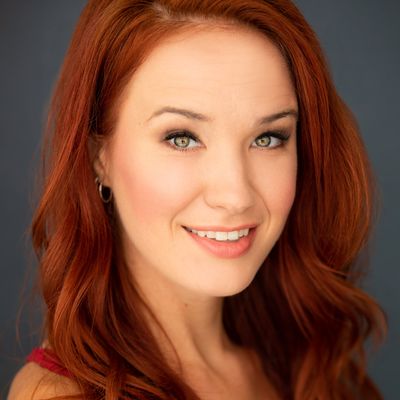
Episode 4 features interviews with Kevin Stites, Sierra Boggess, Julian Schlossberg, Peter Boygo, David Kamp (Vanity Fair), Tripp Phillips, and Philip Boroff (Bloomberg, Broadway Journal).
Transcript
This transcript was automatically generated and might contain errors.
[0:00] Blake Ross: This episode contains discussions of child abuse and child pornography and is not intended for all audiences.
[0:06] Blake Ross: Listener discretion is advised.
[0:10] Blake Ross: Episode 4, it's the end.
[0:13] Blake Ross: Or is it? In the summer of 2019, a few months before tying up the last of suits related to "Rebecca," Sprecher was back in a courtroom.
[0:43] Blake Ross: This time he was in the hot seat. A sting operation by Homeland Security found over 100 videos and images containing child pornography in Sprecher's possession.
[0:55] Blake Ross: One was a 45-minute video of a preteen girl thought to be as young as 10, involved in sexual exploits with an adult.
[1:05] Blake Ross: Sprecher shared some of these files with an undercover agent.
[1:09] Blake Ross: When questioned by an NYPD detective, Sprecher admitted to downloading child pornography.
[1:16] Blake Ross: A hard drive recovered from Sprecher's home contained 130 videos and over 5,000 thumbnails of children as young as infancy suffering abuse.
[1:29] Blake Ross: In the months that followed, Sprecher and his public defender went through the court system.
[1:35] Blake Ross: By March 2020, the pandemic hit and engulfed the world and much of the theater industry that Sprecher fought so hard to be a part of.
[1:46] Blake Ross: By October, he agreed to a plea deal.
[1:50] Blake Ross: Sprecher pleaded guilty to one count of possession of child pornography.
[1:54] Blake Ross: He was sentenced to five years probation and a $5,000 fine.
[2:01] Blake Ross: In the summer, his Morningside Park brownstone sold for a reported $3 million.
[2:07] Blake Ross: His former colleagues, Kevin Stites, Sierra Boggess, Julian Schlossberg, and Peter Boygo have varying opinions of this latest turn for Sprecher.
[2:21] Kevin Stites: A mutual friend of yours and mine, Blake actually told me from minute one of involvement with "Rebecca" to be careful.
[2:28] Kevin Stites: And I didn't believe this person.
[2:34] Kevin Stites: And you know, again, when somebody dangles a bright shiny object of a $14 million Broadway show in front of you, it's amazing how much the bright shiny object will obliterate your, you know, your eyes and your sense of really what's going on.
[2:51] Kevin Stites: I never felt like he was just a schmuck or just innocent in this at all.
[2:59] Kevin Stites: So that what I can say is that with certainty, I don't I never thought of him as just like this go-alonger or that other people were pulling the strings.
[3:11] Kevin Stites: He was very much, he was very involved.
[3:15] Kevin Stites: Somehow, when I heard the unfortunate news about the child pornography, I sort of my eyes just opened up all again.
[3:25] Kevin Stites: And I took a different look at things.
[3:27] Kevin Stites: Then when it comes to be that he's arrested for child pornography, it was like, yeah, you're done.
[3:34] Kevin Stites: Like, just when you thought that it couldn't get any more evil, it turns to that's what's also has been going on.
[3:42] Kevin Stites: Like, it's pretty dark.
[3:45] Kevin Stites: That's really dark, and that's to me, that's someone who has less than zero integrity.
[3:52] Kevin Stites: We all make mistakes.
[3:55] Kevin Stites: And if you decided that someone did something that's just awful, and you never want to have anything to do with them, that's your decision.
[4:03] Kevin Stites: I made my decision that yes, what was done was sad and bad, but I don't I can't take away all the good.
[4:12] Kevin Stites: He was just a voyeur.
[4:15] Kevin Stites: Yes, certainly a voyeur that we're not certainly gonna say, oh great, but not what they originally accused him.
[4:23] Kevin Stites: So he's he I know for a fact that he has gone into therapy very heavily, and he's taking this very seriously, and he has a lot of great strengths as a person, and I hope he'll come out of it a much better person.
[4:39] Kevin Stites: The man I knew was a devoted family man.
[4:44] Kevin Stites: He adored his wife, he adored his kids.
[4:48] Kevin Stites: That is the Ben Sprecher I knew personally.
[4:53] Kevin Stites: He was always responsible towards his investors.
[4:59] Kevin Stites: He was smart, he was honest, he was very ambitious, he could be tough, he could be blunt, but so can a lot of Broadway producers.
[5:11] Blake Ross: As for the other players in the saga, Louise Forlenza is still a practicing accountant, but she ended her theatrical career following "Rebecca."
[5:22] Blake Ross: When I spoke to her, she said she no longer communicated with Sprecher and didn't wish to comment for this podcast.
[5:30] Blake Ross: Louise took a back seat to Sprecher's public face of the "Rebecca" team, but she was no less involved.
[5:36] Blake Ross: She was the one who found the show in the first place.
[5:39] Blake Ross: And she brought Houghton on.
[5:41] Blake Ross: It was always such a wonder to me how someone with the training and expertise of an accountant could fall prey to this money hoax, hot and sold.
[5:51] David Kamp: And from a guy with such a documented, dodgy background.
[5:55] David Kamp: I'm David Kamp, a contributing editor at Vanity Fair magazine.
[6:00] David Kamp: When I met with her in her apartment on the Upper East Side, which is a lovely apartment, she struck me as an educated person who kind of dabbled in production, was more of the passive producer to Ben Sprecher's active producer, but at the same time, she has quite a track record of investing in shows.
[6:19] David Kamp: So it does seem mind-boggling that there wasn't sufficient due diligence to see what Mark Houghton was all about and what Paul Abrams, the investor he was purportedly bringing in, what he was all about.
[6:32] David Kamp: It still to this day, years later, confuses me how a CPA could be kind of casual about that sort of thing.
[6:54] David Kamp: And like Milton C is a warning sign, but also AOL.com is kind of a warning sign.
[6:59] David Kamp: And then there's another one that was like P.
[7:01] Kamp: Branson687 at gmail.com.
[7:03] David Kamp: So these kind of rando, seemingly like auto-generated email addresses that don't seem like the email addresses of people you would want to do business with.
[7:13] David Kamp: So that alone was problematic to me.
[7:16] David Kamp: And then when you have someone like Mark Houghton constantly saying, Yeah, yeah, the funding's gonna be coming in.
[7:22] David Kamp: Oh, you know what? My guy, he's sick.
[7:25] David Kamp: Oh, you know what? Really sad, he died of malaria.
[7:29] David Kamp: I mean, you if you get strung along like that, I don't mean to belittle Ben Sprecher and Louise Forlenza, but I would just think red flags abound at that point.
[7:41] David Kamp: After the verdict was reached and the 10.6 million dollar lawsuit against him, Mark Thibodeau was found not liable on the count of defamation, but was liable for breach of contract and interference with business relations.
[7:56] David Kamp: Everyone eventually settled out of court.
[7:58] David Kamp: Thibodeau continues to work as a press agent on Broadway.
[8:02] David Kamp: He still represents Cirque du Soleil and Broadway's longest-running musical, "The Phantom of the Opera."
[8:08] David Kamp: In fact, there's a very unsubstantiated rumor running around theater circles that Andrew Lloyd Webber himself, scared that "Rebecca" could in fact compete with his very own "Phantom," put Thibodeau up to the whole email thing in the first place.
[8:37] David Kamp: But it is fun imagining Andrew Lloyd Webber as some evil wizard of Oz mastermind of another show's takedown.
[8:44] David Kamp: Pay no attention to that man behind the curtain.
[8:48] David Kamp: When contacted about this podcast, Thibodeau told me, I've really managed to close that chapter of my life this past year, and don't feel like going back there.
[8:57] David Kamp: Mark Houghton was sentenced to 11 years in prison for defrauding several people and companies out of more than 9 million dollars.
[9:05] David Kamp: He was later sentenced to an additional three years for his dealings with "Rebecca."
[9:10] David Kamp: It was at the low security Fort Dix Correctional Facility in New Jersey where I found Mark Houghton.
[9:18] David Kamp: You have a prepaid call.
[9:19] David Kamp: You will not be charged for this call.
[9:24] David Kamp: This call is being recorded and is subject to monitoring.
[9:27] David Kamp: Hang up to decline the call or to accept dial five now.
[9:31] David Kamp: If you wish to block any.
[9:31] Mark Houghton: Hey Mark, how are you?
[9:37] Mark Houghton: Hey Blake, how are you?
[9:38] Blake Ross: Good to hear you.
[9:40] Mark Houghton: Yeah, good to talk to you.
[9:40] Mark Houghton: Good that you get used to the prison phone system.
[9:45] Blake Ross: I am getting used to the prison phone system.
[9:52] Blake Ross: I was learning how fickle the prison phone system could be.
[9:55] Blake Ross: Sometimes it would just suddenly hang up if I tried to put my earbuds in mid-call.
[10:00] Blake Ross: Mid-sentence, you'd get a jarring alert that the phone was about to hang up at exactly 15 minutes of call time.
[10:07] Blake Ross: I can see how people can get wildly frustrated trying to communicate with their loved ones in prison.
[10:13] Mark Houghton: Hotton was laid back, funny and charming with a sick Long Island accent that I'm pretty familiar with.
[10:20] Mark Houghton: Well, we weren't married to nine to five guys, but the first time I realized how different was when Mickey had a hostess party.
[10:31] Mark Houghton: Lawrence.
[10:31] Blake Ross: Oh, yeah, Lawrence out on the island.
[10:33] Mark Houghton: It's nice.
[10:34] Mark Houghton: I'm from Miami.
[10:35] Blake Ross: You ever been there?
[10:36] Mark Houghton: No.
[10:36] Mark Houghton: It's okay, but it's like he died.
[10:38] Mark Houghton: Just like Lorraine Bracco and "Goodfellas," I too am from the five towns in Long Island.
[10:44] Mark Houghton: I went to Lawrence High School.
[10:46] Mark Houghton: Didn't marry a mob guy turned FBI informant.
[10:49] Mark Houghton: Just a nice Canadian fellow.
[10:51] Mark Houghton: But I digress.
[10:53] Blake Ross: I could see how someone would get completely caught up in what Mark Houghton was selling.
[10:58] Blake Ross: Houghton had met Sprecher through Louise Forlenza, who met him through a man named Jeffrey Troncone.
[11:04] Blake Ross: When I spoke to Troncone, who possessed a similar meaty accent and friendly tone, he explained the affair as quote, the most unfortunate occurrence you could ever imagine happening.
[11:16] Blake Ross: I'm assuming he felt this way due to his own past run-ins with the law being brought to light as a consequence of this story.
[11:24] Blake Ross: He said he didn't know Louise that well, but he knew Mark from growing up and claimed he was a good guy.
[11:29] Blake Ross: So as I mentioned, Houghton wasn't the only one with a rap sheet involved in this story.
[11:35] Blake Ross: Troncone, who wasn't an investor but connected the team with several men who ultimately did invest, pleaded guilty to mail fraud in the 90s.
[11:44] Blake Ross: He was also named in a later case against two loan sharks, where he was quoted as saying, they are really not nice people, if you understand what I mean.
[11:55] Blake Ross: You have to be very careful because these are very bad people, very connected people.
[12:02] Blake Ross: Another investor, Bruce Bendel, pleaded guilty to tax fraud.
[12:06] Blake Ross: And yet another, Ira Gaines, a proud Sheriff Arpaio supporter, was investigated and later fined by the SEC for fraud and recently pled guilty to his role in a money laundering scheme.
[12:21] Blake Ross: Whew.
[12:22] Blake Ross: There are enough bad actors here for a summer stock version of "Guys and Dolls."
[12:28] Blake Ross: Throughout my chats with Houghton over the prison phone system, he would tell me all about his allegations against Sprecher, basically reasons why he was innocent and Sprecher wasn't.
[12:39] Blake Ross: Houghton's first claim was that when he first met Sprecher, pictures of kids fell out of his briefcase.
[12:46] Blake Ross: That's a little too on the nose for me, and there's no way to prove that that's actually the truth.
[12:57] Blake Ross: I then was flooded with a bunch of emails from Houghton using a private email outside of the prison's CoreLynx system.
[13:04] Blake Ross: CoreLinks is the monitored email system many prisoners use to send emails while behind bars.
[13:10] Blake Ross: Under this Yahoo address, I got everything from recordings and transcripts of Houghton's phone conversations with Sprecher.
[13:18] Blake Ross: When asked why he possessed such rigorous monitoring, he said that most brokerage firms have an internal system that records telephone calls.
[13:27] Blake Ross: This is, in fact, true.
[13:30] Blake Ross: Most of Houghton’s allegations boil down to his claims that Sprecher never had even close to the amount of money he said he had.
[13:38] Blake Ross: He claims that through a series of unsigned contracts, shell companies, and even ghost investors of their own, both Forlenza and Sprecher lied to their real investors and to the Schuberts, that Houghton was just the fall guy in a larger scheme.
[13:54] Blake Ross: I've combed through these documents. None of that can be substantiated here. Here's what I can tell you. On September 12th, days after the bombshell article in the Times runs proving that Sprecher's big time $4.5 million investor doesn't actually exist, president of the Schubert organization, Bob Wenkel sends an email to Sprecher reading, so what's happening?
[14:20] Blake Ross: Sprecher replies, the Abrams 2 million has been replaced and is now in contract with the target date of Monday to fund. The 2.5 meets with us tomorrow. An additional 1.2 beyond the 4.5 amount has been committed and will be funded by Tuesday. So basically, I've got more than enough money to cover the money we lost.
[14:41] Blake Ross: One of Houghton’s claims is that Sprecher and Forlenza had a number of bridge loans and several shell companies that made up a sizable chunk of their investing. Here's Philip Boroff of Bloomberg News and Broadway Journal to tell us what we know for sure.
[14:58] Philip Boroff: Rebecca Broadway, the producing entity, according to court papers, had collected $5.7 million. It had that money on hand that was less than half the $12 million it needed to put the show on Broadway.
[15:16] Philip Boroff: Ben Sprecher and Louise Forlenza testified that they had commitments for close to $11 million. Had Larry Runsdorf, the Florida drug magnate, come through with the two and a quarter million that he pledged, Sprecher and Forlenza, they would have been able to produce this show on Broadway.
[15:44] Blake Ross: And so a big question is, is that accurate? I know that Thibodeau's attorneys had said that it was a pipe dream, that they could have done it, even in the best of circumstances. As someone who covered the trial, would this show have made it to the finish line? Had Mark Thibodeau not sent three anonymous emails to this prospective big investor?
[16:07] Blake Ross: I don't really know. I think it requires a little bit more forensic analysis that I did not do. The lawyers for both sides made a pretty good case in both ways, you know, that they seem to have come somewhat close to raising the minimum $12 million, at least in terms of commitments, but they only had less than half the money in, and so you could argue it both ways.
[16:37] Blake Ross: By September 15, three days after that exchange with Bob Wenkel of the Schuberts, an additional million dollars attributed to companies owned by Sprecher and Forlenza are listed as giving additional funds to the show. This includes a $250,000 investment from a company identified as Rebecca Broadway Broad Street Opus, Incorporated.
[17:01] Blake Ross: I can find no proof that an incorporated company with this name exists or ever existed. Much of what Houghton showed me was prepared in the SEC investigation into what happened with the show. The SEC later decided not to pursue any actions against Sprecher and the producers of the show.
[17:20] Blake Ross: The only real sense of impropriety on behalf of Sprecher and Forlenza that is glaring from the material that Houghton gave me is that they even hired him, knowing he had no clue what he was doing in the rules of raising funds for the theater and set him loose to get like 30% of their financing. I would hate to have been an investor in this show, knowing that all of this hinged on Mark Houghton coming through.
[17:47] Blake Ross: Houghton was not just some consultant. The show depended on him. It was proven in the New York Times that the investors Houghton brought in, the investors worth four and a half million dollars, the investors who Sprecher never spoke to, the investors with shady email addresses and one-named representatives, investors who suddenly died of malaria, investors who refused to give even one penny after signing legal contracts after those investors were proven to be fake.
[18:20] Blake Ross: Even after all that, Sprecher still relied on Houghton to get him money that without the show could not go on. Ben Sprecher never really answered, at least in the trial, why he continued to work with Mark Houghton after the elements of his story started to fall apart.
[18:53] Blake Ross: All I can say is that it's pretty clear that Ben Sprecher exercised poor judgment in continuing to work with Mark Houghton after his story started to fall apart. We had times to meet up. I was even going to meet with one of his associates, a woman named D. Again, no last name. But none of that ever happened. Knowing what I knew about him, it didn't shock me.
[19:25] Blake Ross: In June 2020, after talking to him for a few months, Houghton suddenly went silent. I thought perhaps the trail just went cold, that he was bored of speaking to me, knowing he'd never actually go on the record. What had really happened was that he ended up in confinement due to a COVID outbreak at Fort Dix.
[19:44] Blake Ross: In March of 2021, Sprecher's case came to an end. He avoided serving time. After years embroiled in the drama that came from many court cases, lawsuits, lawyers, appeals, handcuffs, perp walks, you would think Sprecher would never want to see another lawyer for as long as he lived. But in December 2020, he filed another lawsuit.
[20:13] Blake Ross: This time against his longtime business partner and friend, William Miller. Miller was the moneyman behind Sprecher's theaters. They'd been friends for over 35 years. Miller testified on Sprecher's behalf in the Rebecca case. In this most recent suit, Sprecher is once again represented by the same firm that represented him against Thibodeau.
[20:29] Blake Ross: In this most recent lawsuit, Sprecher claims that Miller diverted over a million dollars in monies meant for their joint business venture in an agreement dating back to 1983. As of this airing, August 2021, this lawsuit is still pending. Sprecher was contacted many times for this podcast and has no comment.
[20:58] Blake Ross: Besides his most recent lawsuit with Miller, Sprecher's laid pretty low. At his sentencing, the judge made reference to Sprecher's hardship with launching Rebecca as to his reasoning for giving him a light sentence, saying he obviously went through a very traumatic professional experience that led to a spiral of depression and compulsive self-destructive behavior.
[21:21] Blake Ross: Sprecher's public defender pleaded with the court to keep him out of prison, citing, the conditions of confinement during the pandemic are incredibly horrific and brutal. There is no ability for people incarcerated to follow any of the strictures of the CDC. Ironically, this is what kept Houghton out of prison too.
[21:42] Mark Houghton: Hey, how's it going there?
[21:45] Mark Houghton: Blake, Mark Houghton. I haven't talked to you in ages. I'm sorry, didn't we so want to get back there? But busy, needless to say. Anyway, uh want to follow up with you when you have a chance, give me a call or be around all weekend. Bye.
[21:57] Blake Ross: After the outbreak of COVID-19 in Fort Dix, Houghton was set free, left to serve the remainder of his sentence on probation. He now works at a Volkswagen dealership. I tried one last time to get Houghton to talk to me on the record to explain what in the hell happened here.
[22:22] Blake Ross: Hey, is this Mark Houghton?
[22:25] Mark Houghton: Yep.
[22:25] Blake Ross: Hey, it's Blake Ross.
[22:28] Mark Houghton: Hey Blake, how you doing?
[22:29] Blake Ross: I'm good. How are you?
[22:31] Mark Houghton: I'm doing awesome. You know, I know it's hard for you to talk or if you even want to talk, but um, I figured I'd give one last shot because there's um I'm wrapping up and I want to talk to you, and there's I don't know if we can or not, but I just figured I'd give one last shot.
[22:49] Mark Houghton: Well, it's certainly worth it to uh at least uh, you know, give it a try. So I could definitely uh reach out to my uh lady that I work with uh to see if that would fly. You know, they've reduced a lot of restrictions on that stuff, so I think there might be uh, you know, that might be a chance.
[23:06] Blake Ross: The lady he's referring to, I'm assuming his probation officer or lawyer, he never really explains it, but there was one question I really wanted to try to get him to answer before I let him hang up. One question that I've asked him since the very first time we started talking in prison. He'd always kind of dodged and danced around it every time I brought it up.
[23:28] Blake Ross: You and I talked about this, that Paul Abrams thing, right? You know, the fake contracts and I can't remember what you told me about that. That uh he obviously was a made-up character, right?
[23:41] Mark Houghton: Hold on one sec, just bear with me.
[23:52] Blake Ross: Thank you for calling Volkswagen. We bring you the care and commitment. I was kept on hold for 15 minutes. Finally, Houghton jumped back on, but only long enough to tell me that he'd call me back at the end of the day.
[24:06] Blake Ross: I didn't hear back from him until a few days later over text. It read, Good morning, Blake. As you know, I would love to share with you all the documents, recordings, and knowledge I have about Ben and Rebecca. Unfortunately, as you and I have discussed, I am directed to stay away from on or off the record discussions with media or otherwise.
[24:29] Blake Ross: In another year, might be another time to do it. But I truly wish you well. You are a very hardworking, diligent person who deserves lots of success, and I'm sure Ben's latest antics with his arrests and his legal problems will give you plenty of opportunity to detail what kind of person Ben is. All the best, Mark.
[24:50] Blake Ross: Well, for now, he's selling cars. It's a long way from the boats and mansions he was used to, but it seems like an honest gig. For now.
[25:11] Blake Ross: As for Rebecca, it remains a hit. Sung in Korean, German, Hungarian, Romanian, Serbian, Japanese. Just not in English. And not in the US. Whether that ever happens here is yet to be known. But the producers of that show will have one hell of a backstory to tell if it ever does. It's the greatest scandal in Broadway history.
[26:02] Blake Ross: Supervising producers are Brittany Bigelow and Dori Berinstein. Special thanks to Philip Boroff. For sources and more information on the Rebecca scandal, visit bpn.fm/burnt.
[26:24] Blake Ross: The views and opinions expressed by the people appearing in the podcast are their own, and their appearance in the podcast does not imply an endorsement of them or any entity they represent, and do not necessarily reflect the views of the Broadway Podcast Network and its officers, directors, owners, employees, and agents.
© Broadway Podcast Network, All Rights Reserved