

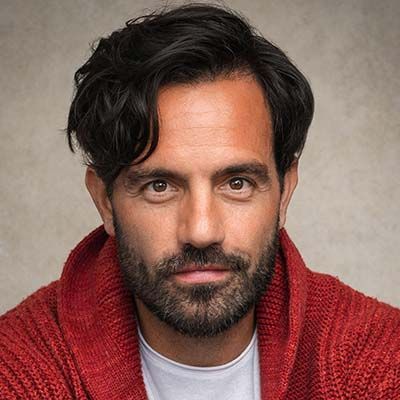
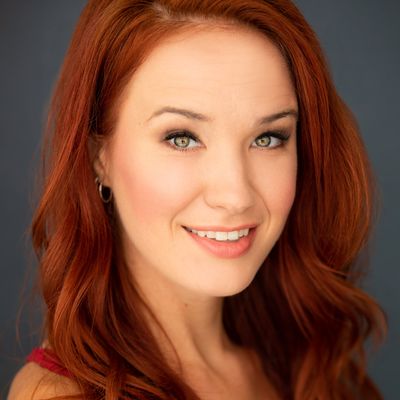
Meet the creators of DOCTOR ZHIVAGO - lyricists Michael Korie and Amy Powers, book writer Michael Weller and arranger Eric Stern as they recount the making of the show with their collaborator Lucy Simon. Show stars Sierra Boggess & Ramin Karimloo perform “On The Edge of Time”... Read More
From the show: Celebrating Lucy Simon
Guests
Videos
About
Meet the creators of DOCTOR ZHIVAGO - lyricists Michael Korie and Amy Powers, book writer Michael Weller and arranger Eric Stern as they recount the making of the show with their collaborator Lucy Simon. Show stars Sierra Boggess & Ramin Karimloo perform “On The Edge of Time”. Rolling Stone writer, editor and Broadway producer, Loraine Alterman Boyle, moderates.
Featured Song:
ON THE EDGE OF TIME from DOCTOR ZHIVAGO
Music by Lucy Simon, Lyrics by Michael Korie and Amy Powers
Performed by Sierra Boggess and Ramin Karimloo
Transcript
This transcript was automatically generated and might contain errors.
[0:02] Loraine Alterman Boyle: Welcome back to our very special Lucy Simon celebration. This is episode four, The Making of Dr. Zhivago. We are thrilled to welcome ZHIVAGO lyricists Michael Korie and Amy Powers, book writer Michael Weller, arranger Eric Stern, and host Loraine Alterman Boyle, former Rolling Stone writer and editor, as well as a producer on the musical Dr. Zhivago. We will also hear Sierra Boggess and Ramin Karimloo performing the gorgeous song "On The Edge of Time." Let's begin.
[0:35] Michael Korie: The one thing I wanted to start out with is ZHIVAGO itself, which was an enormous task to do. I think the impetus, Lucy said, came from her love of the book and the movie. So could you tell us how you got involved with Lucy? I had spoken to Lucy some years before about working on Little House on the Prairie with her, but I was tied up on some projects and I couldn't make myself available. So time went by, and then she got back in touch and said, no, it wasn't her. I think it was Des got in touch and said, guess what? We're doing Dr. Zhivago as a musical. I was sort of overwhelmed. It was one of my mother's favorite books. I remember the movie, but my memory of the movie was that it was a very handsome man watching a very beautiful girl with lots of snow.
I couldn't think what the story would be. So I read the book, and then I was even more overwhelmed by the challenge. I went to meet her and said, look, I don't see that this material as it stands can be the stuff of a musical. What is it gonna be like that I have to add stuff? I'm dealing with one of the great writers in the world, and yet the story's not quite clicking. What are the rules about that? How do I add on to greatness like that? And she said, let's work it out as we go along. So with that reassurance, I said, okay, fine. Let's, you know, I'll have a go.
[2:27] Michael Korie: And then I'll pick up with how then they spoke to me, and I met with Lucy and Michael and Des. I thought it was insane to try and do the Russian Revolution in a musical, but on the other hand, the insane things are the ones that appeal to me, and that when you don't know the solution, then it brings out the most creativity. At the first meeting, Michael said he had a concept that he could start out with the gunshot, where an unidentified woman shoots another man and then work back from that. I thought that was a great concept. Lucy and I started to work, and it wasn't quite clicking. Lucy said, I heard about this other lyricist, Amy Powers. Why don't you do co-lyrics? At the same time, I was doing Grey Gardens and The Grapes of Wrath, and I said, yes, thank God.
When Amy came on, it felt totally complete. Then Eric I knew from Far from Heaven and Grey Gardens and dying always to work with Eric. So then the team and Des was our team leader, and then Lucy was amazing. She really kept us all together through thick and thin.
[3:52] Amy Powers: I came into this with a combination of pop lyricist and theater lyricist background. When I heard that I could collaborate with Michael Korie, I was all over it. What I was bringing to the puzzle was the more female sensibility in terms of lyrics and the more passionate love story side of it. Because I'm a sucker for that, I jumped in. I remember that as an audition, they had me write a lyric, and so I did, and that lyric was "When the Music Played." Lucy immediately heard melodies for that, and so that was the defining moment for us all to work as a team together. I've never experienced anyone like Lucy in terms of her unending passion for the material and devotion to the project and seeing it through.
Then I got to play with these great guys, which was really fun. Lucy didn't have the music at that point; she just did the lyric, and then she did the music. One of the beautiful things about Lucy is that she could work either way. So many composers are very rigid. They either have their melodies laid out and you have to fill in the blanks, or they wait for you and then they create melodies around your lyrics. But with Lucy, it worked both ways.
[5:48] Eric Stern: It's true. It actually worked a third way, which is that the group would sit around and say, what is this moment about? We would come up with an intriguing hook, and Lucy would say, let me take the first stab at it. She would use the hook or the title of the song, and from that structure would evolve. Then we would re-present them to Lucy, and we'd go back and forth like that. By that time, she had already changed the music. Sometimes we would say, what about if it went all the way up here at the end? And she'd say, oh yeah, I can work that in.
[7:00] Eric Stern: I started working with her when she very started working on ZHIVAGO. What intrigued me about Lucy and what ultimately bound me to her was the fact that her sense of melody and theatricalism was in a certain way almost always tied into the human voice. Her inspiration, her melodic sense, her dramatic sense came from her need to sing. She'd been singing her whole life. Like almost everybody in this business, I wanted to be a writer. I was a semi-decent lyricist, but oddly enough, not a very good composer. I'm a very trained musician, and I have skill in that area. But I met Lucy and I realized that she had something that I could never even come close to. It was the gift to express in the human voice what she felt as a human being.
I was able to work with what she gave me, and I'm so grateful to have it because I couldn't ever have done that myself. I actually found a creative partner that sustained me and filled in what I couldn't possibly do. It was like that for over 20 years. We just kept knocking out versions of it. She'd come up with ideas and things sort of scratched on paper, and we'd talk about what she wanted. The thing about Lucy is although not always as skilled on the minutia of music writing, she always knew what she wanted. If I came back at her with something, she said, no, that's not really it. She would show me. It wasn't as if she was malleable. On the other hand, like all creative artists, she has a very strong point of view. Working with her, I was able to help her realize that. It was a symbiotic relationship.
[8:57] Michael Weller: It's wonderful. So in the process, Michael Weller, when do you come in with the storyline? I don't know how you did it having read the book a long time ago. How does this work with the three of them? How did you start writing, knocking out the script, and then bringing it back and seeing what music there is? It was never that formal. We would always meet a lot. Another thing is that Lucy, among other things, has the heart of a natural restaurateur, someone who wants to feed you and take care of you. She has this sort of maternal quality and she loved gathering people. It would be as much, you know, you'd go for the food and then everybody would start talking. For me, the critical challenge was that ZHIVAGO really is a stand-in for passive.
It's always tricky when an author writes themselves into a book because they think lots of wonderful things but they don't do much. You have to provide all that when you're writing the stories so people have something to wonder about as an action. How is this going to come out? That's what I felt was the hardest thing: to make what I understood to be, in every possible way you can understand, a passive responder to a historical moment and turn them into an active seeker of something we could watch and cheer on without desecrating his sensibility in some way.
[10:57] Michael Weller: I had to stay as true as I could to what I thought was moving him and his life. It's very interesting. I got to know quite a bit about him, how he actually functioned in the world. I started to feel that the book is both masterful and chaotic at the same time. One of the things that would be very interesting to do was to try to see through the chaos to what was a consistent story of his life unfolding. He really did have an affair, and it was really with somebody who was extremely difficult to capture. She was beautiful because of how he saw her, not so much what she was, but she was extremely strong, dedicated, and courageous. That became the kind of tools I had to work with. When we'd meet, they would say, oh, I was thinking of a song like this, and I'd think, oh yeah, I see how one could get there.
For example, you have an affair that's developing over two and a half hours. It can't just be that they jump into bed because they're both married. You have to really tease and extend and pull the taffy out as long as you can. But at the same time, you have to show them in love. We had to come up with feints and tricks, like having them discover a letter that someone had written to the person they were in love with and sing it to each other. They're really singing a letter that wasn't the two of them, but we know the audience knows it's really the two of them talking to each other. It's things like that where we kind of legalize an illicit love affair in front of the audience's face. I recall what came first before any scenes was an outline. There was a lot of talk about that outline, a lot of hammering out, talking through the story over and over where Michael would improvise ideas like coming up with a letter at one meeting.
[13:14] Michael Weller: But what was I think by the time all of this outlining and discussing of the story and boiling it down like in a crucible occurred, I think we all knew what was important, which was that it was the story of it was a love story, but it was the story of the importance of art in our lives and how an artist can change societies more than a Putin.
[13:40] Michael Weller: Um, and you know, I always think it's great if the politics of the world we live in can come through in another story, but in a stealthy way. It's not underlined in red. You come to realize this is about us right here, now our lives.
[14:00] Michael Weller: And we always knew we were working towards that end of Jivago coming back from the dead to inspire us and inspire a repressed society with his poetry, and we had feelings like that in our country.
[14:16] Michael Weller: Uh I also remember that through this outline, Amy and I would come up with wonderful lyrics that maybe were a bit too expository at times. And Michael and Lucy would always push us towards the emotional and the melodic.
[14:34] Michael Weller: And the simpler hooks worked best for us. Like Michael came up with an idea of who is she? Such a simple idea, or watch the moon. Very simple ideas, but the more simple you get, the more the closer you can get to the heart, and the less expository you have to be.
[14:54] Michael Weller: And so we would say, let's deal with the emotion, let Lucy move us with that, and let's let Michael take care of the exposition. I mean, I listened to stuff now and I'm crying, but that song is just so magnificent.
[15:10] Michael Weller: Still brings tears to my eyes. And I think that's what you accomplished. That was a song that, yeah. That was a song that Lucy originated.
[15:22] Michael Weller: Um, and she just felt it, and it didn't have a lyric at all or even a hook. And it moved around the show. And one time it was in the beginning, one time it was in the middle, once it was a duet, and it finally found its proper place.
[15:37] Michael Weller: And Amy, do you remember we were all in Lucy's living room killing ourselves to find the right hook? And maybe it was Michael, the right title. And I think Michael suggested the idea of time, and somehow we got okay, the edge of time, or and it evolved, and then we would run off into one of the bedrooms and write some lyrics.
[16:01] Michael Weller: And I'd eat. And drink that fantastic cappuccino. So it was just like that. It was okay. Let's all put our heads together and our hearts together and figure out what needs to be said in this moment.
[16:17] Michael Weller: I remember for on the edge of time, there must have been a hundred different possible title ideas, and Des Makingov was there too in that room, and he kept saying, No, not that one, no, not that one.
[16:32] Michael Weller: And we fully wrote three different versions of it in different spots of the show. I wrote one, you wrote another, and we fought for them, we believed in them, but that was the way the team worked. Everyone had to agree, or we couldn't proceed.
[16:46] Michael Weller: Here are Sierra Boggess and Ramin Karimloo singing on the edge of time.
[16:50] Sierra Boggess: Hi, Lucy. Um, just want to say how much I love you and what a gift you have given music theater and just our hearts and souls with two of my favorite shows, The Secret Garden and Dr. Zhivago, which I get to sing with this beautiful lady here, my favorite leading lady, which we got to do Secret Garden together, and now we got to sing from Dr. Zhivago finally.
[17:10] Ramin Karimloo: Yeah, that's right. Finally, all thanks to you. We love you, we adore you, and you are a gift.
[17:17] Sierra Boggess: Amen.
[17:19] Ramin Karimloo: Amen.
[17:19] Sierra Boggess: Did you say when you spoke, you broke me open, sat my mind and body sorry.
[17:44] Sierra Boggess: Every word I still remember every whisper carries through you were always there beyond the dark lighting my existence my answered prayer my midnight sun glowing in the distance daring me to dream blazing from a farm star to guide me through till I was here on the edge of time you showed me a place where love was real not a mere illusion war unguarded space my heart could heal from its mad confusion sheltered from the storm in your warm embrace I never knew I know at last on the edge of time.
[19:35] Sierra Boggess: Oh the pain all the years of silent despair once is a peer like mist in the air, like mist in the air.
[20:01] Sierra Boggess: What days are left in your love's protection in my arms, so I can feel calling his perfection.
[20:26] Sierra Boggess: I say I do forever free forever true on the edge of time.
[21:12] Michael Weller: By the way, it is worth bringing Des into this at this point because I think I had very little experience with musical theater. I'd started in college writing musicals, and I did the film version of Hair.
[21:27] Michael Weller: But the real nitty-gritty of working on a musical, the economy of it, what works musically and what doesn't, that was just kind of tabularizer for me.
[21:41] Michael Weller: And Des had very definite ideas about that. And I found, and he's also a playwright. So I found his instinct for storytelling really instructive.
[21:55] Michael Weller: I learned a lot from the experience, and I learned a lot about using music in a musical from Michael and Amy and Lucy.
[22:04] Michael Weller: So for me, it was not, it was school as much as anything. Des was cinematic in his approach to theater, and he was about transitions, keeping the energy of the story going by cutting off the big applause moments and keeping making that transition as exciting to the audience as a scene.
[22:38] Michael Weller: Um but we found a happy medium, and through the workshop procedure, Des was a wonderfully inspiring.
[22:45] Michael Weller: Amy and Lucy and I were sitting in the back of the black box theater at La Jolla. And Des would come rushing up to us before the show was over and say, You gotta change this, this, and that, and then the other, and you've got to leave the theater and do it now.
[23:02] Michael Weller: Because the actors have to have their rewrites by equity rules before they go home. I can't rehearse it tomorrow if they don't get it tonight.
[23:11] Michael Weller: So off we ran and wrote something new every night. And Lucy was game for that. Lucy was always willing to re-examine.
[23:17] Michael Weller: Yeah, so that's a really important thing. She wasn't one of those, um, she is not one of those people who's precious about their work.
[23:29] Michael Weller: You can that there are many composers, and we don't have to name them, who just think that um their first thing is the right thing, or um that they're the ones who have all should have all the power in the situation.
[23:45] Michael Weller: And Lucy was always really fluid about that. And I appreciate that. I appreciate that so much about her, because it in the midst of despite her having such um passion and um you know impulses in certain directions, she was always open to having her mind changed.
[24:12] Michael Weller: Um, and how often does that happen in life? Not very often. Not even in theater, but in life in general. People like to stick to their guns.
[24:20] Michael Weller: It's what defines a good collaboration, actually, that willingness to be able to keep. There's an old saying that musicals aren't written, they're rewritten.
[24:28] Michael Weller: Um, you never really finish it. Some point, somebody says you're done. And that's what you have.
[24:34] Michael Weller: Um quick story, which you can ran out. That's it, right? Quick story, which you you can easily cut out.
[24:40] Michael Weller: We were preparing to go to Sydney with a version of ZHIVAGO that we ended up opening there. And the people in Sydney asked me what format their material should be in.
[24:50] Michael Weller: I said, All right, the script should be single-paged, in a three-hole in a notebook, and the music should be double-sided in three-ring notebooks.
[24:59] Michael Weller: We got to Sydney, and they had laminated and spiral bound every script and every and the music. And I said, you know, this is all gonna be on a trash heap, not tomorrow, today, because music was constantly.
[25:14] Michael Weller: I always think musicals are probably the responsible for all the rainforest disappearing. We use so much paper.
[25:20] Michael Weller: Uh, and the fact that they presented so proudly, presented this. Here's your musical. I went, No, that's not our musical, not yet.
[25:26] Michael Weller: So, yeah, that process is something you learn to embrace. And I think a lot of young writers also don't understand the fact that what you mean I have to redo that or throw it out?
[25:35] Michael Weller: How do you throw out your children? You guys are masters at that. Two or three times a day we would do that.
[25:41] Michael Weller: You know, I think we all were in love with the show by the time we did our first black box production at La Jolla.
[25:50] Michael Weller: And we began to have problems when it went to a proscenium stage a year later at La Jolla, and it just played differently.
[26:00] Michael Weller: We also had disagreements of opening numbers, so with together with Lucy, we must have written about 30. I have a file this big of cut songs, many more than we wrote for the show, and uh but that's it.
[26:16] Michael Weller: As uh as Eric says, it was rewritten, and we always had that outline, that structure that Michael had evolved, and we layered upon it. And even after Broadway, we rewrote and re-evaluated.
[26:31] Eric Stern: Yeah.
[26:31] Michael Weller: We just finished a new version. Well, the proscenium stage at La Jolla, uh not our favorite production. And then we retooled the whole thing for Australia, and we loved it in Australia. It really worked. And even in a humongous cavern of the theater, it really worked. And then we rewrote it some more. We might have overwritten it, rewritten it for Broadway. And I think with the pressure, we suddenly we sort of got like six months' notice you're going to be on Broadway. A theater has opened up. And uh, but subsequent to Broadway, we wrote it some more. And Broadway doesn't define this show. It's been done all over the world. Lucy's music reaches to the heart in all of these different languages.
And you know, Amy and I and Michael let our words be translated into other languages. Um, because the music is universal. And however, however it changes, I'm happy that we originated those moments together with Lucy, even if the words have changed. And they've been, it's been in Korea, it's been in um Japan, it's been all over Scandinavia. It's been all over Europe, all the Baltic states that Russia ever trampled over, totally embraced it to their hearts. It's been a huge success over there. Um, and it went back to Australia a second time. Um, and I know that um this work is going to outlive us all.
[28:05] Eric Stern: And it's had different directors too, right?
[28:08] Michael Weller: Yeah, different directors. People do it. People have done humongous productions.
[28:13] Eric Stern: Sorry, people have done humongous productions that have dwarfed Broadway, and they've done tiny postage stamp size productions. But it works in for every culture slightly differently. Um but the basic power of that story and of um the power of art, poetry, or music really, which is poetry in a musical, it's abstract, uh speaks to different ages, different cultures.
[28:46] Michael Weller: Yes, and and also in a way uh di and different formats. So some of them have been more like opera, right? And some of them have been more like traditional musical theater, and some of them have been uh or will be more like experimental musical theater, and that that's Lucy.
[29:05] Eric Stern: That's right. And the message uh uh obviously keeps refreshing its relevance as we've seen these past two months.
[29:12] Michael Weller: Clearly.
[29:13] Eric Stern: Um stunning. It's it's always going to be unfortunate.
[29:17] Michael Weller: Yeah, I was gonna say it's time to bring time for a revival of the internet.
[29:21] Eric Stern: Uh we should ever make an outtakes uh of all our 30 cut songs.
[29:28] Michael Weller: Why not? Well, we're following the footsteps of chess, right? I think they had different versions, different. I mean, there's all that music that Lucy wrote that no one ever heard.
[29:37] Eric Stern: I before before we, yeah.
[29:40] Michael Weller: I could read you the title. I wanted to just ask you something. Some of the music was very influenced by Russian music, stuff that Lucy wrote.
[29:48] Eric Stern: And I think Lucy doesn't read music, is that true?
[29:51] Michael Weller: She reads Lucy reads music.
[29:53] Eric Stern: Yeah, she does read music. She she's she's always given me, yeah, she's always written down uh what she wants. Of course. I get lead sheets from her. Um, you know, but the thing about those lead sheets is we look through them together. I play what she's written. She says, No, I really want that. It's an evolving process. But she's, of course, she's musically literate.
[30:13] Michael Weller: The thing about Lucy that I think you were sort of getting at is that I mean, even the only other score I really know of hers at all is is Secret Garden. But listening to her stuff, I think she also has quite an ear for folk music. And whether that became English, English folk music, Russian folk music, I think there's something. You guys know what I'm talking about. I've seen you nod. There's something about the folk element of Lucy's writing that presents itself, uh, and in this case in Russian folk music.
[30:41] Eric Stern: I, of course, being a smart ass, I tried to give it a little bit more of a contemporary Soviet feel, you know, to play with a little bit, because that's one of my loves is the uh 20th century Russian composers. But the Russian folk music, the peasant element, the folk element, the heart element, uh that's that's Lucy's impulse.
[31:03] Michael Weller: Isn't she a sister act?
[31:04] Eric Stern: She is sisters.
[31:07] Michael Weller: And they sang folk music and they were quite well known.
[31:10] Eric Stern: The Sun sisters.
[31:11] Michael Weller: I believe all three of them did, yeah.
[31:14] Eric Stern: Right, exactly. But I'm I'm I'm just saying that she has a sense of how po uh how folk music works in terms of storytelling, and it's always one of her. She really gets excited about folk music. But she also knew about Prokofiev and Tchaikovsky and the whole spectrum Kobalevsky.
[31:30] Michael Weller: Exactly.
[31:32] Eric Stern: Of Russian music. And I think that um if you were really to analyze those scores by a musicologist, you'd see how literate they are. But the fact that the folk. The folk thing was really uh, no, as I said, I think we were co-conspirators. The thing was really big for her. I remember she was like a um uh a hungry child researching what we could do for do you remember the song uh Women and Little Children?
[31:58] Michael Weller: Uh it opens the second act.
[32:01] Eric Stern: And she I I just remember her um very eagerly diving into Russian folk music to make sure that she was being um that she was honoring uh what what would have been at the time, and then just putting her own spin on it.
[32:21] Michael Weller: So she, you know, she really wanted to be both historically correct and emotionally correct. The final song that we all collaborated on for the show was post-Broadway, was a song called Home where the lilacs grow.
[32:35] Eric Stern: Right, uh, which is a folk song.
[32:37] Michael Weller: Um, and it takes place when um ZHIVAGO is being a doctor on the World War One front, uh, and the nurses are homesick for uh home, uh dealing with all these wounded and dying soldiers every single day. They think of the home front, and then some good news comes. Um and that replaced um a song that a different song that we had in Australia, and then a song that we were forced to use on Broadway, which was the theme song from the movie, which I loathed.
[33:12] Eric Stern: Yes, I'll just be blunt about it.
[33:14] Michael Weller: We all keep having it in our show.
[33:16] Eric Stern: We all because it disrupted Lucy's vision.
[33:19] Michael Weller: And it didn't fit with Lucy's vision.
[33:21] Eric Stern: It didn't fit, it was a stupid song, and I didn't want it in there. And the producers, Hansor Lorraine, and insisted.
[33:28] Michael Weller: But this would be the panacea to everything.
[33:30] Eric Stern: I think it reads. It's a beautiful song for somewhere else.
[33:33] Michael Weller: No, we know.
[33:34] Eric Stern: Yeah.
[33:34] Michael Weller: For the movie. But what this what was so beautiful about this show is that we didn't go to the movie.
[33:39] Eric Stern: We went back to the book, and Michael invented a new dramatic structure, and the score matched.
[33:45] Michael Weller: And the minute you stuck that stupid song in, it became, oh, they're adapting the movie.
[33:50] Eric Stern: And it was never that.
[33:51] Michael Weller: Exactly, Michael. You couldn't have said it better.
[33:53] Eric Stern: I agree wholeheartedly.
[33:55] Michael Weller: Well, I'm stuck back.
[33:57] Eric Stern: We all are.
[33:58] Michael Weller: I'd be and it's gone, by the way, in the latest version of this point.
[34:02] Eric Stern: Yes, gone, gone, gone.
[34:04] Michael Weller: Well, I gave the book to my my uh father-in-law to read. Now he's just a you know, kind of a lovely doctor, small town doctor.
[34:13] Eric Stern: And he does stuff like that.
[34:14] Michael Weller: And he would his comment when I came to visit, he'd read about 50 pages, and he said, Are you gonna have all of these characters in this story?
[34:28] Eric Stern: Don't worry, Byron, we'll work it out.
[34:30] Michael Weller: He said, Yeah, I was gonna say there is a tradition in Russian literature of embracing a huge one.
[34:37] Eric Stern: So you're ready to tackle War and Peace, the musical, is that it?
[34:37] Michael Weller: Uh someone did it, someone did it, and someone did it smartly. They took the water.
[34:48] Eric Stern: Oh, right.
[34:48] Michael Weller: The one Natasha Pierre and the mama, yeah.
[34:51] Eric Stern: Exactly.
[34:52] Michael Weller: Right, right.
[34:54] Eric Stern: Yeah, and again, I tell my students uh the I tell my students that I'm I'm teaching uh that that boy, that was a syllogism. I I tell my kids that if I were given the assignment to rightly Miz as a musical, I would have chosen 50 pages of it to musicalize, not the whole thing, because then you're stuck sort of you know, giving little lip service to moments instead of really delving in.
[35:17] Michael Weller: Michael Weller found a way to um include everything that was important and parse away, uh boil down the stuff that wasn't and just put it to the side.
[35:30] Eric Stern: And then create some create some important things.
[35:33] Michael Weller: That was the spine of the whole thing.
[35:35] Eric Stern: Yeah.
[35:35] Michael Weller: That was the spine. And you know, a collaboration means that everybody sort of has to give up a bit of themselves to make to join together and make something that none of you would have created on your own.
[35:48] Eric Stern: And um, that wouldn't have been possible if the music hadn't unified all those voices.
[35:54] Michael Weller: I I knew that there had been previous versions of it, and I I knew that Arthur wrote some of them, and I was very curious to know what they were like, you know, after the fact. I didn't obviously didn't want to see them before, but when when I was all done, I went, I I thought to myself, I mean, Arthur's very smart guy. And I thought, like, how did he solve this stuff?
[36:16] Eric Stern: Well, I think what they did, boy, from what I understand was that they spent a lot more time on the backstory.
[36:23] Michael Weller: Um, they spent a lot of time on Lara being um abused by Komarovsky.
[36:30] Eric Stern: Oh, well, um, and we dealt with that uh after the fact.
[36:37] Michael Weller: We went back from the gunshot where she tries to shoot Komarovsky and dealt with it in that wonderful song that Amy basically covered the whole backstory in one lyric.
[36:47] Eric Stern: Yeah, I tweaked it a little, but basically that was her totally grasping the whole backstory, and it took care of it.
[36:55] Michael Weller: Um, and I think they spent half of Act One on that backstory, and then everything else that followed was rushed.
[37:02] Eric Stern: You're right.
[37:03] Michael Weller: I never saw any of the other versions, so I have no idea. Lucy's memory of all those songs is encyclopedic. She, I mean, she literally she'll turn to me and say, Remember those measures from that? And I honestly don't remember, but she has every song in her head.
[37:17] Eric Stern: I'm sorry, Michael Weller, what were you gonna say?
[37:19] Michael Weller: No, I was I was remembering that uh that outline, I'd forgotten that I wrote that outline because I remember being t uh, you know, I said I'd think about it and I'd do an outline of my idea, and then I'd give it to Lucy and see if they liked it. But I remember I was skiing, and my kids who were little at the time and very rambunctious and constantly fighting because they're two boys, they were like five and seven, and I was waiting for them to put on their their ski stuff so we could go out in the slopes, and they just wouldn't. I I and I was you know yelling at them and trying to just snapping to it, being not a very good father. And I just finally said to them, you know, you guys, to hell with you. Go outside and play, I don't care. And they and as I said that, that's the moment I thought, Jesus, a gunshot.
[38:15] Eric Stern: That's how it starts.
[38:17] Michael Weller: And I sat down. This was what without thinking, and I wrote the outline in about an hour. And by then the kids were going, when are we gonna ski? When are we gonna ski? Okay, now we can go skiing.
[38:28] Eric Stern: That's right.
[38:29] Michael Weller: It was really not an outline, it was really a treatment.
[38:32] Eric Stern: Yeah, kind of. And by the way, it's in the Lincoln Center Library for the Performing Arts. I put all my papers in there. And I I think people have already used it as research because I've gotten calls.
[38:42] Eric Stern: Wow, that were interesting.
[38:43] Michael Weller: But anyway, I have the uh recording here, and I was just going to mention the songs. Maybe we could recall how they happened.
[38:50] Eric Stern: Two Worlds was like the third or fourth opening number that we came up with.
[38:55] Michael Weller: Oh, I have I have it too.
[38:58] Eric Stern: Um the first one was something, yeah.
[39:01] Michael Weller: The first one was something about Christmas.
[39:04] Eric Stern: Yes.
[39:04] Michael Weller: And Lucy wrote a delightful Christmas song.
[39:06] Eric Stern: It was three.
[39:07] Michael Weller: I remember that. It was we decided we didn't want to do about Christmas, and we needed to really set the political situation. Uh so we wrote something under the Russian sky, and that was replaced with Two Worlds. And then Two Worlds was uh became an epic 15-minute long number.
[39:26] Michael Weller: Uh, who is she? That was um that was Michael's idea. The title after the gunshot. He said, No, you just and then Lucy wrote the music. Uh, and then we filled in the lyrics to that music. Uh, but she came up with that whole questioning tone of that Yuri had. He's supposed to be marrying Tanya, and at the same time, just as he's getting married, he's being totally attracted to this woman who just shot someone. And the music is in the music's deliciously uh uh takes uh takes inspiration from Russia's pension for Orientalism in its in its uh melodies. It's really what else that that song has a lot of dialogue in it too. So she wrote this incredible underscoring to keep the the uh excitement and tension under going under the all the dialogue.
Um it's a godsend was a a uh a big production number, but uh it had a few surprises too, and uh I don't remember that came fairly early on when the music played that was uh Amy's watch the moon was another idea that Michael had and I think we wrote that in the bedroom I beg your pardon while they were out there having cappuccino right then there were a million right a million world war one songs forward march for the czar but then Lucy wanted to do that whole sort of um cantata for the soldiers in a foxhole that was that was fun waiting to go to die that was fun amazing and really that's an incredible work of music talk about that Eric how did that evolve um I was thinking about it this morning knowing we were going to meet and I'm a little hazy about it but Lucy decided that she wanted something that was had a uh strong polyphonic quality had different parts that fit on top of each other each one adding on as the soldiers added on and we sort of discussed what each sort of snippet would be like uh and and how it would grow but basically I just took that direction to sort of put it together uh it was a very much like a mosaic uh and it it sort of I needed to do it but uh the pieces were hers so I basically just welded it and and made it fit together.
[41:54] Eric Stern: And it really gave us the whole spectrum of the feeling of those soldiers. So some praying to God some wishing they were elsewhere uh some plotting to take their neighbor's gun if they died. Someone, and then suddenly they get the call to go out uh to dead no man's land, and you don't know who gets killed and who doesn't.
[42:16] Michael Weller: Yeah. No, it's a it's a really exciting moment. I've always liked that. Uh wonderful first act closing in this house, which is preceded by a little lullaby for the child. Do you remember how that evolved, Amy?
[42:31] Amy Powers: I don't think that was originally part of it. The child being in the city. Lucy had an instinct that the son had to sing, yes. I think the two of you were.
[42:40] Michael Weller: Well, there was a lot of debate.
[42:41] Amy Powers: There's a lot of debate, right, about um whether you could have a child speak directly to his own home, and whether that was going to be emotionally real or look like a some kind of setup gimmicky thing. But and we played around with a lot of different versions of the lyric for that, too. But you know, if you're a child, man, I think about this in relation to oh, all the all the Ukrainians who just had had were ribbed from their homes, right? Um, you know, if you say to a child who's six years old, oh yeah, uh we might never be coming back here, so say goodbye to your house. You know, what what ZHIVAGO had married into a family of white Russians of royalty, and the Bolsheviks had taken over at this point.
They realized for their lives they had to flee. That was the end of Act One. It starts with this very childlike melody that Lucy came up with. Then it goes from family member to family member saying goodbye to their homes, finally to the whole community of society that's been um and sneaking off to a train, and then it joins with the Bolshevik anthem and the two uh that's counterpoint two songs dovetail, it's masterful.
[44:12] Michael Weller: And you know something we never talked of. Well, I I mentioned it a number of times, but I still insist I'd like to see this is that the perfect world was an unusual song for Lucy. That's I was going to go back to get. We skipped it. Because I and I think we missed an opportunity with that song because I felt the orchestration, the the background of it should be found objects. It should not just be instruments, it should be metal scraping on metal and clanking and something very those weird Harry Parch instruments, those homemade instruments, right? Anything like but but I mean even more, you know, like brutalistic noises. So it would be something that was so startling to an audience that like you never hear in a musical.
[45:01] Eric Stern: Then suddenly go ahead, I'm sorry.
[45:04] Michael Weller: But to give Lucy her due, just because I I didn't miss the song when they cut it for Broadway, and we have stupidly cut it, yes. But again, uh Lucy's instinct where her melodies tend to soar and have great leaps and stuff. This was all that little nitty half steps, and and it literally um deromanticized anything. It was almost not music anyway, it was anti-music. So you had beta did just little flies and gnats. It dehumanized it. And I thought that was a very smart impulse.
[45:36] Eric Stern: Well, she was very influenced by that whole constructivist thing at that point. Um, she was always um keyed into something in Russian music. But I think but uh you know, my point is that if we push that a little bit more and make it more great, we we still can, Michael.
[45:54] Michael Weller: Well, but it ain't over yet. I I'll encourage you to do that. Because I think, you know, no, it's a remarkable moment. And it it was not presented as a remarkable moment. It was presented as too much of another song. Although you could see its originality, but I I think there was something to it that could have been really mentioned, no you know, remark noticed, notable.
[46:18] Amy Powers: Yeah.
[46:19] Michael Weller: Right. Then we used to open Act Two with a comedy number that made us all laugh.
[46:25] Eric Stern: Uh, but it was a one-joke song.
[46:29] Michael Weller: Um, and we came up with something else in Australia, and Lucy really went back to that folk theme. Uh women and little children, but she was always she loved the what was it called? The Ukrainian women's music.
[46:41] Amy Powers: It's the Bulgarian, the Bulgarian women's choir.
[46:46] Eric Stern: We listened to a lot of Bulgarian women's choir music, and she came up with something really robust and earthy uh about how the women have to take over the society because all the men are dead or off to war. And it worked great to reopen the second act.
[47:04] Michael Weller: That's great. What's next?
[47:13] Eric Stern: For for Pasha, who became uh the leader of the rebels uh became Strelnikov and became bloodthirsty uh and possibly motivated by the loss of his wife. Um and he and that's a very brutal and uh right. Lucy wanted that song to end, and Des wanted it to end with Strelnikov putting a bullet into the soldier of uh into the brain of a soldier. Jess loved killing people on stage. I'm not sure which one that was a problem.
[47:50] Michael Weller: Yes, he did. That and fire.
[47:55] Eric Stern: Well, yeah, audiences weren't so keen on seeing so much gore.
[48:01] Michael Weller: Well, I think in the version that we've now licensed, uh, by the way, it's been done all over the world, and now it's going to be done in the United States.
[48:09] Eric Stern: Really?
[48:11] Michael Weller: Concord has uh picked up the rights, and now it will be available for productions all over this country as well.
[48:18] Eric Stern: Um we changed the ending and um made it the musical ending, and then the gunshot, which is fine. Um, and then we get into all these fantastic ballads that Lucy just excels at. Uh Love Finds You, It Comes as No Surprise, On the Edge of Time, just these amazing love songs, which is kind of what everyone's been waiting for. And they're just overwhelming one after another.
[48:46] Eric Stern: And we did still sprinkle in in the second act uh, you know, uh a number of uh high-tension memes like Ashes and Tears.
[48:54] Michael Weller: Yes. That is a ZHIVAGO on the run song. Because you can't do ballot after ballot after ballot after ballot. Audiences won't stand for it. But it happens to have this remarkable grouping of ballads in Act Two. Um, that there's kind of a rule in Broadway that you could have one ballad per show.
[49:17] Eric Stern: Um but in a Lucy show, you have more than one.
[49:21] Michael Weller: And they're all equally beautiful. And they have different things. They have different feels also.
[49:25] Eric Stern: They're not they're not the same song, right?
[49:28] Michael Weller: They have different they're all written for character. They they directly speak to that character singing.
[49:34] Eric Stern: Yeah.
[49:35] Michael Weller: I mean, the women's duet, it comes as no surprise, is not a ballad, but um it's a remarkable duet for two points of women, both internalizing their thoughts.
[49:47] Eric Stern: About loving the same man.
[49:49] Michael Weller: Yeah. About loving the same man. And finding that that's their bond, which is very, very, very what do you call it? Subversive.
[50:00] Eric Stern: Hmm.
[50:01] Michael Weller: It's subversive.
[50:02] Eric Stern: Well, I think what you say about her was a very good thing. It's a kind of surrender.
[50:06] Michael Weller: Yeah.
[50:07] Eric Stern: That each each character has their own voice through the music and the lyrics.
[50:13] Michael Weller: Um, a lot of shows, since I see a lot of shows, it all sounds the same. You know, it's they're not differentiating the characters. And this and Secret Garden are extraordinary. They're authorial, they sound like the author singing, right?
[50:32] Eric Stern: Yeah.
[50:33] Michael Weller: And these all come from character and from the heart and from um putting yourself in that um character's shoes. And also, because there were a number of us, we we all and we all had to approve, you sort of had to fight for what you had created.
[50:51] Eric Stern: And that may not be the case in every musical.
[50:55] Michael Weller: Right? You really had to defend why this was working, why this made sense for this character at this time. Every time. That's why collaboration is important. That's what theater's all about.
[51:06] Loraine Alterman Boyle: This has been extraordinary. Thank you so much.
[51:11] Loraine Alterman Boyle: Thank you for listening to episode four of the special Lucy Simon Celebration. Please stay tuned for the final episode coming up next. Tremendous thanks to our guests, Michael Corey, Amy Powers, Michael Weller, and Eric Stern. Huge gratitude to Sierra Boggess and Ramin Karimloo for singing on the edge of time, accompanied by Joseph Talkin. With narration by me, Lucy Boyle. This episode is produced by Dory Berenstein, Alan Seals, and Kimberly Garris for the Broadway Podcast Network. Executive producers are Loraine Alterman Boyle and Liz Armstrong. Associate producer is Henny Konisberg. This series is edited by Alan Seals and Dory Berenstein. Thank you to Victoria Troub, Sean Flavin, and Concord Music for their tremendous support and partnership on this very special project. Find out more about Lucy Simon, how to support the Leukemia and Lymphoma Society, and more ways to listen to this podcast by visiting BPN.fm slash Lucy Simon.
© Broadway Podcast Network, All Rights Reserved