

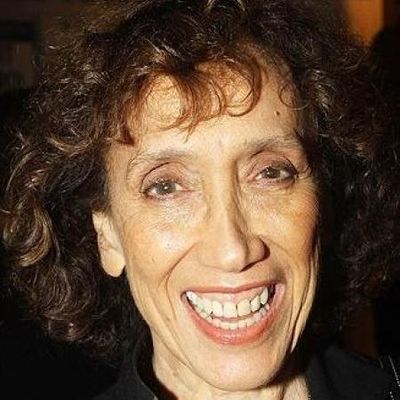
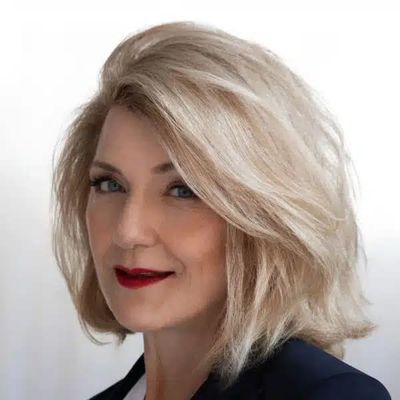
Tony Award-winning lyricist Susan Birkenhead, Tony Award-winning actor and director Victoria Clark, director, playwright and artistic director Emily Mann and host former Rolling Stone writer, editor and Broadway producer Loraine Boyle share insider stories about the making of Lucy Simon’s latest project, ON CEDAR STREET, a musical adaptation of Kent Haruf’s book OUR SOULS AT NIGHT... Read More
From the show: Celebrating Lucy Simon
Guests
Videos
About
Tony Award-winning lyricist Susan Birkenhead, Tony Award-winning actor and director Victoria Clark, director, playwright and artistic director Emily Mann and host former Rolling Stone writer, editor and Broadway producer Loraine Boyle share insider stories about the making of Lucy Simon’s latest project, ON CEDAR STREET, a musical adaptation of Kent Haruf’s book OUR SOULS AT NIGHT.
Transcript
This transcript was automatically generated and might contain errors.
[0:01] Loraine Boyle: Welcome back to our very special Lucy Simon celebration.
[0:06] Loraine Boyle: This is episode 5 in the works.
[0:09] Loraine Boyle: We are thrilled to welcome Tony Award-winning lyricist Susan Birkenhead, Tony Award-winning actor and director Victoria Clark, director, playwright, and associate director Emily Mann, and our host, former Rolling Stone writer, editor, and Broadway producer Loraine Boyle.
[0:26] Loraine Boyle: Today we explore Lucy's new project On Cedar Street, a musical adaptation of Kent Haruf's book Our Souls at Night.
[0:36] Loraine Boyle: Let's begin.
[0:38] Loraine Boyle: This morning we're gonna talk about Lucy Simon's next project, which she's been working on with Emily Mann, Susan Birkenhead, and Victoria Clark.
[0:49] Loraine Boyle: And they're all here with us. Emily, I think you started the ball on this. Am I right or not? You and Lucy. Tell us about that.
[0:59] Emily Mann: Yes, Lucy and I did, but Lucy started it. She asked Michael Weller to introduce us. We'd always wanted to meet, and we did at an event, and um she said, I want to do a musical with you. And I thought, oh my.
[1:31] Emily Mann: It was Lucy who came up with Our Souls at Night by Kent Haruf. And it was then that we wanted to bring Susan on board as lyricist. And to begin with, Victoria Clark as our leading lady. And then she said, Yes, maybe, and, and she talked about wanting to be directing. And uh uh Lucy and I fell in love with um Vicky and her thoughts about the play, and everyone I talked to said she was an astounding director, and we went, Well, let's go. So that's how it began.
[2:14] Loraine Boyle: Okay, so you started with this book, which was I guess a popular book when it came out, um, and it was made into a movie with Jane Fonda and Robert Redford. Um but why did it lend itself to a musical?
[2:29] Emily Mann: I don't know. Well, that was my question when I was asked to join. And um and I was skeptical because it didn't feel like a musical to me. I asked a lot of questions and said, you know, we have to find the conflict. We have to essentially we have to read the material, digest it, and throw it away and create our own musical, which we did. Um we're blessed with Vicky, who has a great dramaturgical sense, and Emily has too, because Emily is also you know a director and a writer, and um and so we sort of hammered out this story, which does depart. In fact, we went further and used a lot of material from other Kent Haruf books. Vicky, you should certainly speak about this.
[3:29] Victoria Clark: Yeah. Oh, I just I think we're we're all very multitasky, and one of the reasons I love this group, um well, all of us are moms, right? And we've all we've all had at least one husband. Some of us have had two. And we're all, you know, of a certain age, and we we all just were sympatico about our own experiences and felt a little enough trust and safety within the group to share um why we were drawn to the material. And so I think it reflects um the life experience and the wisdom of four women who um want our stories to be told, um, because there's as we know a lot of ageism and sexism going on, and as well as to create a piece that will would involve older actors. There's you know, there's a lot of there's not a lot of work for for actors over 50 or 55, and our show at the moment has at least five roles for for people over 60, and probably seven or eight roles for people over 50, and we were really committed to that and to telling a story about two people finding love who never thought they were gonna find love again.
[4:47] Victoria Clark: And the other thing about this team, which is incredible, is that everybody started as an actor or a singer. So Emily and and Susan, when Emily, when we read through material, I just divvy up the parts and let them read it. And hearing the authors speak the lines and speak the lyrics and sing really informs the piece and helps me hear how they envision the piece. So I feel that their background as actors is is really critical to this piece.
[5:17] Loraine Boyle: And how does Lucy's music enter into this, Susan?
[5:21] Susan Birkenhead: Well, Lucy and I worked together over the years, a lot of years. We actually worked on four shows. So I am very familiar with Lucy's music. And we have always written together very easily. It's funny, if there are any clashes in the creative process, it has to do with differences in aesthetics or or in you know, we we have two different sensibilities, but when we come together to write music, it's the easiest collaboration I think I've ever had. Um but also in talking about these people who live in Colorado and the High Plains and the story, I realized that Lucy and I had a treasure chest of wonderful songs that we had once done for a musical called Prairie that was never done. Um for a variety of reasons having to do with book and several book writers, and that we should mine some of that material if it was still usable, and you know, we could just take lift the music out and write new lyrics for it.
And so we explored some of that stuff, and Prairie Rose is you know chief among those songs. Um but there are a couple of others that you know it was a great score, and and we always regretted the fact that it never really made its way to the stage.
[7:01] Susan Birkenhead: There's still time. I have to say, also for for um for me coming on not a I've only done one musical before this. All black musical with Ntozake Shange and um Baikita Carroll in the 80s and early 90s and so it was exciting for me to learn from the A team of musical theater um how to write a book for the theater. And what I loved about working with all three women is their encouragement of allowing the characters to be as complex as they would be in a play. And that we could in fact um have room for both um uh real and complicated characters, real scenes. And then what I found thrilling was how they would as I think it was Susan who said, Yes, we're going to cannibalize your scenes and make uh uh make songs here.
And I found the whole process so thrilling. And because I also like um to use um very spare language when I write, they were also encouraging of that, so that the least amount of my dialogue um uh is being used to launch these incredible songs by Susan and Lucy. So that's been a thrilling part of the process for me and and wonderful to know that you know, I'm gonna encourage my playwright friends if they haven't been writing books for musicals, because they, you know, so many of us think, oh well, it's all about the songs and and you know, the books are often, you know, so so thin. Um it doesn't have to go that way. I mean, and so uh it's just been a great process.
[8:57] Victoria Clark: Yeah, I have to say, um I think you're a natural at this, Emily. I really do, and I hope you you keep finding musicals to write because it is so much more than just the dialogue, right? You you need someone who's great at structure and story and someone who really is mapping an arc of a story and you're you're really good at it. You're really good at it. And it just to have just to know where the songs come and go, and ninety percent of what we've done, or a hundred percent, has we started during the pandemic. And so we we've only been in person together um maybe three dozen three of half a dozen times at the most, just you know, maybe five. And it's uh everything else has been done over Zoom and sending each other material and um that part has been really challenging.
Um but also uh, you know, somehow we've been able to create an incredible amount of work and we've substitute we're already at the point where we've had a reading. Um we submitted to the O'Neill Festival and made it to the very end, made it to the top four musicals out of musicals that were submitted from all over the world, hundreds of musicals. Um we were given a reading, a a virtual reading by the wonderful Signature Theatre in DC. So, you know, we're we're chugging right along. And now but and we've already we we've gotten to the point in rewrites where we've um you know had several songs for certain slots, and so it's um you know, when people stand up and talk about how they worked on their musical and say, Oh, it took us seven years. We know why. It's you know it's a it's a process.
[10:50] Loraine Boyle: So you have a new name for it, don't you? It's not Our Souls at Night anymore, or you're still working on that's still the title has been a kind of an odyssey.
[11:00] Susan Birkenhead: Uh we've gone through a journey with the title. We've but we and we've tried out different things. Um right now we like On Cedar Street because the two people that meet, Addie and Lewis live on the same street, but they never really interacted before. They happen to live across the street from each other. Um there's a tragedy that happened on that street that involves Addie and her family. Um, and so a lot happens on this one street. Um, and it's uh it's a tip it's a typically iconic American kind of title On Cedar Street, so we know it's an American story. So that's that's the one that's uh the front runner for now, and I think Lucy favors that title at the moment as well.
[11:45] Susan Birkenhead: You first did a song with her for A My Name is Alice, right? A very long time ago. Is that is that right?
[11:53] Susan Birkenhead: Uh that's how we met. Well, actually, um a woman named Joan Micklin Silver, a film director, yeah, was going to do um wanted to do a musical of um of her movie, and she called me and she called Lucy and she put us together. And although that musical never came to pass, I mean, it was just...
[12:11] Susan Birkenhead: Was that Hester Street?
[12:18] Susan Birkenhead: Yes. Um she said, but I'm doing this show by foreign about women, and uh we'd like you and Lucy to write a song.
[12:43] Susan Birkenhead: And at the risk of you know, shocking some people. Almost every woman I know at some point in her life has had some sort of experience with a married man. Not necessarily a hot and heavy affair or but it's almost universal. And so we wrote this great song called Happy Birthday, Joe, from the point of view of the other woman who misses all the important times, the birthdays and the holidays and it was a great song. We played it for them, and them being Joan McLean Silver and Julianne Boyd, who were producing it, and Joan McLean Silver leaped up and she said, Never, never, I'll never allow this song. And we looked at each other and we said, But it's a great song, and she said, never. It's so clearly something pushed above.
Trigger, a little trigger there. And she said, We'll assign you a song. We'll just assign you a song. And they assigned us a song about male strippers. And I thought, I'm out of here. Oh no, what a terrible story. I said to Lucy, no, we are not gonna go to this club they want us to go to. I just won't go. And if they want a song about male strippers, we're gonna write a goddamn funny song about male strippers. And so we did. What's the title, Susan? All the pretty young men. Well, we all have to talk about it. Absolutely. I can't even remember it. But it was just, you know, these women. I I I don't even know if I would if it would make me laugh if I heard it now. But so that was kind of crazy.
I met Lucy doing the original workshop of The Secret Garden. Um I played Martha, who was Mary's friend who um, you know, like the Yorkshire girl and her little brothers, Dick and Yeah, the house. Yeah, so we workshopped it up in um Saratoga, and then we uh did the first production at Norfolk in Norfolk, Virginia, at Norfolk Stage, I think. And um that's as far as I went with the show.
[15:13] Victoria Clark: But you were in the show we did together. You know that Lucy and I. Yes, I had kind of crazy agents at the time. So when the our director was kind of let go from the project, and so a new director was brought in, and she wanted to see all of us because she hadn't seen the production. But I had I had a a crazy agent who said, Oh, you will not go on an audition for her. I said, Why not? She doesn't know me. But he advised me not to, and um she's like, sorry, I can't cast you. So I lost that job, and um wonderful Allison Fraser took over and it was nominated for Tony, and she did an astonishing job. And I she had such a great take on that part, it was like nothing I was doing, so you know, God bless, she was incredible. But then um Lucy and um Susan and I worked on a project up at the lawn at Long where was that called Fanny Hackabout Jones oh yeah with Erica John right and so that's where I met Susan.
[16:14] Emily Mann: So Emily you're the you're the newest friend of Lucy in a way you just met her a few years ago right before the pandemic.
[16:22] Emily Mann: That's right. We became fast friends really close friends immediately. We sort of said we sort of fell into each other's eyes and it was sort of love. And the first thing I did was invite her I was then um still artistic director of the McArthur Theater Center in Princeton and every year I did a writer's retreat. So I invited Lucy to come and we had 10 days together and we wrote up a storm. I mean I wrote the first 25 or so pages and Lucy wrote four songs and um a lot of that is still in um we were just on fire. It was also then that we realized how much we needed a director and we needed Susan we needed a lyricist um those a lot of what Lucy wrote was wonderful we we knew.
[17:26] Victoria Clark: That one the opening scene is pretty much intact from your first draft.
[17:31] Emily Mann: Yes. So that's so that it is the spark of what you two created by yourselves uh really uh it it lit the fire for the whole piece and it really you guys knew how you wanted to launch the story and then once Susan came in we uh found an opening number that kind of s sets the stage for the this the whole project and um yeah we and we mapped it out we we really got to know who the people were we then ended up adding uh the brothers and we but but we already knew the conflict with her son we already knew the pain you know deep inside her from her loss that we're not going to reveal here not gonna do a spoiler alert um and we didn't quite have um the ending but we had pretty much through um you know if you want to break it into three acts which one always does as a playwright you know um and even though you might then end up cutting at the midpoint or whenever um but the first two acts are pretty pretty much the same bones.
[18:46] Emily Mann: Um so we got very far in ten days yeah if I may what Susan really brings to the uh collaboration well Susan is just got this kick-ass sense of humor and um and also just a refreshing way of um staying sort of current and present in this zeitgeist whatever and it believe me it has changed so many times since we've been working together we when we met, but the whole the whole we had this cultural revolution and the murder of George Floyd. I mean, that all that all happened as we were working and and the world was turning upside down. And Susan brings um, you know, this great point of view that keeps us from getting too um too sincere and too warm and fuzzy. You know, she just keeps it really uh alive and keeps our story really kinetic, um, which is uh it's a great it's I think it's a great mix of um sensibilities that we have.
[19:52] Susan Birkenhead: It's what Susan talked about in the beginning, you know, how in some ways their opposite sensibilities uh combust and make for make for great theater, yeah.
[20:02] Victoria Clark: Well but Vicky and I are are a lot about funny, you know. We kept saying funny, funny, we do funny.
[20:10] Susan Birkenhead: So yeah, they both would say to it to to me and Lucy, funnier, funnier, funnier, please, please.
[20:16] Victoria Clark: Yeah, we do need it. We need we need to laugh because we know that um life is not all earnest, life is messy, and even in the midst of tragedy, people laugh and find absolutely funny things, and so it has to be in the theater.
[20:36] Emily Mann: Especially in the midst of tragedy.
[20:38] Victoria Clark: That's exactly it's about survival.
[20:41] Victoria Clark: Um I'm very excited that this is an all-women project, and um dare I say it since I'm one of them too, women of a certain age who understand more about life than some of these younger playwrights, I think.
[20:59] Victoria Clark: Um so I I'm looking forward to seeing this on stage. I just want to say that um Lucy has, you know, very generously and wisely decided to bring in a collaborator to finish the score and to assist in finishing the project.
[21:19] Victoria Clark: And so we ha are now working with Carmel Dean, who is an incredible composer. And um I just wanted to give her a shout out to say that you know, we feel so blessed to have her as part of the team, and now she's our um our fifth woman. And um, you know, um Deborah Abramson also worked for worked with us um for a long time and did some incredible arrangements and some incredible work, and so we've had our touch our piece has been touched by some really magical people, and uh we're we feel um very grateful for that and for their contribution.
[22:04] Victoria Clark: And I thank you so much for giving us your time to pay tribute to Lucy and her music. You know, I've worked with so many composers over the years, and Lucy has a unique gift, and I think her gift is sort of mapping the the course of an emotional progression, and she she really knows what the heart sounds like and what relationships sound like, and she's able to paint love and affection and all kinds of emotions quite eloquently with music, and that is, I think one of her greatest gifts.
[22:49] Lucy Simon: Melody has always been my emotional language. It is my god. It is the prehistoric ancient, mysterious depths of the sea language. I always know where I'm going if I let Melody take me there. From the time I was a child, I could count on it to bring me home. I still can. Somehow I can translate into my source and find the way it should sound from my particular emotion.
[23:20] Lucy Simon: The old moon laugh next time. It helped me write my first song. In seventh grade, I had to recite a poem in front of my class. I chose wink and blinking and nod, but I couldn't memorize it without a melody. Since then it has been recorded by many, and Carly and I had a hit single with it. I guess there's some good aspects of being dyslexic.
[23:46] Victoria Clark: Thank you for listening to this final episode of the special Lucy Simon Celebration. If you haven't already, we encourage you to go back and listen to the previous episodes from this five-episode series. Tremendous thanks to our guests, Susan Birkenhead, Victoria Clark, Emily Mann, and episode host Loraine Boyle.
[24:06] Victoria Clark: With narration by me, Lucy Boyle. This episode is produced by Dory Berenstein, Alan Seals, and Kimberly Garris for the Broadway Podcast Network. Executive producers are Loraine Boyle and Liz Armstrong. Associate Producer is Henny Konisberg. This series is edited by Alan Seals and Dory Berenstein. Thank you to Victoria Traub, Sean Flavin, and Concord Music for their support and partnership on this very special project.
[24:35] Victoria Clark: Find out more about Lucy Simon, the Leukemia and Lymphoma Society, and more ways to listen to this podcast by visiting BPN.com.fm slash Lucy Simon.
© Broadway Podcast Network, All Rights Reserved