

Before she became known as the Queen of Country Music, beloved by young and old alike, Dolly Parton was a barefoot kid from a two-room cabin in the Smoky Mountains, singing along to her mother's old ballads... Read More
From the show: Closing Night
Guests
Featured Shows
About
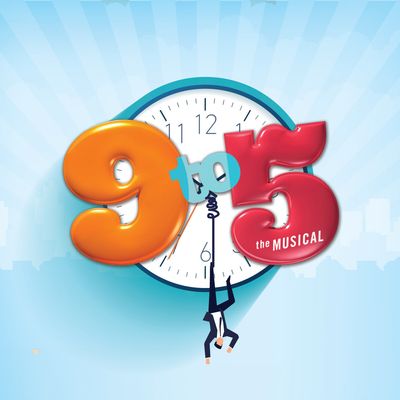
Before she became known as the Queen of Country Music, beloved by young and old alike, Dolly Parton was a barefoot kid from a two-room cabin in the Smoky Mountains, singing along to her mother's old ballads. With her passing on August 25, 2026, at the age of 80, we're revisiting one of the most joyful chapters of her remarkable career: turning one of her biggest hits, "9 to 5," into a Tony-nominated musical.
This episode is taken from our first season, now with a new introduction, new soundbites, enhanced audio, and some final thoughts honoring Dolly's legacy and her influence on us all, especially on Broadway. We trace the show's journey from Jane Fonda's idea for a workplace revenge comedy to one of the most iconic movies of the 1980s, and finally to the stage. It's a story worth remembering: how Dolly carried her own voice, and her own songs, all the way to Broadway.
Transcript
This transcript was automatically generated and might contain errors.
[0:01] Patrick Oliver Jones: There aren't many people in America who can walk into a room and have almost everyone genuinely glad to see them.
[0:14] Patrick Oliver Jones: And for almost 60 years, Dolly Parton somehow managed to be one of those rare few who practically everybody could agree to love.
[0:23] Patrick Oliver Jones: Conservative or liberal, church-going or not, old-school country purists or pop chart teenagers, drag queens or southern grandmothers.
[0:34] Patrick Oliver Jones: But sadly, the world lost this one-of-a-kind beacon of light at the age of 80.
[0:41] Patrick Oliver Jones: You know, in three seasons of this podcast, I've never re-released an episode.
[0:47] Patrick Oliver Jones: But with Dolly Parton's passing, it felt like the right time to revisit one of the greatest chapters in her long and iconic career.
[0:56] Patrick Oliver Jones: That of 9 to 5. The song, the movie, and of course, the musical.
[1:03] Patrick Oliver Jones: But before we get there, I want to take a moment to tell you how she became this kind of person that an entire country could rally around.
[1:12] Patrick Oliver Jones: Someone who never took herself too seriously, but had a drive and ambition few have ever matched.
[1:19] Patrick Oliver Jones: I would just like to be somebody that brings a lot of happiness and joy to people all around the world.
[1:25] Patrick Oliver Jones: I don't really think I'm a great talent. I know I'm not a great singer, but I don't know of anybody that enjoys doing it any more than me.
[1:31] Patrick Oliver Jones: And I just think that I make up for where I lack in talent, I make up for in hard work and ambition.
[1:37] Patrick Oliver Jones: And I know what I can and can't do. And well, really, when I was a kid and wanted to be a star, I just wanted to be a fairy princess.
[1:43] Patrick Oliver Jones: That's what I knew of a star. We didn't have television then and that sort of thing.
[1:47] Patrick Oliver Jones: But I just wanted to be somebody that everybody loved and somebody that loved everybody else.
[1:52] Patrick Oliver Jones: Long before she became the Dolly we all loved, she was the fourth of 12 kids crammed into a two-room cabin on Locust Ridge in the Smoky Mountains of Tennessee.
[2:04] Patrick Oliver Jones: No electricity, no running water, and the walls stuffed with old newspaper to keep out the cold.
[2:10] Patrick Oliver Jones: Her father worked the farm and picked up construction jobs to keep the family fed.
[2:15] Patrick Oliver Jones: He was so broke the week that she was born that he paid the doctor who delivered her with a sack of cornmeal.
[2:22] Patrick Oliver Jones: A story that Dolly loved so much she eventually turned it into a song.
[2:28] Patrick Oliver Jones: And he delivered more than half the babies in those mountains. Among those babies he delivered me.
[2:37] Patrick Oliver Jones: What that cabin lacked in comfort, it made up for in music.
[2:42] Patrick Oliver Jones: Her mother, Avie Lee, sang almost constantly. Old ballads passed down from Welsh ancestors who'd carried them across an ocean generations earlier.
[2:53] Patrick Oliver Jones: Her grandfather was a fiddling preacher.
[2:56] Patrick Oliver Jones: So when six-year-old Dolly wrote her first song, an ode to a corncob doll she named Tiny Tassletop, nobody in that house blinked twice.
[3:07] Patrick Oliver Jones: That's just what Partons did.
[3:09] Patrick Oliver Jones: Two years later, an uncle handed her a real guitar, and something clicked into place that she never let go of.
[3:18] Patrick Oliver Jones: She was on the radio by eleven, she stood on the stage of the Grand Ole Opry at thirteen,
[3:24] Patrick Oliver Jones: and the morning after her high school graduation in 1964, she packed what little she had and left for Nashville.
[3:33] Patrick Oliver Jones: But success for Dolly was never inevitable, nor was it easy.
[3:38] Patrick Oliver Jones: Sure, she had talent, even though she may not have recognized it in herself at first.
[3:44] Patrick Oliver Jones: But what made her different is that she never stopped being Dolly.
[3:49] Patrick Oliver Jones: She never toned down her accent and never apologized for where she came from.
[3:55] Patrick Oliver Jones: We were very proud people, people with a lot of class.
[3:58] Patrick Oliver Jones: It was country class, but it was a great deal of class.
[4:01] Patrick Oliver Jones: Most of my people were not that educated, but they are very, very intelligent.
[4:07] Patrick Oliver Jones: Good common sense, horse sense we called it.
[4:15] Patrick Oliver Jones: Well, that country class and horse sense led to one of the most extraordinary careers in American entertainment.
[4:22] Patrick Oliver Jones: With eleven Grammys to her name, Dolly had twenty-five songs reach number one on the Billboard country charts,
[4:29] Patrick Oliver Jones: a record for a female artist, and forty-three top ten country albums, which is a record for any artist.
[4:37] Patrick Oliver Jones: In fact, her music has appeared on the country charts in each of the past seven decades, the most of any female artist ever.
[4:46] Patrick Oliver Jones: However, among all her solo hit songs, she only had one to ever top the pop charts, and that was 9 to 5,
[4:55] Patrick Oliver Jones: which came out in 1980 as the theme song to the movie of the same name.
[5:00] Patrick Oliver Jones: And so let's look back at how it took almost 30 years for that hit song and film to become a Broadway musical.
[5:13] Patrick Oliver Jones: When 9 to 5 premiered on Broadway in 2009, the musical had all the makings of a surefire hit.
[5:20] Patrick Oliver Jones: It was based on a beloved classic comedic film and had one of the catchiest pop hits of the 80s by none other than Dolly Parton.
[5:31] Patrick Oliver Jones: Well, hey there, everybody. When I hear that sound, it takes me back to a time before computers and cell phones,
[5:38] Patrick Oliver Jones: back when apples and blackberries were something I'd pick out behind the barn.
[5:44] Patrick Oliver Jones: Needless to say, 9 to 5, the musical was eagerly anticipated by fans of the movie and theatergoers alike.
[5:51] Patrick Oliver Jones: The film's message of female empowerment and standing up against workplace discrimination has continued to resonate with audiences.
[5:58] Patrick Oliver Jones: Add to that a star-studded cast and an award-winning creative team that included the Grammy-winning queen of country music herself.
[6:06] Patrick Oliver Jones: Well, this show had everything going for it.
[6:17] Patrick Oliver Jones: Yet, despite the initial buzz and excitement, 9 to 5 struggled to maintain its momentum on Broadway
[6:24] Patrick Oliver Jones: and clocked out of the marquee theater after less than five months.
[6:29] Patrick Oliver Jones: Was this a case of bad reviews, bad decisions or simply bad luck?
[6:34] Patrick Oliver Jones: As we'll discover, there were many factors that contributed to such a short run on Broadway.
[6:40] Patrick Oliver Jones: But perhaps the most intriguing aspect of this story is how it illuminates the inner workings of the movie to musical pipeline
[6:48] Patrick Oliver Jones: and the delicate balance between making art and making money.
[6:55] Patrick Oliver Jones: Welcome to Closing Night, a theater history podcast about famous and forgotten Broadway shows that close too soon.
[7:05] Patrick Oliver Jones: I'm Patrick Oliver Jones, and I'll be your guide in this first season as we go through the ups and downs of one of Broadway's youngest venues, the marquee theater.
[7:15] Patrick Oliver Jones: These episodes will give you a behind-the-scenes look at some of the shows that have come and gone from here
[7:21] Patrick Oliver Jones: and what led up to their closing night.
[7:30] Patrick Oliver Jones: If you walk down Broadway or around the West End these days, you might think you're in Hollywood.
[7:37] Patrick Oliver Jones: That's because more and more movies are finding their way onto the stage.
[7:41] Patrick Oliver Jones: Now, transforming a well-known movie into a musical certainly doesn't guarantee success,
[7:47] Patrick Oliver Jones: but there are two advantages it gives to any production, name recognition and a built-in audience.
[7:54] Patrick Oliver Jones: However, when it comes to adapting the movie 9 to 5 for the stage, it actually comes with a third and even bigger asset, Dolly Parton.
[8:06] Patrick Oliver Jones: I just sit down. If I'm in the right mood, creative mood, I just feel I've got something I want to say that wants to come out.
[8:12] Patrick Oliver Jones: And I usually just sit down with my guitar and I just start singing and it just kind of all comes at once.
[8:18] Patrick Oliver Jones: Dolly was a songwriter first before she ever started recording the songs herself.
[8:23] Patrick Oliver Jones: But once she did, that led to numerous hits in the late 60s and 70s, as well as television shows and specials.
[8:31] Patrick Oliver Jones: But eventually the big screen came a calling.
[8:35] Patrick Oliver Jones: 9 to 5 was really a joy for me, and it was like something I was not expecting.
[8:41] Patrick Oliver Jones: I had been offered movie roles at different times.
[8:45] Patrick Oliver Jones: I had not been interested in doing the movies because at that time, my writing career, my entertaining, I was traveling, touring.
[8:54] Patrick Oliver Jones: I was doing really well with that. And so I didn't want to kind of get sidetracked just then.
[9:00] Patrick Oliver Jones: But when Jane Fonda came to me and presented this idea to me, I thought, well, how can I not do this?
[9:10] Patrick Oliver Jones: In the late 70s, actress and producer Jane Fonda began work on a new motion picture through her recently formed production company, IPC Films.
[9:20] Patrick Oliver Jones: The idea for this picture came from an old friend of Fonda's who had started an organization of women office workers in Boston and called that group 9 to 5.
[9:31] Patrick Oliver Jones: To flesh out this idea, Fonda brought on screenwriter Patricia Resnick and director Colin Higgins to create a workplace drama about secretaries struggling to establish equality with men in terms of pay and position.
[9:48] Patrick Oliver Jones: The movie took a slightly different turn, though, once they started thinking about casting, as Fonda explains on The Late Show with Stephen Colbert back in 2017.
[9:58] Jane Fonda: We started off with very dark, dark comedy. And then one night I went to see Lily and her one woman show appearing nightly. And what can I say? I was smitten. And I said, I don't want to make a movie about secretaries unless she's in it. And then on the way home, I turned on the radio and Dolly Parton was singing Two Doors Down. And I thought, oh, my. Imagine if Dolly Parton played a secretary. I mean, you couldn't see her hands, but it would be. And so we had to I said, but in order to get them, I got to turn it into a real comedy.
[10:30] Patrick Oliver Jones: But even though Fonda asked both ladies to join her in the movie, it actually took about a year of persuading to bring both of them on board.
[10:38] Patrick Oliver Jones: During that time, they came up with some backup options just in case for Lily Tomlin.
[10:44] Patrick Oliver Jones: It was going to be Carol Burnett. And for Dolly, it was Anne Margaret.
[10:49] Patrick Oliver Jones: Well, we'll never know how that movie would have turned out because, of course, both ladies did agree to join the project.
[10:56] Patrick Oliver Jones: However, Dolly did have one stipulation before accepting her offer.
[11:00] Dolly Parton: Part of my deal with Jane was that I would do it, but I said I have to write the theme song and I get to record it.
[11:07] Patrick Oliver Jones: That was part of my deal. Well, she certainly knew something about songwriting, but being an actress. Well, that was a different story. And so as Dolly prepared for her acting debut in 9 to 5, she memorized every line in the script.
[11:23] Patrick Oliver Jones: Not just her own every line. In her mind, that's what movie actors did.
[11:29] Patrick Oliver Jones: Well, she soon came to realize, of course, that she didn't need to worry about all those other lines, which gave Dolly more time to focus on writing the movie's theme song.
[11:39] Dolly Parton: Every day on the set, I just watch what was going on. And I have these acrylic nails and I and they sounded like a like a tap right to me. And it was all about secretary. So I kind of look around. I just like that, you know, like in the mornings I could about tumble out of bed and stumble to the kitchen and different things on the set. Like working nine to five. What a way to make a living.
[12:01] Patrick Oliver Jones: So it was over a period of time I wrote the theme song, just kind of playing off of all the girls. And then when I got ready to record it, I brought all the.
[12:10] Patrick Oliver Jones: The movie released in December of 1980 and 9 to 5 went on to become the biggest grossing comedy film that following year, with the movie's soundtrack just as popular. As Dolly's hit single 9 to 5 became one of the few songs ever to reach number one on the country and pop charts simultaneously, she became only the second female artist to do so. The song earned an Oscar nomination and won two Grammy Awards, and also became the theme song to a TV sitcom based on the movie, which aired on ABC and starred Rachel Dennison, who just happens to be Dolly's youngest sister. With all that success, it's no surprise that this story about three secretaries also caught the attention of notable musical theater types.
Annie creator Martin Sharnon was interested in it, as well as Hairspray's Tony-winning composer Mark Shaman, who had existing songs he thought could be worked into a musical. But just as that piece began to develop, Robert Greenblatt, the head of Showtime Network at the time, had a pivotal meeting with Patricia Resnick in 2005. He wanted to finally bring 9 to 5 to the stage, and of course, their first thought was to ask Dolly to write the score. I just thought, well, when they came to me about it, I was thinking, well, why now after 20 some years, 25 years, I guess, when at that time, when they asked me to write it. And I thought, well, that's interesting. I'll see if, you know, how it goes and see if I can even do it.
But after I got into it, then I saw it was perfect for that. And Dolly wasn't content to just mimic her 9 to 5 song for the rest of the musical. Instead, as Dolly explained to TheaterMania, she gave each character a chance to shine in their own uniquely musical way. So when you write for musicals, you've got a little more freedom to write basically what you think the character is feeling and knowing. And however that turns out, it can be longer, it can be shorter. So it actually got to be fun. And I had fun just being all the different characters. This was not only a learning process for Dolly, but the same could be said for Greenblatt and Resnick as well. All three of them had had great success in their respective fields, but none of them had ever worked on a musical before.
There were definitely certain things I had to learn, like you can't cut in the theater. So if people are wearing one costume, you cannot immediately have them in another costume, even though in the movies they rip off their clothes backstage and run back on. So there was a little bit of a learning curve on things like that. As with any movie turned musical, there's always the decision of how much of the original source material to include. And with the words and images from the hit movie in most people's minds, producer Robert Greenblatt wanted to make sure they found a balance between just restaging the film and actually developing a brand new musical. We didn't want any shock of, oh, you know, what happened to that character?
And there's several iconic lines in the screenplay that we feel the audience waiting for and applauding when they hear them. So we wanted to make sure all those were there. You say one more word about me and I'll get that gun of mine, and I'll change you from a rooster to a hen with one shot. One of the wonderful things about theater, and particularly about musicals, is you can go into the characters' minds. You get to have songs where people talk about what they really think and feel. And so what happens is I think that my understanding of the characters deepened as we did the musical. I really got to know them even better than I did when I was writing them for film. You know, we've made a lot of changes, and at the end of the day, I think people will look at it and go, oh, that's really close to the movie, which I think is the goal.
[16:41] Patrick Oliver Jones: And just like with the 1980 movie, casting was going to be key for this musical, which is why Tony Award-winning director Joe Mantello, who happened to be a high school friend of Greenblatt's, was brought in to direct. But as with most productions, it took a few combinations before getting it right. The initial private industry reading in January 2007 starred Tracy Ullman, Alice Ripley, and Megan Hilty as the three central characters. But a few months later, they lost Tracy Ullman as she began work on her new TV series, State of the Union, and Alice Ripley went on to star in another new musical, Next to Normal. With two more private industry readings coming up, another round of auditions was conducted to fill these vacant roles.
One of the ladies they brought in was Stephanie J. Block, who was finishing up The Pirate Queen at the time. You know, as you just said, I've been cast in these kind of strong, angsty women. So to have this role that's so fragile and tender and she's stumbling her way to find her voice as a woman. And then, of course, I do get this really kick butt song at the end of Act Two where Judy finds her voice. But it's been a dream. I just feel so... I want to take care of this character, you know, because Jane did an amazing job with the movie. Of course, they made it famous. I'm now going to embody it and do my own little spin on it, which you get to do through song and dance. And we'll see how I take care of her.
And for the role of Violet, Anna Gasteyer was tried out for one reading, but Mantello had his own idea of who could play this part. Allison Janney, someone not normally known for her singing voice. I was Joe Mantello, who I've worked with before, called me and asked me to come do this. And I said, no. And he asked me to come to the workshop, which was a great way for me to try it out and see if I liked it, get my feet wet. And I fell in love with them. We had a great chemistry together. And I thought I can do this. Janney was certainly well known nationally from her days as CJ Craig on the West Wing. And though this was going to be her first Broadway musical, she was no stranger to singing in character, having done musicals on screen before, namely Hairspray in 2007.
But that doesn't mean she wasn't still a bit nervous about playing this role, as she confessed to Broadway.com during a press presentation. And Violet, of course, was played by the amazing Lily Tomlin in the original movie. I keep looking behind my back, though, thinking she's going to show up with a hook and drag me on. I think she's thrilled. She better be.
[19:43] Patrick Oliver Jones: And so with their final workshop, the 9 to 5 cast solidified around their three leading ladies, Allison Janney in the Lily Tomlin role, Stephanie J. Block in the Jane Fonda role, and Megan Hilty remained in the Dolly Parton role. Of these three leads, Hilty was relatively unknown, since 9 to 5 would only be her second Broadway show. And now she was filling the very big shoes of Dolly Parton. But Hilty had already felt that kind of pressure before in her Broadway debut, as a replacement for Glinda in the mega-musical Wicked. In fact, Greenblatt took Dolly to see Wicked when they were considering Hilty for the role of Dora Lee, and Dolly was immediately enamored with her and thought she was going to be perfect for the part.
Still, playing a part made famous by Dolly Parton was going to come with comparisons, as Hilty mentioned on the Today Show. And taking on the role of the sexist, egotistical, lying, hypocritical bigot of a boss, Franklin Hart, was none other than Mark Kudisch. And while there was certainly fun to be had, there was still lots of work to be done as well. But of course, the collaborative process often involves a lot of cooks in the kitchen, including Resnick and Greenblatt, along with director Joe Mantello and choreographer Andy Blankenbuehler. But we can't forget about the ensemble, of course, an essential part of any musical. Well, Lisa Howard was part of that ensemble and played Mr. Hart's wife, and she gives an example of the back and forth process of rehearsals.
We would take all day and learn a whole big group number. Andy would choreograph and everything. And then at the end of the day, Joe would come in and he'd be like, and then it was scrapped. And then we would literally start over. I just think they just weren't agreeing on how it should look and how it should go. Obviously, eventually they did, but it was a constant do and redo. At the first tech rehearsal for their 2008 world premiere in Los Angeles, the cast got to be on the set for the first time and found out just how realistic their stage environment was going to be. Nine to Five opens with an empty stage that transforms to a completely detailed office with fluorescent lights, a water cooler, and props galore.
And it all happens in less than 20 seconds. The show also incorporated a huge LED screen in the back of the set. Now, this is technology that's becoming more widely used now, but was not as common for the stage back in 2008. And we were all like, you know, this is cool, but it was, you know, expensive. So I think there were a lot of hurdles in that way. You know, the set itself had this big, ginormous hole in the middle of the stage that the desks would come up. You know, we had an accident during tech. Mark Kudisch thought the little crash pad was there, jumped. It wasn't. I mean, he could kill himself. He didn't. And Mark was like, well, I didn't die because I know how to fall. So, and I mean, it's true.
He rolled and he was all bruised. I mean, it was a lot. There were times when Joe Mantello seemed more like a traffic cop during rehearsals than a director. He not only had his hands full working with the actors and trying to keep them safe, but he also had to work out the intricately designed scenic moves and transitions that required constant tweaks, to the point at which the show released a statement to the press that the first three preview performances in L.A. had to be canceled because of the, quote, size and scope of the new musical necessitate further technical rehearsals. It was that way when we were rehearsing for The Almonds.
[24:20] Patrick Oliver Jones: I mean, there was time during tech. They're doing lights. We're in the lobby rehearsing, changing stuff. But on September 9th, 2008, with their first paying audience, producer Greenblatt wasn't really worried about the scenes. He was worried about the scenic changes. He knew that there were likely to be some last minute technical problems, so he arranged for Dolly to come out and welcome everyone beforehand and remind the audience that this is a preview performance, so it might stop a few times. Well, things went pretty smoothly until the end of Act One when, sure enough, things suddenly ground to a halt. And as if on cue, Dolly got up from her seat and went to the front of the stage and started taking questions from the audience. And then Dolly did with this theater audience what she does with her concert audiences all the time.
[25:31] Patrick Oliver Jones: But after this sing-along, the technical issues still continued. So Dolly went on to sing another of her famous compositions, "I Will Always Love You," remarking that Whitney Houston may have sung the song better, but Dolly made more money on it. Well, that theater audience loved every minute, of course, because this was Dolly in her element, quick on her feet and always the brightest star in the room. Her musical, though, was still finding its feet throughout the previews, because even when the technical elements were working, there were creative elements that still had to be sorted out. There was one time when they couldn't agree on this one number. And so we had a show. We went out, stood still and sang.
Eggie, Eggie, oh my God, because they couldn't agree. We didn't know what to do, stood out there and sang and then left. So it was challenging. I mean, we were having fun while we were doing it. But like, eventually, everyone was like, oh my God, you know. Now, while I would say that is an extreme example, it is true that changes can and do occur constantly during previews. Sometimes it's simplifying staging or other times it's cutting part of a song or rewriting a scene. And for "9 to 5," this was true as well, especially if it crossed a line Dolly was not comfortable with.
[27:01] Patrick Oliver Jones: For pretty much her entire career, Dolly has remained famously apolitical. She's even turned down the Presidential Medal of Freedom twice to avoid even the appearance of politics. One time on ABC's Nightline, the interviewer tried to bring up the subject, but Dolly wouldn't take the bait. I don't do politics. I'm not getting into any of that because I have a lot of fans out there and I don't want to offend anybody. Of course, I have my opinion about everybody. And everybody has their opinion. Everybody and everything. But I learned a long time ago, keep your damn mouth shut if you want to stay in show business. I'm not in politics. I'm an entertainer. Well, during the L.A. previews of "9 to 5," Resnick had inserted a disparaging line about President George W. Bush into Doralee's epilogue at the end of the show.
And although this wisecrack equating Bush with a sexist, egotistical, lying, hypocritical bigot may have gotten a huge cheer from the audience in L.A., Dolly wasn't too happy about it. She told Entertainment Weekly that she didn't think that was the right thing to do because she didn't want to offend half the audience. So the line was replaced ahead of opening night with something Dolly uses in her own concerts. Doralee's new nonpartisan epilogue now says that she, quote, briefly considered running for president, but realized she was too late. Bigger boobs had already beaten her to the White House. It's very funny and very good. So it's not just a big political statement. It's really we've made a good statement and it's got a good message. But it's very, very fun and very entertaining. And I tried my best to write the songs where they really had a lot to say, had a lot of meaning and was a lot of had a lot of fun in them as well.
[28:49] Patrick Oliver Jones: Well, the cast and creative team were certainly ready to have a lot of fun for the "9 to 5" world premiere at the Amundsen Theater in Los Angeles on September 20th, 2008. However, once again, the technical components did not want to play nice and stopped the show just 20 minutes into the first act. And once again, Dolly was there to save the day. This time, though, she had some help from her co-stars from the original movie. Jane Fonda, Lily Tomlin, and Dabney Coleman were all there for opening night and joined her on stage to chat about the show. Then Dolly distracted the audience, as she had done before, with a singalong of "9 to 5" and was just about to go into "I Will Always Love You" when she received word that the technical difficulties had been fixed.
Well, the crowd actually groaned, wanting another number. No, no, no. She responded. Let's do that when we break down again. Not sure that's the kind of message you want to leave an audience, but it's not like it was a secret either. Allison Janney and Stephanie J. Block even went on The View talking about the show's scenic issues. It was like you were all of a sudden in a horror film, you know, one of those like an earthquake and things were just everyone looked like a deer in headlights on stage because we weren't sure what was going to hit us that night because it was just a huge set with lots of moving pieces. And there are a lot of things to run into. We refer to the set as a she and she is a whole nother character in the play.
And I think most musicals have about 17, 18 scene transitions. We've been told we have 47. So that in the same interview with the cast, Hilty mentioned that there were some people who came to the show hoping the set would break down just so they'd get to hear Dolly sing. So it begs the question, was all this tech even worth it? The challenges and delays it was causing Los Angeles area newspapers like the Orange County Register seem to wonder the same thing. This production is more tricked out than it needs to be. Director Joel Mantello and his creative team have spent a great deal of time and energy turning a modest story about office politics into a bells and whistles Broadway show. Still, while most LA critics acknowledge that the show was a work in progress, they also noted that if you like the movie, you'll love the musical. And there's a lot of laughs and sheer entertainment at work for Dolly, though, just seeing her first musical come to life was all the reward she needed.
[31:26] Dolly Parton: One of the biggest thrills of my entire life. It was just overwhelming to me, really, when they started in rehearsals and I was hearing all those voices and I was hearing my song. It's like, wow. But it was just such a joy and such a thrill to hear that all come to life. It just overwhelmed me. I almost fainted when I first started. It was just such a rush that it was just almost, you know, tip my head over. The Los Angeles production wound up with seven nominations at the L.A. Ovation Awards and at the L.A. Drama Critics Circle Awards. It won two for best choreography and best score. But with Broadway just a few months away, Dolly continued to work on that score by writing new songs that made better use of the performers.
There were a total of six production numbers cut out and three new songs added in. But even then, Dolly had plenty of songs that never saw the light of day, some of which she actually felt were better than what ended up in the musical. But that's what happens in the collaborative writing process of a musical. After the break, "9 to 5" has to contend with the 2008 financial crisis and ends up having to delay its Broadway opening.
[32:57] Patrick Oliver Jones: While Dolly and the team continue to work on script and score, trouble that had been brewing in the U.S. and international markets for most of 2008 finally hit a steep decline in September and bottomed out in November. During this time, producer Greenblatt came to realize that his $10 million musical wasn't going to make its original opening date at the marquee. Greenblatt said time constraints made an earlier opening date impossible. So it was pushed a week later to April 30, 2009, which marked the very last day to qualify for the Tony Awards that season. Finally come to Broadway, we, you know, more changes, more changes, we doing it. Then there was trouble with the, I think, the lighting designers.
They weren't liking what they were doing. They ended up hiring a new set of lighting designers. The LED screen in the back, that was a problem and way over budget. So as you can see, a lot happened between the Los Angeles run and the Broadway previews. And through all these changes, Lisa Howard and the rest of the cast kept working and rehearsing, doing their best to ignore all the distractions and setbacks.
[34:14] Lisa Howard: I don't want to paint such a negative picture. It was fun. I mean, and we were working with Dolly Parton. Like it was great. You know, during tech, she would make us fudge and hand it and give us all like homemade fudge. And she would be backstage as we would come off. You know, you go to your gondola, you change into your robe and you go up to your dressing room and she'd be there giving everybody high fives. Great job. Great job. I was like Dolly Parton. With Dolly's infectious joy for music, her larger than life personality and her undeniable skills as a singer and songwriter, most critics said that they were surprised that she was only now making her Broadway debut with "9 to 5" and that it took so long to bring this movie to the stage. But despite the decades in between, when the show finally opened at the marquee on April 30th, 2009, its core message was as relevant then as it was back in 1980.
[35:13] Lisa Howard: I also think it's not just about women being mistreated. It's about anybody being mistreated. She's got a great speech at the end of the play that's about the little guy. And, you know, we have all these men, the suits, you know, that are doing tricks under the table, and it's the little guy that pays for it. So I think especially in this economy, we're seeing it, we're feeling it. And it's very pertinent to today.
[35:36] Patrick Oliver Jones: As Stephanie J. Block explained on the Today Show, the movie and musical champion a message of female empowerment and ending bad behavior that would also become a central part of the Me Too movement just a few years later. And it's actually very interesting, considering everything we know now, to look back at the list of producers for "9 to 5," the musical, one of which was the Weinstein Company. In fact, Harvey Weinstein was there opening night at the Marquis Theatre, talking about the show's message. It's women emancipation. Secondly, it's about women wanting to kill their boss. And third of all, I know that everybody in my company wants to kill me. And they bought multiple tickets. I think this movie could survive, the show could survive on just my company. But it's that absolute fantasy of getting.
[36:30] Patrick Oliver Jones: Talk about life imitating art. This off-handed remark on the red carpet became a self-fulfilling prophecy just eight years later, when more than 80 women did kill Weinstein's career by highlighting a pattern of harassment, assault, and abuse for which the former producer will most likely spend the rest of his life in prison.
[37:00] Patrick Oliver Jones: When it comes to Dolly and the Me Too movement, she's spoken out on 60 Minutes and shared her own stories of harassment and inappropriate behavior from the male-dominated country music scene she joined in the 1960s and 70s.
[37:17] Dolly Parton: Well, I certainly got hit on a lot, and a lot of men thought I was as silly as I looked, I guess. You know, I look like a woman, but I think like a man. And in this world of business, that has helped me a lot, because by the time they think that I don't know what's going on, I done got the money and gone.
[37:34] Patrick Oliver Jones: Well, with 9 to 5 the musical, Dolly, the creatives, and the producers were certainly hoping it would make good money. When the show finally opened at the Marquis on April 30th, it ended a very busy 2008-2009 Broadway season, which proved to be amazingly resilient in the face of an international recession.
[37:56] Patrick Oliver Jones: And in competing for audience dollars, 9 to 5 was not only up against new musicals like Next to Normal, Jason Robert Brown's Thirteen, and the 1980s-infused Rock of Ages, but there were also two other movies turned into musicals that season, Shrek and Billy Elliot, which both had budgets twice that of 9 to 5, and more importantly, reviews twice as good.
[38:23] Patrick Oliver Jones: Overall, critics were mixed in their assessment of Dolly's music and the show as a whole. The New York Daily News thought the bouncy, big-hearted songs were fresh and original. The Guardian went so far as to call it a triumph.
[38:37] Patrick Oliver Jones: Yet, the New York Times dismissed the show out of hand as an overinflated whoopee cushion, while Variety summed it up by calling 9 to 5 an uneven, cut-and-paste job, with the promising material and terrific performers often sold short by clumsy story building, overwhelming sets, and unfocused direction.
[39:01] Patrick Oliver Jones: Well, despite its uneven reception by the critics, the show did rack up four Tony nominations a month after opening. Best Leading Actress for Allison Janney, Best Featured Actor for Mark Kudisch, Best Choreography for Andy Blankenbuehler, and Best Original Score for Dolly Parton.
[39:19] Patrick Oliver Jones: 9 to 5 also received 15 nominations at the Drama Desk Awards, which broke the record for most nominations ever for a single show. In addition, the musical received three from the Outer Critics Circle, two from the Drama League, and a single Grammy nomination for Best Musical Show Album.
[39:46] Patrick Oliver Jones: However, out of 26 total nominations for the show in 2009, Allison Janney's Drama Desk Award for Outstanding Actress in a Musical was its only win.
[39:57] Patrick Oliver Jones: 9 to 5 has been relatively snubbed by the theater community since it opened this spring. Both in reviews and at the Tony Awards, this show hasn't received much positive attention considering it's a big, expensive production with big, impressive names attached.
[40:19] Patrick Oliver Jones: It has, however, received a great audience response, and when I saw the show, the house was packed and the audience was having a blast.
[40:28] Patrick Oliver Jones: Much like theater director and critic Molly Maronick, who wrote that review for her website Theater Is Easy, I also saw the show in the summer of 2009 and thoroughly enjoyed myself, especially those three leading ladies.
[40:42] Patrick Oliver Jones: Now, before the Tony Awards, audiences were numbering well over 10,000 a week, but afterwards, they never reached that level again. As a result, the show had a hard time covering its weekly expenses, much less even making a profit. The cast remained optimistic, but eventually, reality caught up with them.
[41:04] Patrick Oliver Jones: Well, we thought we have stars. We have a really fun show. We have a known entity in 9 to 5, which is a cult. People know it and love it, and it was very disappointing. Plus, we're also in the ginormous theater of the Marriott Marquis, which is notoriously difficult to fill those seats anyway.
[41:25] Patrick Oliver Jones: You start seeing those sales decline, and the producing team having been, I think, over on the set and lighting budget and ticket sales not being what they would have wanted, I think they pulled the plug.
[41:40] Patrick Oliver Jones: And so, after 24 previews and just 148 performances, 9 to 5 closed on September 6, 2009. As Dolly once said to Billboard magazine, quote, "The thing about Broadway is you could work four years and close the next night, or never open at all. Everything's a chance."
[42:05] Patrick Oliver Jones: Well, the following year, the producers took a chance with director Jeff Calhoun to completely reimagine the show for a U.S. national tour production. This Tony-nominated choreographer had choreographed one of Marquis Theatre's few hit musicals, the 1999 revival of Annie Get Your Gun, and he had directed and choreographed a revival of Big River in 2003.
[42:31] Patrick Oliver Jones: So, he was asked to join 9 to 5 and was given carte blanche freedom to overhaul the entire show, with the approval of Dolly and Patricia, of course. Well, he cut some songs and moved songs to other places and gave a more concise through-line to the whole show, and his version hit the road on December 21, 2010, opening in Dolly's hometown of Nashville, Tennessee.
[42:58] Patrick Oliver Jones: Variety said that this touring production benefited from Calhoun's swift and streamlined pacing. The Denver Post was even more emphatic.
[43:28] Patrick Oliver Jones: Instead, the musical is working overtime overseas. 9 to 5 made its West End debut in 2019, and its run there was cut short only because of the pandemic. The third national tour in the United Kingdom just wrapped up last year, as did the Australian production.
[43:57] Patrick Oliver Jones: So, suffice it to say, this musical has poured itself a cup of ambition and has continued to make a living since leaving Broadway and the confines of the Marquis Theatre.
[44:14] Patrick Oliver Jones: But, as it turns out, 9 to 5 won't be Dolly's only contribution to Broadway. Because, just last summer, a new musical about her life and career, called Dolly: A True Original Musical, premiered in Nashville, and is set to have its Broadway opening January 19, 2027, on what would have been her 81st birthday.
[44:38] Patrick Oliver Jones: She wrote the score herself, with new songs woven in with her classics, and co-wrote the book as well. And while it is certainly sad to know that she won't be there to see it open, Dolly was never one who checked the reviews or counted her trophies to know the value of what she made. Dolly's music and generosity have been bringing joy to people around the world, and will continue doing so for many generations to come.
[45:05] Patrick Oliver Jones: But her legacy is so much more than just great music and a loving personality. In 1995, she started the Imagination Library, inspired by her own father who never learned to read. The idea was simple, to mail a free book every month to every enrolled child, from birth until they turn five.
[45:26] Patrick Oliver Jones: The program started in her home county in East Tennessee, but grew into a worldwide effort that has sent well over 300 million books to children across the U.S., Canada, Great Britain, Australia, and Ireland.
[45:56] Patrick Oliver Jones: Dolly's music and generosity have been bringing joy to people around the world, and will continue to do so for many generations to come.
[46:26] Patrick Oliver Jones: I'll never say goodbye.
[46:56] Patrick Oliver Jones: Theme music for Closing Night, composed and created by Blake Stadnik. Thank you to the other voices you heard in this episode, Lisa Howard, Christy Williamson, and our very own Dan Delgado. Join me next time as another production makes its way to Closing Night.
© Broadway Podcast Network, All Rights Reserved