

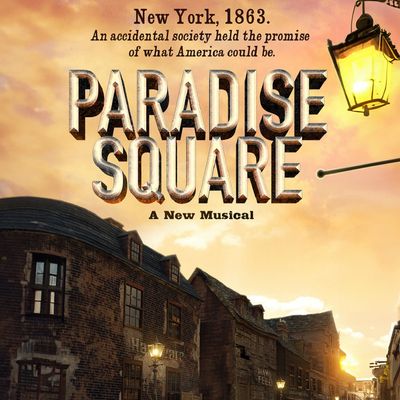
New York City. 1863. The Civil War raged on. An extraordinary thing occurred amid the dangerous streets and crumbling tenement houses of the Five Points, the notorious 19th-century Lower Manhattan slum... Read More
From the show: Critics' Table
Guests



Featured Shows
About
New York City. 1863. The Civil War raged on. An extraordinary thing occurred amid the dangerous streets and crumbling tenement houses of the Five Points, the notorious 19th-century Lower Manhattan slum. For many years, Irish immigrants escaping the devastation of the Great Famine settled alongside free-born Black Americans and those who escaped slavery, arriving by means of the Underground Railroad. The Irish, relegated at that time to the lowest rung of America's social status, received a sympathetic welcome from their Black neighbors (who enjoyed only slightly better treatment in the burgeoning industrial-era city). The two communities co-existed, intermarried, raised families, and shared their cultures in this unlikeliest of neighborhoods.
Hear from critics Rishi Mutalik, Juan Michael Porter II, and Christian Lewis as they review this unique new musical, PARADISE SQUARE.
Transcript
This transcript was automatically generated and might contain errors.
[0:00] Juan Michael Porter II: Hello and welcome to the Critics' Table.
[0:02] Christian Lewis: Every episode we are joined by three luminary theater critics as they review the latest shows on and off Broadway.
[0:10] Rishi Mutalik: You may agree with one, all of them, or none at all, but we ask that you listen first and ask questions later.
[0:17] Juan Michael Porter II: Let's join the table, shall we?
[0:20] Juan Michael Porter II: Hello, I'm Juan Michael Porter II.
[0:22] Christian Lewis: Hi, I'm Christian Lewis.
[0:24] Rishi Mutalik: Hi there, I'm Rishi Mutalik.
[0:26] Juan Michael Porter II: And today we are at the Critics' Table.
[0:29] Christian Lewis: This new podcast discusses the hottest musicals on Broadway and gives our hot takes on it.
[0:35] Juan Michael Porter II: We'll start off with introducing where we all write.
[0:38] Juan Michael Porter II: I write at TDF Stages, Theaterly, Did They Like It, and you can follow me at Juan Michael Porter II on Twitter.
[0:47] Christian Lewis: Uh, I freelance all over the place, but I've been recently writing a lot for Theater Mania, Did They Like It, Theaterly, American Theatre Magazine.
[0:57] Rishi Mutalik: For all of my reviews and more, you can follow me on Twitter at Rishi Mutalik.
[1:02] Rishi Mutalik: I also write all over. Um, I recently wrote um a review for uh Did They Like It, so you can go check that out.
[1:14] Juan Michael Porter II: I love that we are representing Did They Like It Today.
[1:16] Christian Lewis: Yes.
[1:18] Juan Michael Porter II: So we are going to be discussing Paradise Square.
[1:21] Juan Michael Porter II: And first I'll start off with a little synopsis.
[1:24] Juan Michael Porter II: New York City, 1863.
[1:27] Juan Michael Porter II: The Civil War raged on.
[1:29] Juan Michael Porter II: An extraordinary thing occurred amid the dangerous streets and crumbling tenement houses of the Five Points, the notorious 19th-century Lower Manhattan slum.
[1:38] Juan Michael Porter II: For many years, Irish immigrants escaping the devastation of the Great Famine settled alongside free-born Black Americans and those who escaped slavery, arriving by means of the Underground Railroad.
[1:50] Juan Michael Porter II: The Irish, relegated at that time to the lowest rung of America's social status, received a sympathetic welcome from their Black neighbors who enjoyed only slightly better treatment in the burgeoning industrial-era city.
[2:04] Juan Michael Porter II: The two communities coexisted, intermarried, raised families, and shared their cultures in this unlikeliest of neighborhoods.
[2:12] Juan Michael Porter II: Paradise Square. Let's dive in.
[2:15] Juan Michael Porter II: I wonder if we could get a sort of initial reaction about how you felt about the show. Rishi, would you like to start us off?
[2:22] Rishi Mutalik: Yes, I would love to. And I think as a result, I'm both when I love something, I love it very deeply. And when I'm harder on something, it's kind of a huge disappointment. And I think I was left quite underwhelmed by a lot of elements of it. Um, aside from what I think is a really brilliant lead performer, and I'm sure we'll talk about that more. I think a musical that takes on a very interesting piece of history and is looking at different communities in coalition with each other. That is such an exciting thing to me. But I felt it was missing so much of the nuance and richness of that, and uh especially when it comes to this musical storytelling, I was left wanting more from all of those elements.
And um, you know, I think it's really um I'm aware as a performer myself of just the amount of work that goes into putting on a musical of this scale by the cast and by the people involved. You know, I I think I left wishing it was it was an experience worthy of the story they were telling and of um the uh of um the talent on stage.
[3:44] Christian Lewis: What did you think?
[3:45] Christian Lewis: Yeah, like you both mentioned, this is based on a real thing, the Manhattan draft riots, and so I was excited to have that history explored, but I felt a little dissatisfied with how that actual history was explored. We're in kind of this moment with Broadway and intersectional politics of feeling like shows either like don't do enough or shows end up doing too much. I feel like this show is really ambitious, but maybe was trying to like do too much. There is still a lot, like I really liked here. Paradise Square, and I don't say this as an insult or a compliment really, is like an old-fashioned musical. It has a huge cast, it has massive amounts of dance numbers, it has a ton of songs that you're just gonna love.
So in that sense, there's still like it gives you that old-fashioned musical that we all probably fell in love with. So I think there are things to like here, but definitely I was like a bit disappointed for it as far as like a new musical coming out in 2022. You know, you're really you both really hit it on the head uh there. I think there was too much going on. It was impossible to accomplish it all. And the thing that we're sort of skirting around is the central performance that I think everyone in the world loved. People around the world probably heard her belting it out, Joaquina Kalukango, who is really the heartbeat of this story. And yet we never got to spend enough time with her because there were so many other elements coming in and out.
It felt like a musical miniseries, or it could have been. And because the stage is not large enough for the huge set, I kept thinking, I wonder how this would look at Radio City, but that all that open air to see it expanded in that way, or even a sort of um three plays, three musicals running in concert and repertory. One night you come and you see this aspect, another night you come and see that aspect. So that each piece is given the time it deserves. I know that I've ragged on the show quite a bit to a number of people, but I always keep in mind that yes, this was ambitious, it just didn't quite carry through or have the time to carry through what it wanted to give us all.
[6:25] Rishi Mutalik: Like, would love to see that. Rishi, you as a performer, um looking at this, did you find yourself sort of sympathizing with any particular character or thinking like, oh wow, I'm really feeling this, I would love to do that part?
[6:39] Rishi Mutalik: Um, I don't know if so much as I I'd want to play that part, but I did I do think, you know, when we uh when we talk about um Kalukango's performance and and we talk about um I think the central character of Nelly, one thing that stuck out to me is I think one, I think I've been a fan of this performer for a very long time, and she's somebody who I think in the community has been coming up and done incredible work from the Wild Party to Color Purple to many plays, and you know, I think she's somebody who imbues everything with a lot of depth and emotion and and is a very like electric performer, but I felt that the central role, which while a really interesting historical character, um, in theory, it didn't it didn't give her an opportunity to even do all of the things I know she can do.
I think she's such an incredible performer, and she's so um she's so available to all of the you know, all of the emotional uh things that the uh that the character calls for, but I feel like the writing kind of failed her in that regard. Um, but I think, you know, as in as a performer, I think there's something about like, you know, you have to go and do your own work. You have to go and build a whole life around your character, you have to find their desires, you have to find all of the, you know, all of the things that animate them beyond the script, and then bring that to the script as your main um as your main text to follow. And I and I feel like she did like I could see all of her work on there, and I just wish that the things I saw in little moments that were hinted at, these like moments of depth and moments of like just very dynamic character, I wish they were more um, you know, they were given more of the opportunity, but of course everything she was given, I think she, you know, she knocked out of the park.
[8:24] Christian Lewis: Rishi, I think that's such a yeah, I think that's such a great way to phrase it. Like, I think the writing kind of failed her. It was Helen Shaw who wrote in Vulture that Nelly is both the main character, but you could take her out of the whole musical except for one moment, and it wouldn't change at all. Like she didn't actually impact the plot, which is like that's a a failure. And like, yeah, the moments when she should have had these really large emotional something, like when her husband died, she there's almost no scene about it, and the next time she sings, it's about keeping the bar open. It's bizarre, and it makes you think that her amazing 11 o'clock number "Let It Burn," which one Michael, like you said, is amazing and like gets a standing ovation every single time.
I actually don't think it's that great of a song. She's just amazing. So I think, like, what if she had that many amazing songs throughout the show? That many amazing scenes. How much better could this be? Because she brought up a pretty good 11 o'clock number to a standing ovation every night, 11 o'clock number. And is still hitting it out of the park.
[9:26] Rishi Mutalik: I'm curious about um what we felt about the individual elements. I know the costuming was sumptuous, very Ragtime, if you will. The lighting was like a rock star arena, which didn't always work for me. The choreography, when it was based on the uh competitions that was going on, was fantastic and really interesting, but I wasn't always sure that it served the storytelling so much as it was decorative. And then the sound where I was sitting, I could hear it very, very well. But I've heard from other people uh that they were not, it wasn't so clear for them. How did you all receive it?
[9:59] Christian Lewis: For me, sound was fine. I found the lead costumes to be very well done. I focus on 19th-century things in other parts of my life, and I was a costume designer, so I'm very into that, but I was really bothered by the ensemble costumes, the like skirt and little like Amazon corsets that the like Irish ensemble girls were wearing. I was like, what is this like Party City outfit? Don't like that. And then the lighting design, I was so distracted and so bothered. At the back of the stage, there is a row of hexagonal LED rock concert lights that for some reason was visible the whole show. Nothing says 1860s, like rock concert. I was so angry at those lights. I was staring at them the whole show. And then in terms of the choreography, it was both like very impressive and very lively and helped the show out, which was great.
I do feel like by the time we got to the actual climactic dance contest, the choreographers had already used all of their best choreography. Like the dancing was better in Act 1 than in Act Two. And I found it weird that the Irish step dancing wasn't like accurate to Irish step at all. There was like so much torso and arm movement in that choreography, which I get is more dynamic, but was not accurate at all. And I think it would have made better for a better contrast to actually make those two different. So there were some choreographic elements that really left me confused. Aspects of it gave fusion to this unique American form that you don't ever see on stage. You see hammer step, which is a fusion of hip hop and is very cool with Irish step dancing, but again, if it was authentic to the time or what they would be doing, we would see those bound arms, which would actually make an incredible statement about the stasis of the status of the Irish people at the time. And I think it was a missed opportunity that was sort of like, let's be cool instead. Rishi, how did all of this feel with you?
[12:26] Rishi Mutalik: Um, I really appreciate both of your insights on this. Um, you know, I think this is a mega musical at heart. Like that's what it's kind of aiming for. It's aiming for, I think, something that was very popular in the 80s and the 90s. Um, whether we're looking at like the Cameron Macintosh, like Andrew Lloyd Webber, um, the like, you know, and then there's also the um the Schoenberg, like the Les Mis and Miss Saigon, and you know, I think Ragtime is probably the one that we think of most applicable in terms of American history. And I think when it comes to like the production of those, you know, they play such a huge part in selling that as a theatrical event, you know, the sets, the costumes, it has to have a level of lavishness, I think that kind of meets the epicness of the story.
But I don't know, I feel like there's certain kind of cheats that happen these days with some musicals in terms of like this kind of very barebone set and like this rock star like lighting that like you guys mentioned, and also like some kind of intentional costumes, but others that also, like you said, Christian, don't necessarily feel um authentic or or or like they were very, you know, well researched. Um and I kind of felt that none of those elements really kind of brought it to that next level, you know, not to like make this like side by side by comparison by Ragtime, but I think that's a musical that that production had in its movement and in its design, the original production had a like, it just rotated, like it was like its own, it was its own like animal that you could just receive the story with.
Um, and I think it probably goes back to how I personally feel about the other elements of the actual musical itself. But um, but um it didn't all come together for me. I do want to shout out obviously Bill T. Jones. Um I believe, you know, was hugely involved in the choreography and in building the movement in the show, and you know, like Bill T. Jones is absolutely like, you know, such an important fixture in like American dance and like in musical theater too. And but I felt like in some cases it felt like it was just recreating and trying to create these dance moments that didn't always feel necessarily organic. And yeah, so I think yeah, it definitely maybe comes back to the director and how it all cohered for me.
[14:45] Christian Lewis: I think that's important points. Um please.
[14:49] Juan Michael Porter II: Sorry, yeah, I was gonna say, Rishi, it's important that we do. You mentioned the director, Moises Kaufman directed it. We don't need to like read everybody out here, but there was a director, Bill T. Jones choreographed, but then they also credited some other people with choreography. There was someone else who did musical staging. There was like three book writers, several lyricists. It was based in part on Stephen Foster, like the front page of the playbill is like size one font. And it's like clear that there was just like so many creatives involved with this, and it was probably a too many people at the table situation. This musical also has been in development for 12 years and started in a very, very different Stephen Foster jukebox kind of musical.
So I think we can also see that like maybe there was just like too many people trying to change something here, and that it got maybe far away from what it wanted to be, or maybe ended up something so different that it wasn't as coherent as it might have been, and definitely, like you said, did not feel like the polished Ragtime that it's like trying to be. I think that that's a very it's the Frankenstein musical experience. Too many parts coming together, they don't all fit together. And we keep mentioning Ragtime, and I think it's important to mention the lead producer, Garth Jabinsky, who also produced Ragtime and the revival of Showboat that was huge and sprawling. This seems to be his sort of a thing.
And I wonder, perhaps if he hadn't been involved, and perhaps if someone had taken Kaufman aside and said, what if we looked at just a slice of this and focused on that instead? We'd have all come out much better. I don't think that the music is the most ravishing thing I've ever heard, but when you look at this fantastic cast of singers, you forgive it. You think like, oh yeah, that's good. And you hear things that weren't necessarily evident from just say the piano part alone. I had it played for me and was like, ah, this isn't really doing anything, but I remember what they did with it, and that's what brought it to life. And I think that's really the magic of theater, that when it's in front of you, it does something differently than it does on the page.
[16:57] Christian Lewis: Your final thoughts. If you were to say to someone who's coming into town, what would you leave them with?
[17:03] Rishi Mutalik: First, I'm just gonna add that on that point, Juan Michael, it doesn't get enough credit or stage time being talked about, but the orchestrations for this show were great and really like took that music to something great and were very accurate to both musical stylings of both cultures at the time. But for actual last thoughts, I'd say that this is like, yeah, Rishi said it feels like a mega musical from the 80s or 90s. It reminded me a lot of Les Mis and Hairspray said a hundred years before. It has like a lot to enjoy if you're into those big musicals. If you wanna go see something large and grand with a really great central performance, go see Paradise Square. If you want something very like historically nuanced and critical and complicated and very like up to 2022 standards, maybe this isn't the perfect show for you, but there are things to enjoy here, and I think that's probably my takeaway for everyone.
[17:59] Juan Michael Porter II: Um, I think my takeaway is that it's a musical that doesn't live up to its potential, both in terms of the historical subject it's trying to interrogate and in terms of the actual creative musical elements, but I think it also features a star performance that is quite brilliant, and I think it's the first of many star performances in both musicals and plays we're gonna see from her, and I think that is reason to see it. Um, and uh and I think there's something really exciting about um even if when a musical doesn't live up to all of its potential, there's a like supernova at the middle of it that's that's you know making it more of an event. And it's time people had a lot of critiques for Ragtime, they thought it was too busy, and I wonder if in a few years we'll look at this and say, oh, but it's so fun, it's doing so much, we love that about it.
I doubt it. The one thing I know we'll always be talking about is Wakina. That is the reason to see the show. Buy her album that hasn't even been released yet. Just go ahead and like send her money, and that's it.
[19:03] Christian Lewis: Thank you both for joining me today for this chat at the Critics' Table. We'll see you next time.
[19:11] Juan Michael Porter II: Thanks for joining us on this episode of the Critics' Table Podcast. We would like to thank Jose Solis and the BIPOC Critics Lab team who has generously partnered with us on this project. You can find out more about the BIPOC Critics Lab at BIPOCCriticsLab.com. Also be sure to subscribe to this podcast so that you never miss a review and learn more about our critics at bpn.fm/criticstable. The views or opinions expressed by the critics in this episode are solely their own and do not necessarily represent views or opinions of the Broadway Podcast Network. See you next time.
© Broadway Podcast Network, All Rights Reserved