

This week, I sat down with Sharlene Hector, who plays Thought 1. But you may recognize the voice as Sharlene is the lead vocalist for the band Basement Jaxx and appeared in the West End production of Hairspray.... Read More
From the show: Curtain Call Podcast
Featured Shows
About
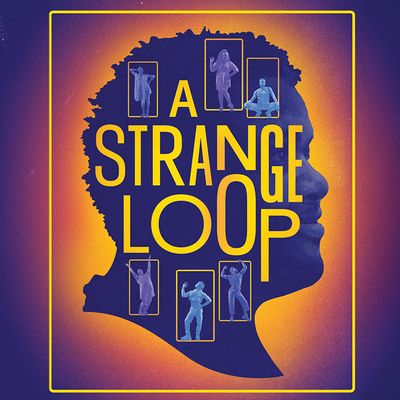
This week, I sat down with Sharlene Hector, who plays Thought 1. But you may recognize the voice as Sharlene is the lead vocalist for the band Basement Jaxx and appeared in the West End production of Hairspray.. But Sharlene can also be heard providing backing vocals for artists such as Alicia Keys, Primal Scream, Josh Groban and many, many more.
We were joined by Tendai Humphrey Sitima (Thought 4) who is also a musician in his own right and could previously be seen in the West End Smash “The Play That Goes Wrong”
Transcript
This transcript was automatically generated and might contain errors.
[0:05] John Schwab: Hi, John Schwab here, and welcome to episode 171 of the Curtain Call Podcast.
[0:11] John Schwab: Curtain Call is the podcast that takes you deep behind the scenes of the theater world, bringing you in-depth conversations with the storymakers that are shaping the future of theater.
[0:19] John Schwab: We pull back the curtain to reveal the stories behind the stories and give you a glimpse into the backstage world like no other podcast does.
[0:27] John Schwab: This week, I'm chatting with two powerhouses, currently starring in Michael R. Jackson's Pulitzer Prize winning musical A Strange Loop, playing at London's Barbican Theatre.
[0:38] John Schwab: A Strange Loop is a critically acclaimed boundary smashing musical that comments on topics such as identity, sexuality, and race.
[0:58] John Schwab: But you get it. It's a strange loop.
[1:00] John Schwab: Now, full disclosure, I haven't seen this cast in action.
[1:04] John Schwab: I had tickets to go last month, but I got hired to produce a series of concerts at this year's French Festival that took me away to Edinburgh.
[1:11] John Schwab: So I will be watching it in the next two weeks, actually next week, before it closes.
[1:16] John Schwab: That's right. You have just over two weeks of performances to catch the show.
[1:21] John Schwab: And I absolutely recommend that you go.
[1:24] John Schwab: Now I've listened to the original Broadway cast recording. I've heard many excerpts from the show online.
[1:29] John Schwab: It is, it is funny. It is funny, but it's also deeply challenging.
[1:35] John Schwab: And I listen, I cannot wait to watch the whole thing next week.
[1:54] John Schwab: Um, right? And uh that also appeared in the West End production of Hairspray. Um but Charlene can also be heard providing backing vocals for artists such as Alicia Keys, Primal Scream, Josh Groban.
[2:01] John Schwab: That's a big list. It goes on and on and on and on.
[2:04] John Schwab: And we were also joined by Tendai Humphrey Sitima who plays Thought 4. Uh Tendai's also a musician in his own right, and um could be he could be seen in the West End Smash The Play That Goes Wrong and uh check out the music on Spotify.
[2:17] John Schwab: Now we chatted about all things A Strange Loop, uh, about appearing in a Pulitzer Prize winning production, the value of music, audience reactions, and just how supportive a producing team can be in regards to mental health, which was so refreshing.
[2:31] John Schwab: I love talking about this. Have a listen.
[2:39] John Schwab: First of all, this is the easy one. Please ask your name and who or what you play in A Strange Loop.
[2:48] Sharlene Hector: My name is Sharlene Hector, and I play Thought One in A Strange Loop.
[2:53] John Schwab: So when I was going through the cast, I thought Thought One. It's that is a an interesting character's name.
[3:01] Sharlene Hector: Yes. And it's I think there are six.
[3:05] Sharlene Hector: Yes, there are six of us all together, and we all represent lots of different things. We all our characters interchange into each other. Sometimes we're all playing the same character. Sometimes one of us is playing that one character. Sometimes one of us is playing a particular part of Usher's psyche. So yeah, it's actually really interesting.
[3:25] John Schwab: Oh my gosh, sounds like an actor's dream. I'm seriously, I'm a little jealous. I'm a little jealous.
[3:31] John Schwab: Okay, and for anyone who doesn't know, we'll get the we'll get these basic questions out of the way before we deep you know get into the juicy meaty stuff. Um can you please let us know what A Strange Loop is about?
[3:41] Sharlene Hector: Now, I I'm sure people who you know listen to this podcast have heard about A Strange Loop before, but um uh can you just give me kind of a lowdown because it is kind of a tricky one to to kind of put down to a boilerplate, and I don't think it I think it would does a disservice to the play and the musical, but what can you do?
[3:59] Sharlene Hector: A Strange Loop is about a young gay black man writing a musical about a young gay black man writing a musical about a young gay black man writing a musical. And it's basically um follows it it follows a day in a life of a young gay black man who has been commissioned to write a play, um both by his family and by his agent, and it's just what happens while he is writing that play, what comes out.
[4:28] Sharlene Hector: So I don't want to say too much because I don't want to spoil it, yeah. But you will laugh, you'll probably cry, you'll be shocked, and you'll be maybe a bit upset by some of the things that you see. But it's a very important story that I feel needs to be told because I don't think people realize what it's like to be black and queer in this country, never mind in America or anywhere else in the world.
[4:48] Sharlene Hector: So this is a little insight into what it's like to be black and queer. Um, yeah, in this world. And more and more these days in this world.
[4:58] Sharlene Hector: So I've heard some of the music as well, and what I was saying to Amy, who's uh sitting with the press, uh, is that I find Usher and what I've heard so far really like innocent, a lovely heart. And he almost kind of sees life rose tinted or whatever, and um, and it kind of is a it's goes along with things because he likes to explore and he's so open to life.
[5:25] John Schwab: And do I have that wrong or is is that just what I've got so far?
[5:30] Sharlene Hector: I think I don't want to say you have that wrong, but I think that once you watch the show you'll realize that that is more of a defense mechanism than the truth. Um, and there is a part of the show where you hear what the truth is, and that's when you realize that actually all of this going along with things is for survival. It's not actually what Usher wants or how he genuinely feels about things. He's just trying to survive in a world that doesn't want him to survive. So yeah.
[6:04] John Schwab: I cannot wait to see it. I cannot wait to see it.
[6:08] John Schwab: I also know that this musical both challenges you to laugh, it challenges you not to laugh as well. Now, when you're on that stage, how much fun is it getting a reaction off audiences when you go, oh, this is this is gonna be a little grenade joke.
[6:32] Sharlene Hector: Um, how much fun is that to play?
[6:34] Sharlene Hector: Well, it it's it's funny because we have different audiences almost every night, and so it's it's difficult to um because there are some situations where you would think, I really hope nobody laughs at this, and then people do, and it's like, oh my gosh, that that wasn't that's a bit uncomfortable. And then there are parts where you really hope that people laugh and they don't, and it's like that's a shame. But it's we what we have we had an amazing director called Stephen Brackett, and he gave us some really good advice, and he said, Don't just tell the story, don't try and control the audience's reaction or try and play something up for more of a reaction, just tell the story.
[7:10] Sharlene Hector: And I find when we do that, we get laughs in places that maybe we wouldn't expect, or we get bigger laughs in places that we really want, but you do get the odd person that laughs at something really off-color, and you're just like, What goes through your mind when you see that and it makes you laugh? But then I I tend to my way of thinking about it is sometimes what you see is so unnerving, it can make you nervous, yeah. And people laugh when they're nervous sometimes.
[7:33] Sharlene Hector: So a nervous laugh is the top of the just the top lock there. We've got a visitor, it might be uh interrupting it.
[7:42] John Schwab: It's all right.
[7:43] Sharlene Hector: Um, so it's so you have uh like a nervous laugh is is just uh as valid a response to uh uh a joke or not a joke as as a an intended joke, isn't it?
[7:54] Sharlene Hector: Yes, yes.
[7:56] John Schwab: So we've talked about this being on Broadway. Um, I mean, this musical A Strange Loop has won every award going. Um it's won the Pulitzer Prize, you know. When something that big, when a when a production that big then transfers, there is some feeling of responsibility, and I think my question said is to get it right in air quotes in proper air quotes, you know. Did you feel that coming into the rehearsal process?
[8:21] Sharlene Hector: Or is it any of the artists?
[8:23] Sharlene Hector: No, okay. Um, the audition process was such that we were made to feel like we were cared about, and I don't know how many auditions you've been to where the director's been like, How was your day? But I hadn't been to any up a big goose egg.
[8:43] Sharlene Hector: So when we got there, and it was like, and everyone had the same experience. Stephen was just kind of like, Well, how was your journey here? Like, how are you doing today? Are you alright? And we were all like, fine, thanks. Looking for the material, you know. And he's like, Well, no, I really like your shirt.
[8:56] Sharlene Hector: And I was like, Oh, thanks. Yeah, it's got mushrooms on it. So my god, I love mushrooms. And then we just had this chat, and then it was like, Okay, now let's do the material. And we had never none of us had ever experienced that.
[9:06] Sharlene Hector: So when we kind came into the whole process, even just from auditions, we felt that we were surrounded by people that actually cared about us as humans, and that's that's unusual in the audition process. When we came into the rehearsal process, it was exactly the same, and it got to the point where there was some content. There's a lot of contentious language in the show, and um, a lot of contentious themes in the show, but all of that was um we were given space to express how those things made us feel.
[9:36] Sharlene Hector: Um, we were allowed to use code words for some of the language so that we didn't have to keep saying it all the time, yeah. And that again, that kind of care is not something I'd ever experienced on a show. We also get free counselling. Every single person in the company gets six free sessions of counselling, and we as a cast have group sessions as well.
[9:55] Sharlene Hector: Amazing, because the content is such that after a while you can become desensitized, but not really. Sometimes it can just come out, so we have an outlet whereby we can talk to somebody about what we're feeling, and so for me, the only thing I felt was we care about you, we want you to tell this story in the best way that you can.
[10:26] Sharlene Hector: I never felt like by the way, this is a winning prize um uh show, and you need to make sure that you do it just like you did they did it in America. We were given so much freedom to create the characters we wanted to create.
[10:37] Sharlene Hector: Um, some of us even spoke to some of our counterparts in America to ask them what their process was because they were the ones that made the show.
[10:46] Sharlene Hector: So um, so yeah, this process. I've never felt any pressure, I've never felt any measuring up, I've never felt any comparison. It's always been what do you want to bring to this? What do you want to how do you want to portray this character?
[11:00] Sharlene Hector: Um I even had a message from somebody who saw the show. There's a character that I play who she's a patron who's going to the theater and she ends up talking to Usher for a little while. And someone said to me, I've seen the show so many times in New York, and the way you play this role is completely different, but it's still great.
[11:13] Sharlene Hector: And I was just like, Oh, okay, because nobody said, Well, this is how El Morgan played it, or this is how you know there was nobody saying that. It was just what do you want to do? How do you feel about this person? Who do you think she is?
[11:25] John Schwab: Yeah. So that is that that process has made us all feel like this is our show as well.
[11:30] John Schwab: Well, that just feels like you've created a family, and I I mean, I I love that the what you've just said, like really hit, which is the desensitization, which is in itself a defense mechanism until it's not.
[11:47] John Schwab: Like you say, until it's until something happens where you cannot hold it back anymore. And I love the fact that you're being supported here. More of that, please.
[11:56] Sharlene Hector: Yes, it's more of that, please.
[11:59] John Schwab: Oh, here comes Thought Number Two.
[12:01] Sharlene Hector: This is Thought Number Four.
[12:04] John Schwab: Yeah, or see, that's where he would live in the Thought Number Two.
[12:08] John Schwab: So sorry.
[12:10] Tendai Humphrey Sitima: How are you?
[12:11] Tendai Humphrey Sitima: Um, I'm very stressful.
[12:14] John Schwab: Don't be sorry, come on, don't be stressed.
[12:16] Tendai Humphrey Sitima: Hi, Charlene.
[12:18] Sharlene Hector: Hello.
[12:19] Tendai Humphrey Sitima: Oh, you are not, you're not allowed to be stressed. Have we been stressed, Charlene?
[12:24] John Schwab: We'll be right back after this short word from our sponsors.
[12:29] John Schwab: Welcome back to the Curtain Call Podcast.
[12:33] John Schwab: I was getting into personal experience. And Charlie, I've just said Charlotte, Charlotte looks about 12, and she's done everything in her. You know, she's literally done everything.
[12:40] John Schwab: Yeah, I'm jealous.
[12:41] John Schwab: So I'm reading, reading, but in fact, both of your um your your bios, you come from a a well, performance in your background, but music performance and and everything.
[12:52] John Schwab: You've supported acts, and you know, you produce and record music as a as a recording artist. What what can you bring to a musical like this which has every single musical style in it? This there is everything in this, you know, there is gospel, there's blues, there's kind of jazz, there's pop, you know, kind of folk.
[13:10] John Schwab: You know, so was when when you saw what was going on there, did you just go, yeah, either I can bring something to this or can I uh I'll I'll jump in on this.
[13:20] Tendai Humphrey Sitima: Yeah. Because I so yeah, I I'm a producer, I'm a composer, and uh so when I got this gig and I would listen to the soundtrack, I came into day one.
[13:30] Tendai Humphrey Sitima: I can't express to you how arrogant I was about all of this. I was like, listen, I am a professional composer. I am gonna these people don't even know what I'm about to bring. Yeah. Yeah. That was what that was the color I was bringing into the room. And I walked in there, and then I tried to sing this stuff, and then I was like, oh, okay, okay, let me sit down and learn. Let me have a beer back, please. And then it's just for me, it's actually been quite I've I was so expecting to come in with like sort of my composer hat and my sort of recording artist hat and be like, yeah, look at all this stuff I can do in the bottom paper. But actually, for me, it's been the opposite experience. I've gained so much, I've learned so much about areas that I need to work on, it's exposed weaknesses in mind, which is something that happens if you write your own stuff.
Yeah, of course. You tend to write around your weaknesses. So when Michael kind of goes, I want you to sing this note very loud and very high, and I'm like, I can't just write around that. I have to do it. So for me, it's been wonderful because it's just been an incredibly inspiring thing of just learning and having so many things I want to steal and bring to my own practice, and then also like I'm learning Charlene. We're talking about looking after people, Charlene, who every time I come off stage, I'm like, Charlene, was that okay? She's like, Yes, and I think it's okay. Um so yeah, for me, it's actually done the opposite, it's bought so much to me, and that's been such a joy and such a privilege because that's I think that's the thing that is really what everyone wants a job or a project that expands them and gives them somewhere to grow, and this has been bad for me too. I think I think the day that I do a show and come off stage and go, Well, I haven't learned anything, is the day I just need to quit.
[15:12] John Schwab: Like you know, you know absolutely I can't express to you how arrogant I was like I love your honesty. This is I was so ready to be great.
[15:25] Sharlene Hector: Oh, aren't we all? Um how about yourself, Charlene?
[15:30] Sharlene Hector: Um well for me, before I when I first got the audition, yeah, um, I instantly went to because they sent everything straight away. They sent what they wanted you to do in the audition and the script, and so I read the script and was like, okay, this is interesting. And so I went online and tried to find the soundtrack, came straight up on Spotify, listened to the soundtrack on repeat for weeks. I was just like, oh my gosh, this is so beautiful, I love this stuff. Um so when we got to rehearsal, I kind of knew most of it, but it was, you know, singing with other people was was really cool as well. So yeah, it was it was kind of I didn't really know anything about the show before it started, but um before we started, sorry, but then um as time went on, I just fell more and more in love with it and with the people involved in it and with the cast and everybody, so yeah, it was it was a wonderful experience, but I didn't know anything about the show before I started.
[16:25] John Schwab: And but you were able to bring your experience from yeah, you know, with well with your musical background, you know, the music artist you worked with before.
[16:32] Sharlene Hector: Because everything was on um sheet music and I can't read. Okay. So I would listen to the soundtrack to learn about it okay, yeah. So then when we would get our notes and we'd record, I would record it into my phone and go home and listen to it because there was no point in me trying to read it. So um, so that that for me was really helpful to be able to learn things by ear.
[16:52] Tendai Humphrey Sitima: Yeah. Um but yeah.
[16:54] John Schwab: But isn't that amazing? I I tell you what, a lot of shows you you wouldn't get past the first audition, can't read the dots.
[16:59] Sharlene Hector: I I can't read music either. I I re I read, right, you know, I've I have musical children as well. They they can read because they were chorusers at Southern Cathedral, but um I never could read music. I just self-taught everything, and I th so although I started out musicals, I did the old dead rock and roller musicals like Buddy and Elvis and the Consider Games, yeah, yeah, yeah. A long time ago, a long time ago.
[17:22] Tendai Humphrey Sitima: Um, but yeah, that would preclude you from or not just preclude you, but exclude you from going further. But it this is feel it feels much more in listening to the soundtrack, the original soundtrack, and I I cannot wait to hear it here. It's much more about the performance and the storytelling rather than the singing, as in um uh like there's this I mean, don't get me wrong, beautiful music, but it's much more about their performance and much more about let's tell this story because you are saying the most outrageous while while singing, and um the show is um the material is is what it is, and I always say this with I think good work, um, is good work uh how does this thing to perform as well you have to be an audience of the work before you can perform it.
[18:11] Sharlene Hector: Yeah, sure.
[18:12] Tendai Humphrey Sitima: So the rehearsal process, in a way, the first few days of a rehearsal for me. I am an audience member and uh trying to deal with the material you respond to as audience does. So I think actually I think we would be missed to say that there was material that I think we all were some were surprised by how hard we found some of it to do. Um, some of the language is particularly triggering, some of the um thematic material is challenging, rightly so. So that was the thing that really surprised us how there was some bit, and it would be someone would really struggle with something one day, and then the other day they wouldn't. Um so we had that, but also there are lines that are just very, very silly and fun to sing. But I don't think drying has happened on this show yet.
[18:56] John Schwab: Okay, oh, you said yes, when you'd be laughing, drying, like you know, when you get sent up by laughing or you're gonna be on stage.
[19:04] Tendai Humphrey Sitima: Oh yeah, really?
[19:05] Sharlene Hector: Yeah! Especially to me.
[19:09] Tendai Humphrey Sitima: I haven't seen it. There's there's one particular part where um the thoughts I've have kind of surrounded our sharing, we're kind of letting him know that we find him physically very unattractive. Right. In many different ways, oh, the all the things that he's different with, yeah, yeah. Right. So there's a part where me and uh Danny who plays Thorp 5, is that right? Um, we are behind him, and we're we're singing a line, and Danny tends to grab my leg and it makes me giggle all the time. Like trying to sing my line, yeah.
[19:39] John Schwab: I'm always asking them. You're onto the stage for warm-up. The stage is now available for one.
[19:45] Tendai Humphrey Sitima: We'll we'll very very quick. Um you've just said a couple of words there that for me ping out the the the triggering and challenging.
[19:53] John Schwab: Yeah.
[19:54] Tendai Humphrey Sitima: Now, I I as an audience member, we talk about high schools. I want to come to the theater, and yes, sometimes I just want to let theatre wash over me or music, but I also like to be challenged. I like to get out of my comfort, but I don't want I don't want to leave a show, whatever, you know. Um, how important is this show for for any audience member? Like, how important is it to become see something that does get them out of their comfort zone and to be challenged and to be you know to to be triggered in in ways and go live because I would imagine you see people who on stage who are triggered, usher being that, but and have ways to get through it. How important is it the show for people to come and see?
[20:36] Tendai Humphrey Sitima: Visibility is one of the most powerful things that I think art can do. Um there's this amazing ability. I mean, Michael says it um about this show, um, which is if the show is successful, the show is for some people a mirror, and for some people a window. And I think my the mission, if I understand it correctly, I can't speak for Michael, but that mission statement that he says at the beginning of the piece, which is uh he just wants to sh uh uh show what it's like to travel the world as a black gay man, um, and that that's the mission, and and the challenge is to do that honestly and openly, then you can't tell a story that isn't challenging to people. Um I think as a result, this show is all of those things, and it's it can be celebratory, but it also is honest, it's revealing and it's powerful, and it's difficult.
And I think that is something that is important to impress on people. The show is difficult at times. Um but my hope is that with an open mind, people can allow themselves to just experience that um and see what is what life is like for other people because you learn a lot from it. I also have to speak on, and I've heard this a few times, which is to do with um that is uh thought um speak on um specifically about things that challenge the show is the things that references and also like the American references of the show, is one thing I really enjoy about a show like this is I've heard people ask questions about why the show has not made an effort to sanitize itself in terms of making the references easier to understand for people that may not get them, or um making the really specific experiences somewhat more palatable.
And the thing I I say is I think theatre has been challenging for a long time. I think Chekhov can be challenging. I think Shakespeare can be challenging. I think a lot of conventional European white theatre can be challenging. And what I love about this show, and the thing I I invite people to come in is come and be challenged by something that's not a white male experience.
[22:50] Sharlene Hector: I agree.
[22:51] Tendai Humphrey Sitima: And and and yes, you might not get some bits, but you didn't get some bits of check-off, but you Googled them after. You know what I mean? So like that that's why this is important. Like it's just fresh.
[23:02] John Schwab: Yeah, I love it. I love that. Now, you guys are gonna go on, but I do I do want to ask one final question, and that is uh what you kind of touched on it there, but what what would you like audiences to leave this theater and this production with? What what are the themes of the what is the one one, two, three, the whatever that you really like them to take away and move forward with themselves?
[23:25] Sharlene Hector: For me, I think I just want people to take what they need. Um, and for some people that might be introspection, for some people that might be um a different point of view. For some people that might be the fact that the way you use grinder is actually causing more harm than good. You know, it's just that kind of thing. I I want people to take what it is that they need because I can say I want people to have a new perspective about this and that, but you never know what someone's perspective is when they come into the show. So just something different that they've never thought about, I'd like people to leave with.
[23:59] Tendai Humphrey Sitima: Yeah, it's a pretty solid answer. That's pretty solid.
[24:02] John Schwab: I was gonna say, didn't I follow that? Like, what more what more could you want to ask?
[24:09] Tendai Humphrey Sitima: Exactly. Exactly.
[24:10] Sharlene Hector: But also, like it's also really good.
[24:13] Tendai Humphrey Sitima: Yeah, it's a good thing.
[24:13] Sharlene Hector: So it's just like you know, my friend said it's like one of these combinations of you're gonna come out feeling a bit tired and a bit tender, but you're also gonna have been thoroughly entertained, and so that's that's kind of what I hope people come out as well. Like, on top of I think I don't think you could put it any better, to be honest. I think.
[24:31] Tendai Humphrey Sitima: Um, come watch some stuff.
[24:33] Sharlene Hector: It's one act.
[24:34] Tendai Humphrey Sitima: Also, I've never seen it.
[24:36] Sharlene Hector: Yeah, no, it's like it's not check-off, is it?
[24:40] Tendai Humphrey Sitima: Well, you can leave.
[24:42] Sharlene Hector: You can't try to tell you.
[24:45] Tendai Humphrey Sitima: Yeah, it's honestly, it's I um it's uh it's a very good piece of theater. And I I've never been in a musical before.
[24:54] Sharlene Hector: Really?
[24:55] Tendai Humphrey Sitima: Uh and like I I thoroughly enjoy musical theatre. And uh what's really cool about this is it's like I don't know the last time I saw a musical that feels like this. And there's a really important thing that happens, which is that for years, we've all been saying we want something new, we want something black, we want something queer, we want the so here it is. So, this is to your audience directly. You've asked for this stuff. Do you know how to make sure this stuff keeps happening? Come and watch.
[25:26] John Schwab: Well, listen, uh, thank you so much. Uh what a what a fantastic chat. I really wish you the best of British for the rest of the run. And I'll see you next Saturday.
[25:35] Sharlene Hector: I'll see you next Saturday.
[25:36] Tendai Humphrey Sitima: I'm so sorry I was late.
[25:38] John Schwab: Ohlene Hector and Tendai Humphrey Sitima from the London Barbican production of a strange lube.
[25:51] John Schwab: As I mentioned, you have only have just over two weeks to go catch the show before it closes. So do make sure to get your tickets today. Don't miss this unique, powerfully emotional musical. And I will put links to purchase those tickets in the show notes. It leaves me to say a big thank you to Charlene and Hector for sitting down and talking to me, and also to Amy and her entire team at Neil Reading PR, who do an incredible job. Thank you guys so much. Also, thank you for listening. But before we go, just a quick reminder to say that if you like this episode, or indeed, if you liked any of our episodes on the Curtain Cold podcast, please do go to whichever streaming platform you use. Leave us a rating and review. It it certainly does help others like your fine self find the podcast. If you want to reach out, you can find me on all the socials at John Schwab. That's at J O H N S C H W A B. Thank you for listening. Speak soon and stay safe. Bye.
© Broadway Podcast Network, All Rights Reserved