

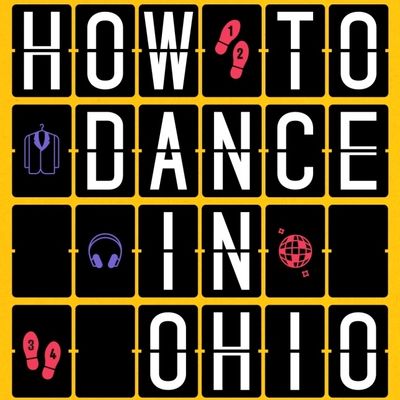
This episode features some of the key creative team behind the Broadway musical How to Dance in Ohio, a heartwarming musical based on a true story that follows a group of young adults on the autism spectrum preparing for a spring formal dance... Read More
From the show: Deep Dive Broadway
Guests
Featured Shows
About
This episode features some of the key creative team behind the Broadway musical How to Dance in Ohio, a heartwarming musical based on a true story that follows a group of young adults on the autism spectrum preparing for a spring formal dance. The show is praised for its uplifting message, its celebration of neurodiversity, and its talented cast, which features seven autistic actors. The event is moderated by 5 time Tony winning Broadway producer and co-founder of the Broadway Podcast Network Dori Berinstein, let’s begin. Our panelists are:
- Sammi Cannold, Director
- Alexandra Shiva, Film Director
- Jacob Yandura, Composer
- Ben Holtzman, Producer
- Nicole D'Angelo, Assistant Musical Director & Script Supervisor
This event was organized as part of an ongoing live event series at the Jacob Burns Center called Life on the Stage: Conversation and Film, and is presented in partnership with The Entertainment Community Fund, a national human services organization that fosters stability and resiliency, and provides a safety net for performing arts and entertainment professionals over their lifespan. Visit https://entertainmentcommunity.org/ to learn more. This podcast was produced by Broadway Podcast Network. For more information about the Jacob Burns Center and the Life on Stage event series, visit bpn.fm/lifeonstage.
Transcript
This transcript was automatically generated and might contain errors.
[0:04] Dori Berinstein: Welcome to the Life on the Stage Podcast, your home to in-depth conversations with leaders and disruptors in the entertainment industry.
[0:11] Dori Berinstein: All content you are about to hear came from a live talkback event hosted at the Jacob Burns Film Center, a nonprofit five-screen cinema and education center located in Pleasantville, New York.
[0:22] Dori Berinstein: Presented in partnership with the Entertainment Community Fund.
[0:25] Dori Berinstein: One of the most successful suburban art houses in the country, the Jacob Burns celebrates film as a vehicle for entertainment, education, and inspiration.
[0:33] Dori Berinstein: This episode features some of the key creative team behind the Broadway musical How to Dance in Ohio, a heartwarming musical based on a true story that follows a group of young adults on the autism spectrum preparing for a spring formal dance.
[0:45] Dori Berinstein: The show is praised for its uplifting message, its celebration of neurodiversity, and its talented cast, which features seven autistic actors.
[0:52] Dori Berinstein: Moderated by five-time Tony winning Broadway producer and co-founder of the Broadway Podcast Network, Dori Berinstein. Let's begin.
[1:02] Dori Berinstein: So we're so excited to have with us the film director, Alexandra Shiva, the composer of the musical, Jacob Yandura, producer Ben Holtzman, script supervisor and assistant musical director, Nicole D'Angelo, and the director of the musical, Sammi Cannold.
[1:23] Dori Berinstein: Let's start by talking for a moment about the film. I would love for you to share with everybody how you came across the story and what led you to make this documentary film.
[1:36] Alexandra Shiva: So um thank you so much. And uh it's so fun to see it on a screen and to see it after I've seen the musical a few times, which I haven't seen the movie, I think in two or three years, so it's really cool. Um, we start. I I was I had very good friends who have a daughter who at the time was 16, and she's high-needs and she's nonverbal. Um, and they kept saying, I, you know, there's so much about little kids. There's nothing about kids when they grow up. Like, what happens? What happens when you're a young adult? And um, I kept trying to figure out a way to tell that story. And then I was at a conference and I met a woman named Sandra Williams who was a self-advocate, and she was a client of Dr. Amigo's. She said, You have to come meet my my um therapist, Dr. Amigo, blah blah, and he's doing this dance.
And I went to Ohio, and I knew immediately that um that was the right way to tell the story, and actually met Toby Shimon, who's the editor, who we sort of started before we even started shooting. We started talking about it and figuring out what it was gonna be, and um and just got lucky, very, very lucky.
[2:41] Alexandra Shiva: And you had a really interesting creative process, I believe, before you started to shoot because it was very important to you to get uh everyone comfortable with the fact that there will be cameras. Can you talk about that?
[2:53] Alexandra Shiva: So when we got there, the first thing we did was Dr. Amigo held sort of a town hall, and it was all the clients and all the parents, and everyone came and asked questions. Why are you doing this? What do you want? Like, what he basically, what do you want with us? And why are you here? And um, and everyone got to ask questions, and then the entire first week we were there, um he had, you know, he would have half the group, and then he would send in one person at a time or a few people at a time and just ask us questions. So Jessica came in with four pages of of notes and questions and was like, I want to know this and this and this and this, you know, and it was a funny thing because we started actually casting the documentary when they were interviewing us. So, you know, they wanted to touch the camera and they wanted to, you know, see what the boom did. It was really cool, and I think everyone got comfortable, and that was how we began.
[3:43] Alexandra Shiva: And how long did you shoot for?
[3:45] Alexandra Shiva: Three months. So we we actually moved to Columbus. Um, and I was commuting to Columbus because I had two very small children. So we the crew was living in Columbus, and then I was there three to four days a week for three months. But it was, it was amazing. Amazing. And and Toby can weigh in on this as well, but I I think that when you were in the editing room, um, the way that you approached trying to figure out how to tell the story is you started with a dance and worked backwards.
[4:14] Alexandra Shiva: I yes. So we we started looking at everything, and then the conversation was, I'm trying to remember it because I was thinking about it when we were watching, that there was that there was something so you had to understand what was important about Meredith walking in and saying hi. You had to know what everyone's moments were. Am I saying this right? Toby's nodding. Okay. You had to know you had to really understand what the payoffs were gonna be. So we edited the dance first, and then we worked backwards. And then, of course, you knew it was gonna end up as a Broadway musical, right?
[4:48] Alexandra Shiva: Of course. Yes. Well, actually, and I've said this to Jacob many times. I was so surprised when when Jacob and Wrecker reached out because I music was one of the hardest things we dealt with in the making of the movie. And we had, you know, when you do make when you make documentaries, you have focus screenings. So we had two focus screenings, um, eight people each. It was a lot of editors, creative people came in, and the uniform statement. Well, there were two. One was, you know, your music is terrible, right? And we did not. And the other one at all. And the other one was, I have no idea where I am. And the first one, the first time people said, I have no idea where I am. We thought, okay, we'll change this, we'll change this.
And then the second screening, hopefully they'll know where they are, still had no idea. My husband was like, I have a great idea. Let's call it how to dance, you know, call it how to dance in Ohio. And I was like, okay, that's perfect. So, but but the music, we actually had to play the movie once in Poughkeepsie. We did this at at our at the associate editors, and we played it without any music, just to see like where does it actually need music? Because our music had become, it was our way in to understanding the characters, but a lot of it didn't need to be there anymore. Or was the wrong tone. So yeah, anyway, long long story short, the idea of it being a musical was bananas. But it's amazing. And it's amazing.
[6:15] Alexandra Shiva: So entered Jacob, who who just happened to find the movie on HBO at the time.
[6:24] Jacob Yandura: Yeah, that's correct. Tell your story.
[6:26] Jacob Yandura: So um, so I'm from Columbus, Ohio. And uh I was looking, you know, for a film to watch one night and I saw the title and it immediately jumped out to me. I thought it was beautiful, and I went, I'm from Ohio. And I read the synopsis and it says, in Columbus, I'm from Columbus. And around that same time, my sister was diagnosed as autistic within that year. Um the film came out in 2015, and I think I saw it in 2016, and Maria was who was 17 at the time, uh, was given like the proper diagnosis. So I said, I immediately have to watch this. Um, and in the first five minutes, it just completely sang to me because it's all the ideas of human connection, and and I think every great musical is about a community, and this was a beautiful community of people.
And um that's so I I wrote to Rebecca and my agent and an essay of an email saying we have to do this, and uh then our agent connected us with you, which was super awesome, and you gave us our blessing, and we started writing spec material.
[7:25] Jacob Yandura: And you have a partner?
[7:26] Jacob Yandura: Yes. Yes, so my um my songwriting partner, uh, Rebecca Grimmelosic. Um, we've been together since gosh, I think like 10 years now. We met in grad school at NYU. Um, and she's also from Ohio, which is really funny, but we didn't meet until um uh in in grad school. So um yeah, so she does the book and the lyrics for the show.
[7:49] Jacob Yandura: And then you just happen to know a uh very talented producing team.
[7:56] Jacob Yandura: I did. And Sammi Lopez, right?
[8:00] Jacob Yandura: Yeah. So um me and my my college freshman roommate Sammi Lopez and best friend, we were both working in two different producing offices, and we're just starting uh to find projects for our our own to produce, and what we wanted to do first was to meet with artists because we both come from a creative background, and we wanted to find our community of artists and and storytellers that we wanted to work with and find something that we can work on from the from the ground up. We're not the type of producers who like to find an already finished musical and then produce it. We really like to start from the beginning. And we had seen um a show that Jacob and Rebecca had written that was off Broadway that one of our good friends was in, and we just loved their material.
We thought the writing was really witty and the songs were really fun, and it was it was a TYA show, which is theater for young audiences, but there was just something about it that that stuck with us. And so our friend who was in the show connected us with Jacob and Rebecca, and we just sort of hit it off right away when we met, and we had very similar feelings about the industry and the types of stories that we were interested in telling. And we kind of left that meeting with like, if anyone has an idea, let's connect. And and I think it was like maybe a month or two later that he watched the documentary, and he told Sammi and I about it, and we watched it and were also immediately hooked.
[9:28] Jacob Yandura: And then you get to the part that's just very surreal. Who who what producing office did you work in?
[9:35] Jacob Yandura: Yes. So at the time I was working for Hal Prince, who was my mentor. Um, for those who don't know, he's a legendary um Broadway producer and director who did Phantom of the Opera and West Side Story, the original, and the original Fiddler on the Roof, Cabaret. I mean, you could just go on and on. Any fantastic musical that happened in the last 70 years, he very likely was involved with in some way or another. And we were opening a show on Broadway called Prince of Broadway, which was a compendium of his entire career showcasing all of the um pieces that he developed over the years. And his golden rule was he always liked to have the meeting for his next project the day after his last project opened.
He was always focused on the future, and we were getting ready to open Prince of Broadway, and he didn't have a new project yet. So he was starting to think, oh, who are the writers I like to work with? What am I interested in doing? And he casually mentioned that he was interested in exploring autism in a musical because his granddaughter is autistic, and I was very ambitious and said, I think I have the project for you. And um, I I brought Jacob and Rebecca up to meet Hal and then.
[10:45] Jacob Yandura: And then the craziest part is you heard Alexandra mention that she has a friend who had a 16-year-old daughter who was in that was the reason she was interested in telling the story, and that was Hal's granddaughter. It doesn't usually happen like that.
[11:03] Jacob Yandura: So crazy. Ultimate serendipity. And and um I love this line that that uh Hal used to say if you want to make musicals, you have to make history. Be daring. And that's what you all did. I mean, because this is a groundbreaking musical, groundbreaking film. And, you know, to get your launch on this story with Hal Prince.
[11:31] Ben Holtzman: Yeah, I like to say it was my my doctorate in learning how to make musicals because Jacob and Rebecca would come up to Hal's office like every few weeks with new material, and I just watched how he pushed and prodded them and just pushed them to think outside of the box of what a musical is or what was conventional or what seemed like the right way to do things. It it just became so clear to me when I was watching him work with them why he was able to do that with Stephen Sondheim and with Kander and Ebb and with Andrew Lloyd Webber. It it just he had this way of um bringing out the best in artists. And as I got to work with him more, it wasn't just writers, I mean choreographers. He gave Bob Fosse his first job, Susan Stroman, Michael Bennett, and you can look at the designers that all got their starts with Hal Prince.
I mean, that was his entire legacy was he was always looking for the next new artist and and helping them to become the best that they could. And I think that's why he was so excited to work with Jacob and Rebecca, because he saw that as his next opportunity to do that.
[12:44] Ben Holtzman: It was the coolest experience. I mean, working with Hal, I I always say, like, my armpits have never been wetter. Because it's just like, okay, yes, what do you want me to do? I'll do anything. You know, but he said he would look at me and he goes, Jacob, be Bernstein. And and what he meant by that was create your own sound, you know, try to just be unique and be daring. And um, it was the coolest experience. And I'm I'm so grateful for that. And um, you know, and what was really cool, and he said, Um, when we start this musical live like every show that I work on, I start with opening number. And he goes, You're gonna work on that until the day before you open, which we did. Um, but he goes, that's where you find the tone, and that's where you know, like Andrew Lloyd Webber had his idea that he wanted to start in complete silence with Phantom of the Opera, and then you know, the big chandelier crash, you know, and he goes, That sets the whole tone for the whole show. So that was so cool to like kind of work from there and then um start.
[13:39] Dori Berinstein: So but unfortunately, uh we lost Hal Prince in 2019. Uh, and you then turned to Sammy to step into those gigantic shoes, uh, and to uh take take on continuing um Hal's dream for this show. Um, could you talk about what your reaction was to the uh to the to the film, to the the idea of the musical, and also um what you inherited from Hal.
[14:15] Sammi Cannold: Absolutely. So I came to the show via Jacob and I we had coffee, and he was um telling me about the project, and I'd seen the film and loved the film. Uh and my brother's autistic, and I was very passionate about the subject matter. And when I heard that he was making a musical um and that they were uh looking for a director to pick up where uh Hal had left off, um, I was like, please pick me. Um what do I have to do? Um and I think that what initially um you know jumped out to me because I I got excited about this show before I even got to read or listen to it was the idea that um the mission of it was that it was equal parts a work of art and a work of advocacy. And I think that that has is something that is so true of, you know, um uh in the four years since then, um, you know, what what we've um what we strive to make.
And um so I uh interviewed for the job and got the job. And um I think it was uh such a huge honor and also wildly intimidating to pick up uh the work of this extraordinary legend and try to honor that uh you know where where he he left off. And I think that one of the things that was extremely helpful in that was that Ben gave me uh three copies of uh Hal's uh script of the show uh with uh his notes in the margin, um, and also the recordings of the meetings that Hal had had with um Jacob and Rebecca and and Ben and Sammy. And those were really my north star in figuring out how to um create a world around the show. And I think that you know it was such a incredible lesson to be able to say um, you know, here are the musings of you know, this legend who for me was such a personal hero as a as a young director. Um, and how do you uh interpret that while also creating anew and creating something that felt true to me? Um, and uh that was the most amazing gift and such an amazing journey.
[16:33] Sammi Cannold: Important to everyone was um you would cast the seven autistic actors with seven uh seven autistic actors. And so uh can you talk about that creative process?
[16:45] Ben Holtzman: Yeah, it was um it always was a given for me that we would cast authentically. Um and I think that when we um brought on our amazing casting uh team, they were so on board, the whole team was so on board. Um, but we did when we sort of started talking about putting out a uh uh audition notice, um, did hear a lot of people saying, um, I don't think you're gonna find who you're looking for. Um and our response was basically, well, then we won't do the show because we're not interested in uh actors putting on autism, part of the mission of the show is um part of the mission of the show is is is amplifying uh and and creating space for uh individuals to tell their own stories. And so um we did that uh casting call.
It was sort of during the end of the pandemic, and so it was a virtual casting call. And uh part of the joy of that was that it was truly global in nature. We had someone from Italy audition. Um and uh we you know received videos and um we did some callbacks on Zoom, and out of that casting uh search, we cast seven people, and it was for a reading at the time, and we thought, you know, oh, of the seven, hopefully, you know, two or three end up in the you know long-term version of the show on Broadway one day. Um, and all seven of them are the seven you just saw on Broadway in that video clip. They've they've stayed together. So it's um, you know, we we were so lucky to find an extraordinary group of seven.
And I think what's most important is that from that casting search alone, we could have cast the show three times over. There was such an amazing talent pool. So to all those people who said uh you aren't gonna find who you're looking for, they were wrong.
[18:45] Dori Berinstein: Nicole, you wear so many hats on this show. It's really incredible. Uh you're an assistant music director. You also play in the pit.
[18:55] Nicole D'Angelo: Sub in the pit.
[18:58] Dori Berinstein: And yes. And you you were invaluable um to the team in guiding them uh to have authentic uh autistic um characters. And so they bestowed on you a yet another title, uh uh script consultants.
[19:16] Nicole D'Angelo: Yes. Um so I was on your TikTok channel, um which is amazing, and you all should check it out. Uh really, really extraordinary. And I was very drawn to the story that you told about somebody who saw the show and mentioned to you the line that really popped for them nothing about us without us. And since we were just talking about casting. Could you talk about that line?
[19:42] Nicole D'Angelo: Yeah my the way I got involved with the show was I auditioned I was part of that that casting pool um and in a most autistic manner missed my callback um just just spaced on the time the callback was due um and thought my life was over I was like oh that like I knew that project was going places and I got a call like way later and they said you know we're looking for a music assistant. We'd love to include more autistic people on the team and and just as fate had it I got to join the team but I have an extensive history um working in autism advocacy uh and part of that advocacy that I've been doing for a long time has been advocating for authentic casting and and for autistic people to be included in the tellings of our own stories.
And so um that led me to becoming the script consultant as one of the autistic people in the room who wasn't on stage um who was behind the table um I was able to you know watch from my perspective and I was able to say things like oh you know I don't think that's how an autistic person would say that or I could say like actually this is the preferred language in the community um and ultimately having autistic people in in the creative process is I think the key and the the cornerstone of of the nothing about us without us, which is the motto of the autistic community, it's a pinnacle of disability justice. It's just the the thought that in order for our stories to be told, we need to be a part of it. So I'm so happy to be on the team in all of the different ways.
[21:26] Dori Berinstein: Yes. And in the in the opening clip, um you heard the line that that opens the show. If you've met one autistic person, you've met one autistic person, which is such a brilliant line that Dr. Migo says in the film. Um I would love for you all to weigh in on a lot of groundbreaking things that you all did to make for a very unique actually on Broadway, welcoming environment for the cast, for the crew, and also for the audience. Can you all jump in and and share what you did and talk about the questionnaire and all that?
[22:10] Sammi Cannold: Yeah, I I can I can start. So Nicole, in addition to all of the hats mentioned, is also a member of our access team. And so um we have an access team that consists of a rotating group of of autistic folks who are working in various areas of the production, not on stage. So that's also been something that we've been trying to implement in our process uh from the early days is just where can we find space for these voices and these perspectives to help not only make the show better, but also make the room better, make the theater better, make the experience better for all people involved. And and one of the major um contributions from our access team was the idea of putting out an access needs survey, um, which we've done before every process that we've started.
Essentially, we send out a a very short survey to all of our team members, autistic and non-autistic, and sort of say, what are what do you need to do your best work in the room? What are things that would prevent you from doing your best work in the room? And what are any specific access needs that you want to share with us? And that really gave us the opportunity to know how to set up these rooms for the company that we were working with. Surprisingly, the people who had the strongest reaction were the Broadway veterans who were like, oh my God, nobody's ever asked me what I needed to do my work before. And, you know, some of them had access needs. Some of them needed a script with larger text, or if the room was too cold, they couldn't sing.
And so that sort of became the bedrock of our process is sort of just being up front with offering the opportunity for our company to share what they need. And I think that spirit has carried through the entire process where now our company feels very comfortable, sometimes too comfortable, um, coming to the lead producers or anyone on the leadership team and expressing what they need. And uh, from my point of view, I don't think I'll ever do a show and not send out an access needs survey again, no matter what the subject matter. And I think what I've learned most of all is that it creates an environment where your company feels valued and your employees feel seen and heard and understood. And I think in this industry for too long, there's been a mentality of you should be so grateful to have your job on Broadway.
There's 400 people waiting outside who would happily take your job, be quiet and don't make trouble. I think that what this show has given me as a producer the gift to do is to throw that out the window and say, no, I'm gonna talk to the people that I'm working with and I'm gonna hear from them and make sure that I'm making this room and this experience, which is a very hard job. Working on Broadway is no easy job to make it as comfortable and as accommodating as possible because what I think we've all learned from this production is that accessibility benefits everybody. Everyone benefits from accessible benefits from accessibility.
[25:21] Sammi Cannold: I just wanted to say that also what's so interesting is that um it really the this idea goes all the way back to when we went to Ohio and Jacob and Rebecca and I went to Ohio to sort of pass the torch and say, here, you know, here's the community and get to know them. And one of the things I love so much about the musical is that it's not they went to get their own source material. So it's like the movies part of it, but then they met everyone there. And one of the things they had their own town hall, and one of the things that people said was they were really upset that they weren't featured more in the documentary and that they had felt left out or that they had wished that it was more ensemble.
And I feel like you started from that very core of like listening to the community and what they wanted in terms of creating the musical too. I mean, most of most of the the musical was from from that night, and and it was incredibly invaluable to us. And meeting the families, meeting, meeting the clients, and it was huge. We loved it.
[26:23] Dori Berinstein: Sammy, can you weigh in uh uh based on that questionnaire, what you learned, how that impacted how you set the room, ran the room.
[26:32] Sammi Cannold: Yeah, I think um I think of this in sort of two buckets. One is um for me as a director, a lot of the feedback uh that we got from that survey in terms of how I could help the actors in the process of staging and rehearsing was that what the majority of our company wanted from me uh was very clear, very specific information. Sometimes I work with actors who will say, uh, don't tell me to go to four, don't tell me to then go left, don't tell me to then go to five. I want to just, you know, figure out the scene and find the scene. These actors, by and large, wanted me to say, can you go to eight, then can you open the door, then can you go over to the window, then can you go to seven? And that was really helpful guide for me to know how the direction I give can allow people to do uh their best work if I give it in a specific way.
[27:26] Sammi Cannold: So that that was the guide, you know, directorily. But then in addition to that, I think of um, you know, and Nicole can speak to this probably better than I can. Um the changes that we ended up making in the room based on the results of the survey, I think of as like hundreds of small details. Um, you know, one of my favorite examples of this is like we got a response on the survey that uh a member of our company had a sensitivity to uh scented soap, um uh, which uh some autistic individuals do. And as a result, our company management team went through the entire uh Belasco theater and replaced all the scented soap with unscented soap. And that that seems like a small inconsequential thing, but it's like a hundred things like that thing that allow the company to collectively do their work because the scented soap is not what's stopping them in the middle of their day.
Um, and so uh it's really a credit to our access team and um you know our our our stage manager, our company manager, our general manager, um everybody in all areas of the production who uh said, okay, you know, we're we're gonna you know go the extra mile in these different ways to make sure that everybody has has what they need.
[28:39] Nicole D'Angelo: But I don't know if you know, for access team-wise, you want to talk about that or also um, you know some of the notes that you gave us, which were really helpful.
[28:47] Sammi Cannold: Oh, yeah. So um I think something that was really important to us, other than making the room accessible selfishly for ourselves as well as the other company members, um, was that the people whose stories we're telling are welcome in seeing the stories um because what's happened historically, I mean, there's only ever been one other representation of autism on Broadway, and that's the Curious Incident of The Dog of the Night Time, which is a show that's designed to teach people about the autistic experience by heightening lights, by heightening sound so that neurotypical audience members can understand what it's like to go through the process of sensory overload. But for somebody who already experiences sensory overload, that makes the show completely inaccessible.
And so that story, which was about autism, which was an autistic story, was not accessible to autistic audiences. And I think TDF might have had one autism-friendly performance. And so it was important to us that every single performance be welcoming to the community that we're representing. And so a lot of the Access team work that we did was in audience accessibility. Um I helped develop a sensory advisory guide, which um gives audience members a head uh a heads up about you know, if you're sensitive to reflective lights, you might be sensitive to this part of the show, or if you're sensitive to nightclub sounds, you might be sensitive to this part of the show. Um we have cooldown spaces in the theater, um, but we also built in the accessibility to the show itself.
[29:50] Nicole D'Angelo: And so a lot of the notes that I was giving to Sammy and the directing team would be along the lines of like sometimes it would be really silly things. Like I remember in Syracuse, uh, we have a scene where a character comes out with um a steering wheel. And when we were in Syracuse, he came out with the steering wheel and it was metal. And I immediately was like, I was like, nope, nope, nope, nope, that can't, because it was reflecting like right into my eyes. It was completely blinding me. So you wouldn't even think like when you're buying a steering wheel, who's who thinks like, oh, that's gonna be reflective and upset audience members. So it would be notes like that, or it'd be bigger notes like uh maybe let's not have the disco ball spin um and reflect light into people's eyes.
So it could be big notes, it could be small notes. Um, the the one I was most thankful for is we have like this scoreboard, and at one point some of the letters flip down on the scoreboard, and it was very, very loud. And so I loved that like throughout previews, we just Sammy said then we're not gonna we're not gonna have that effect. We'll just have the letters already flipped until we can fix it so that I was also not okay with that. It was very shocking, and so I was really thankful to be on a team where they said, well, then we're not doing that. If it's if it's upsetting, we're not gonna do it.
[31:27] Ben Holtzman: What do you mean like with orchestrations and different sounds and symbols and different timbers of sounds I have that might you know trigger some things for people? So that was very helpful. I do think it's important to take a moment and focus on the fact that getting a show to Broadway is almost impossible. And when you have a team. How many of you are making your Broadway debut?
[32:00] Sammi Cannold: And how many cast members are making their Broadway debut?
[32:03] Ben Holtzman: It's 42 in the whole, 42 people in the building are making their Broadway debut. So you have uh a musical that is not derivative. Um an original musical is so is rare. It really is rare and it makes things that much harder. You have a fairly very talented, extremely talented but new group of talent coming to Broadway. And how long did it take you from the moment you watched that musical to open on Broadway?
[32:33] Jacob Yandura: Uh six years.
[32:34] Ben Holtzman: Yeah. Is that right? Six years?
[32:35] Jacob Yandura: Yeah.
[32:36] Ben Holtzman: You know, that that's really extraordinary. And Ben, could you just take us through just some just quickly the jumping points? Because it doesn't just happen. There's a whole creative process, a whole development. Both of you, um, if you could chime in on that trajectory.
[32:55] Jacob Yandura: So I I first just want to comment on what you're saying. And I think for most people, the idea of producing a show with this many Broadway debuts is is like a recipe for disaster. But I think me and my producing team, that's funny because a recipe for disaster is a song that was cut from the show. I didn't mean to do that. Um but I I saw that as like a positive. I just think that audiences are looking for new perspectives and want to hear new voices and new ideas. And I think that that's what was so enticing to me about producing this show. Um but the process, so I think you started writing in 2018. We did like a private reading in uh in the office in 2019 just to hear a first draft. But but just to start hearing it out loud.
And then we then the pandemic happened. Well, first Hal passed away, and then the pandemic happened, which was um a series of unfortunate events for us. But we brought Sammy on like in March of 2020, I think is when we just the week before. It was sort of perfect. I I think like I'm producing some other shows, and the pandemic was horrible for those shows, but it was great for Ohio because it really gave the authors and Sammy like the time to dig in and get to work and and take what we had was a first draft and and really pick it apart and and put it back together because by October 2021, we were able to do our first reading, which Sammy talked about, which is where we found our cast. And then from that reading, we were able to secure an out-of-town production at Syracuse Stage for the following year.
So we did a workshop in June of 2022 in preparation for Syracuse in September of 2022. And then after we shut saw the show at Syracuse, we had always anticipated doing another production before we came to New York, but we all kind of sat in the audience and were like, oh wow, this is really good and maybe is more ready than we thought. And so we did one more workshop in New York City in February of 2023, and then we got the Broadway theater on my birthday, June 16th of 2023. And then now we're on Broadway. It rarely happens that way. This this show is so meant to be.
[35:35] Dori Berinstein: All right. Well, Alasco Theater, get your tickets now. You don't you want to see this and share it with family and friends right away. I do think that it, you know, uh you have set so many firsts for Broadway. This is a show that is landmark in so many ways. And it also is just so emotional and beautiful, and you know, I think beautifully inspired by your film. Um if if you could all uh just take a moment before we close and just talk about, you know, if you had any uh interactions with audience members that you'd want to share just about their reaction to this show.
[36:21] Ben Holtzman: I have a really good one, so I'll I'll go first and then get off the mic. Um I was uh my producing partner was in line at the merch stand, and this um young woman just started talking to her and explained that she was here to see the show. She was from Idaho, and she had never left the state of Idaho before, and she was autistic and she knew that she had to come to New York City just to see this show.
[36:52] Sammi Cannold: Wow.
[36:54] Ben Holtzman: That's awesome. That one's that's not unique either. I've I've been talking to somebody online who said the same thing. She lives in the Midwest and she's never left the Midwest and she's planned a trip herself to travel independently to New York. So that's that's not an isolated incident either, which is really cool. Um but my my favorite audience interaction, it wasn't even an interaction, I was just being creepy, but uh I was just being nosy. Uh when when I'm subbing the show, I get to I watch the show um on the screen. I have like a conductor screen and I can see the front row behind the conductor. And uh the other the other day I was watching the show. Um uh I was watching the conductor, but I was watching the person behind her mostly uh and um at the end of the show I saw her just leap to her feet and she started happy stimming.
She starts she was just so ecstatic after the show, and I was able to recognize that that was somebody who just saw themselves represented on a stage for the first time in their lives, and it was so special to be able to watch that moment. And I've seen so many instances of that on the show. And I I just know if I had had a show like this when I was like 15, 16, it would have been absolutely life-changing. So it's it's really cool to see that for younger people now.
[38:11] Nicole D'Angelo: That's awesome.
[38:16] Jacob Yandura: Yeah, I I I think what I love the most about this is how the community building isn't stopping at the end of the stage, it's reaching out into the audience. And you know, when when I do go see the show, I'm standing in the back and I just see audience members who don't know each other, but they introduce themselves to each other and they, you know, talk about the show. And I think what theater should do is spark conversation. And what I love about the show, it's just the beginning of the conversation, and um, and seeing how these people all connect with each other and then reach out to me and are like, when can I have the sheet music? I need the sheet music, you know, and and it's it's just it's um it's a it's the greatest gift.
And if you can imagine opening night when um it was time for the curtain call, and the cast, you know, took their bows. I believe you join. You were in the building, you were in the audience, and then the cast of your movie came out and stood next to their counterparts. It was so moving. It was so beautiful. Um, that was uh genius producing. Um and very profound.
[39:31] Dori Berinstein: Um, I think I can think of no other uh better way to end tonight's um life on the stage event than another clip from uh the Broadway musical. Uh this is just uh a magnificent song. You're gonna all go out humming it. Thank you, Jacob. And but before we do that, I just want to thank uh Sammy and Nicole and Ben and Jacob. Uh and I Alexandra, thank you for creating this in the first place, and Toby as well. Really um, just so magnificent and uh a story we'll never forget. Thanks for listening. This event was organized as part of an ongoing live event series at the Jacob Burns Center called Life on the Stage: Conversation and Film, and is presented in partnership with the Entertainment Community Fund, a national human services organization that fosters stability and resiliency, and provides a safety net for performing arts and entertainment professionals over their lifespan.
Visit entertainmentcommunity.org to learn more. This podcast was produced by Broadway Podcast Network. For more information about the Jacob Burns Center and the Life on the Stage event series, visit bpn.fm/lifeonstage.
© Broadway Podcast Network, All Rights Reserved