

Our guest is Lynn Nottage. Ms. Nottage has received the Pulitzer Prize for Drama twice: in 2009 for her play Ruined, and in 2017 for her play Sweat. She is the first and the only woman to have won the Pulitzer Prize for Drama two times... Read More
From the show: Destination Freedom Black Radio Days
Guests
About
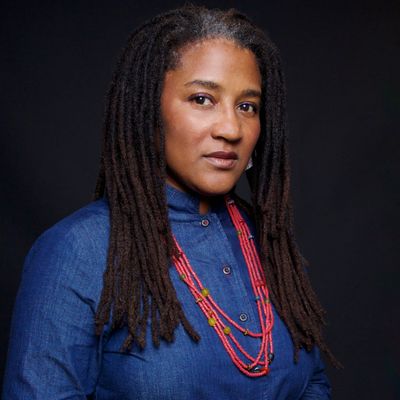
Our guest is Lynn Nottage. Ms. Nottage has received the Pulitzer Prize for Drama twice: in 2009 for her play Ruined, and in 2017 for her play Sweat. She is the first and the only woman to have won the Pulitzer Prize for Drama two times. Nottage is the recipient of a MacArthur "Genius" Fellowship and was included in Time magazine's 2019 list of the 100 Most Influential People. On January 13, 2022 Lynn tweeted that she would have a comedy Clyde’s, and a musical MJ for which she wrote the book on Broadway at the same time. She also has an opera for the play Intimate Apparel. Her work is being produced by 24 different major theatres this season according to American Theatre Magazine. Her play "Clyde's" is the most produced play in 2023/24.
Transcript
This transcript was automatically generated and might contain errors.
[0:00] Lynn Nottage: Next up on The Eclectic.
[0:01] Lynn Nottage: Yeah, I did get a chance to see the production, and it was really quite lovely visiting an old friend. I hadn't seen it probably in twenty-five years, and it really surprised me to spend time with those characters that I hadn't really had a relationship with in a very long time, but I was really gratified to see that the play still spoke to a new generation. Um, and yeah, it was really a lovely production. I had been hesitant to allow it to be produced because I thought, oh, it's an early work, it doesn't speak to who I am right now, and there's always something really scary about that. But I was sitting in the audience and began that first monologue, you know, I just relaxed into what the play was and who I was at that moment when I wrote it.
[1:00] Daniel Betts: Fresh for your ears, tell everybody. It's the new podcast from the producers of Destination Freedom Black Radio Days, produced and hosted by Daniel Betts of No Credits Productions. Comes The Eclectic. Interviews with difference makers, artists, authors, bold thinkers, people we love who get stuff done. Our guest is Lynn Nottage. Ms. Nottage has received the Pulitzer Prize for Drama twice: in 2009 for her play Ruined and in 2017 for her play Sweat. She was the first and only woman to have won the Pulitzer Prize for Drama two times. She is the recipient of the MacArthur Genius Fellowship and was included in Time magazine's 2019 list of the 100 Most Influential People. We're honored to have her as our guest on The Eclectic. Welcome, Lynn.
[1:51] Lynn Nottage: Thank you. I'm really happy to be here. Um, I'd like to start my interviews, um, and I think you know some of his family or Dr. Vincent Harding. He used to always like to start his interviews with, um, please share your full name, your mama's name, your mama's mama's name, and where you spent your childhood. And as you prefer to include both parents, your father's name, your father's father's name, but where you spent your childhood.
[2:18] Lynn Nottage: Um, that's doubtful. Yes, I went to college with Rachel Harding.
[2:24] Lynn Nottage: Yes, that's what I thought. Um, so I remember her well. And um, yeah, my name is Lynn M. Nottage. I grew up in Brooklyn, New York, and I'm like a third generation New Yorker. My mother was Jeanette Ruby Nottage, and my father was Wallace Nottage. And um, both of them were born and raised in New York City, as were my grandparents.
[2:54] Daniel Betts: Wow, that's amazing, you know.
[2:57] Lynn Nottage: Yes, like I said, a native New Yorker as the song goes. So I am a native New Yorker. It's sort of a rare breed. You know, my family came to New York City, I guess during the first wave of migration after um, sort of the emancipation. They came to New York in the early nineteen hundreds looking for opportunity and uh, sort of stayed and put down roots in Brooklyn and Harlem.
[3:28] Daniel Betts: Yes, yes. Let's talk about where you are in the world at this moment.
[3:33] Lynn Nottage: Yeah, right now I'm coming to you from Rome. I'm here as a resident at the American Academy in Rome, and I'm here until um, the middle of the summer.
[3:45] Daniel Betts: Wow. Would this be considered a quote unquote writer's retreat?
[3:51] Lynn Nottage: Um, I don't know whether it's so much a writer's retreat as a residency. It's an invitation for scholars and artists and writers to live for a period of time in Rome, and I'm here right now trying to soak in the ambiance of this beautiful city and figure out what I want to write next.
[4:13] Daniel Betts: That's interesting because I want to start with something first that might have influenced your work. I don't know. I mean, you've been writing since you were eight, nine years old, so I know the women in your life are very influential in your work. But I want to talk a little bit before we get started in depth, is um, your work with Amnesty International, and I know you immersed in a lot of things that you do. I know that was a long time ago. But you think that work, your four years with Amnesty International, do you think that influenced any of your work?
[4:44] Lynn Nottage: Yeah, absolutely. Um, yeah, thank you for bringing that up. After I graduated from the Yale School of Drama, during what was a particularly fraught moment in um, sort of American history while I was at graduate school, it was in the midst of the AIDS epidemic. It was in the midst of the crack epidemic. I was witnessing schoolmates, as you recall, who were dying and um, a city which was New Haven, which was um, under siege by drugs and crime, and I was feeling when I graduated from theater school that I wanted to do something that had slightly more impact. And I was beginning to feel that um, theater was somewhat decadent, even though I don't necessarily believe that now because I believe storytelling is really sort of important in our culture.
But at that moment I felt like I needed to do something else, and I decided when I graduated that I wanted to work in human rights work. And thus I began working at Amnesty International, which in many ways became a second graduate school for me.
[5:57] Lynn Nottage: Wow. Um, because I sort of went from an academic setting to be completely immersed in sort of the um, the language of human rights and um, suddenly dealing with issues that were really a matter of life and death and there was quite a bit of urgency um, that I hadn't experienced before in my work.
[6:22] Daniel Betts: Wow, that's incredible. Thank you so much for sharing that. And how did you first come to writing?
[6:29] Lynn Nottage: No, I think the question I often ponder. I think that I was probably a storyteller in one form or another from the time I was really, really young. You know, my mother always said, oh, you're such a storyteller, you know, for better or for worse. Um, but I grew up in a neighborhood which was Boerum Hill, Brooklyn, which I always describe as a neighborhood that people passed through to get to other neighborhoods. It was sort of a rare kind of neighborhood in that it was organically multicultural. It was um, black, it was Latinx, and it um, was a working-class Irish neighborhood. It was people who were marginalized in other communities, found refuge in Boerum Hill. So we had a large artist community, a large LGBTQ community when I was growing up in the 1970s. And so as a result, it was a neighborhood that had a lot of textures and a lot of cultural collisions and was vibrant and loud and interesting and sort of the perfect place for someone who was interested in being a storyteller. So I think that who I am is an extension of where I grew up.
[7:50] Daniel Betts: Yes. So that mix of a neighborhood like that has to be very influential in your work and just in your crafting life. And you still live in Brooklyn.
[8:01] Lynn Nottage: Yeah. I still, I actually live in the house that I grew up in. After my mother, she who had um, Lou Gehrig's disease passed away, I ended up staying in the house because I'd gone home to take care of her through that very difficult period, and um, myself and my family at the time just decided that we really liked the community. I had never expected to go back to Brooklyn when I left because it was a tough neighborhood, and it was um, yeah, I just never expected to go back. And when I returned, I found that there were things that I very much missed and there were things that I loved about the neighborhood, and I was really happy to be in my ancestral home with my family and also with my father.
[8:51] Daniel Betts: Lynn, you're talking about a very, very um, debilitating disease that your mother had. How did that impact you when you came back to care for her?
[9:03] Lynn Nottage: Well, Lou Gehrig's disease is one of the worst diseases I feel that anyone can get. For those of you who are not familiar with it, it's amyotrophic lateral sclerosis, which is a motor neuron disease that slowly robs people of the ability to move their muscles. And um, depending on where it begins—for my mother, it began in her legs—it slowly moved up her body to the point where eventually she couldn't speak. And as a result, the person really needs full-time care. And when my mother was struck with this illness, it was just at a moment when my life was beginning to blossom, and when I was sort of exercising a certain um, amount of independence, and I was pregnant with a child. And so it came at a very difficult moment, an unexpected moment, but I guess that's the way life is.
We can never anticipate when we're going to be um, forced to contend with really difficult circumstances, and that's what happened with my mother. But you know, it's interesting that you asked because I think in some ways it really tested me, and um, I was forced to go outside of myself in ways that I didn't know that I was capable of doing. And um, I also learned that I could multitask. It's like I could be um, a caretaker to my mother, I could be a mother to a new child, um, and I also work at the same time.
[10:36] Daniel Betts: That's tremendous. So I think that gets me to the point where you talk about how the influence of the women in your life, because that's what so many women, especially women of color, had to be—all those things, multitasked, um, doing all those things, mothers, um, in some cases grandmothers to children, um, working as well too, wives, you know, lovers, whatever the case may be in your case as well as too, as being an activist. So I just wanted to ask that question because I just know many people um, are not aware of how you have to deal with someone who has uh, the debilitating disease like that and then carry on with your life. Um, in a lot of cases, some people, you know, fall apart. Um, that made you stronger, seems like that's what you're saying.
[11:25] Lynn Nottage: Yeah.
[11:26] Daniel Betts: So thank you again for sharing that. I appreciate it. So, uh, some of your first work, let's talk about some of your first work. Um, because I knew some of your work when we attended uh, Yale School of Drama together. Um, but after that, uh, one of your first works was Poof. Uh, my name is Still Alice. Um, talk about those early works.
[11:51] Lynn Nottage: Um, sure. I mean, um, Poof was one of the first plays that I wrote while I was actually still at Amnesty International, and interestingly enough, it really was an extension of um, the work that I was doing there and was inspired very specifically by a set of images that I had seen that a photographer named Donna Ferracio had brought into our office, and it was images of women who were entering a battered women's shelter.
[12:24] Lynn Nottage: And so what these images really captured was something quite arresting. It's a woman who was fleeing trauma and arriving in a space that felt like a sanctuary that felt safe. And so there was that tension of still living with that trauma, but also the possibility in that moment of being able to let it go. And I thought that there was something quite arresting about the images, and I wanted to respond to it, but in the work at the time at Amnesty International, there really wasn't space for us to do that. And so what I discovered is that I had to turn back to what was foundational for me, which is playwriting. And I wrote a short play called Poof, about a woman who is being abused, and it begins with her telling her husband to go to hell, and he spontaneously combusts, and then the next ten minutes of the play, she has to decide with her best friend what to do with the pile of ashes that had been left behind, and in the end they decide to sweep her husband under the rug.
[13:45] Lynn Nottage: I don't wanna hear ya. One, two, three, four. Damn you to hell, Samuel. Samuel, where'd you go? Don't fool with me now. I'm not in the mood. Samuel. I didn't mean it really. I'll be good if you come back. Now come on now, dinner's waiting. Stop your foolishness and let's sit down. Don't be cross with me. Sure, I forgot to pick up your shirt for tomorrow. I can wash another. I'll do it right now. Right now, Sam. You hear me? Florence, honey, could you come on down for a moment? There's been a little accident. Uh uh quickly, peace. Quickly, quickly, please. Hey. I can't find Samuel. Only this pair of spectacles on the floor. You alright? What happened? Smells like you burned something. Ooh, what in the devil is that over there?
Samuel. I think that pile of ashes over there is Samuel. Oh, what has he done now? No, no, no, no, no. It's him. The ashes. It's him. Cha. What's wrong with you? Did he finally drive you out your mind? I think I killed him. What? I killed him. I killed Samuel. He's dead, dead. Dead, dead. Oh no, stop it. I don't have time for this. I am going back upstairs. You know how Samuel hates to find me here when he gets home. You're not gonna get me this.
[15:36] Lynn Nottage: And for me it was this very powerful moment because I realized that I could marry sort of my activist self with my creative self in ways that I hadn't been doing for four years. And I wrote that play Poof, and it won the prize, and it kind of ushered me back into my journey as a playwright. And with A My Name is Still Alice, it was just a really short piece that I did for Second Stage, which also was really instrumental in my journey because it led to my very, very first play commission, which was for a play called Crumbs from the Table of Joy, which was written for a multi-generational audience and I thought, oh I'm gonna write this play and nothing's gonna happen. But then Second Stage did it. And the production ended up going well and that led to the next production and then the next production from that and here I am.
[16:41] Daniel Betts: Well I have to say I had the honor of directing both of those pieces, Poof and Crumbs from the Table of Joy. The play about abuse really spoke to me. One of the reasons I made it to the East Coast from the West Coast and then back to Denver was I was sent there by my family to step in the middle of an abusive relationship between my sister and her husband. So when I read that piece I just knew I had to do it, either produce it or direct it, in this case I did both. So I thank you for writing it, you know, for being able to share with the world. It was so needed and still is needed. It's been a recent revival of Crumbs from the Table of Joy at the Kingdom.
[17:31] Lynn Nottage: Yeah. Did you get a chance to see that production?
[17:34] Daniel Betts: Yeah, I did get a chance to see the production. And it was really quite lovely visiting an old friend. I hadn't seen it probably in twenty-five years, and it really surprised me to spend time with those characters that I hadn't really had a relationship with in a very long time. But I was really gratified to see that the play still spoke to a new generation.
[18:02] Lynn Nottage: Death nearly crippled my father, slipping beneath the soles of his feet and taking away his ability to walk at will. Death made him wail like a god-awful band shit. Like the 1201 Steamboat Moore. At church, at work, strolling, laughing, eating, and of course, the infamous picnic in the park where half the town fell ill to Cyrinthia Bowers' potato salad. Death made us nauseous with regret. It clipped Daddy's tongue and put his temper to rest. It made folks shuffle and bow their heads, but it wouldn't leave us be tugging at our stomachs and at our throats. And then one day it stopped. And we took the train north to New York City. It was really a lovely production. I had been hesitant to allow it produced because I thought, oh, it's an early work.
It doesn't speak to who I am right now, and there's always something really scary about that. But I was sitting in the audience and began that first monologue, you know, I just relaxed into what the play was and who I was at that moment when I wrote it.
[19:54] Daniel Betts: Can we explore that just a little bit more? Because that was leading me to one of my questions: what does it feel like to revisit a piece? Or do you ever consciously think about revisiting a piece? What would you change now or what would you leave to say? And you said you just kind of lean into it and relaxed and just enjoyed it. What goes on in your head, you know?
[20:16] Lynn Nottage: You know, this is a fantastic question because when they first asked me, when Keen first asked me whether I wanted to revisit Crumbs from the Table of Joy, I was hesitant as I said, and then they said, well, do you want to make changes? And I went to the very first rehearsal and I listened to the play, and of course it was the impulse to change everything because I'm such a different person than I was now. You know, and I see the play through a different lens, you know. When I wrote the play, I was young and was really telling the story through the teenage girl's point of view because I was not that far out of my teen years. And now as a parent, I think it might have been different ways in which I entered the play, but I really fought the impulse to change anything. There's something beautiful about seeing your young self.
[21:13] Daniel Betts: Yeah, absolutely. Especially seeing now your young self at a different stage in life. What was that young self like?
[21:22] Lynn Nottage: We're speaking with Lynn Nottage, playwright, artist, activist. Her work's been produced by 24 different major theaters this season across America, according to American Theatre magazine. Tell us what does that feel like to have so much love and respect for your words.
[21:39] Lynn Nottage: Yeah, it's um there's something immensely gratifying about spending this many years trying to center the stories of black women and having those stories finally reach a large audience. I feel immensely blessed to be in this position and I don't take it for granted.
[22:04] Daniel Betts: American theater is glad that you are writing and doing what you do because there are 24 different theaters. Something must be right that you're doing.
[22:15] Lynn Nottage: Something's working, yeah.
[22:17] Daniel Betts: Let's talk about two pieces now that are currently, or well not currently, but of the most recent work that you did. Clyde, you talk about this character Clyde as being sort of a wicked character. Explain that she's a very complex and funny woman, but explain that complexity of Clyde.
[22:34] Lynn Nottage: Sure, Clyde's which is a play that premiered on Broadway, I guess a year and a half ago. And the character of Clyde, who is the owner of a roadside sandwich shop just outside of Reading, Pennsylvania, and she employs people who are formerly incarcerated, and she really runs the shop with an iron hand. And when I was writing the play, I was really interested in what happens to people who are caught in that liminal space, you know, particularly people who are formerly incarcerated, who are coming back into the world and find themselves facing all these insurmountable obstacles. And so I think that Clyde for me was really a metaphor for what we face down when we're trying to resurrect our lives, what we face down when we're trying to fully actualize ourselves. And so, you know, she on the stage is sort of the embodiment of all that we face when we're trying to succeed. All the obstacles that we face when we're trying to succeed.
[24:06] Daniel Betts: Very nice. Oh, and two boxes of virgin olive oil from Serbia. Now I don't know where that is, but it sounds like some good shit. So don't say I don't do anything for you. Where'd all this come from? Is this stuff legal? When were you authorized to ask questions?
[24:26] Lynn Nottage: Just open it.
[24:28] Daniel Betts: Okay, play time's over.
[24:29] Lynn Nottage: I'm losing money.
[24:31] Daniel Betts: Don't look at me like that.
[24:32] Lynn Nottage: If you don't like the way I run things, then you're welcome to leave, but good luck with that.
[24:44] Daniel Betts: How the fuck did we get stuck here?
[24:46] Lynn Nottage: Tell me about it.
[24:47] Daniel Betts: You know, I tried for like two months to get another gig.
[24:50] Lynn Nottage: And Clyde's the only person who would have looped me in the eye.
[24:52] Daniel Betts: Yup, roads off.
[24:54] Lynn Nottage: Why were you locked up?
[24:56] Daniel Betts: I held up a bank.
[24:57] Lynn Nottage: No shit.
[24:58] Daniel Betts: Yeah.
[24:58] Lynn Nottage: That's gangster, right?
[24:59] Daniel Betts: If only.
[25:00] Lynn Nottage: How long you serve?
[25:01] Daniel Betts: Too long.
[25:02] Lynn Nottage: Where they have you?
[25:03] Daniel Betts: Fratville.
[25:05] Lynn Nottage: Yeah.
[25:05] Daniel Betts: I was strung out.
[25:07] Lynn Nottage: Thought I could withdraw money from Wells Fargo with my nephew's BB gun.
[25:11] Daniel Betts: I don't know what I was thinking.
[25:13] Lynn Nottage: Downtown, six days before Christmas.
[25:16] Daniel Betts: I was like out of my head with love.
[25:19] Lynn Nottage: I had all this big motherfucking plans.
[25:21] Daniel Betts: I was gonna buy my girl a dog.
[25:23] Lynn Nottage: So middle of the day, I go into the bank, pull out my gun and I said shit like from the movies.
[25:31] Daniel Betts: Everyone put your hands up.
[25:32] Lynn Nottage: This is a robbery.
[25:33] Daniel Betts: I was so high, bro.
[25:34] Lynn Nottage: I shot one of the security guards in the mouth of the baby.
[25:37] Daniel Betts: Dunk on me like an extra year for assault.
[25:40] Lynn Nottage: The baby like cracked this stool, I got caught in the buck with his throat, and she started to choke, and I had to like do the motherfucking heim link on this dude.
[25:47] Daniel Betts: And then the police wrestled me so fast.
[25:49] Lynn Nottage: I didn't have time to blink.
[25:50] Daniel Betts: You were like, blink, uncle to the fellow.
[25:53] Lynn Nottage: That shit's true.
[25:54] Daniel Betts: Not true.
[25:54] Lynn Nottage: True.
[25:55] Daniel Betts: I'm a romantic.
[25:59] Lynn Nottage: I love with every part of my body.
[26:01] Daniel Betts: You spent a lot of time in that um area of the country, Reading, Pennsylvania.
[26:06] Lynn Nottage: Um Clyde, you just mentioned there.
[26:09] Daniel Betts: I'm sweat.
[26:11] Lynn Nottage: Talk about that immersing yourself into work like that.
[26:14] Daniel Betts: Because I know what Warren was saying where you immerse yourself in the plays that you write that you write.
[26:20] Lynn Nottage: You talk about that process and then talk about what it was what is different and unique.
[26:26] Daniel Betts: Maybe not so much different and unique, but just what is it about that part of the country that's keep attracting you to come back to to do more work about it.
[26:35] Lynn Nottage: Sure, sure. That that's a a compound qu a question.
[26:38] Daniel Betts: I did my best to to answer it.
[26:41] Lynn Nottage: Um I really discovered some of my love for immersive research when I was working on um a play called Ruined which is set in the Democratic Republic of Congo during um a war in a you know a war that they they had in that country that was quite devastating.
[27:03] Daniel Betts: And I was doing my research and had found it really difficult to find stories um about what was happening to women who were victims of this armed conflict and so decided that I actually had to go to East Africa and find Congolese refugee women and ask them questions myself and I found that that process was quite um fruitful and a really important ingredient in my creative pr process because it it it forced me to go beyond my comfort zone and to stretch outside of myself because it's so easy as a writer to get stuck in your head and to lean into what's familiar and what this process did was to take me to some place that was completely foreign and um as a result I was forced to sort of interrogate my own creative process and interrogate you know who I was was.
[28:02] Daniel Betts: You men kill me.
[28:03] Lynn Nottage: You come in here, you drink the beer, take the pleasure, and then want to judge the way I run my business.
[28:10] Daniel Betts: The front door swings both ways.
[28:13] Lynn Nottage: I don't force anyone's hands.
[28:15] Daniel Betts: My girls, Emily, Mazima, Josephine, asked them.
[28:19] Lynn Nottage: They rather be here than back out there in their villages where they are taken without regard.
[28:24] Daniel Betts: They are safer with me than in their own homes because this country is picked clean while men, poets like you drink beer, eat nuts, look for some place to disappear to, and I am without mercy.
[28:37] Daniel Betts: Is that what you're saying?
[28:39] Lynn Nottage: Because I give them something other than a beggar's cup.
[28:43] Daniel Betts: I didn't come here as Mama Nadi.
[28:46] Lynn Nottage: I found her the same way my despite their wealth in the muck.
[28:50] Daniel Betts: I stumbled off that road without two twigs to start a fire.
[28:54] Lynn Nottage: I turned a basket, a sweet and soggy biscuits into a business.
[28:58] Daniel Betts: I don't give a damn what any of you think.
[29:01] Lynn Nottage: This is my place.
[29:03] Daniel Betts: Mama Nadi's.
[29:26] Lynn Nottage: And I went to Reading, Pennsylvania, which is a city, um, but at the time when I began my research was the poorest city of its size, and it's just at the tail end of the rust belt.
[29:37] Daniel Betts: It used to be a a city that was quite economically robust because it was the center of textile.
[29:43] Lynn Nottage: Um textile industry.
[29:46] Daniel Betts: It in fact was the creator of the outlet mall.
[29:50] Lynn Nottage: It had steel factories, it had an agricultural belt, and so for many, many years it was quite robust, and then you know, along with the economic downturn that affected lots of industrial cities, it began to see itself um withering.
[30:05] Daniel Betts: And um, when I went to writing, I was really interested in the ways in which um economic stagnation was reshaping the American narrative, and it felt like a really perfect place to immerse myself.
[30:19] Lynn Nottage: It's a majority Latinx city, it's a city that has um economic diversity, a city that has um racial diversity and felt very much like a microcosm of the country that we're living in right now.
[30:35] Daniel Betts: Well, it's powerful pieces that you just talked about, sweat and roaring and what this is right in Pennsylvania.
[30:42] Lynn Nottage: Let's talk about now a little bit uh about after the aftermath of a George Floyd.
[30:51] Daniel Betts: That was a letter written by many major theater artists as yourself that says, We see you white theaters.
[30:57] Lynn Nottage: I wanted to ask you, you've been involved in this theater landscape for 25 years or more.
[31:03] Daniel Betts: It seemed like a time now that people of color are more visible in that landscape.
[31:08] Lynn Nottage: Let's talk about that open letter that was written to American theater.
[31:11] Daniel Betts: Sure, I was one of the signatories of that letter, which came in a very powerful moment, as you said, it was in the wake of uh the murder of George Floyd, and which just it was in the wake of COVID, which had shut down theater for a year for a year and a half, and I think that those things were both instrumental in this letter being written because during the shutdown, it really gave theater artists the hop opportunity to interrogate um theater culture and to ask very difficult questions about the way in which we as writers of colors, actors of color, as administrators of color um were being treated within the industry.
[31:53] You know, that pause really um allowed us time for reflection.
[31:59] Lynn Nottage: And what I I think the letter expressed was that many people were feeling diminished, many people were feeling that they were harmed by the practices, many people were feeling as though um they were not being fully seen in all the complexities of who they were as artists and as administrators.
[32:20] Daniel Betts: And so I signed the letter because I felt it was really important for us when we returned to the theater after a year and a half of it being shut down, that we didn't go back into the same kind of space.
[32:32] Lynn Nottage: And this was a real opportunity for the theater as a whole to look at its practices and figure out how could it it shift so that um all of us coming back in could enter a space that was more inclusive and more welcoming and more responsible in the way in which it treated everyone, you know, from its audience to the people standing on the stage to people who are backstage.
[33:01] Daniel Betts: Well, it it definitely did make a difference, and I think it continues to make a difference, but also you hate to use the word but still see a little bit of backtracking in the regional theater RAM.
[33:17] Lynn Nottage: Um especially when it comes to administration and people being named or artistic directors, and all of a sudden, you know, within a year, those artistic director either resign or they decide to uh that the the theater decides that it's not the right fit anymore.
[33:31] Daniel Betts: Any comments about that?
[33:32] Lynn Nottage: Um that's several theaters I mean yeah Oregon Shakespeare just just recently and you know several four or five theaters in Chicago uh including here in Denver um so any comments on that?
[33:49] Daniel Betts: Yeah I mean it's it's an enormous shift to turn and change doesn't happen very easily and because we have the desire doesn't mean that our desires are necessarily aligned with you know the boards of directors that remain predominantly white.
[34:10] Lynn Nottage: You know it doesn't mean that our desires are aligned with um people who have been running these institutions for the last twenty five years and I think that we're seeing that borne out you know certainly with um some incredible artistic directors of color who've been put in positions of power who are bringing their full creativity um to their jobs and finding that they're hitting these walls you know I think of um Nataki Garrett in Oregon Shakespeare Festival who is an immensely capable administrator and a visionary leader but repeatedly she found that she was at odds not just with the board there but with some audiences who were resistant to opening up the stage to um um something different.
[34:10] Daniel Betts: Inclusivity.
[34:10] Lynn Nottage: You know?
[35:06] Daniel Betts: Yeah and and I think it was true of, you know, someone like Ken Matt Martin in Chicago at Victory Garden, who was young and bright, huh?
[35:18] Lynn Nottage: And who also found himself battling a board that was resistant to change.
[35:24] Daniel Betts: And you know, I can go on and on with all these people who entered these spaces quite optimistic and brought an immensity of really positive energy who were beaten down because they weren't given the tools necessary to succeed.
[35:43] Lynn Nottage: You said it so rightfully so, because they weren't given the tools to succeed.
[35:49] Daniel Betts: You know, it was like, let's put this this window dressing up, but we're not gonna have you uh supply you with anything else to help you with the rest of the window dressing, you know, to do all the dressing that you need to make this picture beautiful, you know.
[36:04] Lynn Nottage: You can have just enough so that the outside world can think that we're doing what we need to do, but you're not gonna do due diligence to make us successful.
[36:13] Daniel Betts: So that's been really disappointing.
[36:15] Lynn Nottage: That's why I wanted to pose that question to you.
[36:19] Daniel Betts: Let me read a quote to you, and I want you to talk a more a little bit about this quote.
[36:24] Lynn Nottage: You say I wrote a play that did not have white characters, and I remember their literary manager saying to me, I think this is great, but you need to have a character that allows me entrance into your work.
[36:37] Lynn Nottage: Yeah.
[36:41] Lynn Nottage: Sure, yeah, it was um um a literary manager at a Midwest Theater when I was putting up Ruined, and one of the pieces of feedback that I got from her is that she didn't feel the play was accessible.
[36:59] Lynn Nottage: This was a a a white manager because there wasn't a character who she quote unquote identified with. And I remember sort of drizzling at that comment and sort of the microaggression that's sort of embedded in it. And you know the the not so um subtle racism in the comment. And she was not at all aware of what she was saying, and I think that that was the thing that was most hurtful about it. Is that there was no awareness of the way in which that might land harm me.
[37:43] Lynn Nottage: Yeah, yeah. There was no awareness, you know. She was basically saying that this black world that I was putting on the stage was not a place that she felt comfortable being in unless she had a character who she could quote unquote identify with, you know, which is another way of saying I need to have a white person centered on that stage.
[38:07] Lynn Nottage: Right, right. And everybody else can play off of that white character, you know.
[38:13] Lynn Nottage: Yeah. Yeah. Like normal, right? So the way she saw it, the way he saw it, you know, uh in this world. Um people know you originally for a lot of your dramatic work, but you have uh quite an extensive background too now in writing books or musicals uh and operas. Um Secret Life of Bees, which I guess you were just recently in London to put up a uh that's a new production of that, correct?
[38:43] Lynn Nottage: Mm-hmm. Yeah, we just remounted it, sort of a um slightly adjusted version from what was in New York.
[38:51] Daniel Betts: Okay. And also um one of my favorite pieces by you and I one of my favorite pieces because I remember s you took Linda, my wife and I out to dinner one time. We came to New York. And you told us about a new piece that you were working on.
[39:06] Daniel Betts: That piece turned out to be Intimate Apparel. Now that's hello to you. You took us to a Korean barbecue place.
[39:21] Lynn Nottage: And my wife still I I do remember yeah because she's a because you're you because your wife was a costume designer. And I just thought it was just an amazing story. And we talk about now that development of Intimate Apparel into opera. Can you talk about that transition um that you're working on or has been worked on?
[39:41] Lynn Nottage: Yeah, you know um I was was in dialogue with composer Ricky Ian Gordon. He had reached out to me and said, you know, I feel that you can write a libretto and I would love to collaborate with you. And we spent about two years reading short stories and thinking about things that we could adapt and finally he said, you know, the scene I'm really interested in is in your play Intimate Apparel. I think it would make a pr a perfect opera and it's really funny because I was thinking about that as well, but I was too embarrassed to say, Would you adapt my own work?
[40:18] Lynn Nottage: And then we kind of had a laugh about it and we adapted Intimate Apparel, which in some ways, you know, the opera is its perfect form because it it it has a soprano and an alto and um a baritone and et cetera. It's like all the ingredients you need for an opera were right there embedded in in in the piece and um we decided to to create something that's very much a chamber opera because it is about intimacy and it's small and you know I think that it could be on a large stage but it is also something that we thought could exist um in theaters, you know, as a hybrid piece, not just in opera houses, which is really important because I think that there's a whole new generation of people who don't necessarily think about opera as being accessible to them because it's prohibitively expensive.
[41:14] Lynn Nottage: When we were when we were working on Intimate Apparel myself uh and Ricky Ian Gordon who's the composer, we really decided that we wanted to write something that felt accessible and that felt welcoming and that was kind of the opposite of what a lot of people think of opera um today.
[41:36] Daniel Betts: Thank you so much for sharing it. I I can't wait to see it, you know, like Santa pieces forever, you know so uh let's talk about a couple more things before we have to have to let you go. Let's talk about the development of MJ the Michael Jackson um production levels on Broadway and blew everybody's mind. How did that all come about?
[42:00] Lynn Nottage: Um I I was approached by Leah Balak, who's the producer who at the time was working at Sony. Um that had the Michael Jackson catalog. And she said, Do you have any interest in writing a musical about Michael Jackson? I didn't have to wait for a second because Michael Jackson has been such an important artist to me.
[42:24] Lynn Nottage: Um my life tracks with him. The first album I ever owned was ABC. And when I was in high school, Off the Wall blew my mind. And then when I went to college, Thriller was the album that I danced to on Saturday night. And so I can't it Michael Jackson really is kind of the soundtrack of my my childhood and my young adulthood.
[42:48] Lynn Nottage: And I was really interested in telling the story of Michael Jackson as the artist because I think there's so much noise around who he is, but very few people really understand sort of the complexity of who he was as a creative being and just how disciplined and focused.
[43:08] Lynn Nottage: Um and accomplished he was as an artist. An old movie. You're an angry dancer. I like that.
[43:29] Lynn Nottage: But Fossil. You have to sell everything from the tipping of your hat to the flourish of your fingers. And the Nicholas brothers. It's all about the rhythm, baby.
[43:43] Daniel Betts: Well, it was phenomenal hit. And um people are just talking about it all over. And uh thank you again for sharing that with the world, you know. And like I said, taking that approach to his work, his creative changes, rather than all the other stuff that people might want to talk about and put upon him. So I just appreciate that approach to his work.
[44:04] Daniel Betts: Um let's talk about another thing too. Now I just read that you and your daughter Ruby are writing a piece called This House with composer Ricky Gordon again. So um it's gonna premiere next year at the opera theater of St. Louis, is that correct? Am I getting my facts right?
[44:21] Lynn Nottage: Yeah, that's correct. Uh it's uh either next year, but it's more than likely the following year. Probably so probably I would say 2025.
[44:29] Lynn Nottage: Okay. Yeah, because they have a summer season, so I don't think it will be next summer. I think it will be the following summer.
[44:34] Daniel Betts: Okay, fantastic. Tough enough for me to get there and see it then. All right. So what is it like writing with with your daughter Ruby?
[44:42] Lynn Nottage: Um it's it's been really quite lovely. I mean, Ruby is an amazing writer. She has an incredible um poetic sensibility, and she adds an ingredient that I think is missing in my own writing because she is so lyrical and she is such an expansive and intellectual thinker, and so she really pushes me to stretch beyond my own comfort zone.
[45:09] Lynn Nottage: And I like that kind of provocation. You know, I like that she asks me questions and demands um that I not fall back on some of my uh crutches as an artist.
[45:23] Daniel Betts: Wow. That's that's a heavy compliment.
[45:27] Daniel Betts: Yeah. A mom to a daughter. So Lynn, with all your success and your insane schedule, what gets you out of bed every day? What still excites you and challenges you?
[45:41] Lynn Nottage: You know, it's I'm I'm here in Rome, and I think one of the one of the exciting things um about being here is is that every day I walk out the door, I encounter a new aroma. You know, right now the jasmine is in bloom and it's the whole city feels really fragrant, and it's a sensation that I don't get at home. And around every corner there's sort of a layering of histories that invites a certain kind of engagement and qu and um I I I like that that the city is offering me new things to think about, new provocations.
[46:26] Lynn Nottage: And so that's what's getting me up at night. I mean in the morning.
[46:32] Daniel Betts: Beautiful. Thank you. Thank you so much for sharing that. We've been speaking with Lynn Nottage, uh two-time Pulitzer Prize winning playwright. Uh the awards and accolades, I could go on for the next um probably hour and a half, just naming everything that you've been nominated for, nominated for Tonys, um, Drama Desk Awards, and so on and so forth.
[46:53] Daniel Betts: Um she has a number of full-length plays, uh, starting the most recent was Clyde, but also musical, Secret Life of Bees, MJ the Musical, Operas, Intimate Apparel, The House, The Highlands, just some, just to name a short list of her work. Been an activist probably since she was eight, nine years old, seems like. Um fighting for women's rights, fighting for uh especially the working class people, I always say if you see that from Sweat, Ruined, and from Reading, Pennsylvania.
[47:23] Daniel Betts: We've been honored to have her as our guest today on Destination Freedom Black Radio Days, The Eclectic. Uh it's been a long time coming, but it was well worth the wait. Lynn, thank you again so much for being our guest.
[47:34] Lynn Nottage: Thank you, Donnie. It's really lovely to be in conversation with you.
[47:38] Daniel Betts: Great. Take care.
[47:39] Lynn Nottage: All right. Bye bye.
[47:41] Daniel Betts: The Eclectic is produced by Donnie Betts and No Credits Productions LLC. Please subscribe to our podcast at Broadway Podcast Network at Spotify, Radio Public, iTunes, Stitcher, Audible, or wherever you get your podcasts. Follow us on Instagram, on Twitter at Donnie Betts, and at The Eclectic Podcast.
[48:09] Daniel Betts: Thanks for listening to The Eclectic. I'm Donnie Betts.
© Broadway Podcast Network, All Rights Reserved