

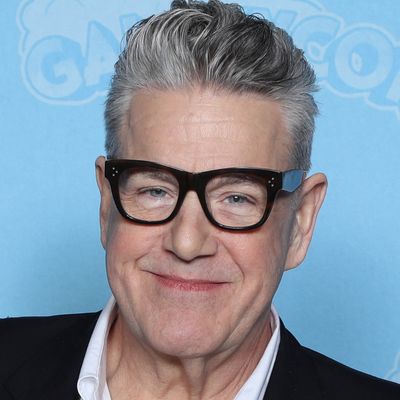
Kicking off Season 3 of "E-Ticket to Broadway" is the Tony Award-nominated Disney Legend that is Jonathan Freeman. Listen as Jonathan shares his memories of going to Disneyland and Walt Disney World as a kid and being "over-stimulated," and his absolute love of the Disney Villains (Captain Hook being his fantasy boyfriend, Malificent, his fantasy girlfriend, naturally)... Read More
From the show: E-Ticket to Broadway
Guests
Featured Shows

About
Kicking off Season 3 of "E-Ticket to Broadway" is the Tony Award-nominated Disney Legend that is Jonathan Freeman. Listen as Jonathan shares his memories of going to Disneyland and Walt Disney World as a kid and being "over-stimulated," and his absolute love of the Disney Villains (Captain Hook being his fantasy boyfriend, Malificent, his fantasy girlfriend, naturally). In fact, Jonathan shares on the episodes how he always dreamt of giving voice to a Disney Villain, and how he made connections as a kid when he heard Disney voice actors. He and David discuss some of his incredible memories from his days recording the voice of the Grand Vizier--from hearing the work of Howard Ashman & Alan Menken for the first time, to working with his fellow cast members including Robin Williams, to seeing how Jafar has become so iconic over the last 30 years. In addition to his work as a voice-actor, Jonathan has appeared in four Disney on Broadway productions including "Beauty and the Beast," "Mary Poppins," "The Little Mermaid," and, of course, "Aladdin" and discusses his experiences performing Disney characters on Broadway. As a special treat to the listeners, listen to a fun story about Disney on Ice, and delight in some iconic Disney speeches...as voiced by Jafar.
- Follow on Instagram: @etickettobroadway
- Jonathan's Instagram: @thejonathanfreeman
- David's Instagram: @directedbydavidalpert
- Learn more at www.eticketpodcast.com
- Part of the Broadway Podcast Network
Transcript
This transcript was automatically generated and might contain errors.
[0:13] David Alpert: Welcome to E-Ticket to Broadway, where Broadway meets Main Street.
[0:19] David Alpert: Here's your host, my pal, David Alpert.
[0:25] David Alpert: Thanks for tuning in to another episode of E-Ticket to Broadway, the premier podcast for learning which Broadway star is most likely to order a dole whip at a Disney park. It's an absolute pleasure to hear from all of you via Instagram and also from the reviews on Apple Podcasts, sharing your love, and joining the E-Ticket community.
[0:44] David Alpert: Unlike theater, podcasting can be a very lonely venture, so it's nice to know I'm not alone out there. Be sure to visit our website, www.eticketpodcast.com to see all of the past episodes and spend some time at our store, where you can shop the E-Ticket Magic.
[1:01] David Alpert: On the website, you can also learn more about Gilanus Fund and ways in which to support it, including becoming a Patreon of E-Ticket to Broadway. Speaking of Patreon, many thanks to some of our newest supporters, Karina C, a B Ticket member from New York, and Jessica Kaye, another B Ticket member from Washington. Thank you both for your incredible support. It means a lot.
[1:24] David Alpert: As I think you'll hear in this episode, I was very, very excited to chat with this guest. Not only did he give voice to an iconic Disney character, he's also a Tony Award-nominated Broadway star, having been seen on Broadway in 11 shows, including She Loves Me, 42nd Street, How to Succeed in Business Without Really Trying, Beauty and the Beast, On the Town, The Producers, Mary Poppins, The Little Mermaid, and of course, Aladdin. Make way for the one and only Jonathan Freeman.
[2:03] David Alpert: I've had the honor of welcoming Jody Benson, Susan Egan, and Adina Menzel to E-Ticket to Broadway. But today I get the incredible privilege to chat with my first Disney villain, Jonathan Freeman. Thank you so much for joining me on this episode.
[2:17] Jonathan Freeman: Hello, David.
[2:18] Jonathan Freeman: Hello. It's very exciting to be talking to you and hearing, of course, this incredible Disney character that is Jafar. So this is very exciting for me.
[2:29] David Alpert: Well, you're very kind, thank you. You know, we're gonna talk about Jafar a bit later, but I want to go back in time. You were born in Ohio. What are your early memories of being introduced to Disney?
[2:41] Jonathan Freeman: I wish I could tell you the first Disney film that I remember seeing. I'm told that it was Peter Pan. That would be about the right time period, probably. I did see a lot of other ones, either on old Reel to Reels that my parents' friends had, or they were sometimes showing at the movies again or something, and we would go see them at the time because this is, you know, there was nothing digital, there were no VCRs, there was nothing except, you know, a piece of film that you had to show somehow. So I did I did kind of catch up at some point with stuff that was earlier than me, even earlier than my old age lifetime. But I think Peter Pan was the first thing that I saw, and I was very excited by it, and I wanted to watch it again, and they said, Well, we have to come back because the next feature isn't until, you know, anyway. And I was excited because of Captain Hook.
[3:34] David Alpert: Sure. Right from the beginning, right from the get-go. I was like, that's looks like fun. Do you remember when Disneyland opened in 1955?
[3:43] Jonathan Freeman: I do. I do. I would in 1955 I was five years old. And I remember it because I had um we had some family members that lived in California, actually in Los Angeles and in and around Los Angeles, uh Los Angeles, and it was um I was very envious that we weren't there and able to go um, you know, like right away. I wanted to go right away, and you know that that's not how things used to work. Things took time to plan and etc, etc. But yes, I do remember the opening, and I remember there was something that was shown at some point later on that was like uh Walt Disney. He had some show where he like talked about things.
[4:24] David Alpert: Yeah, called Disneyland.
[4:28] Jonathan Freeman: Oh, is that is that the name? I think it might be actually a documentary right now on Disney Plus or something. I think so. Anyway, there's a lot of great documentaries on Disney Plus about Disney and Disneyland, if you haven't looked at them, but you probably have. Anyway, um, so so I do remember I do remember the opening. I remember the excitement, and I really remember, you know, that I really thought that if we went there we would actually see those characters.
[4:51] David Alpert: Of course.
[4:52] Jonathan Freeman: I mean the Peter Pan ride. I wanted that hat. I wanted to try on his hat with a big feather. Did you get to go ever?
[5:02] Jonathan Freeman: Yes, oh yes, I did go. I did go uh at some point as I can't remember at what point. Uh I know I'm trying to remember. I cannot remember because I remember I because then I I remember going to Disney World too as a teenager. I can't remember when that opened. You probably know the answer to that.
[5:25] David Alpert: You know what? I'm I uh I'm such a Disneyland boy, but Disney World is about to celebrate its 50th anniversary.
[5:32] Jonathan Freeman: Right. Disney World.
[5:33] David Alpert: And Disneyland Disney World.
[5:35] Jonathan Freeman: Right. So that yeah, so I so I would have well maybe I was already twenty then. I was probably 20 something. But anyway, I remember going to Disneyland as a youngster, but I don't remember very much about it. And then I remember, and this is interesting because I just had to talk about this. I was doing a commercial, get this for United Airlines. Well, no, wait a minute. I auditioned for United Airlines commercial, and the next day, or two days later, I got in a plane to go to Los Angeles because one of my agents had moved out there, and uh he met me at the airport, and when I got in the car, he said, Hi, great to see you, and congratulations, you booked the United Airlines spot. You have to go back on the red eye.
So I'd gone out there ostensibly to see him have fun and go to Disneyland again for the first time since. And um, so that was supposed to be my big Disneyland, you know, trip, and I had to get back on the red eye that same day, come back, but they flew me into Newark where I was shooting the commercial with Priscilla Lopez, shot the commercial, and I was back on the plane the next night, back on the red eye in the other direction the next night from Newark back to LA. And then I did get to go to Disneyland again.
[6:47] David Alpert: Oh, perfect. I love that.
[6:48] Jonathan Freeman: I actually got to see that commercial on your Instagram page, and it is incredible. I went to Broadway Legends.
[6:54] David Alpert: Oh yeah, it's very exciting.
[6:55] Jonathan Freeman: Yeah, it was funny to see it again too. I I don't know where they dig these things up, but uh it was good, it was nice to see it. I I had I had only good memories about it. I hope Priscilla did too. It was such a blur though, because I literally got off, you know, the the red eye and they were like already set up in the I guess newer Newark was pretty empty, I recall at the time. So maybe it was maybe they just took one wing of United Airlines or something because they were shooting commercial for them. I don't know.
[7:24] David Alpert: I don't know. So, you know, going to Walt Disney World, um, do you remember any rides that you got to go on?
[7:32] Jonathan Freeman: Ooh, I went on a lot of them. I don't I don't remember very much about it. I e and I was already like I said, I was probably 20 something. Yeah. Um and then I did not go back again until Aladdin was opening. It opened there was a big opening actually at Disney World, but I was working, so I didn't at that time I didn't see any I didn't go on any ride, I didn't go on one thing. I was just, you know, working, basically. But um I remember I had there's a picture of me somewhere in the there's some stocks. You know what I'm talking about? Like those things you put your head and your hands into.
[8:11] David Alpert: Oh yes.
[8:12] Jonathan Freeman: Oh yeah. Like old time. It was from I don't know, it was connected to some one of the movies or something. And there's a picture of me with my head and my hands in the stocks and my father with his head and hands in the stocks too.
[8:22] David Alpert: Perfect.
[8:24] Jonathan Freeman: I was living in New York at the time and I met my my father and my kids' sisters to go to go to Disney. They said, Do you want to join us? And I said, Yeah.
[8:33] Jonathan Freeman: And off you went to the stops.
[8:35] Jonathan Freeman: I went, yeah. And Disney and Disneyland, I I you know, I just don't remember that much about it, except because I was just way too excited. I was way over stimulated.
[8:52] Jonathan Freeman: David, you've said that you've always wanted to play a Disney villain and that you loved them all. You were quoted to say, without a good villain, you don't have a good story, which I love. Did you have any villains that you loved growing up besides Captain Hook?
[9:05] Jonathan Freeman: Well, Captain Hook was probably my first, that was my first fantasy boyfriend. Yes, I did. First of all, Stromboli. And I had a big had a big crush on puppets, period. I had a lot of puppets from the time I can remember. Uh I grew up in, as as you said, in Cleveland, Ohio, and the Cleveland Museum of Art had a had uh one of the masters of puppetry at the time named George Latshaw, uh did classes there, and I took those classes as a young kid. So that was um, you know, so anyway, uh so I was very interested in Pinocchio, and Stromboli was uh absolutely fantastic character, I thought. Um the cat and the and the the fox in that film, I guess, although they were technically probably sidekicks, they they were also kind of mean.
And also Lampwick, like I like all those mean characters appealed to me. They were just to me, I don't know. But the big ones, you know, the major villains. Um and then you know, going forward, uh, you know, Maleficent, uh, you know, I even like the the villainesses, they were all the same to me. They all bled together, you know. They could have been men, they could have been women, and they could they were interchangeable in a way. Maleficent and Lady Tremain, uh, oh Lady Tremaine, one of the great ones. Um just about every villain you can think of, I probably admired. Not just love, but yeah, loved and admired because they always seemed like they had the most fun in the movies, you know.
[10:36] Jonathan Freeman: Um they seemed like they had the best clothes. They always had such exotic gear, you know. They often had pets that talked. Yeah. And it was like, well could you not want that? You know. And yes, I have said that. Disney villains. They are, you know, without a good villain, you don't have a good because the because the heroes and the and the plot need something to push against. And if they don't have something strong to push against, it's like what's the point? You know, it's like then the then the heroes and the heroines just look like weak people. That's all. So in a sense, the villains really, you know, they're they're the they're the really they're really the ones that create the stories because you know, they they agitate for a better story in a way. And that they become the gasoline that is the fuel for those stories to move in a forward motion.
[11:30] David Alpert: Were there any villains that you related to on a personal level?
[11:34] Jonathan Freeman: Oh god, I don't know. You were like, well, Captain Hook, because, you know, I lost my hand to a Oh oh oh, I see what you mean. No, I don't think so. It was all on a fantasy level. I mean, I related to all of them for, you know, craziest reasons, though, you know, and y a lot of it, I mean, I'm very visually oriented anyway. And uh, so I think a lot of it just started with the those fantastic visuals, the the artistry of the Disney animators is still uh magical to me. I I wish they were I I wish they were still doing hand drawn animation. I I find it more magical than the the um the newer stuff. I mean it's still great, you know, don't get me wrong, but it's so advanced that it's I don't feel they don't feel that that they don't there's no there's no there's not a human hand in there.
[12:24] David Alpert: Right.
[12:25] Jonathan Freeman: And all of the Disney characters, and especially the villains to me, all seemed very real. They seemed very human, and there was a very good reason for that because they were being hand drawn by humans, and you know, I came to realize working on finally working on Aladdin that they because they they uh film or tape everything you do. So they have all of your mannerisms, all of your, you know, crazy gestures, because you kind of have to physicalize those characters in order to make it work, you know, in order to get it out of yourself, you kind of have to do the same work you would do if you were rehearsing something. And and so they get your mannerisms and idiosyncrasies and your your breathing patterns and your breaths and your inhalations, and um that's why it's so great, and I don't see it as much, I guess, or I don't feel it as much, or maybe I'm just turning into a crabby old man and no, no, no, I don't like that. I don't want any I don't want any, you know, mechanical I've been enough mechanical stuff for me.
[13:23] David Alpert: I don't know.
[13:24] Jonathan Freeman: Yeah. Was there a moment as you got older and you were pursuing a performing career that you thought in the back of your mind, maybe one day I'll get to voice a Disney villain?
[13:33] David Alpert: Yes. Was that ever a dream for you?
[13:35] Jonathan Freeman: Always. Always. And and uh right around the time that um right around the time that uh Disney uh Howard Ashman Alan Mencken went to Disney for their famous three-picture deal for the new golden age of Disney. I had an agent named Dinah Ralnick, a little shout out, um, who was wonderful, is wonderful, and she was also interested in animation. Um she was a California girl, and she I think she grew up with a a lot of respect and love for animation and for the ca those characters. Anyway, and um for some reason I did not get an audition for Beauty and the Beast, and I did not get an audition for Little Mermaid, and I really, really wanted to get in on this because I had auditioned for Howard Ashman and Alan Menken for Little Shop of Horrors originally, and I did not get it.
[14:27] Jonathan Freeman: Um but I had a fantastic audition for them. And when I say fantastic, I don't remember what my audition was actually like. It could have, you know, could have sucked, but the fact is it was a good audition for me because I walked out of there feeling good about myself because they were so decent and such nice men, and they uh whatever they did or said to me, I walked out of there feeling like even if I don't get this, that was a great experience. And then, you know, all of a sudden, not all of a sudden, many years later, there I am again, and I get to audition for another project that they happen to be working on. See, that's what you call what the butterfly effect or the ripple effect or something. You just never ever know. You never know where it's gonna where it's gonna lead.
[15:28] David Alpert: So let's talk about Jafar, which you described as an elegant maniac, which I love. Do you remember the first time you heard the score to Aladdin?
[15:39] Jonathan Freeman: Uh well, I heard it uh we never I mean it wasn't like the first day of rehearsal of a musical where you sit down and they play you the entire score. That that didn't happen. Um because that's just not the way that that's one of the ways in which it is not like making a new musical, but it's very similar. Doing an animated feature for Disney, I felt was very much like doing a new musical because it's like two steps forward, one step back. Um that's one of the things. Also, it's highly collaborative. I mean, you know, with a musical, you know, you have musical directors and choreographers and directors, and and uh, you know, once you get into the theater, there's you know, lights and sets and props and you know, all of that great theater craft stuff that I'm completely and totally devoted to and interested in.
Um, and it means a lot to me, it really does. I don't take any of that stuff lightly either. Anyway, so it was the same thing in a sense, except that you know, there was another added element, which was the animation. So I was very, very interested in all of that stuff. Um wait, what was your original question? I got a little off track.
[16:44] David Alpert: That's okay. The first time you heard the songs.
[16:48] Jonathan Freeman: Oh, yes. So right. So this was my experience, and it's a little bit some of it is not, you know, not such a nice thing in a way, but um by the you know, the the animators start working on the film, you know, years before they bring actors in, or that's how it used to be. I think that the animators in Aladdin had been already working like for two years on, you know, starting to do drawings and researching Middle Eastern food and Middle Eastern clothing and Middle Eastern colors, and you know, making decisions about what the film was going to look like from a production standpoint. So they'd been hard at hard at work already. And so I think it was about two years, and they brought, you know, started to bring actors in.
And um the audition process was long, and so right before Christmas of 1990, my agent Diana called and said, Merry Christmas, you got you got, you know, Aladdin, which was very exciting. And then right after the holidays, literally, like I think the day after New Year's Day or something, I got a phone call, and Diana said, they want you in the studio like as soon as you, as soon as we can arrange it. Um because they were they want they're working on a song, they're working very hard on a song, and they want to try to, they uh they're, I don't know, for some reason there was some sense of urgency and desperation that no one, to be honest, no one explained it to me, which is was in retrospect.
I I I felt like I felt like they didn't trust me or something to tell me the truth, or maybe they were sparing me the awful truth, which was that Howard Ashman was not well. And they were trying to finish a song for Jafar that was called Humiliate the Boy, which was the last song that Howard Ashman actually wrote. And so they wanted to get me into the studio to get some work done to see, you know, to get Howard's approval and to listen to it and to get his input while he still was able to give his input.
[18:58] Jonathan Freeman: And the day that I was in this in the studio, um, I was it was it was David uh Friedman, who was the musical director, and there were a few musicians. There was like piano and maybe drums, percussion or something, and maybe somebody else, maybe I can't remember. And then, of course, the technicians and and Alan Mick. And this was all in New York City, by the way. That was the first thing I did. I went into a studio here. Most of my work was done at Studio B at the corner of Dopey Drive and Goofy Lane. On the old Disney lot, I'll never forget that. Anyway so I I they brought me into the studio, and Alan was, you know, giving me very specific notes, and how Howard was not there. And Alan was giving me very specific notes.
And many several times he said to me, you know, um, we'd uh Howard would like to hear this or Howard like to hear that or something. And I was like, Great, I'll do whatever you guys want me to do, you know. And we did a we worked a little bit, and then he said, Okay, I want to I want to get I want to get Howard on the phone, and they got Howard on the phone, and I just remember, you know, uh everybody had to be really, really quiet when Alan was talking on the phone to Howard because he was unwell and he was in the hospital. And so they would play him a take, and then he'd give his notes to Alan, and Alan would say, Howard, you know, wants you to move that part quicker. Howard wants you invest more in that word.
Howard thinks that that's great, but he knows you can do it better, we're gonna do it again, you know, whatever it was. And I I just I didn't know exactly what was going on, and I found out very quickly what was going on, and then I I was you know, part of me, I was part of it was it was weird, it was very weird, I gotta be honest. And that's that was my first experience going into the into the project with the music. Um, and then there was something like you know, between that day and Aladdin on Broadway, there have been either six or seven songs written for Jafar. So um, so that was kind of a that was kind of a rough beginning, and uh once I knew it was happening, I I felt listen, they they could not have known was 1991, January of 1991.
Uh and in 1986, I had lost a partner of 13 years to AIDS. So I was I I don't know, I just felt like maybe they didn't, like I said, I don't know why they didn't tell me, actually just say to me, look, this is what's going on. But after the fact, I was like, wow, did they think they couldn't trust me? Or, you know, but they didn't know about me. They didn't know about my personal life. They didn't know that I had been through it with somebody. And um, so that that'sn't that uplifting and cheerful. But that's how it started. That's how the meeting started.
[22:04] Jonathan Freeman: And then what happened is that I would when I would go out to LA to work, which was about, you know, maybe once every four to six weeks, and I'd go out for, you know, these are the days there was no phone patching. Like we couldn't even do what we're doing now. You and I are doing now. We had to actually get on a plane and go to LA and then be taken to to Studio B at the corner of Adobe Drive and Goofy Lane. I like to say that I'd say it again. Um it was a great, it was a wonderful studio, and they could control the light, so they could make it brighter, they could make it dimmer. I was just wonderful. Everything about that experience, you know, the whole experience, even including my first day in the studio in retrospect, was really quite wonderful.
It it was it's it's a very for me, it's a very kind of um the story, the my storyline of my involvement with that film is very strong. You know, what how the way in which it unfolded for me. And then when I went into the studio uh to work, like sometimes I I'd hear them uh, you know, if they were working on some other music or some other stuff, like if I first heard Proud of Your Boy, um in they were mixing it, and then of course it got cut from the movie. But I I remember one day being in the studio, this is somewhere further along down the line, being in the studio and hearing the the I think Brad Kane had done the demo for it, and I I'm not sure if it was I think it was probably already recorded with an orchestra.
I don't know, you have to get Brad Kane on and ask him. But I I heard him singing it, uh, and I thought it was a one of the most beautiful songs I'd ever heard. And uh so I heard little bits and pieces of the music in answer to your question as we went along. I didn't ever hear a full score. I didn't really know what I mean. I knew that I was familiar with the story of Aladdin because you know, as most people know, it's been told over thousands of years, many, many times in many different ways. One of my favorites actually is Popeye and Olive Oils um their version of their version of one, yeah, it's wonderful. And there's a cold border version that you know goes on and on. Anyway, so um I was uh sort of I you know, I tried to do my research.
I tried to look up as much as I could, you know, at the time, which was not on a computer, trying to find stuff that I could look at and see. And they were very generous with me, Disney and the animators, and you know, they were very generous. They were saying, well, if you want to come into the studio earlier, just to sit in the booth and hear us mix this or that or the other, you can. So I did. I did that whenever I could because it was interesting to me. I I just loved that whole experience, and I went to the animation uh building many times and spent a lot of time with Andreas Deja, my principal animator, and and uh you know everybody else that I could just to absorb as much of the experience as I could because it was such a great, great experience.
[24:56] Jonathan Freeman: So musically, I heard bits and pieces over time, and finally at some point, I guess I sort of heard enough that I had an idea of what it was like, and it was always very exciting. And since I was constantly in and out of the studio recording songs, um doing demos at least, like there was a song called a great song called uh My Time Will Come. And then the reprise further on was called My Time Has Come, which is sort of the point in the movie when Shofar has his psychotic break and wreaks havoc on the world. Um anyway, so there were a lot of the a lot of a lot of songs, like I said, there were six of them within well, there were five five or six of them within that year and nine-month period that I personally was working on either in demo form or this one song that um Tim Rice wrote with Alan Menckin was called Why Me.
And um that song was made it out of the demo process, and we and it and into we recorded it, recorded it in full, and we had to go to the MGM studios to record because it was it was the full on Los Angeles Philharmonic plus half of the New York Philharmonic and a bunch of pickup musicians. It was such a big they need a lot of space anyway. And that was I think the last song that I recorded before the reprise of Prince Ali, which is why me, which is what exists in the movie.
[26:36] David Alpert: Interesting. That's really cool to hear. I mean, in that sense, it really does sound like putting together a Broadway musical, cutting songs, trying new things. I mean, this sounds like, you know, for a kid from Ohio who loved the Disney villains, suddenly you are giving voice to a Disney villain. Did you feel inspired by, you know, Eleanor Odley, who was, of course, Maleficent in Lady Tremaine when you were recording?
[26:57] Jonathan Freeman: Yeah. I thought of all of them. I thought of all of them. Because, you know, growing up, um, like I'm not sure that anyone remember I I mean, I know that Disney Aficionados and people who really love Disney and follow it know a lot of this information, but I'm not sure that people realize that like the people that voiced characters, like in Alice in Wonderland, for example, there was Jerry Colonna, Ed Wynne, um Verna Felton. Um, you know, they there were actors that were people kind of like I am now that had careers on television. Um Eleanor Odley is always in like you find her on the I Love Lucy shows. She was always like the lady the ladies' auxiliary president or some snotty character who was mean to Lucy.
You know what I mean? Like those characters that they played, it they were hired by Disney because they were such strong characters with such great voices. Ed Wynn, Crazy Ed Wynn, of course, is the Mad Hatter, Jerry Kelowner is the uh the March Hare. Um uh Hans Conried, who was the voice of Captain Hook. I knew as Uncle Tanus on the Danny Thomas show. It was Danny Thomas had a television show, and and Uncle Tanuse was his crazy uncle from I Can't Remember Where I think they were Lebanese, perhaps. That was the the or that was the family's uh origin. And this was this crazy uncle that came to stay with them frequently and caused you know havoc. Anyway, that was the voice of Captain Hook. So I I was able to make these connections as a kid between film and television and Disney.
[28:39] Jonathan Freeman: Right. Um just because I could hear it, I could hear the voices, and I knew that I knew it, and I would try to figure it out. And anyway, so and you know, Disney was at a certain point, Disney was really cranking them out. Um, you know, and they were people that I was familiar with. And you know, I don't know. We before there was you know, before there were computers and all this goes without saying, there were things like Saturday afternoon at the movies, you know. So it was a rainy day, and I was at home, I would just watch one old movie after another, and I would see these same people who are voicing characters for Disney. What I love about all that that you're saying is these were people, it's kind of like what you're talking about with the animation by having the humans, you know, drawing it and these wonderful actors voicing it, you start to have these really, you know, memorable characters.
We're talking about Jafar, which is you know, 30 years old. Yes. Yeah. And he exists because of your work and the animators' work. It's really exciting. I mean, I will tell you when, you know, the movie came out and I was a kid, and one of my favorite lines was yours, which was when Jafar says Prince Abu Boo. Which I think is can I ask you to say that? Is that okay? Oh, yes, it's time to say goodbye, Prince Abu Boo. That line is. Yes, see, thank you. Yes, my life is complete. Thank you, Jonathan Freeman. I think he refers to him as a boo boo a couple of times just to put him down. But yeah, it's so delicious. That's that's such delicious language, you know. It's such delicious writing, and you know, and they and over time, you know, because it's a like we talked about, it's a forward and backwards experience, you know, when you're working on it, those lines change, you know.
I recently saw an old piece of footage of me in the studio, and I'm referring to I was screaming about the you big green blob, referring to the genie. And you see you see Ron sort of walk into the frame and say, Oh, we forgot to tell you, we'd have to change that. He's not green anymore, he's blue. Yeah. Because over the even over the year and nine months that I worked on it, he changed colors. The genie changed colors. The um the story that I use a lot to illustrate that the two steps forward, one step back thing, is you know that diamond in the amulet that Jafar steals when he hypnotizes the Sultan, and they literally grind the diamond down into the sands of time to find to try to find the diamond in the rough.
Yeah. That whole concept of the diamond in the rough, which becomes sort of an important aspect of the plot, and in fact, now is the name of the song that Jafar sings in the Broadway production. That concept of the grinding down the diamond, the literal grinding down of the diamond. At one point it was a tiger's eye topaz, uh dragon's eye ruby, and some kind of an emerald. It kept changing. So I'd go back into the studio like four weeks later and they'd say, Oh, we need to redo this scene. We've changed it. It's now an emerald. You know, and it's now, and finally they arrived. The diamond was the thing they arrived at, and then they, you know, jumped on that. The writers jumped on that, I guess, with you know, creating this idea, this uh using the idea of the diamond in the rough, and then literally saying, Well, how about if he really grinds it down and he finds a diamond within the diamond dust, which we'll put in a laboratory jar?
It'll be like a like a um a crystal ball and it'll look like a s a snowstorm, but it'll be diamond dust, and he'll find the diamond in the rough. You know what I mean? Like that concept developed over time, just like in a Broadway show when things change and suddenly there's there's no scene to support the song anymore, the song isn't about the scene anymore, or it doesn't support the plot or the character, and so you know it's like cut, cut, cut, and they throw it away and then you move on. So the same thing's true, absolutely the same thing true.
[32:48] David Alpert: So, Jonathan, now that you've had and continue to have an incredible career on Broadway, what I love is that you've appeared in four Disney on Broadway productions: Beauty and the Beast, Mary Poppins, The Little Mermaid, and of course Aladdin. Did you ever think that this Disney love and this performance on Broadway would intersect so strongly?
[33:06] Jonathan Freeman: No. Never, not a million years. Well, because that it didn't exist, don't forget Disney on Broadway didn't exist until really relatively recently, right? I mean third year. Yeah, but Beauty and the Beast was the first one. And so when that happened, I was like, ooh, you know, because by the time that happened, I may or may not have already completed Aladdin, I'm not sure. At any rate, I had. Yeah. Oh, so it was after the fact. Yeah. So it so, but once it happened, once 94 rolled around, the movie came out in 92. And so when 94 came in, it was Michael Eisner at that time. And they put who I knew from Paramount. That's what's really weird. That's another whole chain of events that we could sew together some.
It's another episode. Yeah, another episode. But um yes, that idea didn't occur to me until there was suddenly Disney Theatrical and they were produced. I mean, to be honest, I never really wanted to be one of those people like in a Jafar costume at the theme park. That was not appealing to me. Um by that time, I was pretty much I mean, you know, I was by 91, I was pretty much established and having a career, and when Aladdin came out, I was doing She Loves Me on Broadway. That was very successful for me and a lot of fun. And so I, you know, it was like another part of my career. I didn't think that it would become so much of my career because that it didn't exist. Anyway, exactly. At some point, I can't remember what, I think I just finished.
I'd auditioned originally for Beauty and the Beast. And I didn't get it. I can't remember. I think I might have auditioned for Lumiere. I think. Anyway, I remember auditioning. I remember I didn't get it. I it was such a great company, that original company. I mean, I wasn't uh Gary Beach, I think was the original Lumiere. Anyway, I it didn't, you know, I didn't um I wasn't I wasn't angry about it, I didn't feel like Disney owes me a show up anything like that. Um because it was so sensational to see it, and I thought, oh well, maybe they'll do Aladdin, you know, and it took a long time for them to decide to do Aladdin, but you know, it's a it's complicated, the magic stuff had to be figured out, and you know, they wanted to make sure they had the right team put together, I'm sure, the right director, choreographer, lighting set design, costume design people, all that, you know. They it they're very thoughtful, and it takes a very long time, you know, um to work on that stuff.
[34:15] Jonathan Freeman: I just love that you've been able to do these four shows on Broadway, and not always I mean, like the villain in Aladdin, but you know, your roles in Mary Poppins and Mermaid, which are you know, it's just showing the wonderful range as a performer. I just love that about you.
[34:15] Jonathan Freeman: Well, you know, I was brought in at a certain point to audition I auditioned several times for Beauty and the Beast, like subsequently to it opening to replace Cogsworth. And um I don't know what ever happened. I every time I went in, I always thought I had good auditions and stuff, and then and I think they just thought I was too tall, too big or something, you know. As Cogsworth, we sort of think of as being kind of small in a way, I guess. Yeah. Well, once he's a clock. He's a clock, right? But you know, once it opened in Scandinavia, I saw a photograph and like the the the uh Cogsworth was enormous. He was like a grandfather clock or something. He was enormous anyway. At a certain point, I guess they needed a Cogsworth, and um I don't remember.
I think I'd you know, I can't if I had my list of, I should have put my list of dates in front of me. I think I'd finished doing producers. I did producers for a year, and then I was at Liberty. And they said, um, and at one point when I auditioned for uh Cogsworth, I basically said, you know, I just don't want to audition for this anymore, you guys. I don't know what I can possibly do. And anyway, they promised me at one point this would be the last audition. They just needed to see me once again, and they really wanted to hire me or whatever, whatever. And you know, and so finally they said, you know, when they I auditioned, they uh did offer it to me at a certain point. Um and uh, you know, I who knows.
Who knows why these things happened? But I was perfectly happy. I didn't have a job, and I was like, Yeah, I'll put on that clock suit. You know, why not? Exactly. What could what could be difficult? Oh my god. So anyway, um, and then what happened is there was just this this weird kind of slide that happened, which was they were getting ready to do Little Mermaid on Broadway, and so I s I slid from that. I actually left, I didn't complete my contract at Beauty and the Beast because they wanted me to go to S uh Denver for the out-of-town work on uh mermaid, and then uh after two and a half years of mermaid and it closed, there was an opening suddenly at Mary Poppins that was um unexpected, and then they said, you know, we need somebody to do this part, I guess, is what they thought.
Well, let's see if Freeman wants to do it, you know. I sort of became like um a it was like I felt like a contract player for a few years, like you know, at an old MGM, the L MGM studios. It's like working for the army, they're like, okay, we need you to go here now, and you're like, yes, sir, and you pack your bag and go. I don't know. So that just happened. You know, it was there, none of it was as far as I know, it wasn't planned. I mean, you can you can speak with Tom Schumacher and find out if they had some greater plan in mind, but I don't think so. I think they just they needed someone, and they were like, Oh, maybe he'll like to do this next. And so I really I went from one, I did four in a row. Yeah, I guess.
[39:11] David Alpert: Oh, free. We'll be right back.
[39:15] Jonathan Freeman: Oh, let's read it.
[39:35] David Alpert: Jonathan, this is fast pass answers. I'm gonna put 30 seconds on the clock after I ask the first question and just go ahead and answer whatever comes to mind. I just did one of these with Ashley and and Michael James Scott recently, and I failed miserably.
[39:50] Jonathan Freeman: Okay, let's go.
[39:50] David Alpert: Maybe without the pressure.
[39:52] Jonathan Freeman: Yeah, no pressure. Ashley and Michael were already on the podcast.
[39:55] David Alpert: Oh, well, that's why they had rehearsed with you.
[39:57] Jonathan Freeman: They've rehearsed, they've rehearsed.
[39:59] David Alpert: Oh damn, you know, because it was the three of us, and we were like supposed to be competing. And before, I mean, they would hear like one note of music and they'd guessed right.
[40:08] Jonathan Freeman: Oh, this is this is much easier than that process.
[40:10] David Alpert: Let's go. Okay, ready? Jonathan Freeman. What is your favorite Disney movie?
[40:18] Jonathan Freeman: Animated movie? Yes. Aladdin.
[40:21] David Alpert: Name a song from 42nd Street.
[40:26] Jonathan Freeman: Young and beautiful.
[40:28] David Alpert: Name any other voice actor from Aladdin.
[40:32] Jonathan Freeman: Gilbert Godfrey.
[40:34] David Alpert: Uh you want me to keep it.
[40:36] Jonathan Freeman: No, no, no, favorite Disney character.
[40:39] Jonathan Freeman: Oh, favorite Disney character. Um, oh God, I don't know. I mean, I look, I'm in love with Jafar. Uh, but you know, he's very closely related to Maleficent. They could be brother and sister. You know, at time, I let you go six seconds over because that last answer was so good.
[40:56] David Alpert: Oh. I love that.
[40:57] Jonathan Freeman: Well, I have more to say about that.
[40:59] David Alpert: Go for it.
[41:01] Jonathan Freeman: Well, here's the thing. There was an episode of House of Mouse that I did, and you know, it takes place in a nightclub, and Jafar was seated with Maleficent, and the dialogue went something like this. He's flirting with her. He's trying to pick her up at the house of Mouse. He's sitting across from her at the table. He says something like, My dear, we have so much in common. Uh, you have a funny hat, I have a funny hat. I have a bird, you have a bird. I have a staff, you have a staff, and she's like zaps him and fries him. Like Layoff. They could literally share the same wardrobe. They are just, I love them both very much.
[41:34] Jonathan Freeman: Well, they're like crazy silhouettes, and it's true, they both have staffs, they both have birds that sit on the staff, and they both have, and you know. They end the movie by growing into something much bigger and then are defeated. I mean, yeah, I see it. They were both voiced by wonderful performers. Well, you know, all Disney Well, no, I shouldn't say that. No, most well, I should say that. Every every villain, even in real life, usually they do themselves in. That's what's great about it. Usually what happens is their avarice or their greed or something. I mean, we're we've we've witnessed it recently in the elections. Something about them becomes so heinous that it it devours them.
[42:19] David Alpert: Put on your fingernails. It's trivia time.
[42:21] Jonathan Freeman: Oh boy.
[42:24] David Alpert: Jonathan, here is our moment of trivia. And we've actually already talked about this wonderful person. The voice of Captain Hook, Hans Conrad, was a true Disney legend, giving voice to Mr. Darling and of course the lovable vengeful pirate. And he also served as the live model of Princess Aurora's father, King Stefan in Sleeping Beauty. Addition, he appeared in five Broadway shows, including the original cast of which Cole Porter musical in 1953.
[42:55] Jonathan Freeman: Oh Lord, you did not.
[42:58] Jonathan Freeman: Well, I don't think it was let's see. Oh no. I know he did a play. He did a play on Broadway that I saw called Spofford. Um a Cole Porter. Oh, oh, wait a minute. Can can. He played can. Yes, because I played that part too. Bodhisadzinadzi. Yes, that's exactly right. Yes. That's right. Bodhisattze. That is well done. You did it. I forgot about that, but I mean I just I recalled it, but I did forget about that. Never forget about Bodhisadzi.
[43:39] David Alpert: Now let's hear from some of you, huh? We put it out on social media, Jonathan, and your fans are super excited to ask you these questions. Tucker wants to know what Disney villain would you want to have voiced if not for Jafar?
[44:00] Jonathan Freeman: Oh boy, I mean, I would love to have voiced Captain Hook, I suppose, because it was my first love. Um I would love to have I would have loved to have had my hand even at Maleficent or or uh Ursula or uh I mean there's so many. I I I would like to I pretty much feel like I could have come up with something pretty individual that would have been different for most of them. But they're all cast so perfectly that I would I would not want to I I you know, I I I d I have such respect for the the people that did voice them. I'm not sure that I would I'm not sure that I should even be saying this out loud. I'm gonna get some kind of Disney villain revenge zapped on me. Eleanor Odley is like, you know, looking down right now, saying, Don't you dare say it. No, no, no. I will kill you. She will zap you at the house of mouth.
[44:56] Evan wants to know what about villains makes them so fun to play.
[45:02] Jonathan Freeman: I think it's a combination of things, and I talked about it a little bit. I I'm I'm speak this is my what I think. It is first of all, the way they look. Their silhouettes are usually extreme. They the scale of the characters are enormous. They're like it's almost like characters in operas. They're so they're they're bigger than life, and the the big challenge is to keep them bigger in life, but still make them seem believable, you know, to not to not to make it seem, you know, you don't you don't want to turn a villain into a buffoon, um, unless that's what's in the text. Um I think also the language that they give them, the villains usually have very specific language. Um often they have different dialects, and sometimes the language is very uh it's grand, it's it's it's like a class it's like classical writing like Shakespeare, Witcherly Congreve, Molire.
It's that kind of writing, it's very verbose at times. And even in the case of Stromboli, um, you know, his because it's a because it's an Italian uh story and it takes place somewhere in Italy. Um that character uses that language uh Benz is able to bend the words in a way that really, you know, I I I find that a very menacing character, just the fact that he's a puppet master and that whole thing. Anyway, um that's I think those are the those are the things that I would say. Is that it was that answer the question?
[46:41] David Alpert: That's great. Yeah.
[46:42] Jonathan Freeman: Yeah, of course. Allison asks, if you expected the role of Jafar to become this iconic.
[46:48] Jonathan Freeman: No. No, I I uh I don't know if we spoke about this online or not, but I was uh this is the true story. You know, um I got very involved with the autism community with through Ron Suskind and his son, and it's a it's a whole it's probably a whole other podcast, but it was a really really interesting part of my life, and it still is a part of my life. I'm still in touch with them. And um there's a documentary that Roger Ross Williams directed that was nominated for an Academy Award uh called Life Animated. And um I was on my way out to Owen's school. Owen is the son of Ron Suskind, who is on the spectrum. And I was out to do a special project, going out to his school on the Cape to do a special project.
And I, on this one particular day, we were they were filming some stuff for the documentary, and Gilbert was kind of like my secret weapon. Like it took Gilbert as a surprise. And I would urge you to go get the book. I mean, the film is terrific, and the book is as terrific. It's I wouldn't even want to say which is better. Um, you know, but um really if you're interested in the subject and you're interested in uh that story, uh, after seeing the the film, which I think you can find on some website, um I would urge you to get the book and read it too. Anyway, what I was gonna say in answer to your question is I was on a train with Gilbert Gottfried going out to the school to do this to film the scene that we were gonna do, and I was gonna bring Gilbert in as my as a surprise, and boy, was it a surprise for those kids.
Um and um we were having this conversation where we we were saying, look what we're we're on a train going out to us, the school in East Sandwich to do this special project that's being filmed for a documentary about kids on the spectrum who have this strong relationship with Disney because there was a uh a Disney club at school at this school that was um for kids that were on the spectrum. And uh they met, I think weekly, if not weekly, monthly, and it was a very serious thing. I mean, you know, the serious, I mean, they they laughed and had a lot of fun and they enjoyed the films, but they watched these movies together, and then they would have they would have conversations, can discussions about it.
Like, how did this character make you feel? Why did they make you feel like this? What about this scene, you know, makes us feel so scared? What is it? The colors, is it the music? It was I mean, it was serious stuff, heady stuff. And anyway, so Gilbert, there's this so in answer to your question. I kept keep going backwards to go forward, I guess. In answer to your question, Gilbert and I admitted to each other that we had never in a million years imagined that it would be the success that it was, or that the characters would become these iconic characters. And you know, the thing that I always say is look, no one sets out to make a flop. I mean, everybody, you know, whether it's in the you know, the David Alpert Backyard Summer Theater or you know, or or a Broadway show or a film or a document, whatever it is, no one wants it to be, everybody wants their projects to be the best that they can possibly be.
And there's so many factors, as you and I know, David, and as probably most of your listeners know too. There's so many things that can go wrong. There are so many things that can prevent it from being good, and you have to keep making it be good in order for it to be good. But you never know once once the film opens, once the opening night curtain goes up, once the you know, the documentary's released, you know, you just never know. Am I right?
[51:00] David Alpert: Right.
[51:01] Jonathan Freeman: Yeah, no, it's true. I mean, there are certain factors, you know, like Gilbert and I said, Well, we knew it was a good project. We knew, I mean, everybody wanted at that point, everybody wanted to be in a Disney film because of of the new golden age, because of Howard and Allen. Everyone wanted to be in that. So that was that was we knew that. Uh, we knew that Robin Williams was going to be in it with us, and we knew that he would be a plus, and uh he was having a very big career. I didn't know Gilbert until this experience, but we had a great time together, um, and uh a lot of fun, which I think shows up a lot in the scenes that we have together. Um we knew who the directors, the writers and directors were. They had had two very successful movies right before this with Little Mermaid, and you know, everything about it was like we knew that it should be good, but you just never know. You never know.
[51:52] Jonathan Freeman: Yeah, you know, and even then it was, you know, even then, once the movie opened, it was there were things about it that were controversial that Disney had to deal with um and situations that they had to couch, and they had in some cases make a few changes, and they did, you know. I'm out of respect for the audience and the people that they know are their audience. So um, yes, and no, yes. We we knew it had the possibility, but we never we had no idea what would happen or what happened to the characters, and I knew that Jafar was a great character. I from the moment I read the first draft of it, uh from the moment I read the text that they sent me from my audition, I felt like I knew exactly what to do with it right from the beginning.
I didn't I didn't fret about it. I I knew what to do. I they sent me a preliminary drawing. I knew by the preliminary drawing what to do. I could read the signals that the animators were giving in the drawing, I could read the signals in the text, and I felt like it was a some character that I'd been preparing for for a very long time. I grew up doing children's theater, so I did a lot of these kinds of characters growing up in children's theater and um and in puppet theater too. So uh it didn't it was right in my what do they say? What's that awful expression? In my wheelhouse? Is that the real house? Yeah. You know, it wasn't a mis it wasn't mysterious to me. I was I was still very much nervous about getting it, but I didn't know where Jafar would end up. And look, I mean, we've been together now for almost 30 years, he and I, and this weird time travel.
[53:34] David Alpert: And that's another question from a listener. Sarah wanted to know if you ever expected to still be playing Jafar almost 30 years later.
[53:39] Jonathan Freeman: No. No, for one thing, as we just spoke about, you know, Disney Theatrical didn't exist. That's number one. So who knew about doing it live? Um I I guess that's the you know, that's the main thing. Um, but you know, but no, uh I I also didn't know very much, you know, all I knew about Disney was that they made these fantastic animated movies that I loved growing up, and I was gonna get to play one of the villains. That's really all I knew when I started, and that was enough for me to just put the pedal to the metal at every opportunity and go, I didn't know it was going to become a TV series. I didn't know that the first four episodes of the TV series were gonna turn into the return of Jafar.
I didn't know that I would be doing or being asked to do talking books and board games and Kingdom Hearts and uh Aladdin on Ice, and There's a very funny story there too that we should talk about sometime. And hilarious story. Anyway, I I know I didn't know any of that. And but as I as each thing came along, I was like, oh, this is interesting. This is fun. This isn't going away. This is, you know, and and to be honest, you know, if you're a Disney princess or a Disney prince, you have a very different experience than a Disney villain does. The fan base is usually very different. Um very different. And um you can't you can't know what it's gonna be. It is really uh I I don't even know how to say it.
The the the fan base for a Disney villain, they come out of the woodwork, and they can be 10-year-old kids like I was, they can be, you know, 90-year-old grandmothers, they can be crazy people that you know want to know where I got the talking bird. Somebody, when the movie first came out, somebody said to me, That was fantastic. How many costume fittings did you have for that? Oh okay. They caught themselves right after it was out of their mouth, but I was like, wait a minute. Yeah, we I you know, and I realized like it's you play a Disney character, you don't really know, but you like go into some other place. You you join this other area in time that exists throughout time because it's like I guess any film in a way, it's captured, except that it's it's you're a part of this bigger thing which is this huge collaborative effort which is this animated feature film and um yeah Anna asks did you get to have any time working together with Robin Williams?
[56:28] Jonathan Freeman: Yes very little time though I think one session that I remember and then a couple times we crossed paths like going in and out of Studio B or something we'd say hello and um and uh but most of the work that I did you know if you even if you look at the the the the Disney uh Aladdin on Broadway now and the film you know I've very I have more scenes actually in the film with the genie than I do in the in the show I guess um so that was the stuff we worked on and also the process of doing at the time I don't know what it's like now the process is is that you do get to work together but only a little bit at the beginning but it was very smart because you kind of get to hear other voices and you get to to kind of get the idea of what people were like and what their characters are going to be like and then I did a little bit more work with the two kids with um Linda Larkin and Scott Wenger because I had a few more scenes with them.
[57:23] Jonathan Freeman: And then I did most of my work in the studio with Gilbert Gottfried because he was most of the time on my shoulder for most of the movie so that was, you know, we were kind of together wherever we go. And um, so that that's how that works.
[57:40] Jonathan Freeman: So he, he uh yes and and and Robin Williams is exactly what everybody thinks. He was he was very, he was genius. They had this idea uh at a certain point um to use Robin Williams for that character, and I think it was, I think if I'm not wrong, someone can correct me if I am. I think it was Eric Goldberg, Eric Goldberg who had the idea and actually took an old comedy album of Robin Williams, and uh because of the way he switches characters so quickly, he took that recording and he animated it. So they could kind of, so that they could see and hear what it would kind of be like, and then they could, I guess, probably pitch it to Robin Williams and say, look, this is what we want you to do. This is, you know, we want you to do your thing, and this is how we're gonna use it at that.
I guess I wasn't in the room, obviously, for those meetings. That's all I can figure out though from the bits of information I've pieced together over the years, but it was a stroke of genius, obviously.
[58:40] Jonathan Freeman: And um, you know, it's a great, it is really, it's not I'm not I don't want to sound like Pollyanna, but it really is a great privilege to get to play one of these characters that becomes important to people because uh you, you know, uh I guess when I depart to this world at whatever point that is, I will be very happy if people just know some of the characters that I've done. Like that's sort of more important to me. I it would, you know, I personally don't feel that I myself, John Freeman, is that interesting as that I don't have an exotic, I don't have an exotic strange life or anything. I feel like it's a pretty, you know, I have a pretty uh normal uh life, but my characters I would be very happy if they so, you know, Jafar is certainly one of those that I think I can count on after I'm gone to carry on for us. I think that is very true.
[59:47] Jonathan Freeman: And that's, you know, that's that's something that is interesting. That's interesting to me.
[1:00:00] David Alpert: So, Jonathan, we love Jafar. We love the Disney Parks, and the idea here is what if Jafar got a job at the parks giving voice to some of the classic attractions.
[1:00:10] David Alpert: So, this would be Jafar as the ghost host. Go ahead.
[1:00:27] Jonathan Freeman: Almost as though you sense a disquieting metamorphosis. Is this haunted room actually stretching? Or is it your imagination? Hmm. And consider this dismaying observation. This chamber has no windows, no doors, which offers you this chilling challenge to find your way out. Of course, there's always my way.
[1:01:07] David Alpert: Yeah.
[1:01:10] Jonathan Freeman: And of course, if Jafar were to be placed on the classic ride, it's a small world, singing the tune written by the Sherman brothers, it would sound like this. It's a world of laughter, a world of tears. It's a world of hopes and a world of fears. There's so much that we can share. It's time that we're aware. It's a small world, after all.
[1:01:44] Jonathan Freeman: And of course, when we arrive at the resort and you get on that wonderful tram, imagine if Jafar was giving that speech. It would sound like this. Hello, everyone. Welcome aboard the Mickey and Friends tram. Please lower your head and watch your step while boarding. Please place your young children toward the inside of the tram, away from the sides. There may be no lap sitting except for very young children who are sitting with their parents. Children may not ride in strollers. Strollers should be folded and safely stored before we leave. As a courtesy to other passengers, we ask that there be no eating, drinking, or smoking on board. In just a few moments, we will begin our trip to the Disneyland Resort main entrance plaza. Thank you.
[1:03:04] David Alpert: And if you can't choose, that's totally fine as well. So the first one, Tweedledear, Tweedledum. Which version of Jafar was more fun to play? The old prisoner or the sorcerer?
[1:03:14] Jonathan Freeman: Oh. Well, the Sorcerer's juicier Meteor, but the old prisoner had that was a great scene. And most people don't even know that I did that.
[1:03:27] David Alpert: Really?
[1:03:28] Jonathan Freeman: I don't think so. Maybe they do. I don't know. Um, no, I would say The Sorcerer. I love that character though. I love that. I love I love that character. You know, I played I played Iago too for about two minutes.
[1:03:42] David Alpert: Oh, really?
[1:03:42] Jonathan Freeman: Before they hired Gah. There's an there's an album you can get. It's called it's it's a four-disc set. It's called The Magic. I don't know, it's called The Music Behind the Magic. If you're an aficionado, you should get a hold of it. I think you can find it somewhere now. Have you ever heard of it?
[1:03:59] David Alpert: I haven't.
[1:04:00] Jonathan Freeman: That one disc is um, this is a great thing. Oh, David, you'd love this. One one disc is Little Mermaid, one disc is Beauty and the Beast, and two discs are Aladdin. And um you hear it's a great teaching tool, I think, for people and who are who writers, because you hear like Howard and Ashman and Howard Ashman and Alan Menken like talking about you know what the song should be, what it wants to be, what it needs to be. Then you kind of hear like maybe Alan noodling around the piano and Howard like singing a little bit, and then you maybe hear Alan singing, and then you know, you hear like the song being sung by one of them, and then you hear it being demoed by somebody, not necessarily the person who did the movie, and then you hear the final, then the final song.
[1:04:41] David Alpert: So cool.
[1:04:42] Jonathan Freeman: It's cool. It is cool. And in that song we were talking about early in the program, um, humiliate the boy. They had not yet figured out exactly what Iago was gonna be like, and they had it, they had originally thought that he'd be like some almost proper English butler, and he would just be talking like a just squawking like a parrot for most of the movie. And then when he had to copy someone's voice, like if he had to like pretend to be Jafar behind a curtain or pretend to be Princess Jasmine, or you know, as he does a couple times in the film, then they would just take that, you know, they'd just have that person record that line and put it in Iago's mouth. Um, and so it wasn't until after that somebody got the great idea to use Gilbert, and it was a stroke of genius because it allowed a Jafar to get a little bit quieter. I could really smooth out that character and be a little more mercurial. I didn't have to, you know, they could let Iago be the one that could do all the screaming and yelling.
[1:05:45] Jonathan Freeman: What's funny is I read that too, and again, like Aladdin came out when I was, you know, uh in elementary school, perhaps. And I just remember, you know, as a as a very theatrical, quiet, you know, uh dir young director. I just remember being like, it's so cool that there's I didn't know the word, but anachronistic, you know, uh a different take. And I was like, I just remember thinking like that is cool that you know, where Aladdin and Jasmine speak as though you expect them to. There's there's a sense of humor and a point of view, which I just loved. And I loved it.
[1:06:19] David Alpert: Um, let me ask you one more. This one's tough.
[1:06:21] Jonathan Freeman: Yeah.
[1:06:22] David Alpert: Tweedledee or Tweedledum, Maleficent or Captain Hook.
[1:06:25] Jonathan Freeman: Oh God, you did not just do that to me.
[1:06:29] David Alpert: I know.
[1:06:29] Jonathan Freeman: This is terrible. I'm a terrible. Captain Hook was my first boyfriend. Maleficent was my first girlfriend.
[1:06:36] David Alpert: Well, there we have fantasy world.
[1:06:52] Jonathan Freeman: Jonathan, you mentioned earlier of a fun story, perhaps about Disney on ice. Would you care to share?
[1:06:59] Jonathan Freeman: I would, because it's funny, I think. Um I was doing She Loves Me, and uh the company within the company, and I when I say the company, I don't mean just the the cast. I mean the crew, all of the crews and the people from the office, the production company, everybody had a lot of kids at the time. Um and uh young kids, and it was advertised that Aladdin on ice was coming to Madison Square Garden. Good. And I thought, oh, that's fun, maybe. And I remembered I voiced it like a long time ago, I guess, you know, long time prior. And then I was like, oh yeah, I voiced that. You see what I'm saying? It's like it was one of those things like when you make it, we almost forget that you made worked on something that's recorded sometimes.
Anyway, so I saw that it was being, you know, and I called them to see if I could get a couple of tickets to go see it. I said, you know, this is the thing that I voiced, and they said, Yeah, how many do you want? And I said, How many do I want? And they said, Yeah, how many do you want? And I said, Well, I don't know. How many can I have?
[1:08:09] Jonathan Freeman: And they said, John, it's it's Madison Square Garden. You know, there will be a lot of people there, but there will be seats. And I said, Well, what do you mean? Like, how many like 50, 100, 200? What? And they were like, just give me a give us a number. I'm sure that we can figure it out. So I said, Well, how about this? You know, I'm doing a Broadway show right now, and it was, I think it was getting to be around the holidays, and I a lot of people have kids, and I think it would be a gas for us to be able to go see Aladdin on ice with kids and the company. So, could I like get back to you with this? You know, like get a sign-up sheet or say yes, just let us know, you know, just let us know by they gave me a deadline or something.
So I put up a sign-up sheet, and everybody was like, Is this for real? Because first of all, you know, Broadway show. I I don't know, it just looks like you know, Aladdin on ice. It it's like a it's a piece of fluff, come on, but it's an entertaining piece of fluff. So a lot of people signed up. I don't remember how many, maybe a hundred or more, and with kids and so on and so forth. So I said, 'Can I get this many tickets? ' They were like, 'Yes. So we all went the company on like a there was a Monday or a or a Sunday night or something.' We all went with all the kids and stuff.
[1:09:33] Jonathan Freeman: And here's what happened. Jafar skated out on the ice. And as soon as he started to speak, which was not this other the ice skater's voice, it was John Freeman's Jonathan Freeman's voice on the ice. As soon as he opened his mouth, like the hundred or two hundred people that were around me, like cheered.
[1:09:56] David Alpert: Yeah, of course.
[1:09:57] Jonathan Freeman: And you could suddenly see this ice skater like straighten up, like, oh, I must be doing a really good job today. Because did you hear that reaction when Jafar entered the room, got out on the ice? You know, I mean, I you could read that sort of in his body language, and who knows if he knew that we were there or not? I don't know.
[1:10:17] Jonathan Freeman: That's my Aladdin on ice story.
[1:10:21] David Alpert: That is that is very good. Thank you for sharing that.
[1:10:25] Jonathan Freeman: It was cute. Like the guy, you know, he skated out, and there was this huge, and then you could see him sort of like he sort of like he did this like he lifted from the chest a little bit more.
[1:10:32] David Alpert: Yes, of course.
[1:10:33] Jonathan Freeman: Suddenly was like, oh, I'm powerful. I am the master of Madison Square Garden this evening. They're all looking at me. Forget about Aladdin and Jasmine and all those other superfluous characters. It's Jafar on Ice.
[1:10:46] David Alpert: It's you know.
[1:10:47] Jonathan Freeman: Yeah.
[1:10:47] David Alpert: I'm the title role now.
[1:10:49] Jonathan Freeman: That's right.
[1:10:49] David Alpert: Well, that's what I always thought it was called anyway, was Jafar.
[1:10:52] Jonathan Freeman: Well, you did have that sequel.
[1:10:54] David Alpert: Well, that's true, but it was a sequel.
[1:10:59] Jonathan Freeman: Well, Jonathan, thank you so much for joining on this episode. Sharing your love of the villains, your journey as Jafar. This has been an absolute pleasure. So thank you so much.
[1:11:08] Jonathan Freeman: It's a great pleasure, David. Thank you for inviting me.
[1:11:11] David Alpert: Of course.
[1:11:12] David Alpert: So thank you so much, and we'll see you at the parks.
[1:11:14] Jonathan Freeman: Yes.
[1:11:31] David Alpert: On the next episode.
© Broadway Podcast Network, All Rights Reserved