

OKLAHOMA. COMPOSER: Richard Rodgers. LYRICIST: Oscar Hammerstein II. BOOK: Oscar Hammerstein II. SOURCE: Lynn Riggs play Green Grow The Lilacs (1930) DIRECTOR: Rouben Mamoulian. CHOREOGRAPHER: Agnes DeMille... Read More
From the show: Fifty Key Stage Musicals: The Podcast
Guests
Featured Shows
About
OKLAHOMA
COMPOSER: Richard Rodgers
LYRICIST: Oscar Hammerstein II
BOOK: Oscar Hammerstein II
SOURCE: Lynn Riggs play Green Grow The Lilacs (1930)
DIRECTOR: Rouben Mamoulian
CHOREOGRAPHER: Agnes DeMille
PRINCIPLE CAST: Howard DaSilva (Jud), Alfred Drake (Curly), Celeste Holm (Ado Annie), Joan Roberts (Laurey)
OPENING DATE: Mar 31, 1943
CLOSING DATE: May 29, 1948
PERFORMANCES: 2,218
SYNOPSIS: Laurey, a young girl living in the Oklahoma territory, must choose between two men to accompany her to the box social: Curly, an attractive cowboy and Jud, a sinister farmhand, whose emotional instability might lead to Curly’s death.
Building on the earlier success of Show Boat, Oklahoma! furthered the storytelling capabilities of a book musical, shocking audiences with its commonplace opening, fusing the narrative with a dream ballet, and unifying all elements to tell one story. The musical is also significant as the first artistic collaboration between composer Richard Rodgers and lyricist Oscar Hammerstein II. Kevin David Thomas explores how the musical was not predicted for success, the contributions of choreographer Anges DeMille and director Rouben Mamoulian, the importance of Decca Records documenting its original cast through an audio recording, and the legacy of the musical in the national discourse.
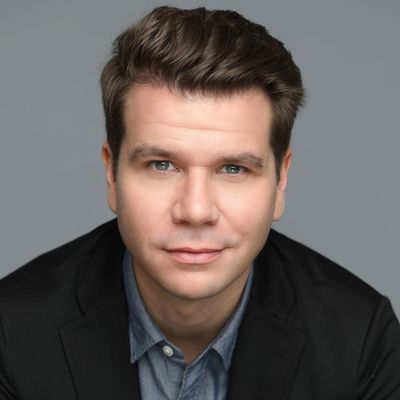
Kevin David Thomas is an actor, music director, broadway coach, and co-host of the acclaimed podcast, ‘Behind the Curtain: Broadway’s Living Legends’. He has been on faculty at the Professional Conservatory of Musical Theater at NYFA for 10 years. Kevin performed in the Broadway revivals of A Little Night Music (cast recording) and Les Misérables. As a music director/musician specializing in new works: A Tale of Two Cities (Broadway; asst to MD), Little House on the Prairie (Nat’l Tour; Asst Music Sup), Marvelous Wonderettes: Dream On (world premiere; cast recording). He is a graduate of Baldwin Wallace University.
SOURCES
Oklahoma, Original Cast Recording, Decca (1943)
Oklahoma!: The Complete Book and Lyrics of the Broadway Musical by Oscar Hammerstein and Richard Rodgers, published by Applause Libretto Library (2010)
Oklahoma starring Shirley Jones and Gordon MacRae, directed by Fred Zinnemann, RKO Radio (1955)
Oklahoma starring Josefina Gabrielle and Hugh Jackman, directed by Trevor Nunn, Image Entertainment (1999)
OK! The Story of Oklahoma!: A Celebration of America’s Most Beloved Musical by Max Wilk, published by Applause Books (2002)
Oklahoma: The Making of An American Musical by Tim Carter, published by Yale University Press (2007)
Transcript
This transcript was automatically generated and might contain errors.
[0:18] Andrew Child: Oh, I'm Andrew Child and welcome to Fifty Key Stage Musicals, the podcast, a companion piece to the Routledge Press publication Fifty Key Stage Musicals, which is available for purchase by going to Routledge.com or clicking the link below in today's description.
[0:36] Andrew Child: Today's episode focuses on chapter 11, Oklahoma.
[0:40] Andrew Child: And with us today is author of that chapter, Kevin David Thomas.
[0:46] Kevin David Thomas: Hello, Andrew.
[0:47] Andrew Child: Hello, welcome. We're so glad to have you with us today.
[0:50] Kevin David Thomas: Thank you.
[0:51] Andrew Child: Kevin David Thomas is an actor, music director, Broadway coach, and co-host of the acclaimed podcast Behind the Curtain: Broadway's Living Legends. He has been on faculty at the Professional Conservatory of Musical Theater at NYFA for 10 years. Kevin performed in the Broadway revivals of A Little Night Music, the cast recording, and Les Misérables. As a music director and musician specializing in new works, he was the assistant to the music director of Broadway's A Tale of Two Cities, the assistant music supervisor for the National Tour of Little House on the Prairie, and worked on the world premiere of Marvelous Wonderettes: Dream On. He is a graduate of Baldwin Wallace University. Welcome, Kevin.
[1:36] Kevin David Thomas: Why thank you, Andrew.
[1:38] Kevin David Thomas: Hello, listeners. So we're gonna be chatting today a little bit about your chapter on Oklahoma and its historical significance at large.
[1:48] Andrew Child: So based on the title of the book, I would just love to hear sort of your quick pitch. Why is Oklahoma a key musical? Why do we care? Why do we still care about Oklahoma?
[1:59] Kevin David Thomas: Yeah, it's so interesting because it's the one, it's like that show you always learn in your history class, whereas like, what's the epic shows? Well, Show Boat and Oklahoma, you know, and for me, it's all the obvious reasons. It's the first musical really of its era that integrated all of the storytelling elements. Show Boat, yes, they had the music and lyrics that had to further the plot and reflect the character situation. But Oklahoma, literally every single element came together, whether it be the staging, the casting of the characters were the right types, and the dance element. So now you couldn't just do a random dance on stage, which is what they would do at the time to show off a featured dancer.
The dance literally tells the story. And if you took the dance element out of the piece, you would miss major, major storytelling elements of it. One other key thing about this musical is that it was the first time we had a cast recording. There were cast recordings before, but this is the first commercial cast recording that was there to preserve the show itself for entertainment reasons, not just promotional.
[3:05] Andrew Child: And so do you think that having that cast recording has asserted Oklahoma's dominance sort of in our culture? Because it's still a very popular and well-loved score, still a very popular show.
[3:20] Kevin David Thomas: Oh, definitely, and it created the foundation that we still have today. If Oklahoma hadn't been such a massive success in 1943, it ran for like five years; no shows ran that long. And this cast recording, it spread the word far and wide. So now you could be living, you know, in the middle of nowhere really, and if you had a record player, you could get into the world of this show, which was unheard of at the time. So if it can spread the sort of the language to all these people and places, then that will resonate from years and years and years to come. And we'll talk probably about a lot of the other reasons why this show continues to be so popular and be reinvented. But I think it does begin and end a lot of times with the music and lyrics.
That's the part; the songs are what people get attracted to with a lot of musicals, you know. It's like, oh, I love that song. I love that, you know, and it's a very catchy score. I think one of the tricky things with this book and therefore with this podcast is we've gotta limit ourselves to 50, and we can only work on 50 musicals. So when you mention that, I just want to flag that this is one of our few opportunities to really dive into this iconic songwriting team.
[4:33] Andrew Child: So yeah, I'd love to sort of hear from you, with your background as a musician, your background as a music director. Why of all their works together, why is Oklahoma the key one? Why is this the one we're talking about today?
[4:46] Kevin David Thomas: Well, outside of the fact that it's the first one that they did, and they, you know, they Hammerstein— we're talking about Oscar Hammerstein II and Richard Rodgers, of course. They both were writing with two different people before they met up to write this. So Rodgers was famously known to be with Rodgers and Hart, Lorenz Hart or Larry Hart, who was unfortunately, you know, an addicted personality and slightly depressed and had a hard time putting pen to paper. And then Hammerstein had written with Jerome Kern; that's who they did Show Boat with. And they were both sort of looking perhaps to not cheat on their partners, but look for something a little new. And they both spied this project. And you know, long story short, they said, let's just try this out.
But the difference this time around was that Richard Rodgers, who had usually written the music first, and then the lyric would be thrown on top of that, now he's writing music for a lyric first, which anyone out there might know that, you know, if the lyric can definitely inform a writer what kind of mood, what kind of feeling, what kind of sensibility you're going to evoke into this music. And I think that was a total game changer for the Richard Rodgers talents. You can completely see a change in the musical tone and style and palette based on his older stuff with Rodgers and Hart and then Hammerstein. But they had so much to lose. I mean, this was a— no one thought this was going to be a hit.
The theater guild who produced it, they had done a bunch of shows in the past, a lot of famous plays, like by O'Neill and stuff, but they were in debt, and this had every reason to fail. Most of the shows at this time period usually had a bevy of women to open up the show with legs kicking and all. I mean, that was this in the 40s, and that was soldiers on a break from the war, were going to be sort of taken away from their problems, escapism. And here you have a show where the women don't come out for the first 40 minutes. The show starts with a bare stage and an old woman churning butter, you know. It doesn't make any sense. And yet the troops loved it. They loved that. And it was the hit because part of the reason was this music. They really infused such life, and they gave you something to connect to with the story, with all of these storytelling elements coming together, as we were mentioning.
[7:09] Kevin David Thomas: And there's something so wholesome about Hammerstein's lyrics. So those sort of coming first puts in context this whole opening pastoral scene. It's very poetic. I mean, the corn is as high as an elephant's eye, and this is a cowboy who's just like talking. You can, you know, the actor can justify why he says that, but it's still on paper, that's a very poetical kind of way to introduce yourself to the audience. But I think it literally gives an audience something to hold on to and something to associate with, and it becomes very, very accessible, to say nothing of the music. I mean, when you play a cast recording of this show, everybody knows the songs. Everybody knows songs from Oklahoma, and they're good songs. I mean, they're solid songs.
[8:07] Andrew Child: So I'm curious about, do you have a connection with Oklahoma specifically?
[8:07] Kevin David Thomas: Yeah, actually, funny enough, I just realized 20 years ago this year I got my equity card. So that's how you join the union; the union is called Actors' Equity Association. I got my Actor's Equity card doing Curly in Oklahoma. I don't know why I was playing Curly at 21, but I was playing Curly in Oklahoma at Weston Playhouse in Vermont, and that was 20 years ago this year. It was that show that was my sort of introduction professionally to the business. So I guess I have a deep connection to it. But I will say, researching to write my article, I did a lot of research, and like I said at the top of this episode, everybody knows the history, you know, the history lesson. Oh yeah, Oklahoma's a big deal.
But to really do a deep dive into understanding what a legacy it had on other shows, that other directors now had to cast parts that were the right type in the right characters and the right people for the parts. Choreographers would take inspiration from Anges DeMille, and people like Michael Bennett, you know, would do A Chorus Line, and that's all about dancing. Andy Blankenbuehler, you can trace all the way to Hamilton. Some of that storytelling is, I believe, here because of the legacy that Oklahoma began with having this integral dance portion of the evening. Other writers of the day—so we were talking about Rodgers and Hammerstein, and you know, most of the musicals in the 1940s were kind of frivolous.
They were silly, you know. If you were a major star, you had your hit songs that would travel with you from show to show. Now you had to write for the situation. You couldn't just write. Irving Berlin famously was like, I'm tapping out because I'm too old for this. He did, you know, he did Annie Get Your Gun, and he successfully integrated everything. But then when he did Mr. President a couple of years later, the critics just were brutal to him. They felt like it was just silly, and he knew it, and he really got out. But Cole Porter, they all had to kind of change up the way that they were making musicals and write their Oklahoma. You know, Cole Porter did Kiss Me, Kate. All the elements came together; it was no longer just silly, frivolous fun.
So yeah, it really changed everything. And really, it's more than just saying, oh yeah, they were a big deal; they were a big deal. The show's a big deal. It really changed all aspects of theater to evolve where it is today.
[10:30] Andrew Child: Well, and even when you take just those two examples, Kiss Me, Kate and Annie Get Your Gun, there is still sort of a plot piece in there that we're gonna perform some songs within the show, within the show, you know?
[10:47] Kevin David Thomas: Yep.
[10:51] Kevin David Thomas: Yep.
[10:52] Andrew Child: Just as Show Boat does.
[10:54] Andrew Child: Just as later great musicals do. So I'm not knocking these, but you know, even as we're talking about contemporary things, Oklahoma didn't rely on that.
[11:02] Kevin David Thomas: Not one bit, not one bit. And that this element that we're talking about, this dance element, you know, I said earlier that if you took it out, you wouldn't understand the story. Well, the big, you know, the famous ending of Act One is this thing called— it's a big ballet, right? The dream ballet. And this dream ballet wasn't just dancing; it wasn't just, you know, let's just put on a big spectacle of fun for the audience. The ballet is called "Laurey Makes Up Her Mind," and it literally is Laurey having this nightmare about who she's going to take to the box social. If she takes Curly to the box social, you know, if she takes Curly in her dream, he dies. So she thinks, I can't go with him. So now the audience goes to intermission with like a secret.
They know something that none of the other characters know other than Laurey. They get— we're like in on the secret. So when we come back for Act Two, we're like, oh, I know why Laurey's gonna, you know, we're gonna look at Judd now because, you know, she had this dream, and we watched it through dance. And it really is integral. I mean, there you go. You can't take that; you cannot remove that element. So it's pretty cool.
[12:06] Andrew Child: So with your experiences with the show and also your familiarity with the show, what do you think? What are the moments? What are the songs? What are the characters? What are audiences still to this day latching on to? What are they resonating with? What is keeping it in our cultural obsession?
[12:26] Kevin David Thomas: Yeah, like why do we still come back to it? It's interesting. Well, you've got— they do have like the stock characters, right? You've got your lead couple that they, you know, they sing the not love love song, you know, people will say we're in love, where they we can't come out and say it, but we're gonna— if they do it right, we're gonna feel you guys like love each other. But it's that sort of like, are they gonna end up together? You know, we know they are, but there's that sort of leading character. Then you have like the secondary comedy couple, you know, Ado Annie and Will Parker.
[12:54] Kevin David Thomas: And again, you can latch on to their sort of like almost puppy love, and it's a really sweet, innocent kind of love, even though she says, I, she sings, I'm just a girl who can't see no. Um, but we kind of relate to that. So we have two different kinds of people that we can relate to, and I think that's a big part of it. Um, and I think there's also this element of in the traditional way they did it, there's Curly and Judd. Judd's usually the bad guy again in the revival, they changed all of that and they kind of flipped it, but um, but we still have these competing personalities, and I think that a lot of people can relate to that as well, is like, oh, there's the bad boy, and then there's like the cocky guy, and who's she gonna go with?
And there, you know, there's always gonna be that kind of you see it on The Bachelor, you see it on TV all the time, you know, and I think that's something that you can relate to as well. Um, and then of course, there's just it's a happy ending, you know, you see there's another state in our union, and it's a very Americana kind of nostalgic feel to it. That we love a good story in the wild west. Um, and I think there is that sort of yeah, Americana vibe to it as well.
[13:56] Andrew Child: So when you mention a revival, are you talking about the most recent one?
[14:00] Kevin David Thomas: The Daniel Fish one, yeah.
[14:02] Andrew Child: There we go. All right. What rings true about Oklahoma that is still in existence in this revival, which for listeners who don't know, was a very pared down, very radical reimagining staging of Oklahoma?
[14:30] Kevin David Thomas: Completely. To paint a picture for you, listeners. If you didn't see it, when you walked into the Circle in the Square Theater on Broadway, which is almost in the round, it was three quarters. You walk in, and the first thing you see is guns all over on the walls of the theater. Just guns, guns, guns, guns, guns. So that's the first impression you get. Is this like, whoa, we've got a lot of guns in here. Then it's an interactive piece. So the audience is, the lights are up almost the entire show, except for a couple sequences where they go into crazy land with cameras, and there's the Judd Curly scene. If you know it, it's all in dark, it's black and white. You only see a close-up of their face projected on the screen.
It's wild. Um, but the rest of it, you can see the people sitting across the audience from you. It is very much like, oh, we are in this town together witnessing this piece. Um, they did not change a single lyric or, you know, book scene. They did reorchestrate it. But um, Daniel Kluger did an amazing job paring it down to almost be like, um, like a barn storm, just like a good old-fashioned hoe down kind of orchestration. So you could, and the band was on stage. Um, like, you know, we're talking guitars, fiddle playing, uh big old bass, uh very, very country folksy kind of feel. Um, and yet in that, Daniel Fish made these reevaluated the relationships and the characterizations. Curly is no longer sort of this, you know, swag, you know, has some swag, this like cool cowboy.
He's this sort of, I would almost say very cocky, almost uh maybe slightly misogynistic, you know, sort of not the typical good guy. He's got a little more darker qualities to him. And then Judd becomes almost a sympathetic outsider, a loner, a person who doesn't belong. Um, and we almost get more sympathetic to Judd, and we almost dislike Curly in this revival. Um, and then I don't want to spoil the ending, but they really, I gas, I saw the first preview and I had no idea when they sing the reprise of Oklahoma and they sing it to the audience. Um, it was very aggressive and it was very scary. Uh, it was a very scary moment, especially when the murder happens, which is also basically in, not to spoiler alert, it was in complete cold blood.
He just like, he just shoots Judd. Uh, and it was, there's blood everywhere. I mean, we're talking this is like visceral production. Um, and yet at its base, they wanted to get a human reaction. And I definitely think they did. I interestingly enough, I read reviews of it in when it would toured in Oklahoma, and they said that at during curtain call, almost half the audience got up and left because it was too much, it was too intense, too, too, too, and perhaps too non-traditional from the way it's supposed, quote. I might, you're these are my air quotes, supposed to be done.
[17:16] Kevin David Thomas: What I thought was so interesting about that show for me at the time that it opened, I was living in Boston, and I concurrently with that opening off Broadway, the North Shore Music Theater in Massachusetts was mounting a big production in the round that was the pastel colors, period costumes, big dopey grin on Curly's face. I did not see it, but it was sort of this moment where there's a rift in the atmosphere where someone is doing a revival of Oklahoma, that's one thing, and someone else is doing something totally different. So I'm curious, do you think after the world has seen on Broadway, off Broadway, and then touring this Daniel Fish production, do you think there's a future for the pastel washed, period costume big dopey grin Oklahoma?
[18:16] Kevin David Thomas: Yeah, I love the big dopey grin. You're so right. Um, yes, actually, I mean, this is, my answer is yes. I do believe that just as there are people that could not stand that revival, they just hated it. But just like, you know, in the world of opera, you know, you can reinvent an opera, change it up, do it a little bit different, and still get different feelings out of it. It's art. But I do think there's always gonna be a place for the nostalgic, good old-fashioned traditional version of Oklahoma. And I think that's valid. And I think there should be. I think we do need to see it the way it was intended by the authors originally. But at the same time, I definitely think that we're gonna, we live in a world where we have both now, that we are allowed to, that we're allowed to have, you know, maybe someone will do something else with it.
Maybe there's more left in the old show, and there's some other reinvention we can have. I mean, that's, I think also a testament to why it is a key musical and so brilliant, because you cannot change a lyric and not change the book scenes and yet still find other, you know, sentiment in it and other information. And you can challenge an audience in a whole new way. I think it's amazing that people were, you know, walked out, were up in arms, were fired up. I mean, isn't it? I think that's what some art is supposed to do. And yet some art is supposed to be, just like Oklahoma can be. Just sit and let me see my nostalgic escapism. Let me just get lost in the world of glory and Curly and the, you know, Midwest back then and this state becoming state and not worry about guns and all of that. And then there's the other side of it too. So I don't know. I think there's, I hope we can have both.
[19:47] Kevin David Thomas: I think that almost posits Oklahoma like beyond most musicals that we can talk about. You immediately mentioned opera, because that's where sort of these avant-garde auteurs can come in and sort of do what they want, or Shakespeare or, you know, Greek drama, that there's something about, well, it's gonna keep being done, so I'm not vilifying anything, I'm not desecrating anything. Um, the Oregon Shakespeare Festival a couple years ago did a gender bent and sort of made the two key characters gay. Um, and then the other production that comes to mind for me was years and years ago, Trinity Rep in Providence did a production that was all sort of just in front of like house wrapping, like the Tyvek stuff, and it was sort of like riffing on this idea that we're seeing sort of a colony in progress, and they all perform downstage with this just big eyesore of a wall.
Um, again, it's just there's so much that can be done, which I'd also love to talk about something that is very accessible to the readers. Um, it's very easy. I don't know if I can say that out loud, um, to find the recordings of the Trevor Nunn and Susan Stroman revival.
[21:13] Kevin David Thomas: Oh yeah, yeah. And it's on Broadway HD, I think. You can watch it with Hugh Jackman. Um, yeah, and that was more, that was a more faithful retelling of the, you know, the original. It sort of had like the big, you know, the big vast set where you really, you see lots of space because that's what you associate with Oklahoma. But that Trevor definitely mined some of the darkness that the, and the conflict that goes on there, especially in Act Two. He definitely shined a light on that and the sort of the sexual energy too, because it's there is definitely, you know, you definitely can feel some of that. Is Laurie attracted to Judd? Is it, you know, Shula Hensley played him in that revival? And he's like a big strapping burly fella, and you know, and of course, not that Hugh Jackman isn't, but you know, you've got two different sort of types there that Laurie could be perhaps attracted to, and there's a visceral sense there.
Um, and I do find, I do think it's interesting that that Trevor Nunn's production adhered to the original concept, but also found some of that darkness as well, which probably helped pave the way to get where we got with the most recent revival. Because there is something, it is darker, but you're right, it is more in line with the original.
[22:25] Kevin David Thomas: And I also think it's just a testament to the progression of time that it's sort of, oh, we're gonna radically reimagine Oklahoma by putting Laurie in overalls, right? Versus we're gonna radically reimagine Oklahoma by you're gonna come in and see a bunch of guns. Right, right, right. And Curly sings, "Well, what a beautiful morning" with his guitar, and you know, Sarah is serenading almost, you know, or we're gonna do a scene where we turn off the lights all of a sudden and we only see their faces on a camera in the back. I mean, this also reminds me of, we were talking about weird, you know, avant-garde productions or new takes Evo Van Hova, who you know did that West Side Story where they did all the multimedia and he often, he often will do just like a view from the bridge where they're like barefoot the whole time.
I mean, like he's gonna, you know, talk about, you know, reinventing things. Um, but yeah, I'm here for it. I'm like, let's, but why, what else can we find? Let's learn something else. We can still learn it the other way. Let's learn something else.
[23:22] Kevin David Thomas: So what musical, because West Side Story has kind of undergone this treatment, and we've seen Oklahoma sort of undergo this a tour treatment, and then there are all kinds of things all over the internet of, you know, oh, watch this clip of this German production of My Fair Lady or something, and it's like crazy stuff. We can't even, like how do you even come up with that?
[23:44] Andrew Child: Um, I love it. It sounds like you're into it.
[23:48] Kevin David Thomas: I do if it serves, if you're doing it to look for some new, you know, looking at it from a different point of view. I'm not so into it just to like do it on for its own sake, you know, or like there is, there's like a very, I don't know if we'll keep this, but there's a famous story, and we talked to Martin Charnin about this on my podcast. But there's a famous production of Annie, where they at the end of Annie, um, instead of it just ending happy with Daddy Warbucks, in this production that shall remain nameless, she wakes up back in the orphanage. Like it was all a dream. And she's, uh, I think they got a cease and desist allegedly. But um, but yes, um, but no, I'm not in it to change up or to radically, I don't know, just do it for its sake.
I'm into it though, if it's like a, like, oh, this or this revival, you know, where we're really, we're honoring the piece, we're honoring what the authors intended, but then we're saying, yeah, but what if we sort of change these couple things here and there? And what can we glean from that? And I'm here for that. And I think we're gonna start to see that with the older shows. You know, we're a relatively new art form, right? I mean, musicals, if we're talking this is a key musical, this is 1943. So, you know, 70, 80 years we've been around doing musicals, and I think, you know, an opera's been going for hundreds of years. So I think it's time that we get to reevaluate some of these older shows, just like we're doing what we're seeing like with Eva Van Hova with the plays.
But I think it's time that we start doing this with musicals as well. Whether or not it's commercial, I don't care. It could do it at a regional theater, do it, you know, that that's where I mean this Daniel Fish production started out in a college. So I mean, great. Let's, great. That's wonderful. Thank you. Let's keep playing. Do you have a show that in your mind is dying for this treatment, other than obviously Annie, but you know, it's probably because it's just, it's going on right now, and I'm a late convert to this show. But the Music Man, I think is a really interesting piece.
[25:43] Kevin David Thomas: It is like Oklahoma because it is the sort of Americana. Now, this is a little bit more Midwestern than out in than a territory state. But um, I because I know that this revival is not this revival's pretty, well, in some instances it is, but it's pretty faithful to the original idea of what Music Man is uh casting aside. But I would like to see a retake. I would like to see uh sort of an update on that, a new take. I don't know what it is, but I would I would totally be here for that. Um and I'm a late convert. I was I thought Music Man was all fluff and no stuff, and I was completely, completely wrong. And I did a deep dive into it last year during the pandemic, and I read the script and watched the movie, and I thought, oh my gosh, this is like I get why this won the Tony Award over West Side Story.
It's just so it's brilliant. It just it turns the musical on its on its on its tail, and I really I dig it. So I'd like to see someone kind of play with that a little bit. I know there was a production a couple summers ago out in the Berkshires that did get in trouble. Um, because they tried to grapple with at the time, there was a lot going on with Wells Fargo and Wells Margo being boycotted. So they tried to kind of riff on that and use Amazon boxes. I know the estate didn't love that. And the other thing that I thought was so interesting, um is that there was a black actress playing Marion, so they chose to omit the song My White Knight, which the argument against doing that was that white knight doesn't necessarily refer to his race, like it's referring to his armor.
Um essentially they had to uh put it back into the production they needed to use it. Um, but I do think it brings up an interesting argument there. Like, if what was their reasoning, what was going on in the rehearsal room that they made the choice to omit that song, and at the same time that that was happening, um there was the production in DC, I think, with um what's his name as Harold Hill. Um I can't think of it right now. Opposition I should I should know opposite Jesse Mueller, I think was doing no, I forget who, but there there was a black actor playing Harold Hill, and it immediately it stirred in my mind. I wonder if they are singing My White Knight, and they have a black actor playing the man that she spoiler is going to marry.
Right, but you have to have that. So I mean, it's an integral part of the story. That that but you know, and I mean, like that's where I'm like, you can't, you can mess with it, but you can't. Yeah, I'm yes, diverse casting, you know, people with disability can all let's let's let's try let's do it at all. But I don't think you can I don't think you I think you have to be more creative and and find a way to keep it and uh and find your way in, much like Daniel Fish did with this Oklahoma or Yva Venhova with uh West Side Story. Um, although they did sort of, I think they changed where they did Officer Krupke. But um I was gonna say, and he did um omit I Feel Pretty. You're right. Which is that's right, uh which is I think with with sometime's blessing, I want to say, because it's never well, it was never one of his favorite lyrics, I know, but you know, no, it's it's really interesting.
It's uh it's yeah, those are and I think these are really good problems to have because we do need more diversity and we do need more, you know, casting that's like that. And yes, these shows were written by a bunch of of for the most part, a bunch of white dudes, you know, in in the 40s and 50s and 60s when you know their mindset was just was different than and the expectations were, and uh not right or wrong, just it was. Um, and so I think that the way we grapple with that is is important, you know, just like with you know, Carousel, like Carousel has to be more than just a musical where the guy like slaps her at some point, and the you know, right it's it you have to deal with that. That it that was how it was written, but then how can you get into that, get out of that? How can you use that for today's audience? And I think that's a challenge for directors, but I don't think it's should be avoided.
[29:42] Andrew Child: No, definitely. I think and these are great conversations to sort of be generating because I up until I'm reading about that production, not singing My White Knight, it never would have crossed my mind that that song could be an issue. Could be something that you'd want to omit. I'd love to know from the standpoint of a music director, how would you be approaching Oklahoma if it landed in your lap right now and you have to music direct production, what's going through your head? What's that process look like?
[30:16] Kevin David Thomas: Well it's interesting first of all, I I would want those orchestrations. I just love the folksy kind of that, you know, you're the gone are the days you're gonna get a full orchestra, you know, doing the full Robert Russell Bennett orchestrations. I highly doubt I would get that. Um but it it's a you have to tow this line of great singers that can honor these beautiful lush lines that can, you know, a soprano that can sing, someone that can belt I can't say no, but then it has to also be people that can handle this language. You know, that's why in auditions it's so great to see people sing traditional musical theater because if you can handle that and you can make that real and you can make me believe your story and sing it, then I know you're gonna be able to handle contemporary language because you know that's just so much more accessible, you know.
But this language is so so more lush and the thought has to last longer while you're holding these notes and you have to you have to sustain the ideas longer and no longer can we just stand and sing. I mean that's a lot of times if you saw some of these productions there was you know the acting was okay but it wasn't as in depth as we have today. Of course that's just the evolution of it. But I would need that I would need some some strong strong singers um that that don't make it all about the singing you know that make it really about that. And I would want, I would boy, I would want that, I want that country sound. I love that. I want it more string instruments. I want like a guitar and a banjo. And you know I I I just would I love that. And I I um yeah, that's I would want Daniel Kluger to uh come visit. And yeah. Amazing. That's a great question.
[31:52] Andrew Child: Do you think there is another Rogers and Hammerstein musical that you would advocate is as significant as or on par with, or for students of musical theater, is there another musical or another few musicals that they should be paying equal attention to?
[32:13] Kevin David Thomas: Yeah. It's interesting because they Rogers and Hammerstein never rested on their laurels, right? When they they did Oklahoma and then they're like, oh, let's do a smaller show. And then they tried to do the one of the first concept musicals that inspired Sondheim to do Company, famously, this musical Allegro, which was not a hit, but it was sort of like it was like a musical about the life, you know, living a full life and and the moments of of your life. Um, and uh and then they talk they go to Siam and they're gonna do the you know, the King and I, and then or before that, doing Carousel about this sleepy, you know, town in Maine. But I would definitely say Carousel because the character you have a bad guy, that's the lead, you know.
Billy Bigelow is is not a good guy, and yet he usually in a musical, except for maybe Pal Joey, you don't have a cat as your lead. You just you just don't do that. Um, and so how because how how you can can you make him sympathetic by the end? And what can we learn from that? But they did, and they they do, and they they do to do that. So I would definitely check that out. Uh it has a stunning, stunning score. That is that has to be one of their greatest scores. My god, the waltz, like the Carousel waltz is just it when that starts uh in the top of the show, it is just absolutely stunning. Um and I've got it, of course. I mean, I feel like I'm so not original with my answer, but South Pacific.
I mean, it this is when I saw that revival at Lincoln Center directed by Bartlett Sher, and that they did use the original full orchestration. Uh, and when that, you know, the whole deck moved back and you saw the orchestra. I mean, everyone like burst it into tears because it's the music was a character in itself. But they're here, we're dealing with racism, and we're dealing with, you know, uh, you know, World War II, and and yet we're still gonna entertain the troops with you know 101 pounds of fungi's my honey but then we're also gonna say you've got to be carefully taught the way you think and the way you believe and what your what your opinions are about other people that are different than you.
Um, I mean, talk about way ahead of your time. Um, so I think South Pacific has gotta be uh has got to be on the list. Um, and I think that they the revival, the most recent one with Kelly O'Hara and Paolo Jot, it was so good because again, the it held up. It's it's it, you know, they didn't change anything. They added one little bit at the in act two, but really they it's it was all there to begin with. We just have updated it to our sensibilities the way we are today. Um, and I think that's again a testament to why these shows are so important because they they they aren't just little museum pieces that are stuck in when they are, you know, so many shows can't be revived today because let's face it, they the books weren't good enough and they're they're gonna the scores are great, but we're not gonna see certain shows um because they just are stuck on the era and the mentality of where when they were in. But these are these Rogers and Hammerstein shows really somehow make it and they still can be revived today. And that's that's pretty incredible.
[35:05] Andrew Child: Do you think it will continue to be important for students of musical theater to know these shows that you're mentioning?
[35:13] Kevin David Thomas: I mean, you're speaking to someone who's obsessed with the history of musical theater. So I mean, that my answer is always going to be of course, yes. But I think it's important to give the why and the wherefore, and like what you know, what is the reasoning behind why these shows are so good and why are they important? And I think it's important for students to understand what you know what they can learn from them and how um they are they are they're they're not these dusty old things from a bygone era that they are just as important now, that the issues that the people were going through in these shows back then are can be translated to today, and we can still learn from them. Um definitely I think we we where would we be without that stuff? Uh and I think we have to keep exploring it for sure.
[35:57] Andrew Child: So I'd love to sort of loop back around to one of the first things that you talked about was the significance of Oklahoma having a cast album. And um, it immediately called to mind a lot of questions for me, but I was like, no, we need to talk about Oklahoma today, and then we can talk about cast albums. But you've worked on multiple cast albums, so I'd love to know is this mentality of preservation, which I think we can see was so pertinent for Rogers and Hammerstein that they had a hand in uh publishing their own music, they had a hand in producing movies based on their shows to varying success. Um, we'll be generous there. Uh some of those movies hold up okay. Yeah, um, some of them not as much, but is there still is that why we're still making cast albums? Are we still thinking about preserving and carrying on something that is otherwise so uh just in the moment and then it's gone?
[37:05] Kevin David Thomas: Yeah. Oh, definitely. Now, uh spoiler alert, nerd alert, everyone. I am a cast album collector. I have been collecting my whole life. I love cast albums. Um, but I would still be that way even if I didn't do this for a living. Um, but yeah, no, I I do I think that it is a way to hold on to something. And yet cast albums not are not always made to sh reflect what was done in the theater. It's a lot of good, you know, directors of the cast or artistic directors of these cast albums, they're trying to tell it's a version of what happened in the theater, but really give you something uh an at the essence of what was going on, you know, at this one time, but it's gonna live forever. Obviously, these cast albums live forever, and it's a way of holding on to, like you said, something that just like like flies away like like a towel in the wind and it's gone.
And and we it's a way for us to hold on and feel like maybe that we were there, we can get the essence of it. I hope it never goes away. I think the problem is that they just cost so much money. Um, but with the advent of technology and the ways of of doing things, I think people are finding ways to have these recordings um as long as they they get done somewhere and somehow. And maybe we're not gonna have, you know, I bought my first album in the longest time because I just don't I I haven't been buying albums as much, but I'm a huge fan of Carolina Change. And so I thought I am gonna buy that cast album. And it was the first time I got the excitement of taking off the shrink wrap and all of that, like used to have like I said, nerd alert. Um, and there is something very uh, I guess sacred about it, that it's it is something that we get to have forever.
[38:35] Kevin David Thomas: And now with digital music, great, sure. I'll collect it that way as well. Um, but yeah, no, I it's I don't think it's ever gonna go anywhere because I think that is um the shows may come and go, uh productions may come and go, but the music and lyrics are the things that we hold on to. We love what we love and cherish. And um, yeah, so I uh no, I I think that I remember there was like a time like in the 90s and in the aughts where a lot of record albums couldn't they couldn't find a reason to to make a profit. They couldn't find a way to make it possible. And now I think with digital music and and and um we found ways of getting around that a little bit, uh I hope. Um, but yeah, so uh yeah, most of the time we do get we get most things get recorded in one way or the other.
There are shows though that I feel like we all have to sort of sit with the loss of that never that cast never got together to record, whether it's because it just wasn't happening, or I often think about there are some replacement casts for Broadway shows that I would think it's like listen, I don't know how many people will, but I'll put some money down if you get them in the studio and I can have this to listen to. Do you have shows like that that you wish had been recorded that you wish were preserved in this way?
[39:54] Kevin David Thomas: Well, one came to mind instantly. Um, and that was a production very recent um of this amazing musical that was sort of a revival but sort of a history lesson. It was Shuffle Along. This is like the cast of this was unbelievable. Audra McDonald, I mean, like unbelievable casting. And what they they cannot release this recording. I believe they recorded some of it, but they you're not gonna what? How could this this is a history? This is like one of the first musicals for black people by black people in the in the in the 30s, and we really we can't get a recording of that. So that one's that one really burns me. Um and then I uh yeah, I also thought instantly of replacement casts, and there's a famous production.
Uh remember, you remember Kiss of the Spider Woman, Kander and Ebb? There was the original production with Chita Rivera, but then Vanessa Williams came in and they re-recorded all of the tracks with her edit. It's still like the same, they just redid the voice and they you know they mixed it in there. I I don't know, that cracks me up, but we don't get that. No, we don't, we don't get that very often. And there's um I can't think of I'm trying to think of someone that I was like, Oh, I wish I had seen you know, this replacement. I mean, I'd probably say something cheesy like Carolee Carmello and Mamma Mia, but I okay that's nice. I actually I actually went to see Mamma Mia to see Carolee sing it because I'm such a Carolee, I'm a crazy Carolee fan.
[41:14] Andrew Child: I think that's very valid. I think there's nothing wrong with that. I'm also a big fan of hers. Um, do you think when we're seeing these uh productions sort of archived or filmed and put on Netflix or put on Disney Plus or whatever streaming service they're put on? Is that an extension of this same mentality, this need to preserve something? And do you think that that's something we'll see continue?
[41:44] Kevin David Thomas: Yes, I do, I definitely think we'll see some of that continue. Um I uh I it's interesting because we're dealing with now, you know, higher ups, right? Like it's not just like theater producers, we're dealing with Netflix or or companies that are trying to make money as well. And I'm not I'm thinking more of like actual stage productions that are filmed, not like taking the prom and then Ryan Murphy going to make a movie of that's uh that's a whole completely different set of circumstances. But I think of like Diana, the musical. Let's just put it out there. Let's talk about it. Yeah, let's in the room. Right. I totally I've got to say, I uh we all know if you've listened to Diana, then you know, and I don't need to say anything.
If you haven't, please go watch it on Netflix. But it's it is what it is, and I find it very entertaining. I find it very entertaining. I enjoyed every moment, it didn't stop me from going to the theater. I definitely saw it. Like actually, the day they announced closing to the cast, that was the night I saw it. It was electric. Um, I think I might want to watch it again on Netflix. I I mean, I just you know, and yeah, it's got its little issues, but I'm here for it and I enjoy it. I am thankful that it was preserved. I'm thankful that everyone's gonna get to see Aaron Tveit and Gianna DeWall's performances because they they are they are acting the you know what out of it. It is unbelievable.
Um, and uh same thing with you know, it will even like uh well, obviously Hamilton. I mean, we we now people that can't go to afford to see something on Broadway or see the national tour, they can see what all the fuss is about, they can see why is this such a magical thing. And I it's fun to see musical theater, the art form, at least in my lifetime, when I was younger, it felt like oh you like musicals, and now it feels like musicals are at the cool table again, and we're you know, we're we're seeing a resurgence, and we're seeing uh how you know. Look at the uh the the Academy of I mean the Golden Globes. Look at I mean it's per Lynn Manuel's permeating everywhere. People are per. I mean, the West Side Story is directed by Steven Spielberg.
I read the first you know 10 pages of the script and I was riveted by it, and it's still the same, you know, West Side Story we all know and love. It's just got a little more fire in it. But oh my goodness, it it works, and it's cool to see um it being taken seriously, you know, and really and really releasing.
[43:56] Andrew Child: Do you think having the shows being more accessible? Because I mean, when you talk when you talk about Hamilton and not being able to afford to see it on the tour, that's most people. Those tour tickets are hundreds of dollars, those are hundreds of dollars. Um, do you think that that has to do with it becoming more popular? It permeating to use your word, other parts of the culture?
[44:22] Kevin David Thomas: Yes, and there's just greed. I mean, it's producers making money. Let's just let's call it what I mean. Like that you talk about you know, the Music Man on Broadway right now. That uh as we record this, you've got Sutton Foster and Hugh Jackman. Those tickets like are stupidly expensive. I mean, it is a rich people's thing if it's a if it's a hit thing, if it's a hit show. So I believe that it should be accessible. I believe that all you know, not just the first you know, row for ten dollars, but like, you know, theater is meant for for people. And so if it means that we record more and we we throw it on a platform, sure. I say yes, I say let everybody see it because it shouldn't just be for like, you know, I mean, I uh one of the first shows I ever saw with my family was Ragtime, and I'm the 90s. I remember my mom and dad were like, Well, you know, this better be good because we're spending like at the time it was like for a family of four, it was like over 200, and that was a lot of money.
That was like a lot of money. Um, and now please, it's like that'd be over 400, 500 for a family four. Um, if it's a hit show, forget about it. So, uh yeah, no, I I believe the theater has got to be accessible and it's got to be, you know, in any way possible. So I'm I'm really happy to see this. And I say this new because it was as early as 16 years ago when if you remember, Legally Blonde was filmed for MTV, and that was a really big deal. They really believed, and we I interviewed the producer of it, um, Hal Luftig. Uh they really thought that was gonna take they were gonna take a hit, that it was gonna ruin their chances of having people come see it because the people would just stay home because why should I go see it live?
I can just watch it on MTV this one night. It wasn't even streamed, it was just this one night you could watch it. Well, no, it did the complete opposite. Now, and now it's like yeah, go for it. Bring it.
[46:16] Kevin David Thomas: Bernadette Peters. I'm sorry, I I'm I'm so sorry. Your the sound got all wonky for a second, but I missed that last sentence. I'm so sorry.
[46:23] Andrew Child: I mean, no worries, let me double check my sound. All of a sudden I just heard you say, mm-hmm, mm-hmm, mm-hmm, mm-hmm over and over again. But now it could be me or it could not be, but I'm we're good now. Can you hear me now? Okay. Yeah, yeah, you're good. So sorry. So when we talk about uh the filmed version of Into the Woods with Bernadette Peters, um, going way back to that, that's probably still one of these foundational things that we see that we seek out, and that probably a lot of us can flag as sparking something and some sort of love of musical theater.
[47:02] Kevin David Thomas: Oh, yes. I think of that one. I think of the Sweeney Todd with Angela. Like these the I feel like any theater kid is like, oh yeah, I remember, I remember where I was when I first watched them. I don't think I got a lot of it, but I definitely was I was like, this is this is amazing. What this is what theater can be.
[47:18] Andrew Child: Oh, of course. Uh and and aren't we so grateful for those? Even the the Sunday in the Park with George as well. I mean, oh well, like thank goodness these were recorded could when they were not doing that. They were not recording these shows then um oh I think that's they're seminal I think they're it is they're like you said they're iconic I mean they are they are and so informative and look what a generation that informed and it and can and continues to inform and I just wonder you know all of these pieces now all of these you know shows are even going into like you know the TikTok musicals and you know all the the way everything is evolving well what's gonna be the next generation what's gonna happen next I I think it's it's really exciting to think what we is in the future you know do you have any sort of inklings any sort of little things you've flagged as people to watch or ideas to watch that are sort of this next level um because I mean I think a book that I'd highly recommend to anyone listening who wants to know more about Oklahoma wants to know more about Rogers and Hammerstein have you read Something Wonderful Todd S. Purdum's book it's on my list actually I highly recommend it I read it in like one sitting on a plane couldn't put it down um but it really does give you this appreciation for these aren't just two artistic geniuses they are everything you're hitting on in this interview is sort of driven home by this book it's like they're thinking they're saying how do we get our music on TV with their Cinderella how do we make movies?
How do we they're thinking ahead, developing new technology. So when you say something like the TikTok musical, I sort of do wonder because of that book, because of the things we talked about in this interview, I think Rogers and Hammerstein would have been all over that. I think they would have loved that.
[49:21] Kevin David Thomas: Absolutely. And it's so I'm so glad you said this because it's so easy to look back, especially if you know mom young. If if I was young and I was like, oh, it's all about TikTok, it's all about I want to do what's new. If you if you look back at Rogers and Hammerstein, they were the Lynn Manuel of the day. They were the hottest of the hot team. They were they were the edgy, they were forefront. So it's almost like a disservice if we look back and think, oh, those old white men are doing their thing. They weren't then, they were to us now, but they really were at the forefront in creating. You can trace, even if we're going to talk about Lynn Manuel, you we can trace Lynn Manuel to them. This is a handed-down art form.
You know, uh Oscar Hammerstein handed it down literally to Stephen Sondheim. Stephen Sondheim, as we've seen from the that letters Instagram has had his hand in so many people's artistic careers, Lynn Manuel included. And and and if there weren't, if Oscar Hammerstein did not exist and you know, put you know, towed the line and tried to push this art form forward, we would never ever have where we have it today. It would never it would definitely not exist the way that we see it, I believe. I'm I it it is it is imperative that we understand that these guys were at the forefront of of where the art form has evolved to today. Um, and I think that it's it's really incredible. Uh good, it's such a good point you make.
[50:42] Andrew Child: Well, thank you so much, Kevin, for being with us today. And thank you, listeners, for joining us today. Please make sure to purchase a copy of 50 Key Stage Musicals by visiting Routledge.com or by clicking in today's show description. If you want to learn more about Oklahoma, please also review the links in the below description. I'm Andrew Child, and thank you for listening to Fifty Key Stage Musicals, the podcast.
© Broadway Podcast Network, All Rights Reserved