

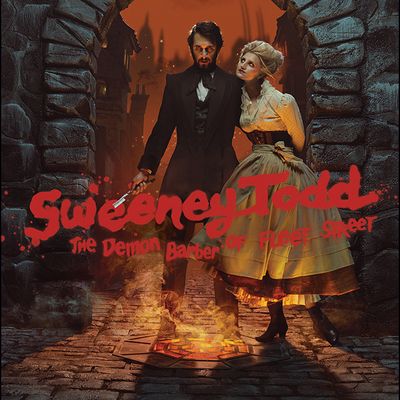
SWEENEY TODD: THE DEMON BARBER OF FLEET STREET. COMPOSER: Stephen Sondheim. LYRICIST: Stephen Sondheim. BOOK: Hugh Wheeler. SOURCE: Sweeney Todd by Christopher Bond. DIRECTOR: Harold Prince. CHOREOGRAPHER: Larry Fuller... Read More
From the show: Fifty Key Stage Musicals: The Podcast
Featured Shows
About
SWEENEY TODD: THE DEMON BARBER OF FLEET STREET
COMPOSER: Stephen Sondheim
LYRICIST: Stephen Sondheim
BOOK: Hugh Wheeler
SOURCE: Sweeney Todd by Christopher Bond
DIRECTOR: Harold Prince
CHOREOGRAPHER: Larry Fuller
PRINCIPLE CAST: Len Cariou (Sweeney), Victor Garber (Anthony), Angela Lansbury (Mrs. Lovett)
OPENING DATE: March 01, 1979
CLOSING DATE: June 29, 1980
PERFORMANCES: 557
SYNOPSIS: Sweeney Todd, a wrongfully convicted man, returns to London to reclaim his wife and daughter only to discover that his wife has killed herself and that his daughter is now the ward, and prospective bride, of the Judge who sentenced him. Vowing to take revenge by murdering the Judge, Todd begins to practice execution on his neighbors whose bodies are then baked into pies and sold to unsuspecting consumers by Mrs. Lovett.
The inspiration for Stephen Sondheim’s Sweeney Todd is examined by Alison Morooney. Fusing the passion for mystery and horror from composer/ lyricist Sondheim and the desire to comment on the oppressive political structures of the Industrial Revolution from director Harold Prince, librettist Hugh Wheeler humanizes the characters from a British urban legend. Though critics lauded the score upon its opening, the musical’s mix of styles and genre-defying designs earned it mixed reviews. This episode argues for Sweeney Todd’s significance as a piece of theatre which, despite its socio-political message, allows an audience to engage emotionally with the characters, contrasting it to the Epic theatre of Bertolt Brecht, which sought to distance its audience.
Alison Morooney is a stage director and choreographer currently pursuing an MFA in directing at The Pennsylvania State University. She has directed most frequently at The College Light Opera Company in Massachusetts and has served as a choreographer at Priscilla Beach Theatre and for Penn State Centre Stage. She has also been on stage regionally and with national tours American Idiot and Nice Work if You Can Get It.
SOURCES
Sweeney Todd: The Demon Barber of Fleet Street, Original Broadway Cast Recording. RCA (1979)
Sweeney Todd: The Demon Babrer of Fleet Street, starring George Hearn and Angela Lansbury, directed by Terry Hughes. RKO Pictures (1982)
Sweeney Todd: The Demon Barber of Fleet Street by Hugh Wheeler and Stephen Sondheim, published by Applause Libretto Library (2000)
Sense of Occasion by Hal Prince, published by Applause (2017)
Finishing The Hat by Stephen Sondheim, published by Knopf (2010)
Transcript
This transcript was automatically generated and might contain errors.
[0:16] Andrew Child: He trod a path that few have trod. Did SWEENEY Todd. A demon barber of FLEET STREET. Hi, I'm Andrew Child, and welcome to Fifty Key Stage Musicals: The Podcast, a companion piece to the Routledge Press publication Fifty Key Stage Musicals, which is available for purchase by going to Routledge.com or clicking the link below in today's show description.
[0:42] Andrew Child: Today's episode focuses on chapter 29, SWEENEY TODD. And with us today is author of that chapter, Alison Morooney.
[0:51] Alison Morooney: Alison Morooney is a stage director and choreographer, currently pursuing an MFA in directing at The Pennsylvania State University. She has directed most frequently at the College Light Opera Company in Massachusetts and has served as a choreographer at Priscilla Beach Theatre and for Penn State Centre Stage. She has also been on stage regionally and with national tours of American Idiot and Nice Work If You Can Get It.
[1:20] Andrew Child: Alison, I'm so excited we get to talk today. So for those who haven't read the book yet out there, could you sort of give us the summary? Why do we care about this freaky weird musical?
[1:37] Alison Morooney: Ugh, this freaky weird musical, you know, it's so funny because I feel that people of my generation, right? Like I'm 31. I grew up with this musical. I grew up a theater kid in high school obsessed with like the recording of Angela Lansbury. Like I never thought of it as this odd, weird thing. But clearly, when it was first being written and being produced, people thought it was crazy and weird. Um, and that's sort of what the chapter focuses on is this idea of um what was this show that combined so many different genres and styles and themes and put it all like in one space? And um what does that look like? And what did that do for the future of musical theater after SWEENEY TODD was written?
And I think what was really cool to discover is that while maybe at the time people were, let's say, confused and um a little bit um curious about what that show was, um after SWEENEY TODD, now we see genre mixing all the time on stage, and it's become sort of more of a normal thing for us to see, which I think is really exciting, and it's cool to have sort of identified SWEENEY TODD as like the thing that started it and the thing that stays in our culture as sort of the best of the best of that idea.
[3:10] Andrew Child: So, what are some of the genres that you would say are kind of slopping together to make this musical?
[3:20] Alison Morooney: Yeah, I mean, so much, but um so it's originated the it's an adaptation, right? Of um a play that was a melodrama that was a penny dreadful, like way back in the early 1800s, and uh Penny Dreadful is like tabloid almost, if you were to contemporize that word. So um it has this fantastic journey of coming from this like lowest of lowbrow, literally a tabloid magazine that cost a penny for people to buy, and it was a serial um magazine, and they would eat it up, eat it up like a, you know, like a Kim Kardashian tabloid now. Um, and so it has this sort of like gory, only in it for the shock value kind of history to it. Um, but then you listen to Stephen Sondheim's score, and you're like, this is so much more.
I hate to use the word sophisticated, but I feel like that's a way to describe it is like it's a symphony almost, right? That score. And so to put those two things together just from a stylistic standpoint is fascinating to dig into. Um, and then you add on top of that, Hal Prince, who directed the original production. You add his idea, and you know, he's sort of the king of the concept musical. Um, the king of wanting to make social and political commentary inside of a musical. So then you add that layer onto it, and it's like this mishmash of gore, horror, opera, symphonic, social commentary, but then it's also really freaking funny at moments too. Like it has this black comedy and this wit um that Stephen Sondheim and the book writer Hugh Wheeler also really enjoyed playing with. So it's just like has sort of something for everyone, even though I don't know that that's the uh the title that anyone would originally like subtitle that with.
[5:23] Andrew Child: Yeah, probably not the tagline, yeah, that we're going with SWEENEY TODD, something for everyone, yeah. Um do you think because I know there was a lot of talk about this uh with the passing of Stephen Sondheim, and so many people had so many things they were sort of lauding and applauding him for, but one of the things we saw again and again was people sort of testifying that these filmed versions of the original Broadway runs of shows like Into the Woods, or in this case of Angela Lansbury and George Hearn doing SWEENEY TODD, that that was such an inspiration for people and such an in to theater for people who couldn't access it otherwise. Do you think that that filmed version is a good introduction to the show?
[6:16] Alison Morooney: Oh, I think so. I mean, I'm biased, that was my introduction to the show. Okay. Um, and you know, there's something I guess I'll again like people who are maybe near my age grew up knowing Angela Lansbury as Beauty and the Beast, like as the teapot. And so that was sort of a friendly way to look at it as like a freshman in high school. Um, and it didn't, but I I think it is. It goes with as well as Into the Woods and Sunday in the Park with George, it's so iconic for people who learn to love theater at a young age because it's so accessible. And I think even though this story definitely has some dark uh themes in it, having it just at your fingertips can be life-changing. And there are kids out there who their favorite part of every Disney movie is the villain, you know.
You know, and I'm not saying go out and be SWEENEY TODD, but what I am saying is like that there's meat there, there's interest there. Um that other musicals don't have. And so to put that on film and show it to people is kind of cool, I think.
[7:22] Andrew Child: Oh, absolutely. Would you say if there are young people listening who don't really know SWEENEY TODD, would that be how you would recommend they familiarize themselves, or would there be a recording that you like or a different in?
[7:38] Alison Morooney: I think that's the in I would I would suggest is the film, and it really is because of the comedic work that Angela Lansbury is doing in that performance. She is so quick and so witty, and it makes it friendlier. Um if you're a music buff and you're a young person, like turn all the lights off and close and close your eyes and shut the doors and like just listen to that original Broadway cast recording. Like the score in and of itself is is a whole other journey. I was listening to it as like a pregame for this interview, and was just reminded like it is earth-shatteringly emotional and laugh out loud funny. Um, but I do think that the filmed version of the tour is the most accessible way to learn the show.
[8:32] Alison Morooney: It's very interesting. In a later episode, I talk with uh Susan Schulman who directed the first revival, um, with Stephen Sondheim's blessing. And one of the things that she said he requested of the revival was cut the organ intro. He never liked it, um, which is so interesting because I love it. I think it's fabulous to do the organ and then hit that shrill factory whistle. But you know, I'm not Stephen Sondheim, so yeah, I mean it's so inter I love that about about Stephen Sondheim. I'm preparing a production of Assassins right now, and so I'm doing a lot of research, and um he was so open to reimagining and reinterpreting um it's art, it's a living breathing thing, and living breathing new people are gonna come into it, and to not allow their humanity room to explore feels not as cool. So I love I love that about Sondheim.
[9:36] Andrew Child: I'm with you. I like the organ. He also hated the whistle, like, and so it's just but but I remember watching that movie for the first time and being like the whistle, like and I told my parents about it like and I so it is it's just you know, something something for everyone, sort of. And SWEENEY Todd is one of his shows that has sort of it's gotten attention, it's gotten lots of treatments, whether it's Broadway revivals, which it's had multiple of, um, including sort of a radical reimagining with um Patti LuPone and uh Michael Severus and a couple other big names in there. Did you have thoughts on sort of these darker, more gloomy productions of SWEENEY TODD, especially where if you like the comedy of Angela Lansbury, that's something that it seems like some of these later productions and tours try to come away from.
[10:37] Alison Morooney: I love that question. I obviously haven't seen every production, but I did actually see the Patti LuPone one. Oh I was in high school, I was like later in high school, so I had like learned the show, and then I went and saw that revival. Cool. I was terrified of Michael Severus. Like he's so scary in that show. Um and may or may not have been because um a phone did go off right before A Little Priest, and we know Patti LuPone um is famous for calling that out and making that a thing. So and it sure was. Um so that may have fully like made my interpretation of that version of the case. It became immersive.
[11:18] Andrew Child: Yeah, you feared for your own life.
[11:20] Alison Morooney: Yeah. I literally was like, I'm someone is going to come get me. It's not my phone, but what if it is? You know, like it he they were so it was just wild. Um but it is dark, and I do I do remember falling in love with the little priest, the worst pies in London. Like those are the songs that I remember fondly, and I think it's also just because of the wit. Um, like it's obviously it's funny, but it's it's just it's so fast. And I just I love that kind of writing. Like I watch and rewatch every Aaron Sorkin entity of all time because of that same kind of like pace.
[12:01] Andrew Child: Okay.
[12:01] Alison Morooney: And I love that about Stephen Sondheim's lyrics, and I know that Hugh Wheeler had a bit with some of the um the book writing with that. Um and that also comes a little bit from I read that he was inspired by um like the Gilbert and Sullivan patter songs and sort of the word play that that you see in you know HMS Pinafore and what have you. Um, and you can draw a pretty straight line between some of those songs. Worst Pies in London easily can be quantified sort of as a patter song. Uh and then, like you're saying, all the witty punchlines in A Little Priest, but I even think you know, something like going back to Gilbert and Sullivan, what my favorite moment in the show is um Poor Thing. I love that song, and I love that she just sort of has a full narrative that she's spinning, you know.
We don't come back really to a chorus, we just we keep going and she's spitting out this story. I think you also something about listening to the Patti LuPone revival with the pared down orchestrations, which I know anyone I know who loves music and is like a diehard Sondheim fan, is like, oh no, it was it was crap. Don't, you know, limit the image. I mean, for those who don't know, in that revival, the actors were playing the music themselves, so that's why it's pared down. But I think it does call attention to the lyrics so much more when they're not backed by a full orchestra, which I like with SWEENEY TODD, exactly what you're talking about. This sort of the wit of it.
[13:48] Andrew Child: Do you have thoughts on the Tim Burton movie? Would you recommend viewing that for people who don't know SWEENEY TODD?
[13:55] Alison Morooney: You know, the Tim Burton movie is great. I definitely saw it when it came out, but uh that was mostly, you know, I I'm a musical theater person, I must go see this movie. Um, you know, and and it's it, but it's its own thing, particularly because something I have come to love as I have grown into a director and choreographer is I love through composed musicals and I love some uh well, I'll just stop there through composed musicals. And the movie doesn't have that. The movie relies a lot more, and I think that's fine for the film medium. I don't have a problem with it. It's an adaptation, just like the musical was an adaptation of a play. So I think it's well done. It's Tim Burton, it has its own tone.
Um, but I miss the suspense that that through composed nature gives it. And Sondheim talks a lot about that. He literally says in an interview, I really wanted to like write a horror movie, but for the stage, because he loved films when he was younger, specifically melodramas and um horror films because of the score.
[15:09] Alison Morooney: Not necessarily because of the story, but because he said, and I think I quote this in the chapter, but he says something to the effect of, you know, I really the reason I love these movies is because the music plays as important of a role as any of the actors do in the storytelling. And so he sort of falls in love with that idea and wants to put it on the stage. And Hugh Wheeler even said, like, I wrote this book, but like do whatever you want, like make it music, do whatever you want. They are probably would be so happy to know that you are sitting here saying, you know, I like the movie adaptation, but it lost some of the suspense, you know, because how hard is it to build suspense, which we're so used to with, you know, Alfred Hitchcock's techniques of movies and jumping back and forth between two things.
How do you do that with music? How do you do that with a score? And I think you're exactly right. All the attend the tale of SWEENEY TODD's and all those little ballads that the ensemble sings throughout, they're unsettling, they're upsetting, they put us on edge and they get us ready for something new that's coming. I'm interested also because in Tim Burton's original screenplay, he wanted those, um, sort of for the reasons you're saying he wanted to have ghosts sort of singing the song. So I am curious, and I don't know why he lost that battle, maybe they didn't want to put that in the movie. I don't know. Cause I mean I didn't know that. That's so interesting. So they feel like go ahead. I mean, he clearly his significant other plays Mrs. Lovett at the time, and she can't even sing.
So I feel like he was getting whatever he wants. I feel like he most often probably does. But that is that would be such an interesting thing to find out. Um obviously I'm not sure exactly how that came to be in the stage musical, but those chorus numbers are so iconic to me. Um and but I feel like they scream Hal Prince more than they scream Sondheim. Obviously, Sondheim wrote them in whatever, but Hal Prince was so like this is a social commentary. Um, this is about the oppressed versus the oppressors, and so I want this Greek chorus always present and always there. Um and you hear that in the score with all of those attend the tale of SWEENEY TODD, and I can just picture the ensemble just you know scattered around that stage and doing that job.
I don't know how that translates to film. Um to have sort of that Greek chorus and not and have that not feel strained, you'd have to do almost like a Ferris Bueller moment, right? And I don't maybe that doesn't fit in the style of the horror film. I'm not sure. I'm just sort of guessing at it at this point. No, no idea.
[18:18] Alison Morooney: How would you, you know, this is a show that has been revived, that has had its moment. If you were tasked with directing this show tomorrow, what's square one for you? What's the first step? Where is your mind at? Oh my gosh. Well, it honestly my like my first big question would probably be like, can we can we achieve the full or near full orchestration? Okay. Because, and I know that's a really practical and maybe boring question, but like it affects how big that show can be. And because it was written so symphonically, I think it has the potential to contain this almost like metropolitan opera-sized production. If you can afford that, you know, if you can have those things. If you can't, I think that has to change how it's staged, how it's cast, how it's designed.
So for me, that that might be my first question. Um, and then my second question might be um, you know, how how much how much is this a political social story of you know, someone who has been wronged and someone who is seeking vengeance, and how much of it is a love story? And what is the sort of how do we tip the scales? Because there's love in a lot of directions, and a lot of it's very tremendously misguided, but there is a lot of love in the story. So, how do you sort of balance both of those realities?
[20:08] Alison Morooney: I'm curious about you know the idea of a metropolitan opera production of SWEENEY TODD, just because you know, I feel like whenever the Met brings in a theater director to do a show there, you know, we see it announced, we see it open, and then we immediately see the bad reviews come pouring in about, you know, it wasn't big enough for the Met. It didn't hit the back walls just because the Met is bigger than anywhere else, you know, other than Radio City Music Hall, you know, you're not doing musical theater anywhere that large. I'm curious, and you don't have to have any more ideas. I know what you were getting at, but it just spawns questions in my head like could a literal like photorealistic version of SWEENEY TODD with like a trillion dollar budget.
Would that be successful on the Met stage? Or does SWEENEY TODD need sort of the non-literal staging that has kind of always accompanied it? I love that question. I definitely don't have an answer, but it's exciting. Um and it just it sort of brings me back to if if you're looking at that source material and you're thinking about you know not the Penny Dreadful, but the melodrama that it became before it was a traditional real play. You know, it was a melodrama, and that was that is like the grandest, most over-the-top performance that you can possibly imagine. And it's something that I don't think an audience today would even accept. I think um, but I think people point at opera sometimes and say it's melodrama. So like I do feel that this show has the capacity to live in that large space. I you know, there's a designer somewhere who knows who would know what to do. Who has the answer?
[22:14] Alison Morooney: Who yeah, no you're absolutely right. I mean, let's talk about some of the character arcs here that are sort of melodramatic, sort of comedia almost, you know, with the two lovers. That is some heightened stuff going on. Joanna goes from like the highest highs to the lowest lows. Do you have thoughts on what it is like to take on one of those roles, Anthony or Joanna? That's so funny. As I was doing my pregame listen on the subway today, I was thinking about that because I used to be an actor, and like Joanna is where I would slide in, you know, like that's you know, where I would maybe go. Good to know. And so, and I started to think about that. I was like, what this song, like actually listening to Greenfinch and Linnabird, it's so poetic and so lyrical and non-literal.
I mean, it's a thinly veiled metaphor, but it's right, you know. Um and I do look at that relationship, and it's like that is that has to be left over from the melodrama. It's so archetypal, having this like naive sailor and this naive woman who knows nothing. It's not her fault that she doesn't know anything, but um she's too pretty to know anything, you know. She's too pretty, she's too blonde, she's too pale, she's too fair, that's what all the men keep telling us is that she's very pretty. Um but I think like those roles are a puzzle. I think that would be hard. I feel like, and I'm just guessing at this point, but I feel like as a director, I would I would go in and be like, okay, sweet odd, dark, complex villain, but not, but he's the hero, but he's also murdering people, and this is the challenge.
This is the challenge. And then I feel like you get to those scenes and be like, oh, this is secretly harder. This is secretly um, I feel like you need to dig in a little deeper and do a little bit more creating, I would imagine, with those actors, like as a collaboration, uh collaboration in the rehearsal room with your actor playing Joanna, with your actor playing Anthony, and and figure out like how to play that with some truth, because it has to, you have to root for them.
[24:33] Alison Morooney: Kind of an interesting question that comes to mind, but sort of looking at what you just said, sort of going back to your analysis about like how Prince's additions to this show, that it is this social commentary. Do you think in this imagined production of SWEENEY TODD that you're getting ready to direct? Do you think is the social commentary still relevant, still necessary, still something, like still enough of a driving force to produce this show? Um yeah, I mean, I think I think there's a lot of shows out there that are trying to do that right now. I think people are interested in shows that are saying something specific about the experience of us now. Um I don't this particular commentary, it lives in a certain time, right?
It lives in the industrial revolution sort of moment in history. Um so I feel like it the the lines might be a little bit difficult to connect, but there's always an oppressor, there's always an oppressed people. I mean, you would not, I would not draw a deliberate line between SWEENEY TODD and the desire for justice and the Black Lives Matter movement. That's probably not possible in that text. But the idea is there.
[26:17] Alison Morooney: Hmm. Do you think when I say do you think when the show premiered or was being workshopped, do you think that audiences were connecting more to this social commentary? Or do you think it was just like, good job, Hal Prince? You got it in there, but we like the spooky parts. We like the blood. We look we think Angela Lansbury's hilarious. You know, it's hard to say. I think the I mean the critics at the time mostly were like, the score's great, the design is amazing to look at. It's really just a lot of really magnificently large ideas all in one place, but I don't really know what it's trying to say. So I don't know that at the time they really people got it as a on a on the whole. Some certainly did.
There were there, but there were even critics who who were like, you're trying like this, they were upset about trying to make this statement using this violence and this gore. Um people thought that that was not some people thought that this was not the way to address this problem because of because the hero is a murderer. A mass murderer. And so I do think that that was a challenge at the time. Um now we've seen a lot more anti-heroes in our in the in the pop culture. Um we you like I think of Deadpool, like and he's you know, he's a good guy, but um that's that's a dark story, and he does some bad things, and and I think we're more used to that idea now.
[28:02] Alison Morooney: Well, I think we make movies like The Joker, like he's not a hero, but we we delve into the psychology of that. I think in this book, there's a chapter that sort of advocates Pal Joey as an early predecessor to that. But it's it even seems trite and silly to compare, you know, womanizer cheater Pal Joey to murderer slash cannibal SWEENEY TODD. Um but I definitely I totally hear your point. And I don't know, I think it just calls to mind every you know documentary, every interview about SWEENEY TODD, it's like, oh yeah, they were having this social commentary. And I think that question is still gonna sit with me that I hadn't really thought about until we were talking about it today. Like, does that social commentary land?
Or I might be closer to some of the critics you were talking about, saying, like, I don't know, it's more we get what you're going for, but you did a horror movie, which I think is totally fine. Um, and is I think that's a worthwhile artistic endeavor in and of itself, because I don't know that we since then, and correct me if I'm wrong, have come closer to having a horror movie in musical theater. The only one that comes to my mind is Carrie, which is far less successful. Which is yeah, kind of can't be and kind of can't be, yeah. And that has its own space, absolutely, yeah. No, no, like shade towards Carrie at all. Um, but it's it's not doing the same thing that SWEENEY TODD did. Because what SWEENEY TODD does that I don't know that Carrie does, um, and like Little Shop of Horrors also has some you know a similar kind of yeah yeah can be but SWEENEY TODD like yes we've talked a lot about the comedy uh during our chat but I think but you look at something like Epiphany or you look at the quartet um and it's it's deeply moving and psychological and complex um and that's something that I think Carrie and Little Shop don't do, certainly not to the extreme that SWEENEY TODD does.
[30:31] Alison Morooney: And I think that's what people were maybe reacting to is I don't know if I should be feeling for this mass murderer cannibal, but I am.
[30:41] Andrew Child: I mean, "Epiphany" is just logical.
[30:45] Alison Morooney: Right. It just makes sense.
[30:48] Andrew Child: No, I think you're absolutely right. Do you think that that sort of these philosophical musings, the giving the villain these moments, even if you don't agree with everything he says in "Epiphany," points were made, you know?
[31:01] Alison Morooney: Um, do you think that comes from Stephen Sondheim?
[31:06] Andrew Child: I think it, I mean, speculation, of course. I think that it likely comes from a combination of things. I mean, Stephen Sondheim himself said, you know, I was out here trying to make a little horror musical, and you know, Hal Prince comes in and he affected the way that because they developed it together.
[31:25] Alison Morooney: Stephen Sondheim is a collaborator, one is a collaborator at his core, and he says that on many occasions, like he needs a collaborator to do his work the way that he wants to do it. And I think he would, I'm sure he was influenced by Hal Prince's desire to really dig into, you know, vengeance and SWEENEY TODD's particular vengeance against the particular system that put him where he is.
[31:51] Andrew Child: So I don't know the nitty-gritty details of how that song came to be, but I have to imagine that it was sort of a collaboration between the two of them. Um, and part of what Christopher Bond, who wrote the play that Stephen Sondheim saw, um, did is he took that melodrama from the 1800s and he adapted it, and he's the one that sort of started to put in the backstory that we now know, as oh, you know, his wife, you know, was molested and all this, um, all of that backstory was never a part of the melodrama that this story originates from.
[32:35] Alison Morooney: Um, and so I feel like it probably came from a lot of different places. Um, that's what makes this musical so compelling to come back to it and back to it and back to it, is because I feel like there's always more to discover in that idea, you know, what put that person in this place to do this thing? Because it's not that long into the, well, it takes almost to the end of Act One, right? For that song to occur.
[33:02] Andrew Child: But by then you're on board, dang it.
[33:07] Alison Morooney: Right. Like you're on board with it. And you might not like yourself for that, but you're rooting for this guy, or at least I, if I were directing it, that's that would be my hope, right?
[33:17] Andrew Child: Right. So you, if you don't mind my asking about this, you're preparing to direct "Assassins." Um, which is, you know, when we talk about maybe questionable heroes, like "Assassins," you have an ensemble of questionable heroes here.
[33:36] Alison Morooney: Um, and it's a Sondheim show, and it's a little weird, it's a little off-kilter. Um, but there's certainly some social commentary there. Would you mind just sort of, you don't have to show your full hand here, but what's going through your head as you prepare to mount a production of that in 2022?
[33:59] Andrew Child: Yeah. Um, I will be fully honest and say that I'm still wrestling with that.
[34:06] Alison Morooney: Okay.
[34:06] Andrew Child: Um, it's, and I spent a lot of time before I agreed to do it, I spent a lot of time sitting with that question. And you know, if you've ever read "Finishing the Hat" or "Look, I Made a Hat," I forget which one it's in now, but it's in one of those books, and you read sort of Sondheim's notion, as he calls it for that show, and he says very specifically that the idea is sort of just like what made these people do what they do or do what they did.
[34:41] Alison Morooney: Um, which is a similar question that we were just discussing, right? With SWEENEY.
[34:44] Andrew Child: And I personally, and I really want to be clear, I'm speaking from the I here, like I in this moment, I don't care why they did what they did.
[34:58] Alison Morooney: Um, that's not an interesting question to me for this, for "Assassins," right?
[35:04] Andrew Child: Yeah.
[35:04] Alison Morooney: Because it's particular to this country, it's particular to the kind of violence that we see in this country. Um, and I, when I read it for the first time after I was offered it, I could not stop thinking of January 6th.
[35:20] Andrew Child: I couldn't stop thinking about it.
[35:22] Alison Morooney: And it, that made me really pause and be like, is this, and I don't think the musical is trying to equate. I mean, obviously January 6th hadn't happened. Um, but do you know what I mean? Like I don't think the musical is out to explore something that's unique and interesting, and I would never say cancel it, I would never say don't do the production.
[35:43] Andrew Child: But I'm not interested in the same question that Sondheim was interested in because of the violence that we see on a regular basis in this country.
[35:58] Alison Morooney: Um, people who, well, I won't go into it anymore. I think I've said enough, but what is, what became my hook is sort of, it wasn't in the original production or workshop, but now it's fairly common to, you know, the balladier is this, you know, I'll call it the voice of reason or um, the hopeful character, right?
[36:22] Andrew Child: The voice of something for sure, the voice of something, yeah.
[36:26] Alison Morooney: Um, I would lean more towards naive than maybe reason, but yeah, um, but there's hope in that character and trying to make sense of it all, and you know, now most of the time when you see that production, you see that character transform into Lee Harvey Oswald at the end, so it's played by the same actor.
[36:49] Andrew Child: Um, and that was really interesting for me because the script I was reading didn't have that in it, you know, but I knew that that was, you know, sort of a practice of the production now.
[37:03] Alison Morooney: And as I started to interrogate that choice, I started to think about like all of the people who I know or people I know who know people who have gotten sucked in by these all of this terrible online like QAnon, all of these sources of this of idiotic, incorrect, fully false stuff.
[37:33] Andrew Child: And people are acting on it like it's gospel and it's very scary.
[37:40] Alison Morooney: Um, but the transformation of the balladier into Lee Harvey Oswald to me sort of tells that story.
[37:48] Andrew Child: And the danger of how like seducing those kinds of ideas can be and so that's, that's where I'm sitting with it now.
[38:00] Alison Morooney: And I don't know that I've figured it out but I think that is why I have decided like yes this is a worthy interrogation for today.
[38:10] Andrew Child: Well I think that that's so exciting because I also think that part of that reveal that that character becomes Lee Harvey Oswald it a little bit relies on sort of for a while with "Assassins" I haven't done the math on this but I'd assume the majority of your audience would have a recollection of the day that JFK was shot.
[38:34] Alison Morooney: And I again haven't done the math on it, but I'm assuming wherever you're presenting it, um, that's not a guarantee that the majority of the audience will have that recollection anymore.
[38:44] Andrew Child: Either they would have been very young, they wouldn't have been born yet.
[38:48] Alison Morooney: And so I think to start thinking about what we're going to come into the room with, you know, whether it's the January 6th, or someone from that show was just released from prison.
[39:03] Andrew Child: I think.
[39:14] Alison Morooney: Oh, that's a character in "Assassins."
[39:16] Andrew Child: No, he's a real person.
[39:17] Alison Morooney: Um, but that is, it's very interesting. In the um, the interview about "Beauty and the Beast," I talk with Marcia Milgram Dodge, who just closed "Beauty and the Beast" at the only theater in Washington, DC.
[39:32] Andrew Child: Yeah.
[39:32] Alison Morooney: And one of the things she talks about is it the production got postponed because of COVID. They needed to redesign the beast's horns, because you're presenting this to children in Washington, DC.
[39:44] Andrew Child: And that horned man in the Capitol that it was when she revisited the costume design, it was all she could imagine, and it was gonna be this scary for all the wrong reasons to a young audience.
[39:59] Alison Morooney: And I just, you know, I think it's exactly that sort of thinking that you seem to be engaging with as well for "Assassins," like what happens when we put this on stage now.
[40:15] Andrew Child: Totally interesting.
[40:17] Alison Morooney: Totally changing the subject here. But you mentioned you like the sung-through shows. Do you have other Sondheim shows that you are itching to work on?
[40:26] Andrew Child: Or even that you would say, hey, if you love musical theater, you love "SWEENEY TODD," check this one out.
[40:34] Alison Morooney: Oh gosh. You know, I feel like with Sondheim stuff, I love every one of them for different reasons.
[40:43] Andrew Child: Um, which says a lot about who he was as an artist.
[40:48] Alison Morooney: Um, and what he was willing to experiment with and risk. Um, like for this, it's, you know, it's fully the symphonic score for me that I am in love with and the patter songs and the wit that is in that um in that show.
[41:06] Andrew Child: But then you look at something as beautiful as like, um, I just assisted on "A Little Night Music" a few years ago, and I was not as familiar with that one at the time, but um, it was just so differently beautiful and light.
[41:29] Alison Morooney: Um, even though I mean obviously these characters are experiencing pain, but no, what someone dies. You know what I mean? It it's it's a lighter, more bubbly um musical, and it's funny in the way that you know some, uh, a George Bernard Shaw or Oscar Wilde rather is a better example, like an Oscar Wilde thing is funny.
[41:52] Andrew Child: Um, and so that's, that's very cool.
[41:55] Alison Morooney: And then like I have a secret love for "Passion," which is maybe not popular, but I um, it's smaller to produce, like, and I, you know, as a young director, I'm always looking for smaller shows to do, and I sort of it has its challenges for sure.
[42:14] Andrew Child: Um, but I fell in love with that sort of the triangle of relationship and um the idea of diving into a woman like that in the space that she is in the time that she is, and I don't know.
[42:35] Alison Morooney: I just think that's it's worthy of exploration.
[42:40] Andrew Child: Um, would you say I mean I've always had been a sucker for "Into the Woods" because but that's just, you know, I was just gonna say before you said that, are you drawn to the darker stuff?
[42:51] Alison Morooney: Because you know, you weren't saying "A Funny Thing Happened on the Way to the Forum," "Into the Woods," but no.
[42:56] Andrew Child: If um, do you have any thoughts about "Into the Woods" or you just like it?
[43:00] Alison Morooney: I just like it.
[43:02] Andrew Child: I mean, I, as an in middle school I did the junior version a million times, you know, it's just one of those things.
[43:07] Alison Morooney: And my, I have a much younger sister who also fell in love with musical theater because of "Into the Woods."
[43:13] Andrew Child: Okay.
[43:13] Alison Morooney: Um, watching that PBS thing, uh, the recording of that and seeing me do it, and now she has done it, and so I think there's more of a like a deeper nostalgia for me um as a performer with "Into the Woods" and with every other Sondheim show, I feel like I live more in the directorial space.
[43:35] Andrew Child: Um, and that's just those are two very different sides of my heart.
[43:40] Alison Morooney: So it's just like different.
[43:42] Andrew Child: Um, it's funny that you accuse me of liking darker things because I think some of my advisors would agree with you.
[43:49] Alison Morooney: And it's something I think I have to finally admit to.
[43:53] Andrew Child: You did write the chapter on "SWEENEY TODD."
[43:55] Alison Morooney: I think you have to, yeah, a little bit come around on that one.
[43:58] Andrew Child: Yeah, it wasn't the chapter on "Annie," but you know.
[44:01] Alison Morooney: It wasn't.
[44:03] Andrew Child: Um, amazing.
[44:05] Alison Morooney: Well, thank you so much for chatting with me today.
[44:08] Andrew Child: It's been such a pleasure.
[44:11] Alison Morooney: And thank you, listeners, for joining us. Please make sure to purchase a copy of "50 Key Stage Musicals" by visiting Routledge.com or by clicking in today's show description.
[44:22] Andrew Child: If you want to learn more about "SWEENEY TODD," please also review the links in the below description.
[44:28] Andrew Child: I'm Andrew Child, and thank you for listening to "50 Key Stage Musicals," the podcast.
© Broadway Podcast Network, All Rights Reserved