

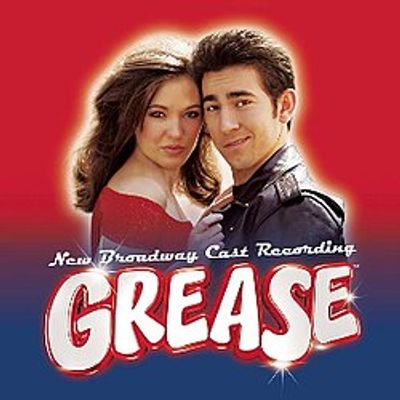
GREASE (1994) COMPOSER: Jim Jacobs, Warren Casey. LYRICIST: Jim Jacobs, Warren Casey. BOOK: Jim Jacobs, Warren Casey. DIRECTOR: Jeff Calhoun. CHOREOGRAPHER: Jeff Calhoun. PRINCIPLE CAST: Ricky Paull Goldin (Danny), Rosie O’Donnell (Rizzo), Susan Wood (Sandy) OPENING DATE: May 11, 1994... Read More
From the show: Fifty Key Stage Musicals: The Podcast
Guests

Featured Shows
About
GREASE (1994)
COMPOSER: Jim Jacobs, Warren Casey
LYRICIST: Jim Jacobs, Warren Casey
BOOK: Jim Jacobs, Warren Casey
DIRECTOR: Jeff Calhoun
CHOREOGRAPHER: Jeff Calhoun
PRINCIPLE CAST: Ricky Paull Goldin (Danny), Rosie O’Donnell (Rizzo), Susan Wood (Sandy)
OPENING DATE: May 11, 1994
CLOSING DATE: Jan 25, 1998
PERFORMANCES: 1505
SYNOPSIS: At Rydell High greaser Danny falls in love with good-girl Sandy. Throughout their high school days, they, and their friends, try to figure out life and love.
Casting Director Stuart Howard details the way producers Fran and Barry Weissler changed the Broadway landscape by employing “Stunt Casting”-- the hiring of celebrities who will draw audiences to a show after the box office inevitably slows-- in the 1994 Broadway revival of Grease. Differences between “Star Casting”-- in which a celebrity with significant stage experience or training replaces a previous performer in a run-- and “Stunt Casting”-- in which no regard is paid to a performer’s experience but their notoriety is instead exploited-- are outlined. Though the stars brought to the show elicited a range of responses from the theatre community, audiences, and critics, ultimately, the choices aided by rigorous and inventive advertising campaigns, kept the show running with fresh audiences buying tickets. Some of the celebrities that rotated through the production included Linda Blair, Joe Piscipo, Jon Secada, and Brooke Shields. Following their success with Grease, the Weisslers have continued their infamous casting practices with their revival of Chicago and other productions have taken note and followed suit.
Stuart Howard taught at The Juilliard School for ten years and gave Master Classes and lectured at S.U.N.Y. Purchase, the Stella Adler Academy of Acting, Carnegie Mellon University, Purdue University, NYU’s CAP21, and The American Academy of Dramatic Arts. Stuart, Janet Hayes Walker and John Newton founded The York Theatre Company in New York City. Stuart has had his own casting company, Stuart Howard Associates, since 1980. They have cast scores of productions for Broadway, off Broadway, National Tours and London’s West End. Recently, they cast the Broadway revival and National tour of West Side Story, Tracy Letts’ Pulitzer Prize and Tony Award winning August: Osage County, and the original production of La Cage Aux Folles. He is currently involved in the casting of the world premiere of The Heir Apparent by David Ives, Twyla Tharp’s Come Fly Away, The Maids by Jean Genet and two new musicals based on the life of Josephine Baker.
SOURCES
Great Rock Musicals by Stanley Richards, published by Stein & Day Publishing (1979)
Grease, Revival Cast Recording. Masterworks Records (1994)
Grease starring Olivia Newton-John and John Travolta, directed by Randal Kleiser. Paramount Pictures (1978)
Grease: You’re The One That I Want starring Max Crumm and Laura Osnes, directed by Nick Murray. NBC Television (2006)
Transcript
This transcript was automatically generated and might contain errors.
[0:14] Andrew Child: Hi, I'm Andrew Child and welcome to Fifty Key Stage Musicals, the podcast, a companion piece to the Routledge Press publication, Fifty Key Stage Musicals, which is available for purchase by going to Routledge.com or clicking the link below in today's show description.
[0:31] Andrew Child: Today's episode focuses on chapter 39, the 1994 Revival of Grease.
[0:37] Andrew Child: And we're chatting today with Professor Robert W. Schneider.
[0:40] Andrew Child: Professor Schneider holds academic appointments at Penn State University, New York Film Academy, and the University of Mount Union.
[0:49] Andrew Child: He is the artistic director of the J2 Spotlight Musical Theater Company, original programming producer at Feinstein's 54 Below, as well as the host of the podcasts Behind the Curtain, Broadway's Living Legends, Gay Card Revoked, and This Was a Thing.
[1:04] Andrew Child: He is also the co-author of Fifty Key Stage Musicals.
[1:08] Andrew Child: Rob, how are you doing today?
[1:10] Robert W. Schneider: I'm wonderful, Andrew. Thanks so much for having me on. I appreciate it.
[1:14] Andrew Child: Amazing. Well, I'm excited to talk to you about the '94 revival of Grease, and I'd love to just get things started with what the heck is this revival doing in this book? What makes it key?
[1:24] Robert W. Schneider: That I think is a question that a lot of people probably are asking when they say, "Where's the Sunday in the Park with George chapter? Is that what you meant to put here?"
[1:34] Robert W. Schneider: Well, I could have put act one of Sunday in the Park with George in there at the café. Oh god, no, no, I shouldn't say that because people get angry.
[1:41] Robert W. Schneider: No, you know, one of the things for the book was this idea that the shows that we had definitely changed the industry in some way, shape, or form. And you cannot deny that the 1994 revival of Grease changed the way casting happened on Broadway, which has now had a massive domino effect.
[2:08] Robert W. Schneider: Some might say for the better, some might say for the worst. But either way, you're either getting what the model of the revival of Grease created was a casting model that so many producers saw for the first time that it was an easy way to make money off of a lot of tourists who might not have gone to the theater had they not had a quote-unquote stunt casting act or a stunt actor in the particular role, which has led to the survival of such shows as Grease, which ran forever and ever.
[2:42] Robert W. Schneider: Chicago is now the longest-running revival in American history, and it's specifically because of its casting. The fact that it consistently cycles in people that you probably would not think of as being in a musical, but what intrigues enough audiences to actually come out because they want to see the stunt performer perform. They're not coming to see Chicago per se; they're coming to see Jerry Springer in Chicago because they like Jerry Springer's television show.
[3:11] Robert W. Schneider: Now the downside of that is somebody like Jerry Springer, who's not really a musical theater performer, is taking a role away from somebody who is a very qualified performer that could be going into that role. But on the flip side, you also then have people coming to see a Broadway musical that might not have seen a Broadway musical had it not been for that particular stunt casting, and they might go off and see another Broadway musical because they enjoyed Chicago.
[3:35] Robert W. Schneider: So it's really a double-edged sword, but that all started with Grease in 1994.
[3:41] Andrew Child: And so, would you say when we talk about Grease being a key revival, is this just changing Broadway marketing and sort of the business side of the theatrical endeavor? Or does this have an artistic effect as well?
[3:56] Robert W. Schneider: Well, I will, I mean I will be honest with you, the 1994 revival of Grease was very enjoyable, but it did not break any artistic ground. So we don't look at it really from an art, not like some of the other shows in here like Company or Sweeney Todd where artistically things were being changed. This was a very nice revival of Grease. But what it was changing, like you said, was the industry and how exactly people get to have leading roles on Broadway and exactly how do people get to be in a Broadway show.
[4:26] Robert W. Schneider: And so that's really what we're talking about when we're changing it because the model that Barry and Fran Weissler, who were the producers of the Grease revival, came up with is something that's still being used today. Sometimes it works brilliantly, like for example, some might say that Sara Bareilles going into Waitress, even though she's the author of the piece, is stunt casting, and that's an example where it works really well.
[4:51] Robert W. Schneider: And then sometimes it backfires a little bit. You know, there's a long list of real housewives who have gone into different shows, and that makes the artistic quality of the show suffer because the person isn't qualified to necessarily be on stage. They got lucky with Sara Bareilles because not only is she a brilliant writer, she also turned out to be a brilliant actress as well. You know, that's rare; that is random.
[5:17] Andrew Child: That's right. Well, and also we already know she can sing. You know, and sometimes when we see stunt casting, it's Jerry Springer. Can Jerry Springer sing?
[5:27] Robert W. Schneider: Well, no, the answer to that one is no. So yeah, so we talk about the '94 Grease because it really changed the model of the way the casting industry was looking at shows. And then what's interesting is suddenly doors opened to, I'm gonna use the word performers very loosely, because I'm gonna, you know, before this, I don't think a stand-up comic, I don't think an Olympic gymnast, I don't think somebody who had been in a bunch of B movies would have ever been considered to be the leads in Broadway musicals.
[5:58] Robert W. Schneider: Now suddenly all those doors opened to all these other different people that are in other areas of the entertainment industry. But then it also closes doors on a lot of really qualified Broadway and theater actors who now can't get in because the role that they're right for is being taken by Linda Blair from The Exorcist, or it is being taken by Cousin Brucie, the DJ, that also went in through Grease.
[6:22] Robert W. Schneider: Like I said before, it is a double-edged sword, but the casting world was so revolutionized by this idea that it's brought people into the theater who would not have been there before, but it also then allowed people who were supposed to be in the theater not giving them a seat at the table any longer because they were not a celebrity. I think we're still seeing this now today, and I think it's gonna evolve over time. Nowadays, and you know, we act like it's not happening, but it is happening. Casting decisions are being made by how many TikTok followers somebody has, how many Instagram followers somebody has, and I don't think that's any different than what Grease was dealing with in the '90s, if that makes sense.
[7:04] Andrew Child: What this is also sort of hearkening back to for me is an earlier episode when we talked about My Fair Lady, and Peter Felicia kind of lays out for us the ways that Rex Harrison being in My Fair Lady, someone who is an actor who doesn't sing, who can't sing, opens up the floor to a whole slew of dramatic and comedic actors to come into different roles. Do you think there's something similar going on here?
[7:32] Robert W. Schneider: Absolutely, absolutely. Like I said, you know, it allowed all these people from different forms of the entertainment industry to say, "Oh my gosh, there is a possibility of me being in a Broadway show." Because before everything was pretty segregated. You could be in a Broadway show as a musical theater performer, and maybe you would do film, maybe you would do television. But if you were over in the film world, you rarely came into the world of musical theater.
[8:01] Robert W. Schneider: Okay. You know, if you were in television, you rarely came into the world of Broadway musical theater. More often than not, you might be doing like summer stock places or regional theater places. So yeah, I think that much like what Peter is saying on My Fair Lady, I would say the same applies to this Grease.
[8:19] Andrew Child: Now, stunt casting is a term that I think we should probably try to define. And that is, for us, you know, it's this idea of taking someone that I think is an unknown entity and putting them into a Broadway production because we don't know if it will work, we don't know if it won't work. And I think a great example of, I'm gonna give you a flip side of an example of this. Sometimes people think of stunt casting as they'll put any celebrity into a show.
[8:50] Robert W. Schneider: And a couple of years before Grease, there was the musical Grand Hotel. Okay. And in Grand Hotel, there was the role of the ballerina, the aging ballerina, which I think was played by Lillian Montevecchi originally, was a Broadway actress. When she left the production, then people like Leslie Caron went through, Sid Charisse went through. Some people might say, "Well, that's stunt casting." It isn't, it isn't. The role calls for an older dancer. And both Leslie Caron and Sid Charisse, even though they had not done a lot of Broadway musicals, that's a stunt, but in some ways it still reinforces the idea of the concept of the show, which is it's an aging dancer.
[9:35] Robert W. Schneider: Okay. So that's one. Now, stunt casting for us, I would say, is putting somebody like Brooke Shields into Grease. Okay. She's much older than the character of Rizzo is supposed to be. We know that we know Brooke Shields as this sweet, angelic teenager from movies from the 1970s and 1980s. So she's gonna go in as Rizzo, which is a very hardened and tough character. Brooke Shields has not really sung; she's not danced; she's not been on a Broadway stage.
[10:07] Robert W. Schneider: Right. This is stunt casting. Okay, this is stunt casting, okay, because we're saying this is somebody who has sort of like a teenage following. We're putting them in a quote-unquote teenage show. Is it gonna work? Is it not gonna work? Fortunately, it worked. That was a surprising one where it turned out for her that she was this incredible actress, you know, she was this incredible musical theater actress, and after she did Grease, she went on and she did Wonderful Town a few years later on. She did the Leap of Faith musical. So that was one that proved, okay, stunt casting can somewhat work.
[10:41] Robert W. Schneider: Then we see, you know, and I don't want to talk badly out of school, but you know, then you have some people like Joe Piscipo who come in as Vince Fontaine. And Joe Piscopo is a stand-up comic. He's not really a musical theater actor. I don't think he understands the artistic sense of what's supposed to happen. So that's stunt casting that goes in the opposite direction. Does that make sense?
[11:04] Andrew Child: Yes, absolutely. Do you think that the stunt casting going on in Grease? I feel like Grease, because of the movie, it already sort of has a following; it already has an audience. Were they building upon that natural audience? Or were they trying to sort of broaden that audience, go after different demographics with these stars?
[11:28] Robert W. Schneider: I think they were trying to go after different demographics. And I think that's what the brilliance of the casting is, which is they said, "Look, there's a whole world of untapped individuals that want to that should be coming to see Broadway shows. How can we lure them in?" Yeah, you've seen Grease; you've seen the movie on Grease. You probably saw a high school production of Grease at some point in your life. What can we do to make Grease different? Well, what if it's the people that are populating the show?
[11:57] Robert W. Schneider: And because Grease is about nostalgia, at the end of the day, that's really what the show is about. It's about looking back to a more quote-unquote innocent time. Barry and Fran Weissler were very smart because in the casting of Grease, they used people that were nostalgic. So for example, Sally Struthers, who was a very big television star in the early 1970s, was then cast as Miss Lynch, the principal. So then you go, "Oh, that makes me feel nostalgic." The fact that Cousin Brucie, a very popular New York disc jockey, came on as Vince Fontaine. That made people feel nostalgic. So I think they were trying to expand their demographic.
[12:34] Robert W. Schneider: I think they were trying to expand their demographic. And then because other producers saw how successful it was, then other companies, like take, for example, Disney, the people that rotated in through Beauty and the Beast, some of them being stunt casting. Chicago, like we mentioned earlier, is built on stunt casting.
[12:59] Robert W. Schneider: Right. I mean, after the first couple of years of Chicago, they ran out of quote-unquote Broadway performers. And then we're like, "How do we keep Chicago interesting to people?" Now it kind of works in Chicago because Chicago, at the basis of it, is people being famous for not having talent. So in some ways it kind of works.
[13:21] Andrew Child: Oh, this big commentary, this statement on fame, this statement on mob mentality.
[13:27] Robert W. Schneider: Yeah, absolutely. Absolutely. And then sometimes, yeah, yeah. So anyway, that's that. I don't know, even if I answered the question.
[13:36] Andrew Child: I think does Grease naturally lend itself because of this theme of nostalgia? Because I'm also just sort of starting to think about the ways that there's this nostalgic casting going on in the movie version of Grease. You have Frankie Avalon, you have Sid Caesar, you know, you have, who's the band? Don't they have like Sha Na Na or someone at the...
[13:56] Robert W. Schneider: Yeah, Eve Arden is the principal? I mean, you're absolutely right. It is nostalgic.
[14:02] Robert W. Schneider: So what they're doing is not that different.
[14:06] Stuart Howard: What they're doing is not that different. The only thing I would say is that they didn't really put them in the leagues. You know, it's supporting characters in the movie, the gym teacher, the principal. Right. Um, okay. This is going further. This is saying, well, not only will they populate those roles, they'll also populate some of the leading roles as well. Rizzo was the big one. Rizzo was the big one where a cycle of individuals went through. Um, it started with Rosie O'Donnell in the original company, and it kind of worked because Rosie O'Donnell, even though she wasn't a singer, and that is stunt casting in itself, which is take the tough comic and have her, you know, have her play this role. Um, because Rosie O'Donnell doesn't have the greatest singing voice, it kind of made other people feel like, oh, I can go play this because if Rosie can do it, I can do it. Which is not always true. I think Rosie O'Donnell is supremely talented.
[15:06] Andrew Child: Oh, I you know, please don't get me wrong. I agree with you. I think she's a marvelous actress, and I think her voice, while it's not like the greatest singing voice, it serves the character for what you need. So I but I think that's deceptive to people. I think because what she also had was charm about her, and it and and uh such an enthusiasm for being on stage that I think that outweighed any sort of vocal limitations that she might have possibly had.
[15:35] Stuart Howard: So we see it sounds like a lot of stunt casting going on in revivals big time. Yeah, um, you've talked a lot or you've mentioned a lot Chicago. We're talking obviously about Grease. You also mentioned that Beauty and the Beast had a lot of stunt casting going on in its original run. Yes. Do you think there are shows that lend itself easier to stunt casting? Or do you think this could be a good idea?
[15:59] Stuart Howard: I do. I do. Yeah, I do. I think shows that edge into the world of camp. Okay. Allow themselves to be to uh to do that. I think shows that allow like, for example, something like Hairspray, um, I think allows itself to have stunt casting, especially in the role of Edna. I think you could do stunt casting. I think all the mother figures in that you could do stunt casting with. The Drowsy Chaperone, I think is another show where you can get away with uh, you know, stunt casting. Well, that can't be to the max. That's right. So elegant. And and it's interesting to note that when they first started working on Drowsy Chaperone, though the Beth Level role of the Drowsy Chaperone, they were looking at people like Tina Louise, they were looking at people like Eartha Kitt, they were look, they were looking at people who had a camp nostalgic quality to them.
And then eventually they realized that it was probably best to go with the Broadway actress, which at the end of the day, the Broadway actress ended up winning the Tony Award and you know became the toast of Broadway for her performance. Um yeah, I think if it goes into camp, and I think if it goes into nostalgia, you have an easier time because the audience is more forgiving of limitations.
[17:16] Andrew Child: Do you think are there shows right now on Broadway that you think are rife for stunt casting, or that you think in a few years are gonna be resorting to this, falling back to you know, that's a really fantastic question. I mean, you know, Chicago is the perennial in that in that regard. It's still running. I think that you know, that's there. Um Waitress, which is no longer on Broadway, in addition, also produced by the Weisslers, which is really interesting. Also had stunt casting. For example, The Old Man in the Restaurant, they had Al Roker come through. Wow. And then, and then they said, Why does the doctor have to be male identifying? And they gave the role to the actress June Squibb. So, you know, I think that if that show ever comes back, I think that would be one. I cannot think of one off the top of my head, though, that right now is uh works in in that sort of world.
[18:12] Stuart Howard: Okay. I guess like the big question for me are you know, these long-running Broadway sort of uh placeholders that are there forever, permanent fixtures. Um, are we gonna see in 10 years? Are we gonna see stunt cast Christine Daae? Are we gonna see stunt cast uh Elphaba? You know what? I think you might see it in Wicked. I don't, but I think it would be supporting characters. I don't think it would be lead characters. Which I guess they've a little bit done with the tours. They've put people in as the wizard, they've put people in as Madame Morrible.
[18:50] Andrew Child: Absolutely, absolutely. I think though that the other thing is is with shows like Wicked and shows like Phantom, they are so complex musically that I don't think you can sort of just throw in a Rosie O'Donnell type and hope for the best.
[19:07] Stuart Howard: Okay. I mean, if you're so you're telling me I'm never gonna see Fran Drescher do Defying Gravity, and you're crushing my dreams.
[19:15] Andrew Child: I'm so sorry about that.
[19:17] Stuart Howard: Um, but I will be the first to pay for it if she does go in.
[19:20] Andrew Child: Amazing. I I mean I'd be there as well. Maybe we can get a little cabaret review to the case.
[19:25] Stuart Howard: I would love that. Now, actually, didn't she do Cinderella at some point for Endrusher?
[19:29] Andrew Child: Did do Cinderella. I'm a huge Fran Drescher fan. And I think, you know, I think we can call it stunt casting. She was in it with um Carly Rae Jepsen as Cinderella, which I think we can also call that stunt casting.
[19:44] Stuart Howard: Stunt casting. Um, especially when Fran Drescher has to sing. We're gonna call that stunt casting. She does do a fabulous speak singing. Speaking of Rex Harrison in the what's the Lincoln Center with the Philharmonic when they do Camelot.
[19:58] Andrew Child: She does Morgan LaFay.
[20:01] Stuart Howard: It's fabulous. It's probably still stunt casting.
[20:04] Andrew Child: Yes, she's a very talented actress though, but it is stunt casting.
[20:09] Stuart Howard: So do you have stars who come to mind, if not shows, who you just think we gotta get him up on stage. We gotta see him in something in a stunt cast way.
[20:21] Andrew Child: Oh my gosh, what a what a great question. I've all you know, this you're gonna think I'm so bizarre. I always wanted to see a Guys and Dolls with uh Donald and Melania Trump as Nathan and Adelaide and Barack and Michelle as Sky and Sarah.
[20:37] Stuart Howard: Well, not only did you have the names, you had the roles ready. I'm thrilled for that.
[20:40] Andrew Child: I was gonna be able to do that. Absolutely. That was the question. What roles are we putting them in?
[20:44] Stuart Howard: That's no, that's always one that I thought I would be like, oh, that's that would be kind of interesting to see.
[20:49] Andrew Child: Interesting to say the least.
[20:50] Stuart Howard: Interesting to say the least at the very least. Um I would I would love to see that. That's no, that's actually a fantastic question. I'm trying to think, you know, there's there's so many people that you look at in all areas of the world. And you know, because that's the thing with the Grease opened up. It said you don't have to be a theater performer. You know, you can look at a football player and somebody like you know, Peyton Manning, who's very charming, and go, Oh, who what could he do?
[21:18] Stuart Howard: But we didn't have that, but I don't think we had that before Grease. And if you did have it, you had it in stock. You had it in a regional theaters. You know, if you're a fan of the Golden Girls, you know, they always make a joke about going to the Burt Reynolds Dinner Theater because they're gonna see Miss Ruth Buzzy in Evita. And we laugh at it, but in some ways it's not that far off from what was happening. But the fact of the matter was you thought to yourself, well, a major television star who's really not right for the role, they can do that in Summerstock because the quote unquote regional audiences don't know any better, which is a very condescending way of looking at theater goers, I think.
[21:56] Andrew Child: Right.
[21:56] Stuart Howard: But then uh I don't think anyone ever imagined that would be happening in New York, but that is happening in New York, and it's been happening, it started with Grease, and now it's continuing to go forward today. And I think we as people who enjoy theater, who are fans of theater, who will pay money to go and see a show. I'm definitely interested in seeing something if I recognize a name, you know, if it's something even if it's not a theater performer.
[22:23] Andrew Child: No, listen, I'm you know, you think about it like this. You know, if you're not a if you're not uh a religious or devote theater goer, you know, you're coming into New York City, you're going on vacation, right? And you know there's a couple of things that you need to do when you hit New York City. I'm gonna see the Empire State Building, I'm gonna get a slice of pizza, I'm gonna go see a Broadway show. Maybe Wicked has come through your hometown. Maybe you've seen Phantom of the Opera already. So, what then is going to get you into a theater?
[22:50] Stuart Howard: Oh my gosh, I love the Jerry Springer show. He's in Chicago right now. I love the Real Housewives of whatever city we're in right now. I I want to go see them do something. I love Queer Eye for the Straight Guy. What is Carson Kressley? You know what I mean? So it's it's that is a that is also a really important thing.
[23:09] Andrew Child: And you're absolutely right, Stuart. As much as we love Broadway performers and we want, you know, you and I might go, oh my gosh, you know, Beth Leavel's in this show. I have to go see it. Most of the country doesn't know who she is.
[23:23] Stuart Howard: Right.
[23:24] Andrew Child: And most of the country, when they come into town, are not buying a ticket because she's in a show. And that's that's not a knock on a on a woman who is a brilliant performer.
[23:34] Stuart Howard: Do you think we as theater consumers, as theater makers, is that something we should be concerned about, engaging with?
[23:47] Andrew Child: Engaging with, you know, audiences who might not be familiar with the New York theater scene.
[23:51] Stuart Howard: And giving it. I don't think so because I know that there's lots of people from other industries that we don't know who they are, you know, when it comes to movies, when it comes to television, when it comes to sports. So no, but my feeling is if you have if you have gone, if you want to keep your show running and you feel like artistically you have done everything possible to keep it running, then I think if you want to, I don't want to say resort to stunt casting, but if you want to explore other options, then I think that you can.
[24:27] Andrew Child: Okay.
[24:27] Stuart Howard: Um, but I don't I don't think it's your job as a theater maker from the get-go to start off going, who can we get in this show that'll sell tickets in a risky manner?
[24:40] Andrew Child: So let's talk about another radically different casting later revival of Grease. Um I believe that Andrew Lloyd Webber had already done it.
[24:50] Stuart Howard: Oh god, shows where you vote and the winner gets to take on the role on the West End.
[24:56] Andrew Child: But I think that, or was the Legally Blonde one first in America, or was you're the one that I want first in America?
[25:03] Stuart Howard: I'm not quite sure. I think, I think Legally Blonde was first.
[25:08] Andrew Child: They did the search for Elphaba, right?
[25:10] Stuart Howard: Yeah, and then I think it was Grease.
[25:13] Andrew Child: I might be wrong on that.
[25:14] Stuart Howard: But do you think all those shows? Because and then Andrew Lloyd Webber, he kept doing them. He did like 27 of them for all of his shows. Do you think that this 1994 revival of Grease did that make space for allowance for this sort of competition show where we're voting for Danny and Sandy?
[25:36] Stuart Howard: Absolutely. Because you know, when reality television really first came out at a popular height, which was in the early 2000s. Then, I mean, there was some reality shows before that, but really from 2000 to 2005 is when reality shows really took off. Um, I think the theater industry really wanted to jump on that bandwagon. But and I'm sure there was a sense of this feels immoral or this does not feel right artistically to um tap into that reality market. But then they all said, well, Grease did it 10 years ago, so why shouldn't we be doing it now?
[26:13] Andrew Child: So yeah, I think had Grease not paved the way with that, I think it would have taken a much longer time for theater practitioners to say, let's lean into the search for Elphaba. Let's leave, let's lean into you're the one that I want, where the audience gets to pick who gets to play Danny and Sandy, and then those two people are given contracts.
[26:35] Stuart Howard: And I think those two actors went Max Crumb and Laura Osnes, I think won the show.
[26:41] Andrew Child: Oh yes, if you're checking with me, yes.
[26:43] Stuart Howard: And did I stay up late voting for them? Not to get too political. Yes, I did. I sat up and I voted as many times as I could. And let me tell you, I got a little frustrated because a couple years later, we're seeing Laura Osnes do every ingenue role. And I wanted to call someone back and say, Listen, I was voting for her to be Sandy, not to take over for every ingenue role ever that you every single revival. Are you kidding me?
[27:08] Andrew Child: I do know it's Max Crumb though.
[27:11] Stuart Howard: Oh, who doesn't? But you know what's interesting? You from Massachusetts, right? Voting for her. You now feel a sense of I got this person a step ahead.
[27:25] Andrew Child: Oh, absolutely.
[27:27] Stuart Howard: Which means then you go root for her. So you might have found you might have watched her on television in the competition, you go, Oh my god, I really like this person. I voted for her for Grease. Then you'll go see Grease. And then the next time she's in a show, you go, Oh my god, I voted for her.
[27:40] Andrew Child: You take a certain pride in that, the same way that that we do when we watch a reality television show and we pick our own people that we want to root for.
[27:49] Stuart Howard: I still go back. I'm still filled with pride in the Andrew Lloyd Webber episode. She comes out with a gold cape on and she sings Jesus Christ Superstar. And one of Sir Andrew Lloyd's critiques is he didn't know ever that a woman was going to be able to sing this song and be so powerful with it. Uh for um, I still brim with pride, even though you know I'm a little dicey on her nowadays.
[28:12] Andrew Child: But you know, back then I was like, that's our Sandy.
[28:15] Robert W. Schneider: That she's gonna win.
[28:16] Andrew Child: Yes, and that's you know, and that's the that's the point. We as consumers of culture, whether it's music, sports, because I I will put sports into that category, reality television, whether you like it or not, is part of the cultural side, guys. We we pick favorites, and so when our favorites ascend from the that genre that we're associating them with, that's exciting for a lot of us.
[28:43] Andrew Child: So, of course, we want to go see Luan Countess Luann in a show. Of course, we want to see me Mimi Lakes.
[28:46] Robert W. Schneider: Yeah, you did.
[28:46] Andrew Child: Of course, we want to go see her in a show. Of course we want to see her, yeah. No, I mean if if you know, if you're really following these people's career, then of course you want to go.
[29:03] Andrew Child: There was the great football player Joe Namath, who spent a lot of years doing summer stock, and people did not give a shit what show he was in, they just wanted to see Joe Namath.
[29:12] Robert W. Schneider: Well, I think it's amazing to see like brochures, old programs from summer stock shows to see some of these names. I mean, to be honest with you, if this book expanded itself beyond the Broadway industry, I would have definitely included the Kenley players in Ohio, which was one of the most prolific theater companies in the United States, was run by this man was led a very fascinating life. His name was John Kenley.
[29:41] Andrew Child: Do you know his story?
[29:43] Stuart Howard: I do not know this story, but I love Summerstock, so I want to hear this story.
[29:48] Stuart Howard: Great. You can keep this or cut this out if you want. John Kenley owned two theaters in Ohio, and what he would do was is in the 1950s, 60s, 70s, and 80s, he would get the biggest stars imaginable to do a season of shows for him.
[30:08] Stuart Howard: And I don't I mean like big television and movie stars. He would pay them a ton of money to cut, like Jimmy Stewart and Lauren Bacall and Gloria Swanson. And he would get them all to come do shows for him.
[30:22] Stuart Howard: Um people would come out from all over Ohio where he was performing, where he was performing these shows to come see these stars. Now they did not care what show they were in, they just wanted to see the star perform.
[30:39] Stuart Howard: Now, I digress, but you can cut this out if you want. The interesting thing about John Kenley was he would come up for three months in Ohio and live his life as John Kenley. Then he would go to Florida, where he lived his life for the other nine months of the year as a woman.
[30:57] Andrew Child: Wow.
[31:00] Stuart Howard: He would he switched gender identification depending on what location he was in.
[31:07] Andrew Child: Wow.
[31:08] Stuart Howard: We have to keep that in. That's so cool. And he lived to be 104 years old. He was one of the most influential theater producers in the United States because he was the one who really revolutionized and created the idea of putting celebrities into productions to garner ticket sales.
[31:25] Stuart Howard: And people have tried for years to make documentaries about him to make a musical about his life. And his family is so embarrassed by his lifestyle, they have denied the rights consistently to his life story.
[31:41] Andrew Child: Wow.
[31:43] Stuart Howard: But a very, very fascinating man. But he is the I mean, to be honest with you, the Weisslers might have gotten this idea for stunt casting from the John Kenley model, which was we'll do six shows, and each show will have a different celebrity in it.
[31:58] Stuart Howard: And when we say celebrity, it ranged. It ranged from athletes to popular singers of the time. Uh, you know, maybe a politician here and there that wants to try their hand at acting. Um, but that was a very successful model for him, and all the Weisslers did was take that model, apply it to Broadway, and then other Broadway producers saw how successful the Weisslers were with Grease and expanded beyond that.
[32:24] Andrew Child: Well, and another great example, I'm I'm sorry, of stunt casting, I would say is another Weissler thing, which was Reba McIntyre and Annie Get Your Gun.
[32:31] Robert W. Schneider: Oh, right.
[32:32] Andrew Child: Prior to Annie Get Your Gun, Reba McIntyre was just known as a country western singer. That's all she was really known for. Nobody knew if she could act, and then she ended up giving one of the most brilliant musical theater performances ever when she took over for Bernadette Peters in Annie Get Your Gun.
[32:45] Robert W. Schneider: Which have you ever seen Barbara Cook talking about that?
[32:48] Stuart Howard: Yes, Barbara Cook said, you know, it was one of the greatest performances that she had ever seen. And if you have never gotten the chance to see Reba McIntyre do it, it is brilliant.
[32:57] Andrew Child: That's a great example though of stunt casting.
[33:00] Stuart Howard: And I think it's key that um, at least in the talk that I saw, um her name just left me. We were just talking about her Barbara Barbara Cook, Barbara Cook.
[33:13] Andrew Child: Yeah, her name just went out of my mind, and I said, I can't just call her Barbara because that's Strisand.
[33:18] Stuart Howard: You're just like the whole industry in the 60s and 70s, where the name just went out of everyone's heads.
[33:23] Andrew Child: Yeah.
[33:24] Stuart Howard: But when I saw Barbara Cook talking about it, it was key to me. It hits on exactly what you were talking about. That she was furious when she saw that casting announcement.
[33:33] Andrew Child: And it wasn't until she saw the show that she said, Oh no, this lady, she's got it. She's nailing the role. She's a performer.
[33:42] Stuart Howard: You know, like I said, you know, sometimes it pays off. You know, somebody like Reba McIntyre, somebody like Brooke Shields, somebody like Sara Bareilles, it pays off.
[33:51] Andrew Child: Um, and then, you know, there are the unfortunate situations where it doesn't pay off. And not only is this the performer, the stunt performer embarrassed, but the integrity of the show suffers.
[34:06] Stuart Howard: And, you know, I was not there. I've not seen her performance, so I can't say anything, but I've heard, you know, Linda Blair's performance in in Grease.
[34:14] Andrew Child: Uh-huh.
[34:14] Stuart Howard: You know, was a moment where everyone felt that the show was cheapened because she wasn't necessarily a performer per se.
[34:21] Andrew Child: Um, and they decided to put a uh they they put her face on a billboard in Times Square, but the head rotated because that, you know, from the exorcist, that was her big thing.
[34:33] Robert W. Schneider: Yep.
[34:33] Stuart Howard: And I think at that point, that's when people started to go, there has to be some sort of um, I don't want to say a litmus test, but there has to be some sort of standard.
[34:44] Andrew Child: And if you're a fan of last five years, you know, when Kathy is auditioning and we go inside of her inner monologue, she goes, you know, these are the people who put Linda Blair in a musical.
[34:54] Stuart Howard: Um, and it's a it's you know, it's a dig at the Weisslers casting somebody like Linda Blair who evoked nostalgia, though.
[35:03] Andrew Child: Right.
[35:04] Stuart Howard: Who evoked nostalgia? Interesting story about Linda Blair. I was when I needed to use the bathroom in a vet's office, and when I went in there, there were four autographed pictures of Linda Blair with her dog.
[35:17] Andrew Child: Like thank you, doctors, blah blah blah blah blah like she was thanking the vets in this office but multiple times and they hung them in the bathroom that they let the patrons use.
[35:32] Stuart Howard: I hope we can put that in too I didn't realize there was stunt veterinary casting.
[35:38] Andrew Child: There is there's stunt veterinary bathroom decoration.
[35:42] Stuart Howard: It's a whole thing you can major in in very select colleges.
[35:46] Andrew Child: Well I got I gotta write a sequel to this book then 50 key veterinarian's bathrooms that you can use.
[35:53] Stuart Howard: Yeah.
[35:53] Andrew Child: Yeah I think people would really really enjoy that I think people would really enjoy that.
[35:57] Andrew Child: I mean you know I'm you know because you're much younger and you probably have your finger on the pulse more than I do are there people that you see in the industry entertainment sports uh tick to I mean we even see people now from TikTok going in to see and it also that doesn't necessarily bother me per se.
[36:17] Stuart Howard: No.
[36:17] Andrew Child: Like if if someone is talented and they have a platform to shine I don't think they should be punished because they didn't get a BFA somewhere.
[36:25] Stuart Howard: Right.
[36:26] Andrew Child: But so my question for you is do you is there anybody that you see and you think oh my gosh why haven't they done a show yet?
[36:32] Stuart Howard: That is a great question. I do wonder with um, you know we talked about Nene Leaks um someone in that same vein of being this person who is this huge personality on a reality show, like build an empire around their just identity.
[36:54] Stuart Howard: I wonder, like, when are we gonna see Tiffany Pollard on Broadway? I think that she's generated so much cultural capital. She's so iconic in her reactions to things, her responses to things, just uh simple images of her sitting still circulate on the internet.
[37:13] Stuart Howard: When are we gonna put her on stage? You know?
[37:16] Andrew Child: Um, so I'm a big fan of hers.
[37:18] Stuart Howard: Uh, and then there are so many people on TikTok who it would be absurd, but it would be exciting, and I think a revival is kind of a place to do that.
[37:29] Stuart Howard: Uh, you know, it's not a new show. There's not so much artistically at stake, you know. If you are putting Grease on stage, uh, if it totally tanks and fails, and you've got Linda Blair and all these other people not pulling their weight, uh, wait a few decades, someone else is gonna put Grease back on stage.
[37:49] Andrew Child: They might even have a TV show about it, you know.
[37:51] Stuart Howard: Uh, so I think it would be fun to put no names coming to mind exactly.
[37:56] Andrew Child: Well, I guess one, I love Angel Mommy on TikTok.
[37:59] Stuart Howard: Um, would love to put her in I love Bells Are Ringing.
[38:04] Andrew Child: I'd love to see her do that role.
[38:06] Stuart Howard: Who knows if she can sing?
[38:07] Andrew Child: Angel Angel Mommy?
[38:09] Stuart Howard: Angel Mommy, yeah.
[38:10] Andrew Child: I am unfamiliar with the work of Angel Mommy.
[38:13] Stuart Howard: TikTok star.
[38:14] Andrew Child: Uh, she is a TikTok star.
[38:16] Stuart Howard: Um she's very absurd.
[38:18] Andrew Child: Uh, one might call it comedy, some might call it transcending any art form.
[38:23] Stuart Howard: Um, I'd love to see her in a musical comedy.
[38:26] Andrew Child: I think it'd be incredible.
[38:29] Stuart Howard: I I love that.
[38:31] Andrew Child: I I okay, great.
[38:32] Stuart Howard: I hey listen, I'm down.
[38:33] Andrew Child: I'm I'm ready for her gypsy.
[38:35] Stuart Howard: Let's be real.
[38:35] Andrew Child: I'm ready to see her do Mama Rose just a couple of years.
[38:38] Stuart Howard: She just needs to age into it.
[38:40] Andrew Child: I love you because you just want to jump deep into that pool.
[38:43] Stuart Howard: No waiting, no shallow end.
[38:45] Andrew Child: We're just gonna go deep deep into that pool.
[38:47] Stuart Howard: Let's go for it.
[38:48] Andrew Child: For these particular stars.
[38:50] Stuart Howard: I mean, listen, I I understand where people get angry and they go, listen, this is you know, they're not a real quote unquote performer.
[38:58] Andrew Child: But I'm also like, well, what does make it what does that mean?
[39:01] Stuart Howard: Like what what what who gives off the seal of approval of who's a performer and who's not a performer?
[39:07] Andrew Child: Right.
[39:08] Stuart Howard: You know, I uh Jerry Springer, he's not a performer. He's up there saying lines.
[39:13] Andrew Child: By definition, he is now he's now a performer.
[39:16] Stuart Howard: Right.
[39:16] Andrew Child: He had to join the union, so now I don't even want to get started on that.
[39:20] Stuart Howard: Okay.
[39:21] Stuart Howard: Um, but that's but I but I really think that this revolutionized things. And you know, there's a difference between star casting and stunt casting.
[39:31] Andrew Child: And I think up until Grease, we did have star casting, which is Hugh Brenner is a star, he will be the king in the king and I.
[39:38] Stuart Howard: Anthony Quinn is a star, he will be Zorba in Zorba.
[39:42] Andrew Child: Right.
[39:42] Stuart Howard: Um, but then the stunt casting of an unknown quant unknown entities.
[39:48] Andrew Child: And I think the chapter in the book does a really great job of laying out sort of quantifying what is stunt casting.
[39:56] Stuart Howard: Yeah. Mark Madama, who wrote our chapter, I think did a really nice job on, like you said, laying laying all of that information out.
[40:04] Andrew Child: But you know what's interesting. I was talking to the casting director of Grease, Stuart Howard, and he was saying it was fascinating because you know, they started looking at things they had never looked at before, which was you know, they would go to you know, people they would go to the supermarket and buy People magazine and buy the National Inquirer and circle, you know, who's this?
[40:22] Stuart Howard: Oh, this could be something, that could be something. Wow. You know, it was it it was a whole different world of casting than they had been used to before.
[40:30] Andrew Child: And now that's really the way it's going.
[40:34] Stuart Howard: Because at some point, these shows, you know, Kinky Boots will run so long before they need some sort of rejuvenation.
[40:42] Andrew Child: Well, what's the rejuvenation?
[40:43] Stuart Howard: You can't write new songs, you can't do a new show.
[40:47] Stuart Howard: What where what is the one department we can rejuvenate?
[40:50] Andrew Child: Casting.
[40:52] Stuart Howard: Which, although Beauty and the Beast, they did add some songs when they brought in some of their stunt casting choices.
[40:57] Andrew Child: Correct.
[40:58] Stuart Howard: Correct.
[40:59] Stuart Howard: But it's not like they took Broadway actors and gave them new songs.
[41:03] Andrew Child: It was will, you know what I mean?
[41:04] Stuart Howard: It was they didn't they couldn't change the text. The one thing that they can control though in marketing is putting in these different types of celebrities.
[41:14] Andrew Child: And that had not happened before.
[41:16] Stuart Howard: I think you know, we can remember a time when a show would run its course and they would go, Well, we've cycled through just about everybody.
[41:25] Andrew Child: There's really I mean there was there's nothing else we can do.
[41:27] Stuart Howard: We'll close.
[41:28] Andrew Child: Now producers are saying, no, no, no, no, no, we will get people in through the people we're putting in in these shows.
[41:36] Stuart Howard: That's how we'll stay alive.
[41:38] Andrew Child: And you've seen it, you saw it on Waitress.
[41:41] Stuart Howard: You know, Waitress stayed around because Sara Bareilles popped in, Al Roker popped in.
[41:46] Andrew Child: You saw that huge controversy around uh the Great Comet with the casting.
[41:53] Stuart Howard: Oh, yeah.
[41:54] Andrew Child: That would I mean, now that's interesting because that's if for those of us who remember, you know, the idea was that Josh Groban, right?
[42:03] Stuart Howard: Right, was um Dave Malloy, the writer played the role off Broadway.
[42:08] Andrew Child: They realized they needed a star to do it on Broadway, and that's when Josh Groban came in.
[42:13] Andrew Child: In some ways, it's stunt casting because you only know Josh Groban as a singer.
[42:18] Stuart Howard: Right.
[42:19] Andrew Child: You know, he's not an actor. We didn't know him as an actor, we didn't know him as a performer.
[42:23] Stuart Howard: And then surprise, surprise, he ended up being quite wonderful in the role. Then he left, and they want to put in Mandy Patinkin, but really isn't stunt casting because he's a very established Broadway actor.
[42:37] Andrew Child: If that's what you're referring to.
[42:39] Stuart Howard: Yeah, and I know there was a big blowback against Mandy Patinkin replacing a black actor in the show.
[42:48] Andrew Child: And sort of the official response was if we don't put Mandy Patinkin in this show, we're closing.
[42:55] Stuart Howard: And that is what happened, because Mandy Patinkin publicly stepped away from the role amidst sort of blowback, and the show did close. I don't have enough of an opinion on that to sort of quantify it as good or bad, but it was very interesting. It was something that happened.
[43:14] Andrew Child: Yeah, that was a show that the producers knew very clearly we will not succeed unless there is a name that is drawing ticket buyers to come see this show.
[43:28] Stuart Howard: Which is crazy because if we're talking about a '94 revival, sort of starting this mentality, for it to become so commonplace, so standard for them, the producers to just be able to say we do this or we fold, no questions asked, and then their prediction comes true, is kind of crazy. You know, listen, we are in a time now, because of finances, that people do not want to take risks on unknown quantities. And that's why it's very hard to get shows up on their feet on Broadway without a celebrity or a name being attached to it.
[44:10] Andrew Child: Because no one is gonna pay $200 to go see something called Atasha Pierre and the Great Comet of 1812.
[44:17] Stuart Howard: Like, what is this?
[44:19] Andrew Child: Right. What is it? What was it? Was War and Peace musicalized? Is that what it was?
[44:23] Stuart Howard: Um, it's one of those.
[44:26] Andrew Child: Or Anna Karenina.
[44:27] Stuart Howard: I can't, oh God, I sound so horrible. I forget which one it was. It might be one.
[44:31] Andrew Child: I think it's one thief. It might be a different one. I forget. Uh, we shouldn't have talked about this.
[44:36] Stuart Howard: Oh no.
[44:37] Andrew Child: I'm sorry.
[44:37] Stuart Howard: No, I think you're right.
[44:38] Andrew Child: You're right.
[44:39] Stuart Howard: Someone's yelling at it at a certain kind. But the issue is they knew, listen, no one's gonna come see this unless there's something that attracts them to the piece. And then we'll put Josh Groban in. Okay, well, we can't, so Josh Groban's leaving. Who are we gonna put in? Well, we'll put in Mandy Patinkin, someone who's an established Broadway actor who hasn't been on Broadway in a while, that has a huge following. Plus, he's also in one of the greatest cult movies of all time, The Princess Bride. It checks all the boxes for producers.
[45:11] Andrew Child: I really did think you were gonna say he's in one of the greatest cult movies of all time, Elmo in Grouchland.
[45:16] Stuart Howard: He's the bad guy.
[45:17] Andrew Child: Well, that goes without saying, but okay.
[45:19] Stuart Howard: For me, it's always Elmo in Grouchland, then Citizen Kane, you know, in the list of the top films.
[45:25] Andrew Child: I think that's pretty standard.
[45:27] Stuart Howard: But you're absolutely right, though. The fact that the producers knew, but that's because people don't want to spend money on something they don't know. And that also includes people.
[45:39] Andrew Child: Right.
[45:39] Stuart Howard: You know what I mean? That includes people who are known quantities, but you can make money off of people.
[45:44] Andrew Child: Absolutely.
[45:45] Stuart Howard: Which I mean goes back to day one, you know, you can get a refund if a stand-in is going on, you know, or you know, if you get notified that there's an understudy, you know, because you're not coming to see the show, you're coming to see the person.
[46:01] Andrew Child: Right.
[46:02] Stuart Howard: And I listen, I understand that on a one-man show or one person. If they're like, hey, listen, you know, okay, I guess if it's an evening with Harry Connick Jr. and Harry Connick's not there, I kind of understand why people want their money back. But you're supposed to be going for the story, but a lot of people don't want to go for the story. A lot of people want to go because they go, Oh, I love Harry, I love Josh Groban, but I want to see him.
[46:24] Andrew Child: Well, I guess also says who says we have to go for the story, you know.
[46:29] Stuart Howard: No, well, apparently not anymore.
[46:31] Andrew Child: Not anymore. But what I always find so fascinating, though, is that the shows that are very successful in the past few years didn't really have names in them. Hamilton didn't have any, there were no names in it.
[46:47] Stuart Howard: Right.
[46:47] Andrew Child: All that Lin-Manuel Miranda had done was he did a show called In the Heights, and that was it. He wasn't, you know what I mean? Not to say that he wasn't a genius, but nobody knew who he was outside of the New York theater community. There was another one I was just thinking of. Uh, nobody knew who Ben Platt was.
[47:04] Stuart Howard: Right.
[47:05] Andrew Child: Before Dear Evan Hansen.
[47:07] Stuart Howard: Right.
[47:08] Andrew Child: You know, it's, uh, these, uh, um, Six, no one knows who, nobody knew who any of these people were in.
[47:13] Stuart Howard: Right.
[47:14] Andrew Child: And then these are the shows that end up being the most successful.
[47:18] Stuart Howard: That is interesting.
[47:20] Andrew Child: Which I always find fascinating. Fun Home, same thing.
[47:24] Stuart Howard: Right.
[47:25] Andrew Child: Nobody knew who, you know, uh, outside of the end, you know what I mean?
[47:29] Stuart Howard: No, of course, of course.
[47:31] Andrew Child: Yeah, there are always going to be people who know who.
[47:35] Stuart Howard: Yeah.
[47:36] Andrew Child: But outside of the industry, they're not big poll names for tourists.
[47:40] Stuart Howard: Yes, and these shows end up being so fascinating and so interesting that they can get people in there. So I think if a producer automatically goes, who's gonna be our who's gonna sell our tickets for us? I think you probably have some bigger issues because I think that means there's something not working with the story. You're not, you don't trust the story enough to, um, uh, to let it rest on its own.
[48:07] Andrew Child: That's okay.
[48:08] Stuart Howard: That's yeah, you know what I mean? That's okay, but I think Grease is really the show that proved that. I think Grease was the one that said, listen, you if you keep a revolving door of celebrities in and you keep surprising us with who these celebrities are that are taking over, you know, then I think you're in good shape.
[48:27] Andrew Child: So they created this great model, they created this fantastic model. I'm only talking from a financial perspective, I'm not talking from an artistic perspective, right? Which I think sets us apart from a lot of the other chapters in this book, which are breaking artistic ground, which are paving new paths that shows mimic or recreate artistically, whereas this one sounds like is kind of a different key in a different way.
[48:52] Stuart Howard: It is key in a different way because, like we had said at the beginning of the conversation, it cuts out a lot of trained actors who are brilliant performers, but it also puts a lot of butts in seats that probably would not have been there in the first place had that individual not been cast.
[49:12] Andrew Child: For the second part of today's episode, we sit down with Stuart Howard, who was the original casting director for the 1994 revival of Grease, and who was in charge of making sure that the Weissler's request for stunt casting was fulfilled. Here's our interview with Stuart.
[49:31] Andrew Child: Stuart, I am so happy that you were joining us today.
[49:34] Stuart Howard: My pleasure.
[49:35] Andrew Child: Now, one of the things that the chapter talks about is there are two terms, star casting and stunt casting. Can you tell us one if you agree that they should be divided into two terms? And what do you think the differences are between the two?
[49:56] Stuart Howard: Well, I have a feeling that people would say in a negative way, um, that Grease was filled with stunt casting. It seems to me, yes, if a stunt is what kept that show running for four years.
[50:11] Stuart Howard: Four years for a revival is quite wonderful. And a revival, anyone could have gone to the local video store pretty much and you know, taken the movie off the shelf. So the fact that they're investing so much time. So do you feel that the term stunt casting is an appropriate term, or do you look at it just as it's casting?
[50:48] Stuart Howard: You know, I think I would say it's casting. I would never give it the name stunt casting because it either fulfilled what we needed or it didn't. And the idea of saying of really thinking outside the box of Greg Louganis. I mean, that's very outside the box because he had never been on Broadway. I know Cousin Brucey, the DJ had come in, but also out of the box because they're not quote unquote Broadway actors. Where did those ideas come from?
[51:26] Stuart Howard: Everyone.
[51:27] Andrew Child: Everyone had an idea.
[51:29] Stuart Howard: Barry had the only show I think I worked on about eight shows with the Weisslers. I don't remember him specifically coming to meetings for casting.
[51:48] Stuart Howard: Uh, but he had a lot of ideas once the show started. Uh, once we realized Marcia Lewis, who was the original Miss Lynch.
[52:05] Andrew Child: Who's the principal character in the show?
[52:07] Stuart Howard: Right.
[52:09] Stuart Howard: She, once she left, it opened up a lot of older women who were looking for jobs.
[52:22] Andrew Child: Interesting. Now, Marcia Lewis was a very respected Broadway actress, but a Broadway actress.
[52:29] Stuart Howard: Yes.
[52:29] Andrew Child: So did you ever consider once she left, who's a Marcia Lewis type in the theater industry, or did it immediately go to who else outside of the box could fit into that slot?
[52:45] Stuart Howard: If that makes sense, that question.
[52:47] Andrew Child: It totally makes sense.
[52:48] Stuart Howard: I think it was both of those things. I mean, Mimi Hines.
[52:56] Andrew Child: Yes, thank you.
[52:57] Stuart Howard: Mimi Hines, who was one of the replacements for Barbara Streisand. Um, another person who really wanted to do it was Sally Struthers, who now it's not like it was the only show she ever did. She works every summer at the Ogunquit Playhouse. She's now a very respected musical comedy actress and a lovely funny woman.
[53:37] Andrew Child: How did this, well, there's a couple of layers to all of this? I mean, unlike something like Chicago, where I don't want to say there's any nostalgia element to it, Grease is a nostalgia show, right?
[53:51] Stuart Howard: Yeah.
[53:51] Andrew Child: The idea is the audience comes in and is hearkened back to things of their past.
[53:56] Stuart Howard: Right.
[53:56] Andrew Child: And so a lot of the casting did that as well, putting in somebody like Mackenzie Phillips or Linda Blair, people that had been popular 20 years ago. How did your casting process change knowing that you had to think outside the box? Did you start looking at magazines you never thought you were gonna look at?
[54:17] Stuart Howard: Not just magazines, but people in my office had recordings. I mean, that's how Debbie Boone. Um, and I said, but she can really, really sing. And um, but she did play Rizzo.
[54:37] Andrew Child: Yes, which in our production was, which Rosie O'Donnell was the first Rizzo in the revival.
[54:45] Stuart Howard: Definitely auditioned. And I didn't know who she was really. I mean, I knew she was a comedian.
[54:53] Andrew Child: Yes.
[54:53] Stuart Howard: I think I had heard her sing, but not really sing. And they knew they wanted her the minute she started joking. And there were other people who definitely auditioned. Like we had said in the beginning of this podcast, you know, it's not really stunt casting, it's thinking outside the box in order to keep a production running so tons of people can stay employed.
[55:25] Andrew Child: Um, did you ever feel as a casting director from any of your fellow peers in CSA or anyone else in the casting world going, oh, you're doing, are you the guy who brought all the time? And how do you respond to that? How does that make you feel?
[55:43] Stuart Howard: Um, I guess probably I said things like crying all the way to the bank.
[55:53] Andrew Child: And thank you, listeners, for joining us. Please make sure to purchase a copy of Fifty Key Stage Musicals by visiting Routledge.com or by clicking in today's show description. If you want to learn more about Grease, please also review the links in the below description. I'm Andrew Child, and thank you for listening to Fifty Key Stage Musicals, the podcast.
© Broadway Podcast Network, All Rights Reserved