

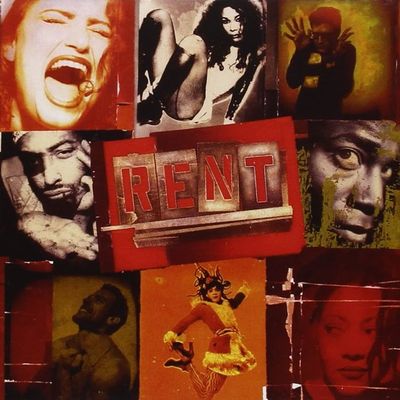
RENT. COMPOSER: Jonathan Larson. LYRICIST: Jonathan Larson. BOOK: Jonathan Larson. SOURCE: La Boheme by Giacomo Puccini (1896) DIRECTOR: Michael Greif. CHOREOGRAPHER: Marlies Yearby. PRINCIPLE CAST: Adam Pascal (Roger), Anthony Rapp (Mark), Daphne Rubin-Vega (Mimi) OPENING DATE: Apr 29, 1996... Read More
From the show: Fifty Key Stage Musicals: The Podcast
Featured Shows
About
RENT
COMPOSER: Jonathan Larson
LYRICIST: Jonathan Larson
BOOK: Jonathan Larson
SOURCE: La Boheme by Giacomo Puccini (1896)
DIRECTOR: Michael Greif
CHOREOGRAPHER: Marlies Yearby
PRINCIPLE CAST: Adam Pascal (Roger), Anthony Rapp (Mark), Daphne Rubin-Vega (Mimi)
OPENING DATE: Apr 29, 1996
CLOSING DATE: Sep 07, 2008
PERFORMANCES: 5,123
SYNOPSIS: Mark and Roger are two bohemian artists living in New York’s lower East Side at the height of the AIDS epidemic. Mark is a documentary filmmaker and Roger is an HIV positive songwriter. When Roger meets Mimi, a drug addict, he falls madly in love but is unsure if he should tell her of his impending mortality.
Composer Jonathon Larson set out to bring musical theatre to a new generation with Rent, a rock opera based on Puccini’s La Boheme and set in Lower Manhattan’s East Village. The musical helped break taboos and stigma around queerness, trans liberation, and AIDs. Jordan Dragutsky chronicles Larson’s quest for giving his generation a voice that sounded like the popular music of the time with the sophistication of musical theatre composition, the advocacy of Rent by New York Theatre Works, the unique casting and design process that was helmed by director Michael Greif, and how the unexpected death of Larson catapulted Rent, and its stars, to global popularity.
Born and raised in Los Angeles, Jordan Dragutsky grew up surrounded by the entertainment industry and relocated to New York in 2010 after graduating from UCIrvine (BA Drama/Minor Queer Studies). Jordan has assisted in press offices and production/merchandising for over 30 Broadway, Off-Broadway, dance, and touring productions including: Harry Potter & The Cursed Child, Hair, Wicked, and Book of Mormon. He joined the administrative staff at the New York Film Academy in 2012, and from 2015-2020 he served as Senior Dept. Coordinator for the Musical Theatre department. Jordan is a proud member of SAG/AFTRA with experience working on over 100 TV/Film sets. Featured credits include The Cobbler (Goth Guy), Only Murders In The Building (Hulu), and The Marvelous Mrs. Maisel (Ocarina Player).
SOURCES
Rent, Original Cast Recording, Dreamworks Records (1996)
Rent by Jonathan Larson, published by It Books (1997)
Rent starring Adam Pascal and Anthony Rapp, directed by Chris Columbus, Columbia Pictures (2005)
Rent Filmed Live on Broadway starring Will Chase and Adam Kantor, directed by Michael John Warren, Radical Media (2008)
Rent Live starring Jordan Fisher and Brennin Hunt directed by Michael Grief, 20th Century Fox Television (2019)
Without You: A Memoir of Love, Loss, And The Musical Rent by Anthony Rapp, Simon & Schuster (2006)
Rent FAQs: All That’s Left To Know About Broadway’s Blaze of Glory by Tom Rowan, published by Applause (2007)
On Broadway: From Rent to Revolution by Drew Hodges, published by Rizzoli (2016)
Transcript
This transcript was automatically generated and might contain errors.
[0:00] Andrew Child: Days of inspiration playing hooky, making something out of nothing, the need to express to communicate going against the green, going insane going mad.
[0:14] Andrew Child: Hi, I'm Andrew Child, and welcome to Fifty Key Stage Musicals, the podcast, a companion piece to the Routledge Press publication Fifty Key Stage Musicals, which is available for purchase by going to Routledge.com or clicking the link below in today's show description.
[0:32] Andrew Child: Today's episode focuses on Rent, and with us today is author of that chapter, Jordan Dragutsky.
[0:40] Andrew Child: Born and raised in Los Angeles, Jordan grew up surrounded by the entertainment industry and relocated to New York in 2010 after graduating from UC Irvine with a BA in Drama and a minor in Queer Studies.
[0:54] Andrew Child: Jordan has assisted in press offices and production and merchandising for over 30 Broadway, Off-Broadway, dance, and touring productions.
[1:04] Andrew Child: He joined the administrative staff at the New York Film Academy in 2012, and from 2015 to 2020, he served as Senior Department Coordinator for the Musical Theatre department.
[1:16] Andrew Child: Jordan is a proud member of SAG-AFTRA with experience working on over 100 TV and film sets.
[1:23] Andrew Child: Some credits include The Cobbler, Only Murders In The Building, and The Marvelous Mrs. Maisel.
[1:30] Andrew Child: Hi, Jordan. Thank you so much for being here with me today.
[1:33] Jordan Dragutsky: Thank you very much for having me. I'm so thrilled to be here.
[1:37] Andrew Child: Yeah, I'm excited to talk about this. Can you just start us off for those who haven't read the book yet? What makes Rent a key musical? Why are we talking about it today?
[1:54] Jordan Dragutsky: Well, Rent was very much the first of its kind. It created an insane media frenzy. It transformed musical theater. It was groundbreaking. And it kind of like gave, you know, in the mid-90s, musical theater was kind of at a little bit of a lull. And when Rent came along, it was all of a sudden bam, like, oh my gosh, musical theater is here. It's now brought back into the forefront of pop culture. And it remained a huge major success story for, you know, even up until now, but it was on Broadway for over 12 years and broke an intense amount of records in doing so.
[2:35] Andrew Child: Do you have thoughts about why? Just like based on the content, why were audiences going crazy, needing to get tickets to see this show?
[2:49] Jordan Dragutsky: Well, at the time that Rent came along in the mid-90s, pardon me, Broadway had kind of fallen into a little bit of a boring lull. Well, I don't want to use the word boring, that's not the best word, but it had fallen into repetition. Disney was popular, we had a lot of revivals. There wasn't much by way of new original content, so to speak. Stories about real life people. We had Cats, we had Phantom, we had Miss Saigon. Now, these stories, some of them live partially in truth and in reality, but not in a way that Rent really did. And when it came along, people almost didn't know what to do with it because they're like, oh, this show, it's using a real band. They're on stage, there's no major set changes.
They're talking about real struggles facing people that really currently, still to that time when the show came out, still lived in New York and were still facing those struggles, even though the show is set, you know, five to six years earlier before its release. So it really blasted onto the scene, and everyone was just like, oh, this is the new thing to go see. The advance for the show is unbelievable. It broke a lot of box office records and it was fast-tracked to Broadway. Fast tracking, we don't see that happen so much, so to speak. I guess the last time it recently that it happened was Hamilton. But Rent opened off Broadway in January, and you know, the Broadway season, all shows usually have to open by the end of April to be eligible for Tony contention.
And now this show opened off Broadway at the end of January, and it was so successful that they rushed to get it open a couple days before the Broadway season ended. They rushed to get it open on Broadway so that it was ready to go because they knew they had something. They knew that there was something there, and there was a sense of urgency, especially given the fact that Jonathan Larson, the writer of the show, passed away the night before the show started previews off Broadway. He never got to see it open off Broadway. He never got to see it open on Broadway. He won a lot of awards posthumously because of his passing. And I think that actually his death is what really sparked the frenzy.
All of a sudden, this new show was bubbling downtown, and then there's a news article that comes out right before the show opens off Broadway saying, oh my goodness, the writer of this show died before it even started. And he had been working on it for seven years.
[5:30] Andrew Child: Do you think that in addition to being sort of this, you know, this oasis for theatergoers, this something new, something different, something interesting, did Rent also have a pull for people who weren't going to see the theater who had no interest in Phantom?
[5:50] Jordan Dragutsky: Yeah, 100%. You know, at the time that Rent had opened, there was no—the last, I think I guess you could say the last rock musical on Broadway before Rent was probably The Who's Tommy, excuse me. And you know, this came out a couple years after that, and there was nothing else around. And it spoke to a generation, you know, Jonathan Larson, this was his goal, even though he didn't see it come to fruition, so to speak, this was his goal early on in life. He wanted to transform the American musical, and he wanted to write a new American musical for the MTV generation specifically. And you know, if you think about it, he graduated from college, I think in 1984. That's the height of MTV's new popularity and music videos.
And so he knew early on he wanted to write something that would strike a nerve with the people that were watching MTV with that generation. And he wanted to bring them into the theater and make them sit down and hear a story about real people. That hadn't been done in a while, or ever really. So we can definitely, the statistics are there, the facts are there. It appealed to the generation he was going after. And I think something that's a little bit tricky with Rent is I don't want to say we've seen it like decline or like beaten to death, but I feel like it has sort of done this incessant loop of non-equity tours. And we've seen the live show on NBC to mixed results, you know. A lot of recent Rent incarnations have opened to very mixed results.
And I think that has to do with the fact that it was tied so inherently to the MTV generation. And now that that has shifted, that Rent now, you know, maybe starting in 2000, you know, around when it closed off on Broadway, we were already seeing the decline of the MTV generation and or the shifting of it.
[6:09] Andrew Child: Do you think now the show sometimes is thought of as almost dated? And when it first came out, we were like, oh no, this is never gonna feel dated, so to speak. But you know, it's starting to veer into that, and I think it does have to do with the changing of pop culture specifically. Do you think is there a future for Rent as a period piece? Or is there a reinvention for Rent that you could predict in the future?
[6:09] Jordan Dragutsky: Absolutely. You know, Jonathan Larson was in a sense a protégé of Stephen Sondheim's. And I think that 150%, he would be behind the idea of reinvention and new interpretations, similar to how Sondheim up until his death encouraged that of his works. And so I do think there is room for that. And I hope that in the future we're gonna see other more new productions of Rent and see it done different ways. The thing is with the recent incarnations, the recent off-Broadway run, the national tour that's out right now, the live film version, they're still—I found them still trying to hold on to the original aesthetic and vibe of Rent. Even the tour that's out right now, if you look at photos of it, it is Rent as you saw Rent in 1996.
Okay, it is still the same logo, same set, possibly the same direction. I'm not sure if Michael Greif is still coming in or not, but it is still in a sense the same show, and I think they're falling under the mindset of if it ain't broke, don't fix it, but also let's show people how transformative and amazing this show was. It's kind of like saying, let's go see The Lion King right now and see if it still strikes the same nerve.
[9:48] Andrew Child: Does that make sense?
[9:49] Jordan Dragutsky: Yeah.
[9:50] Andrew Child: Do you think The Lion King is a show that has dated and aged in a similar way?
[9:58] Jordan Dragutsky: I think if, you know, I actually only recently saw it for the first time, about three or four years ago. And I said to myself, while I was in the theater, I was like, if I saw this in, you know, when it came out in the late 90s, it probably would have hit me a lot more. It would have wowed a little bit more. I could see how back then it was so transformative.
[10:20] Andrew Child: Do you think because the impact of that show, because other shows have done similar things since then? Does that have anything to do with that sort of losing its impact, its wow?
[10:38] Jordan Dragutsky: I'm not sure. Okay. That's the best answer I can give for that. I think at this point it has more to do with the cultural shift and how we look at things than the show not changing.
[10:52] Andrew Child: Okay.
[10:53] Jordan Dragutsky: I think it more has to do with how people are raised looking at their cell phone screens now. They're not raised watching music videos on TV anymore. No, we're staring at screens nowadays and we're not looking and encountering with people this in the same way that we used to. I think that really has to do with the cultural shift and why Rent eventually closed on Broadway and why the off-Broadway run ran for around a year and then closed. And they are now calling this current Rent tour, which is the 25th anniversary Rent tour, they're calling this the farewell season. This current tour right now is slated to end, it's not slated to continue. Which perhaps that just means, you know, we need to put this button on it for someone to come in and do a redesign, do a restaging, do a reimagining.
And there have been attempts, and I think that we are—Rent isn't going anywhere. There's no way. It is such a strong piece of material that I do believe, just like we saw The Color Purple come back, it came back roaring. And The Color Purple originally wasn't a huge blockbuster success. But then when that revival came in, it came back with a mighty, mighty, mighty roar. And I do think that Rent will eventually see that happen.
[12:16] Andrew Child: Okay. Do you think there are shows that have come since Rent that have sort of replicated its success, that have sort of appealed to a certain demographic of young people, have reached out beyond regular theatergoers? What comes to mind for you there?
[12:37] Jordan Dragutsky: Well, I mean, Rent set the stage for the modern American rock musical. Hair kind of laid the groundwork. But if you think about Hair, it didn't have as strong of a plot. It was loosely tied together. It was a hippie presentation, had some great music, but it didn't have a very strong story. Rent has a very, very strong story. And I lost myself there. Wait, re-ask the question again, if you don't mind.
[13:10] Andrew Child: What since Rent has sort of had this same appeal?
[13:10] Jordan Dragutsky: So, um, Rent laid the groundwork, and all of a sudden we started to see a flurry of new rock musicals coming in in 1998.
[13:21] Jordan Dragutsky: We had Hedwig and the Angry Inch, which played off-Broadway downtown for a couple of years, and that didn't even, and it was a huge smash success, and it didn't even leap to Broadway.
[13:30] Jordan Dragutsky: It leapt from off Broadway to movie, and the movie ended up developing a cult following similar to the way that Rent's original run developed a cult following.
[13:40] Jordan Dragutsky: You know, Rent is a cult musical, it fits perfectly in that category of a niche musical about a story, and it develops and it developed a strong following.
[13:51] Jordan Dragutsky: People ran in droves to see Rent, and it was everyone.
[13:55] Jordan Dragutsky: It wasn't just the high society of New York, it was everyone.
[13:58] Jordan Dragutsky: Now, other musicals that came out of that, you know, we have Hedwig and the Angry Inch.
[14:02] Jordan Dragutsky: Then we see other shows that were directed by Michael Greif, including Next to Normal.
[14:06] Jordan Dragutsky: Next to Normal was the next musical to win the Pulitzer Prize for drama after Rent, actually, and it didn't even come until, was it, 10 or 11 years later, something like that.
[14:17] Jordan Dragutsky: Um, so we have Next to Normal, we have modern jukebox musicals using catalogs from other artists that includes American Idiot and Jagged Little Pill.
[14:27] Jordan Dragutsky: Those shows also tackled modern American issues and tried to tell stories about real people.
[14:34] Jordan Dragutsky: Um, and then if we're thinking, uh, flashback, we have a new modern telling of Spring Awakening. Spring Awakening, the musical came out in 2007 or 2009, and it was by Duncan Sheik, who was also very popular in the 90s, uh, you know, indie music scene.
[14:50] Jordan Dragutsky: And that musical was about, um, it was an update of, I think it's also featured in 50 Key Musicals.
[14:50] Jordan Dragutsky: Um, it was an update of a 1893 story play about kids going through their sexual awakening.
[15:06] Jordan Dragutsky: And this is a play from the 1890s that had to do with sexual awakening, suicide, abortion, death.
[15:14] Jordan Dragutsky: And if Rent wasn't around, I don't think we would have seen any of these shows.
[15:19] Jordan Dragutsky: I don't think these writers would have thought that it was okay to tell these stories on the stage.
[15:25] Jordan Dragutsky: And Rent really said, yeah, no, we could tell any story we want, it could have adult subject material.
[15:31] Jordan Dragutsky: We can tackle death, people die.
[15:33] Jordan Dragutsky: You know, that's part of life.
[15:35] Jordan Dragutsky: The whole point of all of these shows is they're telling real stories about real people.
[15:40] Jordan Dragutsky: Um, so it's not just the rock transformation, but it's also the ability to tell these stories.
[15:45] Jordan Dragutsky: So nowadays, any musical that falls into RB, rock, um, um, gospel, they almost all draw influence from Rent, even Hamilton, especially Hamilton.
[16:02] Andrew Child: So, what is your connection beyond you wrote a chapter for this book to the musical Rent?
[16:10] Jordan Dragutsky: Um, okay. So dating back, I actually texted my sister before we started today. I was like, okay, what year was it? And she said, I first took you to see Rent in 1998 or 1999.
[16:23] Jordan Dragutsky: And the way she was able to source that information is because she knows that she was the one who was driving.
[16:29] Jordan Dragutsky: Okay. So I was 11 or 12 years old.
[16:33] Jordan Dragutsky: Um, so Rent opened on Broadway in spring of 1996. And by fall, they already had, um, they already had tours starting.
[16:43] Jordan Dragutsky: And most of the Rent tours really started with sit-down productions in cities like Chicago and LA.
[16:50] Jordan Dragutsky: And they'd stay there for a couple months and then go out on tour.
[16:52] Jordan Dragutsky: And we see that a lot nowadays, actually, especially with Hamilton and Wicked.
[16:55] Jordan Dragutsky: Um, they'll sit in these major cities for months at a time and then launch out on the road.
[17:00] Jordan Dragutsky: So she had seen it once with Neil Patrick Harris at the Amundsen Theater in the LA premiere of the show.
[17:07] Jordan Dragutsky: It which was, yeah, that was 1997.
[17:11] Jordan Dragutsky: And then, um, Rent actually started having multiple tours.
[17:15] Jordan Dragutsky: I don't know if you remember that, but when Rent first launched, they launched one tour, and then they were like, no, this show is so successful, we need another tour.
[17:22] Jordan Dragutsky: Nowadays, we have several Broadway shows that have multiple national tours going.
[17:26] Jordan Dragutsky: And Rent maybe was one of the first shows to do that.
[17:28] Jordan Dragutsky: Um, I'm not 100% sure. I know Cats eventually, I think, had more than one tour going at a time.
[17:33] Jordan Dragutsky: But Rent had two national tours going called the Angel and the Benny Tour, named after characters in the show.
[17:39] Jordan Dragutsky: Those were the first two tour names.
[17:40] Jordan Dragutsky: Um, I know at one point there later there was the, I think, a Mimi Tour.
[17:44] Jordan Dragutsky: Um, my sister took me to see the show.
[17:48] Jordan Dragutsky: You know, I grew up with a sister who is five to six years older than me.
[17:52] Jordan Dragutsky: And so when Rent came on the scene, it was incredibly popular with middle and high school students.
[17:59] Jordan Dragutsky: They could relate to it.
[18:01] Jordan Dragutsky: They were watching MTV at that time.
[18:03] Jordan Dragutsky: Um, and so she took me to see it for the first time.
[18:06] Jordan Dragutsky: It was at the Schubert Theater.
[18:08] Jordan Dragutsky: Um, it was the other national tour, it was the second one.
[18:11] Jordan Dragutsky: Uh, the Schubert Theater no longer exists in Los Angeles.
[18:13] Jordan Dragutsky: It was a theater that was built into an office building in the 70s.
[18:16] Jordan Dragutsky: It opened with Follies and it closed 15 years ago.
[18:20] Jordan Dragutsky: Rent was one of the last shows to play there, actually.
[18:22] Jordan Dragutsky: I think the Kiss Me, Kate revival was the last show to play at that theater.
[18:26] Jordan Dragutsky: And she took me to see it there, and I was immediately like, what is this?
[18:29] Jordan Dragutsky: And mind you, I have already at this point, I had already heard the score.
[18:33] Jordan Dragutsky: I had a 15, 16-year-old sister. That CD was on repeat in that house.
[18:39] Jordan Dragutsky: Oh my goodness.
[18:40] Jordan Dragutsky: So I was already familiar with the story.
[18:42] Jordan Dragutsky: And then I'm like not, I'm not even in puberty yet.
[18:45] Jordan Dragutsky: And I'm watching these people on stage. I'm like, oh, okay.
[18:48] Jordan Dragutsky: Um, and that sparked it for me.
[18:50] Jordan Dragutsky: From then on, I maybe turned into more of a Rent head than my sister.
[18:54] Jordan Dragutsky: Um, wow.
[18:55] Jordan Dragutsky: The national tours, um, you know, we live in Los Angeles, and the national tour, if it's a popular show, it was stopping in the Los Angeles area once, if not twice a year.
[19:05] Jordan Dragutsky: Wow.
[19:06] Jordan Dragutsky: So from, I would say, you know, the first time I saw the show was 1998.
[19:12] Jordan Dragutsky: Between 1998 and when I moved to New York in 2010, I saw Rent, I couldn't tell you how many times, definitely more than 10 or 15 times.
[19:22] Jordan Dragutsky: And I saw it at a total of seven or eight touring venues in the Los Angeles and Orange County area.
[19:29] Jordan Dragutsky: Because anytime Rent came through, it had to stop at these theaters.
[19:29] Jordan Dragutsky: It had to stop at at least one of the theaters, if not two of them.
[19:35] Jordan Dragutsky: It would go from one to the other.
[19:37] Jordan Dragutsky: And in Los Angeles, in the metro area, you're only an hour, hour and a half between these venues.
[19:41] Jordan Dragutsky: So I would get in my car and I would go rush Rent.
[19:44] Jordan Dragutsky: I would get a rush ticket and I would wait out inside out, wait in line for a rush to get with friends and go see the show.
[19:51] Jordan Dragutsky: And we were sitting in the front row.
[19:52] Jordan Dragutsky: And I saw it nearly every at every venue it came to in Los Angeles.
[19:57] Jordan Dragutsky: Yeah.
[19:59] Andrew Child: Do you think, did it play better in different venues than others?
[20:05] Jordan Dragutsky: Here's the thing with Rent. You have a rock musical. There's no, with the band on stage, you have a stationary set.
[20:13] Jordan Dragutsky: There's only a couple things that are flown in.
[20:15] Jordan Dragutsky: Um, and there's no major set changes throughout the show.
[20:19] Jordan Dragutsky: And you have a set cast of what, 12 to 15 people, if that.
[20:23] Jordan Dragutsky: And so Rent is, if you think about it, it's a cheap show to produce.
[20:27] Jordan Dragutsky: That tour, you know, they didn't need a huge influx of money.
[20:31] Jordan Dragutsky: They're not putting in a turntable on the stage, right?
[20:34] Jordan Dragutsky: They're not flying a lot of things in.
[20:36] Jordan Dragutsky: So any theater that could get the show was like, yeah, because it, you know, it was easy, it was easy to take it around the country and around the world.
[20:45] Jordan Dragutsky: And it was, and that played into its accessibility.
[20:49] Andrew Child: Do you think we sort of talked about the parts of Rent that maybe might feel like a period piece today? Are there moments in Rent that you think audiences forever will be able to latch on to and love?
[21:07] Jordan Dragutsky: Absolutely. From start to finish, there's a moment every few minutes in the show, actually. The, you know, Rent starts, um, with a monologue.
[21:18] Jordan Dragutsky: And you know, we have a rock, it's a rock opera, so almost the entire show is sung through.
[21:22] Jordan Dragutsky: There's very few parts of it that are actually scenes with no song.
[21:26] Jordan Dragutsky: And it starts with the cast just walking on stage, saying who we are and what story we're about to tell, then the power goes out, and the show starts, and the first song, which is titled Rent, starts with a roar.
[21:40] Jordan Dragutsky: That downbeat hits, and immediately your leg starts to shake with the beat of the show.
[21:46] Jordan Dragutsky: And it kept that pulse going throughout the entire show.
[21:49] Jordan Dragutsky: I'm always, I, you know, whenever I used to teach musical theater history, I say to us, I used to say to students, for a show to really be successful, it needs to have an X factor.
[21:58] Jordan Dragutsky: That X factor can be any number of things.
[22:01] Jordan Dragutsky: Rent had an intense amount of X factors.
[22:04] Jordan Dragutsky: It crossed, you know, we have the way the show starts, the way the show tells its story, the blending of genres.
[22:12] Jordan Dragutsky: At the end of act one, the climax of the end of act one is this giant patter song where people are giving props to their generation.
[22:21] Jordan Dragutsky: And all of a sudden we're hearing people talk about dildos on stage in the same song that they're talking about Kurosawa.
[22:28] Jordan Dragutsky: You know, it almost encouraged the sexual awakening.
[22:33] Jordan Dragutsky: And then the act one ends, and act two starts with the show's most famous song, which is Seasons of Love.
[22:39] Jordan Dragutsky: And it's a gospel song.
[22:43] Jordan Dragutsky: So we are jumping around and we're leaping from X factor to X factor.
[22:50] Jordan Dragutsky: And so, yeah.
[22:52] Andrew Child: Do you think if there are listeners out there who maybe are not so familiar with Rent, how would you recommend getting into this show, familiarizing yourself?
[23:04] Jordan Dragutsky: I would listen to the score right away.
[23:06] Jordan Dragutsky: The original Broadway Company.
[23:09] Jordan Dragutsky: Okay. I wouldn't listen to the movie.
[23:10] Jordan Dragutsky: I mean, hey, I don't want to knock any other recordings there are out there.
[23:14] Jordan Dragutsky: There's a Japanese recording. I've heard Seasons of Love performed in Japanese, and it sounds wonderful.
[23:19] Jordan Dragutsky: It's great.
[23:20] Jordan Dragutsky: But that original recording captured it.
[23:22] Jordan Dragutsky: It won the Grammy.
[23:24] Jordan Dragutsky: Um, it made stars of everyone singing on it.
[23:27] Jordan Dragutsky: Um, it was, you're, uh, did you ever own that disc, that two disc set?
[23:32] Andrew Child: Oh, of course.
[23:33] Jordan Dragutsky: Absolutely.
[23:34] Jordan Dragutsky: Of course I did.
[23:34] Jordan Dragutsky: I remember meeting Gwen Stewart, the original soloist, and I asked her to sign the CD for me.
[23:41] Jordan Dragutsky: And I still have that CD.
[23:43] Jordan Dragutsky: Um, yeah, so I mean, I would start there.
[23:49] Jordan Dragutsky: Now I've said before that I think it was the changing landscape made the show somewhat in a way fall out of shape.
[23:56] Jordan Dragutsky: You know, the show tackles, and it tackles the HIV AIDS pandemic.
[24:01] Jordan Dragutsky: And you know, we're looking at a group of people in the early 90s.
[24:04] Jordan Dragutsky: By the time we got into the mid 2000s and prep became available, um, the concern of serious illness and death associated with AIDS and HIV has kind of dis, not dissipated, I would say, but kind of, um, well, I guess dissipated a little bit.
[24:22] Jordan Dragutsky: So the concern of that isn't the same as what it was.
[24:27] Jordan Dragutsky: And I do think that the changing of history also contributed to the show at this point, possibly feeling a little dated, or at least the original production, so to speak.
[24:36] Jordan Dragutsky: So that's why I would encourage anyone who wants to really dive into it.
[24:40] Jordan Dragutsky: I would watch footage of the original production.
[24:44] Andrew Child: Okay.
[24:45] Jordan Dragutsky: And listen to that original production.
[24:47] Jordan Dragutsky: Those, it's not overproduced.
[24:49] Jordan Dragutsky: Those vocal pyrotechnics, you have Anthony Rapp, you have Adam Pascal, you have Idina Menzel, you have Taye Diggs, all these people who were all unknowns at the time in which the show came out.
[25:00] Jordan Dragutsky: The only person in the cast who had really worked a lot was Anthony Rapp.
[25:05] Jordan Dragutsky: He had been in a bunch of movies.
[25:07] Jordan Dragutsky: Wow.
[25:09] Jordan Dragutsky: From when he was a kid.
[25:11] Jordan Dragutsky: Oh, right.
[25:11] Jordan Dragutsky: But yeah, from when he was, he was in the, he was in the Babysitters Club.
[25:15] Jordan Dragutsky: Isn't that what it was called? Or Adventures in Babysitting.
[25:17] Andrew Child: Oh, yeah.
[25:18] Jordan Dragutsky: Yeah.
[25:19] Jordan Dragutsky: As a little teenager.
[25:21] Jordan Dragutsky: That's right.
[25:22] Jordan Dragutsky: So, um, everyone else was unknown.
[25:25] Jordan Dragutsky: It threw them into the limelight.
[25:27] Jordan Dragutsky: These people were doing photo spreads.
[25:29] Jordan Dragutsky: They were doing major magazine published publications while they were still off Broadway before the show even opened on Broadway.
[25:37] Andrew Child: We're falling down some rabbit holes here.
[25:41] Andrew Child: Do you have, uh, this is a tough one? Do you have a favorite song in Rent?
[25:53] Jordan Dragutsky: That answer would change over time for me.
[25:55] Jordan Dragutsky: Okay.
[25:56] Jordan Dragutsky: First instinct is What You Own.
[26:00] Jordan Dragutsky: Oh wow.
[26:00] Jordan Dragutsky: Okay.
[26:01] Jordan Dragutsky: The way that that song is written and the sharpness of the harmonies gets me every time.
[26:07] Jordan Dragutsky: And I think that's a song that is transcendent.
[26:09] Jordan Dragutsky: If you were to listen to that song right now, it is just as relevant as when it was written.
[26:13] Andrew Child: Okay.
[26:13] Jordan Dragutsky: If you think about it.
[26:15] Jordan Dragutsky: But you know, other songs, La Vie Bohème, that song is, it's an eight-minute patter song that, you know, if you think about it, it has ties to like Gilbert and Sullivan and Into the Woods.
[26:28] Jordan Dragutsky: But they're talking about, they're giving, you know, it, that song, you know, for anyone who doesn't know the show, La Vie Bohème is this whole sequence at the end of Act One, where the entire ensemble has just left one of the lead's performances, and they're now in the Life Café, which used, which no longer exists, but it used to be a respite for artists and bohemians in the Alphabet City in the East Side, in the, um, East Village.
[26:53] Jordan Dragutsky: And that whole sequence is a celebration, a counterculture and the things that teach us and transform us and make us think.
[27:06] Jordan Dragutsky: And it specifically wanted to capture currently what was going on. Think about all the things that are mentioned in that song. So that whole sequence and storytelling in it is wonderful because you have this huge celebration, and it's eight minutes long, and a lot of story happens in this sequence, even though it's a celebration of pop culture, you know, and counterculture just as much. Um, so that whole sequence really wows me. And that has always for you know, you the show starts with a downbeat and boom, boom, boom, boom, boom, you're into the show. And that goes straight on until the last time the entire ensemble goes, Viva La Vivo M to the Bohemian life. And then intermission. And then intermission, and all of and all of the action that happens in that first act, it's all in one night.
Act two is the next day or a couple uh a week later, moving into that new year and takes place over the course of a new year. How do you measure the life and love? We you know, we if you think about it, act one, there's an intense amount of exposition. And then in act two, we see a lot of movement from that based on the relationships that are established in that one fateful night, Christmas Eve. Wow. Yeah. Would you because there are so many filmed versions of the show? Would you have one that you would recommend if someone's saying, you know, I want to see it? Like whether it's the NBC one or a filmed concert version or the movie.
[28:55] Jordan Dragutsky: I would strongly uh so shortly before Rent closed on Broadway, they filmed it and they and they streamed it, or not, it was before streaming. Yeah, whatever they did at that moment. But it'd before Rent closed on Broadway, they did record it, and they um, I guess we could say streamed it, but it wasn't a live telecast, but it was uh released in movie theaters for a couple days, and that was the original production with basically the closing cast, several of whom those cast members we now see on Broadway, right? Right now. Um, so I would actually start there because that if it's available somewhere, I would start with there because that is the original production.
[29:33] Andrew Child: Okay. Now, the thing with the movie, I don't know how much you want me to dive into things like that, but you can go into the movie.
[29:42] Jordan Dragutsky: Let's do that. They did a movie in the early 2000s. I was actually I was such a rent head that I got one of my childhood friends into it. Her mother was a publicist, or she still is, and she actually took us to the set. I was on, I was on we we were, it was they filmed it, they didn't film it in New York. They filmed it in San Francisco, they filmed it in LA. And another day, which is one of the really strong songs in Act One, uh, one of the prolific songs in Act One. Um, I watched them film the final shot of that scene. And the thing is, that movie was shot in sound stages and on back lots. And it was directed by Chris Columbus, who directed the first two Harry Potter movies. He also directed um Home Alone. I think he did the first two Home Alones, and I think he also did Mrs. Doubtfire. So you have a show about that's supposed to be nitty and gritty and cult, but you give it to a director that does kids' family friendly movies.
[30:50] Andrew Child: I don't know.
[30:50] Jordan Dragutsky: Home Alone gets pretty nitty and gritty. I mean, if you think about it, Mrs. Doubtfire, even worse, what does that man do? Yeah. Um, so but you know, they went Hollywood with it, they hired most of the original company, and at that point they were all in their mid 30s, right? And they were all reprising their roles that they had created about 10 years earlier. It was 10 years earlier. They were making the movie in 2005, and it came out I think fall 2005 or fall 2006.
[31:25] Andrew Child: Okay.
[31:26] Jordan Dragutsky: And you have these people who are in their mid 30s, some of them pushing 40, playing people that are supposed to be in the range of 19 to 24, somewhere in there. And in addition to that, you have a director who's used to making big budget family friendly movies. So, in a way, the raw edge was lost or it wasn't captured on screen.
[31:50] Andrew Child: Okay.
[31:51] Jordan Dragutsky: And I actually feel the same about the um was it NBC Live or Fox Live, the Rent Live that came out like two or three years ago. I felt the same way about it. I actually couldn't finish it.
[32:02] Andrew Child: I think you're right. It might have been Fox actually.
[32:03] Jordan Dragutsky: Yeah, it was Fox calling it. I just universally call them all NBC Live because whatever. Um it just didn't land.
[32:11] Andrew Child: No.
[32:12] Jordan Dragutsky: At that point, you're having people, you know, the Rent Live that was on Fox, you're having people perform the show that weren't necessarily even alive when it first came out.
[32:23] Andrew Child: So the question comes in how much backstory, how much research went into this to capture, you know, to me it felt like a cheesy Grease version of Rent.
[32:34] Jordan Dragutsky: Cheesy is a great word for that.
[32:36] Andrew Child: And Rent, cheesy is not a word that you necessarily want to associate with Rent.
[32:41] Jordan Dragutsky: No.
[32:42] Jordan Dragutsky: Rent is cult, it is camp, and it is trash. Now, sometimes that might involve cheesy, but it doesn't involve Music Man cheese. It doesn't involve Annie Get Your Gun cheese. It doesn't involve Irving Berlin cheese. Um, so you know, it didn't the only version that I personally have seen before that really stuck with camp, cult and trash, it was the original production.
[33:10] Andrew Child: Okay.
[33:12] Jordan Dragutsky: It's stuck with that nitty gritty. Do you think because so much of the staging of Rent is so non-literal, is so, you know, needs to be done on the stage, do you think Rent had at one point the potential to be adapted to film or to be adapted to like a live TV musical and we decided missteps?
[33:36] Jordan Dragutsky: We are in 2022 right now, and Lynn Manuel Miranda has just created a movie musical version of Tick Tick Boom, which is a Jonathan Larson musical, it's autobiographical, and it's about a show that Jonathan Larson wrote about himself. And he was trying to get it workshopped and produced up until he started working on Rent. And it's about himself. And if Lynn was able to take that, to take that material and flesh it out, you know, Tick Tick Boom was a three-person show when it first came out on Off-Broadway. And when Jonathan was writing it, it was a one-person rock monologue. So if Lynn was able to take that show and flesh out the story and do original things with it and have the success that that movie has now had, you know, we have the Oscars coming up this weekend.
Tick Tick Boom is nominated for multiple Oscar Awards. A Jonathan Larson musical that he never saw come to life is now an Oscar nominee. And it's because someone had original ideas in terms of how to tell that story and flesh the story out.
[34:44] Jordan Dragutsky: And I, and it's watching that movie really makes me have faith that there is a life out, uh, a life beyond for Rent. There is potential there, especially for a show that has so much juice in it and so much meat. There is a wonderful potential there. It's just figuring out how to navigate the fact that the story is set in a specific time. It's figuring out how to navigate and make it reach a new audience. And I think that that is what Lynn was able to do with Tick Tick Boom. So I look forward to new ideas with Rent because it's possible. And the possibilities are endless because of the content. The show itself, you know, it doesn't need a moving set. You can change things around. The cast can fluctuate in terms of size. You can strip it down even further, or you can add more to it. The possibilities are endless with a show like that.
[35:43] Jordan Dragutsky: Again, hearkening back to the Color Purple revival, they stripped that away and decided to let the music and the voices tell the story. And it landed more so than the original production.
[35:57] Andrew Child: Right.
[35:59] Jordan Dragutsky: Same thing with Hedwig and the Angry Inch when it finally came to Broadway.
[36:03] Andrew Child: Wow.
[36:04] Jordan Dragutsky: Whoa. One Tony's. It was a new way to tell that story. And they did so, and it did take a little bit of updating. And I think there's room for some updates with Rent, but it is a story set in a specific time. But again, you know, we had the AIDS pandemic, we're still dealing with the AIDS pandemic. It is not gone anywhere. You know, we have medication nowadays that literally could cure the world of this virus, and it hasn't been done. You know, it care and access, you know, it's still a universal subject.
[36:42] Jordan Dragutsky: Rent, you know, the producers, once they moved Rent to Broadway, they decided they figured they realized, oh no, we have a show about Bohemians and people living in the East Village and dying. And you know, it's a show about people who don't have much money. And so they had to figure out a way to make the show more accessible. And I wanted to touch base on the idea of the rush policy. Um, you know, we now see that with every Broadway show. Every Broadway show that comes out, even the tours, they have some manner of a rush policy. And I don't think we would see that as much today as we do if Rent didn't really start that. And that also contributed to the Rent frenzy. People wait in line around the block.
And they eventually, you know, after the, you know, the producers decided in the transfer up to Broadway, they were like, we need to make the show more accessible. So they, one of the producers like, we let's do a general rush. We'll sell the first two rows of the theater at $20 a ticket, I think two hours before the curtain, and we'll sell them to anyone who's waiting in line. That created a massive frenzy in terms of people outside the theater.
[37:43] Jordan Dragutsky: There's always a line of people outside the theater. If people are walking by on the street and they see that, they're gonna go, oh, well, something's going on there. Maybe I should check it out. Um, it also helped build um momentum inside the theater. If you have the most rowdy fans sitting in the front two rows and the people sitting behind them, they're gonna be like, oh, okay, these people are super into it.
[38:03] Jordan Dragutsky: Yeah. And you know, eventually, actually, because of where the theater is near Port Authority, safety became a concern. People were camping out overnight, waiting in line for these rush tickets. They actually had to switch over to a lottery eventually to make it safer. And that still creates helped keep the frenzy going because there was a huge crowd outside the theater uh two hours before the show started. We're not people aren't even the cast isn't even there yet. And now we're seeing that to this day with shows like Hamilton and Book of Mormon, um, making theater accessible for a new audience for people who wouldn't be able to afford the price of a normal ticket. And I really wanted to touch base on that because rent transformed that.
And they did it on tour too. I rarely paid the normal price of a ticket to see rent when I was a teenager. I would get up on the weekends, drive to the theater with friends, and we would sit there with some food and a chair until we could get ourselves a ticket.
[38:53] Jordan Dragutsky: Wow. And it's huge that, you know, we have to highlight the fact that these were the front rows. These were the good seats. These weren't standing in the back, which even though it's become standard practice to do a lottery, to do a rush, that is still not standard practice, you know.
[39:13] Andrew Child: Correct.
[39:14] Jordan Dragutsky: Yes. Nowadays some rushes are a partial view off to the sides. I saw Six a couple weeks ago. I run the I won the sixth lottery, front row seats.
[39:21] Andrew Child: Wow.
[39:22] Jordan Dragutsky: Sitting dead center in the front. Yeah, so it's still happening a lot today, and it's it's great. Hamilton does, they bring in school kids. Their lottery tickets are only $10 each. And they're still doing it online. That was the first way I saw Hamilton actually.
[39:37] Andrew Child: Wow.
[39:38] Jordan Dragutsky: Yeah. So if you want to go get a rush ticket, thank Rent.
[39:41] Andrew Child: Yeah, wow.
[39:43] Jordan Dragutsky: Well, thank you so much for chatting with me. This was fabulous.
[39:45] Andrew Child: Thanks for having me. I really, really appreciate it. I love falling down the rabbit holes of rent.
[39:52] Jordan Dragutsky: Thank you so much for joining us today. Please make sure to purchase a copy of 50 Key Stage Musicals by visiting Rutledge.com or by clicking in today's show description. If you want to learn more about rent, please also review the links in the below description. I'm Andrew Child, and thank you for listening to 50 Key Stage Musicals. The need to express, to communicate, to going against the grain, going insane, going mad to love attention, no pension, to more than one.
© Broadway Podcast Network, All Rights Reserved