

MAMMA MIA. COMPOSER: Benny Andersson, Bjorn Ulvaeus. LYRICIST: Benny Andersson, Bjorn Ulvaeus. BOOK: Catherine Johnson. DIRECTOR: Phyllida Lloyd. CHOREOGRAPHER: Anthony Van Laast. PRINCIPLE CAST: Judy Kaye (Rosie), Karen Mason (Tanya), Louise Pitre (Donna) OPENING DATE: Oct 18, 2001... Read More
From the show: Fifty Key Stage Musicals: The Podcast
Featured Shows
About
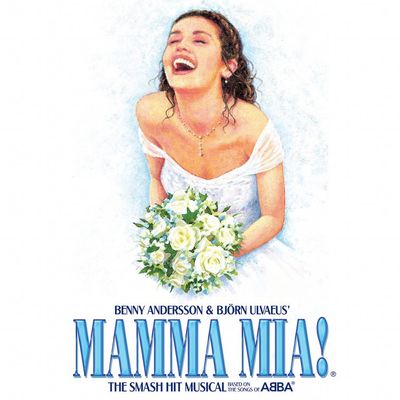
MAMMA MIA
COMPOSER: Benny Andersson, Bjorn Ulvaeus
LYRICIST: Benny Andersson, Bjorn Ulvaeus
BOOK: Catherine Johnson
DIRECTOR: Phyllida Lloyd
CHOREOGRAPHER: Anthony Van Laast
PRINCIPLE CAST: Judy Kaye (Rosie), Karen Mason (Tanya), Louise Pitre (Donna)
OPENING DATE: Oct 18, 2001
CLOSING DATE: Sep 12, 2015
PERFORMANCES: 5,758
SYNOPSIS: Sophie is about to be married and wants her father at the wedding except she doesn’t know who that might be. Limiting it to three men that her mother knew intimately, she invites them all to her wedding to see if she can figure out which one is her real dad.
Using the hits of Swedish pop group ABBA to tell a fictional story, Mamma Mia! was heralded as Broadway’s first mega-hit jukebox musical. After the rocky reception of their first Broadway endeavor, Chess, band members Benny Andersson and Björn Alvaeus gave complete freedom to book writer Catherine Johnson, believing the plot of the musical was the key to its success, not the music. Upon opening, though the show was mocked by critics and ultimately overlooked by awards shows, the musical was a major commercial success. Malcolm Womack explores how its financial successes encouraged producers to mine the discographies of successful artists to guarantee Broadway hits with such musicals as All Shook Up, Lennon, Come Fly Away, and Movin’ Out.
Malcolm Womack is an Assistant Teaching Professor at the Penn State School of Theatre. He has been published in the academic journals Film & Theatre and the Journal of Popular Culture, and has contributed several entries to the African American National Biography. Malcolm has written about Mamma Mia! previously twice, providing an article for the journal Studies in Musical Theatre and a chapter for the edited collection Mamma Mia! The Movie: Exploring a Cultural Phenomenon. He received his doctorate from the University of Washington with a dissertation on Harlem’s Cotton Club.
SOURCES
Mamma Mia, Original Cast Recording, Decca Records (1999)
Mamma Mia! How Can I Resist You: The Inside Story of Mamma Mia And The Songs Of ABBA by Judy Craymer, Benny Anderson, and Bjorn Ulvaeus, published by WN (2006)
Mamma Mia starring Pierce Brosnan and Meryl Streep, directed by Phyllida Lloyd, NBC Universal (2008)
Transcript
This transcript was automatically generated and might contain errors.
[0:03] ♪ Musical number: "I Was Cheated by You" — performed by ABBA ♪
[0:18] Andrew Child: Hi, I'm Andrew Child, and welcome to Fifty Key Stage Musicals, the podcast, a companion piece to the Routledge Press publication Fifty Key Stage Musicals, which is available for purchase by going to Routledge.com or clicking the link below in today's show description.
[0:36] Andrew Child: Today's episode focuses on chapter 43, MAMMA MIA. And with us today is author of that chapter, Malcolm Womack.
[0:45] Malcolm Womack: Hey, Malcolm Womack is an assistant teaching professor at the Penn State School of Theatre. He has been published in the academic journals Film and Theatre and the Journal of Popular Culture, and has contributed several entries to the African American National Biography.
[1:03] Malcolm Womack: Malcolm has written about MAMMA MIA previously twice, providing an article for the journal Studies in Musical Theatre and a chapter for the edited collection MAMMA MIA! The Movie: Exploring a Cultural Phenomenon. He received his doctorate from the University of Washington with a dissertation on Harlem's Cotton Club.
[1:23] Andrew Child: Malcolm, I'm excited to talk with you today.
[1:26] Malcolm Womack: Well, I'm excited too, Andrew. Thank you for having me.
[1:28] Andrew Child: Yeah, so could you please tell our listeners a little bit about what is your connection with the show in question today, MAMMA MIA?
[1:41] Malcolm Womack: Okay. Um, I remember seeing MAMMA MIA when I was in grad school in Las Vegas. And I remember seeing it with a bunch of sneery grad students. And when we left, they were very, you know, superior to it. It's fluff, it's nonsense, it's nothing. And all I could think was, you know, we talk a lot about rejecting the patriarchy. This is a show that literally rejects the patriarchy. This is a show about a young woman, and all she cares about is being a man's daughter and being another man's wife. Her mother has killed herself raising her, but she doesn't care about mom; she cares about these three men. And by the end of the show—and I'm sorry, you know, give away the ending of MAMMA MIA, but I think that's probably all right, I think we'll be able to—by the end of the show, okay, good.
Um, she doesn't care who her father is. She doesn't care which one of these three knuckleheads is her father. She's not gonna marry Skye. They love him; they're gonna go off and have adventures. They walk on an attractive bridge together off into the sunset, but she's gonna be her own person. She's not a man's daughter; she's not a man's wife. And I swear, I thought, you know, if they were doing this show at a, like, an aloft downtown in a very political, you know, theater company with music of Kurt Weill in the background, people would be writing doctoral dissertations on this thing. Interesting. But because it's silly, because it's ABBA, because there's, you know, white platform boots and "Knowing Me, Knowing You," people turn their nose up at it. And I think it is one of the most—and I'm not even kidding when I say this—one of the most aggressively feminist musicals of the last 30 years. That's my take on MAMMA MIA.
[3:20] Andrew Child: And so you have just from seeing it, being in the audience, just sort of having this belief system about it, you've gotten to write about this musical multiple times, it seems like.
[3:33] Malcolm Womack: Yeah, I've written a journal article about it. I wrote a chapter in a book about an academic collection of essays about the movie, and now I was, you know, lucky enough to write in Fifty Key Stage Musicals. Um, and I think it's—this is gonna get very grad school here—I think it's a very rich text. I think there's a lot more in MAMMA MIA than just, you know, seeing a bunch of goofballs singing "Dancing Queen." I think it is, you know, Jill Dolan talks about the kind of feminism that sneaks its way into the mainstream, and I think that's totally what Catherine Johnson and Judy Craymer did with the show.
[4:09] Andrew Child: Do you think we miss all of that just because so many people turn their noses up at MAMMA MIA because it's the jukebox musical, because it's the music of ABBA?
[4:20] Malcolm Womack: I think you might be right about that. I mean, I suspect so. You look at these very intelligent New York Times theater critics, and they kind of fall all over themselves to get their knives out and take shots at it. Um, even the first Broadway production, Ben Brantley gives it a pretty positive review and still calls it a giant singing hostess cupcake, right? I think it's the pastels; I think it's the songs of ABBA. Um, I don't think it's crazy to say that it's a woman-centered piece, and the enthusiasms of men get lauded; the enthusiasms of women often get dismissed or ridiculed. Um, and I think it just sneaks in there so neatly. Um, so many of the songs have been repurposed for this show in a very clever way. Uh, how speech-making should I get, Andrew?
[5:13] Andrew Child: You can go 100% speech-making if you'd like to defend MAMMA MIA to us.
[5:17] Malcolm Womack: To my last breath. Um, ABBA, you know, Benny Andersson and Björn Ulvaeus wrote the songs, wrote the songs often for their partners, then their girlfriends, then their wives, then their ex-wives, uh, Anna Frid and Agnetha, to sing.
[5:34] Malcolm Womack: Okay. So it's a ventriloquial act to begin with. It's men putting their words into the mouths of women. And all songwriting is like that a little bit. But if you look at other bands or acts that had married couples within them, like Fleetwood Mac or the LA punk band X, the women in those bands wrote songs too. So their voices came out as well.
[5:55] Andrew Child: Okay.
[5:55] Malcolm Womack: Um, with ABBA, it's all Benny and Björn. And that's fine; they're good songwriters. But the lyrics they're writing are for their wives to sing. Uh, "Thank You for the Music," "The Songs I'm Singing," "Thanks for All the Joy They're Bringing." They're creating their women as, um, hey, this relationship broke up, but it's nobody's fault. Um, they're really taking a stab here. What Catherine Johnson does in repurposing these songs is she takes a lot of these songs that are sung by the women originally and puts them in the mouths of her male characters. So, uh, one character is—it's not a man who's—it's not a woman who sings "Walking Through an Empty Room, Tears in My Eyes," it's a man who sings that. And the most serious of the three men is the architect, the soulful architect. Um, "Does Your Mother Know?" That's a huge change.
[6:54] Andrew Child: Yeah, because look, ABBA's already got "Dancing Queen," "Only 17." So we've already got this kind of fantasy of teenage girls throwing themselves at men and kind of winking at them. And you know, but you're right, it's a totally huge change because now it's a woman totally emasculating a man, and even though that character is kind of a figure of fun in the show, a woman saying, you know, "Does Your Mother Know You're Out?" is a very different thing than Benny and, you know, kind of smiling knowingly at it.
[7:22] Andrew Child: Right. Do you think that this subversion was conscious on the part of the creators of this show?
[7:31] Malcolm Womack: I do. Um, I think Catherine Johnson knew what she was doing in writing the show. The one thing she was—she was given pretty free reign. And, you know, Benny and Björn had had a few stabs at trying to do a musical. They had one that was successful in Sweden but never broke the UK or the States. They had Chess, which is appreciated now, but at the time was kind of a, you know, a big money hairball. Um, didn't quite get a chapter in this book, but you cover it a little bit in your chapter. And I love it; I love Chess. Um, but boy, it's of its period, and they kept rewriting it. And I think a concert version of Chess is kind of the way to go. It's got some great songs in it. We'll give it that.
[8:14] Malcolm Womack: It does have some good songs in it. For a lot of people, that's their first exposure to rap, was hearing Murray Head rapping "One Night in Bangkok."
[8:22] Andrew Child: Okay.
[8:23] Malcolm Womack: You know, this is—it's the early '80s, so unless you're really kind of down with South Bronx and Boogie Down Productions, you're not hearing a lot of rap until, you know, "Bangkok Oriental Setting" shows up. Yeah, Benny and Björn know popular music, and they know what's gonna be the next big thing. Um, and you gotta give them that. Um, yeah.
[8:41] Malcolm Womack: Yeah, I do think the women involved knew what they were doing. They—Benny and Björn said, "Don't take us too seriously." Um, what we need is a good story, and we don't want it to be about ABBA. And that's kind of the easy way out with these jukebox musicals, right?
[9:00] Andrew Child: Right, which we've seen so much more since MAMMA MIA and the huge success of MAMMA MIA.
[9:08] Malcolm Womack: We've seen so many more jukebox musicals, and a vast majority of them are biographical or tell the story of a certain group. Uh, do you think our other shows, are they trying to emulate the success of MAMMA MIA?
[9:26] Malcolm Womack: I think they're trying to emulate the financial success. I mean, it was a world beater in terms of money, in terms of international sales. Um, even the film, which, you know, has its moments, um, made a ton of money to the point where they even wrote a sequel, which a baffling sequel, where we could get Cher singing "Fernando," but the whole point of the first story is to run out the window.
[9:52] Andrew Child: Uh-huh.
[9:53] Malcolm Womack: Um, so yeah, I—in the same way that, you know, popular films are being turned into musicals, and in the past it was always novels or stage plays turned into musicals. I think people want the familiar property. I think now so many recording artists and their, um, their agents are opening up the songbooks to allow the possibility of a successful stage production. Um, Jersey Boys does it really well. Jersey Boys gives Frankie Valli and the Four Seasons a narrative they never had before. Um, and so that's great, but a lot of them, uh, like you talk about, um, they haven't been as successful because then, you know, an Elvis thing, a Johnny Cash thing, I might as well be, you know, watching Legends in Concert, watching a really polished Elvis impersonator.
[10:43] Andrew Child: Right.
[10:43] Malcolm Womack: Um, is there something from MAMMA MIA that producers who are trying to have the next big jukebox hit? Is there something from MAMMA MIA that they should be paying more attention to than just the fact that we love the songs of ABBA, we love seeing them tell a story? Is there something else, some other truth that MAMMA MIA stumbled upon or actively pursued that producers should be thinking about?
[11:15] Malcolm Womack: Yeah, and if I—if you know, if I knew the answer to that, you know, I'd be a millionaire. I think timing has a lot to do with it. I think big fans of ABBA knew the ABBA catalog. Have you seen the show on stage?
[11:28] Andrew Child: I've never seen it on stage, never.
[11:31] Malcolm Womack: But big fan of the—
[11:35] Andrew Child: Yeah.
[13:01] Malcolm Womack: Um, I don't know what it would be like now when I saw it right after it, you know, premiered. Most people, unless you were a big ABBA fan, you knew "Dancing Queen." You knew the song "Dancing Queen," and that was it. And as the show goes on, and as the opening bars of these different songs play, and you can hear a murmur of recognition in the audience. Oh, yeah, I'd forgotten that was an ABBA song. "Knowing Me, Knowing You," "SOS," how can I forget "SOS"? "Money, Money, Money." And you know, the crowd wasn't screaming, but you could feel it, and you could hear, oh. And I don't know that we're gonna get that so often. In a large part, I don't know that a lot of these acts have the kind of catalog that ABBA has, has this, you know, laundry list of hit songs.
Um, I think what would be useful for producers that are trying to emulate the success of MAMMA MIA to keep in mind is, you know, I think Catherine Johnson, the book writer, does a brilliant job of walking the line between the very familiar. We understand the story; it never gets too cloying. It can get in the neighborhood of it, but—and I'm sure there are productions where it's just saccharine, but it never gets too cloying. But we have these new characters that we can appreciate.
[13:01] Malcolm Womack: Um, I teach at Penn State, like you said. I've had college kids come up to me and say, "Oh, you know, I love that song. Um, I don't know, 'Take a Chance on Me.' It always makes me think of, uh, Donna and her funny friends." And, you know, I wasn't, you know, at Studio 54 in the '70s; I'm not that old. But, uh, these songs have been removed from ABBA and placed into this, you know, musical theater context. I don't know that we're gonna see that with Holler If You Hear Me, the Tupac Shakur musical, or Ring of Fire, the Johnny Cash musical. Um, and going back to Jersey Boys, giving them a narrative, we've already got a narrative for the Beatles. We know their story; we know Elvis' story.
[13:39] Andrew Child: Well, I think what you were talking about with this sort of, you know, having tons and tons of hits that sometimes we hear it and we say, "Oh, that's ABBA." I feel like the only other show that comes to mind that had the potential to go there was the Carol King musical, which again came under fire for, great, we love these songs. Do we really want to see a Carol King impersonation act? Do we really want to see this, like, fraught book played out before us? You know, not that that show wasn't financially successful, but artistically it did kind of come under fire.
[14:17] Malcolm Womack: No, you make a really good point because there are so many familiar songs from Tapestry that I know I wouldn't immediately go, "Oh, that's a Carol King song."
[14:25] Andrew Child: Right.
[14:25] Malcolm Womack: You know, but once I heard it, uh, oh, there it is, or songs that she was writing that were made popular by someone else, you know, that we don't even know her recordings of it, if she has a recording of it, you know. So do you think that because of everything we've talked about thus far alone, is that enough to quantify MAMMA MIA as one of Fifty Key Stage Musicals?
[14:59] Malcolm Womack: Oh, I get well, I mean it depends on how we're gonna define key, I guess. Um I don't know if it should be in the canon the same way that I don't know, Carousel should be. Um, but in terms of casting a shadow over the American music, well by the American music, we're talking Broadway, we're talking a for-profit New York specific theater institution. Um uh yeah, producers have been falling over themselves to grab the brass ring. It it's it it has been so financially successful that you know I in the UK we have, you know, uh uh what is it? Um Our House the Madness musical. We've had uh a musical uh based on the Spice Girls written by Jennifer Saunders. So, you know, wow a smart, funny woman, uh huh, but but in the States, uh what we think of three Spice Girls songs, you know?
Right. Um and I I think that that uh so many acts that have a glancing familiarity with the public, a couple of number ones and a few albums and maybe a greatest hits collection. Um they suddenly they're all very interested, you know. Green Day, Green Day does a musical. And and they're they're not the biggest gutter punks in the world. I mean, these are three guys that asked permission to smash their instruments on Saturday Night Live. So we're not exactly talking about the Sex Pistols here, but I mean this they have, you know, uh the very successful American area, you know. Do you think are there other jukebox musicals that have followed MAMMA MIA that you have an equal love for or an equal respect for or hold in as high of a regard?
[16:42] Andrew Child: Uh you know, it it's it's hard to to kick around Jersey Boys. Um Jersey Boys is very good at what it does. It's very solid, and people have such love for it. Um I I never saw Ring of Fire the Johnny Cash musical or Holler If You Hear Me, the Tupac Chakori musical. But it it they're hard to imagine. Um Johnny, you know, people can imitate Elvis and people can try to imitate Johnny Cash, but Johnny Cash's voice is so distinctive. Right. That to turn that into a story would be tough. And hip hop is always going to be a problem because once someone's covering uh uh you know a route number, then all the authenticity goes and the perceived authenticity goes. We have an expectation in hip hop that it's a direct communication from somebody who's spinning the rhymes who's written this poetry to us.
Um, you know what I think is it it's you know, in terms of tone, it's the diametric opposite of MAMMA MIA, but Girl from the North Country. Oh, uh okay, uh, which is you know um a grim, a grim, sad I'm using somebody else's line. In the words of our former president, sad exclamation point. It is a sad musical. Um, but using Dylan's songs and incorporating them into a narrative, um, I think it's very successful.
[18:06] Malcolm Womack: So it's again, it's we're thinking it's more successful because it's taking the songs that already exist and infusing them into a story. And I'm not sure, was that ever done before MAMMA MIA that we know of?
[18:28] Andrew Child: Yeah, uh, I mean, like the the uh uh Beggar's Opera, John Gay's Beggar's Opera in the 1700s, singing popular music and sticking them in a play.
[18:37] Malcolm Womack: Okay. Um so but in the 20th century, um no, I mean you you think about shows like Five Guys Named Mo, kind of okay. Um, and then we get to a lot of you know, Smokey Joe's Café, like a review kind of thing, yeah. Yeah, um, but in terms of I'm not a playwright, but I think there'd be some kind of pleasure in making the jigsaw puzzle of I've got all these songs, I need to tell a story, and I need to stick them in there. Um, I can't think of anything, but boy, I'm sure there must be. Do you have any artists in mind who you think would make a good jukebox musical?
[19:20] Malcolm Womack: Like, is there an album catalog out there that you think would tell a great story? I'm I hadn't thought about this.
[19:30] Andrew Child: Okay, Cab Calloway would be my first thing. Uh if we but then the hell of it is is that do we have a Cab Calloway mancake character, right? Because Cab's kind of familiar.
[19:40] Malcolm Womack: And so do we have just some guy with his hair, you know, fried and slicked dancing around saying hi to hidey hi. Um or do we spread it out? Because that's you know, part of the thing uh the MAMMA MIA does so well is it spreads these songs out and reimagines them through the gender swap.
[20:01] Andrew Child: Um it's hard to see a Cab Calloway musical where there's eight different people singing, you know, the ghost of Smoky Joe and uh kicking the gong around.
[20:11] Malcolm Womack: Um I'm working on that.
[20:16] Andrew Child: Do you have an idea for that? What do you think would be a good band between the two musicals?
[20:20] Malcolm Womack: I don't have an idea for that.
[20:22] Andrew Child: Uh, because I mean it's also hard because I feel like it's all been done, you know, whether it makes it to Broadway or it makes it to the West End, or just somewhere out there, I feel like anyone who has five or six albums that people are gonna recognize songs from, someone's done it, someone's snatched it up.
[20:43] Malcolm Womack: Um maybe Lady Gaga's the last holdout in popular music, but you know, with with the MJ musical and the Britney Spears one in the works, like I feel like it we're really we're exhausting everyone.
[20:57] Andrew Child: We're going through everything. I think it's also it kind of when you were talking about Cab Calloway, when we have these iconic looking and iconic behaving characters that it's like you're not gonna do the Cher show and have it be some other character singing Cher's songs, you know, we run into an issue when it's someone like Britney or it's someone like MJ who are shrouded in so much controversy, or who we already are you know familiar with their narratives.
[21:32] Malcolm Womack: Yeah, uh do you think the MJ show can survive the controversy?
[21:35] Andrew Child: I mean, I don't know.
[21:37] Malcolm Womack: I mean, they that one is crazy to me because they stacked it with every possible high brow name you could imagine. When I saw that they had Lynn Nottage writing that book, you know, I was like, are you joking? Are you kidding me? I'd love to know how much they paid her, you know.
[21:56] Andrew Child: Um, everything about everything she's ever done feels like it tells me she knows that that's not her rising star.
[22:06] Malcolm Womack: That's not gonna be her next Tony, that's not gonna be her next Pulitzer, you know. Um, so I just wonder how much did they slap on Lynn Nottage's desk and say, just make this work, make this happen, and avoid, you know, we're not gonna go up to when he gets controversial, you know.
[22:24] Andrew Child: Right.
[22:25] Malcolm Womack: If we can even say he was ever, you know, not controversial. There's so much there with like putting children on stage with his father, you know, like yeah, so much stuff there.
[22:36] Andrew Child: Do you have thoughts about that?
[22:37] Malcolm Womack: I haven't seen it, so I don't know, but if you have thoughts about the MJ.
[22:42] Andrew Child: Look, I'm trying to write a book about the TV show I Spy starring Bill Cosby.
[22:47] Malcolm Womack: And and so this is an idea of is this character too toxic that no matter no matter what they meant at a certain point and what they did for the black community, um, what they brought to America, their gifts, their talent, the amount of love people had for them.
[23:05] Andrew Child: We hit a point now where, yeah, none of that matters.
[23:07] Malcolm Womack: Um because some bad stuff happened. Some and I I don't mean to be making light of that.
[23:15] Andrew Child: No, no, right, right.
[23:16] Malcolm Womack: And does that totally negate everything? Does it negate everything for now? Does it negate everything forever ad infinitum, like in perpetuity? Um, but that will be interesting, you know, as we're recording this, just to see what happens with the MJ musical.
[23:37] Andrew Child: Do you have thoughts about if there are listeners who aren't familiar with MAMMA MIA, what's the best way to get into this show?
[23:47] Malcolm Womack: How should they approach it?
[23:50] Andrew Child: Uh with a with a light heart and an open mind.
[23:54] Malcolm Womack: Um, because it's it's not the most challenging piece of theater you're ever gonna see. Uh it's, you know, it is what it is. And right now, you know, high schools are doing MAMMA MIA. I think colleges are doing MAMMA MIA.
[24:07] Andrew Child: So the rights are out there.
[24:09] Malcolm Womack: Um it would be fun to see it on a big stage, but you know, I I imagine there's some high school productions of MAMMA MIA that are just delightful, where these kids are are singing the hell out of these songs that they love, and uh and it's a it's a it'll be a great time.
[24:26] Andrew Child: Um I I know I started this thing by talking about I don't know, cultural feminism and the poison pill that dismantles the patriarchy, but don't go in with that attitude thinking that that's what this is gonna be.
[24:26] Malcolm Womack: This is gonna be the bloody raised fist. Um it's a it's it's a light and fun show, and there's some jokes that work and some jokes that are so corny that I can't imagine anybody making them work.
[24:51] Andrew Child: Um there are a few cop-outs.
[24:53] Malcolm Womack: Look, the song Super Trouper is in it, and there's no way to get the song Super Trouper in this show unless you say, um, she was in a band and this was their big hit.
[25:02] Andrew Child: So yeah.
[25:03] Malcolm Womack: Uh but I would say that if you're somebody who's listening to a podcast about musicals and you haven't seen MAMMA MIA yet, oh go see it.
[25:13] Andrew Child: It's um your friends who don't like musicals will point to that and go, that's why I don't like musicals.
[25:19] Malcolm Womack: But but if you like musicals, it it's gonna be a ton of fun.
[25:23] Andrew Child: I also think I just in my own experience, I think we can exclusively say that people who hate musicals, this is an example of why.
[25:34] Malcolm Womack: Because I feel like I know so many people who have never been in a theater in their lives.
[25:39] Andrew Child: But if MAMMA MIA comes on tour, they get out their boa and they show up, you know, they wanna see because they care about ABBA, they care about this music, you know, they love the movie, maybe.
[25:50] Malcolm Womack: Um do you think because you can sort of mention this a little bit. We've got some songs in there that are only in there because they can be, you know, the diegetic music.
[26:00] Andrew Child: Is that is that a cop-out for uh jukebox musical to be doing, or do we think, you know, if you want to get the song in there, that's fair.
[26:14] Malcolm Womack: I think it's a cop-out.
[26:15] Andrew Child: Yeah, I totally agree.
[26:16] Malcolm Womack: I think I think that if because that is the you know, that's Occam's race. That's the easiest way to get from point A to point B.
[26:24] Andrew Child: I gotta write a musical that's got the songs of I don't know, you two in it.
[26:28] Malcolm Womack: Uh, so it's gonna be a musical about an Irish band.
[26:31] Andrew Child: You know, it's it's the easiest way to get that music in there.
[26:34] Malcolm Womack: Um too, actually, might be they got a big catalog.
[26:37] Andrew Child: That's true.
[26:38] Malcolm Womack: That hasn't happened yet.
[26:40] Andrew Child: Oh, I don't know.
[26:41] Malcolm Womack: Maybe I it might not have happened yet.
[26:43] Andrew Child: But it that sounds like something that could have happened and maybe it fizzled out somewhere, you know, like they got the marquee up and it went down, you know.
[26:51] Malcolm Womack: Um I'm curious.
[26:54] Andrew Child: One of my favorite things with MAMMA MIA, and this might totally be a dead end that we don't talk about if you haven't seen it, but you already mentioned Jennifer Saunders.
[27:02] Malcolm Womack: Um, did you ever see when she and Dawn French did a parody, not of the movie, but of the making of the movie for um the uh what's it called comic relief?
[27:13] Andrew Child: Red Nose Day.
[27:14] Malcolm Womack: Yeah, yeah, yeah. Did you ever see that?
[27:17] Andrew Child: I I did remind me about it though.
[27:18] Malcolm Womack: I remember the Swede joke.
[27:20] Andrew Child: Uh yeah, that's a big one.
[27:21] Malcolm Womack: Um that's the only thing I remember. They um they play up exactly like everything you're sort of talking about. They make the tagline for the movie the you know, the music of ABBA with words in between, you know, like it is it really is a beautiful uh skewering of that movie that I totally think like American comedians could never have pulled that off.
[27:46] Andrew Child: Because I think Jennifer Saunders is one of the only performers out there smart enough to say, I'm gonna parody Meryl Streep and I'm gonna take her down, you know.
[27:57] Malcolm Womack: Like she really does this not flattering performance, but once you see it, it's like she's not wrong.
[28:04] Andrew Child: She's doing exactly what Meryl does in the movie.
[28:07] Malcolm Womack: And I feel like in America, we could never get away with that.
[28:10] Andrew Child: You would just have to, you know, parody the fact, oh, isn't it funny that Meryl Streep did this movie?
[28:15] Malcolm Womack: But Jennifer Saunders is able to just say, you know what? She wasn't that great in it.
[28:22] Andrew Child: Well, and she's not wrong.
[28:24] Malcolm Womack: I mean, uh Pierce Brosnan, every I don't know anybody who doesn't like Pierce Brosnan.
[28:29] Andrew Child: Everybody loves Pierce Brosnan, but there hits a point in that movie where oh god, he's gonna sing again.
[28:33] Malcolm Womack: Oh, God bless him. Uh um yeah, and French and Saunders have been doing movie parodies.
[28:40] Andrew Child: Oh, yeah.
[28:42] Malcolm Womack: For so long.
[28:43] Andrew Child: No, you make a really good point.
[28:45] Malcolm Womack: Is you don't think of MAMMA MIA as being, you know, sacred ground to people, you know.
[28:49] Andrew Child: We we can't uh insult MAMMA MIA.
[28:52] Malcolm Womack: But I think you're absolutely right that a lesser comedian would um would treat Meryl Streep with kid gloves there.
[28:59] Andrew Child: Which uh, yeah, we're we're maybe gonna make fun of the fact she's in the movie, but we're not gonna tear apart what she does.
[29:07] Malcolm Womack: And I would do you think that the movie is a good interpretation of the musical, like did it translate well?
[29:19] Andrew Child: Um well, two things.
[29:21] Malcolm Womack: It made a ton of money and they made a sequel to it.
[29:24] Andrew Child: Yeah, the international sales for that film were colossal.
[29:27] Malcolm Womack: Um, so in that respect, yeah, it's that's what the play is.
[29:32] Malcolm Womack: Um in terms of interpreting it, I don't know. I it's not it's a criticism you hear about actors sometimes. It's oh they look like they're having a good time. And I don't know that I felt that as much as I felt that watching that movie. And yeah, it looks like Meryl Streep's having a ton of fun, but you know, I wish I was. Um but I'm I'm I like her, so I'm glad she, you know, had a nice vacation to the Mediterranean. Um I I don't know. I it didn't work for me. Um I thought Amanda, I don't know how to pronounce the last name, Cyfrida, Se Frieda. Yeah. Um one of those. Yeah. Um she was lovely, did a great job. Uh some of the comedy worked, some of it didn't. And uh I I was I was surprised it was as successful as it was.
Because I went to because look, I as I've been writing a lot about MAMMA MIA. Uh when the film came out, I went to a midnight screening the day it opened. Wow. Because I felt like I should be on the ground floor of this. And this was, you know, it was a theater full of people that very much wanted to see MAMMA MIA. And during the closing credits, when Donna and the dynamos come out and Meryl Streep says, Who wants to hear one more song? You can hear people in this room, big ABBA fans, big MAMMA MIA fans going, Oh no! Oh wow, they're getting mocked by people who went to the midnight showing of it. Jeez. But but then overseas sales, hundreds of millions of dollars, and uh a sequel was there. So and did you see the sequel?
[31:14] Andrew Child: You know, I didn't. Uh I know that I know that Donna died and she gets married, and I thought, yeah, God, that's that's horrible.
[31:23] Malcolm Womack: She does they only got one scene out of her, you know. I really do feel like maybe maybe she saw Jennifer Saunders' impersonation and she said, I'm not doing the second, I'm not doing the sequel. But the sequel, I think the crazy thing about the sequel, which I went to, maybe not opening night, but like in the first week. Like I really was excited about the sequel. Um the crazy thing is there weren't a ton of hit songs that didn't make it into the first movie. So, you know, they throw in Waterloo, they throw in Fernando, but then we get Dancing Queen again, and they do MAMMA MIA again. You know, they're reusing the same songs, which is to remove it from already you've sort of analyzed the removal that it went through to be put into the show, then to remove it and put it in the sequel to the movie is absurd.
Um, and I think the sequel is only worthwhile to see because they got a killer cast playing the younger versions of you know Pierce Brosnan and Meryl Streep and Christine Boranski and Julie Walters, and so seeing those people kind of do these like spot on impressions is fun, but other than that, it's and then Cher is fun.
[32:42] Andrew Child: Spoiler.
[32:43] Malcolm Womack: That's a real spoiler if you don't know that Cher is coming, the butt uh Cher's as the grandma is very fun.
[32:49] Andrew Child: I'm curious the trailers.
[32:51] Malcolm Womack: She was in the trailers, yeah.
[32:53] Andrew Child: That's all I knew was that Cheryl was gonna show up and sing Fernando.
[32:56] Malcolm Womack: Um she released an ABBA album like as a companion to that, which is yeah, which is kind of fun. She did a bunch of covers of their songs, sort of, so she was apparently having maybe more fun than Meryl had in the first one, you know. Um she deserves it, good for her.
[33:13] Andrew Child: Yeah. Do you think you know, we've seen a spike since the non-professional licensing became available just a few years ago, um, in colleges, high schools, community theaters doing MAMMA MIA. Do you think this is a show that we will continue seeing produced at such a large scale?
[33:37] Malcolm Womack: Yeah, I think it might be actually. I I think because uh because the music is so strong, because it and it's it's not you know handles Messiah strong, but I mean it it these are some very solid pop songs that people enjoy singing and enjoy hearing. And so uh and like you said, you know, the songs of Abbott with some words in between. And so on that level alone, people are gonna want to stage it so they can, you know, sing Dancing Queen and SOS and people will enjoy seeing it. So I think, and and also it's a woman-centered show, and that's the thing with uh so much non-professional musical theater, is you got uh, you know, a century of shows that feature men and then a girlfriend and maybe a chorus line, and this is a bunch of women getting a bunch of songs.
Um so just the logistics of it make it appealing. Plus, I think, you know, when we start thinking through those sort of logistics, like it's a show you can do on one set with a couple pieces, you know, it really is this clean, concise.
[34:48] Andrew Child: Do you think would I don't know, would MAMMA MIA as a concert hold the same charm? Or is this story really adding something here?
[35:02] Malcolm Womack: I think the story adds something to it. I I think that to do MAMMA MIA as a concert, then you might as well just you know have an ABBA cover band. Um we could see the platform shoes and the funny costumes and uh and and there are a bunch of ABBA cover bands. I'm trying to remember some of their names because they're all terrible puns. Uh oh, I'm sure they're not coming to me. Um but no, I I mean chess works, we were talking about that earlier as a concert piece because you know we're gonna hear these these big sweeping songs and them and you know, um uh the duet between the two women I know him so well.
[35:39] Andrew Child: Oh, yeah, the big one.
[35:40] Malcolm Womack: The big one, uh, number one hit in the UK. Um and that's great. Um we we don't need the the overly complicated cold war uh chess defection storyline. We'll be fine here in the songs.
[35:57] Andrew Child: Yeah.
[35:57] Malcolm Womack: Um it would be kind of silly to look at some very po faced people getting in front of music stands and opening them up and then you know, hearing dun dun dun dun dun dun dun dun dun dun. Um might as well do the show at this point.
[36:11] Andrew Child: Do you think or did you come across anything in your research for this chapter or for your multiple other times writing about MAMMA MIA? Are there ABBA fans who dislike MAMMA MIA?
[36:26] Malcolm Womack: I don't know. I don't know. Um it's not impossible though. It's easy to imagine. Um yeah, I feel like it has to exist, but maybe it's because this isn't some hard rocker thing that just sort of nudging it over to almost like a different sleeve of the dominant pop culture and making it a mega hit musical. But I feel like we always have detractors. I feel like I'm aware of Green Day fans who were infuriated that there was going to be a Broadway musical with their sacred music. So I do wonder if there is anyone out there who's silly enough to be like an ABBA super fan, but not quite silly enough to say, I want to see this musical or I want to see Christine Baranski doing this song. I I guess it's probably it seems unlikely because the the ABBA doesn't have that kind of you know teen angst they spoke to me when I was, you know, 14, suburban and bitter uh that you know that punk or a metal band has.
Um and I don't think an ABBA fan is the kind of person who's my favorite band, you've never heard of them. I don't think ABBA is this kind of niche thing to be. I I imagine most ABBA fans are just delighted there's millions more ABBA fans, and they get to cheer and see ABBA made a you know a comeback album. I don't know they would have without MAMMA MIA. And so I get more music from Bjorn Ulvaeus and Benny Anderson, and you know, uh it's a good week for most ABBA fans.
[37:59] Andrew Child: But you're probably right.
[38:00] Malcolm Womack: Were you in Twitter?
[38:03] Andrew Child: Sorry, go ahead.
[38:05] Malcolm Womack: No, I you're probably right that there is somebody who has a great deal of importance to this music and doesn't like show folk, you know, screwing it up.
[38:15] Andrew Child: Were you uh fan of the new album that came out?
[38:19] Malcolm Womack: Uh I I uh uh no, not really. Um I I I think they're uh for and this is just for me. For me, they are of their era, they are a lightning in the bottle band. They're, you know, Eurovision and Waterloo, and then maybe up to 81, and the girl with the golden hair. Um, and you couldn't get two guys writing more successful uh popular music than these two guys. But that's that's where they live for me. Um but that's that's totally my personal taste.
[38:54] Andrew Child: Have you listened to the new album? Do you like it?
[38:56] Malcolm Womack: I I could take it or leave it. I felt like I I like their music a lot. I like their old stuff. Um, and then I didn't feel like I got anything new out of the new stuff. Like I didn't like I felt like this was I mean, ironically, to bring it back a little bit to musical theater, it's big time how I feel about um the tick-tick boom movie. That I feel like we're seeing these other Jonathan Larson songs, you know, and I'm just kind of like, that's a less good love ebohem, you know. I'd rather just stick with Ren. I'd stick with what I know. It feels like this was the first draft, and maybe we're better not knowing that this existed, you know. I felt very similarly about the new ABBA stuff.
[39:43] Andrew Child: But I guess we never talked about are you an ABBA fan outside of Mama Mama?
[39:49] Malcolm Womack: Um well, I I I am now. Um at the time when I was, you know, with my idiot friends gonna go see Mama Me and I think the Mandalay Bay in Las Vegas is where we saw it. Um I I thought it was gonna be fun. I I but I you know I don't think I would have been able to name the four members of ABBA. Um but but they have a way of turning you. Uh there's a a story about when the Sex Pistols did their reunion tour, their filthy Luca reunion tour. Um, before they took the stage, they played Dancing Queen.
[40:24] Andrew Child: And Johnny Rotten's original thought was we're gonna start playing Dancing Queen, and the crowd is gonna go boo, and then we'll storm out on stage, because that's the kind of music we tore up. Take that, Thatcher, you know, in our in our 80s British punk way.
[40:37] Malcolm Womack: So they play Dancing Queen, first show, and the crowd starts singing along. Because even if you're an old gutter punk going to the Sex Pistols Reunion Tour, you can't resist Dancing Queen.
[40:48] Andrew Child: Yep.
[40:48] Malcolm Womack: And they never played it again because they learned their lesson. And I I think that's the power of ABBA. Is there you know, I'm sure there are people who can very successfully resist ABBA, but I I think they're a pretty irresistible band.
[41:05] Andrew Child: Do you think that MAMMA MIA? We've kind of talked about what it did to sort of the theater industry, what sort of influence there. Do you think the popularity of MAMMA MIA, aside from getting us a new ABBA album, has it had an effect on American or westernized pop culture in a larger sense?
[41:32] Malcolm Womack: Nothing immediately is jumping to mind. Um, we uh I don't know the timeline well enough to know because I'm thinking in terms of film more than terms of the stage right now. Um, but we did start seeing uh all-star celebrity, you know, mixed match casts doing some stage musicals that covered older stuff. I think of Rock of Ages. And I I wonder if that's uh uh an attempt to um oh, look at all of these famous movie stars, and they're singing songs you're familiar with in a in a storyline that isn't difficult to follow. Um but I don't know if that effect has lasted. I mean we had a handful of those and then that kind of dried up.
[42:20] Andrew Child: Right.
[42:21] Malcolm Womack: So uh you know, right before we talked, I went to the MAMMA MIA website um uh just to see what's up with MAMMA MIA. Um still on tour in the UK, still part of the Princess Cruise lines, still, you know, and it it's it's all over the place.
[42:38] Andrew Child: Is you know, is the cruise ship and the open air theater and the dinner theater, is that is that where MAMMA MIA belongs, do you think? Or do you think we have to bring it back to Broadway someday and do it again?
[42:51] Malcolm Womack: Oh, I I don't know. I don't know if it'll ever be part of the Encourse series of the great musicals of the past. Um I I think I think that is kind of where it belongs, and there's nothing wrong with that. Um it doesn't have that kind of Lion King spectacle longevity, right? Where there'll be dedicated performances of it in major cities because um you're not there to look at the platform boots, you're you're there to hear the songs. And I I think that uh dinner theater, community theater, cruise lines, hey, uh there are worse ways to spend a couple of hours.
[43:27] Andrew Child: Um, amazing.
[43:30] Malcolm Womack: Thank you so much for chatting with me today. This was fascinating.
[43:33] Andrew Child: No, thank you. This was a lot of fun. It was nice meeting you.
[43:36] Malcolm Womack: You as well, and thank you, listeners, for joining us. Please make sure to purchase a copy of 50 Key Stage Musicals by visiting Routledge.com or by clicking in today's show description. If you want to learn more about MAMMA MIA, please also review the links in the below description.
[43:53] Andrew Child: I'm Andrew Child, and thank you for listening to 50 Key Stage Musicals, the podcast.
© Broadway Podcast Network, All Rights Reserved