

Tim digs up some cover versions of four of his best-known songs performed by boxing legends Barbra Streisand, Neil Diamond and Brian Wilson - and music legend Mike Tyson; or possibly the other way round... Read More
From the show: Get Onto My Cloud: The Tim Rice Podcast
Featured Shows

About
Tim digs up some cover versions of four of his best-known songs performed by boxing legends Barbra Streisand, Neil Diamond and Brian Wilson - and music legend Mike Tyson; or possibly the other way round.
Transcript
This transcript was automatically generated and might contain errors.
[0:00] Tim Rice: Hello, this is Tim Rice, and this is episode 36 of my podcast Get On to My Cloud.
[0:15] Tim Rice: One of the most satisfying aspects of having good fortune as a songwriter is the possibility of cover versions of your songs, particularly satisfying if you haven't pestered the singer in question to do so. If a distinguished recording artist records one of your songs simply because he or she liked it, that's a great compliment.
[0:36] Tim Rice: Over the years, plenty of performers have been kind enough to wrap their tonsils around my words, obviously accompanied by a brilliant tune, which I must concede plays a pretty big part in making any song popular. The endless discussions within and indeed without the music industry as to whether the music or the lyric is the most important factor in making a hit can never be satisfactorily resolved.
[1:00] Tim Rice: There are plenty of wonderful tunes that have been sunk by an indifferent lyric. And of course, many melodies have been extraordinarily popular without any words at all. There again, quite a few poets down the ages have made an impact without any musical backing. One comes to the rather obvious conclusion that both elements of the creation are essential for a hit.
[1:23] Tim Rice: My pal, the great British lyricist Don Black, said to me the other day that the tune will be the first thing that makes a song a hit, but the words are what will give the song longevity, turn it into a standard, or not. I agree. Every great hit has a perfect balance between words and music, even if it doesn't always seem like it to begin with.
[1:46] Tim Rice: On the face of it, a song like Don McLean's American Pie made the huge impact it did because of the words. But had his tune not been a brilliant and almost instantly memorable vehicle for the complex tale he told, American Pie might never have been a lasting success. McLean's extraordinary lyric would not have been best served by the tune of, say, Moon River, one of the greatest popular melodies of all time, which, fortunately for its composer Henry Mancini, was graced with perfect words by Johnny Mercer.
[2:20] Tim Rice: Like all lyricists, I love the allegedly true story about Mrs. Oscar Hammerstein, who, when hearing at a cocktail party that Jerome Kern had written Old Man River, pointed out that her husband wrote Old Man River. Jerome Kern wrote Dum Dum Dum Dum. To put lyricists in their place, I recall the definitely true story told by another master British lyricist, Barry Mason, who was doing what you do in the gents at the Savoy Hotel when he realized the bloke at the next stall, in those pre-social distancing days, was whistling Delilah, one of his big hits at the time.
[2:57] Tim Rice: Barry was unable to resist remarking to his fellow gent, did you know I wrote the words to that song you're whistling? To which the bloke looked at him and snarled. I wasn't whistling the f words. If I'm ever next to somebody whistling Don't Cry for Me Argentina, I don't think I'll mention that I wrote the words.
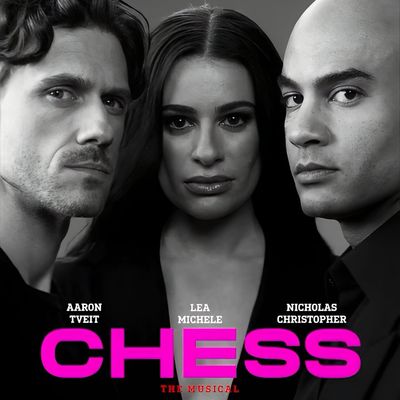
[3:17] Tim Rice: Anyway, I'd like to play one or two of my favourite cover versions. I always thought that I Know Him So Well from Chess, written of course with Bjorn Alvaeus and Benny Anderson, would struggle to get covers, as it's a duet with two different characters singing diametrically opposed views of the same man. And it would surely need two singers on singing terms with each other to follow in the footsteps of Elaine Page and Barbara Dixon.
[3:42] Tim Rice: But I'm glad to say that the song has had quite a few memorable duet recordings since Elaine and Barbara first brought my lyric to prominence. The most recent at the time of this recording is by Amanda Holden and Sheridan Smith. Another pairings on I Know Him So Well have included Whitney Houston and her mum Thelma, Mel C and Emma of the Spice Girls, Peter Kay and Susan Boyle, Steps, and a male duet version by John Barriman and Daniel Boyce.
[4:12] Tim Rice: But one well-known female inquired whether it was okay to record the song more or less solo, i.e., with her singing both parts. I guess I might have objected or at least thought about objecting, except with the fact that the lady in question was Barbra Streisand. I took a totally unexpected phone call from her in my car, somewhere on the A40, and as these were the early days of car phones, I pretty speedily pulled into a lay-by to make sure I didn't lose the connection.
[4:39] Tim Rice: It wasn't the best signal of all time, but once I gathered what she was after, i.e., could she do the song on her own, I rapidly agreed. Frankly, she could have asked to do it in Swahili or underwater, and I would have agreed. By the time I got home, I'd begun to worry that the call was a hoax, but it wasn't, because eventually it appeared as a track on one of her Broadway albums.
[8:33] ♪ Musical number: "I Know Him So Well" — performed by Barbra Streisand ♪
[8:59] Tim Rice: Barbara's version was almost a duet in that Richard Page, the songwriter and former lead vocalist of Mr. Mister, provided some answering phrases. Oh so good, oh so fine, etc. In a way, having the same person sing both verses works, because it then portrays a woman wondering which of two explanations is responsible for the failure of a relationship. Or something. But I doubt if anyone listening to that would bother to analyze it. More likely they'd just think, what a lovely tune. And Babs sings it pretty well.
[9:31] Tim Rice: Another song from Chess, One Night in Bangkok, attracted a big name American cover in 2011. The singer was not quite in Ms. Streisand's class. Fortunately for him, singing was not his meal ticket. Boxing was.
[10:30] Tim Rice: At this level than no ordinary venue. Get Iceland or the Philippines or Hastings or this play. One night in bank, I end the world or stuff. You'll find the garden and be gold and closer. And if you're lucky, then the God that she feels the angel sliding up to me. One town, very like another head down over your pieces, bruh. What do you mean you see one crowded flu to stickin' town? Two girls, one sweet, summer set up and the summers and sweet. Get tired to talk into a tourist. Every moves among the peers. I get my kick above the waistline sunshine. One night and bank I makes a hard man a fool. Not much between despair and exercise. One night and bank, I make the tough guys tumble. Can't be too careful with your composing.
I can feel the devil walking next to me. A cerebral fitness. It grips me more than it would a whole muddy river or reclining Buddha. And thank God I'm only watching the game, controlling it. I don't see you guys freaking kind of make I'm contemplating. I'll let you watch. I wouldn't fight you, but the kind of quick we use, they get born excited. So you better go back to your board, your temple, your master call and cooking that happy.
[12:37] ♪ Musical number ♪
[12:58] Tim Rice: One night and make a mix of hard man humble. Not much between the scare and exercise. One night and make a mix the tough guy's humble. Can't be too careful, which you'll comfort me. I can feel the devil walking next to me.
[13:19] Tim Rice: Mike Tyson. Should I ever meet him? I would have no hesitation in telling him that his version was way, way better than Murray Head's original. He gave new poignancy to the line, I get my kicks above the waistline sunshine. Next to another artist of Megastar status, whose principal job was singing, Neil Diamond. Not only was it an honor to have the great man sing one of the songs from the Lion King score that I wrote with Elton John, but he generously sent me a thank you note with an advanced copy of the album on which it featured. The movie album, Neil Diamond, conducted by Elmer Bernstein. His version of our song was an illustrious company alongside standards such as As Time Goes By, True Love, In the Still of the Night, and one of my all-time favorite songs, Moon River. I'm afraid I brutally rejected these classics in favor of playing Neil's version of Can You Feel the Love Tonight.
[14:08] ♪ Musical number: "Can You Feel the Love Tonight" — performed by Neil Diamond ♪
[17:52] Tim Rice: Neil Diamond. I got to meet Neil Diamond a few years after that 1998 album and have kept in touch, although Neil's not been in the best of health recently. When a great songwriter decides to sing songs by other people, apart from anything else, it shows that they're appreciative of the work of others and that they consider themselves not as rivals, but as colleagues. When that great songwriter is Neil Diamond, and the work of others is mine, it's a particular thrill. Neil, of course, writes both words and music. I get sent quite a few songs by new songwriters who create both lyric and tune, and sometimes feel that their work would be more lasting if they handed over one half of the job to a specialist.
But this was definitely never the case with Neil. He cracked both skills from the start. As Solitary Man and Cherry Cherry convinced me in 1966. In 1966, I was working at EMI Records in Manchester Square, London W1, my first official job in the music business. I was what was known as a management trainee, in reality, a glorified office boy. I wore a suit and tie and clocked in at 9 a.m. whether or not I'd been out late the night before at a concert or club, allegedly working or talent spotting.
[19:18] Tim Rice: All this was changing fast, but one of the highlights of my formerly dressed first weeks in Manchester Square was the visit of the Beach Boys to the HQ of their London Record Company. They'd just issued the majestic album Pet Sounds and were giving another of EMI's well-known outfits, the Beatles, a good run for their money. They tooled around the square in a mini moak and caused a huge stir both within EMI and in the streets of West One. However, their lead creator Brian Wilson was not there. He'd relinquished touring with the band and remained in California, more or less living in the recording studio, turning out masterpieces for his brothers Carl and Dennis, cousin Mike Love, family friend Al Jardine, and new boy Bruce Johnston to deliver live to the world.
What's considered by many to be the Beach Boys' greatest single, Good Vibrations, was in the works and shot to number one all over the globe in October that year. Anyone who was in their teens or twenties in 1966 still holds Brian Wilson in awe. And back then, if you'd put it to me in my suit and tie, that one day Brian Wilson would record one of my songs, I would have suggested that you lie down in a darkened room until the drugs had worn off. But 45 years later, he did. Not one song, but two. In 2011, I was amazed when I heard that he'd recorded an album of Disney favorites entitled In the Key of Disney, including two numbers from The Lion King. He had a comparatively rhythmic crack at Can You Feel the Love Tonight, but also had a go at Simba's song from his cub days, I just can't wait to be king.
I've quite a few more covers of my stuff lurking in murky corners of my collection, so maybe I can inflict these upon you in a future podcast. Thanks to Robert Duncan for suggesting the idea for this episode of Get Onto My Cloud, as I end it with Brian Wilson. Yes, the Brian Wilson.
[20:46] ♪ Musical number: "I Just Can't Wait to Be King" — performed by Brian Wilson ♪
[21:03] Tim Rice: That was episode thirty-six of Get Onto My Cloud. Written and introduced by me, Tim Rice, and produced by none other than Peter Hog.
© Broadway Podcast Network, All Rights Reserved