

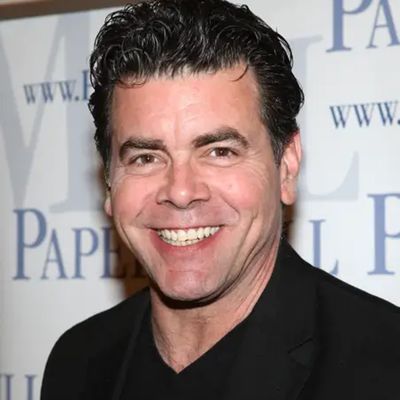
For the first time ever, Burke Moses tells his harrowing (and hilarious) tale of getting hired for--and then promptly fired from--the original production of Into the Woods, just weeks before it was set to begin its Broadway production... Read More
From the show: Giants in the Sky
Guests
Featured Shows
About
For the first time ever, Burke Moses tells his harrowing (and hilarious) tale of getting hired for--and then promptly fired from--the original production of Into the Woods, just weeks before it was set to begin its Broadway production. Join host Ben Rimalower for this candid conversation exploring how Sondheim and Lapine went Into the Woods.
Transcript
This transcript was automatically generated and might contain errors.
[0:00] Ben Rimalower: Broadway Podcast Network presents Giants in the Sky, How Sondheim and Lapine Went Into the Woods, with me, Ben Rimalower. Today's guest, Burke Moses, the Prince in the Final Workshop.
[0:13] Burke Moses: Once upon a time... I was cast as Rapunzel's prince, but wound up playing the dual roles of Cinderella's prince and the wolf in the final pre-Broadway workshop of Into the Woods. I later created the role of Heracles in the Broadway premiere of Stephen Sondheim and Burt Shevelov's The Frogs. I also created the role of Gaston in Disney's Beauty and the Beast on Broadway, and starred on Broadway in the acclaimed revivals of Guys and Dolls and Kiss Me Kate. My off-Broadway performances include Gigantic and The Fantastics, in addition to numerous regional theatre credits and film and television roles.
[1:01] Ben Rimalower: Well, Burke, first of all, thank you so much for talking with me. You are, like, such a wonderful surprise to me, because when I started this project, wanting to learn about Into the Woods, because it was such a big show, but it's pre-internet, and there was those years of development that nobody knows anything about, and I had a vague sense that there'd been Betty Buckley at some point, and all these other people had auditioned, and there was Playwrights Horizons, and they went to San Diego, but I couldn't find stuff. It was really limited information out there, and then in one of my first interviews, Danielle Furlan says, oh, and Burke Moses, and I was like, what? I had no idea. And then I got a little more information as I started to talk to people, but the way people went in and out in that process, and it's been so many decades, and the fact that I can actually talk to you about it, I am just overjoyed, and I know all the listeners are dying to hear your whole experience, if you would share it with us, from the very beginning, when you even knew there was such a thing as Into the Woods.
[2:11] Burke Moses: Well, thank you for having me. I'm not quite sure if I feel privileged to be here, because you are the first person in the media ever to ask, ever wanting to know the tale of the exiled prince. So I am privileged. I am privileged. I don't know if it's a privilege. It's as much of a privilege as going to a Saw III movie. Actors, like in any business, actors like to sit around and tell war stories about their career, the horrible things, the heartbreaks, the parts they didn't get, or the parts they got, but the show didn't have legs, et cetera. During these moments, I never tell my story, because after I tell my story, everybody just goes, oh, shit. Wow. And nobody seems to be able to top it. So to cut to the chase, what happened was, I wasn't just part of the reading.
I was the original Broadway Rapunzel's Prince. I had a contract. And when we started that reading, not only did I have a contract for that, but I also had a contract for ABC television. I was working in daytime. I had a three-year contract. So I was doing both shows. It's a big deal. I remember it was on the cover of the entertainment section of USA Today, which used to be much bigger than it is now. And what happened was, on the first day, I had two jobs. I was making deep into the six figures with both jobs. And a week later, it was a two-week reading, and a week later, I lost the soap opera job. And a week after that, I was fired from Into the Woods. And I never got to play my part. Never got to even say the words, except for once during the reading.
[4:23] Ben Rimalower: Now, this was going to be your Broadway debut?
[4:28] Burke Moses: I was a year out of school. So it's a bit of a story. So it's not for the faint of heart. So kiddies, listen up. So here it goes. So I graduated from Carnegie Mellon, which wasn't nearly the, you know, today it's harder to get into at MIT. Back then, it was not so difficult to get into such programs, but I was doing very well. I had a commercial. I worked over the summer, so I had plenty of money to move to New York. I had a great agent. All the agents wanted me coming out of a school. I started and immediately started working on television, doing episodics, doing reoccurring players for the Guiding Light. And then ABC picked me up for a three-year deal for the now-defunct soap opera Loving, which used to be down 67th Street, down by the railroad tracks there.
And so we got this thing. This was by Christmas. I'd come in the fall. This was by Christmas. And then in January, my agent said, look, I know you've got a contract, but I want you to go in for this show. It's the new Stephen Sondheim show, Into the Woods. And so I went in, did my first audition, started making callbacks. And then all of a sudden, you know, they gave me the script. So I had to go in and do it. And I remember meeting James Lapine. And after I'd gotten to read with him, I said to him, I'm not really, I feel like I'm not getting the style. You know, they gave me the prince scene, the scene before they say agony. And I really wasn't getting the style. And Lapine said, no, you're really not, but we're going to call you back later anyway.
So I got called back to the final call. And I remember Robert Westenberg was there. Harry Groner was there. And I think McGillis, Howard McGillin was there. So it was those three guys. And I don't remember seeing anyone else for Rapunzel's prince, but they matched me up with Westenberg. And I think it was the West Side Arts Theater. I think it was over there on 43rd Street. And so we're literally on stand waiting stage left, you know, waiting to enter when you would. And so he comes on, starts talking. And all of a sudden I came on and the scene was magic. It was, he had that, you know, I like the one in the red hat, that delivery of his, that was just, and I remember coming off. First of all, I didn't really know it was that funny.
They were just roaring their asses off at their own jokes, which is what writers do. And I had no idea, but I came off, I came off not knowing what had happened, but I knew it went very, very well. And the next thing I know, my agent's calling me up saying, you got it. You're, you're, you're this character. And I was like, oh my God, can we do that? And my agent was okay. We're, you know, rolled up her sleeves and started doing so and worked out a deal somehow where I was going to take some weeks off. But anyway, I was going to do both contracts, take a little storyline exit from my thing or pre-tape things, post-tape things, and it was going to work out. Okay. Because I, you know, I didn't really care that much about the soap opera.
I wanted to be in a Broadway musical, not just a Broadway musical. But back then, Sondheim was literally the only guy in town. He was the penultimate. I had seen, I had seen, you know, Len Cario in role double Z of the Eurus Theatre, God, you know, I mean, this was just so unbelievable. So we get to the day and we have our, you know, they send us the script like a day before. Okay. Because it was all big hush, hush. I don't think I got it until like Saturday or Sunday was delivered to me, which was brand new. I was like, oh my God, scripts delivered to me. This is fantastic. And so we go in the next day. And there's the entire cast, there's Gemignani, there's Sondheim, there's Lapine, there's Betty Buckley doing the, doing the witch.
And of course, Chip and Joanna and all the people who had been out at La Jolla. Yeah, or most of them. Yeah. So we sit down, and we're like, you know, okay, do the meet and greet, etc, the bagels, etc. And we sit down and read the play, which I think was the last time Sondheim ever did the sing through. And he has the worst voice you have ever, it's like a bark, but it's on pitch. Or is it? Because it's, it's just like, and it was, of course, it was magical, because I had heard these stories about this sort of thing. And I was just, oh my God, and every time my scenes with Robert would go into this thing, and I just play off him. He was just really easy to play off good actors. And he's a great actor.
And I was just playing off him. It's like, oh, oh, I see what I'm doing. I'm kind of getting it here. Yeah, of course, everybody's laughing. And it was just glorious. And so we finally get to the break. And I'm over at the coffee craft table or whatever, get a little tap on my shoulder, I turn around and it's Stephen Sondheim. He's going to talk to me. And he's like, in his very peculiar way, kind of just odd. Well, I would just want to, you know, welcome you to the show type of thing. And, and I said, Thank you so much, sir. It's so great to be here and blah, blah, blah. And I'm going on and on. And while I'm going on, he's, he's like shaking his head like no, no. And he's like backing away from me.
And I'm kind of moving toward him going, and I feel just great to be here. And he finally just goes, don't, don't, don't call me, sir. And he walks away. And I just stood there at the craft table like, what the fuck was that? And I should have thought, it's an omen. It's an omen for what is to come, because what happened next was James Lapine approached me. And he said, Burke, listen, Robert Westenberg is finishing up his run at Arena Stage. He's doing the Crucible. I think he was doing Proctor down there. And he's not going to be able to do the reading. Since you're his understudy, during the reading, you're going to do his role. And your understudy, Jeff Blumenkrantz, is going to do your role.
I mean, I cannot tell you the difference in chemistry between me and Robert Westenberg and me as the lead with Jeff Blumenkrantz. So basically, they just handed the lead of the biggest Broadway show in a decade to a kid 10 months out of Carnegie Mellon with his Meisner training. And not only that, and I just spent the last nine months trying to learn this television thing. We didn't have television training back then. You literally learned it on the spot, just like they did in the 30s. And TV is a whole different thing. And of course, the exact opposite energy than a highly stylized musical. So we finished the reading, and I'm just freaking out, and the reading goes great, and everybody says goodbye.
And I call up my agents saying, they just gave me the lead. Well, there's nothing else you can do. Okay, so I go in the next day. Now, I've had the script for a day, so I'm like rereading the script. And I go in the next day, and we're like, you know, we're going to block two weeks, we're going to have a staged reading. And I go in the next day, and I realized right off the bat in the first scene, it was with Chip and Joanna. Were you the wolf? What? Were you?
[14:02] Burke Moses: You were doing a scene with Chip and Joanna in I'm the Prince. And I was like, I'm not part of it at all. I'm like a stage manager sitting over on one side. Absolutely zero direction. And the first thing James Lapine said to me, I remember we were doing the wolf. Everybody kind of liked my wolf because I use this kind of gravelly voice, which I learned in school and I later used in Heracles. So I had this look at that flesh pink and plump head that had a real gruff little girl. But it kind of went into this big baritone sound there like, whoa, okay, that's different. And so that was going well, and was going so well that Lapine came up to me, she said, he said, little red riding with Danielle needs to see you like you're a rock star.
And I was like, a rock star? How the hell am I going to make this guy sound like a rock star? It's not like, you know, I, I couldn't, I couldn't go. I just I couldn't do some kind of rock and roll. That was like, that's not going to work. And I'm going, I'm going back. I'm spending three days, but no, we had a problem because the prince is not going well. And I'm spending days on this thing. Finally, I'm like, Davy Jones, the monkey. I come in one day, we run the scene, I go, hello, little gal, what's your rush thing to get higher? And he and the points like, stop, stop, stop. Whoa, whoa, whoa, what are you what are you doing? What are you doing? And he said, Well, I mean, you said a rock star.
And I thought, Dave, what about Davy Jones? And he went, No, no. I meant that she should see you as a rock star, what you're doing is fine. And I, and I once I didn't say it, but I wouldn't go, why the fuck you tell me? That was it. I was like, so I, about a week into it, I get a call from my agent saying, well, the soap opera is going to let you go. We kind of pulled a fast one on them. And you know what, it's not the six weeks that it's really more like 14 weeks. Yeah. So they can't really continue your storyline. Well, you just lost well, about 100,000. It was like, it was like, oof. But I didn't care anyway, because I'm in a great big Broadway. No matter I'm living the dream. Horribly, but at least I'm okay.
So but once the second week of the reading started, I am so lost that finally, I just go up to Lapine and say, look, I'm, I'm really, really not good. There's a style here, like in Guys and Dolls. And they went, Yes, there is. And I said, Well, what is it? Yeah. He said, Well, it's not what you're doing. And then he left. And that was the only piece of direction I received, playing the leading role in the biggest Broadway musical less than a year out of school. So we finally get to the day of the reading. I'm like, just, you know, get this nightmare over with, bring Westenberg back. So I just need to be able to watch, I just need to be able to sit there and watch. And my part was so easy. All I had to do was sing a song which fit like butter in my voice.
I mean, a chicken in its own juices. But you know, the two scenes are once he's there, I'm fine. And with a couple of side gags later on the rest of the time, it's like ensemble work, you know what I mean? It was the perfect, perfect way to enter Broadway with that kind of rehearsal period. And so finally, we're getting to the stage reading and they say, Okay, you know, a couple friends are going to be in. And I was back down when it was at 890 studios. Yeah. downtown on Broadway, big, big, big rehearsal room, big, you know, and I get there in the morning, and there's Chip, who's smoking a cigarette with his hand shaking, and he's curled into a fetal ball by the door. And I'm like, I thought he was having a nervous breakdown, Chip.
What's the matter? What's going on? He went, Are you fucking kidding me? Look in there. And I was like, what? And I walk in, it's like, Oh, my God, there were 100 chairs. In the front row, Kevin Kline was hobnobbing with Bernadette Peters. Mary Elizabeth Mastriantonio was there who I was just in love with a star of a human comedy. It was like, Oh, my God, who's Miss dream doll and she's like front dead center with every power player in New York. It was the hottest ticket in a generation and I had not brought my game face. Lapine said, Oh, it's just just another rehearsal will be work. No, this was a full on Broadway spectacle. And I don't remember much about the reading. I just remember on the one thing I could just nail, which was the wolf.
I lost my place and I had to stop and start over. It was just it went from nightmare to nightmare to nightmare to nightmare moment and moment missed. It was a putrid performance of which I had no clue of what I was doing and nothing they taught me in school was helping whatsoever. I was reaching into a grab bag of tricks and coming out. I just had no clue what Westenberg had done because it was so fast. I only saw him for like twice and I was my mind was occupied. Otherwise, you know, I wasn't. And so finally, I think, oh, my gee, thank God. And so I go back on Monday. I've got to finish up the soap opera and I'm there in the makeup room and I'm talking to Chelsea Noble, who married. The guy from.
Married the who's the guy is like a Christian kid actor. Anyway, that that's a sidebar. And all of a sudden, somebody said, Burke, phone call. So I get it. I mean, let's say it's interesting. I mean, it's like, you know, bunch of ironing boards around. Get a call. Hi, Burke. James Lapine. Yes. Listen, we're letting you go. We're going to go another way. And I said. But I didn't get to play my part, he said. Yeah, we've decided to go another way. And I thought. All right, let's see what. And I was like, oh, my God. And I called my agent and she said, yeah, I just heard come on in. So after my day shoot, I went to my agent and I'm sitting there in the waiting room just kind of, you know, stunned, shocked.
And next to me, I recognized the actress who was also there as Randy Graff. And I just seen her in the gypsy run of Les Mis. But oh, hi, I saw you in Les Mis. I thought you were quite wonderful. I know Marcus Lovett at the School of Marcus Lovett. She was like, oh, hi. You know, and I said, Burke Moses. And she went, Burke Moses. Wait, the end of the woods, Burke Moses. And then she covered her mouth and went. And I thought, oh, my God. I got fired on Monday. And this was like Monday evening or it was Tuesday. It was one day. And I was Burke Moses, the guy who was fired from Into the Woods. And the only I mean, they had to pay me. So I did get a Broadway paycheck for the next year. Wow. Now, so that was it.
But I went, I went dark. I went into a hole. And the next thing I know, I'm doing streetcar so far out in the boonie that I mean, it was like your penance. It was like exile. It was so far. It literally was as far out of New York as you could possibly get to. And it was just wow. Wow. And so that was my welcome to the business.
[24:42] Ben Rimalower: Okay, first of all, thank you so much for telling me this. I have so many questions. And of course, I want to get to, you know, I mean, this, I can't imagine what this does to a person at that tender age. But of course, you went on to do many Broadway shows, many Broadway shows, including one with Stephen Sondheim. So I mean, there's a lot more that happened later. But going back just before the axe fell, like, I, first of all, this is so interesting, because the people that mentioned you being in that workshop, talked about how brilliant you were, including Jeff Blumenkrantz. So my guess was you were going to tell me, Oh, I was a young whiffer snapper. I, I talked. When they when they had, you know, the way my mind worked at the time, I mean, when they handed me, I could be the lead.
What if I'm better than Weston? You're young, you're stupid, you don't get no contracts don't work that way. Okay, but I thought I could go toe to toe with him on the wolf. I was like, put my wolf up against it. Go ahead, my friend. Yeah. But the prince, I was so lost. I just did. I just didn't have the I just couldn't figure it out. And my training had really not to address that. And that was actually became the focus. Yeah. How could I have saved myself from that peril having no direction, no support? No, no, I mean, about the no direction, because, you know, I mean, obviously, so many of us in the business idolize James Lapine for the shows he's written, and for the work that he's put on stage, in terms of the results, you know, that the audience experienced.
But even in his own telling in his book about Sunday in the park with George, putting it together, I don't know if you're familiar with this book, but it's a fascinating book. And it's it's kind of like this podcast in that it's like an oral history of that show. And it's very frank, and unflinching and how many problems these actors had with him. And he's very much owns up to sort of being new to directing in general, somewhat and very new to musical theater. And, you know, having, I mean, you know, people like Christine Baranski and Kelsey Grammar and stuff that, you know, fell out in that show before it came to Broadway. And so, you know, obviously, Into the Woods was later, and there was a Pulitzer and other stuff.
So I'm sure there was a higher level of confidence and, you know, competence even in that way. But but clearly, there were other issues other people talked about in terms of the bedside manner with the actors. And there did seem to be this kind of like trail of bodies, I mean, which I guess is not uncommon for a musical in development. But like, I mean, did you know, did you have a sense coming in as Rapunzel's prince, because I guess Chuck Wagner, who did it on Broadway is who had done it at the Old Globe. He didn't know what they wanted. Equally as devastating to Chuck for not being pulled along with it. He must have been like, hallelujah when it came to redemption. So, you know, I mean, it must have been, I mean, can you imagine how devastating it was for him?
[28:05] Burke Moses: Yeah, but I mean, did you, you know, sometimes it seems like they're just kind of throwing pasta against the wall because they can't figure something out. Was there that sense about the character? Like they, they like weren't happy with anything they were getting from anybody. And so they just kept like throwing people under the bus. Well, I never, I never, the only time I ever did with Kunzel's Prince was my audition with and the read through. I mean, that was it. I never touched that role again or since. It didn't happen. So once I got to the press, I mean, I'm, I'm a kid out of school, book in hand, got the script one day earlier. I have no clue what a professional Broadway performance looks like, never mind be able to do it.
I'm doing, you know, I was doing summer stock with, you know, there's just no difference what you come out of school and particularly back then, which was a whole different time in training. Right? I mean, it was, you know, we had seven hour acting classes back then. I mean, it was like, you know, getting on a couch and being assaulted. And this is not going to help you in the vaudevillian world theater, which is an old school training. And that's what eventually they'd be writing a book on the subject. So this was impetus for me was how can, how could I have survived a situation where I have no experience, no direction, and I'm not part of the process.
[29:46] Burke Moses: Yeah. And we do a seam, they just huddled together and I sit in the side. It was, I was no different than a stage manager. Now, do you think that was them being sort of condescending to you because you were the understudy and they didn't really care what your input was to the scenes that would Bob? I think it's because they had a show that they thought were in trouble and everybody was scared to death that the script didn't work, you know, chip sign in the arguments that chip would do. And, and, and, you know, fuddling with Joanna. I mean, there's, you know, it's all kinds of politics going on about each person's part, etc. And Westenberg is not there to fight for his own part. And they, they know they have to do everything back again, once he comes back.
So it's not like I had Jerry Zaks for a director who would have basically just fed me every line until I got behind who at the time, I don't know what his directing thing, but he is not an actor's director. I mean, he gave me nothing other than, you know, throwing me off base on, on, on the wolf and, and saying, well, it's not what you're doing.
[31:04] Burke Moses: Yeah. I mean, okay. So talking about your book, it's Stanislavski never wore tap shoes, right? Right. Do you feel there's been a change from that era where now programs prepare performers to work in what musical theatre is as opposed to like maybe Stanislavski stuff that maybe is hard to apply in these sort of, as you put it, vaudevillian contexts? But the musical theatre, the problem with the Stanislavski is it's a nine month process. Yeah. First, the first step of the Stanislavski process is basically have a picnic and get to know each other. Nine months, man. Yeah. And then, you know, then the group theatre came along where they had four months, they took the entire summer off. Now you're basically musical theatre gig is about three to four weeks long.
Okay. In those three to four weeks, about two days are spent on the acting. Days. And a typical, especially in a big show, like we just, last big show, it was 42nd Street. It was just a big show. We were doing three scenes, three scenes in an hour, you know, an hour and 20 plus 10 minute break. Okay. You know, with our thing is you really have to have a vaudevillian approach to our business. So fast that you've got to just have some rules to follow. And the craft, that which, what's his face, Strasberg called bullshit, life blood of our business. You know, I went through year after year after end of the woods in this kind of, oh, miasma, confusion about acting. And then my first rehearsal for Guys and Dolls, I finally, finally get back to Broadway to replace the Sky Masterson.
Yeah. I sit down with Jerry Zaks. And he goes, Okay, let's just do the scene. And I said, you know, he goes, How you doing, Sky? I said, Nathan, you old promoter, you. And Zaks gets stopped. He just screamed at me. I mean, there was Leah Hawking, right? And he goes, No, it's Nathan, you old promoter, you. So I said, Nathan, you old promoter, you. And he went, That's it. Wow. And then so I went, I went on to the next line, you know, I feel great, Nathan, to one of a week's out west in Havana, big place, beautiful scenery, helpful climate. And I beat him for 50 G's playing blackjack. And he went, No, stop me again. He went, I beat him 50 G's playing blackjack. And he kept on doing that throughout the first scene.
By the second scene, he stopped directing me like that he stopped giving me line reads, because I suddenly realized what he wanted me to do. That was the first piece of craft I discovered first piece of real craft, you know, toss that dialogue up, ask a question, be speak with inquiry, drive through dialogue, you know, that sort of thing. And that was what changed my approach. Thank God I had him for Beauty and the Beast. Yeah. Then it was just like, I'm just an I'm like in a blur of Stanislavski, trying to feel it and the whole thing. And you're like, No, dude, just need not say a lot of dialogue.
[34:33] Burke Moses: And so that's a lot of years, because this is a fall of 87, or summer of 87. When you get fired from into the woods. And then that's 1993. When you go into Guys and Dolls, as because I know, I saw you, you and Faith Prince, you're fabulous. And Leia Hawking and Jonathan Hadari, I think. Yeah, all great. And Jerry Zack's brilliant production, but spoiled me, I never want to see Guys and Dolls again. But that's another podcast. But, but that's six years. And were you just going to auditions? The latter, where it was basically do a regional show, get great, you know, do a regional show, mixed reviews, do another soap opera, get let go from that. And then spiraling around around regional show that inspired to do a musical.
And just for six years, just trying to figure out why the hell I got fired from into the woods. So always, always, it was it was crazy for me, like, how could I have survived that insane process? And then that day, with Jerry Zack's at the end of my I went, that's how you learn how to say a lot of dialogue.
[36:04] Burke Moses: Now, did you in all that time? Were you feeling like a victim? Or were you blaming yourself for what happened? And myself? Oh, no, no, I know. I'm a depressive, dude, we, we just go straight into the toilet. I went into such a dark place where I thought I was the most not only the most horrible actor, but the most horrible person as well. It was dark, dark. And it just But what I mean, you'd seen Okay, so you were, I was, I was, I was on the cover of USA Today, for God's sake, my parents had had rented a bus. Oh, friends from New York for the big opening of the biggest show in a generation with, you know, but you were but you were fresh out of Carnegie Mellon. Betty was a star with the Tony Award and TV shows and movies and a long list of credits. Did it not give you some sense of this is part this is this is systemic or something that she had a similar fate? No, no.
[37:05] Burke Moses: Oh, well, buddy, but I'm not Betty Buckley. I know, I know, I just took it all on myself. Like, not only I am a horrible actor, but I was a horrible person, too. Because they're so intertwined. You know, I, you know, I was the BMOC coming out of college, I suppose. Boom. And the next thing I know, I'm, I'm in podunk rep, I'm in podunk rep doing streetcar. But I mean, when you when you came to that room that day, and ships in a fetal position, smoking a cigarette, and Kevin Kline and Bernadette Peters are hobnobbing. Like, didn't did you do you have a sense? Oh, like heads are gonna roll. This is like, this is like, I, there were so many in people that I'm sure that Schubert's the Neil, I'm sure everyone was there.
And thank God, I didn't know them. I just was Kevin Kline. He was like my God. Yeah, he was big time back then. And it was like, where you just froze. I just, it was I was just so unprepared. You really gotta, you gotta be prepared to bring your game face. Yeah, this was hardly another rehearsal. Yeah. It was, I mean, it was just it was a nightmare. And, you know, as one does, when you're young, you relive it over and over and over and over every move you made until finally, you get some experience and you just go, dude, even at my age, I'm not quite sure if I could have made it out of that one. Yeah. development, where you're not part of the process. And you're just sitting by with a script in your hand.
And I mean, you know, we're no one's talking to you. But I must admit, it helped later on when Lapine gave me a very nice note after Beauty and the Beast. He said, he said, the Tony Awards really messed up not giving you a nomination. You were phenomenal. I was like, all right. No, thanks for that. But finally, finally, finally, The Woods happened. That whole experience really just wrapped it all up into a nice package. And I was kind of done. It took 20 years for me to get over this.
[39:36] Burke Moses: And wait, so and tell me about then working with Sondheim on the frogs. Sondheim's an odd bird. Yeah, he's an odd duck. So there's not a whole lot of conversations that I had with him. But he, you know, he wrote that song for me. Oddly enough, they didn't want to cast me in that either. They were looking for a literal giant. They wanted somebody like six, eight, six, nine, like Herschel was in Guys and Dolls. Yeah, yeah. Herschel Sparber. Just couldn't find anyone who could sing, I guess, or act. And so I asked William Ivey Longton. I actually, I actually designed the shoes. I said, like, almost like the Tharni, right? Which is a great story into itself. And so the whole post Into the Woods experience was wonderful. And I just saw William Ivey Longton the other day at a party. It was just, we were talking about it.
[40:40] Burke Moses: Now, was that with the frogs, the first Sondheim show you auditioned for after Into the Woods? Yes. Were you nervous about did you go in with like, a chip on your shoulder or extra anxiety or? They didn't do the reading. So I didn't even audition for it. They just asked me to do the reading. So I went in and kind of did, you know, a rough thing. And I don't think there was, I'm not quite sure. There wasn't a song at the time. I did the reading. I was like, Oh, this sounds great. I mean, it's just, it's just a fantastic cast. So it was just like a lark. And with a lot of stress on Nathan. Yeah, yeah. A lot of stress on Nathan. Yes, he just come back after the show, like on a matinee, screaming his head off that the audience wasn't laughing.
And you're going, Nathan, it's Lincoln Center on a Wednesday afternoon. The oxygen tanks out there, they're laughing, they can barely cough. Anyway, it was highly stressful for him. But it was such a and my part was great. I just came on did a song and a great scene. Classic vaudeville stuff. So yeah. And so that that really tied up. I was very, very, very thankful to have that experience and have my own little Sondheim song. And yeah, before before I died.
[42:37] Burke Moses: I was cast as the Prince in the final workshop of Into the Woods, and it was a whirlwind experience. I remember the excitement of being part of such a groundbreaking project, but it was also a bit surreal.
[43:07] Burke Moses: The rehearsal process was intense. We were working closely with Stephen Sondheim and James Lapine, and their vision was so clear. It was thrilling to be part of that creative energy, but it also came with a lot of pressure.
[43:38] Burke Moses: I had to learn the music quickly, and Sondheim's scores are notoriously challenging. I remember feeling overwhelmed at times, but I was determined to rise to the occasion.
[43:50] Burke Moses: There were moments during rehearsals where I felt like I was really nailing it, and then there were other times where I just felt lost. It was a rollercoaster of emotions.
[44:02] Burke Moses: The cast was incredibly talented, and I was in awe of my fellow performers. It was inspiring to see everyone bring their characters to life, and I felt lucky to be part of such a talented group.
[44:24] Burke Moses: However, as we got closer to the opening, I started to sense that something was off. There were discussions happening that I wasn't privy to, and I could feel the tension in the room.
[44:49] Burke Moses: Ultimately, I was let go just weeks before we were set to begin Broadway previews. It was a shocking moment for me, and I had to process a lot of emotions in a short amount of time.
[45:18] Burke Moses: Looking back, I can see that it was a learning experience. I learned a lot about the industry and about myself. It was painful, but it also pushed me to grow as an artist.
[45:47] Burke Moses: I remember feeling a mix of anger and sadness. I had invested so much into the role, and to have it taken away felt like a betrayal. But I also knew that this was part of the business.
[46:14] Burke Moses: After that experience, I took some time to reflect on what I wanted to do next. I knew I couldn't let this setback define me. I had to keep moving forward.
[46:43] Burke Moses: I eventually found other opportunities, and while I still think about that workshop, I also recognize that it was just one chapter in my career.
[47:03] Burke Moses: The lessons I learned during that time have stayed with me. I learned to be resilient and to trust my instincts as a performer.
[47:23] Burke Moses: It's funny how life works out. That experience, while difficult, ultimately led me to other roles that I might not have pursued otherwise.
[47:51] Burke Moses: I think about the impact that Into the Woods has had on the theater community, and I'm grateful to have been a part of its journey, even if it was brief.
[48:11] Burke Moses: The show has such a lasting legacy, and I love seeing how it continues to resonate with audiences today.
[48:36] Burke Moses: I often reflect on the creative process and how important it is to be open to change. Sometimes, the best things come from unexpected circumstances.
[49:02] Burke Moses: I still have a deep respect for Sondheim and Lapine. Their work has influenced so many artists, and I feel fortunate to have had the chance to work with them, even for a short time.
[49:17] Burke Moses: The experience taught me that every opportunity is valuable, even if it doesn't go as planned. It's all part of the journey.
[49:44] Burke Moses: I hope that by sharing my story, others can see that setbacks can lead to new beginnings. It's important to keep pushing forward and to stay true to your passion.
[50:09] Burke Moses: I think that's what makes theater so special—the ability to connect with others and to share our stories, no matter the outcome.
[50:37] Burke Moses: So, while my time in Into the Woods was cut short, I carry those lessons with me and continue to embrace every opportunity that comes my way.
[51:00] Burke Moses: It's all about the journey, and I'm excited to see where it takes me next.
[51:25] Burke Moses: Thank you for letting me share my story. It's been cathartic to reflect on that time and to talk about the impact it had on my life.
[51:55] Burke Moses: I hope that anyone listening can find inspiration in my experience and remember that every setback can lead to something greater.
[52:10] Burke Moses: The world of theater is unpredictable, but that's what makes it so exhilarating.
[52:30] Burke Moses: I look forward to seeing how Into the Woods continues to evolve and inspire future generations of artists.
[52:57] Burke Moses: Thank you for having me on the podcast. It's been a pleasure to share my journey with you.
[53:27] Burke Moses: I appreciate the opportunity to discuss my experiences and the lessons I've learned along the way.
[53:52] Burke Moses: I hope that my story resonates with others who may be facing their own challenges in the industry.
[54:22] Burke Moses: Remember, it's all about resilience and passion. Keep pursuing your dreams, no matter the obstacles.
[54:52] Burke Moses: Thank you again for this platform to share my voice and my story.
[55:07] Burke Moses: I look forward to what the future holds and to continuing to be part of this incredible community.
[55:28] Burke Moses: Let's keep the conversation going and support one another in our artistic journeys.
[55:38] Burke Moses: Thank you for listening, and I hope to connect with you all again soon.
[55:59] Burke Moses: Until next time!
© Broadway Podcast Network, All Rights Reserved