

Tony Straiges tells all the secrets of his magical scenic design. Join host Ben Rimalower for this candid conversation exploring how Sondheim and Lapine went Into the Woods... Read More
From the show: Giants in the Sky
Featured Shows
About
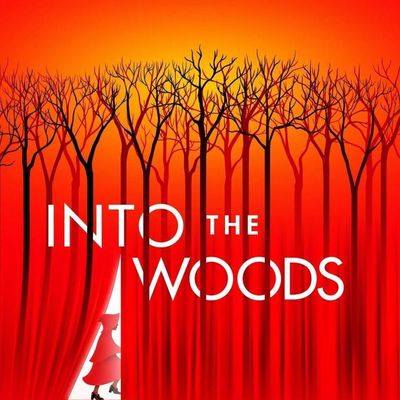
Tony Straiges tells all the secrets of his magical scenic design. Join host Ben Rimalower for this candid conversation exploring how Sondheim and Lapine went Into the Woods.
Transcript
This transcript was automatically generated and might contain errors.
[0:00] Ben Rimalower: Broadway Podcast Network presents Giants in the Sky: How Sondheim and Lapine Went Into the Woods.
[0:06] Ben Rimalower: With me, Ben Rimalower.
[0:08] Ben Rimalower: Today's guest, Tony Straiges, original set designer.
[0:12] Ben Rimalower: Once upon a time.
[0:17] Ben Rimalower: Tony Straiges designed the scenery for the original Broadway and Old Globe productions of Into the Woods, for which he received a Tony nomination, as well as the original production of Sondheim and Lapine's Sunday in the Park with George, for which he won the Tony Award. His other Broadway design credits include Enchanted April, Golden Child, Shimada, I Hate Hamlet, Artists Ascending a Staircase, Dangerous Games, Rumors, Long Day's Journey into Night, Harold and Maud, A History of the American Film, and Timbuktu.
[0:53] Ben Rimalower: Of course, you famously were the set designer for the previous Lapine Sondheim collaboration, Sunday in the Park with George. And as a matter of fact, my inspiration for this podcast was drawn largely from that wonderful oral history of Sunday in the Park with George that James Lapine wrote putting it together, which featured some fascinating pieces of conversations between he and you about the development of that production. And so I guess I'm curious in the context of that relationship at that moment in your career, when did the knowledge that there was such a thing as Into the Woods come to you?
[1:39] Tony Straiges: Um, I don't remember. I well, I know James was talking about writing another musical with Steve, and it would be about fairy tales. And I can't remember what information James gave me, but I remember making an elaborate sketch. I mean, he talked about—I don't think there was a script yet—but he talked about putting these different fairy tales together and all these characters from the different fairy tales joining up and telling a complicated story. So I did this complicated drawing, but it was kind of realistic in a way, and I don't have it. The drawing is at the Lincoln Center Performing Arts Library, but it was the first drawing that I did kind of in relationship to the piece that James was creating.
[2:26] Tony Straiges: And when James had a country house, a farm, an old farmhouse upstate New York, I would go up there with him and his wife, and I would do the gardening, and we would walk to a butcher shop that was close by, but you had to go through the woods to go to the butcher shop. We would go to the butcher shop to get beef to make burgers outside, and of course, the walk was the way you walked through the woods. It's very uneven, and you go up little hills and dales and all that stuff. As we talked about this show, I ventured to change, "Well, look how we're walking." I mean, when you walk in the woods, you're kind of walking differently.
[3:21] Tony Straiges: And I've been using curves in—I did A Midsummer Night's Dream at the Old Rep, and I used a lot of curves in that. Then when I did Timbuktu, which was a remaking of the musical Kismet, the whole floor was like one huge sand dune. So I became attached to this curve idea, but it seemed to be a really good idea for Into the Woods because, also, James, what he likes in the musical, like in Sunday in the Park with George, he likes to be able to have a lot of options and to be able to change the stage all the time. It seemed constantly kind of moving, and so all these little hills and dales on the stage were able to pivot and go upstage and downstage so that he could change the picture all the time.
[4:22] Tony Straiges: But when he first asked me—when I guess when I first got the script—well, it's very difficult. There were two things that were difficult: How do you put a forest on stage? Because trees are extremely beautiful and complicated, but phony trees on stage or in the movies look just like that—like phony. So I saw this—Joseph Cornell is one of my favorite artists, and he's the guy who makes these little miniature boxes with different kinds of lithographs and feathers. But he had a box that had real branches in the front—up front of branches. They were all painted silver, and behind it was a doll, and you saw the doll through these silver branches. That gave me the idea of how to do the forest because we built these metal traceries, but then we wove real branches—thousands and thousands of branches—into this tracery.
[5:28] Tony Straiges: They were real branches, and they couldn't be deeper than six inches because there were so many of them, and they either flew in and out or tracked across the stage, and they could only be six inches deep. Anyhow, that became the main idea for the forest, and because we were using real branches and the way we wove them, we really had the beauty of what makes a tree. Then the other parts that were—James, it was hard to figure out how to do the cottages. When we did the show in San Diego, James wanted it to be more presentational. It had to do with the animals. I said, "How do you see these animals?" And he said, "Well, like there's soap figure soap animals." You know, there's soaps that are in the shape of animals, and so that was kind of a simplistic look for the animals, and so we went with this simplistic look at the scenery.
[6:37] Tony Straiges: It was more presentational, not so realistic. But we used the branch idea, but when we decided to go to New York, the producers wanted it much more elaborate, and so we did make it much more elaborate. But it was, again, the same ideas of these branches. The other thing that influenced the design, I guess we looked at a lot of fairy tale drawings, and when we went to Broadway, we tried to figure out how to do the cottages. I looked at Dürer, the artist Dürer, Albrecht Dürer, and his drawings were really incredible because they looked like fairy tales, especially the backgrounds where there were all these different trees and stuff.
[7:28] Tony Straiges: Somehow, the idea came of how to do the cottages for Broadway was having this drop that was made up of Dürer drawings, but I reassembled them and made cottages. There were three cottages, and then there were paths leading up to a very complicated forest. It was all based on Dürer drawings, and at the top of the forest, I think there was a castle or something. But then three panels opened up where the cottages were—the faces of the cottages were drawn on these faces, and they opened up, and you were in the interior of the cottage. That was a really great way to do the cottages.
[7:52] Tony Straiges: The last thing that influenced the design was the backdrops for the first act and the second act. I've used this before too. I needed to do one main drop that represented the tree, and I used this before. I photographed a piece of fan coral from the sea, and I redrew it to make it look more like a tree. I used it in Timbuktu, and then later I used it in—I did a ballet in Sweden. I used it for a backdrop in Coppélia. But anyhow, I had this silhouette, and it was about the application was on scrim, and that was behind all of these traceries of tree branches.
[9:12] Tony Straiges: In the second act, what influenced me again—I was using a fan coral, but it was destroyed, it was broken apart. I found this picture of the forest fires in California, and the whole ground and the stumps of the trees were all black, and the sky went from a bright orange up into a purplish color, and I used exactly that for the backdrop for the second act. It's interesting because if you look at the backdrop of the second act when the World Trade Center was destroyed, there were pictures of all the iron left standing, and it looked exactly like our tree in the second act of Into the Woods.
[10:00] Tony Straiges: Wow. So those were the main influences, and as you see, if you watch Into the Woods, you see how James uses all this stuff. I mean, they're just—there's movement, they're always moving and turning and twisting. For a relief we wanted for the end of the first act, something just to give a relief from all this branch stuff, and so it's the wedding scene. I got a book on lace, and I looked at all these laces, and I took a pattern—maybe one or two or combined a couple of patterns—and we have this white lace drop which came in, and Richard Nelson lit it beautifully, but it was a big change from all of these tree branches, you know? So that's basically kind of how it worked, how it came about.
[11:01] Tony Straiges: I would show all these ideas to James, and we worked pretty close together on how forming what it's gonna look like. Then we gave him a very elaborate model, and he takes the model and he'll work with his assistants with the model, and they'll play around with it. I think they had all the moves laid out before we got into the theater, you know, how they would move these trees in all these different formations. That's the value of the model.
[11:36] Ben Rimalower: Yeah.
[11:38] Tony Straiges: People have talked a lot about how, as great as the show looks on the American Playhouse broadcast, there was just so much beauty in the way the lights hit those trees that can't be conveyed on this video from nineteen eighty-nine. Was that something that you had in mind in the design, that these were going to create such beautiful effects in the light, these branches?
[12:08] Tony Straiges: Well, yeah, because of the texture. What we did in San Diego, as I said, we used branches again, but they were in panels. The panels were rectangular, and they had a tree-like tracery, but they were contained in rectangular panels because James wanted it to be presentational, not kind of realistic. So we knew that these branches—the texture of the branches were gonna be spectacular when they're hit by lights. The branches ranged in colors from autumnal colors to summer colors, and they were all painted first white, and then they went over with really rich dyes—layer in layer of dyes—and then we went over with gold glazes. In the burnt-out trees in the second act, they were painted blackish, and then we went over with silver glazes so that they were still beautiful, but they had no life anymore; they didn't have any color.
[13:21] Tony Straiges: Um and we used big pieces of driftwood. There's scenes where people are sitting on these beautiful real driftwoods that we found, you know, at agricultural places, and we painted over them with glazes. It was beautiful, I thought. I mean, everybody thought too that it did look very beautiful and it did convey the feeling of a forest, you know.
[13:47] Tony Straiges: Yeah, I mean everybody thought that. I was talking to Jacqueline Dankworth, who was Cinderella in the London production, not by James Lapine, not by you, but her mother Cleo Lane had been the witch on the national tour, and she said that Cleo's comment when she thought in London was that it looked better in America.
[14:09] Tony Straiges: Um, I'm curious, besides the beauty, there are so many special effects that happen with the magic and the transformations. How did you navigate those from the design perspective?
[14:24] Tony Straiges: Well, we had a magician come in to help with the first act where the witch is sitting on a chair and the chair rises up. A musician helped figure that out. I mean, the chair was attached to a metal rod at one end, and the actress had to be in a certain position to hide that rod, and the chair lifted up in the air with Bernadette on it.
[14:59] Tony Straiges: Um, so then the traps, there was a lot we used to call the basement of the Martin Beck. There was so much mechanism down there. Well, for the tower, before we designed the show, we had to go down into the Martin Beck basement and measure everything because we needed to know how high we could go with things coming up from the floor. We designed a tower that would fit in the Martin Beck basement, but then they discovered that the tower wouldn't fit, so they had to dig a hole in the basement to give us more room to make the tower tall enough to look like a tower.
[15:58] Tony Straiges: And when they started digging a hole in the Martin Beck basement, they discovered a river underneath. So they had to fill up the hole, and the technical people said, "Well, let's make the tower telescope," which it does, you know.
[16:15] Tony Straiges: Um, so the beanstalk coming up, I wasn't sure how to make this beanstalk rise from the floor to beyond the proscenium, but Pete Feller, who was a technical director and a good friend of mine, said, "Well, what we could do is if you have the choreography going on and just drop in a clear plastic, thin fishing line attached to a sinker."
[17:00] Tony Straiges: See, I thought, and James thought, "Oh, well that's terrible, everybody's gonna see that." And he said, "Well, not if you had the choreography working and you had the audience's attention on what the actors are doing." And he was right. I mean, the fishing line came down with the sinker on it, and you never saw it. They hooked it up down in the basement, and the beanstalk was in three sections, and it kind of telescoped and went up, and you never saw the sinker or the line.
[17:36] Tony Straiges: One of the things that was a problem, I think, was having the giant's head fall down on the stage. First of all, we only had about a foot to make the giant's head. I feel we shouldn't show that, but James wanted the giant's head. The sculptors at Costume Armor did a wonderful job with all of this yarn, but I just felt it didn't look enough like a head because there wasn't enough room. When we were having it fly in, it came on an angle on a rail, and James wanted it to bounce off the floor to give the thud. We did it once or twice, and Pete Feller said, "Stop it, you're gonna destroy the stage."
[18:38] Tony Straiges: So it would come down, and before it hit the ground, it would just kind of stop and then kiss the stage. The way James wanted it would have broken the stage; it was very heavy.
[18:54] Tony Straiges: The birds became a pain in the neck. When we first started them, they looked really good. I didn't know how to do them either, but we'd make tests up at the shop. They were on vibrators that would make each bird vibrate, and the wings were made so that they had elasticity. As the vibrator vibrated, the string that they were attached to would kind of give a flip. But near the end, some of them would be flipping their wings and some weren't.
[19:59] Tony Straiges: I mean, the cow, we had three cows because they had to do different things. The cow that's eating the corn, the actress, I think it was Joanna Gleason, would put her hand inside the cow, and her hand would be in a cushion that looked like a tongue, and she would be with her hand eating the stuff that they were feeding it.
[20:26] Tony Straiges: Oh wow. There was one cow that was covered with dust because he was the one that just painted. Oh, and then the death of the cow was funny. Because it was just a jack on the cow's hoof, and when the cow died, the jack opened up and knocked the cow over, but it was very funny.
[20:49] Tony Straiges: Having the handle on the cow, the actor would grab the cow by the handle and run off. I mean, it was very funny.
[20:59] Ben Rimalower: I mean, were those things like, for example, the cow that you just came up with in the shop, or was that stuff that was sort of workshopped in rehearsal?
[21:11] Tony Straiges: The first time we did the animals was in San Diego, and they were the first animals that we made. I mean, I drew them, and of course in the song, the song describes the cow.
[21:27] Tony Straiges: So I incorporated all of the things he was saying about the cow and the lump on her hump.
[21:39] Tony Straiges: So those animals were carved by a wonderful carver in San Diego, but I forget his name now. He worked in the prop shop, and he did a beautiful job with the horse and the cow. Then when we came into New York, Nino Novellino of Costume Armor, I think we used one of the cows, and we had to make a couple more cows.
[22:23] Tony Straiges: Then we had horses drawing, carrying that little carriage when they were going off to the ball, so Nino carved all of that. It was based on the carvings from the guy who did it in San Diego.
[22:23] Tony Straiges: Nino was a wonderful carver. He died, but he did all the carvings for the elephant in Phantom of the Opera and the big statue in Miss Saigon. He was a wonderful artist.
[22:41] Ben Rimalower: People have talked a lot about, and they had a word for it, but I can't remember that big set piece that slid on and off that was like a hill that could rotate?
[22:53] Tony Straiges: Oh, that was the center, the main platform, the center one, yeah. That was like a hill, and it could go up and down stage and turn around. I don't know if you remember at one point when Joanna Gleason is in the woods, the giant is stomping around, and it's when she dies actually. Part of that little hill cracks open, and the corner just flips open.
[23:28] Tony Straiges: There was a drop in the back that was based on a photograph of seeing images of a forest, just a silhouette of light coming through leaves. That was a drop we used a lot in the second act. James wanted, when she died, there would be a crash, and he wanted some physical look to happen to kind of show she was being crushed by a tree falling down.
[24:08] Tony Straiges: So what we did was we attached feathery China silk to the top of that drop, and when the tree supposedly fell, the magnetic things holding the drop opened up, and it just fell down by itself. It fell down with a thud, and all these flames of China silk happened in a flash, but there was all this movement of this big crash.
[24:36] Tony Straiges: There was the big tree on the drop that was against the fiery sky, so it happened all in a second, but it wasn't a change for the audience to understand what was going on except that now the main tree that they had seen all through the first act was not there anymore.
[25:17] Ben Rimalower: And what about that tree that Cinderella's mother was inside of? Was that a telescope thing like the tower also?
[25:24] Tony Straiges: No, that traveled on, and that was designed to fit off stage on that side of the stage. It didn't come apart or anything, and it remained always designed to fit on the stage, let's see, stage right side of the Martin Beck theater. You know, everything is done to measurements.
[26:01] Tony Straiges: And so that the tree was pretty big and solid because someone was in it. And there were also doves in that tree or that they were animated and they worked really well. But so that tree never all it had to do was track on and track off and when it went off stage there was enough room that actors could get around it and everything. So we didn't have to worry about putting it somewhere. It just and it was very heavy too.
[26:32] Ben Rimalower: For all those things that came on and off, was that automated or was this before that era?
[26:38] Tony Straiges: Oh no, it was yeah, it was all automated. It was all like Sunday in the Park was all automated, and so Into the Woods was too. It's amazing, the automation and the computers, you know. 'Cause it makes the scenery move really beautifully. I mean, stage hands could move the scenery beautifully too. But sometimes a stage hand could be off or go too far or go too soon. The computer seemed to be constantly on top of it, you know.
[27:24] Tony Straiges: And because both Sunday in the Park with George but mainly Into the Woods there was so much movement of all these pieces twirling and going up and down. And the other thing where the guys, the two boys are in the tree, they were floating in there. That had to be we had to work with Steve and James because they needed a certain amount of time from the previous scene to run off stage and go climb upstairs to get onto a ramp that led onto that little branch that they're sitting on and then that branch flew in. But that all had to be done, there had to be enough music and dialogue so that they would be able to have the time to leave the stage and go off stage, climb up and get on that rig that they sat on and then they would be lowered in. That was all that had to be done to the amount of dialogue and music that was going on before that.
[28:31] Ben Rimalower: And with all this stuff, how did you revisit it for the national tour?
[28:37] Tony Straiges: Well, yeah, that was a big thing because we couldn't do what we did on Broadway of course. I mean we did some of the things, the tower, it didn't come through the floor, nothing came through the floor, because every theater is different. But what we did was big, we used the drawer, so I made all the trees, the moving trees and everything, just the same kind of drawing that is on the preface, the scene with all the cottages and the forest there that was all drawer drawings. I made all the wood trees when they went into the woods drawer drawings. They were hard covered but I just used drawer drawings and instead of that, we couldn't use the real branches because they wouldn't survive.
[29:31] Ben Rimalower: And other than that, did you still have the same hill that came on and off and the same tree?
[29:31] Tony Straiges: No, no, there was none of that. Because the tour wasn't even a national tour. It was kind of between a national tour and a bus and truck tour.
[29:52] Ben Rimalower: And so what would have replaced those kind of scenic elements? Was there any sense of levels?
[29:57] Tony Straiges: I don't think so. I don't remember now, but I don't think so because we didn't have, they, it's a tour, every theater is different. Is that where it plays? And so it would be just, you just couldn't make to use traps. Every theater is different and some theaters don't even have traps. So there was no, it was just a flat floor.
[30:28] Ben Rimalower: And I mean with the whole experience compared to the rest of your career in theater, what would you say was different about collaborating with James Lapine versus other directors of musicals or plays in general?
[30:50] Tony Straiges: Well, James is very visual. He was a graphic artist and so he has a real good sense of vision, you know, of things aesthetically looking, how things should look. I mean a lot of directors, they leave the design entirely up to you, but James has an input in it. But some directors are like that too. When I, one of the last shows I did in New York was the Brecht, what is it? It was at this classic stage company, Mother Courage.
[31:30] Ben Rimalower: Oh yeah.
[31:31] Tony Straiges: Yeah. And Tanya Pinkins.
[31:34] Ben Rimalower: That's with Tanya Pinkins.
[31:37] Tony Straiges: Yeah, yeah. And so that director, God, I can't remember his name now. He was the artistic director of the classic stage.
[31:46] Ben Rimalower: Oh, is it Brian Kulick?
[31:48] Tony Straiges: Yeah, Brian, Brian, yeah. But Brian gave me, he made these sketches of like for the whole show of what he wanted. He wanted a truck because he put the show in Africa because in Africa there are gangs that go around, well it's kind of like the guy who was working for Putin who eventually Putin killed. They go around and they terrorize these diamond mines and also a lot of these chemicals that are used in smartphones and cell phones come from Africa and there's these gangs that try to steal these mines and coerce these mines like that Russian leader who Putin was working for in Russia. Anyhow, Brian wanted to put this in Africa because there's these gangs and they go around and pick up trucks and they have machine guns.
And well, we couldn't use a pickup truck because I went all over New York and Brooklyn measuring trucks and there was none that could fit in the wings of classic stage. So the only thing that would fit would be a Jeep, a Willy Jeep. And so what I had to do was, well we had to find a Willy Jeep but I had to make the Willy Jeep into a truck. So I mean we got a Willy Jeep and we sawed it in half and I designed a truck, the top part that we went for an army truck with a canvas top, and the truck was in two sections. Why am I talking about this? Brian made all these drawings and with this truck in two parts in mind and there are drawings with benches where he had a scene with people sitting on the benches, but he had it all drawn out, you know. I mean that doesn't happen all the time. It actually very rarely happens, but each director is different, you know.
[34:15] Ben Rimalower: And were there, do you remember what things James Lapine sort of came to the table with that he had as visual notions for Into the Woods?
[34:29] Tony Straiges: Well, I think what happens with directors and designers, well with me anyhow, I go to the director and I just listen to what he's trying to, he just talks about the play, you know, and then I go and get all this research and pictures and photographs, art of different artists and I bring the stuff to the next meeting and we go look at it and I see how they react to what I'm showing them. I guess probably what I did with James was show him that photograph of the California fire and I didn't show him of course the Cornell idea. I showed him a sculpture of Cornell. So that's, and then he says yes or no. The one thing that he did want, that he wanted that when the audience walked in that there would be three pages of the three main fairy tales that they were portraying and he wrote down what he wanted to be said in these three big pages. When the audience walked in, there was a drop with three big pages of the three main stories and that was all James, you know, how the wording and everything.
[35:56] Ben Rimalower: I've gotta go to Lincoln Center and look at that first drawing that you did before there was a script. Do you remember any elements of that drawing?
[36:05] Tony Straiges: Yeah, well, the drawing, I can't, it was, I know it's a complicated drawing, but I guess I had like three different kind of tree sections, clumps of trees that they all three turned, three different things turning. They were three turntables, so Jim would react, James would react to that and so I don't, so somewhere between that and what we finally, maybe he saw that and said, no, I think we should, when we do this in San Diego we should be presentational. That's the word he used, presentational. That this is not real, this is storytelling. But then like I say, when we went to New York, the producer said, no, no, no, it's gotta be much more elaborate, you know. And so somewhere, I mean, all of James reacted to all of this and from that drawing at Lincoln Center, it became something different.
[37:20] Ben Rimalower: Well, what an amazing evolution. I'm so grateful for your time, Tony. It's so fascinating to hear about the inception of this show that means so much to so many people now.
[37:34] Tony Straiges: Oh good, I'm glad. I mean, yeah, it was, yeah, well, working with James and Steve was wonderful and losing Steve, I mean, it was just really horrible because he was an extraordinary person and he was very nice to all of us and he was a tough guy, but he was so inspiring and gracious. He was so gracious and it was really sad that he's gone, but of course he has all his work being shown and I'm pretty thankful for James that he got me involved in these shows, you know.
[38:19] Ben Rimalower: Well, I'm thankful he got you involved too because your work was so magnificent and will be inspiring to generations for sure.
[38:28] Tony Straiges: Well, I'm glad I had the opportunity.
[38:37] Ben Rimalower: Thank you for listening to Giants in the Sky: How Sondheim and Lapine went Into the Woods on the Broadway Podcast Network. Look out for episode 46 with Kay McLelland, original Florinda and replacement Baker's wife.
© Broadway Podcast Network, All Rights Reserved