

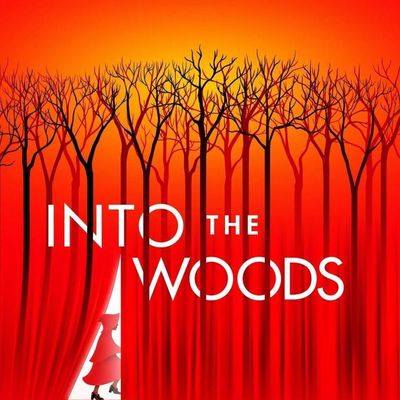
Heidi Ettinger explains how a she came to design the logo art for Into the Woods while producing the show. Join host Ben Rimalower for this candid conversation exploring how Sondheim and Lapine went Into the Woods... Read More
From the show: Giants in the Sky
Featured Shows
About
Heidi Ettinger explains how a she came to design the logo art for Into the Woods while producing the show. Join host Ben Rimalower for this candid conversation exploring how Sondheim and Lapine went Into the Woods
Transcript
This transcript was automatically generated and might contain errors.
[0:00] Ben Rimalower: Broadway Podcast Network presents Giants in the Sky: how Sondheim and Lapine went into the woods with me, Ben Rimalower.
[0:07] Ben Rimalower: Today's guest, Heidi Ettinger, original producer and graphic designer.
[0:12] Ben Rimalower: Hey, people of the woods, it's Ben.
[0:14] Ben Rimalower: You may have noticed there was no episode last week.
[0:17] Ben Rimalower: There's not going to be an episode next week either.
[0:20] Ben Rimalower: I'm not sure exactly when the next episode will be, but there will be a few more.
[0:24] Ben Rimalower: However, we are coming to the end of the woods.
[0:28] Ben Rimalower: Once upon a time.
[0:31] Ben Rimalower: Heidi Ettinger produced the original Broadway production of Into the Woods and designed the now iconic logo, which the art for this podcast pays homage to.
[0:39] Ben Rimalower: She also designed James Lapine's plays, Photograph, Table Settings, and 12 Dreams, as well as his Public Theater productions of King Lear and A Midsummer Night's Dream.
[0:48] Ben Rimalower: She was the first woman to win the Tony for Best Scenic Designer for her work on Big River, an award she also won for The Secret Garden.
[0:55] Ben Rimalower: She was also nominated for Best Scenic Designer for The Adventures of Tom Sawyer.
[1:00] Ben Rimalower: She received a Best Musical Tony Award for producing Big River, along with Best Musical nominations as the producer of The Secret Garden and Into the Woods.
[1:08] Ben Rimalower: On Broadway, she also designed Good Vibrations, Dracula the Musical, The Sound of Music, Triumph of Love, Moon Over Buffalo, Smoky Joe's Cafe, The Red Shoes, and Nightmother.
[1:33] Ben Rimalower: I heard you say somewhere else in another interview that the scenic design for a theatrical production sets the tone.
[1:48] Ben Rimalower: And it's funny because with Into the Woods, which you produced but didn't design, I still have that sense about it with you. Maybe because of the iconic artwork that you did that was used for all the advertising of the show and was the inspiration.
[2:06] Ben Rimalower: I don't know if you've seen the artwork for this podcast is an homage to your work there. But I guess I'd like to get the background of, I mean, I know that you had worked with James Lapine on a couple of productions before Into the Woods, and maybe you knew each other even from Yale.
[2:25] Ben Rimalower: I'd love to know the whole backstory of how this came into your life.
[2:30] Heidi Ettinger: Oh, golly. Well, you know, yes, from Yale. So James and I were good friends there, and I started, I designed the first show he ever did, I guess, which was Gertrude Stein, I think.
[2:47] Heidi Ettinger: Oh, that a Photograph, right?
[2:50] Heidi Ettinger: Photograph, Photograph, and then I fascinating.
[2:53] Heidi Ettinger: Yeah, it was this is we go way, way, way back.
[2:56] Heidi Ettinger: And then we did 12 Dreams of the little tiny above a church, little tiny up off Broadway situation.
[3:07] Heidi Ettinger: But we were both learning, and then we continued to work together and be great pals through many, many years.
[3:20] Heidi Ettinger: In fact, I just was emailing with him yesterday about something else.
[3:25] Heidi Ettinger: But yeah, just a long, long series of collaborations, some terrific ones.
[3:33] Ben Rimalower: And then I know that musical theater design has been a great passion of yours, and of course, you won your first Tony Award for Big River, which was produced by the Dodgers who produced Into the Woods.
[3:51] Ben Rimalower: Do you remember the first time that you knew there was this Sondheim-Lapine fairy tale mashup musical Into the Woods?
[4:03] Heidi Ettinger: Well, James mentioned it to me. He said, you know, I think the very, very first reading at Playwrights, he said, why don't you come and take a look at this?
[4:12] Heidi Ettinger: And I did, and there's obviously something very close to all of us here because at the time we all had young children, and so we were at that point in our own parental development where we were reading literally reading fairy tales to our children.
[4:30] Heidi Ettinger: So I found it fascinating, and then he asked me if I would be interested in producing, and I said, of course I would, with my then husband Rocco.
[4:43] Heidi Ettinger: So that's really, and then we brought in Dodgers for the show.
[4:48] Ben Rimalower: Gotcha. And were you going to see it in San Diego?
[4:54] Ben Rimalower: And you know, what was, were you all involved? You know, nowadays that's so common with the enhancement money or, you know, that producers, commercial producers are present in the nonprofit institutional developmental productions.
[5:12] Ben Rimalower: Was that the case with Into the Woods?
[5:14] Heidi Ettinger: Oh, yeah. I mean, I think that was just par for the course, pretty much.
[5:19] Heidi Ettinger: You know, the numbers have escalated dramatically since to a huge number, but yeah, we were very involved.
[5:26] Heidi Ettinger: We were in San Diego, we were, you know, talking to James and Steve and going back and forth.
[5:32] Heidi Ettinger: And so yeah, we were there during that process, which was fascinating.
[5:43] Ben Rimalower: I bet. And I believe in San Diego there was different artwork.
[5:47] Ben Rimalower: So I imagine you had not done your design for the advertising for the show yet at that point.
[5:54] Ben Rimalower: How did that come about?
[5:57] Heidi Ettinger: I don't remember what the graphic was, but I know that James hated everything that would be shown to him, of course.
[6:06] Heidi Ettinger: And we were all becoming very frustrated, and I just did this scribble, which was a rough they ended up sort of developing, I think it too far, but, and showed it to Steve, who really liked it, and James did, and that was at least we could put that particular problem to bed for a while.
[6:25] Heidi Ettinger: That was a real, yeah.
[6:27] Heidi Ettinger: And you know, was that, there I know there was about nine months between the closing in San Diego and the first performance on Broadway.
[6:43] Heidi Ettinger: And then there was that workshop in the summer.
[6:47] Heidi Ettinger: From the producing standpoint, how did that decision get made?
[6:51] Heidi Ettinger: And what was that timing all a product of?
[6:56] Heidi Ettinger: Well, what I can remember about it, which is not much, quite honestly, because with all the big musicals I've produced, I always have children to have babies in the middle of them.
[7:08] Heidi Ettinger: So of course, had a baby for the show too.
[7:12] Heidi Ettinger: I think that was just a realization that there were substantial words that needed to evolve slowly over time in a non-pressured situation, particularly around the second act.
[7:26] Heidi Ettinger: And he created a space for that kind of work to happen.
[7:31] Heidi Ettinger: Then, you know, some of it happened and some of it didn't.
[7:35] Heidi Ettinger: James is the best person in previews I've ever seen.
[7:41] Heidi Ettinger: So he has the ability to keep his head when all those around him do not, and continue to be, you know, masterful at doing little tiny cuts and tweaks to make the material go where it needs to go.
[8:35] Heidi Ettinger: So I knew that was going to happen on Broadway.
[8:35] Heidi Ettinger: And I think he thrives under pressure and is able to make these kind of choices when the pressure is cranked up to absolute maximum level.
[8:35] Ben Rimalower: But somehow he didn't. It's amazing.
[8:35] Ben Rimalower: And is that something that you were confident about before Into the Woods, like you know, coming out of that summer workshop?
[8:35] Ben Rimalower: If questions about the second act were still unresolved, you know, was that something that you already knew he was going to be able to, you know, handle under pressure, or is that something you learned on Into the Woods?
[8:35] Heidi Ettinger: Well, you know, I'd worked with him enough, so I knew that, you know, we'd done a lot of shows together, and so I was aware that frequently he really didn't know what he was going to do until it was in front of an audience.
[8:50] Heidi Ettinger: So he had to wait for that critical response and then make the tweaks he needed to make.
[8:56] Heidi Ettinger: So that was his process.
[8:59] Heidi Ettinger: And even if it was, you know, nerve-wracking for everybody, it was, you know, I was aware that it was a process that usually worked pretty well.
[9:07] Ben Rimalower: Yeah. Had you been a fan of Sunday in the Park with George?
[9:13] Ben Rimalower: Was that a show you were, you know, you saw more than once, for example?
[9:19] Heidi Ettinger: Oh, yes, absolutely.
[9:20] Heidi Ettinger: I mean, you know, we were friends, and he would usually remember pretty much always asked me to go to an early preview or address of a was working on because I think he thought that I could have some useful insight for him as a, you know, reasonably objective person.
[9:39] Heidi Ettinger: So I was there certainly early on for Sunday as well.
[9:47] Heidi Ettinger: He talked about that process so fascinatingly in his book Putting It Together about the making of Sunday in the Park with George.
[9:57] Heidi Ettinger: And it seemed so obvious to me, thinking about Into the Woods having come right on the heels of Sunday in the Park.
[10:05] Heidi Ettinger: Wouldn't everybody just really understand that these guys are gonna get it together and nail it with this show and just to be patient.
[10:14] Ben Rimalower: Was that the feeling on the producing team and around Into the Woods as it was going through that gestation?
[10:25] Heidi Ettinger: To some of us who knew James well, yes, that was a feeling, but of course, there are always producers there who were based essentially there writing checks and don't have that kind of level of understanding.
[10:39] Heidi Ettinger: And they bring kind of concerns to the table in terms of their own investments and the viability of their investment.
[10:49] Heidi Ettinger: So there was a fair amount of pressure from outside sources.
[10:54] Ben Rimalower: And I mean, would Into the Woods, you know, just from a strictly producing and economic standpoint, would it have been considered like a big show by 1987 standards?
[11:07] Heidi Ettinger: Oh yeah, absolutely.
[11:09] Heidi Ettinger: Yeah, it was a big show, big investment.
[11:12] Heidi Ettinger: Because, you know, Steve's shows were not known for being commercial hits, certainly success to Sondheim, but commercially, you know, you never know.
[11:29] Heidi Ettinger: It's only in retrospect that we see all the revivals and we kind of revive what really happened to many of those early Broadway productions.
[11:42] Heidi Ettinger: They didn't make money.
[11:44] Ben Rimalower: Yeah. I mean, that seems, while Into the Woods was, you know, by many measures successful in its original production, it certainly seems like the show now that is, you know, the most accessible to younger generations and is just so widely permeated the sort of, you know, global consciousness, you know, as a Sondheim musical.
[12:11] Ben Rimalower: What was, was that the hope given the subject matter at the time?
[12:17] Heidi Ettinger: No, I mean, we're shocked that the show has, you know, quite honestly, it comes as a, you know, real shocker because there was certainly a period of time after the Broadway production, which, you know, was marginally successful financially, in which the show sort of went into hiatus in terms of it, and then suddenly it became extremely, you know, due to revivals, due to schools, whatever, became this global phenomenon.
[12:52] Heidi Ettinger: But we, you know, to this day, I think people involved in it are really surprised.
[12:57] Heidi Ettinger: Who knows? Who knows why? It's fascinating.
[13:01] Ben Rimalower: Yeah, I mean, I have my theories, you know, based on the subject matter being accessible to young people and, you know, therefore a good school show with its kind of large ensemble cast.
[13:01] Ben Rimalower: But certainly one thing that I think, you know, at least for the generations, you know, that were coming of age in the 90s, and you know, is the broadcast on PBS in American Playhouse that James directed so beautifully for the cameras.
[13:33] Ben Rimalower: Was that something that, since Sunday in the Park with George also had been broadcast?
[13:40] Ben Rimalower: Was that ever part of the discussion from the producing side as something that was going to, you know, be good for the property long term or, or was that really just an outside event that happened to the production?
[13:57] Heidi Ettinger: I think it was more like an outside event that happened, and then we saw it as a wonderful record of the show, and that James had directed it beautifully, but we didn't anticipate at all that it would lead to this very, very long life the shows had.
[14:19] Ben Rimalower: Um and uh what about um from a design standpoint? I know that um uh lighting-wise and costume-wise, the Into the Woods was produced at a time when there had been or weren't or was in the midst of a time of a lot of technological developments that were put to use in terms of um the um automations and uh with the costumes, those fabrics like that the the wolf's um bodysuit was made of.
[14:53] Ben Rimalower: Um was that also true uh from a set design perspective?
[15:01] Heidi Ettinger: Um, you know, I think it was pretty traditional. I mean, I think all of it was actually pretty traditional design. I don't think any part of it was was really, you know, using new technology in in in any extraordinary way, um, which I think was right for the show because it lives in that traditional fairy tale world, and that's really what the visual images need to be informed by, um, as as do the costumes. So, you know, maybe there was some materials that were slightly different or but but I think the technology was was stuff that had been around for a long time.
[15:43] Heidi Ettinger: And um is is that's hard to be a designer yourself working on shows where you're a producer and not the designer, and to um you know, because producers have input on design, so you know, where or where to to know when to impart your uh wisdom and when to hold back oh well you know Tony Stragus was an old friend from Yale too so and he had done Sunday and that had been a really successful obviously collaboration so no I I felt that it was not my role I mean I've certainly been in the position of being both producer and designer you know several times and um and that it it it's a lot I can imagine a lot to do.
[16:35] Heidi Ettinger: Um so I I no I I didn't feel that um unless James asked me to and occasionally he would um ask me to to discuss some some tiny detail with designers I I would definitely hold off.
[16:50] Ben Rimalower: Yeah. Is that hard when you are producing and designing you know for the I guess the opposite question, you know, when you're in a meeting with the other producers it is is you know you because your input is is also wearing the hat of the designer does that change you know how the way that they uh that your voice is heard in that producing collaboration?
[17:18] Heidi Ettinger: Well inevitably it it did that but um uh but I I think in a show like for instance Secret Garden um it it was it was actually I I think designers on most shows tend to have the most objective um perceptions about a show because they're slightly outside of it. They're not a cast member, they're not holding on to their role. Um, they're not the a composer holding on to his notes. You know, they I think they have a little bit more remove.
[17:51] Heidi Ettinger: Um, and so they're able to look at it more globally, partly because they're probably already working on the next couple of shows anyway. So while everybody else is trying to fix the second act, they're you know, designing act two of the next project. So there's a kind of nice, I think a really healthy remove uh from the trenches that allows the designers and who I always talk to first because they're usually the you know really smart about large obvious problems that other people are not willing to uh tackle.
[18:30] Heidi Ettinger: Um so yeah, no, they're they they and I don't and I think it's sort of sad that people don't really recognize that as much as they should that the the designers' collaboration really goes way beyond just visual input.
[18:43] Ben Rimalower: Yeah. Yeah, what that's that's such an interesting observation. I I I certainly have experienced that, you know, and e even um like I like the word they use the word global because I I've heard designers say things that are are uh really helpful in contextualizing not just the show itself, but the experience or the process of the show. It is something that you know not being in the trenches uh affords them.
[19:10] Ben Rimalower: Um the reality is also designers tend to do many, many more shows than the writers that or the directors do, um, or the composer, you know, they're they're really have the ability to jump from project for to project, which are extremely different from each other, whereas the the writers are sort of locked into their own uh world vision.
[19:36] Heidi Ettinger: Yeah. Um what about uh the tour of Into the Woods? Um, I know that the design had to be um reconceived uh for the theaters that would be playing on the road. What how how did that um uh producing the tour? How did that compare to producing another show not by Steven Sondheim or you know what what was it like to produce the tour of Into the Woods in 1988?
[20:11] Heidi Ettinger: You know, I honestly wish I could remember a lot of shows get better on the road because they're forced to cut. And for most shows, you know, less is more, uh tightening is better. So I I think we did well with with Secret Garden, we did the the road, the national tour was actually a much better show than the really much better show. Tighter, shorter, faster.
[20:39] Heidi Ettinger: Um, but um well, I thought at the St. James and it was pretty great already. So now it was but it was something it was self-indulgent. That was the problem with what happened at the St. James, and that is frequently the problem with a lot of Broadway shows, because they can get something, whatever it is that the director or composer wants. It's there. Whereas is this essential? It doesn't necessarily enter into it in the way that a national tour has to be all about. Is this essential? Do we have room to put it on the truck? You know, so that that really hones in and focuses the the nature of the show.
[21:20] Ben Rimalower: But I think so interesting. That's such an element of um, you know, theater in black boxes and you know, um educational theater and you know, off off Broadway. And to we think of national tours as being, you know, maybe the opposite uh end of the spectrum. And in a way, it's kind of like it comes full circle that after that commercial Broadway success, it leads to then more downsizing and simplicity.
[21:47] Heidi Ettinger: Right, and focus and focus.
[21:50] Ben Rimalower: Yeah. Yeah, absolutely. And um uh how how about in terms of like the commercial life and the the marketing of a show like Into the Woods on tour? Do you do you have any memories of what that was like as a producer?
[22:07] Heidi Ettinger: You know, I honestly don't. I just a long time ago. That's a long time ago. That part of it was a real blur. So no, I I gotta pass on that one.
[22:20] Ben Rimalower: Under understandable, understood. Um and uh have you revisited the the revivals, uh, the film, uh, you know, uh how how have you has into the woods stayed uh how have you seen Into the Woods in the years since the Broadway production?
[22:39] Heidi Ettinger: Well, you know, I've seen a number of of productions. I saw the um the concert production, I think with James, maybe.
[22:48] Ben Rimalower: Oh wow.
[22:50] Heidi Ettinger: I think so. Um, which was really interesting. And it was it to me, the most moving part about that experience was how broad the audience was in terms of age, in terms of response, in terms of gender, in terms of everything. And that to me was a real surprise. And the fact that clearly most of the people in that audience had either been in it or they you know directed it or something. They all knew they knew the show. And that that was very moving to me, that it was it was part of their lives as part of what they grew up with.
[23:27] Ben Rimalower: Yeah. Yeah, I I I loved you're talking about it at Encours. Uh I I loved seeing that um uh the same way. Um, and and exactly like you said, I went with my sister. We had done it together in college. I directed it, she was the baker's wife. We held hands, you know, it was a very, very bad experience. Uh very sweet. But um, and and I went it would, you know, we it's it was a genuinely unifying experience, which we very little of.
[23:59] Heidi Ettinger: Yeah.
[24:07] Ben Rimalower: Yeah. They are able to to to experience it together.
[24:11] Heidi Ettinger: Yeah. I I felt exactly the same way. Some people that I've spoken to uh for this podcast, cast members and such, have um talked about how the kind of rock star energy that production had um was a distraction, you know, this sense that this thing that people talk about a lot in general in musicals nowadays, where people are kind of cheering for the high notes before the lyric is even out of the performer's mouth, and that it sort of gets in the way of just the actual storytelling. Did do you see that happening?
[24:46] Heidi Ettinger: No, because you know it's become a classic. So everybody knows what the next line is. And either way, it's like doing a Greek tragedy. Yeah, there's some play at the end. So whatever whatever rifts you want to make on that basic classic material, you should do.
[25:00] Ben Rimalower: Yes, yes. I love that take. I agree wholeheartedly.
[25:08] Heidi Ettinger: Um and uh I guess are have your thoughts on the meaning of the piece changed over these years, seeing it again?
[25:20] Heidi Ettinger: Well, you know, in light of our current disastrous global political situation, it's taken on entirely new moving meaning. I mean, it at the time we did the show, the the metaphor for the giant was, I think, sort of unclear to the audience. It was just sort of looming doom of some kind, but now that metaphor has become very specific and very clear, I think.
[25:52] Ben Rimalower: Yeah.
[25:53] Heidi Ettinger: Yeah. Well, that's too bad. It's a different time, you know, it was a very different time.
[26:02] Ben Rimalower: Yeah. It it it is hard. It's hard to watch the show now and not feel um uh that that was my experience of the revival, was that act two felt um so much more immediate to me than it had in in previous years.
[26:19] Heidi Ettinger: Um for all those reasons. Um yes, well, uh, is there anything else that that you remember about the experience uh of uh creating the show that that you would share with me uh you know it was it was a nail biter um like I think all of Steve's shows are because so little of the music existed for a long time and I think Steve also produces his best work under pressure so you have to wait for the pressure to build up and then when it does he comes he comes out with with with songs like No One is Alone which was way late in the game uh when when that uh when he wrote that and so it's a it's a nerve wracking experience for everybody because the actors as well they they know that there's a hole there that's eventually going to be filled but you know when um and uh but it it's interesting I think that there are certain personalities that thrive with that kind of of pressure and also need the time to really be informed and understand what hole it is that they're actually filling and and the whole process has to happen before that moment or that aha moment arrives.
[27:51] Heidi Ettinger: So yeah it's um it it it's a nail biter but it it works out okay in the end.
[27:59] Ben Rimalower: Yeah.
[27:59] Ben Rimalower: Well, uh, I I'm so happy that it did because I I'm just one of many uh millions of fans who cherish this piece. Thank you so much, Heidi, for uh talking to me about it. I really appreciate it and I know they will too.
[28:15] Heidi Ettinger: Okay, my pleasure. Good luck with that.
[28:18] Ben Rimalower: Thank you. Have a wonderful day.
[28:21] Ben Rimalower: Thank you for listening to Giants in the Sky How Sondheim and Le Pine Went Into the Woods on the Broadway Podcast Network.
© Broadway Podcast Network, All Rights Reserved