

In this episode, we pull back the curtain on the intimate world of Broadway with special guest Claire Warden, the intimacy coordinator for the current production of 'Romeo + Juliet.' Claire takes us on a journey from her acting roots to becoming a trailblazer in the field of intimacy direction... Read More
From the show: Half Hour with Jeff & Richie (Post-Show Broadway Discussions and Interviews)
Guests
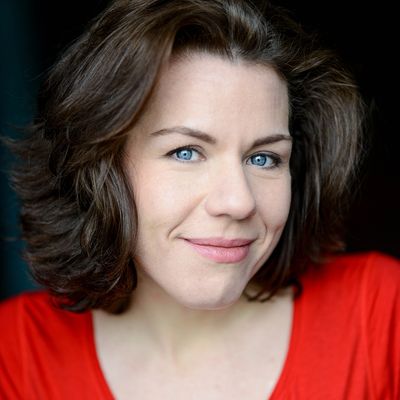
About
In this episode, we pull back the curtain on the intimate world of Broadway with special guest Claire Warden, the intimacy coordinator for the current production of 'Romeo + Juliet.' Claire takes us on a journey from her acting roots to becoming a trailblazer in the field of intimacy direction. We explore the delicate balance of creating safe spaces for actors while maintaining the creative vision of directors, and dive into the unique challenges faced in bringing Shakespeare's passionate love story to life on stage. From navigating complex power dynamics to working with understudies, Claire shares insider insights that will change how you view intimate scenes in theater. Plus, we'll hear some surreal and humorous behind-the-scenes moments that only live theater can provide. Whether you're a theater professional or a curious fan, this episode offers a fascinating glimpse into a crucial yet often overlooked aspect of modern stage production.
Follow and connect with all things @HalfHourPodcast on Instagram, and YouTube. Share your thoughts with us on our podcast cover post on Instagram.
Transcript
This transcript was automatically generated and might contain errors.
[0:08] Jeff Malone: Welcome to Half Hour with Jeff and Richie.
[0:11] Richie Grasso: I'm Jeff.
[0:11] Richie Grasso: And I'm Richie.
[0:12] Jeff Malone: And today on our show, we welcome a very special guest, Claire Warden.
[0:16] Richie Grasso: Claire, welcome to Half Hour.
[0:18] Claire Warden: Thank you. I'm so thrilled to be here with you.
[0:20] Claire Warden: Claire Warden is a pioneering intimacy coordinator and director with over two decades of experience in TV, film, and theater. She's made history as the first intimacy director on Broadway and has worked on numerous high-profile productions. Claire is also the director of advanced training intimacy directors and coordinators and has been recognized with awards for her groundbreaking work in the field. We're thrilled to have her here today.
[0:43] Jeff Malone: Claire, um, we always like to start our episodes with our guest about how they got started in the industry. Can you tell us a little bit more about your journey into becoming an intimacy coordinator and director? And what does that mean to be an intimacy coordinator?
[0:59] Claire Warden: That's an excellent question. Um, I would say I started my career as an actor, uh, and that was very early on. I did my first theater show when I was three years old, um, at school, the school activity, and I think I was bit by the bug then. Um, so I've been a career an actor my whole career. Um, and I moved to the states about 16 years ago. Um, and once I had moved over and kind of started to establish my acting career there, um, I also trained and then completed my training by working as a fight director. Um, so I was kind of in the world and in that kind of split focus of performing and then being on the outside and creating these physical stories. Um, how I got involved in intimacy direction is I joined with the team that really kind of led the building of the discipline.
Um, in 2000, I met with Tony Cena, who is kind of the founder of the movement, as it were, um, and Alicia Rhodes, and they had formed a company called Intimacy Directors International, um, along with Shabon Richardson, and we're starting to build the bones of an approach because before there was nothing, there was barely conversations around intimacy and nudity. And so they'd started to build an approach, and I came on and brought my various different skills and experiences from my career, both in acting in choreography and in I'd spent some time, a lot of time teaching especially Shakespeare with actors and with actors with specific trauma. So kind of an understanding of the trauma-informed lens there. And we built it together, and here we are, seven years later, and we've started to change the industry.
[2:58] Richie Grasso: It's pretty amazing because I think it's interesting how, and correct me if I'm wrong, maybe before intimacy directors and coordinators, it was the director or choreographer's job to really kind of get through some of those scenes. And do you find that directors that you work with are relieved that there is an intimacy coordinator with them, or do you work with them, or are there certain scenes that only you're working on? Like what's the relationship with your director per se when you're working on these shows?
[3:25] Claire Warden: Yes, it was always the director or choreographer or actors between themselves. Sometimes they were like sent off into a room and figure that out and bring it back, which has a whole little handbasket of the um, but no, I always work very closely with the director. Um, I very much see the intimacy director's role as that of a creative support and facilitation one. So the director is our overall steward of the story that we're creating in the vision, and the actors are the performers and the carriers of the story, and they're the ones that are creating it together. So I'm here both with my technical expertise of the choreography, but also with a lot of sexual dramaturgy and a lot of understanding about the nuances and specificities of creating physical stories. And so we work together and we have individual conversations, myself with the director, myself with each actor, and then we all come together and we build this thing together.
[4:26] Claire Warden: I think, um, and I will say that before intimacy direction happened, many directors and many choreographers really did their best to create an environment where they could work in a way that was okay for their actors. There's just so much complexity. When you ask an actor in our world today, which is a world of we're in an epidemic of sexual assault, we're in an epidemic of oppression and patriarchy and an inner system in an industry that is built on incredibly strong power dynamics and hierarchy. There's just so much there that needs to be navigated in order to create that space for an actor to truly relearn what their consent is and then be able to name it and have it stand with the tiny, many tiny things that it can erode at it at every point.
Um, and so really to have someone that's leading that that's got their eye out that's really deeply trained and experienced in noticing that just takes that pressure off the director, the actor, the stage manager, the choreographer, um, and lets them do their actual job, and also then brings in that next level of expertise and specialty advice, like when you're doing anything issue, when you have a fight on stage, you bring in a fight director. When you have illusions, you bring in a magician, right? When you have, uh, you want it to rain, you bring in your water experts, right? So it's like it's a bit of an elevated ask for actors. So we just need to provide them and the director support in order to create that in the healthiest and therefore most creatively free way.
[6:27] Richie Grasso: It feels like something that should have been around way longer than it started. And in the process of this, if I'm understanding it correctly, does the director come up with an idea or the choreographer come up with an idea and they come to you and say, This is what we want to do? And then you kind of say, Yeah, you should do that, or no, let's think of the right way to do it, and then that gets brought into the actors?
[6:52] Claire Warden: Um, it can be different. Sometimes it usually starts with a conversation with the director or choreographer, and they'll they might say, Here's my thoughts, or this is like they might have a really specific vision, or like sometimes they're like, I just want to find it in the room with the actors, and everything in between. So if they have specific requests or the script is very clear about what it asks for, and the director's like, I'm I'd like to go with what the script says, then my job at that point then, then I go and have a conversation with our actors, and we really talk through all of the considerations and ramifications of that request and whether it sits or where it sits in their consent spectrum, um, and what is okay for them and what is not, or what they don't know yet, and what they definitely know is a no. So when we get into the room to start working on that, we have our hard no's and we know the kind of sandbox in which we might play, and I know all the intricacies of what the actor needs in order to be supported and how they like to be supported, and how they'd like to work and any area to be aware of.
But then we then we create it together, and so part of the facilitation part is that you know, me watching and ensuring that as it goes, um, we're maintaining that open room and that ability for actors to really have that moment to consider is that something that I'm willing to commit to eight times a week for the next six months, or and is that really going to tell the story that we're interested in? Because we always have to start with the story.
[8:32] Claire Warden: There's if we don't if we're not really clear on what the story is, then we're just arbitrarily pretending to make out what the theater. So we start with what is the moment, what is the experience, what's this story point that we're looking at here, and then how might we tell that with the acting? Like we do with the rest of the play.
[9:00] Richie Grasso: Right.
[9:01] Claire Warden: Right.
[9:03] Richie Grasso: So let's just carry that forward into the interest. And so I know recently you were working on Romeo and Juliet on Broadway at Circle in the Square Theater.
[9:11] Claire Warden: Um, we saw it, it's wonderful.
[9:13] Richie Grasso: We really enjoyed the whole production so much. And so many people I always find that so many people know the story, and then there's so many people that don't quite know the story until you really see everyone knows the cliché iconic scenes and Romeo or Romeo and all that stuff. But when you see it set in a different lens like this, I was just gonna ask you a little bit of what if you could walk us through your process of that specific show and what you've been doing with your role in that show.
[9:52] Claire Warden: Yeah, I'm so glad you enjoyed it. We had a lot of fun making it.
[9:57] Claire Warden: Um, I think the specific process for me on my end as intimacy director, um, again was that really a couple of meetings with Sam Gold, our director, to start with him sharing the world of the play that we were going to be creating, and what was important to him in doing this show now with these people.
[10:18] Claire Warden: Um, and what you said, Rich, is so true about people think they know these Shakespeare plays, especially "Romeo and Juliet," which is probably possibly one of the most famous. Um, but I think a lot of people know an idea that was handed down to someone that then made a play of it that then handed it on. A lot of people haven't had the opportunity to really dig into what the play is actually about and all of the elements of the play. Um, and so beginning with Sam's visions and ideas and thoughts and wants, uh, and his motivation to tell this story now about young people trapped in a world of violence and a world of pain and a world of division and hate without, um, like personal connection, just like the legacy of hate, um, and disconnected in so many ways, and reaching out for healing, for connection, for intimacy, for care, um, and not knowing how to ask for it or how to give it.
Um, and we were like, well, this is this is this world, and this is what we see in so many of these characters, and then that moment of hope where two of them figure it out and bind each other, and yet through the lack of communication are unable to deal with the massive, um, travesties that happen in their life that happen one after the other. So that was my first point is to really understand the world we're creating, why we might be telling this story here now. Um, and, uh, and then also to look really, um, openly and considerately at the people that were in our cast that would be telling this story. Um, you know, we have a really incredible, vibrant, young, brilliant cast. Um, it's a space of we wanted to create, even in this world, we wanted to create a space of queer joy. We wanted to create a space of openness and understanding, and we wanted to see bodies doing things that the world maybe hasn't doesn't allow them to do in public.
[12:45] Claire Warden: And so it was really looking at who do we have playing these roles and how do we really allow all of their authenticity out? Um, and then how do we build right at the beginning of the process? What I was doing mostly was building the communication tools, the space, the ensemble understanding of how we truly see and honor each other's humanity as artists and as actors. Um, and how we set up if someone does something that's not okay, this is how we deal with it, right? It's not if, it's when. And so really building a trust and a communication so that they could play bravely and boldly and freely with each other with care and confidence and create a really powerful show. With most of that said, and that most of them are young performers in this industry right now. Did you feel like you were faced with any unique challenge in kind of helping them or guiding them?
[13:52] Claire Warden: Do you what I would say because I have I I've come off a number of um shows, my last couple of projects that were quite, um, had older casts and older stories, right? More mature and established people. Um, I wouldn't necessarily say it was a challenge, but it was really striking to notice the difference between this generation who are so connected in with consent and agency, and so tuned into the need to, um, work against the system of harm and recognizing a system of harm, and yet within that there is a real, uh, trepidation, um, and a real focus on not doing wrong or of care. Um, and so there's a we have to build a strong structure for people to then step in and commit to the work.
[14:59] Claire Warden: Um, but they have a, uh, fluency with that kind of consideration conversation. Um, and so for me, it's like, oh, I have to like switch to a slightly different place that I'm coming from as I facilitate that to really, um, honor that. Um, and I will say it's an incredibly physical show, yeah, and it's a very emotionally demanding show for many of our actors, especially our Romeo, our Juliet, our, um, Tommy, who plays both our nurse and Hibball, uh, Sherla who plays Capulet and Lady Capulet, like it's a very large journey for them.
[15:36] Claire Warden: So the building up their stamina and their resilience physically, emotionally, intellectually, like Shakespeare's always a marathon. Um, and I think "Romeo," I think because we know "Romeo and Juliet" in the zeitgeist, and it's so popular, somehow people think, oh, that's a bit of an easier one. Oh no, it asks so much. So I think that was also just for them like trying to support and find ways to keep them resting and letting it go and being able to build up their resilience to do this show.
[16:11] Claire Warden: I wanted to move on to talking about some of the other projects as well. But before we do that, I wanted to talk quick. Um, something just kind of actually popped into my mind. You know, when you're working on live theater and a show that's running so long, of course, there's standbys and understudies as well. Do you ever feel that? Do you feel like you get enough time with the understudies as well? And do you ever feel like there's ever a history of, oh, wait, I'm doing this intimate scene now with someone new? And if it's last minute, especially, is there jarring issues there, or is it actually more seamless? I would be so curious to know from that perspective.
[16:41] Claire Warden: Oh, yes, Richie, you're very, uh, astute. Yes, for a long time. Um, especially in the realms of intimacy, understudies have just been like, "Morone on and go for it." Um, and it's something that I'm currently really working to adjust in the whole system of our theater, um, industry in Broadway, um, is that like extra consideration and care. Because it's not just the understudies, it's also your principal actor who all of a sudden has spent months creating and building trust with their scene partner, all of a sudden, someone that they know, but they've never done this before in front of everyone, they're having to do it with a different body.
[17:20] Claire Warden: Um, I would say, and I think most understudies would agree with me there, they never have enough time in anything. Um, when you think about, I mean, I have to say, I have such respect and honor for anyone that takes an understudy or a swing role, especially on Broadway. Because when you think about your principals have four to six weeks every single day together, building it, talking, understanding, and then they get to do it every night and practice and get better and better and better. And then your understudy just has to sit in a room and watch.
[17:55] Claire Warden: And then every Thursday gets a partial run-through with people that are still trying to figure out. And then they're like, oh, you're on in 45 minutes. Yeah, yeah. Feel frightful. Remember that door, get your costume on, here's a wig, go. Um, so you know, they are, I think, the heroes of Broadway, without a doubt. Um, we work very, you know, I have the same conversations with principals that I had with our understudies. Our understudies, we have four of them, and they cover multiple tracks.
[18:26] Claire Warden: So it's really a kind of Venn diagram of if you go on for this role, who will you be interacting with? Um, and so we've had the conversations with them. They've been, once we had built the intimacy and it was clear, they were then allowed into the room to watch it and start to note it. And then we've had a couple of intimacy sessions in our understudy rehearsals where we've been able to make sure that they're clear with the, um, with the choreography. The what I'm what I want to set as our standard practice is that before we even head into tech, that we get, and this is what most of the shows I am able to do this, um, through the deep support and understanding of our stage management team, um, is that we have that opportunity for the principal and any of the understudies that they're gonna go on with outside of that stressful put-in rehearsal right before the show to just walk through the choreography, to do it together once and figure out and be like, oh, you're a lot taller. I'm gonna have to jump. Or, um, hand goes here, not here.
[19:34] Claire Warden: Um, and like just give them both that opportunity to feel secure in it. Um, and it's working pretty well. So hopefully that's another change will be able to continue through the industry.
[19:45] Richie Grasso: It's great.
[19:46] Claire Warden: It's great.
[19:46] Richie Grasso: Yeah.
[19:46] Claire Warden: We did want to move kind of into some of your additional work too that you've done. You've done numerous, uh, things on TV productions, film.
[19:54] Richie Grasso: How do you feel like your approach differs when you're working on TV and film versus the stage?
[20:01] Claire Warden: We'll be right there.
[20:06] Richie Grasso: Let's jump back into things.
[20:08] Claire Warden: How do you feel like your approach differs when you're working on TV and film versus the stage?
[20:14] Claire Warden: Yeah, it actually ends up being quite different. I mean, the foundations are the same, which I think is helpful, is that the principles that underpin the whole approach remain the same, which is agency, um, which is advocacy, which is creative consensual creativity, which is collaboration facilitation.
[20:35] Claire Warden: Um, but a film or TV process works very differently to a rehearsal. We have a lot of pre-production, weeks and weeks of just the crew really and the creative meeting and planning. And then we're often shooting things completely out of order. So even if it's a TV show and we're working on an episode, sometimes we'll, we usually do what's called block shooting, which means that we shoot one or two episodes fully in a six-week period. Then we move on to another couple of episodes. Sometimes, if you're really lucky, that's episode one and two. Usually that's episode two and seven. And then you'll go to episode nine and three, and then you'll go. So that idea of like having to really be clear on the arc, the intimacy journey or the arc of the experience for each of these characters, like me reading the scripts going forward, but then shooting out of order.
Like that's something that our actors and directors have to be really clear on, and I do too. Um, there's a lot of people on a film set, a lot of people. Um, and so kind of bringing the protocols for everyone, which are different than that many people are used to working in, kind of larger logistical issue. Um, and then the sheer kind of technical consideration of when you're in a theater, like take our Romeo + Juliet, right? It's a theater, there's 800 people, it's in the round. So everybody has a different view of the stage, and we're trying to make illusions happen on stage that everybody can see and really get the story, but also hide what we need to hide. Um, when we're shooting on camera, we have a little bit more control of the audience's eye because they only see what we let the camera see, but we often get a lot closer, and we often have to think about the multiple ways that we need to see this.
So the different setups and the different angles that our camera comes at, and that it all kind of the tweaks we need to make for it to work together. It also works at incredible speed in film and TV, and urgency is a tool of coercion and has been used many times in our industry. So for me, it's a lot about where can I be that buffer against it and continue to make the space for everybody to breathe and ground and consider what we're making from a human point of view? Um, people first, product second. Um, and then just it's often a lot more technically demanded because the camera can get so close, the illusion has to be so much better in order to tell it.
[23:23] Richie Grasso: And we, and we, I know you worked on the West Side Story film remake from a few years back. What was that like working with Rachel? You know, there and then here in Romeo, but also just like the great Steven Spielberg, and just I know I believe Stephen Sondheim was on set for a little bit of that too. It's like these wonderful names. What was it like just being throughout that process?
[23:42] Claire Warden: Well, um, I have to say that was one of the few moments where I have had a little inner like I would have been through class. When I first met Steven Spielberg, um, um, and in fact, Stephen Sondheim, luckily I went on to work with Stephen Sondheim again in Company, so like that was joyous. But I'm sure first time Mr. Spielberg walked in, or as we as everybody on set calls him, the Gov. Um, he walks when he walked in the room and I'm like, breathe, be growing up, be you, you know what you're doing. Hi, and he's so, so lovely and so open and so genuine in his connection. He just comes up and we shake hands and chat, and he's like, I've never worked with an intimacy coordinator. I'm a bit nervous about these scenes because I they're not the kind of stuff I do, and I'm a little worried.
And I'm like, I got you, Stephen. We'll be slightly. Yeah, yeah. So that was wonderful. Yeah, sometimes do meet your heroes because they are just as lovely and even more lovely than you imagine. The way he speaks with actors is so incredible, especially the younger actors. Again, a young cast that we had there. And the way that Steven is so beautifully invested and proud of what they're doing and so encouraging. And that's the reason that they were able to do such powerful performances in that is because he was so meticulous and caring with them.
[25:08] Claire Warden: Um, I actually did not get to work with Rachel on that show. So I came here, I was supporting my colleague Tonice Divier Johnson, who was the lead intimacy coordinator. She did all of Rachel's scenes, and then I did um the Anita scenes and the sexual assault scenes. I have a specific um expertise in that as well. So I got to work with Ariana DeBose in that and support that. I mean, it's, it's ever, we're on this enormous sound stage. Um, it's a very large scale, there's a lot of people, but again, there was a real lucking, there was a real understanding of what we're doing and creating here. Um, and uh, and you know, I managed to spend a good amount of time with Ariana, really making sure that she had everything she needed um to tell that story again and again because that's the difference again with film, is that with theater, even if it's a really challenging emotional part of your story, you do it once and then you move on, and you get to do the whole show, so you get your kind of journey through and out of it at the end.
With film, we have, we spent three days shooting that scene. So Ariana has to stay in this for three days, and we do it again and again and again, and then again from a different angle, and then we come in close and then we come back and do the wide. So it, the sustain, the emotional sustainability is intense. Um, so I was really happy to be able to be there to support her on it.
[26:44] Richie Grasso: I know we're almost out of time. I wish I could talk to you for another whole half hour, but it's, but I do we did want to ask you one final question before we get ready to wrap up. We always like to ask our guests about a fun behind-the-scenes moment or something silly or funny or something that's happened in any of your projects. Uh, that we, you know, a lot of our listeners love to hear the behind-the-scenes story. So if there's any story from any project you're willing to and able to share here, we'd love to hear.
[27:05] Claire Warden: Yeah, I mean, there's some I really can't share, but I wish I could. Um, I would say I think one of the kind of most fun yet surreal moments, um, and I can say it now because it's closed, so I'm not giving away the magic of it, literary magic, was when I was working on the Broadway company, um, and we have a moment in uh a song called TikTok where we see one of the characters, um, uh Andy played by Clayborn Elder, kind of uh it gets in bed, and then he appears at a doorway, does a whole routine. I remember that, right?
[27:41] Richie Grasso: Yes.
[27:41] Claire Warden: And then sits up in bed, and so we had we had an actual illusionist who came to help us, and we had a magic bed, a trick bed that had a split in it that when Clay gets in the bed, they then do this very specific swap with another actor so you don't see it, who comes up and then takes this position so that Clay can then get under the bed, slides out, come out, does the whole routine, slides back in and swaps around.
[28:12] Richie Grasso: Wow.
[28:12] Claire Warden: But the situation, um, because it's, it's a slit in the bed, and uh our Bobby, um, Katrina Lang is still in the bed, and so we have the situation where she's having to like tent up the duvet with her knees so that we don't see the bodies moving. Yeah, so uh our body double, as it were, has to come up kind of between her legs, and then this and Clayborn is a large man. And so they have to literally like squish against each other to get back down and then fold into this little slot and then climb out. And so I'm there with the illusionists, and he shows me the illusionist, and I'm, I'm okay. This is gonna be real close. And there's a moment where I'm standing here and I'm trying to help direct a man come up, like get knees in between knees, up between someone's thighs, and I'm like, I'm doing magic, sexy magic tricks. What is happening? Oh my god. I never thought I'd collaborate with a magician, and yet I've done it now twice on different shows.
[29:16] Richie Grasso: Wow, well, that's cool.
[29:22] Claire Warden: And it was, and there, and then they'd get stuck, and they'd like, I can't, you were like, I might. And then there were some fun things where people, some of our understudies would like slide in and then just at inopportune moments in rehearsal, just pop their head out of the bed where the word sponge do and scare everybody. It was a lot of fun.
[29:41] Richie Grasso: Oh my gosh. See, we never really know some of those things from that because there was the scene was done so seamlessly, I couldn't figure out how that was done because it was so impressive.
[29:48] Claire Warden: Yeah, so very, very cool stuff. Amazing.
[29:51] Richie Grasso: Oh my gosh. Well, listen, this was great. We'll have to have you back sometime because I want to hear more stories. This is just wonderful.
[29:56] Claire Warden: This is really, really right.
[29:58] Richie Grasso: Yes, yes. We thank you all so much for listening to our episode today of Half Hour. Thank you all so much for joining us and listening to Claire's wonderful career in stories. Thank you.
[30:08] Claire Warden: Bye.
[30:10] Richie Grasso: And to all of our listeners, if you have any suggestions for future episodes, we'd love to hear from you. You can connect with us on Instagram at Half Hour Podcast.
[30:18] Jeff Malone: And are you on Instagram too, Claire?
[30:20] Claire Warden: I am, yes.
[30:22] Jeff Malone: Where could our listeners find you?
[30:25] Claire Warden: Oh, yes. Oh, yeah, great. We'll tag and make sure everyone can go find you and follow your wonderful journey, of course. Um, and if you have any suggestions for future episodes, everyone, we'd love to hear from you. You can connect with us as Jeff said on Instagram at Half Hour Podcast.
[30:38] Claire Warden: Thanks so much for joining us today, Claire.
[30:40] Richie Grasso: Thank you.
[30:41] Jeff Malone: And I'm Jeff.
[30:42] Richie Grasso: Saying ta ta for now.
[30:45] Jeff Malone: Bye.
© Broadway Podcast Network, All Rights Reserved