

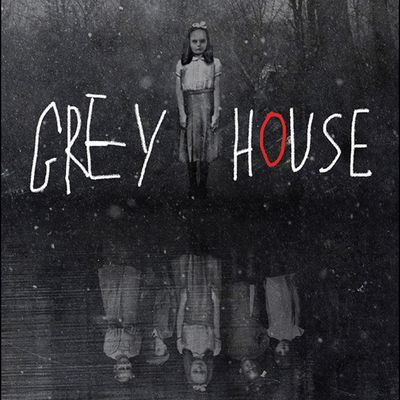
In this episode, we journey into the heart of theatre with Levi Holloway, a multifaceted actor, writer, director, and teacher based in Chicago. Levi unravels his personal and professional experiences that shaped his Broadway play, GREY HOUSE, including the influence of theatre legends Joe Mantello and Laurie Metcalf in its creation... Read More
From the show: Half Hour with Jeff & Richie (Post-Show Broadway Discussions and Interviews)
Guests


Featured Shows
About
In this episode, we journey into the heart of theatre with Levi Holloway, a multifaceted actor, writer, director, and teacher based in Chicago. Levi unravels his personal and professional experiences that shaped his Broadway play, GREY HOUSE, including the influence of theatre legends Joe Mantello and Laurie Metcalf in its creation. He takes us through the dream logic he applies to create transformative moments on stage, his unique approach to crafting a narrative puzzle for the audience, and shares a glimpse into his upcoming horror film adaptation and a new play, TURRET. He also opens up about his deep-seated passion for teaching art to deaf students, adding another layer of intrigue to his rich narrative. Don't miss out on this immersive exploration into the world of theatre, where personal experiences and artistic creativity intertwine. Tune in now, and let's uncover the magic and mystery of theatre together!
If you liked this episode, don't forget to subscribe to this podcast and leave us a review.
Share your thoughts with us on this episode below:
On Instagram: @halfhourpodcast
On TikTok: @halfhourpodcast
On our website: www.twoworldsentertainmentllc.com
Transcript
This transcript was automatically generated and might contain errors.
[0:08] Jeff Malone: Welcome to Half Hour with Jeff and Richie, the Theater and Pop Music Podcast.
[0:12] Richie Grasso: I'm Jeff.
[0:13] Richie Grasso: And I'm Richie.
[0:14] Jeff Malone: And on today's show, we have a very special guest, Levi Holloway.
[0:18] Jeff Malone: Levi is a Chicago-based writer, director, actor, and teacher. As a playwright, world premieres include his adaptation of Pinocchio at Chicago's Children's Theater, Haven Place, and Greyhouse at a Red Orchid Theater, which he is an ensemble member.
[0:35] Jeff Malone: Uh Greyhouse is now currently playing on Broadway at the Lyceum Theater. Levi, welcome to Half Hour Podcast, and thank you so much for joining us today.
[0:44] Levi Holloway: Oh, thank you so much for having me.
[0:46] Levi Holloway: It's a pleasure.
[0:47] Jeff Malone: Thank you. We um we'd love to dive right into Greyhouse.
[0:50] Richie Grasso: Of course, we have some questions for you about that. We saw this a couple weeks ago and loved it, and we have questions and we want to know more about that. But before we do that, we just figured we'd give our listeners a little bit more information. So we'd just love to know a little bit more about you first, about your past theater experience and what kind of led you to Greyhouse, what you were doing before Greyhouse, and what kind of got you to where you are today.
[1:12] Levi Holloway: Oh, sure. Uh absolutely. Like you said, I'm Chicago-based, you know, and I studied acting at the theater school at DePaul, and um, and then once I graduated that program, it was immediately obvious that you can't just do that one thing in Chicago. You have to become a hyphenate. Um so I became a hyphenate artist, and that led me down many tributaries, most critical of which was teaching with education. And I became a teaching artist for a lot of theater companies, namely Looking Glass Theater Company, and I was placed in some deaf classrooms to teach mask work. And this was I was in my 20s. Um so I was dramatically underqualified for that job, but I hope that I rose to it. I fell in love with those classrooms and became really passionate about working with young deaf artists.
Um and that led me to writing for them, um creating works that they could be integrated into with hearing artists and um and anyway, I got the best job I ever had. I landed um I ran the Stein Voice program at Chicago's Bell Elementary School, which is one of the country's most old and prolific deaf and hearing integrated schools founded in 1917, and I was fortunate enough for about 10 years to run their theater program. So I exercised a lot of my dark stuff with kids, and I did some adaptations, um and all those old children's stories are super messed up, you know. Uh so I would adapt those and build worlds from them that were steeped in deaf and hearing integration, and then that got noticed at large by the greater theater community, which led me ultimately to becoming an ensemble member with a Red Orchid Theater Company, with which I write and act.
[3:18] Levi Holloway: Awesome.
[3:19] Richie Grasso: Yeah. So and now that Greyhouse was at a Red Orchid Theater Company. Did where did you get the inspiration for writing Greyhouse and where did the when did you start the process for writing it?
[3:32] Levi Holloway: I wrote it fairly quickly. Um because it's such a personal story. And at that time in my life when I was writing it in 2019, um I had a lot of stuff going on that I needed to put down ink. Um so there's a couple buckets of inspiration the first being my nightmare life. I've always been encumbered by night terrors my whole life. Um and I think it's because my dad took me to a bunch of scary movies when I was a kid. Uh I don't blame him. I'm grateful. I have a lot of gratitude about that, but I guess I just pay really close attention to my super messed up dreams and I write from them because I think dreams, particularly nightmares, are trying to tell us something really vital. And uh yeah, so as cliché as it can be, I would write that down and then twist that into stories.
So as I was sort of working out the template for what Greyhouse could be my—and this is a little heavier, but I don't mean it to be heavy, it's just for context—but my twin sister was killed in 2016. Um and that came as a real uh it really took my legs out and uh I needed to kind of process that and you know we all lose people and I'm lucky enough to have the means and resources to exercise that loss into my art. Uh so I wanted to write about a house that holds grief and uh holds youth that you know kids that they get to then experience a youth and a found family. And I also wanted to write about—ooh, it's really thundering here. Um man, okay. And um and I wanted to write, I was also, you know, it's not all heavy shit.
Uh or excuse me. Um it's not all heavy. Um I was also I had I was falling in love with my now wife at the time. So I was really two people. And one was um one was at sea and uh, you know, really in the dark. Um, and the other one was getting ripped up out of that darkness by someone who um who is now my wife. Um so anyway, that's sort of the genesis of the play. And then I love a good ghost story, you know.
[6:27] Levi Holloway: I love that. And I and it's interesting to hear that you know, this was done out of town, and then it came to Broadway. And when it came to Broadway, currently on Broadway, we had Joe Mantello and Laurie Metcalf now on the project. So I'd love to know a little bit more about what got them involved in the project and what were they contributing from what you did out of town to what you're doing now in New York, what were their contributions, kind of how they got involved in the project with you.
[6:53] Levi Holloway: Well, we did the play in 2019 at a Red Orchid to a very small house, but it had some impact in Chicago, uh, enough impact to lead it to Tom Curtihy's desk, um, our producer, one of our producers for Greyhouse. Um, and he then uh well I should back up a step um I ended up signing with Olivier Sultan at CAA uh he loved the play he put it on Tom's desk he's the sort of champion of exactly where we are now and the steward of this play in this wonderful way he put it on Tom's desk Tom was delighted by it he gave it to Joe and Joe it was a pretty quick turnaround Joe and Lori are a couple mischief makers and they uh he gave to Lori he's like I think this there's something here and she said well yeah if you say so and um uh so anyway that that uh sort of was all coming together Tom Curthe got it in you know in 2020 so the pandemic kind of bottlenecked everything uh and now that Broadway's back um I think I think Joe's really interested in what this new landscape is and um uh I think um I I think had some you know he he's he's such a he's such a gifted artist and I think that this work speaks to where he is and and the kind of stories he he wants to tell um I think he's all about these honest uh hard truths you know in in his work um that's one thing that he does so anyway that's the that's the short of it there's a lot of nuance to it but um the the TLDR is that I'm very lucky.
[7:09] Richie Grasso: Yeah yeah so this it kind of touches something for me because I always find Broadway doesn't always have the most welcoming new welcomingness to like new ideas and scary being one of them like horror or spooky things on the stage. I mean like we'll have something like Sweeney Todd, a musical that's kind of horror in a way. But this seeing a real ghost story on the stage, where do you think Broadway will take this in the future?
[9:14] Levi Holloway: I think that's a great question. And I'm not sure that I'm the best candidate for the answer um because I've never really set out to write in a particular genre space. I mean I can't deny that uh that Greyhouse is certainly um a horror play but horror is among one of many things that it is um so I think that it's a I think it's a I'm trying to for my for myself I'm trying to understand the Broadway landscape at large and I'm trying to understand where something like Greyhouse fits into that. And I'm not sure that it does or that it needs to. I think that it challenges the audience. I think it you know my hope is that it thrills the audiences and and my deepest hope of all is that it that the audiences find themselves in it.
And and and in in that that ingredient right where we we find ourselves in in the work we make this contract to sit down and watch I always say like plays are like it's funny because it's a bunch of humans sitting with other humans agreeing to watch other humans pretend to be other humans and uh in that I think that Greyhouse is very it's a very warm play. Uh and it it does welcome the audience to to find themselves. And I don't think that's terribly unique in in a lot of the great work that's on Broadway. Um you know you can try to you can you can look at theater as escapism, but uh I don't see it that way. I think it's a coming home. And um uh I think it was Anna Shapiro who said that um I'll butcher this um because someone told me she said this, she didn't think me.
In fact, the original director of Red Orchid said this uh about what she said. His name's Shade Murray. He's um he's one of the uh most groundbreaking Chicago directors uh there are. He said that Anna said that uh great stories don't teach us anything new, they just remind us of what we've always known but forgot. And um I just love that. Uh and even if she didn't say it, uh I love it. Um, so that's what I'm trying to do.
[11:35] Levi Holloway: I it's it's an amazing quote. And I uh with this piece, I find it to be so interesting because I I've studied theater, I direct, I freelance direct, and I see so much theater too. And I found that a lot of theater of the last five, ten, maybe even twenty years has been very um, whether it's straight plays or musical theater, it's very like um spell everything out for the audience and make everything crystal clear so that everybody understands every minute of this, and that it's cookie cutter. There's a lot of plays lately, I feel like are like, and I leave the play and I'm like, okay, I don't really know what to talk about because I understand what happened and I felt some emotions there. Great.
And there was something about this, and so there's that, but there, but then I find that the best plays, I walk out of the theater, I'm like, I have to like go like have a cup of coffee and like talk about this with the person I went to for like an hour. And so when Jeff and I left, you were like the first on our mind to be like, we have to like go figure out how to talk to him about this because we walked down, we're like, okay, wait, whoa, I have this theory. And Jeff was like, I actually have this theory, and it and it was a talking piece. And we were talking about this, and it was just whether he was right or I was wrong, it didn't even matter who was right or wrong. It was just all the themes and motifs throughout it that we were talking about.
So I guess my question for you is when you get to the ending of this. I even was listening to people in the audience like, oh, I think that it was someone said I think this was like. Yeah, like someone was like, I think this whole thing is set in purgatory. I heard an audience over saying, I'm like, oh yeah, that's I actually didn't even think of that for a second. And I was like, wait, did she leave? Or who was human and who was a ghost? So, and I love that. I think that's just what theater should do, even a film should do that, you know. So, my question is do you like that people are perceiving the ending of this play like that? Do you like that people are talking about it? Do you wish that it was not talked about like that? Like, what are your thoughts on like the ending, the ending? Because I feel like that's what's the buzz of this play right now.
[13:40] Levi Holloway: You know, I think there's a tension between overt and covert. And I think that I'm always trying to ride the in-between. Um, you know, uh I also that said, do not believe in withholding or being ambiguous. I um I respect the audience so much, and I'm so grateful for their time that I I do offer a sort of puzzle box. Um, and that's that's very true. Though the answers to this play um are all they're all definitely hiding in plain sight.
[14:20] Levi Holloway: Uh at Curtain Uh there are things there are, I guess clues is the word for it, but there are there are clues littered about the stage that really just let you know what's coming.
[14:33] Levi Holloway: Um you know, uh without spoiling, if you there are so many times where a character in the play who who is of the house, who's an occupant of the house, tells the guests of the house exactly what's happening and exactly what's coming for them.
[14:50] Levi Holloway: Um but you know the perhaps that's what it is, you know, that it that the truth is is is horror.
[14:58] Levi Holloway: Um so we're you know, our characters, our our our guests are in are in a bit of denial because they got some stuff to work out with each other.
[15:08] Levi Holloway: Um so the more and more they unravel, it's less um it doesn't lead them to a place of uncertainty, it leads them to a place of certainty.
[15:19] Levi Holloway: Um I love I love the theories I hear and read.
[15:23] Levi Holloway: I do troll the uh the internet, which is a dangerous thing to do.
[15:26] Levi Holloway: Yes, as it's it is very dangerous, and I have very thin skin, so it's tough.
[15:32] Levi Holloway: Uh and there's a lot of landmines out there because you know, people have have very strong opinions, and I think that a play like this um uh is provocative because it doesn't uh uh uh it does not want to help you, but it wants you to I you know I wrote it so specifically for everybody who's watching it.
[15:56] Levi Holloway: I I care so much, but at the same time, I I respect the audience so much that I I want them to do their own math.
[16:04] Levi Holloway: Uh I lay out all the all the equation uh for them.
[16:10] Levi Holloway: And uh I really there's this other thing that I'm so interested in, and it's that a play is an offer, right?
[16:17] Levi Holloway: And I say this to all the artists I work with on either side of the table.
[16:22] Levi Holloway: I say, look, my job's the ink.
[16:24] Levi Holloway: The white space between the ink is is our job together.
[16:28] Levi Holloway: And it could be anything.
[16:30] Levi Holloway: It could be anything.
[16:31] Levi Holloway: We can shape it to anything.
[16:32] Levi Holloway: And Joe has been such a he's so incredible.
[16:36] Levi Holloway: He's such a um, I mean, it's I'm not saying anything new about Joe.
[16:40] Levi Holloway: Um, and he certainly doesn't need me to validate validate his um his artistry.
[16:46] Levi Holloway: But it it's been it's been moving to be in the room and watch so many people at their at the top of their game in process.
[16:53] Levi Holloway: Um and for them to be in process on my really personal weird play um is is is is is wild.
[17:02] Levi Holloway: That's a long answer to I love the theories.
[17:05] Levi Holloway: Um I love I I love that.
[17:08] Levi Holloway: I think the ending is challenging, but and it's so hard for me to like not be like, well, no, no, no, no, it's this, it's exactly that.
[17:15] Levi Holloway: Right, right.
[17:15] Levi Holloway: Um which you know I I'm always happy to do like when I'm not being recorded.
[17:22] Levi Holloway: But so you have a clear ending that oh my gosh.
[17:27] Levi Holloway: Yeah, there everything to me, I'm like, it's so clear.
[17:30] Levi Holloway: Yeah, um, yeah.
[17:32] Levi Holloway: But but I understand, you know, sometimes we do a little rewrite, and I'd say, Joe, this is I'm just, you know, it'd be like a little volley.
[17:40] Levi Holloway: And I'd say, um, this is so overt.
[17:43] Levi Holloway: I I don't this is so overt.
[17:44] Levi Holloway: And he'd just looked at me like you you you think that's overt, you know.
[17:49] Levi Holloway: Uh uh he you know, um so I I'm always careful that uh with with this with the ending of the play, I think I think it's pretty straightforward.
[17:59] Levi Holloway: Yeah, yeah.
[18:00] Jeff Malone: How do you feel that the play overall translates to the stage from what you originally wrote in the play?
[18:07] Jeff Malone: And is there even more like scary moments in the play that really would be too much for the stage?
[18:16] Jeff Malone: Um like jump scares.
[18:19] Levi Holloway: Oh, are I'm sorry, are you asking if we've lost anything like in in uh yeah, like that, did it did you lose anything translating to the stage?
[18:30] Levi Holloway: Uh from like Chicago to New York, or just in general from script to some script to stage.
[18:35] Jeff Malone: Yeah, sure.
[18:36] Levi Holloway: From from script to Chicago to New York.
[18:39] Levi Holloway: Well, from the script, um, you know, it's funny.
[18:43] Levi Holloway: I al I like to write impossible stage directions.
[18:46] Levi Holloway: So I'll say like uh this wall becomes another wall, or this character's entire planet shifts, or the refrigerator starts to bleed.
[18:56] Levi Holloway: Um or you know, stuff like that.
[18:59] Levi Holloway: Sort of these huge impossible things, and that's where the collaboration is.
[19:04] Levi Holloway: So a wall becomes another wall, um, you know Joe would call, he'd say, Tell me about the stage direction, and I'd say, Well, I just know that I know that there's a huge transformation that happens here, and it could be many things, but in this moment, this character is suddenly in a different house, or you know, in a i there's some sort of um there's a lot of dream logic to that.
[19:35] Levi Holloway: So Joe would say, like, uh, okay, thank you, you know.
[19:39] Levi Holloway: How about this?
[19:40] Levi Holloway: Or you take that back to the designers and and then call me, or you know, this is before we start a rehearsal.
[19:46] Levi Holloway: Um so that's one that's one part of it.
[19:50] Levi Holloway: Um in terms of horrifying moments that or scary moments that we had to lose, I don't think so.
[19:56] Levi Holloway: Um there was an act of viol.
[19:59] Levi Holloway: There's already uh an act of violence in the play that's it's fairly spectacle driven and I think of a very beautiful act of violence, in terms of whoa, I've never seen that on stage before.
[20:09] Levi Holloway: Um and that used to be a little more gruesome, which might make you laugh if you've seen it.
[20:16] Jeff Malone: Um you have seen it.
[20:19] Levi Holloway: Yes, on on the page, it involves some ha a hammer and some nails.
[20:24] Jeff Malone: Okay.
[20:24] Levi Holloway: Um and I think Joe, I think the cast and crew and designers would have been down for to go as far as the play needs to go.
[20:35] Levi Holloway: But you know, sometimes with gore, particularly on stage, the more realistic is realistic it is, the less believable it is.
[20:44] Levi Holloway: Um you have to be Yeah, totally.
[20:48] Levi Holloway: If it's totally real, the audience starts paying attention to how real it is.
[20:53] Levi Holloway: And then suddenly, of course, they know it isn't, and then moments have gone by.
[20:56] Levi Holloway: But if it's an exhibition, if it's if it's artful, and you know, you could go for realism too, but if there's something dreamlike about it, then I think the audience is more inclined to go to to to just get in that water and swim.
[21:14] Jeff Malone: Totally relates to what you said earlier, too, about this is something you've somewhat in a way dreamed up.
[21:20] Jeff Malone: And that really actually helps me kind of process this whole story a little bit more too.
[21:32] Levi Holloway: I also think from my sister showing me scary movies when I should not have been watching them.
[21:38] Levi Holloway: But I for my whole life I always had them.
[21:41] Levi Holloway: And I've always been intrigued to kind of know how do people actually get that down on paper?
[21:46] Levi Holloway: Because you know, when you wake up, you only have it for such like how long do you remember that dream for or certain parts of the dream that are so important, and you just gotta probably write it right away.
[21:57] Levi Holloway: But it really is actually making me look at this play from a completely different angle now.
[22:02] Jeff Malone: So it's right, right.
[22:05] Levi Holloway: Well, I I've I've I'm so lucky for my dreams, and I I love when I have a nightmare, and I don't love it.
[22:10] Levi Holloway: My wife definitely doesn't love it.
[22:12] Levi Holloway: Um But you know, there's been times where I've I've had to really think hard if it was a nightmare if or if something happened, you know, and um it's it's interesting, it's um it's interesting.
[22:27] Levi Holloway: I I don't know, you know, uh sometimes I think the quickest way to bore somebody is talk about your dreams.
[22:32] Levi Holloway: Um but uh I only take oh sure, yeah, yeah.
[22:39] Levi Holloway: No, you know, like last night I had a dream, and you're like, okay, well, I would like to go get coffee.
[22:45] Levi Holloway: Um but I don't know.
[22:49] Levi Holloway: I I I just take there's sometimes I just go through a series of images and I and I I I sort of pull the threads from that, you know.
[22:57] Levi Holloway: And and and in talking about post-greyhouse, I have a question for you here as to what's next for you.
[23:06] Jeff Malone: Are you thinking that have you written other things?
[23:08] Jeff Malone: Are you trying to go back to Chicago?
[23:10] Jeff Malone: Do you want to continue some Broadway stuff?
[23:12] Jeff Malone: Do you have something in the works that you're allowed to say or not allowed to say?
[23:15] Jeff Malone: Like what's what's next for you past this show?
[23:19] Levi Holloway: I'm doing an adaptation of a horror film uh that I can't really talk about.
[23:27] Jeff Malone: Okay.
[23:27] Levi Holloway: That should that should happen in in London.
[23:30] Levi Holloway: I'm doing uh my next play that will see an audience or an audience will see uh will be in the spring of 24 uh in Chicago, um starring Michael Shannon and Travis Knight.
[23:49] Levi Holloway: Uh Travis Knight is an incredible actor.
[23:51] Levi Holloway: He he he was in the original Greyhouse, and we are uh all three of us, Mike, Travis, and I are ensemble members uh at a red orchid.
[24:00] Levi Holloway: Um so that's a horror play.
[24:02] Levi Holloway: It's a two-hander.
[24:03] Levi Holloway: Um uh did I say it's called Turret.
[24:06] Levi Holloway: Um and it's uh it's it's it i guess you could call it a bit of a spiritual cousin to to Greyhouse.
[24:14] Levi Holloway: It has some of the same rules going on.
[24:16] Levi Holloway: Um but it's um it's about well, I won't say too much, but it it it is about two men who live underground in a sort of bunker underneath a a massive turret and uh you know a big uh a big sort of gun.
[24:36] Levi Holloway: And they're soldiers, and something there is something outside that wants in.
[24:41] Levi Holloway: Um but we are, you know, they are they are two men who whose relationship keeps changing and changing and changing from father and son to brothers to lovers.
[24:54] Levi Holloway: We're not ever sure.
[24:55] Levi Holloway: And there's some reveals that that take us through the the how and the why of that.
[24:59] Levi Holloway: But it's really an exploration of cycles of abuse, uh, alcoholism, fathers and sons, um, the ghosts of the living, and it has um sort of it's sort of paying homage to some of my favorite horror movies, like The Thing and Alien.
[25:17] Jeff Malone: Love that.
[25:17] Jeff Malone: That's some great stuff coming.
[25:19] Jeff Malone: For sure.
[25:20] Jeff Malone: That's super interesting.
[25:21] Jeff Malone: Um we're getting close to the end here, so we always like to ask one last final question to all of our guests.
[25:27] Jeff Malone: But what is a fun behind the scenes moment or memory that you've had working on Greyhouse, whether it was in Chicago or Broadway, that you want to share with the listeners.
[25:39] Levi Holloway: Oh man.
[25:40] Levi Holloway: Um there's so many, and and this is such a good question.
[25:45] Levi Holloway: If you had if I had if if I if I knew it was coming, I'd give you the end.
[25:51] Levi Holloway: The most golden nugget ever.
[25:54] Levi Holloway: Um one of my favorite things, and this is not the funniest thing, but one of my favorite things, and he would uh not agree that it was a favorite thing of his, but Joe has uh what you call what he calls tech shins.
[26:09] Jeff Malone: Have you ever heard this phrase?
[26:10] Jeff Malone: A tech shin?
[26:11] Levi Holloway: No.
[26:13] Levi Holloway: So during tech, you know, you know, it's pitch black in the theater.
[26:18] Levi Holloway: And when you get up to you get up, some seats of the Lyceum don't don't fold right back up.
[26:26] Levi Holloway: So uh Joe cannot sit still, right?
[26:29] Levi Holloway: He is up and up and up and up.
[26:31] Levi Holloway: And every time he gets up, he rams his shins full speed into like a folded down chair.
[26:39] Levi Holloway: So he's just got like a series of like deep purple lines on his shins.
[26:44] Levi Holloway: He's got tech shin.
[26:45] Levi Holloway: Um and I yeah, he's got tech shins.
[26:50] Levi Holloway: Um I uh I couldn't help but but laugh and uh uh you know I feel bad for his legs, but uh he it's his choice to get up, you know, he keeps getting up.
[27:02] Levi Holloway: Um so that's probab that's probably that's I got a hundred of it, but that would be a good thing.
[27:05] Jeff Malone: I feel like he's got he's probably not alone in that.
[27:08] Jeff Malone: I'm sure there's plenty of directors, choreographers, playwrights who run up and down the aisle to check things and sight lines and running and boom, boom, boom, bump into things.
[27:16] Jeff Malone: I'm sure that's always happening.
[27:18] Levi Holloway: Oh my god.
[27:19] Levi Holloway: Theater's a dangerous sport, right?
[27:25] Jeff Malone: Well, listen, everyone, thank you all so much for tuning in and listening.
[27:28] Jeff Malone: This was a really, really wonderful conversation.
[27:30] Jeff Malone: It just is so wonderful to hear from the source of the show.
[27:34] Jeff Malone: So thank you all for listening today, and thank you, Levi, for joining us today.
[27:38] Richie Grasso: Yes, we hope you enjoyed our conversation with Levi.
[27:41] Richie Grasso: Uh Levi, if our listeners would like to learn more about your work, where could they find you?
[27:47] Levi Holloway: Uh I don't I'm not I don't really traffic too much of the social medias, but I am on Instagram at Levi Holloway.
[27:54] Richie Grasso: Okay.
[27:55] Levi Holloway: Um, and then they can look up a red orchid theater uh to find what's coming next.
[28:01] Richie Grasso: Great.
[28:01] Richie Grasso: Love that.
[28:02] Jeff Malone: All right, cool.
[28:03] Jeff Malone: Um, thank you, all of our listeners, and if you have any suggestions for any future episodes, we'd love to hear from you as well.
[28:09] Jeff Malone: You can connect with us on Instagram and TikTok at Half Hour Podcast.
[28:12] Jeff Malone: Also, if you'd want to check out our we our full review and thoughts on Greyhouse, you can go back and listen to our past podcast episode, all about that, which is linked in the description of this podcast episode.
[28:23] Richie Grasso: There we go.
[28:24] Richie Grasso: Yes.
[28:24] Jeff Malone: So thanks so much for joining us today, Levi.
[28:27] Jeff Malone: We can't wait to see what's in store for you next.
[28:29] Jeff Malone: I'm Jeff.
[28:30] Jeff Malone: And I'm Richie saying ta-ta for now.
[28:32] Jeff Malone: Bye.
© Broadway Podcast Network, All Rights Reserved