

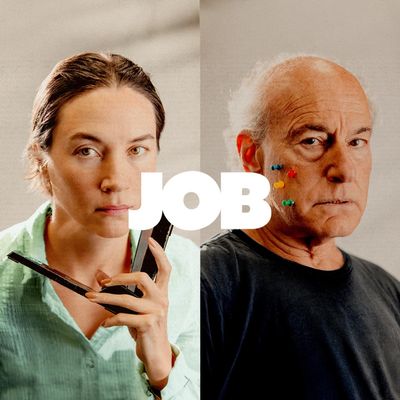
In this episode, we sit down with Michael Herwitz, the visionary director of Broadway’s JOB. Join us as we delve into Michael's fascinating journey from child actor to director, uncover the creative process behind the success of JOB, and explore the themes that resonate with audiences across generations... Read More
From the show: Half Hour with Jeff & Richie (Post-Show Broadway Discussions and Interviews)
Featured Shows
About
In this episode, we sit down with Michael Herwitz, the visionary director of Broadway’s JOB. Join us as we delve into Michael's fascinating journey from child actor to director, uncover the creative process behind the success of JOB, and explore the themes that resonate with audiences across generations. Michael shares insights on the role of lighting and staging, the challenges of directing a two-person scene, and the open-ended interpretation of the play's conclusion. Discover how JOB bridges generational divides and engages audiences in meaningful conversations.
Follow and connect with all things @HalfHourPodcast on Instagram, and YouTube. Share your thoughts with us on JOB on our podcast cover post on Instagram.
MICHAEL HERWITZ is a director, producer, and dramaturg in New York City. He is often found huddled around a new script in development or dreaming up a revival of a favorite musical. His directing work collides fantasy with the mundane, and is often representative of queer and/or Jewish communities. He creates where generosity of spirt and pursuit of excellence go hand-in-hand. Michael is a ferocious advocate for the fourth wall and believes every second act deserves a dream ballet.
In Fall 2023, Michael made his directorial Off-Broadway debut with JOB by Max Wolf Friedlich. The twice-extended, sold-out run was a New York Times Critics Pick and hallmarked as "Highbrow and Brilliant" in New York Magazine's Approval Matrix. The commerical transfer at the Connelly Theater in 2024 recouped its investment in five weeks.
Born and raised outside New York City, Michael began his career as a child actor on Broadway. While stage managing his middle school musicals, he developed a deep passion for being behind the scenes. Michael has developed and staged new plays and musicals at HERE, Ensemble Studio Theater, JACK, SoHo Playhouse, Williamstown Theater Festival, IRT Theater, Lifeworld, Martha's Vineyard Playhouse, and the Pasadena Playhouse. As an Assistant, Michael has supported the work of Terry Kinney, Moritz von Stuelpnagel, Leigh Silverman, Jessie Nelson, and Joe Brancato.
In addition to his directing work, Michael has worked as a General Manager and Company Manager Off-Broadway and on tour. He is the Co-Founder of G45 Productions, an artistic collective dedicated to new plays. His education spans Fiorello H. LaGuardia High School of Music and Art and Performing Arts to Northwestern University to the Williamstown Theatre Festival to watching countless movie musicals as a kid.
Transcript
This transcript was automatically generated and might contain errors.
[0:08] Jeff Malone: Welcome to Half Hour with Jeff and Richie.
[0:10] Richie Grasso: I'm Jeff.
[0:11] Richie Grasso: And I'm Richie. And today on our show, we welcome a very special guest, the director of the current hit play JOB on Broadway, Michael Herwitz.
[0:18] Michael Herwitz: Thank you so much. I'm so happy to be here.
[0:22] Jeff Malone: Yeah, I'm gonna tell our audience a little bit about you. Michael Herwitz is a dynamic director, producer, and dramaturg based in New York City, known for his unique ability to blend fantasy with the mundane while highlighting queer and Jewish themes. He made his Off-Broadway directorial debut in the fall of 2023 with the critically acclaimed and commercially successful JOB by Max Wolf Friedlich, a former child actor on Broadway. Michael has staged new works at esteemed venues such as HERE and the Williamstown Theater Festival. He is co-founder of G45 Productions, an artistic collective dedicated to new plays. And his educational journey includes notable institutions like Fiorello H. LaGuardia High School and Northwestern University. I hope I got everything in there.
[1:05] Richie Grasso: Oh Michael, we're so excited to have you on the podcast. Having seen JOB twice now, we can't wait to chat about this full production with you. But first, Michael, you started as a child actor on Broadway. How did that experience shape your journey to becoming a director?
[1:21] Michael Herwitz: Oh boy. Um, I think it's actually the only reason I'm a director, or at least it accelerated the path really quickly. Yeah, I was in Dracula, the musical, and I was in Chitty Chitty Bang Bang, which sort of opened in the 2004, 2005 season. I was sort of eight, nine, and ten. It was sort of like a three-year thing between first rehearsal to final close. Um, those shows both didn't do very well. You know, they weren't hits; they were flops. And um, I knew that, you know, and I was a really geeky kid who knew how to use the internet. So I would like read all the grosses and I would read the message boards and I would read all the reviews, and you sort of feel the vibe in the building. So I knew that these shows both weren't hitting the way that people wanted them to.
And I started thinking, well, how do we fix it? Like how would we fix the show? And because I was really precocious as a nine-year-old, I would like march into the stage management office at Chitty and I would say, listen, we should cut the flying. We have to cut the kids' fly. Then the car flying isn't special anymore. And so we gotta make some changes here. And of course, I didn't think that they would take me seriously, but it was sort of like a game. Like I kind of liked the test of thinking, like, can I do this? And um, so I really think it was the people backstage of those shows, like the stage managers at Chitty, Michael Pissaro, Saskia Larveen, um, and some of the actors and sort of the backstage child guardians who really were like my parents backstage.
It was really those people who saw that curiosity in me and saw that hunger. I loved looking at the performance reports and the stage managers gave me a calling script so I could practice calling the show at home. And like all of these things, so I was really, really nurtured by those folks backstage. Um, so it's been very special now to come back to Broadway 20 years later, exactly 20 years later. And um, some of those folks have now seen the show and we're talking and emailing and they're reaching out to me and they're saying that they're proud. And um, I feel really, really, really special.
[3:25] Richie Grasso: I love that. That's so awesome. Uh, moving over to JOB. So we saw JOB downtown, uh, Off-Broadway in the winter, and we were obsessed. And so we interviewed, we had to, we told the press people right away, please we have to talk to Max. So we have a whole episode out talking to Max and just loved talking to him. And then we transferred to Broadway. We're like, yeah, so we just saw it last two weeks ago again, and uh, we are we're just always talking about it. I'm truly, this has just been groundbreaking for us. And we, Jeff works as a producer in the music business. I work as a director and producer as well. So we work in these industries too, and I'm always seeing a lot. And so I'm looking at this, I'm seeing New York Times calling it a critic's pick, New York Magazine labeling it highbrow and brilliant. What do you think is resonating so much with audiences like us or people who are just loving this? What do you think is resonating with the critics and the audience for you personally?
[4:17] Michael Herwitz: Yeah. Well, first of all, I just want to say you guys are such JOB enthusiasts.
[4:22] Richie Grasso: Yeah, we love it.
[4:23] Michael Herwitz: We love it.
[4:24] Richie Grasso: We love it.
[4:24] Michael Herwitz: I show for I've listened to all of the episodes. The most recent one, I was sort of nervous. I was like, all right, um, they're gonna ask me some stuff, so I gotta get myself ready to know what I'm in for. Um, but actually, Max had sent me your initial episode very early on, and you know, reading reviews and that kind of stuff is challenging, and sometimes I do it and regret it, or then I don't do it, and then I regret it. It's sort of, you know, you kind of can't win either way, but he was like, I really appreciate just the sort of the depth through which you know Richie and Jeff were speaking about the show, and so I do appreciate that. Um, oh, and now I've totally lost the plot.
[5:01] Richie Grasso: No, that's okay.
[5:04] Michael Herwitz: You're totally fine. I was just asking what you think, like, why is this resonating so well with audiences today?
[5:10] Michael Herwitz: Listen, I think it's a conversation starter, right? Like, I think, um, first of all, I think the show takes um, the sort of like millennial experience extraordinarily seriously. And I do think our first initial audiences, especially downtown, were people sort of in their 20s and 30s who had gone to maybe liberal arts schools or on college campuses, sort of between 2010 and 2020, and sort of saw these things in the character that they really responded to. And I think it's rare, especially because the show is this therapy session that we really dive very deeply into one person's psyche in sort of a very explicit way. So I think that people really see themselves in her, and I think that really scares people too, because they don't necessarily want to see themselves in her.
So I think that's a fun place that we invite people in. Um, and then it's for sure a show that people just want to talk about. You know, it's very um, it's very kind of office cooler vibe. You want to go, you go the next day, yeah, you want to go to the office or you want to text your family or whatever, and you want to say, Oh, I'm really thinking about this. And I think the reason the show has staying power is because people in the shower five days later are still thinking about it. And that is sort of a universal whether you even people who don't like it, they still are thinking about it five days later, you know. So I think that there's um an excitement in that, in that um, it just holds you. I think that's why it is resonating.
[6:35] Richie Grasso: I feel like it's interesting, kind of like looking at you, like what you're saying with the millennials, like really resonating with this play and talking about it because we keep going in depth more and more with each time we talk about it. I found it a little interesting. There were some like older people sitting around us. I don't know if they really had the same feeling, which I kind of get, which is like interesting seeing this go from Off-Broadway to Broadway now, and how some of those audience members might not be having that same feeling. Um, especially with like maybe we'll go here right now with like the lighting, like in this show. I think the lighting is like a major character in this piece, and like that's like something we really wanted to talk to you about because are some of those choices in the lighting here like in the script, or did you come up with them yourself? Like, how did that character really come about in this production?
[7:33] Michael Herwitz: Totally. Um, that's like there's a lot in there. So yeah, you're yeah. Um, yeah, and I do want to talk about sort of at some point I want to come back to talking about kind of like the older generation seeing the show.
[7:47] Richie Grasso: Yeah, yeah.
[7:47] Michael Herwitz: That is also like way more complicated than I even thought it was gonna be when I started. In terms of lighting and in terms of sound and all those sort of gestures in the play, that um is in the script.
[7:59] Michael Herwitz: Okay. Um, it wasn't it was in it appeared in like the fourth or fifth draft that we were working on. So I know Max wrote the play, and then Hannah Gatz is our dramaturg, and I'm the director, and the three of us have been attached from the very, very beginning. So there's really like not a draft of this play that I haven't read. Every sentence that is said aloud, we have argued about. Like the three of us have worked really, really in concert on every single thing and sort of where the writing starts and where the directing stops, it's a very blurry line. Um, and so it makes sense that we get these questions, sort of like where did this come from? So, yes, I mean, there was um a moment in a draft where I read where there was sort of a new stage direction, Max was sort of playing around with something and it said like the office goes green.
And I was like, oh, that's sort of a different thing. That's sort of a different rule. And I was happy because I was pushing us for that. I wanted something that felt like the show because it's a therapy session, it could feel very, very static. So, how do we create something that feels really dynamic and alive? And so he sort of proposed that some things would happen. And then I sort of took that and ran. And then we bring in our designers and then they start saying, oh, what if it's this train thing? And what if it's this dentist chair thing? And we start thinking, okay, well, these are sort of the rules. And so they all have to sort of fit into this kind of um umbrella. What do you guys think it could be within that umbrella?
And then they come in with stuff. And so from there it's really like trial and error. And we were tinkering throughout the entire thing. I mean, I still, I want, I saw the show last week and I was like, oh crap actually I think we should have done this. You know, it's still ongoing. Um, and so yes, it started with Max in terms of he sort of brought it in. I then took that and sort of started to morph it, invited the designers into the conversation. The designers and us and me would sort of like noodle on things and build things and try things. We try things in rehearsal that would or wouldn't work. We then try them in tech in the actual sound system and then it was really different because coming out of a Bluetooth speaker on a desk versus coming through the entire theater sounds very different.
So then that would teach us things um, and then we sort of show that all to Max and Hannah at the end and sort of say like, you know, does it work for you? And then they would say yes or they'd say no and some, you know, there was a lot of things where, you know, Hannah would be like I don't really get what you're doing with that. And I was like yeah you're right. All right let's go let's roll back up our sleeves and see what's going on. And we did that every literally every single day.
[10:21] Michael Herwitz: There were sequences on especially for the broad production that we touched every single day until they said okay you have to put your pencils down.
[10:28] Richie Grasso: Yeah.
[10:29] Michael Herwitz: It's extremely clear that you are a collaborative team working on this because I have had multiple episodes of this podcast where I go to a show and I say, I think the lighting designer was in a different room. I think the director barely showed up to those rehearsals because it does I see productions and I'm like, who was driving this ship? And clearly, with y'all are working together as a team. It's very what you're saying makes complete sense to me because it's clearly shown up there on the stage. And also to kind of piggyback on the directorial, you know, I've directed two person scenes before in one room where I'm like, oh my gosh, when do they sit? When do they stand? Should they move here?
Is it getting too boring if they're sitting for too long? That's like where my mind goes as a director. And I would love to know like what were you facing any of those challenges? Like, we got two people in one room for almost 90 minutes, like, whoa. But I thought you handled the way they moved throughout the place really well. Like, was that a challenge for you?
[11:30] Michael Herwitz: Oh, absolutely. I asked myself the same questions you just said. Like, yeah, it can't be two people just sitting there. That's really boring. Right. How do we keep this sort of alive? And how do we keep it moving? And how do we keep it surprising? And how do we make sure that we're using every inch of the space we have? And um we, you know, when we we started, I started the first second we give rehearsal to the playhouse. We sort of had the whole set on stage, and I was like, Oh my god, it's way too early for this. Like, I sort of re got a half hour in, and I was like, Oh, we're so we don't even know what we're doing yet. We have to like strip all this back. So we sort of staged the first version of the show just with literally two folding chairs, like on a blank stage.
And then slowly, as we were building, we started adding in a desk or adding in the tissue box or adding in the like sort of the other stuff, like slowly trickled in as we got closer and closer and closer to our first preview. But for a while it was sort of like Evil Van Hove like cage match style. Like it's just two chairs in this little box. Like, what do you guys do if it's just that? And then the room sort of filled out gradually.
[12:34] Richie Grasso: I love hearing that. One thing I wanted to talk about, because I feel like we talked about this in our last episode about when um, and this is like a big spoiler, but everyone who listens knows we're gonna go in deep uh with things that are happening on the stage. Hey, we have three episodes out already of JOB, so we're gonna go there. But when we saw it um downtown, there was a moment where Peter, we think he put the mask on himself. And then now in this one, it has somewhat shifted to um Sydney finding the mask in the desk. That did not happen downtown, right?
[13:13] Michael Herwitz: You're very astute watcher.
[13:15] Richie Grasso: Okay.
[13:17] Michael Herwitz: And we that like my big thing is like when did that change and why did it change?
[13:23] Richie Grasso: Yeah. If you're allowed to say if you're allowed to say.
[13:24] Michael Herwitz: Yeah, no, I mean, well, listen, I think it's hard to talk about, obviously, as we all know. Yeah. I think something that has definitely you know, there are um it was a choice to change it. It was my choice. I was pushing for something different. Um, most of it was because um even people who had seen the show numerous numerous times, like our producers, our press people, people who were really studied in the show, would see it after five or six times and be like, I still don't get that. What is that? And that bothered me. I was like, I think I think by time five or six at least, you should sort of be getting it, you know? And so while I think the j while the gesture was really exciting and theatrical, and I do think it's sort of a blank canvas that allows the audience to put something on, like it allows the audience to sort of ascribe meaning to it from the outside, which is something that I welcome in our play.
But there's a line for me about that. There's sort of a there's sort of a border of where I feel comfortable. Is it are we just doing things that are so sort of vague so that people can go home and think things and aren't actually being true to what is literally in the text of the play, you know? And so I felt like I wanted to make that moment a little clearer. Knowing that as you guys spoke to, like knowing that like for some people who've seen it numerous times, they will be like, oh, if that's a giveaway or some sort, you know. But I I felt like for the first-time audience, which is most people who are experiencing the play, you want them to be um with all the mystery of the play, it's like how to make sure people are leaning in and not being pushed out.
Because there are sometimes there's big gestures or there's mystery things, or there's twists, or there's ever that's what it makes you go, huh? I don't know what that is, versus yeah, oh, what is that? And I wanted to make sure we were always on the side of oh, what is that? So that's kind of where that mask moment changed. Um designer Patricia Spenden also sort of took a very different approach to the physical mask too, in effort to just sort of clarify. Um, there's a you know, this is a hint, but there's a line in the play that sort of speaks to what that mask is. And I wanted to make sure that the that even when that line appears 10 pages later, you would say, Oh, I remember that. And that's what I was trying to build. That sort of your memory would go, oh, I oh, I think I get that.
[15:38] Richie Grasso: It's smart because I feel like that's what it does now with this with how you're doing it on Broadway now. I definitely think it helps the audience know earlier because when we saw it downtown, I would not have known or connected that earlier, which was fine because I thought it was a better, well, not better, but like a more interesting director choice of like us trying to discover what's actually happening on the stage. But then like here, I think it is helping, which might actually lead back to the kind of question about an older generation seeing this play now. And is that also helping them and whatever else you wanted to touch about how they are receiving um the show.
[16:17] Michael Herwitz: Yeah, yeah. I I don't I don't know. You know, I think it's it's been a it's been a challenging process in some ways because it's like who are we building it for, right? Like the obviously a first time viewer is very different than a second or third time viewer with our play. You watch it very differently. Obviously I hope that it's satisfying both ways. And and at the Connelly it was really nice for people who'd seen the Connelly EFSO playoffs who were like, oh I was just as in it. I was just as scared. I was just as excited like it didn't feel like it had lost the suspense, which was excellent. Right. Um but it is a thing where it's like yeah the audience starts to try to get ahead of it then.
So you know it there's this uh I you know I who knows maybe maybe the you know the first version of the mask is more arresting for some people and for some people it's not and and that's just something I have to get comfortable with being like it's not gonna work for everybody or it's gonna feel different. And I can't wait to go see it in DC or Chicago or some other city when with some other director and be like oh my God you really figured that one out. You know that's awesome that you like that's a wholly different idea and different approach if that's amazing. And that's the mask too is another moment where there was a mask that was called for in the script but it was in a sort of a very different treatment and and so it's sort of like a proposal from the playwright that then the director and the team kind of take on and sort of morph and then send back as a proposal.
In terms of the older audience, um, yeah, I mean, I do think I felt like our Broadway audience might be a little different than our off-roadway audiences. And I want to make sure that they're not being pushed out, as I was saying. I don't want to make no sure that they're being repelled by anything. And so if that means that the sound is a little bit quieter, or that means that we're sort of treating something differently. I was welcome to that. Um, but I'll just say I think the older audience has been like just as with it. I sort of wish that I hadn't been scared. They're they're um I do think that they tend to resonate more with what Lloyd, what Peter's character is saying. Um I think sometimes if you feel people holding Jane Sydney's character and a little bit more judgment, but there's a moment in the play where you really see that change.
You sort of feel the audience kind of fall in love with her, and you sort of feel the audience really understand her. And I think sometimes people see them as their daughter, or they they see her as their daughter, or they see her as their granddaughter, and that kind of like when that moment happens, it really changes the temperature in the room.
[18:31] Michael Herwitz: Um, we have a Thursday night five o'clock and a Thursday night, 8:30, which is very fun in our schedule. And it feels like the five o'clock tends to be older and the 830 tends to be younger. And there was one night where it was like so amazing because the five o'clock, such a boisterous audience, so vocal, so loud. Mostly people, a traditional Broadway audience older than our normal audience, like they were in stitches with everything that Peter said. And then the late night show felt like a frat party, like in stitches over like Sydney has a line about like being, you know, an article about being raised by a Jamaican nanny, and like it got applause. You have to stop, you know, for like the whole and also it's usually in the mezzanine because people playing for the cheaper seats are the younger people in the mez.
And like the mezzanine felt like a a raw concert that night. So I think it's it was such a validating evening for us because it was like, oh my god, the show really does resonate across the show, it's about a generational divide, and within the audience, and even within the critical reception of the show, I think that generational divide is like really alive. And I think that's kind of cool. I really I think that's exciting. And I hope that as the show is talked about, you know, in the years to come, people will sort of take all of that into their consideration.
[19:43] Richie Grasso: Especially since I think um at the well when I first saw it downtown, I discovered the aha moment, right? Or whatever's happening at the very, very end there really late. Like I just got for me personally, I just got it really late. Like and and just on it, and he got it a little bit. He grabbed my leg, he's like, wait, what? I'm like, why is he? I don't know. I was just really not, I was looking at other things maybe, or I I was following it, but I was just so and that's fine. And when I really realized it was like, oh my gosh, wait, I wish I discovered this like 10 minutes earlier. So when I when I went back, I from the beginning I listened with a very different ear. And what I also really listened for is when were the people because most times you go to the theater and a big moment happens, and most people do at the same time, right?
Like in general, depending on if it's a comedy or drama. This is like, and then five seconds later, and then 10 seconds later. And I've I don't know if I've ever heard that in the theater where you're hearing different people in that 10 minute window at towards the end, right?
[20:43] Michael Herwitz: Of it, and every time she says a line, there's an ah, and then he says, and I've never it's like like um like firework going off, right? And I would be like, and I and I that is what's very cool to me is hearing the different reactions, not a few hundred people going at the same time. I don't know if you're understanding like how specifically how odd, but but like I yeah, it's just that was really impactful to me the second time hearing that.
[21:07] Richie Grasso: Yeah, you know, I really feel that. I mean, I side of me, I sort of when I walk when I see the show, that's what I look forward to most. It's kind of like hearing that moment. I think it's usually about like a 20-second span, yeah where you sort of get like some people, some people get it like the first second second one of 20, and some people get a second 19 of 20, and it sort of ripples through the crowd, and um, and then even after, you know, you're sort of through the through the rest of the play, you're sort of hearing like just this kind of like hum and buzz in the room. It's it's it's very satisfying, it's very cool. And and sometimes I think, oh, do I would I've rather had it been one big and I'm I kind of like that it's not.
[21:38] Michael Herwitz: No, I agree with all of that. Like coming at it. Um, yeah, yeah. And I think it also changes every night, and that's I'm not sure I'm the thing that we'll probably talk about. But and when we were when when we were leaving, there was an older woman near us, and she asked someone who you know, and I'm not trying to be ageist here at all, but it's like someone around our age was sitting near us and someone older, and she leaned over, she could have tapped my shoulder, Jeff's shoulder, but she wound up tapping the person next to me, and she said, and we were getting ready to leave. It was after the bows, and she had said, Oh, can you um what happened? Like, she just really didn't understand what happened, and like he tried to, in like the most like G-rated way, explain like what had just happened, I think.
Like, to not startle her because I don't think she got it. But she was it was like the most respectful, like she just like honestly wanted clarity, and he was able to like give like a 10-second clarity, and it and she was like, Oh, okay, I thought that, but okay, and he was like, Yeah, awesome, and two strangers, and then left the theater. And I was like, that's what theater is all about, you know. I don't know. I'm gonna go. That's so cool.
[22:41] Richie Grasso: Yeah, that's really cool.
[22:45] Michael Herwitz: I mean, when my mother first saw it, she was like, What just happened? Just half the thing. I was like, All right, Alex, catch it. So um no, but I yeah, yeah, yeah, yeah. I know I'm not upset about that. Yeah, that's like what we like felt that because we were actually at one of the five uh 30 performances on a Thursday, I think right after it opened. Um, which like we kind of felt the generational divide in the audience there where we maybe were some of the younger in the audience, and it kind of leads to an interesting question about how did you go about um approaching that general generational divide between the two characters.
[23:22] Michael Herwitz: We'll be right back.
[23:27] Richie Grasso: Let's jump back into things. Um I don't know if it was a huge I think I think we just knew that the play was gonna be that. I think one of Max's initial impulses in writing was like, um well, I was was that you wanted to sort of start a conversation between generations. I think to me, the play is very much about a father and a daughter, right? Like we know that this is a father who has had a a really troubled relationship with his daughter, and this is a daughter who's had a really troubled relationship with his father, her father, and these two people meet in this room and they kind of see their family in each other. And so I would say if there's a sort of an access point in terms of the generation that I leaned into, it was that access point.
[24:07] Richie Grasso: Yeah.
[24:08] Michael Herwitz: Um that is a familial thing. And on top of that too, the big generational divide between tech between those two people and how they use tech was which is also interesting because I feel like there's so many people in the audience that are resonating with Peter's character and what um they're doing with tech and how they're so against tech, but using tech to do things, and then you know, kind of and us millennials that are debunking people with tech. So it's like interesting to see those two things happening on the stage, and I feel like that's where you really nail it as well.
[24:47] Richie Grasso: Um with your choices.
[24:50] Michael Herwitz: It's also interesting because you we I believe we said this with Max. We said, you know, he had kind of left it like it's up to the audience to decide how this ends. And I believe he said Peter and Sydney also, and this could have changed since we talked to him six months ago or whatever, but I believe he said they also have never said their personal thoughts on how they think this ending is. So I'm gonna assume I know the answer to what you're what I'm about to ask you is do you have your own thoughts? And do you not tell the cast or company your personal opinion on it for the sake of the artistic integrity of the piece?
[25:22] Michael Herwitz: Um no, I think it's it's for me, it's changed, and for me it still changes. Okay. I think I think the you know, the thing I tell people is there's no secret that we have that you don't have. There's no like decision that we made that was like don't tell the secret. Like that's not at all what it is. I think I think of the show a little bit more like the mystery of Edwin Drude. You know, like the audience like votes every night on who they think killed Edwin Drude, and then that person gets to have the final song. Like, I kind of think we were more interested in creating that sort of experience. And I think it's funny when people who caught to me and they're like, Well, yeah, the Connelly was this, but clearly you guys changed it for this.
And I'm like, you know, like, and I think it does depend on sort of where you sit and and and what you've been listening to, and you know, maybe it's that Sydney makes a certain expression one night that she didn't make last night, and that kind of changes people's experience. So it's sort of out of my control a little bit of what people leave feeling or the story that they get. Um, and yeah, Peter and Sydney, I think we all sort of understand where we come from, but we haven't said anything explicitly. And yeah, um, I think for all of us, we sort of feel like it's not um, I think that's the that's the first question I want you to ask when you leave the theater is you know who's right, who's wrong, what's true, what's not true.
But I hope that that question then gives way to a whole other conversation. I think it's like that's the sort of starting point, that's the spark. But I hope that I think the play is much more than that, and I hope that you will um sort of go home and talk through much more.
[26:53] Richie Grasso: Well, we were talking with a friend after who saw it, and we we kept saying, you need to see the show, you need to see the show, you're gonna love it. And he he made a statement after he's like, that. This is basically like a modern day doubt, and you're really left at the end saying, like, it did he do it, did she do it? What have they actually done from like what you received? And like that's the conversation that we keep happening, uh key happy having with other people saying, like, what do you think actually happens at the end? And you like you leave it really on that cliffhanger of saying nobody knows.
[27:30] Michael Herwitz: Or do yeah, exactly. And I I think I I don't know, I think when people are feeling really confident, I'm like, yeah, for sure. Yeah, for sure. And I I could literally keep talking about this for hours, and I know we're almost out of time, so I gotta unfortunately wrap it up. But I wanted to ask you for you personally, after job, I mean, or while job is still running, first of all, congrats on the extension of that. It's wonderful that it's running longer. Um, what is next for you personally, next projects, anything you're allowed to say, or or things on the horizon for you?
[28:00] Michael Herwitz: Yeah, I I have a really fun thing actually next, which is that um I went to LaGuardia High School, as you said. Yep. And um they're doing into the woods in the fall. And so I'm gonna go back and I'm gonna direct into the woods at my old high school. I love it to which Yeah, I had gotten hired to do it before we knew the show was gonna transfer to Broadway. And um when we found out, I had a sort of a second honestly where I was like, Is this kind of silly? Like I'm gonna be directing umbrella, should I be going to direct is that a bad career move? Like would my agent be upset, you know? But I really A, you know, job is a two-hander in a room, and this is gonna be like you know, the the design budgets at LaGuardia High School are like practically bigger than the Broadway budget.
So it's like I actually have a lot more to play with. Um I have an amazing choreographer named Sarah Parker who's currently in Health's Kitchen and she's gonna be doing it with me. And um we're gonna have an amazing time. We cast the show in the spring, and the students are just uh out of this world talented. Um and I just I just can't wait. I think it's gonna be like a really sort of different scene, but the best the best thing to go to next.
[29:03] Richie Grasso: And we we read somewhere that you love dream ballets.
[29:07] Michael Herwitz: So are you putting a dream ballet in his woods? That's what I wanted to know.
[29:11] Michael Herwitz: Well, you'll have to come you'll have to come see it to find out.
[29:15] Richie Grasso: We love a dream ballet too over here at Half Hour Podcast.
[29:19] Michael Herwitz: So I loved reading that. I was like, yes. There was there was that and that you love the fourth wall and we love the fourth wall. Like, yeah, because we were saying a lot in this podcast lately, a lot of shows are you oh I personally think are overusing narrators and breaking the fourth wall a ton because they're not trusting their audience. I just I you could listen to almost every podcast lately with a narrator. I say, Why are directors not trusting their audience more? Please trust you. We don't need a narrator to beat us over the head with the plot every single second of this two and a half hour show. And I love that with job, you kind of kept that fourth wall up and you're like, just watch this. We don't need to spell everything out for you. You know what I mean?
[29:55] Michael Herwitz: Than thanks. I I something I feel like people talk about theater being like this communal experience all the time, which I totally agree with but something I love about going to theater I love going to theater alone because I love that I I love kind of getting lost in the sort of anonymity of all of it and getting lost in the darkness and sort of feeling like my self consciousness totally disappears because it's just me in the dark with this thing. And so I I like preserving that for audience members too however I can it's it's wonderful.
[30:19] Richie Grasso: Yeah that's amazing we you you definitely have a big future we we can yeah we're excited to see what's next for you for sure.
[30:26] Michael Herwitz: Thank you of course uh folks listen thank you all so much for listening today we have to wrap it up but that's all to the time we have for half hour. Thank you so much for listening.
[30:35] Richie Grasso: Yes we hope you enjoyed our conversation with Michael in this in the description we will share all information about where you can learn more about Michael and how you can see job. To our listeners if you have suggestions for future episodes we'd love to hear from you you can connect with us on Instagram at half hour podcast.
[30:50] Michael Herwitz: Thanks so much for joining us today.
[30:53] Richie Grasso: Thanks for having me.
[30:55] Richie Grasso: Signing off for now I'm Richie and I'm Jeff saying ta-ta for now.
[30:59] Michael Herwitz: Bye
© Broadway Podcast Network, All Rights Reserved