

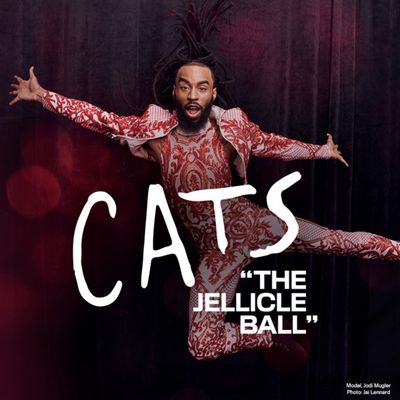
In this episode, we sit down with Nora Schell and Garnet Williams to discuss their roles in the off-broadway production of CATS: "The Jellicle Ball". Please note that this episode may contain spoilers about the show... Read More
From the show: Half Hour with Jeff & Richie (Post-Show Broadway Discussions and Interviews)
Guests
Featured Shows
About
In this episode, we sit down with Nora Schell and Garnet Williams to discuss their roles in the off-broadway production of CATS: "The Jellicle Ball". Please note that this episode may contain spoilers about the show. If you haven't seen the musical yet, you can catch CATS: "The Jellicle Ball" playing at PAC NYC.
Follow and connect with all things @HalfHourPodcast on Instagram, and YouTube. Share your thoughts with us on CATS: "The Jellicle Ball" on our podcast cover post.
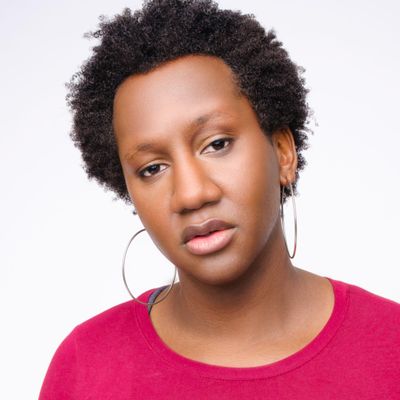
Nora Schell graduated from The University of Michigan with a BFA in musical theatre and a minor in gender, race, and nation. They received Drama Desk, Drama League, and Clive Barnes Award nominations for their Off-Broadway debut in SPAMILTON. Nora made their Broadway debut in Jagged Little Pill. With their educational background, Nora continues to cultivate a career focused on the intersection of performing and social justice. Thank you to Gregg Baker Management and their family. @noraschellmusic
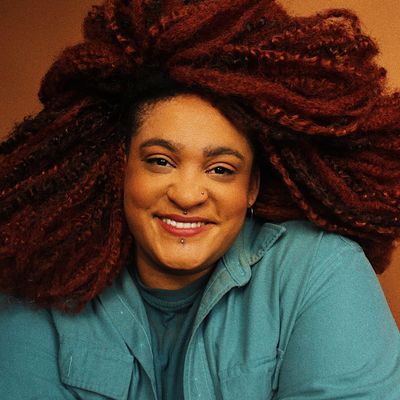
Garnet Williams is a writer, actor, and singer originally from Atlanta. Some favorite roles include The Lovebird in Skyward: An Endling Elegy (Powerhouse) and Miss Olivia Blonde in At Hotel MacGuffin (Parity). More recently she has been on concert stages from Caveat to Joe’s Pub. For Lucile.
Transcript
This transcript was automatically generated and might contain errors.
[0:00] Jeff Malone: A Broadway Conversation with Nora Schell and Garnet Williams.
[0:30] Jeff Malone: A rising star in the performing arts scene, Nora earned acclaim for their Off-Broadway debut in Spamilton and made their mark on Broadway in Jagged Little Pill. Nora's career is dedicated to merging performance with social justice advocacy. Garnet Williams is a writer, actor, and singer originally from Atlanta. Some favorite roles include the lovebird in Skyward and Ending Elegy at Powerhouse, and Miss Olivia Blonde in At Hotel MacGuffin. More recently, she has been on concert stages from Caveat to Joe's Pub. Nora and Garnet, welcome to the show!
[1:08] Nora Schell: Thank you!
[1:09] Garnet Williams: Hey!
[1:10] Jeff Malone: Nora and Garnet, it's great to have you both on the show. And before we get into your current work in CATS: The Jellicle Ball, can you tell us about your journey on how you got started in the industry?
[1:23] Nora Schell: Yeah, we actually both grew up in Georgia, which is wild, because we didn't know each other, but we did cross paths a couple times unknowingly. Like, we were at the same, like, you know, like the Jimmy Theater Awards in Georgia, it's the Shuler-Hensleys, and we were at it at the same time.
[1:40] Garnet Williams: Wow.
[1:41] Nora Schell: But, yeah, so I was lucky to grow up in Georgia, in an area that had some really great arts programs and funding. The first show we ever did was Fiddler on the Roof. I played Yenta, Black Yenta, in fourth grade.
[1:53] Garnet Williams: Yes, yes, yes!
[1:54] Nora Schell: So that was fun. Then I went to Pebble Brook for Performing Arts, a magic school in high school. Yeah, I feel like I kind of was able to start really early because I had supportive parents, and I was in an area in the South where the arts was prioritized.
[2:11] Garnet Williams: Oh, that's amazing, amazing.
[2:14] Nora Schell: When it comes to performing start, it's kind of the stereotype, shy little kid that knows how to repeat the sounds of the pastor and the parents. And so it was like, we're gonna throw you on stage for Easter pageant. You, you, you know, little four or five-year-old me imitating the pastor saying, "Good morning!" I said, "Good morning!" I see the goodness of blah, blah, blah. But I also ended up, because it was the school that was in my district, going to, well, you know where they are?
[2:53] Garnet Williams: There's our half hour call.
[2:56] Nora Schell: But going to the sort of rival to Pebble Brook, though, I don't know if we called it a rivalry, but it was one of our cities, and big arts high school has produced people like Dakini Calatango and San Consangla, and, you know, went through there and started working professionally at about 18. And, you know, True Colors Theatre Company, it's Kenny Leon's company down there, and jumping around doing Black Nativity, and it was just kind of a run from there.
[3:23] Garnet Williams: Amazing. I love hearing the stories of how a lot of people get started, you know. And it's interesting, because we, so we're talking today a lot about CATS: The Jellicle Ball, playing way downtown in Manhattan, off Broadway. I didn't really know what to expect going into this. I saw the latest revival of CATS on Broadway, this movie that came out a few years ago, and everybody like has their opinion. The second I say, see the movie, I know. Every time I see someone older, younger, and I say, oh, CATS is back in New York, and most people have been like, oh, really? And I'm like, no, no, no, you don't understand. Like, this is not Grandma and Grandpa's CATS, okay? So it is not. And so I like have said, I said, go buy a ticket, and then they literally say, oh, my gosh, like, I totally understand what you're saying.
So this is so reimagined. I totally see that. Just explain a little bit, if you can, about this process of how you both got involved, and what this process has been like, to bring this from rehearsal mode into like, what we're seeing now on stage.
[4:30] Garnet Williams: Yeah, so, um, I just got added for this leg of it. The show has been in workshops for like, three years, yeah?
[4:38] Nora Schell: At least two or three, yeah. I've been, I was fortunate enough, I knew Victor Vasquez of X-Casting, I've known him for years, and he's a teacher at a base, who are both like, wonderful people, and really, really advantageous artists who are really trying to make sure that the right people end up in the room. I got invited to audition. And I think I remember specifically being in a callback with one of the directors, the two co-directors Jalen Levingston, who I've built such a relationship with at this point. And I was in the callbacks, kind of being like, I'm not ballroom, but I'm a trans woman. So like, let's figure it out. And I was doing the Cavity. I was, I was, I was doing the callback, and I was singing Cavity.
And I remember sitting, snatching a chair from someone, and I said, I could do the normal choice, I could pull out the bazooka. And he says, Well, now, of course, I want the bazooka. So I did something that you now see in the show every night. So it's, it's been quite a journey of like, jumping up and down and having my role switched in between workshops as well.
[5:45] Garnet Williams: And I guess I'd say, so like, I got added for this leg, I had been asked to audition, I think, for the last workshop, but I was doing a regional production. So I wasn't able to come in for it. And I kind of thought, okay, like, this is gonna be a big project, they're gonna pass over me, because they need people to be there, they're gonna be building this, I was like, so that probably won't happen. But then I got called in again for the pack iteration. And so I remember I initially taped for Demeter. And then they sent me a breakdown for Bustopher. And I was like, interesting. And like, the breakdown was saying, like, they wanted it to be a fat femme who's competing in body. So I competed in Luscious Body.
And I was like, okay, we'll see if they're gonna do this correctly. So you know, I went in for my callback, and I got to pack and I didn't realize, I did not realize how high profile it was until I got here. And I texted my manager, I was like, I'm not getting this job. I was like, there are people in this hallway who like have huge credits. I was like, I'm not getting this job. I was like, whatever, I went in, it was a good audition. And I kind of left and I was like, okay, I did a good job. I was like, but I'm not getting this. So I remember my manager calling me, we were talking on the phone, we were kind of griping about some stuff in the field. And then at the end of he goes, Oh, yeah, by the way, an offer for CATS came in.
I was like, wait, what? You just buried the lead? Um, so it was it was a really exciting. Um, it was really exciting, because it also just caught me off guard. My manager did it so nonchalantly. But, um, yeah, I feel really lucky to be a part of the production and to have been added to it later down the line. And it's been really nice to learn from everybody who's been a part of it, both musical theater and ballroom folks.
[7:12] Nora Schell: Totally love that.
[7:14] Jeff Malone: And for those who haven't seen the show yet, and are listening to this episode, so this CATS incorporates ballroom culture in here. How do you feel like you both have incorporated that into these iconic characters that you're playing?
[7:29] Garnet Williams: For me personally, right. And I want to be very clear that like, though I am a woman of trans experience, and have been for a while, ballroom was never my way in. But I had always sort of crossed paths with women who were in ballroom. Because as far as developmental roads, a lot of trans women of color go to ballroom, I went to drag. And there's a lot of similarities in so far as these people who have this grandioseness, and this solidified sense of self. Because, and this is a bit of a Trace Lysette quote, but like, we do not have the luxury of imposter syndrome. And so being very sure of yourself, very sure of your skills, and what you can do with, you know, making a dollar out of 15 cents is very much something that lives in the Bumble arena that I keep, you know, bucking and prancing around this stage. And, you know, reaching for the back of people's wigs when they do things they're not supposed to.
[8:27] Nora Schell: Like, I didn't see that last night.
[8:31] Garnet Williams: That's amazing.
[8:34] Nora Schell: Yes, I love it. And it's interesting, because I find that there is this, just from my experience being there for a few hours, there's this extreme level of respect for so many different cultures of people coming together. And like you said, this hybrid of musical theater, because someone said to me, they're like, oh, CATS is such a dance show. Someone said, how are the vocals? I'm like, we're getting choral, singing, SATB vocal, like, I'm getting choral, because I come from such a music place. I'm like, I hope that like, we're not stripping down the choral on this, because Angeloid Webber is so heavy in those harmonies, and the gorgeous sounds, and just the ending, that song, you're all standing and singing at the end.
It's just, it's just like, I feel like I'm just hearing this like symphony, and the orchestrations are there. I'm like, it's just all respected in every way you look at this. I just wanted you all to know that, because I found that to be so respectful for Angeloid Webber and the work, but also to reimagine it. So thank you. And I just want to say a public shout out to Tara LaShawn Clinkscales, Shireen Timentale, the two that make up the whole four Sopranos that they hired. Because it's literally the two of them, and then the two of us, and that's it.
[9:42] Garnet Williams: Oh my gosh. Wow.
[9:44] Nora Schell: They decided to only hire four Sopranos, so shout out to those little people.
[9:49] Garnet Williams: Shout out, because you're belting, and you're giving vocal.
[9:51] Nora Schell: And you have the power.
[9:52] Garnet Williams: It's power. It's totally vocal power, and it's also this, you're dancing this whole show, and then you're just still giving the vocal. I was just really impressed with that, for sure.
[10:02] Garnet Williams: It's interesting, because I want to say, because you were talking about ballroom, and so for my character, for Bustopher, the way that I incorporate it is like, I'm not doing as much dancing, but I am walking body. So it's more about the presentation of, it's still performance, there's still dance moves, but it's more about that level of confidence. So I start off, you know, in a more mask-presenting outfit. Very Gladys Bentley, and shout out to Queen Jean, our costume designer, who is beautifully referential with everything she does. But so then, you know, I do my little burlesque strip thing, and I'm in this corset with the Union Jack, and what I will tell you is that learning how to sing in that corset was a task.
[10:42] Jeff Malone: Oh, I bet. And what I kind of wanted to ask next is, we saw you both as Bustopher Jones and as Grizabella at the performance we were at. Did you take anything from other performances of Bustopher Jones and Grizabella, or was this a completely reinvention of those two characters?
[10:59] Garnet Williams: This is a complete reinvention. This is a complete reinvention. I mean, I don't really take anything from James Corden. But that's because Bustopher is portrayed initially, it's kind of like a fatphobic joke. It's taking the piss out of fat people, and this is a celebration of fatness. And it's like being a beautiful fat person, being a non-binary fat person, being a non-binary black fat person on stage. It's like, we're not doing this as Bustopher Jones where it's like, you know, uppity. This is no, like, I am a celebration.
[11:31] Nora Schell: Yes, I am that B.
[11:32] Garnet Williams: Yes, yes, yes.
[11:33] Nora Schell: There you go, the B. And, but we, we even felt that from watching it, we're watching your performance. And I feel like when you get to that part in the show, and it's very early on, we're sitting there and we're like, oh, okay, we're really going to go here in this show now. And we're going to, like, respect it and appreciate it.
[11:52] Jeff Malone: We'll be right back.
[11:58] Jeff Malone: Welcome back.
[12:01] Jeff Malone: Garnet, you understudy Bustopher Jones as well, correct?
[12:04] Garnet Williams: Yeah.
[12:05] Jeff Malone: And what is the process between you two working together in the roles? And how do you make it your own when you do go into the role?
[12:14] Garnet Williams: You know, in this process, I have been incredibly fortunate that the people that I understudy are such wonderful and warm and giving and brilliant templates for what I do. And the reality is, I am so not capable of what these people are. You know, Nora is a belter with a capital B. The woman who normally plays Grizabella is, you know, the queen mother of the house of Maison Margiela. She is a ballroom legend. She has so much history that goes with her. And for me, you know, I, once again, just sort of being a stereotype, like the people that I modeled myself after as I tried to be an actor and I imagined in high school what I could possibly be as an actor, it was a lot of me playing a Barbra Streisand clip on YouTube or Arja MacDonald in Marie Christine and singing along with it and trying to figure out where are those little pieces.
So, you know, being on the sidelines and watching these two people tell these stories in such specific ways, trying to figure out how to walk that road and the places where that their feet have really sunk in and really shown me what the path is to put my foot in there. And even if I can't fill the spot, because I obviously can, but to really like find where my foot sticks in there and really, really trying to honor what they've done, but realize that my body is a different canvas. So I just have to paint what I can.
[13:51] Jeff Malone: We did get to see you as Grizabella. Well, and I will say we were blown away by your performance in that role. You captivated us early on in and I was like, where is Grizabella going to go with this? And I'm going to tell you when you're singing your song, there was not, everyone was crying around me and it was an amazing experience. And there was one point I said to Richie, I was like, I think you're really crying up on stage. And I was like, this is so real and authentic. Cause I was like, I don't know if this is the first time you're playing the role. When we saw it, I don't remember what day it was. It was the Friday of pride weekend, which was even like bigger because we were like, whoa, we're here.
[14:34] Garnet Williams: There's a joke that I've been making in this process a lot, is that there are 10 trans women in this city who work and we all talk. And so often theatrical spaces, especially larger ones, will do anything but hire an actual trans woman and a special one of color. And there is this feeling in the center of myself about what it means to when those lights come up. And in the midst of these seas of people who I'm so grateful to come and see the show, because I've been in shows where the house is half empty, like seeing not only all the people who paid and all of the like very excited people, but looking and seeing younger black people and seeing trans people, like visibly unambiguously trans people out there and understanding that that is the beginning of what I want my legacy to be as an artist.
There are so many trans women who have more skill than in their pinky than I will ever be able to conjure. So many people whose lives were cut short for a million different reasons. And for every one of them, I will take 100 steps, even if it means that I don't get it. Like my one of the things that carries me in me continuing to do this career path, despite all of the obvious challenges, is delusions of grandeur, because everybody, every artist has to be delusional. But like, one of my biggest ones is that, you know, I will be more than twice this age and sitting in that box at the Kennedy Center and have a Kennedy Center honors and there will be some trans woman or trans man of color who comes out on that stage dressed to the nines in the biggest label of the time and looks up at me in that box and says, I saw you on a commercial, on a TV set, in a movie, and I saw you and I said, nah, they'll let that outside. I can do anything I want.
[17:20] Jeff Malone: I've seen enough Kennedy Center honors videos to know exactly what you're talking about. And it is what I grew up as a child watching, what that must feel like that moment, right? And what a profound statement. And to kind of tie in your creative team here, you have two directors and two choreographers, Jalyn Livingston, Bill Rauch, Arturo Lyons, Omari Wiles. It's very clearly, there's a vision here. I've seen so many shows and I come home and I say, Jeff, I don't know if there was a vision. What was the vision? This was extremely crystal clear vision with these four people. What was it like working with these four people, bringing this vision to life in this way?
[17:58] Nora Schell: I will say, Bill approached Omari initially about, I just know this story since I've spoken with both of them. Bill approached Omari about doing Cats as a ball because he had seen Omari's dance company and Omari was kind of like, why does this white man want to do a ball show? They started developing it together also with Josie, what's Josephine's last name?
[18:19] Garnet Williams: Josie Kearns, I believe.
[18:20] Nora Schell: Josie Kearns. The three of them are the ones who developed the outline for the show. So Omari created every category for each character as somebody in the ball community. I think it was a really cool process where it's not just where we had two directors, two choreographers, but there was a lot of overlap where there is directing within the choreography, there's choreography within the directing. And it was very interesting to see folks of different, one, racial backgrounds, two, different ages, different communities. It was very, it wasn't always easy because people have different opinions, people have different ways of working, but it was a very valuable experience to watch folks grow, to also grow myself and learn that I need to sometimes adjust how I'm going to learn something. I can't just force it in there and say, no, this is the only way that I learn because that doesn't work for everyone.
[19:13] Jeff Malone: Totally, totally. And to bring another creative name into this, I know recently Andrew Lloyd Webber has come to see this show. Do you have, I read the press on it, but what are your thoughts on what he thought and what was, did you meet him? Well, anything you can share about what that was like for him to be there?
[19:29] Garnet Williams: The elevator story. You tell the elevator story. So I have a little bit of a knee issue right now. So I take the elevator when I finished the show. And at the end of the show, I'm in this just red bra. So my boobs are out. I get in the elevator. I hear somebody go, can you hold the elevator please? And I'm like, okay, they hold it. And then in comes Andrew Lloyd Webber and his entire team with me and my boobs out in the elevator and this man is standing right next to me. And he literally he's trying to be respectful. And I was like, hi, oh my gosh, I'm so sorry. And I just come so awkward. I was like, I'm really sorry that my boobs are out. Oh my gosh.
[20:03] Jeff Malone: I mean, to have him there and to, I mean, that must have been, I know some people don't always like to know if someone's there and some people do. So I'm sure maybe some of you knew, but that must have been profound just to have him there.
[20:12] Garnet Williams: I mean, I mean, yeah, I, in that same way about what it means to, to, to do theater and, and to be for me to be a soprano on a Webber show. Like I, I very pointedly, I was a little late getting down to meet him because I wanted to scrub all of my makeup off and have this man look a black transgender woman in the face and say, hello, I was your bamblerina and also one of your sopranos this evening. Thank you for coming to the show. And he was like, oh, it was wonderful. And I was like, we'll be right back.
[20:51] Jeff Malone: Let's jump back into things. A cool thing about this show too, is like it does feature the cabaret style seating, which makes it semi immersive. I think in my opinion, how has that been working for you navigating through the audience, et cetera? Does the energy kind of feed you to perform?
[21:09] Garnet Williams: It definitely does. I mean, the cool thing about the show is if you're sitting down at the cabaret tables, it's a completely different show because you're catching all of our little ad libs, the relationships that we've created. And obviously when you see the show from above, it's this big, big picture, but when you're down there, you get these little vignettes that you don't catch if you're not at the cabaret tables.
[21:29] Jeff Malone: Yeah. We were on the side, we were like on the side of the catwalk, not at the tables, but in the seats.
[21:37] Garnet Williams: Yes. It was very cool. And just, looking at this broad, we're seeing a lot of reinvented, reworked classics coming to the mainstream here, right? How do you see productions like this specific Jellicle Ball contributing to the evolution of musical theater? Are we going to be seeing more of this in your opinion, in terms of just reinventing classics in this way? Because when it works, it works, right? So what do you think the future of this is?
[22:06] Nora Schell: I'm always a little trepidatious when asked, will we see more like this? Because we have seen so often, and especially when it is the idea of this fringe thing, though people have always been here, right? There was a massive crop of Asian talent working in Hollywood and around Hollywood before Crazy Rich Asians. Before the blaxploitation era of film, there were so many brilliant black actors who were running around and they just weren't being taken seriously. And sometimes that happens, and then there's this huge gap. I think that this is another invitation to say, if you build it, they will come. And the people that you want to do things are right at your fingertips, right? I feel so fortunate to be in this show.
And if I can be a little sentimental at this moment, there is such a gift to be able to sit next to somebody like Norah Schelds, who is so brilliant and so giving and so generous on stage, because I find I'm my best when I can actually talk to a person. And this is a person that could lead a whole show. Like, you put it on Broadway tomorrow, this person could burn the theatre down eight times a week and not break a sweat, really. And I want that to be the invitation that's taken, to know that the people who are in this piece and who are willing to breathe into it are here. Yes, we love to see another famed person. We love to see another famed person, but there is so much joy in saying, this is a thing, and let's dig into it to see what it is. Because we didn't declaw the cat. We put acrylics on that baby and we found it.
[23:55] Garnet Williams: I love that. I love that. It's so wonderful. That's great. You made the cat beautiful.
[23:59] Jeff Malone: Yes, yes. And speaking of, you know, Jeff has one final question for y'all as we get ready to wrap up. But one thing I just want to say, listen, I think this could go to Broadway tomorrow. It could have went to Broadway yesterday. I don't know if you know anything yet or not. I know this is all a few weeks left. But in your opinion, are you hopeful that this has a life past August 11th in terms of another off-Broadway venue, a tour, a Broadway? Do you want this to continue on?
[24:20] Garnet Williams: Disregard the fire alarm. Disregard the fire alarm.
[24:24] Jeff Malone: I'm glad there's no fire alarm. Live theater, folks.
[24:29] Garnet Williams: Yeah, I mean, of course. I would love for it to go to Broadway. We don't know anything yet. I mean, the good sign is that Andrew came and saw it and he liked it, which was the, I guess, final frontier for if there could be more life. He had to approve of it. So when he came and liked it and he genuinely enjoyed it, that to me was really reassuring. And I'm hoping that if it does have life that it's handled responsibly because so often we see producers and folks rushing to get things and you lose the integrity of the show. You lose the special aspect. And so it's like if Broadway isn't the right fit and it's another off-Broadway venue, I would prefer that so we can preserve what this has. And then you're not cutting a run short or taking away from the message of the show because this is a really special piece and it's been healing for me.
I recently went through a really terrible breakup and being around a bunch of black and brown queer people every single day that lifted me up. That is the biggest part of this show that I want to hold on to. Broadway would be great, but the people are so incredibly important to me. And these are folks that I'm going to know for the rest of my life.
[25:37] Jeff Malone: That's amazing. So we're getting close to the end of our episode here, and we wanted to have one final question that our listeners always love to hear about a fun, unexpected moment that has happened behind the scenes. And it can be from Cats or it can be from any production that you've been in, but...
[25:52] Garnet Williams: Whatever you're willing and allowed to share.
[25:55] Nora Schell: I told my Andrew Lloyd Webber story. I feel like that one kind of counts.
[25:59] Garnet Williams: It does count.
[26:03] Nora Schell: This isn't from Cats, but it just... It really touches on a lot of YID theater, so I'm going to show this. So in late winter of 2020, I was doing a production at Monumental Theater Company in the DMV, and I was doing Pithio in Head Over Heels. And the pandemic was raging, people were starting to get sick, and we didn't know what was happening. And there was this man in the DC theater community, I don't know if he's still around, but we affectionately called him Turtle Man, because you could always find him in the front row of any show, kind of looking up at you like this with his hands together. And we finished the show, we found out that night that we had to close, and I was fine. Everybody was sobbing, and I have that big auntie energy, hugs and squeezes, and to people I was fine.
And somebody came up to me and told me that at intermission, he had turned to them, and just ever so quietly, because he had the most soft-spoken voice through his glasses, and he said, you know, we don't know what's going to happen. There might not be theater for the next thousand years, but what we will know is that we were here tonight, and we got to watch these people do this. And that was just an arrow through the heart, because, you know, I came out after having worked in Menehelen Hayes' nominee in the DMV, and then I stopped working, and the call stopped coming, and then I finally got to go back on stage to do Pythio as myself, as this bawdy Southern trans woman. And I also had a younger non-binary person, like another trans person as my understudy.
So I wasn't alone, and I was already getting to be like, I get to stand in the gap and encourage you to say, when it's time for you, it'll be your time. And that is something that has stuck with me, and really motivated me in those gaps, about like, when's the next job going to be? Who's going to be willing to see me as a person who's not just talented, but actually skilled at my craft?
[28:07] Garnet Williams: I love stories like that.
[28:12] Jeff Malone: And here we are. Now everyone sees you.
[28:19] Garnet Williams: Well, I will say, as we're wrapping up here, it is a true joy to see you both in this. I have told people who don't even see theater to run down and see this. It's just been a joy. I just wish the nothing but the best for you all, and your company, and your audiences, and your future of this. It's truly one of the best things I've seen in a really long time.
[28:34] Nora Schell: In a really long time.
[28:34] Garnet Williams: It's refreshing. So we thank you all so much for listening today, that's going to wrap up our episode of Half Hour, and thank you so much for listening.
[28:40] Jeff Malone: Yes, and we hope you enjoyed our conversation with Nora and Garnett. We will share all information on where you can learn more about them in the description, and how you can get tickets to Cats.
[28:50] Garnet Williams: And to all our listeners, if you have any suggestions for future episodes, we'd love to hear from you. You can connect with us on Instagram at Half Hour Podcast.
[28:57] Jeff Malone: So thank you so much for joining us today, Nora and Garnett.
[29:00] Garnet Williams: Thank you.
[29:01] Nora Schell: Thank you for having us.
[29:03] Jeff Malone: And wrapping up here, I'm Richie.
[29:05] Garnet Williams: And I'm Jeff.
[29:06] Jeff Malone: Saying ta-ta for now.
[29:07] Garnet Williams: Bye.
© Broadway Podcast Network, All Rights Reserved