

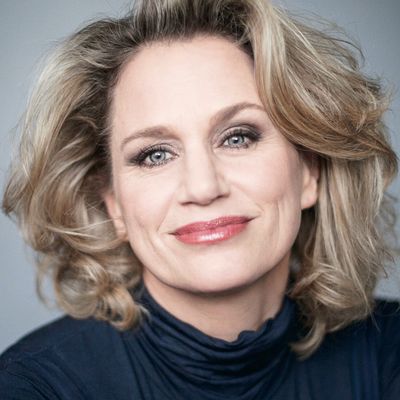
In this episode, we sit down with Tony Award winner Cady Huffman. Cady takes us on a journey through her career, from her early days in youth theater to her Tony-winning performances on Broadway... Read More
From the show: Half Hour with Jeff & Richie (Post-Show Broadway Discussions and Interviews)
Guests
About
In this episode, we sit down with Tony Award winner Cady Huffman. Cady takes us on a journey through her career, from her early days in youth theater to her Tony-winning performances on Broadway. She shares fascinating insights into working with legendary directors like Bob Fosse and collaborating with comedy genius Mel Brooks on "The Producers."
Cady opens up about her current role as director of the off-Broadway show "Empire," discussing the challenges and joys of bringing the history of the Empire State Building to life on stage. She also reveals her passion for inclusive storytelling and her vision for future projects, including a fresh take on "The Music Man" and a performance piece about Sor Juana Ines de la Cruz.
Follow and connect with all things @HalfHourPodcast on Instagram, and YouTube. Share your thoughts with us on our podcast cover post on Instagram.
Transcript
This transcript was automatically generated and might contain errors.
[0:08] Jeff Malone: Welcome to Half Hour with Jeff and Richie.
[0:10] Richie Grasso: I'm Jeff.
[0:11] Richie Grasso: And I'm Richie.
[0:12] Jeff Malone: And today on our show, we welcome a very special guest, Tony Award winner, Cady Huffman.
[0:16] Cady Huffman: Well, thank you, Jeff and Richie.
[0:21] Jeff Malone: I'm gonna read a little bit about Cady for our listeners. Cady Huffman is a Tony Award-winning actress and Emmy nominee whose career spans over four decades. Beyond her acclaimed performances, Cady is a talented writer, producer, and director, having developed new musicals and theater pieces in New York City, directing at regional theaters and colleges nationwide as well. Her collaborations with legendary directors like Bob Fosse and Mel Brooks underscore her remarkable career. Passionate about storytelling and mentoring young talent, Cady is also deeply involved with organizations like Broadway Cares, Equity Fights AIDS, and the Drama League. She's a Tony nominee for the Will Rogers Follies. She's a Tony Award winner with Best Performance by a Featured Actress in a Musical as Ulla in the original Broadway Company of The Producers. And she was on Broadway recently with Nathan Lane in The Nance.
[1:07] Richie Grasso: I saw that. I love that performance.
[1:09] Jeff Malone: And Cady is also directing Empire right now off-Broadway at New World Stages, which runs till the end of September. We just saw that, so we're gonna talk about Empire too. So that's your whole bio.
[1:20] Cady Huffman: Is that it? Is that everything?
[1:22] Jeff Malone: I don't know. I think there's a few things you missed.
[1:25] Cady Huffman: When I was seven, I think you know.
[1:27] Richie Grasso: Well, I have to say, you are our first Tony Award winner on our podcast. So yeah, we're very, very grateful. And when I saw that you were gonna do this, I was thrilled because I'm a huge Producers fan and the Will Rogers Follies. That Tony Award performance still, I watch it, Jeff.
[1:41] Jeff Malone: How often do I watch it?
[1:43] Richie Grasso: It's like incredible.
[1:45] Cady Huffman: The Will Rogers Follies one.
[1:47] Richie Grasso: Yeah, it's so good.
[1:48] Cady Huffman: It's incredible.
[1:49] Richie Grasso: It's incredible.
[1:50] Cady Huffman: So they built that staircase special for that. That wasn't even in our theater.
[1:52] Richie Grasso: Wow.
[1:54] Cady Huffman: Like we went to, I think it was the Minskoff, and they had that on stage.
[1:58] Richie Grasso: Like that's amazing.
[1:59] Cady Huffman: Amazing.
[2:00] Richie Grasso: Yeah.
[2:00] Cady Huffman: Yeah.
[2:01] Cady Huffman: We walked over, by the way.
[2:03] Richie Grasso: In costume.
[2:04] Cady Huffman: Oh, I love it.
[2:06] Richie Grasso: That's a story.
[2:07] Cady Huffman: Yes.
[2:08] Jeff Malone: Well, we are so happy to have you on the show today.
[2:11] Cady Huffman: Thank you.
[2:11] Richie Grasso: Before we start getting into Empire, we wanted to have a little bit of a moment where you get to tell us how you first got started in the theater industry and what drew you to performing at a young age.
[2:24] Cady Huffman: Oh, I'm sure it was attention. But actually, I was pretty shy. I was a very shy child, which I think is a very common story, right? For performers, people like, oh, you must have been so this or that. It's like, well, actually, I was definitely hiding behind my mother's legs, you know, a lot. But I was always a dancer, you know, from very, very young, begging my mother to take ballet classes, and she finally, for my seventh birthday, found the right teachers. And she was absolutely right to wait. But I'd been begging her for about four years, and I started taking ballet classes, and then I did these summer programs in my hometown called Youth Theater.
[3:08] Cady Huffman: Gee, never heard of that before. Yeah, but every town has it. I sang. Oh, I played the Rose in The Little Prince.
[3:20] Cady Huffman: Oh yeah, I know. Oh my god, if Greg Naman asked me to marry him one more time, I was gonna punch him. But we were having so much fun. But my teacher was a woman named Laura Dolis, Laura J. Dolis, and her mom was Laura Stover Dolis, and she'd been a very famous operatic soprano, and she heard me sing The Little Prince, and she offered to give me the classical training because it was very obvious that I could belt pretty naturally. So she wanted to like force me into that classical kind of technique. Again, she was totally right. As you know, as much as I may have gone kicking and screaming, I learned so much from her doing the classical training. So I was getting classical ballet, classical voice, and then believe it or not, in my crazy house, which was, you know, could be a chaotic mess and sometimes just full of magic, we would read Shakespeare for fun.
[4:20] Cady Huffman: Wow, you know, like yeah, and we sang, you know, hands, knees, and bumps of daisy all the time. Me and one of my brothers just loved performing, and the other brother was just mortified by us, you know, just mortified. So, you know, that's how it goes. And I got my picture in the paper. So I think that was like, oh, well, that's great. And then I just worked super hard to be outside the house as much as I possibly could. I just took every class I could until I was 18 and left.
[4:48] Richie Grasso: It's so nice to hear your stories about a performer because now we're moving into Empire. We saw Empire, you're directing Empire. I'd love to know a little bit about what attracted you to this project as a director, how and when does that transition from being a performer to your director? Are you still performing and directing at the same time? Like, how did that process go?
[5:05] Cady Huffman: Yeah, well, you know, I mean, as an eight-year-old, I know I was telling my cousins what to wear, how to do it, what to do, pushing them out in the living room, you know. So I'd say I was very young when I decided I wanted to direct as well. And I did choreograph my high school musicals, and I choreographed what the year out of high school. Yeah, I've just sort of always done whatever was asked of me, and I realized I was directing a little later in life. Like people kept asking me to put together things, so I would put them together, and then finally I'm like, oh, I think this is called directing.
[5:45] Cady Huffman: Yeah, and then I got very serious about it. Hmm, gosh. Before the pandemic, okay, many, maybe a decade ago is when I realized I was directing. And now I, yeah, and you know, I just get older and older. I can't, I can't stop it.
[6:07] Richie Grasso: Yeah.
[6:07] Cady Huffman: So I just love it more and more and more, and I still love performing, but I'd rather make a lot of money doing a TV show or make it a movie or, you know, doing one voiceover.
[6:22] Jeff Malone: Right.
[6:22] Cady Huffman: You know, eight a week gets harder and harder.
[6:25] Richie Grasso: Yeah, oh my gosh.
[6:26] Cady Huffman: But I love those actors who want to do it.
[6:29] Cady Huffman: Oh good lord, I couldn't be happier than I am in the rehearsal room with theater actors.
[6:33] Jeff Malone: And how did you get connected with Empire specifically?
[6:37] Cady Huffman: Well, apparently I did a reading of it about 14 years ago for Lincoln Center. It was like a seven-week workshop, like it was a for real thing. And then it was over, and they went their way. I went mine, and December, something like December 13th, 2023, I get a phone call from one of the writers saying, oh, hey Cady, we hear you're directing. We loved what you did 14 years ago. More than that, we loved what you said about the piece 14 years ago. Would you like to work with us on this?
[7:08] Cady Huffman: Uh, yes, I would. I would absolutely not at all thinking we would be up and running off-Broadway in seven months. I mean, it was extremely fast and, you know, difficult.
[7:20] Richie Grasso: Yeah.
[7:21] Cady Huffman: But, you know, I love telling stories about people who make things. My grandfather dug the subways when he was a teenager.
[7:30] Cady Huffman: Wow, wow. And I love those men, you know, the men who do that and the women behind the scenes. And, you know, I am just stunned that more people don't know the Mohawk Ironworker story.
[7:42] Richie Grasso: Right, right.
[7:43] Cady Huffman: How absolutely, you know, famous they are for walking the very highest beams on the skyscrapers and bridges. So I wanted to tell all those stories. And, you know, there's the Empire State Building has such an amazing history. And so our challenge was making it not a history lesson, making it into a narrative. And it was, you know, it was very challenging. You know, they had a lot of elements in there that suddenly we found ourselves in the rehearsal room, okay, how are we gonna do this? So that's how it went.
[8:17] Cady Huffman: And I, you know, I think the show is settling better and better on these actors, and because it's very complicated.
[8:25] Richie Grasso: Yeah, it's like, oh dear.
[8:28] Cady Huffman: Yeah, there's a lot going on and a lot of really good, and then other things we wish we could improve upon. And, you know, it's just one of those living, breathing abstract musicals that take a while to settle in.
[8:42] Richie Grasso: It's certainly, I mean, when we were watching, I was like, everyone up there is really like giving their all, they're enjoying the experience. I also think with the set design, just you're directing different. I sometimes I see a show and I say, Jeff, oh, everything was front and center the whole time. The whole show was front and center, or it was down left the whole time. And so when I direct, I like to put things in different, use the space that you have, and I thought you did a nice job of moving people through different locales and the down in those house settings down left and right. It was just nice to have that. My eye was going all over. I enjoyed that.
[9:14] Cady Huffman: Thank you. Yeah, Walt Spangler is our designer. And you know, it's an old movie theater.
[9:18] Cady Huffman: Yeah. So there's no fly, there's one entrance onto the stage. It's like all these things that totally work against doing theater. But he did such a beautiful job of designing that set. It's wonderfully built. And then we did our poetic best to tell the story in that environment, you know, where you want to build something into the sky, you have sort of this low, wide environment where you're trying to go fan and tall.
[9:44] Richie Grasso: Right.
[9:44] Cady Huffman: But I thought Walt did a just a wonderful job in the very limited amount of time he had to design it.
[9:50] Richie Grasso: It's cool to hear that you've been part of this project for so long, too.
[9:53] Cady Huffman: Like crazy.
[9:54] Richie Grasso: How much would you say has changed from when you first worked on this 14 years ago to what it is now that we're seeing at New World Stages?
[10:02] Cady Huffman: Completely. There are some similarities, but there was not 1976, all those years ago. That's very new. The Mohawks were mentioned, but they were not featured at all. And yeah, just getting that it was much more linear, and now it's a little more abstract and jumping all over the place.
[10:25] Cady Huffman: Yeah, it's quite different. Quite different. All the workers and the women all each have a very individual voice in our version of it. Whereas before there was a larger cast, there was a chorus, there were dancers, you know, there was, I think, 25, 30 people.
[10:43] Richie Grasso: Wow.
[10:43] Cady Huffman: You know, a crazy big show and we have, I think, 16 people on stage which is still a lot and, you know, you've mentioned this earlier, you have experience working with some iconic directors like Mel Brooks and Bob Fosse. Do you take something that you've learned from them and put that into your direction, especially on a piece like this?
[10:43] Cady Huffman: Absolutely. I tell you, I had Fosse on my little shoulder throughout. You know, I did the show I did for him, I turned 21 out of town doing that show in Boston. Yeah, and I was injured, so I got this opportunity. He and I sat in the bar one night and he just told me everything he was trying to do, everything he wanted, everything Schubert's wanted, the conflict. Like I got this amazing conversation with Bob Fosse that I sort of knew at that moment, wow, I'm really enjoying something that most people will never get. And it was a very cinematic show. It had one set, Tony Walton set all iron, and then I remember really focusing on how he focused our eye to where he wanted it to go. And of course, it was all about movement because it really shows weren't being done like that at that time.
They were still pretty old-fashioned with, you know, very literal sets, although Tony Walton often did those abstract sets. But for this one, it was just told in a very cinematic way, and I remember somebody using that word and I remember thinking about his movies. And I definitely try to do that as a former dancer as well to get my cast moving through the space.
[12:27] Cady Huffman: You know, not just show up, say something and leave.
[12:30] Richie Grasso: Yeah.
[12:31] Cady Huffman: That's great. You could definitely feel that. And a lot of people that listen to our podcast love to hear stories that are happening in the room that we don't get to see because we just get to see the finished product.
[12:43] Richie Grasso: But how do you feel like your collaboration process was with the cast? Any fun stories there?
[13:04] Cady Huffman: You know, I'm very boring. I really try to bring as much kindness into the room so that everyone's real confident. We had this crazy foreshortened casting process; we had to cast in one week through EPAs and ECCs. So we sat there and met sixty to eighty people a day. And as Fosse did at his auditions, I got up, I introduced myself, thanked everybody for coming, and they did their thing. Everybody deserves that moment. So often we are treated very poorly in the audition room. Not always, but we can be dismissively so. I tried to create an environment that was really, really fun, and I think we succeeded at that. Lorna Ventura, our choreographer, who I think is just fantastic, she too got all those dancers improvising.
We needed to see what these people would do in a very short period of time. So when we got into the room finally to start rehearsing, maybe a week and a half later, they sort of knew who we were, and we knew who they were. It becomes, "Oh, hey, yeah, it's just these people we just spent these few days in a room with."
[14:28] Richie Grasso: I can't really know what we were usually at the end like to ask fun, silly behind-the-scenes questions about any part of your career. So you could talk about Empire or that at the end.
[14:36] Cady Huffman: Well, in the next 16 minutes, it's very boring. As a director, I'm very boring. As an actor, more things happen.
[14:40] Richie Grasso: All right, so we'll save the story for the end for that. But before we transition out of Empire into some other parts of your career, I just wanted to ask, what are you hoping audiences take from this piece? Because I took a lot; I took a history lesson out of it. I learned new things that I never knew about that building. I'm hoping that's what your intention was for me to take away from it. But what are you hoping audiences take from this?
[15:03] Cady Huffman: Well, I do find it so interesting that people are still so interested in the Empire State Building. It's a very romantic structure, and it's right smack dab in the middle of New York City, where we all love, the world loves New York City. What I realized in researching the building is it was the first sort of office building skyscraper where everyday people were allowed inside and to go up inside of it and see the world from on top. I think that's sort of it built during the depths of the depression, so it was this very hopeful thing and very much an inclusive environment, as much as 1930 could be, or '31. But I would love for the audience to leave it remembering some of the music and having a whole bunch of questions about the building and the time, and having maybe newfound respect for those types of workers who take such pride in their work and live lives and do things that no one will ever know they did.
[16:17] Richie Grasso: Yeah, yeah, yeah. That's wonderful. I love that. And I'm glad it's still running. Well, when we wrap up the episode here, we'll talk about how people can—there'll be an option—we'll put the ticket link for people to go check out the show. It was a nice experience, and I love New World Stages too.
[16:27] Cady Huffman: Yeah, they do a pretty good job.
[16:32] Richie Grasso: Yeah, it's nice. So moving on to some other things here. You are a Tony Award winner for your role in The Producers. I'd love for you to talk a little bit about what that experience was like. You're with—I think that is one of the most iconic, hilarious shows. I keep saying to Jeff, are we ever gonna get a revival of it? Is it appropriate now to have a revival or not?
[16:52] Cady Huffman: I'm doing a revival in London. The Chinese factory is doing a revival. So I'm excited to see what they do with it. I just would love to know what that process was like, and then winning the Tony Award, just what that was like for you too.
[17:04] Cady Huffman: Oh, please. Yeah. I mean, I was wearing one point two million dollars worth of diamonds from Harry Winston that night. I had a little armed guard with me who we lost because I won the award, then they take me back to press, and then I had to perform. Like, I had to change into my wig and had to go perform. And he lost me because he wasn't going up on stage at Radio City with me.
[17:27] Richie Grasso: Yeah, yeah.
[17:28] Cady Huffman: So my dresser and I, Laura, and I took off all these diamonds, which are like stacked on my arms. Oh my god. And I was wearing these chandeliers that were copies of Marilyn Monroe's favorite earrings.
[17:34] Richie Grasso: Oh my god.
[17:41] Cady Huffman: But mine were real, and hers were paste. We laid them out, and we're like, well, I don't know. She scooped them up, put them in her apron, and I went and performed. And then the armed guard did find her. I tell you, I was never happier to give something back. If I thought one of those earrings dropped off my ear, you know, it just was too stressful for me. I come from a very working-class background. I'm like, they were very beautiful, but don't give me that responsibility. I'm good. I'll wear them, and then I'm happy to give them back.
[18:15] Cady Huffman: But yeah, it was one of those, you know, it's a Tony story that's pretty unusual because I was thrilled. We won absolutely everything we could have—the most Tony Awards in the history of any probably show.
[18:28] Richie Grasso: Yeah.
[18:28] Cady Huffman: And 15 nominations, 12 wins—only 12 wins because there were multiples in a couple of the categories. You know, that's what it was. And so I was so thrilled, and there were great shows on that season. It was like The Full Monty and Jane Eyre, and you know, there were other really good shows on. And I'd be like, God, wasn't that great? And everybody's like, well, no, because only The Producers won anything. I was like, well, yeah, I guess it depends on your perspective. So it was nice for us, not so nice for other people who wanted to see more of other shows. But you know, it was a blast, and I got home at, I don't know, seven in the morning. It was just one of those nights because what most people don't realize is on Sunday we've all done a matinee.
And then we have about 45 minutes to get into hair and makeup and gown, get over to Radio City or wherever it's being done, and that's it. You know, just 45 minutes to do this thing. And having so everybody—it's also the first time you get to see your fellow actors because you're all too busy to see each other's shows. So you get to sit down, take a breath, and be like, hey, how are you other than the softball field where we all dominated in Broadway League softball?
[19:47] Richie Grasso: What tell me—I idolized Mel Brooks. I think that man is brilliant, and he's incredible what he writes and his comedy. I just would love to know a little bit about what it was like working with him.
[20:02] Cady Huffman: It was great. I put on some air conditioning, then I turned it off because of noise, and now I'm like, oh god, it wasn't quite cool enough. Oh good Lord. Yeah, because you know, he didn't direct this.
[20:12] Richie Grasso: That's right, correct.
[20:15] Cady Huffman: It's okay. I know Susan Stroman, right?
[20:17] Richie Grasso: Yeah.
[20:18] Cady Huffman: Everybody thinks of him. Yeah, Susan was great. And Mel is extremely bright. So he goes to a restaurant, and he's gonna be Mel Brooks. Hey, hey, he's gonna have the words for you, blah, blah. You're gonna say, well, there he is, there's Mel Brooks. When you work with him, he's extremely serious, and he and Tom Meehan sat quietly during rehearsals, and there really was not much. They had already written something so brilliant. I gotta say, in the several original musicals I've done on Broadway, this was the only one where pretty much nothing changed out of town. Just a section of "Springtime for Hitler." It was Gary Beach who had to carry all that amazing—and the sweetest man. You know, he's one of those guys who knows he's happy, you know, those people who just like, oh, you know you're happy. Like you're not looking for something else. You're kind and you're happy. But he had that little, you know, oh I was just a paper hanging no one whoops.
[21:20] Richie Grasso: Yeah.
[21:20] Cady Huffman: Hilarious. And I think it's different on the recording than it was in the show. I think there's a part cut out of the recording because there's a dance break, a tap moment maybe, and then I think they cut the orchestration on that in the recording. I could be wrong, but I don't know. It's definitely different.
[21:36] Richie Grasso: Yeah.
[21:37] Cady Huffman: But that was really—I mean, there were shaves of lines here and there, but really from the first reading, which I was fortunate enough to be in, the first reading—wow, like literally cracking that thing in Stroman's home reading with, yeah, it was just crazy, but there wasn't much that changed. So really out of town, we lived in this above the theater in Chicago, so we lived—we went—we were at the Cadillac Palace, and I think the hotel above it was called like the Argyle or something.
[22:09] Richie Grasso: Wow.
[22:09] Cady Huffman: So the cast all lived up there.
[22:12] Richie Grasso: Wow.
[22:12] Cady Huffman: And it was February in Chicago, so you couldn't go out, right? But you sure could use that service elevator and do whatever you were just having. It was like college, you know, just like we were in a big old dorm—super, super fun.
[22:29] Cady Huffman: Did I answer your question?
[22:30] Richie Grasso: Yeah, I love and I love that you mentioned Susan Strowman too because she's brilliant.
[22:34] Cady Huffman: She's so brilliant at what she does too.
[22:36] Richie Grasso: Yeah, I had worked with her on Steel Pier.
[22:39] Cady Huffman: I had like covered the two women in that, and she choreographed that, but she has such a talent for knowing what a Broadway show looks like.
[22:48] Richie Grasso: Yes.
[22:49] Cady Huffman: You know, how to fill the stage, and that's what a Broadway show looks like. You know, because it's not a movie. It's not, you know, it is your eyeballs, like you said, for Empire, you want to, oh, I want to see stuff. I want to see what's going on around me, and it needs to be cohesive. And she's just great at that. And again, I think dancers make great directors because they understand movement so well.
[23:13] Richie Grasso: Totally.
[23:13] Jeff Malone: Yep, totally. This kind of leads into a fun question for you here. But Jeff, you've been awfully quiet. What's going on at home? What's going on home? Richie and Jeff, why are you in separate rooms?
[23:27] Richie Grasso: We recorded this room for sound purposes.
[23:29] Jeff Malone: That's probably right. I know. But also if I had to share a screen with them, I would really get nothing.
[23:34] Richie Grasso: Yeah, exactly. Okay, Richie. I'm done.
[23:37] Jeff Malone: But really. Yeah. If you actually could direct any play or musical, regardless of budget or logistics, what would that show be and why?
[24:07] Cady Huffman: Well, I mean, I think, well, there's two ideas I have constantly going in my head. And one of them is a version of The Music Man, believe it or not. I love that show. Oh my God. I love the show, but I really think these great old musicals, Oklahoma, The Music Man, they get watered down to something that the writers never intended. Like when these shows are written, they were written by people with political agendas. And I think, I really think that The Music Man, I mean, don't I don't want any hate mail, but I think they avoid the race issue in it. Like they are Irish immigrants at the turn of that century. So I would like to do a version of it. I don't want to make it any heavier, I don't want to change any words, but I think the cast can look quite different.
I think that the music can be interpreted, though not changed. And I think you keep Mrs. Peru, the mother, Irish and make her sort of the rebellious revolutionary of the piece, truly, that she married, you know, I guess it would be Mr. Peru, right at a time when the Irish were not considered citizens, really. You know, they were really the bottom of the rung. So I think there's a lot to investigate there with a more interesting cast. And yeah, I would like to investigate that. And then I have this very obscure two Americans, a 17th century nun called Sor Juana Inés de la Cruz, and she had there's a museum of her in Mexico City, Mexico, and I've always wanted to do a performance piece, and right now with Ariana DeBose being so popular, I want to use her as Sor Juana, and it'd be mostly a dance piece with the drums of, you know, this is when the slave trade was coming through the Caribbean, and you know, I mean, believe me, I know I sound like a big bore, but these are the things that go through my head.
But I love intricacies, I want to play every part, you know, and then I'm so thrilled when I see what someone else does with the part that I never thought of, you know. So anyway, those are the two things that are on my mind.
[26:28] Richie Grasso: Well, if you're if you ever get that Music Man idea launched, I would be honored to be your associate director on the show.
[26:35] Cady Huffman: Okay. No, I love it. I've done The Music Man four times as an actor and as a director. I'm I tell Jack.
[26:41] Jeff Malone: Oh, really? I cried during the Hugh Jackman Sun Fox because I'd never seen a Broadway production of it in my life. And I just, I truly find it emotional. I could talk about that show for hours because I think that is like Americana, that show.
[26:54] Cady Huffman: It's like I'm so excited to hear you say that. I do think there's you're tapping into something that most people don't. You know, that they just turn Marion into this kind of milk toast character. And you know, they're often a little older than the Sherbert. But there's also like there's this elephant in the room where, well, I actually, I mean, listen, maybe we'll have another episode about this, but really quick, there's this there's this moment where like she has this young brother. They're like a 10-year-old brother. And Mrs. Peru is often so old.
[27:29] Jeff Malone: I know.
[27:29] Cady Huffman: So there's this dynamic. But the women, the pick a little ladies are like really actually mean. And like they're actually it's gossipy and it's funny, but they're actually really horrible to that thing about it. Why are they really mad? Because I think she was having the affair with the money and all that, but really. And she's half Irish. And they're yeah, like there's a whole rootedness to that.
[27:52] Richie Grasso: Yes.
[27:53] Cady Huffman: And Mrs. Peru, I want to be Emily Skinner, somebody like that. Who's gorgeous. Yeah. She's the right age to be Marion's mother.
[28:03] Jeff Malone: Yes.
[28:03] Cady Huffman: I'm the right. I'm getting to be too old to be Marion's mother. But I'm sort of like, you know, as great as everybody is who plays these characters, there's nothing against the actors. I just think she should be more of a rebel.
[28:15] Richie Grasso: Yeah.
[28:16] Cady Huffman: 50, you know.
[28:18] Jeff Malone: No, I love and I love the Shelly Jones, Ronnie Howard movie. I could just, I don't know. I could talk.
[28:22] Cady Huffman: I know you love it.
[28:24] Jeff Malone: So anyway, another day we'll talk about it. I know we're out of time. You have two and a half minutes.
[28:28] Cady Huffman: I was like, two minutes. Katie and Richie are getting coffee for sure.
[28:32] Richie Grasso: I know. I'm so sorry, Jeff. Can't be a good one.
[28:35] Cady Huffman: Oh, that's just not.
[28:37] Jeff Malone: But you're beautiful.
[28:38] Cady Huffman: Oh, I agree.
[28:41] Richie Grasso: It's so gorgeous. Jeff, you got to ask the question.
[28:44] Cady Huffman: I can't tell if Richie's adorable because he's talking the whole time.
[28:49] Richie Grasso: I'm obsessed.
[28:51] Cady Huffman: Okay. I'm not going to talk like Jeff. Everyone is going to love hearing you say all.
[28:58] Richie Grasso: Well, here, we'll wrap up getting close to this, but looking back at your career. Yeah. Is there a particular role or project that holds a special place to your heart?
[29:09] Cady Huffman: Well, yeah, they all do. I mean, you know, Fosse, of course, Mel Brooks, Susan Strowman, Tony Awards. But really the role and directing. Like I got to direct an Alan Ayckbourn play called Seasons Greetings at a college. And, you know, that's a freaking huge show. And it's to get young actors to have any understanding of what it is to be a 40-year-old with children, you know, and all the complexities of marriage. I just love that kind of stuff. But for me as an actor, it was The Nance that really I just loved playing Sylvie because I'm so often typecast as the, well, I used to be, you know, the show girl. Now I'm sort of the fading showgirl. But I love that we got to see both sides of her. So you got to see her stripper, you know, she was a communist stripper.
And so you get to see her on stage doing her strip number, and you get to see her off stage fighting for her rights. So, you know, we so often as actors get pigeonholed and people think that's who we are. Like some people are surprised I don't have a Swedish accent. A lot of people were very surprised that I'm not from the South from when from the Will Rogers Follies. So yeah, it gave me more of an opportunity to be a whole person.
[30:30] Richie Grasso: That's amazing. And we're gonna put you on the final spot.
[30:33] Cady Huffman: Oh, yeah.
[30:34] Richie Grasso: Do you have a funny behind the scenes story? This could be from your acting time as well.
[30:43] Cady Huffman: Well, you know, that's the whole thing. I'm not a kiss and tell kind of gal. But the Will Rogers Follies, firstly, my pants fell off on stage.
[30:51] Richie Grasso: Oh my god.
[30:51] Cady Huffman: Well during my numbers, so I just had to sort of step out of them, toss them off stage and keep singing. You know, I was clever enough to get away with it. And I was supposed to have Tommy Toon said, Well, Katie, my vision for you is to always look naked. Like, well, here's your dream come true. And then I had this branding iron that I swung around on the first number, and it flew into the audience more times than I care to admit. But it was not a real branding iron, thank God. You know, it was just made of things that were not going to kill somebody. And it would just, I would just keep singing my song and they would hand it back up and I would gone, you know. So just things like that.
[31:31] Richie Grasso: Can we get a Will Rogers Follies revival soon?
[31:34] Cady Huffman: That I yeah, I know they're talking about it a lot.
[31:37] Richie Grasso: Yeah, they have been.
[31:38] Cady Huffman: I know it's a great show.
[31:40] Richie Grasso: It is a great show. I personally I think it's more difficult than The Producers, because The Producers is so farcical. And believe me, we can do a whole half hour hour on my viewpoint of Ula as a feminist. You know, like I get a lot of shit.
[31:55] Cady Huffman: That's good.
[31:55] Richie Grasso: That's okay. We got so very end, very end, about her song. And I'm like, no, you all don't understand what a feminist she is. It's just because we're uptight Americans and don't understand how to be shame free about sex and other things. Like I can't feel shame that Ula likes sex at 11 o'clock every morning.
[32:14] Cady Huffman: Right.
[32:15] Richie Grasso: I'm like, you go girl. Why not? But anyway, yeah, I think we got a lot of backlash doing the Will Rogers Follies, which I think is a beautiful show. I think that one's almost harder than The Producers.
[32:27] Cady Huffman: Wow, interesting.
[32:28] Richie Grasso: Yeah, unless you just get the right brain on it. Who's gonna say, let's do this with it, you know?
[32:33] Cady Huffman: Yeah, yeah.
[32:34] Richie Grasso: Yep, yep.
[32:34] Jeff Malone: Well, we are out of time. We're minute over.
[32:36] Cady Huffman: Oh my gosh.
[32:38] Jeff Malone: I see 3202.
[32:40] Cady Huffman: Two minutes.
[32:40] Richie Grasso: There we go. Well, you're not gonna go anywhere. You're gonna stay public. We're gonna wrap up the episode now.
[32:44] Cady Huffman: Okay.
[32:45] Richie Grasso: Sorry, so don't leave.
[32:46] Cady Huffman: I'll be quiet.
[32:46] Jeff Malone: But that is for all for today's episode of Half Hour. We thank you all so much for listening today.
[32:52] Richie Grasso: Yes, we hope you enjoyed our conversation with Cady. In the description, we'll share all the information on more about how you can see Empire and where to get tickets.
[33:01] Jeff Malone: And to all our listeners, if you have suggestions for future episodes, we'd love to hear from you. You can connect with us on Instagram at Half Hour Podcast.
[33:07] Richie Grasso: So thanks so much for joining us today, Cady.
[33:10] Cady Huffman: Oh, thank you guys, and congratulations. Whatever, whenever it was you got married.
[33:15] Richie Grasso: Oh, thank you.
[33:15] Jeff Malone: Thank you. Signing off for now, I'm Richie.
[33:18] Jeff Malone: And I'm Jeff. Saying ta ta for now.
[33:20] Cady Huffman: Bye.
© Broadway Podcast Network, All Rights Reserved